
If you drive in Massachusetts, you already know the drill. Every year, your car needs to pass a state inspection that covers both safety and emissions. It’s not optional. It’s not something you can push off indefinitely. And if you skip it, you’re looking at fines, potential insurance headaches, and the risk of driving a car that might not be as safe as you think.
The whole process takes about 12 minutes and costs $35 for most vehicles. But there’s more to it than just showing up at a station and hoping for the best. Knowing exactly what the inspectors check, what causes failures, and how to handle a rejection can save you time, money, and a whole lot of frustration.
What the Massachusetts Inspection Actually Covers (And Why It Exists)
Massachusetts requires every registered vehicle to pass an annual inspection that looks at two things: is your car safe to drive, and is it polluting more than it should be? The state combines these into a single visit at any of the roughly 1,800 licensed inspection stations across the commonwealth.
The Safety Side: 14 Systems Get Checked
The safety inspection isn’t just a quick glance under the hood. Technicians evaluate 14 different systems on your vehicle, including brakes, lights, steering, tires, mirrors, seat belts, and more. If any one of those systems doesn’t meet the standard, your car fails. No exceptions.
The goal is straightforward: keep dangerous vehicles off the road. A car with bald tires, faulty brakes, or broken headlights is a hazard to everyone, not just the driver. The inspection catches these problems before they cause an accident.
The Emissions Side: Keeping the Air Clean
The emissions portion checks whether your vehicle’s engine and exhaust system are putting out more pollutants than allowed. We’re talking about stuff like carbon monoxide, hydrocarbons, and nitrogen oxides. These are the chemicals that contribute to smog and respiratory problems, so the state takes them seriously.
Every vehicle registered in Massachusetts has to pass this test annually. The standard inspection fee is $35. Motorcycles pay around $15. Commercial vehicles may cost more depending on the station and the type of inspection required. If your car fails emissions, you’ll need to get it repaired and retested before you can get a passing sticker.
For more details on specific requirements and exemptions, the state publishes a helpful FAQ document worth reading.
What Happens When You Show Up for Your Inspection
The Process From Start to Finish
When you pull into a licensed inspection station, a technician will direct you to the inspection area. From there, they’ll run through both the safety and emissions checks. The whole thing typically wraps up in about 12 minutes, assuming there aren’t any complications or a long line ahead of you.
During the safety portion, the technician physically checks your brakes, lights, tires, steering, mirrors, horn, seat belts, and other components. For emissions, they’ll plug into your vehicle’s diagnostic port and may also check the tailpipe output depending on your car’s age.
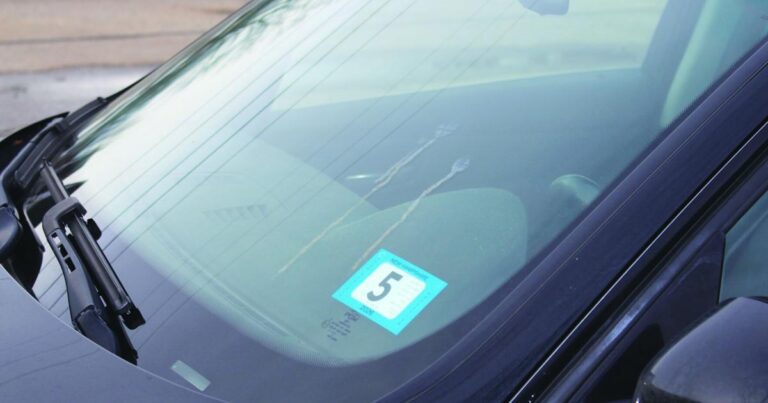
Once everything’s done, you’ll get an inspection report. If your vehicle passes, the technician places a new inspection sticker on your windshield. Here’s something that trips people up: the sticker displays the month your previous sticker expired, not the month you actually got inspected. So if your old sticker expired in March but you didn’t get around to it until May, your new sticker will still say March. That means you’re technically already due again the following March, not the following May.
What to Bring and What It Costs
You’ll need two things when you arrive: your vehicle registration and proof of insurance. Without both, the station can’t inspect your car. It’s worth double-checking that these are in your glove box before you drive over.
The fee for a standard passenger vehicle inspection is $35, paid directly to the inspection station. Motorcycles are $15. Commercial vehicles may be higher. You pay regardless of whether your vehicle passes or fails, so there’s extra motivation to make sure things are in order before you go.
The Full Safety Inspection Checklist: What They’re Looking At
Want to avoid a surprise failure? Go through these items yourself before heading to the station. You won’t catch everything a trained technician will, but you can spot the obvious problems that lead to most rejections.
Windshield and Wipers
Your windshield needs to be free of cracks and chips that block your line of sight. Even a small crack can be grounds for failure if it’s in the driver’s viewing area, and those small cracks have a way of spreading fast, especially in a Massachusetts winter.
Your wipers need to work properly too. If the blades are brittle, streaking, or torn, replace them before the inspection. A fresh pair of wipers costs $15 to $30 and takes about two minutes to swap out. There’s no reason to fail over something that cheap and easy.
Lights, Signals, and Horn
Every light on your car gets checked: headlights, taillights, brake lights, turn signals, reverse lights, and hazard flashers. All of them need to work. A single burned-out bulb will fail you.
Here’s a quick way to check them yourself. Park facing a wall at night and cycle through your lights to see if they’re all illuminating. For brake lights, have someone stand behind the car while you press the pedal, or back up close to a reflective surface.
Your horn also needs to be loud enough to actually alert other drivers. If it sounds weak or doesn’t work at all, that’s a fail.
Mirrors and Seat Belts
Both side mirrors and the rearview mirror need to be securely attached and provide a clear view. A cracked or missing side mirror is an automatic failure. If a mirror is loose or vibrates excessively, get it tightened or replaced beforehand.
Seat belts have to latch properly, retract smoothly, and lock when you tug them sharply. If a belt is frayed, jammed, or won’t click into the buckle, it won’t pass. Check every seat belt in the vehicle, not just the driver’s.
Brakes and Tires
Brakes are one of the biggest areas of focus. They need to operate smoothly without grinding, squealing, or pulling to one side. The technician will check your brake pads, rotors, and overall stopping ability. If your brake pedal feels spongy or goes too close to the floor, that’s a red flag you should address before the inspection.
Tires need a minimum tread depth of 2/32 of an inch. The old penny test works here: stick a penny into the tread with Lincoln’s head facing down. If you can see the top of his head, your tread is too shallow. Tires also can’t have visible cuts, bulges, or punctures, and they need to be inflated to the proper pressure.
Steering and Suspension
The steering system gets checked for excessive play or looseness. If your car drifts to one side or the steering wheel shakes at highway speeds, there’s likely an alignment or suspension issue that could cause a failure.
Suspension components like shocks, struts, and control arms are inspected for visible wear or damage. A car that bounces excessively over bumps or feels unstable in turns probably has suspension problems worth fixing regardless of the inspection.
Bumpers and Body Condition
Your bumpers need to be securely attached. If one is hanging off or missing entirely, that’s a failure. The body of the car is also inspected for serious rust, holes, or sharp edges that could injure a pedestrian or compromise the vehicle’s structural integrity.
Some surface rust is normal, especially on older cars in New England. But if you’ve got rust holes in the rocker panels or fenders that are crumbling away, that’s the kind of thing that won’t pass.
How the Emissions Test Works (And What Makes Cars Fail)
The OBD System Check
For vehicles manufactured after 2008, the emissions test relies heavily on the On-Board Diagnostic (OBD) system. The technician plugs a scan tool into your car’s OBD port (usually located under the dashboard near the steering column) and reads the diagnostic codes stored by the vehicle’s computer.
If your check engine light is on, your car will fail the emissions test. Full stop. It doesn’t matter what the code is or how minor the issue might seem. A lit check engine light is an automatic rejection. So if that light’s been glowing on your dashboard for weeks, get it diagnosed and fixed before your inspection appointment.
One thing a lot of people don’t realize: if you’ve recently cleared the check engine codes (either with a scan tool or by disconnecting the battery), the OBD system won’t have enough data to complete the readiness monitors. The technician will see that the monitors aren’t set, and the car will fail for “not ready.” You typically need to drive 50 to 100 miles through various conditions after a code reset before the monitors are fully ready.
Tailpipe Emissions Testing
Older gasoline vehicles and diesel vehicles may undergo a direct tailpipe test. The technician inserts a probe into the exhaust pipe while the engine is running and measures the concentration of harmful gases coming out.
For diesel vehicles, there’s also an opacity test that measures how thick and dark the exhaust smoke is. If your diesel truck is rolling coal, it’s not going to pass. Cars that exceed the allowable pollutant levels will need repairs, which could range from something simple like replacing an oxygen sensor to something more expensive like replacing the catalytic converter.
Visual Check of Emissions Components
The technician also does a visual inspection to make sure all emissions control components are physically present and haven’t been tampered with. They’re looking for the catalytic converter, the exhaust gas recirculation (EGR) valve, and other components that reduce pollution.
If someone removed the catalytic converter (whether for performance reasons or because it was stolen and never replaced), the car will fail immediately. Any bypassed, gutted, or visibly damaged emissions equipment has to be repaired or replaced before you can get a passing sticker.
Special Situations: New Cars, Motorcycles, Commercial Vehicles, and Heavy-Duty Trucks
Not every vehicle follows the same inspection rules. Depending on what you drive or how you acquired it, the requirements can vary.
Just Bought a Car? You’ve Got 7 Days
If you’ve recently purchased a vehicle, Massachusetts law requires you to get it inspected within seven days of registration. This applies whether you bought it from a dealer, a private seller, or brought it in from another state. Don’t assume that because you just bought it, everything’s fine. Cars that were registered in other states may not meet Massachusetts-specific requirements.
The seven-day window is tight, so plan ahead. If you’re buying a used car, it’s smart to get a pre-purchase inspection before you even close the deal. That way, you know what you’re walking into.
Commercial and Fleet Vehicles Face Stricter Standards
If you own or operate commercial vehicles, expect a more thorough inspection process. Commercial vehicles must be inspected annually, and the inspections typically cost more than a standard passenger car. The technician examines everything that’s checked on a regular car, plus additional items related to the vehicle’s commercial use.
For fleet owners, staying on top of inspection schedules isn’t just about compliance. Failing to maintain current inspections can result in significant fines and could even affect your commercial insurance premiums. It’s a business expense that pays for itself in avoided penalties.
Motorcycle Inspections Have Their Own Rules
Motorcycles go through an annual inspection just like cars, but the checklist is tailored to two-wheeled vehicles. Inspectors check tire tread depth, brakes, lighting, and other motorcycle-specific safety items. The fee is typically $15.
One practical tip: if you’ve got accessories like a bike rack or saddlebag attachments that might get in the way, remove them before your appointment. It avoids unnecessary delays and gives the technician clear access to everything they need to see.
Heavy-Duty Vehicles Get the Most Scrutiny
Trucks, buses, and other heavy-duty vehicles have the most comprehensive inspection requirements. On top of the standard safety and emissions checks, these vehicles may require a Federal Motor Carrier Safety Administration (FMCSA) inspection. Inspectors look at structural integrity, emissions output, load-handling capability, and commercial weight ratings.
If you operate heavy-duty vehicles, non-compliance isn’t just a fine. It can pull a vehicle out of service entirely until the issues are resolved, which means lost revenue and disrupted operations.
What Happens After: Passing, Failing, and Your Next Steps
You Passed: Here’s What the Sticker Means
If your vehicle passes, you’ll get a fresh inspection sticker on the lower corner of your windshield. That sticker is your proof that the car met all safety and emissions standards at the time of inspection.
Remember what we mentioned earlier: the sticker shows the expiration month of your previous sticker, not the date of your new inspection. So if you were late getting inspected, you’ve effectively shortened your current inspection cycle. There’s no credit for being late.
Driving without a valid inspection sticker can get you pulled over, fined, and potentially flagged by your insurance company. It’s a small thing that can snowball into bigger problems if you let it slide.
You Failed: Don’t Panic, But Don’t Ignore It Either
If your vehicle fails, you’ll get a rejection sticker instead. This sticker means your car didn’t meet the required safety or emissions standards, and you need to fix whatever was flagged before you can pass.
Here’s the typical path forward:
- Review the inspection report to understand exactly what failed.
- Take your car to a mechanic or registered emissions repair facility for the needed repairs.
- Bring the vehicle back for a re-inspection once the repairs are complete.
- If it still doesn’t pass after repairs, you may be eligible for a waiver depending on the circumstances.
Driving around with a rejection sticker and no repairs made is asking for trouble. You can be fined, and if you’re involved in an accident, the fact that your car had known safety defects could create serious legal and insurance complications.
The bottom line? Don’t treat your Massachusetts inspection as a hassle to avoid. Treat it as a 12-minute checkup that keeps your car legal, your roads safer, and your wallet protected from much bigger repair bills down the line. When’s your sticker set to expire?