
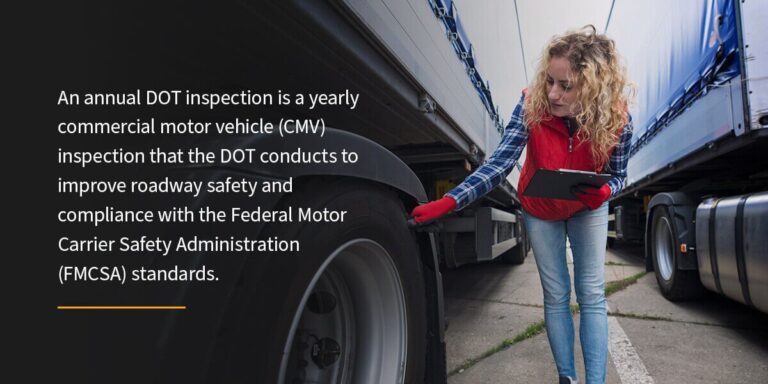
If you run a small trucking operation or you’re an owner-operator, you’ve probably asked this question at least once: can I just do my own annual DOT inspection instead of paying someone else to do it? The short answer is yes, you can, but only if you meet specific qualifications laid out by the Federal Motor Carrier Safety Administration (FMCSA). It’s not as simple as grabbing a flashlight and crawling under your rig on a Saturday afternoon.
Get it right, and you save money, gain scheduling flexibility, and develop a deeper understanding of your equipment. Get it wrong, and you’re looking at fines, violations on your CSA score, or worse, a truck that gets put out of service on the side of the highway. Let’s walk through exactly what’s involved so you can decide whether self-inspection makes sense for your situation.
What Exactly Is an Annual DOT Inspection?
Every commercial motor vehicle (CMV) operating on public roads is required to undergo a comprehensive inspection once a year. This isn’t a quick once-over. It’s a systematic, documented examination of the vehicle’s safety-related systems, and it’s mandated by the Department of Transportation.
The inspection covers everything from brakes and steering to lights, fuel systems, tires, and coupling devices. Inspectors are looking for any defect that could make the vehicle unsafe to operate. Once the vehicle passes, it receives an inspection sticker or decal that must be displayed on the truck. The inspection report itself has to travel with the vehicle or be kept on file and available on request.
Why Skipping or Failing This Inspection Hits You Hard
Compliance with DOT inspection requirements isn’t a suggestion. The FMCSA enforces these rules through the CSA (Compliance, Safety, Accountability) system, and the consequences of non-compliance are real. Over 133,000 trucks get cited every year for not having proof of a current annual inspection. That’s one of the most common violations on the road.
If you get pulled into a roadside inspection and can’t produce a valid inspection report or sticker, the best-case scenario is a fine. The worst case? Your truck gets sidelined on the spot with an Out of Service order, and it doesn’t move again until the issues are resolved. For an owner-operator, that’s lost loads, lost revenue, and a hit to your safety record that follows you around.
Who’s Actually Allowed to Perform a DOT Inspection?
This is where most of the confusion lives. The FMCSA doesn’t require inspectors to hold a specific government-issued license or pass a federal exam. But that doesn’t mean anyone can do it. The regulations set clear qualification standards that every inspector must meet.
The Qualification Standards You Need to Meet
According to the FMCSA, a qualified inspector must satisfy the following criteria:
- Knowledge of the regulations: You need to understand the inspection standards outlined in Part 393 and Appendix G of the Federal Motor Carrier Safety Regulations. These aren’t light reading. Part 393 covers everything from lighting and reflectors to frames, cab and body components, wheels, steering, suspension, and brakes. Appendix G lays out the specific inspection procedures and criteria.
- Ability to identify defective components: It’s not enough to know what a brake chamber looks like. You need to be able to spot when one is cracked, leaking, or out of adjustment. This applies to every system covered by the inspection.
- Proficiency with tools and methods: You need to demonstrate that you can properly use the tools required for the inspection, including brake measurement tools, tire tread gauges, and lighting testers.
- Hands-on experience: Inspectors should have practical, real-world experience working with the vehicle components they’re inspecting. Book knowledge alone isn’t sufficient.
If you’re an owner-operator or fleet manager who meets these qualifications, you can self-certify as a qualified inspector. This typically involves completing the appropriate certification form and keeping it on file. Some states, like Connecticut, have specific self-certification forms you fill out and submit as part of the registration process.
But here’s the thing: self-certifying means you’re putting your name on a legal document saying you’re qualified. If an auditor or roadside inspector later finds that your inspection was incomplete or substandard, that self-certification won’t protect you. It could actually make things worse because it shows you claimed competence you didn’t actually have.
Brake Inspections Require an Extra Level of Expertise
Brakes get their own special category in DOT inspections, and for good reason. Brake-related violations are consistently among the top reasons trucks get placed out of service during roadside checks. The FMCSA takes brake condition very seriously.
To qualify as a brake inspector, you need to go beyond general inspection knowledge:
- Understand brake system mechanics: You need to know how air brake systems work, including the compressor, governor, air tanks, slack adjusters, brake chambers, drums, and linings. If it’s a hydraulic system, the same depth of knowledge applies.
- Use brake-specific measurement tools: This includes tools for checking pushrod travel, measuring brake lining thickness, and testing air system integrity.
- Detect worn or failing components: Cracked drums, glazed linings, leaking chambers, out-of-adjustment slack adjusters. You need to be able to catch all of it.
Brake inspectors also need to stay current with evolving safety standards and technology. Automatic slack adjusters, for example, have changed how brake adjustment is evaluated compared to manual adjusters. If you’re not up to speed on current standards, you could miss something that puts you out of service at the next weigh station.
What Gets Inspected: The Full Annual DOT Checklist
The annual inspection is comprehensive. Every system that affects the safe operation of the vehicle gets examined. Here’s what the inspector (whether that’s you or a professional) will be going through.
Brakes, Steering, and Suspension
Brakes are tested for stopping efficiency and responsiveness. The inspector checks brake pads or linings for thickness, examines rotors or drums for cracks and wear, inspects brake lines and hoses for leaks or deterioration, and verifies that the air system (if applicable) holds pressure properly. Pushrod travel is measured to ensure brakes are within adjustment limits.
Steering gets a thorough going-over too. The steering wheel is checked for excessive play, and the linkages, tie rods, drag links, and gearbox are examined for wear, damage, or looseness. A steering system with too much play can make a loaded truck dangerously unpredictable, especially at highway speeds.
Suspension components like spring hangers, leaf springs (or air bags), shocks, struts, and U-bolts are inspected for cracks, breaks, or excessive wear. A failed suspension component on a loaded trailer isn’t just a mechanical problem. It can cause the vehicle to shift or roll in ways the driver can’t control.
Tires, Wheels, Rims, and Coupling Devices
Tires must have adequate tread depth and be free of cuts, bulges, or other visible damage. Steer tires have stricter tread requirements than drive or trailer tires. The inspector also checks for proper inflation, which matters more than most people realize on a heavy vehicle. An underinflated tire on an 80,000-pound truck generates enormous heat and can blow catastrophically.
Wheels and rims are examined for cracks, bends, elongated bolt holes, or missing fasteners. A cracked rim at highway speed is a nightmare scenario, and it happens more often than you’d think on trucks that regularly run rough roads or heavy loads.
Coupling devices include the fifth wheel, kingpin, pintle hooks, drawbars, and safety chains. These are the connections holding the tractor and trailer together. Inspectors verify that the fifth wheel is properly mounted and latched, the kingpin isn’t worn beyond limits, and all safety devices are present and functional. A coupling failure at speed is one of the most dangerous things that can happen on a highway.
Lighting and Reflective Devices
Every light on the vehicle gets tested: headlights, taillights, brake lights, turn signals, marker lights, clearance lights, and hazard flashers. A single non-functioning light is enough to earn a violation.
Reflective devices like reflectors and conspicuity tape (that reflective striping you see on trailers) are also checked to make sure they’re present, properly positioned, and in good condition. Visibility is everything when you’re sharing the road with a vehicle that weighs 40 tons. Missing or degraded reflective material is one of the easier things to fix, but it’s also one of the easier things to overlook if you’re not being thorough.
Should You Actually Do It Yourself? Weighing the Trade-Offs
Just because you can do your own annual DOT inspection doesn’t automatically mean you should. There are real advantages and real risks, and the right answer depends on your experience level, your operation’s size, and how confident you are in your own thoroughness.
The Upside of Self-Inspection
- You save money. Professional DOT inspections typically run between $50 and $150 per vehicle, sometimes more depending on your area and the shop. If you’re running multiple trucks, that adds up fast over the course of a year.
- You control the timing. No waiting for an appointment or working around a shop’s schedule. You inspect when it works for you, which is especially valuable during peak freight seasons when every day on the road counts.
- You learn your equipment inside and out. There’s no substitute for hands-on time with your own truck. The more familiar you are with every component, the faster you’ll catch developing problems before they become roadside emergencies.
The Downside You Can’t Ignore
- It takes real time. A thorough annual inspection isn’t a 15-minute task. If you’re not experienced, expect it to take significantly longer than it would for a professional who does these every day.
- The risk of missing something is real. A professional inspector does dozens or hundreds of these inspections a year. They know what worn components look like at a glance. If you’re doing one inspection a year on your own truck, you don’t have that pattern recognition. Missing a defect that gets caught at a roadside inspection means a violation on your record and potentially an out-of-service order.
- You need the right tools. Eyeballing things isn’t acceptable. You need brake measurement tools, tread depth gauges, and the ability to safely get under the vehicle. If you don’t already have this equipment, there’s an upfront investment involved.
Know the Legal Boundaries Before You Start
Self-certifying as a qualified inspector is a legal declaration. You’re signing paperwork that says you have the knowledge, skills, and experience to perform this inspection to federal standards. If your inspection later turns out to be incomplete or inaccurate, that certification doesn’t shield you from liability. It can actually increase your exposure because it shows you represented yourself as competent.
Your inspection also has to cover every area required by the DOT, not just the parts you’re comfortable with. If you’re confident checking lights and tires but shaky on brake adjustment measurements or air system integrity, you’re not fully qualified, even if you self-certify. An incomplete inspection is arguably worse than no inspection at all because it creates a false sense of security.
After the Inspection: What You Need to Do Next
Review Every Finding Carefully
Once the inspection is complete, go through the report line by line. If you found defective or worn components, prioritize them by safety impact. Brake issues, steering problems, and tire defects go to the top of the list. Everything else gets addressed in order of severity.
Keep a copy of the inspection report on file. Federal regulations require you to retain inspection reports for at least 14 months. If you get audited or pulled over for a roadside inspection, you’ll need to produce this documentation. Not having it is a violation in itself.
Fix What Needs Fixing and Document Everything
Start with the safety-critical repairs. If the inspection revealed worn brake linings, a leaking air line, or a cracked rim, those get fixed before the truck moves another mile. All repairs should be performed by qualified personnel, whether that’s you (if you have the mechanical skills) or a professional shop.
Document every repair. Keep receipts for parts, note who performed the work, and record the date. This paper trail serves two purposes: it proves the issues were corrected, and it gives you a maintenance history that’s valuable for tracking component life and spotting recurring problems.
Get Your Sticker Right
Once all repairs are completed and the vehicle passes, update the DOT inspection sticker. This sticker needs to be placed in a visible location on the vehicle, typically on the driver’s side of the frame or near the driver’s door. It should display the correct dates and inspection information so that any roadside inspector can verify your compliance at a glance.
Keep the area around the sticker clean. A sticker that’s covered in road grime and unreadable might as well not be there. If an officer can’t read it, you’re going to have a conversation you don’t want to have.
The Bottom Line: Can You Do It? Yes. Should You? That Depends.
If you genuinely have the knowledge, the tools, and the experience to inspect every system covered by Part 393 and Appendix G, then self-inspecting your truck is a legitimate option that saves money and puts you in closer touch with your equipment. Plenty of experienced owner-operators do exactly this.
But if there’s any part of the inspection where you’re guessing, skipping, or hoping for the best, you’re better off paying a professional shop to handle it. The cost of a proper inspection is a fraction of what a single out-of-service violation, a roadside fine, or a preventable accident will cost you.
Annual inspections aren’t just paperwork and stickers. They’re the line between a truck that’s safe to operate and one that’s a liability on wheels. Whichever route you choose, don’t cut corners.