
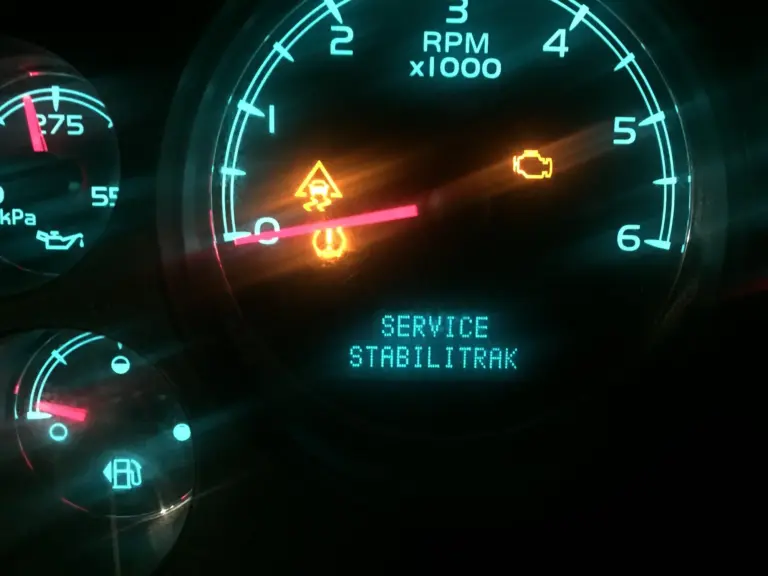
You’re driving your Chevy Impala and the “Service StabiliTrak” message suddenly appears on the dashboard. Your first instinct is probably a mix of confusion and worry, is this serious? Is my car safe to drive? Can I fix it myself?
This warning means something’s gone wrong with your Impala’s Electronic Stability Control system, the one that’s quietly working behind the scenes to keep your car from sliding or losing control. It could be a minor sensor glitch or something more involved. Either way, it’s worth understanding what’s going on so you can handle it the right way.
What StabiliTrak Does and Why It Matters
StabiliTrak is GM’s name for their electronic stability control system, and it’s one of those features you probably never think about, until it stops working.
How StabiliTrak Keeps You on the Road
In simple terms, StabiliTrak monitors what your car is doing and compares it to what you’re telling it to do. If you’re turning the steering wheel left but the car is sliding right, the system steps in. It adjusts brake pressure on individual wheels and tweaks engine torque to pull you back on track.
This is especially valuable on wet roads, icy patches, or during sudden swerves to avoid something in the road. You might not even feel it activate most of the time, it’s that smooth. But when it’s not functioning, that’s when you notice the difference.
Why It’s a Real Safety Feature, Not Just a Dashboard Light
StabiliTrak isn’t some optional comfort feature. It actively reduces accident risk by helping you maintain control during emergency maneuvers. Say you take a highway exit ramp a little too fast, StabiliTrak modulates braking and reduces power to keep the car from spinning out or drifting wide.
Without it working properly, your Impala handles like any car did before stability control existed. Fine in perfect conditions, but way less forgiving when things go sideways, literally.
The Parts That Make It All Work
StabiliTrak relies on a network of sensors constantly feeding data to the car’s computer:
- Wheel speed sensors – Track how fast each wheel is spinning independently.
- Brake pressure sensor – Monitors and helps regulate braking force across all four wheels.
- Steering angle sensor – Reads the position of your steering wheel so the system knows where you intend to go.
These components work in concert, comparing data dozens of times per second. When the numbers don’t add up, say one wheel is spinning way faster than the others, the system takes corrective action. When any one of these sensors fails or sends bad data, that’s typically when the warning pops up.
What’s Actually Triggering the Service StabiliTrak Warning
The warning doesn’t show up randomly. Something specific is causing it. Here are the most common culprits in Chevy Impalas.
Sensor Failures Are the Usual Suspect
More often than not, a bad sensor is behind the message. A failing wheel speed sensor is one of the most frequent offenders, when it stops reporting accurately, the car’s computer loses track of what that wheel is doing, and the whole stability system gets thrown off.
A malfunctioning ABS sensor can cause similar chaos, potentially triggering both the StabiliTrak warning and the ABS light simultaneously. The steering angle sensor is another one to watch, if it can’t accurately read your steering input, StabiliTrak doesn’t know which direction you’re actually trying to go.
Then there’s the throttle position sensor. When this one goes bad, the car can behave unpredictably under acceleration, which the stability system interprets as a problem worth flagging.
Electrical Gremlins and the Body Control Module
Sometimes every sensor checks out fine, but the electrical system connecting them doesn’t. The body control module (BCM) manages a wide range of vehicle functions, including stability control. If the BCM fails or develops a glitch, the StabiliTrak warning can appear even though the sensors themselves are working.
Loose connections, corroded terminals, or degraded wiring can all disrupt the data flowing between sensors and the computer. A weak brake switch or a struggling fuel pump, particularly in vehicles running E85 fuel, can also contribute to the problem. It’s worth checking all electrical connections periodically, especially if you live in an area with harsh winters and road salt.
Engine and Transmission Problems That Set It Off
Here’s one that catches people off guard: the StabiliTrak warning can be triggered by engine or transmission issues that have nothing to do with the stability system directly.
Engine misfires are a classic example. If a cylinder isn’t firing properly, the sudden change in power output can confuse the stability system. Lifter failure can have a similar effect. Hard or erratic shifting from the transmission can also activate the warning, since the system interprets unexpected power delivery changes as a potential stability issue.
Even something as simple as running the wrong tire size can cause problems. Mismatched tires send inaccurate speed data to the onboard computer, and that alone can be enough to trigger the alert. A dirty or failing throttle body can affect air intake and engine performance, creating a ripple effect that reaches the stability system.
How to Fix the Service StabiliTrak Warning
Now for the practical part. Depending on the root cause, some fixes are straightforward enough to handle yourself, while others need a mechanic.
Check the StabiliTrak Control Module First
The StabiliTrak Control Module is the brain of the system. Start here. Moisture intrusion and loose connectors are surprisingly common problems, especially in older Impalas or vehicles that have been through a lot of wet weather.
Use a diagnostic scan tool to pull any stored error codes. Then inspect and clean the module’s connectors, making sure they’re dry and seated firmly. If the codes keep coming back after cleaning and reconnecting, try a module reset. Still no luck? The module itself may need replacing, particularly if it’s old or has visible damage.
Swap Out Bad Sensors
If your diagnostic scan points to a specific sensor, replacing it is usually the fix. The most common ones to fail are:
- Wheel speed sensors – One at each wheel; they’re exposed to road debris and moisture, so they wear out over time.
- Steering wheel position sensor – Located in the steering column; when it fails, the system can’t track your steering input.
- ABS sensors – Closely tied to the stability system; a bad one often triggers both the ABS and StabiliTrak warnings.
Sensor replacements are generally affordable parts-wise, though labor can vary depending on the sensor’s location. The key is identifying exactly which sensor is the problem, an OBD-II scanner makes this much easier than guessing.
Don’t Ignore Engine Performance Problems
If your Impala’s engine isn’t running right, fixing that often clears the StabiliTrak warning as a side benefit. Worn-out spark plugs are one of the easiest and cheapest things to check, they can cause misfires that cascade into stability system alerts.
Think of it this way: the StabiliTrak system monitors everything the engine does. If the engine stumbles, the system assumes something might be wrong with vehicle stability. Fix the engine problem, and the downstream warning usually disappears.
How to Keep the StabiliTrak Warning From Coming Back
Once you’ve resolved the issue, a few simple habits can help you avoid seeing that message again.
Stay on Top of Your Stability System Components
Periodically check that your ESC and ABS systems are functioning properly. Pay special attention to wheel speed sensors and brake pressure sensors, they’re the most exposed to road conditions and wear out first. If your dealership offers software updates for your Impala’s systems, keep those current too. Outdated software can sometimes cause false alerts.
Stick to Your Maintenance Schedule
This one sounds obvious, but it’s where most people slip up. Regular oil changes, tire rotations, and brake inspections aren’t just about keeping the car running, they’re how small problems get caught before they snowball into warning lights and expensive repairs.
A mechanic who sees your car regularly will notice a sensor starting to drift or a connection beginning to corrode long before it triggers a dashboard warning. That early catch can save you real money and headaches.
Drive Smart in Low-Traction Conditions
StabiliTrak is designed to bail you out when conditions get slippery, but it works best when you’re not pushing it to its limits. In rain, snow, or on icy roads, slow down, leave more space between you and the car ahead, and steer smoothly.
Avoid sudden acceleration or hard braking, both can overwhelm the system or even push your car into limp mode, which limits engine power to protect the drivetrain. If you feel traction slipping, guide the car gently rather than jerking the wheel. Working with the system instead of against it keeps everything functioning the way it’s supposed to.