

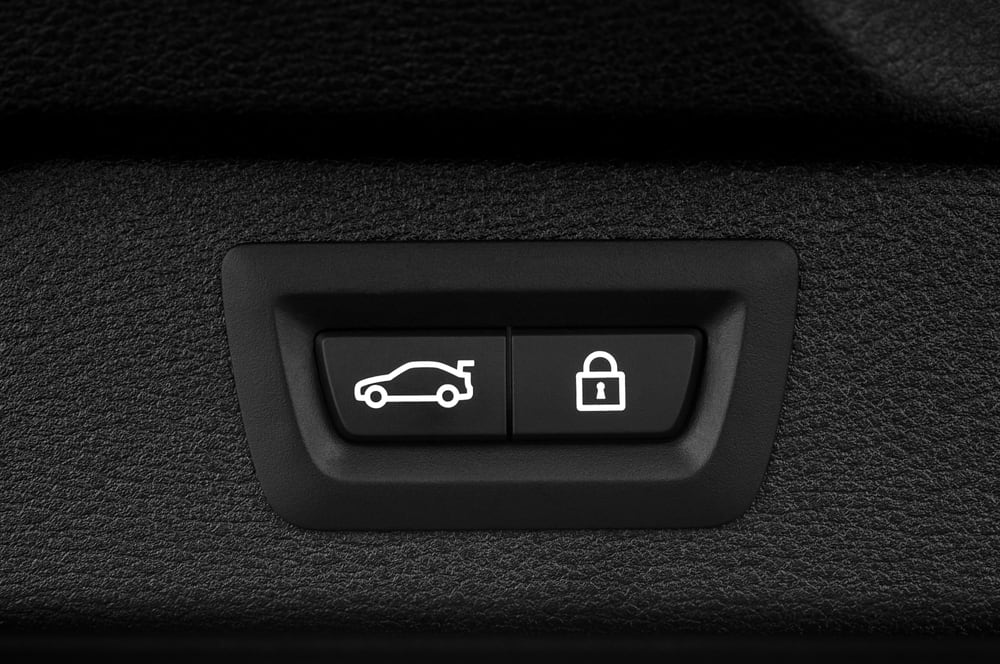
Few things are more frustrating than walking up to your car with an armful of groceries, pressing the trunk release button, and getting absolutely nothing. No click, no pop, no movement. The trunk just sits there, locked shut, completely ignoring you.
If your trunk button has stopped working, don’t panic. This is actually a pretty common issue, and in most cases, it’s something you can diagnose yourself before spending money at a shop. The fix usually comes down to one of five things: valet mode being activated, a weak car battery, a stuck trunk latch, a blown fuse or damaged wiring, or a failed trunk lock actuator.
We’re going to walk through each of these causes in detail, explain exactly how to check for them, and tell you what the fix looks like for each one. Some of these you can handle in your driveway. Others might need a mechanic. Either way, you’ll know exactly what’s going on before you spend a dime.
How Your Trunk Release System Actually Works
Before jumping into fixes, it helps to understand what happens behind the scenes when you press that trunk button. It’s not magic. There’s a specific chain of events, and if any link in that chain breaks, the trunk stays shut.
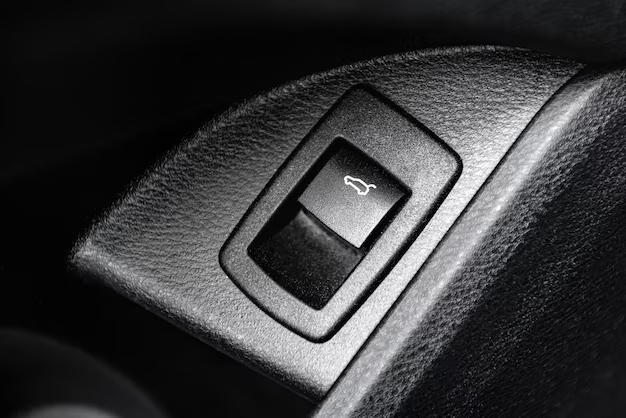
Here’s the basic sequence. When you press the trunk release button, whether it’s on your key fob, your dashboard, or the button near the driver’s seat, it sends an electrical signal through your car’s wiring. That signal travels to a component called the trunk lock actuator, which is a small electric motor mounted inside the trunk lid mechanism.
The actuator receives the signal and physically moves the latch, releasing the trunk lid so it can pop open. Some vehicles use a spring-loaded mechanism that pushes the trunk up once the latch releases. Others just unlock it, and you have to lift it manually. Either way, the actuator is what does the unlocking.
For this whole system to work, several things need to be in order:
- The car’s electrical system needs to be powered and functioning normally
- The fuse protecting the trunk release circuit needs to be intact
- The wiring between the button and the actuator needs to be undamaged
- The actuator itself needs to be operational
- The trunk latch needs to be free to move when the actuator engages it
- The vehicle can’t be in a mode that intentionally disables the trunk release, like valet mode
If any one of those conditions isn’t met, hitting the trunk button does nothing. The good news is that these problems are easy to check in a logical order, starting with the simplest possibilities and working toward the more involved repairs.
Fix #1: Check if Valet Mode Is Turned On (The 30-Second Fix Most People Miss)
This one catches more people than you’d think. Most modern cars have a valet mode feature, and when it’s activated, it intentionally disables certain functions to limit access when you hand your keys to a valet or parking attendant. The trunk release is one of the first things it locks out.
The whole point of valet mode is to keep the valet from opening your trunk and accessing your belongings. It’s a security feature. But here’s where it gets tricky: it’s surprisingly easy to activate by accident. Depending on your vehicle, you might turn it on by pressing a certain button combination, toggling a hidden switch, or even through your car’s infotainment settings without realizing it.
How to Check for Valet Mode
The valet switch is usually tucked away somewhere discreet. Manufacturers don’t want it to be obvious, so it’s often in one of these spots:
- Inside the glove box, sometimes on the side wall or near the back
- Under the dashboard, near the steering column
- Near the center console, hidden behind a panel or under a cover
- In the infotainment system, under settings or security menus (on newer vehicles)
Open your glove box first and look for a small toggle switch. If you find one, flip it to the opposite position. On some vehicles, you’ll need to turn it to “OFF” or “Normal.” On others, pressing and holding a button on the key fob in a specific sequence deactivates the mode.
Your owner’s manual is your best friend here. Every manufacturer handles valet mode differently. Some use a physical switch, some use a code you enter through the steering wheel buttons, and some newer cars let you toggle it through a touchscreen menu. Look up your specific make, model, and year to find the exact process.
How to Tell if This Was the Problem
After deactivating valet mode, try the trunk release button again. If it works now, you’re done. The trunk was never broken. The system was doing exactly what it was told to do by keeping the trunk locked.
If the trunk still doesn’t open after disabling valet mode, the issue lies elsewhere. Move on to the next fix.
Pro tip: If you use valet parking regularly, get familiar with how to activate and deactivate this feature on your specific car. Knowing the process by heart saves you from this exact confusion later.
Fix #2: Test Your Car Battery (A Weak Battery Kills More Than Just the Starter)
People usually associate a weak battery with a car that won’t start. But here’s something a lot of drivers don’t realize: a battery that’s low on charge can cause all kinds of weird electrical behavior long before it’s completely dead. Your engine might still turn over, your headlights might still work, but secondary electrical systems start acting up. The trunk release is one of the first to go.
The trunk lock actuator is an electrical component. It needs a certain amount of voltage to engage and physically move the latch mechanism. When the battery voltage drops below a healthy level, the actuator might not get enough power to do its job. You press the button, the signal goes out, but the actuator just doesn’t have enough juice to respond.
How to Check Your Battery
You’ll need a voltmeter or multimeter for this. They’re inexpensive and available at any auto parts store. Here’s what to do:
- Turn the car off completely
- Set your multimeter to DC volts (the “V” with a straight line)
- Touch the red probe to the positive battery terminal and the black probe to the negative terminal
- Read the voltage
Here’s how to interpret what you see:
- 12.6V or higher: Battery is fully charged and healthy
- 12.4V to 12.6V: Partially charged, might cause issues with secondary systems
- 12.0V to 12.4V: Significantly discharged, likely causing electrical problems
- Below 12.0V: Battery is effectively dead and needs immediate attention
If the reading is below 12.4V, your battery is the likely culprit. Even at 12.2V, you’re only at about 50% charge, and that’s enough to cause problems with components like the trunk actuator that draw power intermittently.
What to Do About It
You’ve got three options depending on how bad the situation is:
- Recharge the battery using a battery charger. A slow trickle charge overnight is best for battery health.
- Jump-start the car and let the alternator recharge the battery by driving for at least 20 to 30 minutes. Then test the trunk button again.
- Replace the battery if it’s more than 3 to 5 years old, won’t hold a charge, or keeps testing low after recharging. At that point, the battery cells are degraded and no amount of charging will fix it permanently.
Keep in mind: A weak battery doesn’t just affect your trunk. It can cause issues with power windows, door locks, interior lights, key fob range, infotainment system glitches, and more. If you’ve noticed multiple small electrical gremlins in addition to the trunk button failing, the battery is almost certainly the root cause. Fixing the battery fixes everything at once.
If your battery checks out fine (12.6V or higher, holding charge well), the problem is mechanical or somewhere further down the electrical circuit. Time to check the trunk latch itself.
Fix #3: Check if the Trunk Latch Is Stuck or Damaged
Here’s a scenario that happens more often than people think. The trunk release button is working perfectly. The signal is being sent. The actuator is receiving power. But the trunk still won’t open because the latch mechanism itself is physically stuck or broken.
The trunk latch is the mechanical component that holds the trunk lid closed. When the actuator fires, it moves the latch to release the lid. But if the latch is corroded, misaligned, jammed by debris, or mechanically damaged, it won’t release no matter how many times the actuator tries. The actuator might click, but the trunk stays shut.
This is especially common in areas with harsh winters. Road salt, moisture, and temperature extremes take a toll on metal latch components over time. Rust builds up inside the mechanism, and one day it just freezes in the locked position.
How to Check if the Latch Is the Problem
First, try opening the trunk using your key fob. If that doesn’t work either, try the physical key if your vehicle has a trunk key slot. If no method of opening works, the latch is almost certainly stuck or broken.
But here’s where it gets interesting. Most vehicles have an emergency trunk release cable inside the trunk. Yes, it’s inside the trunk, which seems counterintuitive when you can’t open it. But you can usually access it from inside the cabin.
How to Access the Emergency Trunk Release
Here’s the process, step by step:
- Fold or push the rear seats forward. Most sedans have a fold-down rear seat or at least one section that folds to create a pass-through to the trunk area.
- Crawl into the trunk space from the cabin through the opening.
- Look for the emergency release handle. It’s typically a bright yellow or glow-in-the-dark T-shaped handle attached to a cable. It’s usually located near the trunk latch mechanism on the underside of the trunk lid.
- Grab a flashlight. The trunk interior is dark, and the handle can be tucked behind panels or hidden near the latch mechanism. Without a light, you might miss it entirely.
- Pull the handle firmly downward. This mechanically releases the latch via cable, bypassing the actuator entirely.
If pulling the emergency release opens the trunk, you know the actuator and wiring are the issue. If pulling the emergency release does nothing, the latch itself is physically damaged or frozen. At that point, the latch mechanism needs to be repaired or replaced.
When You Need Professional Help
A stuck latch that won’t release even with the emergency cable usually means mechanical damage, severe corrosion, or a misaligned striker plate. This isn’t a job most people can handle with basic tools. A local locksmith or your dealer’s service department can open the trunk without damaging the body and replace the latch assembly.
Some locksmiths specialize in automotive work and can get to you faster and cheaper than a dealership. It’s worth calling around for quotes if your car isn’t under warranty.
If the latch isn’t the problem and you were able to open the trunk through other means, the electrical side of the system is where the fault lies. Let’s look at the wiring and fuses next.
Fix #4: Inspect the Fuse and Wiring (The Hidden Electrical Failure)
If the battery is healthy, valet mode is off, and the latch moves freely when manually released, the problem is almost certainly in the electrical pathway between the button and the actuator. That means either a blown fuse or damaged wiring.
Think of it this way: the button sends a signal, the wiring carries it, the fuse protects the circuit, and the actuator receives the command. If the fuse is blown, the circuit is broken and no signal gets through. If a wire is damaged, shorted, or corroded, the signal either can’t travel or goes to ground instead of reaching the actuator.
How to Check the Trunk Release Fuse
Every vehicle has one or more fuse boxes. Most cars have one under the hood and another one inside the cabin, usually under the dashboard on the driver’s side or near the kick panel. Your owner’s manual will have a fuse map showing which fuse controls the trunk release circuit.
Here’s how to check it:
- Locate the correct fuse using your owner’s manual or the diagram printed on the fuse box cover.
- Pull the fuse out using the fuse puller tool (usually included in the fuse box) or a pair of needle-nose pliers.
- Inspect it visually. Hold it up to the light. If the thin metal strip inside the clear plastic housing is broken or burned, the fuse is blown.
- Test it with a test light or multimeter. Touch the probes to the two metal contact points on the fuse. No continuity means it’s blown.
- Replace the blown fuse with a new one of the exact same amperage rating. Never put in a higher-rated fuse. That defeats the purpose of the fuse as a safety device and could cause wiring damage or even a fire.
After replacing the fuse, test the trunk button. If it works, you’re done. But pay attention over the next few days. If the new fuse blows again quickly, there’s a short circuit somewhere in the wiring that caused the original fuse to blow. A fuse doesn’t blow for no reason. It blows because something in the circuit drew too much current.
How to Check the Wiring
Wiring issues are trickier to diagnose. The wires running to the trunk actuator travel through the body of the car, often passing through the hinge area between the trunk lid and the body. This is a high-stress zone. Every time you open and close the trunk, those wires flex. Over years and thousands of cycles, the insulation can crack, wires can break internally, or connections can corrode.
Common signs of a wiring problem include:
- The trunk button works intermittently (sometimes it opens, sometimes it doesn’t)
- Jiggling the wiring harness near the trunk hinge makes the trunk pop open
- Visible damage, fraying, or green corrosion on the wires near the trunk opening
- Other trunk-related electrical features fail at the same time (trunk light, license plate light, rear camera)
If you’re comfortable with a multimeter, you can test for continuity along the wiring from the fuse box to the actuator connector. But honestly, tracing and repairing automotive wiring is where most DIYers should draw the line. A short circuit that isn’t properly identified and repaired can cause repeated fuse failures, damage other components, or create a fire risk.
Our recommendation: If you suspect a wiring issue, take the car to a mechanic or your dealer’s service department. They have wiring diagrams specific to your vehicle and the diagnostic tools to pinpoint the exact location of the fault. The repair is usually affordable since it often involves splicing a broken wire or replacing a damaged section of harness. It’s not a big-ticket repair, but it does require the right knowledge and tools to do safely.
Fix #5: Replace a Failed Trunk Lock Actuator
If you’ve ruled out valet mode, the battery is healthy, the latch moves freely, the fuse is good, and the wiring checks out, you’re left with one conclusion: the trunk lock actuator itself has failed.
This is usually the case when you press the trunk button and hear a faint click from the trunk area, but nothing actually happens. The click means the actuator is receiving the electrical signal and trying to engage, but its internal motor or gear mechanism is worn out or broken. It just can’t physically move the latch anymore.
Another strong indicator of a dead actuator is when neither the dashboard button, the key fob, nor any other electronic method can open the trunk, but the emergency release cable inside the trunk still works perfectly. That tells you the latch itself is fine, and the problem is specifically with the electrical device that’s supposed to move it.
Can You Repair an Actuator?
Unfortunately, no. Trunk lock actuators are sealed units. You can’t open them up, fix the internal motor, and put them back together. When they fail, replacement is the only option.
The actuator itself is usually a relatively affordable part, typically ranging from $30 to $120 depending on the vehicle make and model. Labor costs vary, but the replacement usually takes a mechanic about 30 minutes to an hour since it involves removing interior trunk panels to access the latch assembly.
Should You DIY This Repair?
It depends on your comfort level. On some vehicles, replacing the actuator is straightforward. You remove a few screws, disconnect the wiring connector, swap the actuator, and reassemble. On other vehicles, particularly newer ones with integrated latch and actuator assemblies, the job is more complex and might require special tools or calibration.
If your vehicle is still under warranty, take it to the dealer. The trunk lock actuator is an electrical component, and in many cases, it’s covered under the powertrain or electrical system warranty. Getting it replaced under warranty saves you both the parts cost and the labor charge.
If you’re out of warranty and want to save on labor, check YouTube for a tutorial specific to your make and model before attempting it yourself. A general guide won’t cut it here because actuator locations and mounting styles vary wildly between vehicles.
Quick Troubleshooting Flowchart
To make this easier to follow, here’s the logical order you should check things in. Start at the top and work your way down:
- Is valet mode on? Check and deactivate it. Try the button. If it works, you’re done.
- Is the battery healthy? Test voltage. If below 12.4V, recharge or replace. Try the button again.
- Is the trunk latch stuck? Try the emergency release cable. If the cable doesn’t work either, the latch is damaged. Get a locksmith or mechanic.
- Is the fuse blown? Locate, inspect, and replace if needed. If the new fuse blows again, there’s a wiring short.
- Is the actuator dead? If you hear a click but nothing moves, or no electronic method opens the trunk but the manual release works, the actuator needs replacement.
This order matters because each step rules out the simpler, cheaper possibilities before you move to the more involved (and expensive) fixes. There’s no point paying a mechanic to replace an actuator when the real problem was just valet mode being accidentally turned on.
Preventive Measures: How to Stop This From Happening Again
Once you’ve fixed the immediate problem, it’s worth taking a few steps to prevent a repeat. Trunk release failures often happen because of neglect or environmental factors that are easy to address with basic maintenance.
Keep the Latch Lubricated
The trunk latch is a moving mechanical part. Like any moving part, it benefits from occasional lubrication. Once or twice a year, spray a light penetrating lubricant (like white lithium grease or silicone spray) on the latch mechanism and the striker plate. This keeps the parts moving freely and prevents rust buildup, especially if you live in a region with harsh winters and road salt.
Maintain Your Battery
Test your car battery at least once a year, particularly before winter. Batteries lose capacity in cold weather, and a battery that seems fine in summer can fail when temperatures drop. If your battery is more than three years old, have it load-tested at an auto parts store. Most places do this for free.
Inspect the Trunk Wiring Periodically
Every now and then, open the trunk and take a look at the wiring harness where it passes through the hinge area. Look for cracked insulation, exposed copper, green corrosion, or wires that look stretched or pinched. Catching a wire issue early, before it causes a short, is a lot cheaper than replacing a blown fuse, a fried actuator, or a damaged wiring harness.
Know Where Your Emergency Release Is
Don’t wait for a breakdown to figure this out. Open your trunk today, find the emergency release handle, and note where it is. If you ever get stuck with a dead trunk button in a parking lot, you’ll know exactly how to get in without calling for help.
What It Costs to Fix a Trunk Button That Won’t Work
Here’s a rough breakdown of what each fix typically costs, so you know what to expect:
- Deactivating valet mode: Free. You just flip a switch or follow a procedure.
- Recharging or replacing the battery: Free to recharge yourself. A new battery typically costs $100 to $250 installed.
- Replacing a trunk latch: $150 to $400 depending on the vehicle and whether additional components need attention.
- Replacing a blown fuse: Under $5 for the fuse itself. Free if you do it yourself.
- Wiring repair: $50 to $200 for a mechanic to trace and fix a short or broken wire.
- Replacing the trunk lock actuator: $30 to $120 for the part, plus $50 to $150 in labor. Total is usually $80 to $270.
The cheapest fixes (valet mode, fuse, battery) should always be checked first. There’s no reason to jump straight to actuator replacement without ruling out the simple stuff.
Frequently Asked Questions
How Can You Tell if Your Trunk Latch Is Bad?
The clearest sign of a bad trunk latch is when the trunk won’t lock or unlock properly, regardless of which method you use. If the trunk button, key fob, and physical key all fail to open the trunk, and the emergency release cable inside the trunk doesn’t work either, the latch is almost certainly the issue. You might also notice that the trunk doesn’t stay closed properly, popping open while driving or not clicking into place when you shut it.
Corrosion, physical damage, or a misaligned striker plate are the usual causes. In cold climates, ice can also freeze the latch mechanism temporarily. If it opens fine after the car warms up but sticks in freezing temperatures, moisture intrusion and corrosion are the likely culprits.
How Much Does It Cost to Replace a Trunk Latch?
A trunk latch replacement typically costs between $150 and $400. The price varies based on your vehicle’s make and model, the cost of the latch assembly itself, and labor rates in your area. On some cars, the latch and actuator are sold as a combined unit, which increases the parts cost but simplifies the installation since you’re replacing both at once.
If the damage extends beyond just the latch, say the striker plate is bent or the trunk lid alignment is off, additional parts and labor can push the total higher. Getting a few quotes from different shops before committing is always smart.
How Do You Know if the Trunk Lock Actuator Is Failing?
There are two telltale signs of a failing trunk lock actuator. The first is an audible clicking sound coming from the trunk area when you press the release button, but the trunk doesn’t actually open. That clicking means the actuator is receiving the electrical signal and trying to engage, but its internal motor or gear mechanism can’t move the latch anymore.
The second sign is when no electronic method works. If the dashboard button, key fob, and any smart trunk features all fail to open the trunk, but you can still open it manually using the emergency release cable or a physical key, the actuator has failed. The latch works fine mechanically. The electrical device that’s supposed to trigger it is the broken link.
Can a Dead Key Fob Battery Cause the Trunk Not to Open?
Yes, but only if you’re using the key fob to open the trunk. A dead key fob battery means the fob can’t transmit the signal to the car. If the fob’s trunk button doesn’t work but the button inside the car (on the dashboard or door panel) does work, the issue is the key fob battery, not the trunk system. Replace the fob battery and the problem is solved.
If neither the fob nor the interior button works, the key fob battery isn’t the issue. The problem is in the car’s trunk release system itself.
Why Does My Trunk Only Open Sometimes?
Intermittent trunk release is almost always a wiring issue. When a wire is partially broken or has a loose connection, it might make contact sometimes and lose contact other times. Temperature changes, vibration from driving, or even the position of the trunk lid can affect whether a damaged wire makes or breaks contact.
A failing actuator can also cause intermittent operation. As the internal motor wears out, it might work when conditions are favorable (warmer temperatures, good battery charge) and fail when they’re not. If your trunk opens inconsistently, check the wiring at the trunk hinge first, then consider having the actuator tested.

The Bottom Line on Trunk Button Failures
A trunk release button that won’t work is annoying, but it’s rarely a mystery. Work through the five possible causes in order, starting with the free and easy checks:
- Valet mode accidentally activated
- Weak or dead car battery
- Stuck or damaged trunk latch
- Blown fuse or damaged wiring
- Failed trunk lock actuator
Most of the time, the fix is simpler and cheaper than you’d expect. Start with valet mode and the battery. If those check out, move to the latch, then the fuse, then the actuator. By the time you reach the actuator, you’ve already ruled out everything else and you know for sure that’s where the money needs to go.
Don’t let a stuck trunk ruin your day. Grab a multimeter, check your owner’s manual, and start working through the list. You might be surprised how quickly you find the answer.