
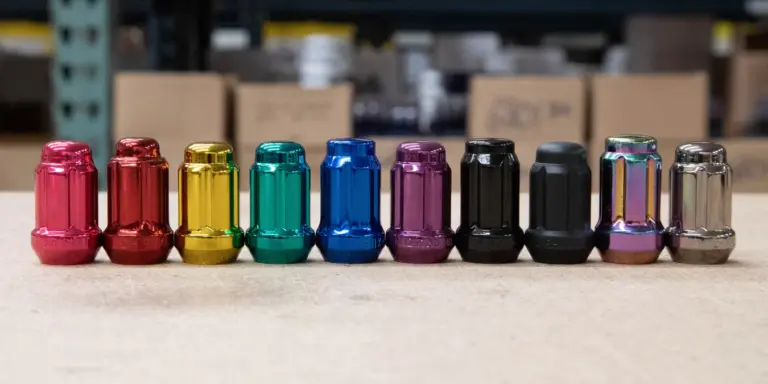
Maybe you just installed a fresh set of wheels and the stock silver lug nuts look completely out of place. Maybe you want everything color-matched down to the smallest detail. Or maybe you just saw someone on Instagram with matte black lug nuts and thought, “I could do that myself for about ten bucks.”
Whatever your reason, the question is simple: can you paint lug nuts? And the answer is yes. You absolutely can. People do it all the time. But, and this is a big but, there are some real safety concerns you need to understand before you grab a rattle can and go to town.
Lug nuts are not decorative trim pieces. They are the only things holding your wheels to your car. Get the paint job wrong, and you could be dealing with anything from an ugly, chipping mess to a genuinely dangerous situation where your torque specs are off and a wheel comes loose at highway speed.
That is not meant to scare you away from the project. It is meant to make sure you do it right. So let us walk through everything: what works, what does not, what paint to use, how to prep the surface, and the one area you must never, ever let paint touch.
Yes, You Can Paint Lug Nuts. But Read This First.
Painting lug nuts is a legitimate way to customize your wheels on a budget. A can of high-temperature spray paint costs around ten to fifteen dollars, and the whole project can be done in an afternoon. Compared to buying a set of aftermarket colored lug nuts, which can run anywhere from $30 to over $100 depending on the brand and material, painting is a fraction of the cost.
But there are real risks that come with this project if you skip steps or use the wrong materials. Let us get those out in the open right away so you know what you are dealing with.
Paint Chipping Under Stress
Lug nuts live in a harsh environment. Every time you tighten or loosen them, the socket or wrench puts direct mechanical stress on the painted surface. Impact wrenches are even worse. They deliver rapid, high-force impacts that can blast paint right off the nut in seconds. If you ever need a tire change on the side of the road, the first thing that is going to suffer is your paint job.
This does not mean the paint will fall off the moment you install them. With proper preparation and the right paint, the finish can hold up well during normal driving. But every time those nuts get removed and reinstalled, whether for a tire rotation, brake job, or flat tire, the paint takes a hit. Plan on touching things up periodically if you want them to keep looking good.
Heat Is Your Enemy
Your brakes generate serious heat. During normal city driving, brake rotors can reach temperatures of 300 to 400 degrees Fahrenheit. Hard braking from highway speeds can push temperatures well above 500 degrees. That heat does not stay contained in the rotor. It radiates outward into the hub, the wheel, and yes, the lug nuts.
Regular spray paint starts breaking down at around 200 to 300 degrees Fahrenheit. At those temperatures, the paint discolors, blisters, and eventually peels. This is why using standard spray paint on lug nuts is a bad idea. You need paint that is specifically formulated to handle high temperatures, and we will get into exactly which products work best in a moment.
The Torque Spec Problem
This one is the most important safety consideration, and it is the one most people overlook. When you paint a lug nut, you are adding a layer of material to its surface. If that layer builds up on the contact surfaces, the flat face that presses against the wheel or the tapered seat that centers the nut, it changes the friction characteristics of the joint.
Why does that matter? Because torque specifications depend on a specific amount of friction between the nut and the wheel surface. When you tighten a lug nut to, say, 80 foot-pounds, the torque wrench is measuring the resistance it takes to turn the nut. If paint on the contact surface reduces friction (because paint is smoother than bare metal), the nut might feel tight at 80 foot-pounds but actually be generating less clamping force than it should.
In plain English: the nut feels tight, but it is not holding as firmly as the torque reading suggests. Over time, vibration and thermal cycling can cause that nut to work itself loose. And a loose lug nut on a spinning wheel is one of those problems that escalates from “minor annoyance” to “life-threatening emergency” very quickly.
The solution is straightforward. Keep paint off the contact surfaces and, most importantly, keep paint off the threads. We will cover exactly how to do that during the application process.
Not All Lug Nuts Take Paint the Same Way
Before you start prepping, take a look at what your lug nuts are actually made of. The material determines how well paint will adhere, how long it will last, and whether painting is even the best approach for your situation.
Steel Lug Nuts
Steel is the best candidate for painting. The surface has a natural roughness that gives paint something to grab onto. Steel also handles heat well and does not expand and contract as dramatically as some other metals, which means the paint is less likely to crack from thermal cycling.
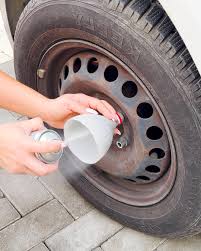
If your car came with plain steel lug nuts (the kind that are often painted black or left in bare metal from the factory), you are in great shape for a DIY paint job. A light scuff with sandpaper, a coat of primer, and a few layers of high-temp paint will give you a finish that looks good and holds up reasonably well.
Chrome-Plated Lug Nuts
Chrome is trickier. The whole point of chrome plating is to create a smooth, shiny, non-porous surface. That is exactly what makes it look great, and it is also exactly what makes paint slide right off it.
If you want to paint chrome lug nuts, you need to sand the chrome surface first. This is not a light scuff. You need to rough up the chrome enough to create texture for the paint to grip. Use 320 to 400 grit sandpaper and work the entire surface until the shine is gone and the metal feels rough to the touch.
Even with proper sanding, paint on chrome tends to be less durable than paint on bare steel. The adhesion is never quite as strong, and the paint is more prone to flaking, especially around the edges where a socket or wrench makes contact. If you have chrome lug nuts and want a different color, buying aftermarket lug nuts in the color you want is honestly a better long-term investment than trying to paint over chrome.
Aluminum Lug Nuts
Aluminum lug nuts are lighter and often come with a machined or polished finish. They look great out of the box, but painting them presents some challenges.
Aluminum is a soft metal, which means paint can chip and peel more easily under mechanical stress. The surface also oxidizes quickly when exposed to air, and that oxide layer can prevent paint from adhering properly if you do not prep it correctly.
For aluminum lug nuts, anodizing is a much better option than painting. Anodizing is an electrochemical process that changes the surface of the aluminum itself, creating a hard, colored layer that is part of the metal rather than sitting on top of it. Anodized finishes are extremely durable, corrosion-resistant, and available in a wide range of colors. The downside is that anodizing requires professional equipment, so you cannot do it in your garage.
If you are set on painting aluminum lug nuts yourself, use a self-etching primer specifically designed for aluminum. This type of primer chemically bonds to the metal surface, creating a foundation that regular paint can stick to. Without it, you are basically painting on glass. The finish might look good for a week, but it will not last.
Choosing the Right Paint (This Is Where Most People Go Wrong)
Walk into any auto parts store and you will find an entire aisle of spray paint options. Most of them are completely wrong for this job. Regular automotive spray paint, the kind you might use on a bumper or a valve cover, is not designed to handle the heat that lug nuts experience.
You need paint that can take the heat and still look good. Here are your three best options, from budget-friendly to premium.
High-Temperature Enamel Spray Paint
This is the go-to for most DIY lug nut painting projects. Brands like VHT and Rust-Oleum make high-temperature enamel paints that can resist heat up to 500 degrees Fahrenheit (260 degrees Celsius) or more. Some formulations are rated even higher, up to 1,200 degrees for exhaust and engine applications.
For lug nuts, a paint rated to at least 500 degrees Fahrenheit is sufficient for normal driving. If you drive aggressively, do track days, or live in a mountainous area where you are riding your brakes on long descents, consider stepping up to a paint rated for 1,000 degrees or higher.
High-temp enamel sprays typically cost between $8 and $15 per can, and a single can is more than enough for a full set of 20 lug nuts (five per wheel on most cars). The color selection is somewhat limited compared to regular spray paint, but you can usually find black, white, silver, red, blue, and a few other popular options.
One thing to know about high-temp enamel: many of these paints require heat curing to reach their full hardness and heat resistance. We will cover the curing process in the application section.
Powder Coating
If you want the most durable finish possible, powder coating is the answer. Instead of liquid paint, powder coating uses dry, electrostatically charged powder particles that are sprayed onto the metal surface and then baked in an oven. The heat melts the powder into a smooth, hard, continuous film that bonds directly to the metal.
Powder coating is significantly more durable than spray paint. A properly applied powder coat can last five years or more, even in the harsh environment around your wheels. It resists chipping, scratching, and heat better than any spray paint on the market. It also comes in a huge range of colors and finishes, from matte to high gloss to metallic to textured.
The catch is that powder coating requires professional equipment. You need an electrostatic spray gun, a powder coating oven large enough to fit your parts, and the knowledge to apply the powder evenly. Some enthusiasts invest in home powder coating setups (a basic kit runs about $100 to $200), but for most people, it makes more sense to take the lug nuts to a local powder coating shop.
Expect to pay between $50 and $100 to have a full set of lug nuts professionally powder coated. That might sound steep compared to a $12 can of spray paint, but when the finish lasts five times as long and looks significantly better, the math works in your favor over time.
Ceramic Coatings
Ceramic-based paints and coatings represent the premium tier. These products use ceramic particles in the paint formula to provide exceptional heat resistance, hardness, and a beautiful glossy finish. Some ceramic coatings can withstand temperatures well above 1,000 degrees Fahrenheit.
The finish quality of ceramic coatings is noticeably better than standard high-temp enamel. The color is richer, the surface is smoother, and it maintains its appearance longer under harsh conditions. If you are the kind of person who details their car every weekend and wants every component to look showroom-quality, ceramic coating is worth considering.
The downside is cost. Ceramic coating products are more expensive than standard spray paint, and professional application adds to the price. For a set of lug nuts, you might spend $100 to $200 or more depending on the product and who applies it. That is getting close to the cost of just buying aftermarket colored lug nuts, which is worth keeping in mind.
Here is a quick comparison to help you decide:
| Method | Cost | Durability | Heat Resistance | Best For |
|---|---|---|---|---|
| High-Temp Spray Paint | $10 to $20 | 1 to 3 years | Up to 500 degrees F+ | Budget projects, temporary color changes |
| Powder Coating | $50 to $100 | 5+ years | Very high | Long-term durability, professional finish |
| Ceramic Coating | $100 to $200+ | 3 to 5+ years | 1,000 degrees F+ | Premium finish, extreme heat environments |
| Anodizing (aluminum only) | $100+ | 10+ years | Excellent | Aluminum lug nuts, permanent color change |
Preparing the Surface: Why This Step Makes or Breaks the Job
You can use the best paint in the world, but if the surface is not properly prepared, the finish will fail. Paint does not bond to dirty, oily, or smooth surfaces. It needs a clean, slightly rough surface to grab onto. Skip the prep work and your paint will start peeling within days.
Here is how to prep your lug nuts the right way, step by step.
Step 1: Remove the Lug Nuts from the Car
This should go without saying, but do not try to paint your lug nuts while they are still on the car. You will get paint on your wheels, your brake rotors, your tires, and everything else in the vicinity. Remove all the lug nuts first. If you are doing all four wheels, work one wheel at a time so you can safely support the car on a jack stand while the wheel is off.
Once the lug nuts are off, set them on a clean surface where you can work on them without losing any. A piece of cardboard or a shop towel works well. Some people push the lug nuts onto a piece of wire or thread them onto a bolt so they stand upright for painting. That is a smart approach because it lets you spray all exposed surfaces evenly without having to flip them over multiple times.
Step 2: Clean Everything Thoroughly
Lug nuts accumulate brake dust, road grime, oil residue, and sometimes anti-seize compound from previous installations. All of that needs to come off before you paint.
Use brake cleaner or a good automotive degreaser. Spray each lug nut generously and wipe it down with a clean rag or paper towel. Brake cleaner evaporates quickly and leaves no residue, which makes it ideal for this job. If the lug nuts are particularly grimy, soak them in degreaser for 15 to 20 minutes before wiping.
After cleaning, handle the lug nuts with clean gloves or a cloth. The oils from your skin can interfere with paint adhesion, and fingerprints on a freshly cleaned surface are a recipe for fish-eyes and other paint defects.
Step 3: Sand the Surface
This is the step that separates a paint job that lasts from one that flakes off in a month. Use 400-grit sandpaper to lightly scuff the entire outer surface of each lug nut. You are not trying to remove metal. You are just creating tiny scratches that give the primer and paint something to grip.
For chrome-plated lug nuts, you may need to start with 320-grit to cut through the hard chrome surface, then finish with 400-grit to smooth things out. The goal is to remove the shine completely. If any part of the surface still looks reflective after sanding, the paint will not stick there.
After sanding, wipe each lug nut down again with brake cleaner to remove sanding dust. Any particles left on the surface will get trapped under the paint and create bumps and imperfections.
Step 4: Apply Primer
Primer serves two purposes. It improves paint adhesion, and it provides a uniform base color that helps your topcoat look consistent. For lug nuts, use a high-temperature, self-etching primer. Self-etching primers contain acids that microscopically bite into the metal surface, creating an even stronger bond than mechanical sanding alone.
Apply the primer in one thin, even coat. Hold the spray can about 8 to 10 inches from the surface and use smooth, sweeping passes. Do not try to get full coverage in one coat. A thin coat that does not fully cover the metal is better than a thick coat that runs and drips.
Let the primer dry completely according to the manufacturer’s instructions, usually 20 to 30 minutes in moderate temperatures. If you are working in cold or humid conditions, give it extra time.
A quick note: if you are going with powder coating, you can skip the primer step. Powder coating bonds directly to the metal surface during the baking process, so primer is not needed and can actually interfere with adhesion.
The Step-by-Step Painting Process
Your lug nuts are clean, sanded, and primed. Now comes the fun part. Here is how to apply the paint for the best possible result.
Protect the Threads First
This is the single most important step in the entire process, and we cannot stress it enough. Do not let paint get on the threads. Paint on the threads changes the friction between the nut and the stud, which directly affects your torque readings. It can also cause the nut to bind on the stud, making it difficult to tighten or remove.
In a worst-case scenario, paint buildup on the threads can prevent the lug nut from seating properly against the wheel. The nut feels tight, but it is actually not making full contact with the wheel surface. Road vibrations can then work the nut loose, and a loose lug nut can lead to a wheel separating from the vehicle while driving.
Cover the threads completely with masking tape before you start painting. Wrap the tape tightly around the threaded portion of the nut, making sure no threads are exposed. If you threaded the lug nuts onto a bolt for painting, the bolt itself will protect the threads from overspray, but a layer of tape as backup is still a good idea.
Also consider masking the contact face of the lug nut, the flat or tapered surface that presses against the wheel when tightened. Paint on this surface can affect how the nut seats and can alter the torque characteristics of the joint, just like paint on the threads. Some people paint the contact face and then lightly sand it smooth before installation, but the safest approach is to keep it bare.
Apply Thin Coats
Resist the urge to get full, opaque coverage in one heavy coat. Heavy coats are the enemy of a good paint job. They run, they drip, they take forever to dry, and they are more likely to chip and peel because the thick layer does not flex well under stress.
Instead, apply two to three thin, even coats with about 10 minutes of drying time between each coat. Hold the can 8 to 10 inches from the surface and keep it moving. Short, controlled bursts are better than long, continuous sprays.
After the first coat, the primer might still be visible in spots. That is fine. The second coat will build the color, and the third coat will even everything out. By the time you have three thin coats on, the coverage should be smooth, consistent, and fully opaque.
If you are using a metallic or pearl-finish paint, maintaining consistent spray distance and speed is even more important. Uneven application with metallic paints creates blotchy areas where the metallic flakes lay at different angles, and it is very obvious in direct light.
Let Them Dry Completely
Patience is everything here. After the final coat, let the lug nuts dry for a minimum of 24 hours before handling or installing them. Some high-temp paints feel dry to the touch within an hour, but “touch dry” and “fully cured” are two very different things. The paint needs time to harden and reach its full strength.
If your paint requires heat curing (check the product label), you have two options. You can either bake the painted lug nuts in your home oven at about 200 degrees Fahrenheit (93 degrees Celsius) for one hour, or you can install them and let the heat from your brakes cure the paint during normal driving. The oven method gives you a more controlled and complete cure. The driving method works but may result in slightly uneven curing since different lug nuts get different amounts of heat depending on their position relative to the brake rotor.
If you use your kitchen oven, do it while the house is well-ventilated. The paint will off-gas during the curing process, and the smell is not pleasant. Some people use a dedicated toaster oven in their garage for small automotive parts to avoid stinking up the kitchen. That is a solid approach if you plan on doing this kind of work regularly.
Install Carefully
When you are ready to install the painted lug nuts, remove the masking tape from the threads and inspect each nut. Make sure no paint has bled onto the threads or the contact surface. If you see any paint where it should not be, remove it with a small piece of sandpaper or a razor blade before installing.
Thread the lug nuts on by hand first, at least two or three full turns, before using a wrench or socket. This ensures the threads are engaging correctly and the nut is not cross-threaded. Cross-threading a lug nut is bad enough normally. Doing it with a freshly painted nut will strip the paint right off the threads and potentially damage the stud.
Use a torque wrench to tighten the lug nuts to your vehicle’s specified torque. Do not use an impact wrench for final tightening if you can avoid it. The hammering action of an impact wrench will chip paint off the socket contact area immediately. Hand-tighten to final torque for the best chance of preserving your paint job.
If you absolutely must use an impact wrench (like at a tire shop during a rotation), consider placing a thin plastic or rubber sleeve over the lug nut before the socket goes on. Some socket sets come with protective sleeves specifically designed to prevent scratching chrome or painted lug nuts.

What Will Kill Your Paint Job (and How to Prevent It)
Even with perfect preparation and application, painted lug nuts are going to face some tough conditions. Understanding what degrades the finish helps you take steps to extend its life.
Brake Dust
Every time you press the brake pedal, tiny particles of brake pad material and rotor metal are generated. This brake dust coats your wheels and lug nuts with a fine, abrasive, and mildly corrosive film. Over time, brake dust can eat into paint and cause discoloration, especially on lighter-colored finishes.
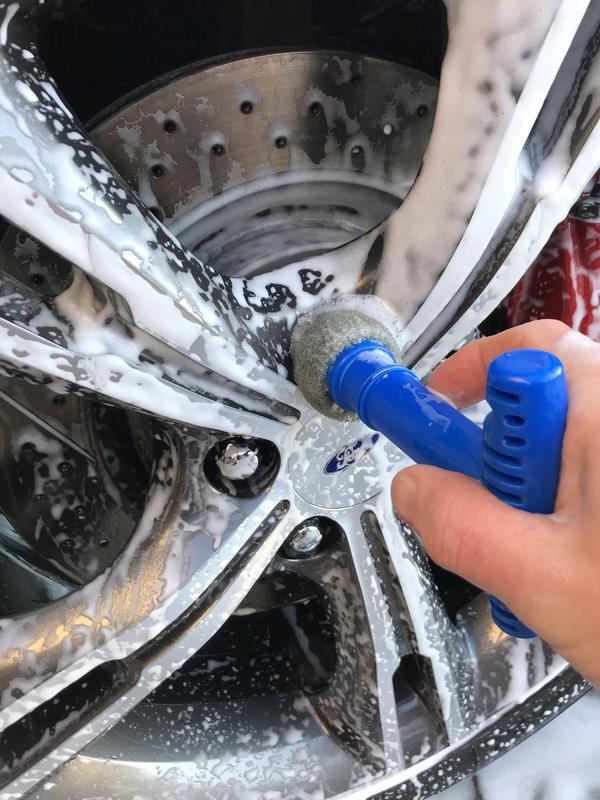
The best defense is regular cleaning. Washing your wheels and lug nuts every one to two weeks prevents brake dust from building up to the point where it becomes difficult to remove. Use a dedicated wheel cleaner that is safe for painted surfaces. Avoid harsh, acid-based wheel cleaners, which can strip paint quickly.
Road Salt
If you live anywhere that gets winter weather, road salt is going to be a problem. Salt is incredibly corrosive to both paint and bare metal. It works its way into tiny chips and imperfections in the paint, attacks the metal underneath, and causes the surrounding paint to bubble and lift.
During winter months, wash the salt off your wheels and lug nuts frequently. Even a quick rinse with plain water after driving on treated roads makes a significant difference. If you notice a chip in the paint on a lug nut, touch it up as soon as possible to prevent salt from getting under the remaining paint and causing it to peel.
Chemical Wheel Cleaners
Ironically, the products designed to keep your wheels clean can destroy your painted lug nuts. Many commercial wheel cleaners contain strong acids or alkaline compounds that dissolve brake dust and road grime. They work great on bare alloy and chrome, but they can strip paint in seconds.
Read the label on any wheel cleaner before using it on painted surfaces. Look for products that specifically say “safe for all wheel finishes” or “pH-neutral.” When in doubt, stick with regular car shampoo and water. It takes a little more elbow grease, but it will not eat your paint.
Impact Wrenches and Socket Contact
We touched on this earlier, but it bears repeating. Every time a socket goes on and off your lug nut, it scrapes the painted surface. Impact wrenches amplify this damage dramatically. If you are meticulous about your painted lug nuts, hand-tighten with a torque wrench and use protective socket sleeves whenever possible.
Some car enthusiasts keep a small bottle of touch-up paint in their glove box and touch up their lug nuts after every tire rotation or brake service. It takes five minutes and keeps the finish looking fresh.
How Long Will Painted Lug Nuts Actually Last?
The lifespan of your paint job depends on the paint type, how well you prepped the surface, and how much abuse the lug nuts take from driving conditions and maintenance.
With high-temperature spray paint and proper preparation, expect the finish to look good for about one to three years. You will likely need to do touch-ups during that time, especially on the faces where the socket contacts the nut. After three years, a full repaint is usually in order.
Powder coating lasts significantly longer, typically five years or more. The finish is harder, more chip-resistant, and more heat-resistant than spray paint. If you are going to the trouble of painting your lug nuts, powder coating is the best value for longevity.
Anodizing on aluminum lug nuts can last ten years or more because the color is part of the metal itself, not a coating sitting on top. It does not chip or peel in the traditional sense. It can wear down over a very long time, but the degradation is gradual and even.
Ceramic coatings fall somewhere between spray paint and powder coating in terms of durability, typically three to five years with good maintenance.
Keeping Painted Lug Nuts Looking Their Best
Once you have invested the time and effort in painting your lug nuts, a little regular maintenance goes a long way toward keeping them looking sharp.
- Hand-wash your wheels instead of using harsh spray-on cleaners. A soft brush, some car shampoo, and water are all you need. This is gentler on the painted surface and prevents chemical damage.
- Touch up chips immediately. The moment you notice a chip, dab a small amount of matching paint on it. This prevents moisture and salt from getting under the paint and causing it to peel further. A small artist’s brush works well for precise touch-ups.
- Apply a light wax or sealant to the painted lug nuts when you wax your wheels. This adds an extra layer of protection against brake dust, UV rays, and road chemicals.
- Avoid automatic car washes with spinning brushes. These brushes can scrub against your lug nuts and scratch or chip the paint. Touchless washes are fine.
- Re-torque after the first 50 to 100 miles following installation. This is good practice with any freshly installed lug nut, painted or not. The slight settling that occurs during initial driving can cause lug nuts to lose a small amount of clamping force, and re-torquing ensures everything is still properly seated.
When Buying New Lug Nuts Makes More Sense Than Painting
Painting is a great option for a lot of situations, but it is not always the best choice. Here are a few scenarios where buying aftermarket colored lug nuts is the smarter move:
You want a finish that lasts for years without maintenance. Aftermarket lug nuts come in anodized, powder-coated, and chrome-plated finishes that are factory-applied and far more durable than anything you can do with a rattle can. If you do not want to deal with touch-ups and repaints, buy the finished product.
Your existing lug nuts are chrome-plated. As we discussed, painting over chrome is an uphill battle. The adhesion is never great, and the paint tends to flake at the worst possible times. Spending $30 to $60 on a set of pre-colored lug nuts saves you the frustration.
You are doing a performance build. If you are building a track car or a car that sees hard driving, painted lug nuts are going to degrade quickly from the extreme heat and frequent removal. Forged steel or titanium lug nuts with a factory-applied coating are built for that environment. Your $12 paint job is not.
You want a color or finish that spray paint cannot replicate. Some colors, like deep candy reds, chameleon finishes, or anodized titanium, simply cannot be achieved with spray paint. If you have a specific look in mind, aftermarket lug nuts or professional coating services are the way to go.
Matching Your Lug Nut Color to Your Build Style
Color choice is personal, but there are some general guidelines that tend to work well with different vehicle styles.
Matte black is the most popular choice, and for good reason. It works with practically everything. Lifted trucks, lowered sedans, SUVs, sports cars. Matte black lug nuts blend into dark wheels and create a clean, aggressive contrast on silver or machined wheels. They also hide brake dust better than any other color.
Gloss black gives a more refined, polished look compared to matte. It works well on luxury vehicles and builds where you want everything to look sleek and uniform.
Red is a classic accent color, especially on sports cars and performance builds. Red lug nuts pop against black, silver, and gunmetal wheels. Just keep in mind that red paint can fade faster than darker colors when exposed to UV light, so a UV-resistant clear coat is worth adding.
Gold or bronze pairs beautifully with white, black, and dark gray wheels. This combination is a staple of the JDM (Japanese Domestic Market) tuner scene and has been popular for decades for good reason. It looks fantastic.
Blue and green are bolder choices that can look stunning when done right, but they require more thought about how they coordinate with your overall color scheme. A set of bright blue lug nuts on a blue car with blue wheel accents can look cohesive and intentional. The same blue lug nuts on a random red sedan might look out of place.
Silver and chrome are safe, understated choices that match factory wheels and blend in seamlessly. If you just want to refresh the look of your existing lug nuts without drawing attention to them, a fresh coat of silver high-temp paint does the job nicely.
A Quick Recap of What Matters Most
Painting lug nuts is a simple, affordable project that can make a real visual impact on your wheels. But the safety considerations are not optional. Here is what to remember:
- Use high-temperature paint rated for at least 500 degrees Fahrenheit.
- Clean, sand, and prime the surface before painting. Skipping prep is the fastest way to ruin the job.
- Apply thin, multiple coats with adequate drying time between them.
- Never paint the threads or the contact surface. This is a non-negotiable safety rule.
- Let the paint cure fully (at least 24 hours, or heat-cure per the product instructions) before installing.
- Use a torque wrench for final tightening and re-torque after the first 50 to 100 miles.
- For maximum durability, consider powder coating instead of spray paint.
The project costs almost nothing, takes an afternoon, and can be redone whenever you want a new color. Just respect the safety boundaries, and your painted lug nuts will look great and perform exactly the way they should.
Now grab a can of high-temp paint, mask those threads, and make your wheels look like they belong on a build that is worth showing off.