
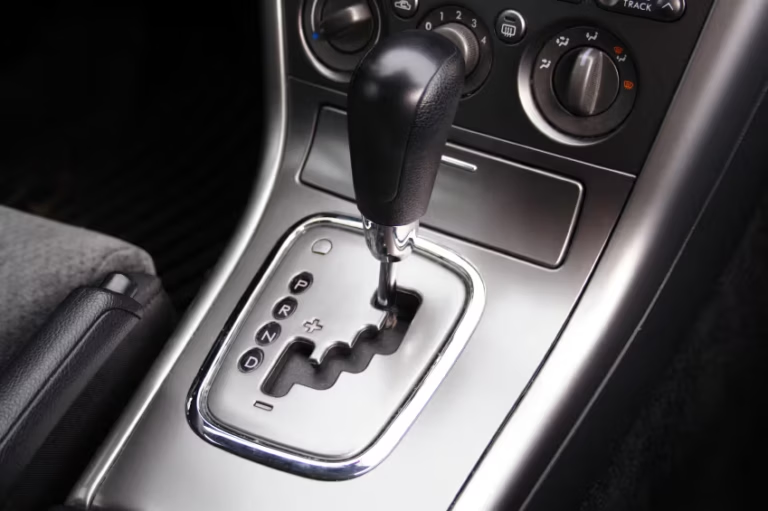
If your car jerks, shudders, or kicks every time it shifts gears, you already know something is wrong. That unsettling lurch between gears is not just annoying. In many cases, it is a warning sign that your automatic transmission needs attention, and the longer you ignore it, the more expensive the fix becomes.
Here is the part that surprises most car owners: the majority of automatic transmission problems, including jerking and rough shifting, come down to one simple thing. Poor maintenance. Not bad luck. Not a factory defect. Just neglected upkeep.
But before you panic about a massive repair bill, let us walk through exactly what causes an automatic transmission to jerk, what each symptom means, and what you can actually do about it. No technical jargon. No fluff. Just straight answers.
What Is Actually Happening Inside Your Automatic Transmission?
To understand why your transmission jerks, it helps to have a basic picture of what is going on inside it.
Unlike a manual transmission, where you physically press a clutch pedal and select gears yourself, an automatic transmission does all of that work on its own. It uses a combination of hydraulic pressure, special transmission fluid (called ATF, short for Automatic Transmission Fluid), friction plates, solenoids, and a valve body to shift gears smoothly and at the right time.
Think of it like a highly organized plumbing system. Fluid moves through narrow channels under carefully controlled pressure. Valves open and close at precisely the right moments. Friction plates engage and release in sequence. When everything works together, you get smooth, seamless gear changes.
When something disrupts that system, even slightly, you feel it. That jerk, that kick, that shudder. That is the transmission struggling to do its job.
Most cars start showing these symptoms somewhere around the 100,000 kilometer (62,000 mile) mark, though driving habits, climate, and maintenance history all play a role in when problems show up.
Why Your Mechanic Might Be Wrong About Maintenance-Free Transmissions
Before getting into the specific causes, this point needs to be addressed directly.
There is a common myth floating around, and unfortunately, some mechanics still repeat it. The idea that modern automatic transmissions are “maintenance-free” and never need a fluid or filter change. Some car manufacturers even label their transmissions this way in their marketing materials.
Do not believe it.
Every automatic transmission needs fluid and filter changes at regular intervals. The fluid breaks down over time. It picks up metal particles from normal wear inside the transmission. It loses its viscosity and its ability to maintain proper pressure. Once that happens, everything downstream suffers.
If someone has told you that your automatic transmission never needs maintenance, get a second opinion. Skipping transmission service is one of the fastest ways to turn a small, cheap problem into a catastrophic, expensive one.
The Real Reasons Your Automatic Transmission Is Jerking
1. The Wrong Transmission Fluid Is Being Used
This one catches people off guard. It seems simple enough, right? Fluid is fluid. But automatic transmission fluid is not a one size fits all product, and using the wrong type can absolutely cause jerking.
Every car manufacturer specifies an exact type of ATF for their transmissions. That specification covers viscosity (how thick or thin the fluid is) and performance characteristics (how it behaves under heat, pressure, and friction). Using a fluid that does not match those specifications means the transmission is not getting what it needs to operate correctly.
Here is a real-world scenario that comes up often: a car owner notices that their automatic transmission jerks and shudders in the morning during winter, but after driving for 10 to 15 minutes, the problem disappears completely. By midday, the car shifts perfectly.
That is a textbook sign of the wrong fluid. When the temperature drops overnight, the fluid thickens. If it thickens too much because it is the wrong type for that transmission, it cannot flow properly until the car warms up. Once warm, it thins out and works fine again.
The fix here is straightforward. Drain the incorrect fluid and replace it with the exact ATF specification listed in your owner’s manual. Do not guess. Do not assume that “universal” fluid works for every car. Check the manual or ask a qualified technician what fluid your specific transmission requires.
2. A Clogged Transmission Oil Filter
Every mile you drive puts some degree of wear on the moving parts inside your transmission. That wear produces tiny metal particles that get carried through the transmission fluid. Over time, these particles collect in the oil filter. That is the filter’s job, catching debris before it can damage sensitive components.
But here is the problem. If you never change the filter, it eventually becomes so clogged that it restricts fluid flow. Less fluid flowing through the system means lower hydraulic pressure. Lower pressure means the friction plates cannot engage and disengage with the right amount of force. When that happens, they slip. And when they slip, you feel a jerk, a shudder, or a kick every time the transmission shifts.
In severe cases, when fluid flow is seriously restricted, the friction plates overheat. Overheated plates wear faster and can actually burn. If you notice that your transmission jerks more after it has been running for a while and the fluid has heated up, a clogged filter is a strong suspect.
The solution is not complicated. Change the transmission fluid and filter at the intervals your manufacturer recommends. Most cars need this done somewhere between 40,000 and 80,000 kilometers (25,000 to 50,000 miles), though high-performance or heavy-use vehicles may need it sooner. Treat this like an oil change. It is basic maintenance, not optional.
3. Worn or Burned Friction Plates
The friction plates inside your automatic transmission work similarly to the clutch in a manual car. When the transmission shifts gears, these plates compress together or release apart, controlled by hydraulic pressure from the ATF. The process happens dozens of times during a normal drive, usually without you noticing it at all.
When the plates are in good condition and the fluid pressure is correct, gear changes are smooth and almost imperceptible. But when the plates wear down, or worse, when they burn because of low fluid or overheating, everything changes.
Worn friction plates cannot grip properly. They slip under load, which creates that jerking or shuddering sensation during acceleration or when slowing down. Burned plates are even worse. The burns change the texture and properties of the plate surface, making smooth engagement nearly impossible. At that point, the jerking becomes more violent, and you may start hearing a crunching or grinding noise coming from the transmission area.
In extreme cases, worn or burned friction plates can reach the point where certain gears simply stop working. The transmission may refuse to move into a particular gear, or it may slip out of gear under load.
There is no easy fix for this one. Worn or burned friction plates require the transmission to be removed from the vehicle, disassembled, and rebuilt. It is a significant repair. But the good news is that it is almost entirely preventable with regular fluid and filter changes and catching fluid level problems early.
4. A Failing Transmission Oil Cooler
Your automatic transmission generates a lot of heat. During normal driving, the ATF temperature can reach well over 100 degrees Celsius (212 degrees Fahrenheit). Under heavy use, like towing, stop and go traffic, or aggressive driving, it can go even higher.
To manage that heat, your car has a transmission oil cooler. Depending on the vehicle, this might be a separate cooler or it might be integrated into the engine radiator. Either way, its job is to bring the fluid temperature down to a safe operating range before the fluid circulates back through the transmission.
When the cooler fails or becomes clogged, the fluid runs too hot. Hot fluid breaks down faster, loses its viscosity, and stops providing proper pressure. The result is rough shifting, slipping, and eventually the kind of damage to friction plates and solenoids that we already talked about.
Here is where a common but harmful maintenance shortcut comes into play. A lot of shops offer what is called a “pressure flush” service for automatic transmissions. The idea sounds good: use a machine to force all the old fluid out under pressure and push fresh fluid in. It seems thorough. But this method has a serious flaw.
When you flush the system under pressure without removing and cleaning the oil pan, replacing the filter, and flushing the cooler separately, all the debris and sludge that has settled at the bottom of the transmission gets stirred up and pushed through the system. This debris can clog the cooler’s tiny internal passages, the valve body channels, and the solenoids.
The transmission may actually feel worse after a pressure flush than it did before. If the cooler gets blocked by that stirred-up debris, it can no longer cool the fluid efficiently, and the overheating cycle begins.
The right way to service an automatic transmission is to drop the pan, replace the filter, clean the pan, and then refill with fresh fluid that meets your manufacturer’s specifications. It costs a bit more in labor, but it does not push contamination further into the system.
5. A Dirty or Worn Valve Body (Hydraulic Plate)
The valve body is essentially the brain of the hydraulic system in your automatic transmission. It is a block containing dozens of small passages, check balls, springs, and valves. When you accelerate, decelerate, or the transmission computer calls for a gear change, the valve body directs pressurized fluid through the correct channels to engage the right clutch pack or band.
Each gear has its own dedicated fluid circuit inside the valve body. If those circuits become restricted by sludge, varnish deposits, or metal debris, the pressure required to engage the clutches correctly drops below what is needed. The result is delayed, jerky, or incomplete gear changes.
Cleaning the valve body requires removing and disassembling it. This is not a roadside fix. It is a workshop job that involves carefully removing, cleaning, and inspecting every passage and component. Once contamination gets into the valve body, you cannot simply flush it clean from the outside.
But there is another failure mode for the valve body that has nothing to do with contamination. Physical wear. The valve body typically consists of two plates with a separator plate sandwiched between them. Solenoids press small ball-shaped valves against precisely machined holes in this separator plate to open and close fluid circuits.
Over time, those holes wear and become slightly out of round. When that happens, the ball cannot seat properly, pressure leaks past it, and the circuit loses efficiency. You feel this as a soft bump or hesitation during gear changes. The fix is replacing the worn separator plate, but like everything else with the valve body, that requires transmission removal and disassembly.
6. Failing Shift Solenoids
Solenoids are small electromagnetic valves that the transmission control module uses to direct fluid flow through the valve body. When the computer decides it is time to shift, it sends an electrical signal to the appropriate solenoid, which opens or closes a fluid circuit, which triggers the gear change.
It sounds simple, but solenoids are surprisingly delicate components. They can fail mechanically, getting stuck open or closed. They can fail electrically, not responding to signals from the computer. And here is a failure mode that affects modern vehicles more than older ones: many contemporary solenoids are made with plastic components.
Plastic solenoid bodies are lighter and cheaper to manufacture, but they have a weakness. Under the sustained high temperatures that an automatic transmission generates (especially if the cooler is not working efficiently), plastic can warp, distort, or crack. When a solenoid loses its shape, it can no longer seal the fluid circuit properly. Fluid leaks past it, pressure drops, and the gear change becomes rough or erratic.
Metal solenoids do not have this problem. They hold their shape at high temperatures and tend to last longer. But most modern vehicles come with plastic solenoid bodies, which is one more reason why keeping your transmission temperature in check through proper maintenance and a functioning cooler matters so much.
Repairing or replacing solenoids requires removing the valve body from the transmission. Once the valve body is out, the solenoids can be cleaned, tested, and replaced individually if needed.
Less Common Causes That Still Deserve Attention
A Faulty ECU or Transmission Control Module
The ECU (Electronic Control Unit) or TCM (Transmission Control Module) is the computer that manages shift timing, solenoid activation, and overall transmission behavior. In most cases, when the transmission is jerking, the ECU is not the problem. The mechanical and hydraulic components described above are far more common culprits.
But in rare cases, software errors or hardware faults in the ECU can cause erratic transmission behavior. When the ECU is the issue, the symptoms usually go beyond the transmission. You might also see unstable engine idle, irregular throttle response, or warning lights on the dashboard.
If you suspect the ECU, the first step is computer diagnostics. A scan tool connected to the vehicle’s OBD port can read fault codes from the transmission control module and point toward whether the issue is electronic or mechanical. Do not try to patch ECU problems with guesswork. Bring in a technician who has the proper diagnostic hardware and software for your vehicle.
A Failing Transmission Oil Pump
The transmission oil pump is what creates hydraulic pressure in the first place. Without adequate pressure, nothing in the transmission works correctly. Friction plates slip, solenoids cannot operate valves effectively, and gear changes become rough or impossible.
The good news is that the transmission oil pump is one of the more robust components in the system. Pump failures are genuinely rare. But they do happen, particularly in cases of factory defects, severe contamination, or mechanical damage from running the transmission with very low fluid levels for an extended period.
When the pump is failing, you will notice symptoms across the board, not just during specific gear changes. The transmission may feel sluggish and unresponsive. Pressure-related codes may show up during diagnostics. In severe cases, the transmission may stop functioning altogether.
Pump replacement requires transmission removal. It is a major repair. But again, it is largely avoidable through proper fluid maintenance, since running a transmission low on fluid is one of the most direct ways to accelerate pump wear.
Damaged or Corroded Wiring
Every signal that the transmission control module sends to a solenoid travels through a wiring harness. In older vehicles especially, this harness can develop problems. Wires corrode, connections oxidize, and insulation cracks or breaks.
A damaged wire can send an intermittent or incorrect signal to a solenoid, causing it to open or close at the wrong time. From the driver’s seat, this feels identical to a failing solenoid. Erratic, unpredictable gear changes.
Diagnosing wiring issues requires a careful inspection of the harness and connector pins, along with live data from a scan tool to see whether solenoid signals are being sent and received correctly. It is painstaking work, but in some cases, a simple wiring repair or connector replacement can solve what appeared to be a major transmission problem.
Causes That Have Nothing to Do With the Transmission
Here is something that often gets overlooked. Not every jerk or shudder you feel when driving is coming from the transmission.
The Throttle Body
A dirty throttle body restricts airflow into the engine. This causes hesitation and stumbling, which can feel remarkably similar to a transmission jerk, especially during acceleration. A simple throttle body cleaning can sometimes eliminate what seemed like a transmission problem.
The Air Filter
A severely clogged engine air filter has a similar effect. When the engine cannot breathe properly, it struggles under load, and that struggle translates into a lurching sensation during acceleration and gear changes. Replacing a dirty air filter is cheap and takes ten minutes. It is worth checking before assuming the transmission is at fault.
Engine and Transmission Mounts
The engine and transmission are bolted to the chassis through rubber-lined mounts. These mounts absorb vibration and movement. Over time, the rubber degrades and can tear or compress permanently.
When a mount fails, the engine and transmission move more than they should during acceleration and gear changes. You feel this as a noticeable jolt or thud, often accompanied by a clunking sound. The sensation can be easily mistaken for a transmission problem, but replacing the worn mounts solves it completely and at a fraction of the cost of transmission work.
How Transmission Additives Fit Into the Picture
Transmission fluid additives have a somewhat controversial reputation. Some mechanics swear by them. Others dismiss them entirely. The truth is somewhere in the middle.
Quality additives, when used correctly, can offer genuine benefits:
- Smoother gear changes by improving the frictional characteristics of the fluid
- Extended fluid life through oxidation inhibitors
- Protection of friction plates, clutches, and seals
- Mild cleaning action that helps suspend and remove light deposits
- Reduction of transmission noise during operation
- Prevention and sealing of minor fluid leaks from aging seals
One product that has a solid track record in this category is the Liqui Moly ATF Additive. It cleans internal components, helps restore seals that have shrunk or hardened slightly with age, and can reduce shift harshness in transmissions that are in reasonably good mechanical condition.
The key word there is “reasonably good mechanical condition.”
An additive is not going to fix burned friction plates. It is not going to unclog a severely blocked valve body or repair a failing solenoid. If the underlying mechanical problem is serious, no additive will mask it for long.
Used as a preventive measure, though, additives have a legitimate place in a transmission maintenance routine. The recommended interval is roughly every 20,000 kilometers (12,400 miles). However, you should not use the same additive more than three times on the same batch of transmission fluid. After three uses, the fluid itself needs to be changed. Adding more additive to spent fluid is not a substitute for a proper fluid change.
What to Do When Your Automatic Transmission Starts Jerking
If your transmission is already jerking, here is a practical, logical sequence to follow:
Step 1: Get a Diagnostic Scan Done First
Before spending money on anything, have a scan tool connected to the OBD port. The transmission control module stores fault codes that can tell you whether the problem is electrical (solenoid circuits, sensor failures, ECU faults) or whether the codes point toward a hydraulic or mechanical issue. This prevents you from replacing parts blindly.
Step 2: Check the Fluid Level and Condition
Pull the transmission dipstick (on vehicles that have one) and check the fluid level. Low fluid is the simplest possible cause of jerking and slipping. While checking the level, look at the color and smell of the fluid. Fresh ATF is typically a clear pinkish-red color. Dark brown, black, or fluid that smells burnt is a sign that it is well overdue for a change, and possibly that internal damage has already occurred.
Step 3: Change the Fluid and Filter Properly
If the fluid is dirty or overdue for a change, have it done the right way. That means dropping the pan, replacing the filter, cleaning the pan, and refilling with the correct ATF for your vehicle. Do not let anyone talk you into a pressure flush as a standalone service.
Step 4: Address the Non-Transmission Causes
Before committing to expensive transmission work, have the throttle body cleaned, the air filter replaced, and the engine and transmission mounts inspected. These are inexpensive checks that can occasionally solve what seemed like a major problem.
Step 5: Escalate to Internal Diagnosis If Needed
If the fluid change and basic checks did not resolve the jerking, the problem is likely internal. At that point, you are looking at valve body cleaning or replacement, solenoid replacement, friction plate replacement, or some combination of those. This level of repair requires the transmission to be removed from the vehicle and properly inspected by a qualified transmission specialist.
Do not cut corners here. Partial repairs done without a proper inspection often fail again quickly. A reputable transmission shop will disassemble, measure, and diagnose the actual worn components before replacing anything.
A Quick Reference: Causes and Solutions at a Glance
| Cause | Symptom Pattern | Solution |
|---|---|---|
| Wrong ATF fluid | Jerks when cold, disappears when warm | Drain and refill with correct ATF |
| Clogged oil filter | Jerks under load or when hot | Drop pan, replace filter, fresh fluid |
| Worn friction plates | Jerks during acceleration and braking | Transmission rebuild |
| Clogged oil cooler | Overheating, jerks progressively worsen | Clean or replace cooler |
| Contaminated valve body | Delayed or rough shifts in specific gears | Remove, disassemble, clean valve body |
| Failing solenoids | Erratic shifts, specific gears affected | Replace solenoids with valve body out |
| ECU or TCM fault | Jerks plus other electrical symptoms | Computer diagnostics, software update or repair |
| Failing oil pump | Severe pressure loss, widespread symptoms | Transmission removal and pump replacement |
| Bad wiring | Intermittent, unpredictable shifts | Harness inspection and repair |
| Dirty throttle body | Hesitation during acceleration | Throttle body cleaning |
| Clogged air filter | Sluggish acceleration, stumbling | Replace air filter |
| Worn engine/trans mounts | Clunking jolt during shifts | Replace mounts |
The Cost Reality: What You Should Expect to Pay
Being honest about costs matters here, because it affects the decisions you make about maintenance and repairs.
Basic fluid and filter service: This is the most affordable transmission service and should be a routine expense. Depending on the shop and vehicle, expect to pay somewhere in the range of $150 to $400 for a proper pan-drop service with a filter change and fresh fluid.
Solenoid replacement: Individual solenoids can range from $50 to $300 in parts alone. Combined with the labor of removing the valve body, total costs typically fall between $300 and $900, depending on how many solenoids need replacing and the vehicle.
Valve body replacement or repair: A rebuilt or new valve body can cost $300 to $1,000 in parts, and labor pushes the total to $500 to $1,500 or more for some vehicles.
Full transmission rebuild: This is the expensive option. A complete rebuild, including new friction plates, seals, bearings, solenoids, and a cleaned or replaced valve body, typically runs between $1,500 and $4,000 depending on the vehicle, the shop, and what parts are needed.
Transmission replacement: In some cases, replacing the transmission with a remanufactured unit is more cost-effective than rebuilding a heavily damaged one. Costs vary widely by vehicle, from $2,000 to $5,000 or more installed.
Here is the uncomfortable truth about those numbers. A consistent schedule of fluid and filter changes, costing a few hundred dollars every few years, can prevent most of the serious failures on that list. The difference in cost between maintaining a transmission and replacing one is dramatic.
How to Protect Your Automatic Transmission Going Forward
None of this has to happen to your car. Automatic transmissions are robust, well-engineered components that can last the life of the vehicle when treated properly. Here is what proper treatment actually looks like:
Follow the manufacturer’s service intervals. Your owner’s manual lists the recommended ATF change interval. Follow it. If you drive in severe conditions (lots of city driving, towing, extreme temperatures), go shorter, not longer.
Always use the correct ATF specification. Not universal fluid. Not whatever is on sale. The exact type listed in your owner’s manual for your specific vehicle.
Have the fluid serviced the right way. Pan drop, filter replacement, clean pan, fresh fluid. Every time.
Monitor the fluid level periodically. Check it the same way you check your engine oil. Catching a slow leak early costs next to nothing. Discovering it after the damage is done costs a great deal.
Do not abuse the transmission. Aggressive driving, excessive towing beyond the vehicle’s rated capacity, and running the wheels while stuck in mud or snow all generate extreme heat and stress inside the transmission. Use common sense.
Address unusual symptoms early. If you notice a slight hesitation, a new noise, or a subtle change in how the car shifts, get it looked at. Small problems caught early are almost always cheaper to fix than the same problems left to get worse.
An automatic transmission jerking when it shifts is not something to wait on. Every gear change that happens under abnormal conditions puts more wear on the friction plates, more stress on the solenoids, and more heat into the fluid. The damage compounds over time. What starts as a minor shudder can become a complete transmission failure if it is ignored long enough.
So if your car is already showing symptoms, the smartest thing you can do right now is book a diagnostic scan and a fluid inspection. Find out exactly what you are dealing with before spending money on guesswork. The information from that scan will tell you whether you are looking at a simple fluid change or something that needs more serious attention.
Your transmission is not going to fix itself. But it will tell you when it needs help.