
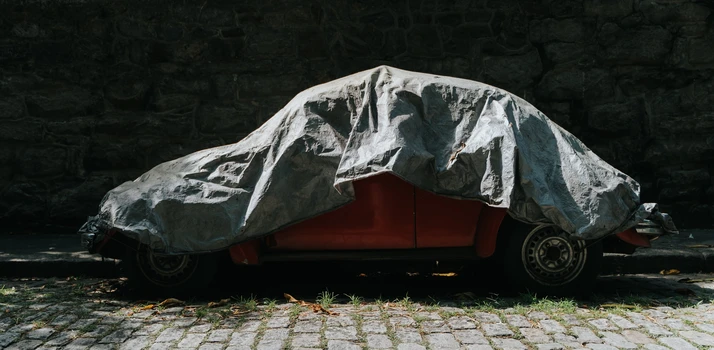
People often assume that a car with very low mileage is automatically a good thing. It sounds logical, less use means less wear, right? But any mechanic who has worked on cars that have been sitting unused for extended periods will tell you a very different story. A car that sits idle for months or years develops its own specific set of problems, and some of them are surprisingly serious.
Cars are engineered to be driven. Every system in the vehicle, from the engine to the brakes to the air conditioning, relies on regular use to stay in good working order. When that regular use stops, things start to deteriorate in ways that have nothing to do with mileage and everything to do with time, moisture, temperature changes, and the slow degradation of materials that are no longer being kept active.
If you own a car that rarely gets used, or if you are considering buying one with very low mileage from an owner who barely drove it, this article is important reading before you make any decisions.
How Long Is Too Long to Leave a Car Sitting?
The short answer: do not let a car sit unused for more than two to three weeks without at least starting it and driving it briefly. Even better, aim for at least 60 miles per month of actual driving, not just idling in the driveway, but driving at normal road speeds to get everything properly circulated and up to operating temperature.
Idling alone is not enough. When a car idles without being driven, the engine does not fully reach operating temperature, the battery does not receive a meaningful charge, and the brakes, suspension, and drivetrain components do not get exercised at all. Driving, even a short run of 20 to 30 minutes, does far more good than 30 minutes of idling in a garage.
Consider this real-world example: a Honda Accord from 2009 that accumulated just 620 miles over ten years. From the outside, you might think it was in excellent condition. In practice, a car like that will have problems that a vehicle with 100,000 miles of regular use might not. The mileage is almost irrelevant, what matters is whether the car was regularly exercised.
12 Things That Go Wrong When a Car Sits Unused
1. Suspension Components and Springs Deteriorate
This is often the first thing you notice when you take a long-unused car for a drive. The ride feels wrong, stiff, bouncy, or just not quite right. Shock absorbers that have been stationary for a long time can develop flat spots and lose their damping characteristics. Springs that have been compressed under the car’s weight in the same position for months or years can develop a permanent set, losing some of their elasticity.
In more severe cases, particularly in damp environments, the shock absorber seals can dry out and crack, leading to oil leaks. A shock absorber that has leaked its hydraulic fluid is essentially non-functional. The car will feel unpredictable on corners and rough roads, and stopping distances can be affected.
2. Tyres and Rubber Components Throughout the Car
Rubber does not last forever, and it degrades whether you use it or not. A tyre that sits in one position under the weight of the car for months develops flat spots, the section of tyre in contact with the ground compresses and does not fully recover. When you drive on a tyre with a flat spot, you feel a rhythmic thudding or vibration that can be mild or quite pronounced depending on how long the car has been stationary and the ambient temperature.
More seriously, tyres crack with age regardless of mileage. UV exposure, ozone in the atmosphere, and temperature cycling all attack the rubber compound over time. A tyre that is six or seven years old may look acceptable on the surface but have microscopic cracks developing in the sidewalls that compromise its structural integrity under load. This is a genuine safety risk, particularly at motorway speeds.
The same aging process affects every rubber component under the hood: coolant hoses, vacuum hoses, intake boots, belts, and gaskets. After years of sitting, these components become brittle. A hose that appears intact at rest can split under the pressure of a running engine. Starting a long-unused car and immediately driving it hard is asking for a breakdown, warm it up slowly and inspect the rubber components before subjecting the engine to load.
3. Rust Attacks More Than Just the Body
Rust is the predictable enemy of any car left outdoors, but even a garaged vehicle is not immune. Moisture in the air, temperature cycling between day and night, and the absence of the heat generated by a running engine all create conditions where surface oxidation develops on exposed metal surfaces.
Exterior corrosion is the most visible problem, but it is not necessarily the most serious one. Rust forms inside the exhaust system, on brake discs, within fuel system components, and on unpainted chassis and suspension surfaces. A car garaged in a damp environment may actually develop corrosion in more critical places than one that was driven regularly and kept dry through use.
Vehicles that lack anti-corrosion treatment, galvanized panels, or significant use of aluminium and composite materials in their construction are most vulnerable. If the car was stored outdoors in wet or coastal conditions, the extent of corrosion can be far greater than mileage alone would suggest.
4. ECU and Electrical Connectors Oxidise
The electronic control units, wiring harnesses, and electrical connectors throughout a modern car are vulnerable to oxidation, particularly at the pin connections where electrical contact depends on clean metal to metal surfaces. Temperature cycling causes minute amounts of moisture to condense and evaporate repeatedly over time, which gradually oxidises the contact surfaces.
Airbag connectors are particularly susceptible and particularly important. A corroded airbag connector can cause the system to fault or, in some rare cases, trigger unexpected deployment. ECU connectors with oxidised pins can cause all manner of intermittent faults, codes that come and go without obvious cause, systems that work sometimes and not others.
The practical fix when assessing or preparing a long-unused car is to methodically disconnect and reconnect every accessible electrical connector, applying a quality electrical contact cleaner or contact spray to each one. This removes oxidation and restores reliable electrical contact. It is tedious work, but it saves hours of diagnostic head-scratching later.
5. Mould and Bad Odours in the Interior
A car that has been sitting with its windows closed through multiple seasons of temperature changes, hot summers, cold winters, rain, is an ideal environment for mould and mildew growth inside the cabin. Moisture gets in through door seals, ventilation gaps, and the fabric of the seats and carpets themselves, and without the regular airing-out that driving provides, that moisture creates perfect mould conditions.
The result is an interior that smells musty or outright unpleasant, with potential mould growth on seat fabric, carpet, headlining, and within the air conditioning system. This is not just a comfort issue, mould spores can be a genuine health concern for people with respiratory sensitivities.
Restoring a badly moulded interior requires professional cleaning with specialist solutions and UV treatment. It is not a quick job, it can take several days at an auto detailing service. The best prevention, if you know a car will be stored, is to leave it garaged with windows slightly cracked to allow air circulation, which significantly reduces interior moisture buildup.
6. Brake Discs and Pads Rust and Bond
Here is something that surprises most drivers: brake discs can develop surface rust in as little as 48 hours of being left stationary in damp conditions. On a car that has been sitting for two years or more, that surface rust becomes thick, uneven, and in some cases structurally significant.
In mild cases, the rust is just surface discoloration that wears off within the first few brake applications. In more serious cases, particularly when the car has been sitting in wet conditions, the pads can actually bond to the disc surface. When you try to move the car, the bonded brakes create severe resistance, and when they eventually release, they often leave material stuck to the disc face that creates an uneven braking surface.
On a car that has been stationary for two or more years, replacing the brake discs and pads is usually the right call regardless of their apparent condition. The surface integrity of the discs after extended corrosion exposure is not something you want to test at speed on a public road.
7. Brake Calipers Seize
The brake calipers contain pistons that push the brake pads against the disc when you press the pedal, and then retract when you release it. These pistons are surrounded by rubber seals that keep brake fluid in and moisture out. When a car sits for an extended period, two problems develop.
First, the rubber seals dry out and lose their flexibility, allowing moisture to enter the caliper body. Second, the pistons themselves can seize in their bores from a combination of corrosion and the degradation of the rubber dust boots. A seized caliper piston means the brake pad is not being properly retracted after braking, the pad drags constantly against the disc, causing rapid overheating, uneven wear, and a car that pulls to one side. In severe cases, a seized piston will not push out at all, meaning the brake on that corner barely functions.
On a car that has been truly stationary for years, it is possible to release the handbrake and find that the rear brakes are completely seized, the car will not move without dragging the pads hard against the discs. This is not just inconvenient; it is a safety problem that requires immediate attention before the car is driven anywhere.
8. Air Conditioning Loses Its Refrigerant
The air conditioning system relies on rubber seals and O-rings throughout its circuit to contain the refrigerant gas under pressure. These seals require regular lubrication and that lubrication comes from the refrigerant oil that circulates through the system when the compressor runs.
When the air conditioning is never used, those seals dry out. Temperature cycling causes them to expand and contract repeatedly without being lubricated by refrigerant oil. Over time, microscopic cracks develop in the seal surfaces. Even a tiny leak point is enough for refrigerant to slowly escape the system, because refrigerant molecules are extremely small and can pass through gaps invisible to the naked eye.
The practical result: a car that has been sitting unused for years will almost certainly need an air conditioning recharge when it returns to service, and may also need new seals or O-rings at the leak points. Running the air conditioning for a few minutes monthly, even in winter, keeps the seals lubricated and maintains the system far more effectively than leaving it dormant for the warm season.
9. The Water Pump Can Fail or Block
Cooling systems accumulate deposits over time, scale from the water used in the coolant mix, rust particles from the cooling passages, and degraded coolant itself. When the engine runs regularly, these deposits remain in suspension, circulating harmlessly through the system until the next coolant change removes them.
When the car sits unused for an extended period, those deposits settle and harden. They accumulate most heavily in low-flow areas and the water pump is particularly vulnerable. Hardened deposits can pack around the pump impeller, reducing its flow efficiency or seizing it entirely. Cast iron cooling systems are especially prone to this, as iron oxide from corroding internal surfaces adds a significant volume of rust particles to the coolant over time.
In some cases, the sequence of events is: a gasket fails (because the old coolant has lost its corrosion inhibitor properties), the system is drained, and the deposits that were previously suspended in the coolant harden in place as the cooling passages dry out. When the system is refilled, those hardened deposits break loose and block the pump.
10. Relays and Electrical Contacts Fail
Relays are electrical switches scattered throughout the car’s wiring system, controlling everything from the fuel pump to the cooling fans to various actuators and solenoids. Inside each relay are small metal contact points that open and close to complete or break electrical circuits.
In a car that runs regularly, those contacts are kept clean by the warmth generated during normal electrical operation. In a car that sits for years, moisture and oxidation attack those contact surfaces. The contacts develop a resistive oxide layer that prevents reliable electrical connection, causing intermittent or complete failures of whatever system that relay controls.
What makes relay faults frustrating to diagnose is that they are often intermittent, they fail when cold or damp and then work again once the contact heats up. A car returning from long storage can present a confusing array of electrical gremlins that are actually all caused by the same underlying problem: oxidised relay contacts throughout the system.
11. Fuel Injectors Block and Fuel Degrades
Fuel left in a car’s tank and fuel system for extended periods does not remain stable. Petrol begins to lose its volatility after around three months, and over the course of a year or more, it can oxidise and form varnish-like deposits within the fuel system. These deposits are sticky, gum-like substances that coat the inside of fuel lines, the fuel pump, and most critically, the injector nozzles.
Diesel fuel faces a different but equally serious problem in cold conditions, it can develop wax crystal formation at low temperatures, which can block filters and fuel lines. In very old diesel, microbial growth (a biological contamination issue sometimes called diesel bug) can occur, producing a dark sludge that blocks the entire fuel system.
On a car that has been sitting for more than six months, draining and replacing the fuel before attempting a long-term restart is strongly advisable. Running degraded old fuel through a modern fuel injection system risks clogging injectors that are far more expensive to replace than the cost of fresh fuel.
12. The Battery Is Almost Certainly Dead
A car battery left without any charging for more than around three months will begin to sulfate, a process where lead sulphate crystals form on the battery plates, permanently reducing its capacity. A battery left for a year or more is almost certainly beyond recovery. Even if it can be jump-started initially, it will not hold a useful charge and will likely fail within days of the car returning to service.
For a car in long-term storage, the battery should either be removed and kept on a maintenance charger (a trickle charger or battery tender), or disconnected and checked periodically. Simply leaving the battery connected and hoping for the best is a reliable way to come back to a completely dead electrical system.
What to Check Before Driving a Long-Unused Car
If you are bringing a car back into service after an extended period of inactivity, work through this checklist before driving it at speed or any significant distance:
| System | What to Check | Action If Needed |
|---|---|---|
| Battery | Voltage and charge capacity | Replace if it cannot hold a charge above 12.4V |
| Tyres | Pressure, tread depth, sidewall cracking, flat spots | Inflate to spec; replace any cracked or aged tyres |
| Brakes | Disc condition, pad bonding, caliper movement | Replace discs and pads if rusted; free or replace seized calipers |
| Engine oil | Level, color, and age | Change if more than 12 months old regardless of mileage |
| Coolant | Level, condition, color, and smell | Flush and replace if rusty, discolored, or more than 2 years old |
| Rubber hoses and belts | Cracking, softness, brittleness | Replace any visibly degraded rubber components before driving |
| Fuel | Age and condition of fuel in tank | Drain and replace if more than 3 to 6 months old |
| Air conditioning | Cooling performance | Recharge refrigerant; check for leaking seals |
| Electrical connectors | Oxidation at visible connectors | Clean with contact spray; check for fault codes with scan tool |
| Exhaust system | Internal rust and moisture damage | Inspect for holes or blocked passages from internal corrosion |
Buying a Low-Mileage Car That Has Been Sitting: What to Know
Low-mileage cars from infrequent owners, sailors, frequent travellers, elderly drivers who stopped driving, often appear on the used car market at attractive prices. The appeal is understandable: few miles suggests little wear. But as this article has shown, mileage and condition are not the same thing.
Before buying a low-mileage car with a history of infrequent use, factor in the likely cost of:
- A new battery
- New brake discs and pads (and possibly calipers)
- Tyre replacement if they show cracking or are more than five to six years old
- Air conditioning recharge and seal inspection
- Full fluid change across the engine, cooling system, brakes, and transmission
- Potential rubber component replacements in the engine bay
- Interior deep cleaning if there is any sign of mould or odour
A car that has been started and driven at least 60 miles per month throughout its life, even by a very light-use owner, is in a fundamentally better state than one that sat completely stationary for the same period. When assessing any prospective purchase, ask not just how many miles are on the clock, but how regularly the car was actually driven. That answer tells you far more about its true condition.
Cars are engineered to move. Every system in them works better, lasts longer, and stays healthier with regular use. If you have a car sitting in the garage that you rarely drive, make the effort to take it out for a proper run at least once every two weeks. It costs nothing but time, and it protects an investment that costs far more to restore than it does to maintain.