
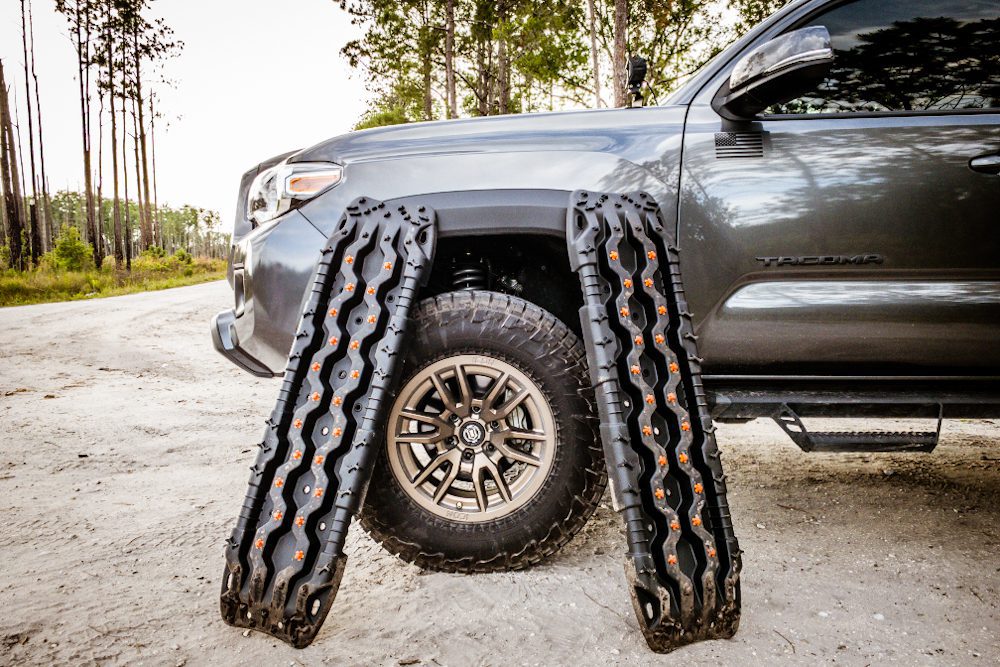

When you’re driving off-road or navigating true winter conditions, “getting stuck” isn’t a rare event—it’s a normal risk that comes with low-traction terrain. Snow turns to slush, sand behaves like water under load, mud becomes a suction cup, and even wet grass can act like ice once your tires spin and polish the surface. The difference between a minor delay and a serious recovery situation often comes down to whether you have the right tools on board and whether you know how to use them correctly.
Traction boards (also called recovery boards, traction tracks, or traction mats) are one of the most practical self-recovery tools you can carry. They don’t require a second vehicle, they don’t rely on engine power alone like “rocking” the car, and they can be used in snow, mud, sand, and even on rutted trails where a tire needs a stable ramp. Used properly, traction boards give your tires something firm to bite into, reduce wheelspin, and help you climb out of a hole rather than dig deeper into it.
Below are three traction board options worth considering—each with strengths that suit different drivers and vehicles. I’ll also explain what actually matters when choosing recovery boards (material, tooth design, stiffness, length, and load capacity), plus the correct field technique for using them safely. That way, you’re not just buying plastic; you’re building a recovery plan you can trust when conditions go sideways.
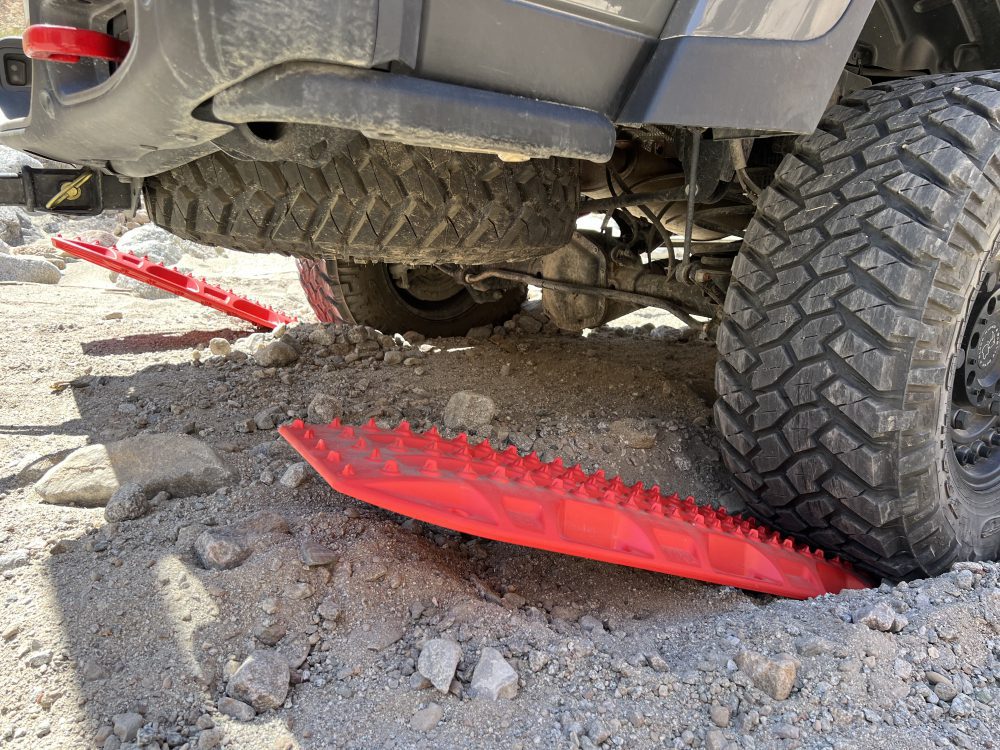
Expert note before we start: traction boards are not magic. They work best when you combine them with smart recovery habits—reducing tire pressure when appropriate, digging out packed snow/sand in front of the tires, and applying gentle throttle. If you simply floor it, you can melt snow into ice, dig trenches in sand, or damage the boards and your tires. Think “controlled grip,” not “brute force.”
How traction boards actually help you get unstuck
To choose the right traction boards (and to use them effectively), it helps to understand the mechanics of getting stuck. Most vehicles get stuck for one of four reasons:
- Loss of traction: the tire can’t generate enough friction to move the vehicle forward.
- High-centered: the vehicle’s belly or skid plate rests on the surface, lifting tires and reducing weight on the contact patch.
- Wheelspin excavation: the tire spins and digs a hole—common in sand and mud.
- Surface polishing: the tire spins and compacts/polishes the surface into something even slicker—common in snow and wet clay.
Traction boards address these problems in two key ways:
- They create a high-friction interface: aggressive lugs/teeth on the board interlock with tire tread.
- They provide a ramp and load spread: instead of the tire trying to climb out of a crater, it climbs up the board. The board also distributes weight over a larger area, reducing sink-in.
In real recoveries, the “ramp” effect is often as important as the traction effect—especially with heavier vehicles, street tires, or shallow approach angles in deep snow.
What to look for when buying traction boards (expert checklist)
Before we get into the three recommended products, here’s what matters most when you compare traction boards. This will help you pick the right set for your driving conditions and vehicle size.
- Material and temperature tolerance: quality boards are typically reinforced nylon or advanced polymers designed to flex without cracking. Cheap plastics can become brittle in cold weather.
- Length and ramp angle: longer boards generally perform better in sand/snow because they give the tire a smoother climb. Shorter mats are easier to store but may require more digging.
- Tooth/lug design: aggressive lugs help tires bite, but the pattern should also shed mud and not snap off easily.
- Stiffness vs. flex: you want controlled flex, not a board that folds like cardboard. Too stiff can crack; too flexible can become useless under weight.
- Load capacity and vehicle weight: heavier SUVs, trucks, and loaded overland builds need stronger boards. Also consider tire size and contact patch.
- Ease of storage: do you have roof rack mounts, cargo space, or do you need a compact solution with a bag/case?
- Real-world usability features: carrying handles, shovel ends, mounting points, and included straps can make a big difference when you’re cold, tired, or stuck at night.
With that framework in mind, here are three traction board options that cover the most common needs—from compact mats to classic recovery boards.
Maxsa Innovations 20333 Escaper Buddy Traction Mats
The Maxsa Innovations 20333 Escaper Buddy Traction Mats are a practical choice for drivers who want a compact, straightforward recovery aid that’s easy to store and quick to deploy. These mats are made from heavy-duty plastic and are designed to hold up under typical emergency recovery situations in snow, mud, sand, and similar low-traction surfaces.
What makes traction mats like these useful is their simplicity: you’re not trying to build a bridge; you’re giving the tire a short, aggressive surface to grip and climb. In light-to-moderate stuck scenarios—where you’re just spinning on packed snow, loose sand, or shallow mud—mats can be enough to break free without additional tools. They’re also a smart option for vehicles with limited cargo space, like compact crossovers or sedans that occasionally deal with snowed-in driveways.
They also come with a carrying case, making them easier to keep organized in your trunk or cargo area—an underrated benefit because recovery gear that’s scattered tends to get left behind, damaged, or buried under luggage.
Best for: daily drivers, crossovers, occasional snow/sand incidents, and anyone prioritizing compact storage.
Expert usage tip: mats are more effective if you first clear the “polished” surface under the tire. In snow, scrape away the icy glaze. In sand, dig out the loose pile that the tire created. Then place the mat as flat and straight as possible so the tire can climb smoothly rather than kick it out.
TRED Pro Recovery Boards
TRED Pro Recovery Boards are designed for serious traction and repeat use. They’re built from high-quality materials and engineered with a ramp profile that helps the tire climb onto the board and then continue forward with stability. That ramp design matters more than most people realize: when a vehicle is stuck, the tire often needs to climb out of a rut or depression before traction even becomes the limiting factor.
These boards are at their best in sand and mud, where vehicles commonly dig holes. They’re also highly effective in snow—especially wet snow—because the board prevents tires from spinning directly on an icy base layer. TRED boards are widely used by off-roaders because they can withstand repeated recoveries, and because they’re long enough to function like a controlled “runway” for your tire rather than just a short bite point.
TRED Pro Recovery Boards are great for use in mud, sand, snow, and other soft surfaces. They are also lightweight enough to handle easily and can be stored in your vehicle—though many drivers mount boards externally (roof rack, rear ladder, bed rack) to save cabin space and keep muddy boards outside.
Best for: regular off-road use, heavier vehicles, recovery scenarios where you expect deeper ruts, and drivers who want long-term durability.
Expert usage tip: when you place long recovery boards, aim them slightly upward along the tire’s natural exit path. If your wheels are turned, align the boards with the intended direction of travel—otherwise the tire can climb the board and slide off the side. In deep sand, reduce tire pressure first when safe and appropriate; then use boards to finish the recovery with minimal wheelspin.
X-BULL New Recovery Traction Tracks
X-BULL New Recovery Traction Tracks are popular because they offer a strong balance between durability, flexibility, and price. Made from durable and flexible nylon, they’re intended to provide strong traction in mud, snow, and other soft surfaces. The basic deployment is simple: place the tracks in front of the drive tires, straighten the wheels, and apply gentle throttle so the tire climbs onto the board rather than spinning it out.
In practical off-road recoveries, the combination of flexibility and strength is what you want. A board that is too stiff can crack when a heavy tire loads it unevenly, especially in cold conditions. A board that is too flexible can “bow” and lose its ramp advantage. X-BULL boards are designed to flex under load while still maintaining enough shape to support the tire’s exit.

X-BULL New Recovery Traction Tracks are also lightweight and come with a carrying bag for easier storage, which helps if you want to keep them inside the vehicle rather than mounted externally.
Best for: drivers who want strong recovery performance without premium pricing, mixed terrain (snow + mud + sand), and occasional-to-regular trail use.
Expert usage tip: if your vehicle has traction control that aggressively cuts power, you may need to switch to a mode that allows more wheel slip (varies by model) to climb onto the board smoothly. Too much traction control intervention can prevent the tire from developing the steady momentum needed to ride up the ramp.
How to use traction boards correctly (step-by-step recovery technique)
Buying traction boards is only half the solution. The other half is using them correctly—because improper technique is the #1 reason people conclude that boards “don’t work.” Here is the recovery sequence professionals use, simplified into a practical field process.
- Stop spinning the tires. The moment you realize you’re not moving, stop. Wheelspin digs deeper and polishes the surface.
- Assess which tires are driving. If you have 4WD/AWD, confirm it’s engaged properly. If you’re in 2WD, identify your drive axle (front or rear) so you place boards in front of the correct tires.
- Clear space in front of the tires. Dig or scrape a small “runway” so the board can sit flat and the tire can climb onto it. Even a few inches of digging can transform the outcome.
- Place the boards as straight as possible. Align them with the intended direction of travel. If you’re turned to the left, rotate the boards slightly left to match.
- Seat the boards under the tire edge if possible. The best placement is when the tire can immediately bite into the lugs. Push the board in close to the tire to reduce the “jump” required.
- Use gentle, steady throttle. Aim for controlled traction, not speed. Let the tire climb. If you feel the board shoot out, stop and reposition.
- Keep rolling until you’re on stable ground. Don’t stop the moment you’re free—drive a car length or more to avoid sinking again.
- Retrieve and clean boards. Mud and snow packed into the lugs reduces performance later. A quick rinse or shake-off preserves traction.
Safety reminder: keep bystanders away from the path of the boards. If a board ejects under wheelspin, it can become a projectile. Controlled throttle and proper placement reduce this risk dramatically.
Common mistakes that reduce traction board effectiveness
If you want your traction boards to work when you truly need them, avoid these common errors:
- Using boards without digging: boards need a stable base. If they’re floating on loose sand or sitting on an ice layer, they’ll slide.
- Over-throttling: too much power melts snow into ice, digs sand into trenches, and breaks traction lugs.
- Placing boards too far ahead: if the tire has to “jump” onto the board, it often spins and kicks it out.
- Ignoring alignment: misaligned boards cause tires to climb and slide off the side.
- Not considering tire pressure: in sand and snow, lower tire pressure often helps the tire float and grip—boards then finish the job.
- Relying on one board when two are needed: placing boards under both drive tires increases stability and reduces the chance of one tire digging a new hole.
Quick comparison: which traction board should you choose?
All three options can work well, but they shine in different scenarios. If you want a simple decision framework, use this:
| Product | Best Use Case | Why It Stands Out |
|---|---|---|
| Maxsa Innovations 20333 Escaper Buddy Traction Mats | Everyday snow, light mud/sand, compact storage needs | Simple, durable mats with a carrying case; great “just in case” tool |
| TRED Pro Recovery Boards | Frequent off-road recovery, deeper ruts, heavier vehicles | Strong ramp design and durable construction for repeated use |
| X-BULL New Recovery Traction Tracks | Mixed terrain and value-focused recovery | Good balance of flex and strength; lightweight and easy to store |
Pro-level add-ons that pair well with traction boards
If you drive off-road often (or you live where winter storms regularly strand vehicles), traction boards are even more effective when paired with a few simple tools:
- Compact shovel: faster clearing in front of the tire and under the board.
- Tire pressure gauge and inflator: lowering tire pressure can be the difference between digging and floating—especially in sand and snow.
- Work gloves: boards get cold, muddy, and sharp-edged under stress.
- Recovery strap and rated tow points: when boards aren’t enough, a gentle pull is often safer than aggressive throttle.
With those items, you’re no longer “hoping” to get unstuck—you’re equipped to recover methodically.
In conclusion, traction boards are an essential tool for any off-road or winter driving enthusiast. When choosing a traction board, consider the conditions you will be driving in and the size and weight of your vehicle to ensure you choose the right one for your needs.