
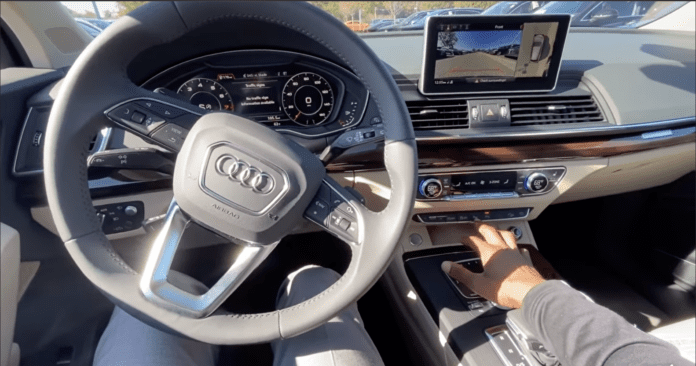
The Audi Park Assist system represents a sophisticated fusion of cutting-edge sensor technology and intelligent software, designed to transform one of driving’s most stressful tasks; parking; into a seamless, confidence-boosting experience. This innovative feature integrates a high-resolution rear-view camera with an array of ultrasonic sensors and electromagnetic steering capabilities, allowing your Audi to detect suitable parking spaces, guide you precisely, and in many cases, handle the maneuvering almost autonomously. Far more than a simple backup aid, it employs real-time data processing to steer the vehicle into parallel or perpendicular spots with remarkable accuracy, often correcting its path mid-maneuver for optimal alignment.
Imagine gliding through a crowded urban street or a tight supermarket lot, where every inch counts. Audi’s engineers have crafted this system to alleviate that tension, drawing on decades of innovation; tracing back to the brand’s early recognition in the 1980s that advanced parking tech could elevate the luxury driving proposition. Today, it combines auditory cues, visual overlays on the MMI display, and precise control inputs to make parking intuitive and remarkably stress-free.
Audi Models Equipped with Parking Assistant Features
A growing number of Audi vehicles come equipped with advanced parking assistance, making this technology accessible across much of the lineup. Here’s an overview of key models that typically feature Park Assist or enhanced variants like Park Assist Plus:
- Q5 ; A versatile SUV favorite, often including robust parking aids as standard or optional.
- Q7 ; The spacious flagship SUV benefits from comprehensive sensor arrays for effortless maneuvering in large or confined areas.
- A5 (including Coupe and Sportback variants) ; Sleek and agile, with parking tech enhancing its urban prowess.
- A4 ; The refined sedan integrates these systems to simplify daily drives.
- A3 ; Compact yet premium, offering accessible assistance for city dwellers.
- TT Coupe ; The sporty icon gains practical help without compromising its dynamic character.
- SQ5 ; Performance-oriented SUV with intelligent aids to match its power.
- A5 Cabriolet ; Open-air freedom paired with smart parking solutions.
- S5 Cabriolet ; High-performance convertible that still prioritizes ease in tight spots.
By around 2020, Park Assist became standard or widely available on more models than ever before, reflecting Audi’s commitment to democratizing advanced driver assistance. Whether you’re a daily commuter dreading narrow street parking or an enthusiast exploring new destinations, these systems turn potential frustration into effortless precision. In recent years, enhancements like Park Assist Plus have expanded capabilities in models such as the Q5, Q7, and newer iterations, incorporating 360-degree views and even more autonomous functions.
The beauty lies in the integration: ultrasonic sensors scan for viable spaces as you drive slowly past, while the rear-view camera provides crystal-clear visuals. Additional software overlays guide your inputs, and the intuitive MMI touchscreen acts as an interactive tutorial, walking you through activation and usage with clear, step-by-step prompts.
How the Parking Assistant Feature Operates
At its core, Audi’s Parking Assistant leverages a network of ultrasonic sensors positioned around the vehicle; typically front, rear, and sides; to emit sound waves that bounce off nearby objects, calculating distances in real time. Combined with the rear-view camera (and often front/side cameras in Plus variants), the system builds a comprehensive picture of the surroundings.
When searching for a spot, drive at low speeds (usually under 20-30 km/h), and the system actively scans. It identifies parallel spaces needing roughly 0.8 meters extra length than your vehicle or perpendicular bays with adequate clearance. Once a promising spot appears on the display, you can select it, shift into reverse, and let electromagnetic steering take over. You control acceleration and braking, while the car handles precise wheel movements; often requiring multiple forward-reverse cycles for tight maneuvers.
If obstacles arise, the system intervenes with immediate alerts. In advanced setups, it can even assist in exiting spaces, reversing the process flawlessly. This isn’t gimmicky automation; it’s engineered reliability, with the vehicle capable of self-correction to achieve perfect alignment.
Activating the Parking Assistant
Activation is delightfully straightforward, blending automatic convenience with manual control. In many configurations, the system engages automatically upon shifting into reverse, priming sensors and cameras instantly.
For on-demand use; such as forward maneuvering or proactive scanning; simply press the dedicated Park Assist button, often located on the center console near the gear selector. A confirming beep sounds, and an indicator light illuminates on the switch, signaling readiness. The MMI display springs to life with relevant prompts, ensuring even first-time users feel guided.
Deactivating the Parking Assistant
Deactivation prioritizes safety and driver control. Accelerating beyond approximately 6 mph (10 km/h) while pressing the gas pedal automatically disengages the system; ideal for resuming normal driving. Removing the ignition key also shuts it down completely.
Manual deactivation is just as simple: press the Park Assist button again, and the indicator light extinguishes. Note that if the bulb fails, the light won’t illuminate during activation, but the system remains functional; always verify via the MMI display or audible cues.
For forward approaches to obstacles (like pulling into a spot nose-first), manual activation ensures warnings engage promptly.
Audible Alarms and Customization
The acoustic feedback is one of the system’s most intuitive elements. Dedicated speakers emit graduated beeps: intermittent at first, increasing in frequency as proximity tightens, culminating in a continuous tone at critical distances (typically under 0.3-1 meter, varying by direction).
Through the MMI interface, personalize these alerts; adjust volume, pitch, or even fader settings to blend with your audio preferences. This customization ensures the system enhances rather than disrupts your drive.
The Mute Function Explained
Silence doesn’t mean inaction. When you engage the parking brake or shift to Park, audible warnings pause temporarily; preventing unnecessary noise during stops. Yet the system stays vigilant: releasing the brake or moving out of Park reactivates alerts if obstacles remain detected. This thoughtful design balances courtesy with safety.
Forward and Reverse Operation
Whether creeping forward into a bay or reversing into a parallel spot, the system monitors constantly. Beeps accelerate with closing distance, demanding attention. At ultra-close range (under 0.3 meters), rapid bursts urge an immediate stop; preventing contact.
If you hold position for about 4 seconds, tones fade to avoid annoyance, but re-approaching reignites them proportionally. During gear shifts in multi-point parking, sounds pause briefly, but visual icons persist on-screen.
Graphic Display Integration
The MMI screen transforms into a dynamic proximity map, segmenting distances into color-coded zones. As you near an obstacle, segments converge toward the vehicle icon; entering the red “collision” zone halts progress.
You can toggle this visual off via MMI controls for a cleaner view, though audio warnings remain active. Post-parking, graphics re-engage automatically. For deeper customization, consult your MMI manual; it’s a powerhouse of personalization.
Essential Considerations for Safe Use
While remarkably capable, no system replaces vigilant driving. Key points include:
- Sensors feature blind spots; low, narrow, or angled objects may evade detection.
- Always scan for children, pets, or dynamic hazards; sensor range varies with conditions.
- Driver responsibility never waivers; monitor surroundings actively, as this is assistance, not autonomy.
- Low obstacles (curbs, ramps) may drop off radar as you close in.
- Visual feeds have slight delays; factor this in tight maneuvers.
- Customize visuals via MMI for optimal clarity.
- Keep sensors ice- and snow-free for reliable performance.
Adhering to these ensures the system augments your skills safely.
Conclusion
From novices adapting to luxury motoring to seasoned Audi enthusiasts appreciating refined tech, the Parking Assistant proves remarkably approachable. Its intuitive activation, clear feedback, and intelligent automation make every parking endeavor smoother and more enjoyable. New owners especially benefit from reviewing the owner’s manual or consulting an Audi service center to master nuances and sidestep any initial hurdles.
Embracing this feature doesn’t just simplify parking; it elevates the entire ownership experience, letting you focus on what truly matters: the joy of the drive.

