
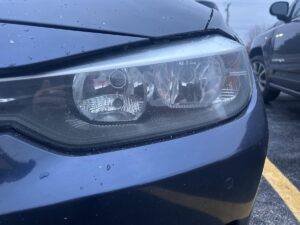

You’re cruising down the highway, enjoying the drive, when that dreaded warning suddenly appears on your dashboard: “Lighting System Malfunction.” Your heart sinks, your confidence drops, and your wallet already feels lighter. For many BMW owners, this message carries an almost mythical reputation; one associated with dealership horror stories and four-figure repair estimates.
But here’s the truth most people never hear: a BMW lighting system malfunction is not a diagnosis. It’s a symptom. And in many cases, it’s a symptom of something surprisingly minor. Before you panic, cancel weekend plans, or resign yourself to dealership prices, it’s critical to understand what your BMW is actually trying to tell you.
Table of Contents
In this guide, we’ll break down how BMW lighting systems really work, why they fail, how to diagnose problems accurately, and; most importantly; how to fix them intelligently without wasting money. This isn’t guesswork. This is how BMW lighting systems fail in the real world.
What a BMW Lighting System Malfunction Really Means
When a BMW displays a lighting system malfunction warning, it’s not simply telling you that a bulb burned out. Modern BMWs are rolling computer networks. Every headlight, tail light, daytime running light, and indicator is monitored continuously by one or more control modules.
Instead of power flowing directly from a switch to a bulb, your BMW uses electronic control units to manage lighting. When you turn on your headlights, the switch sends a request to a module. That module checks system conditions, confirms electrical parameters, and then supplies power; often in a carefully controlled pulse-width-modulated signal.
If anything deviates from expected values; current draw, resistance, voltage stability, communication timing; the module flags a fault. That fault becomes the generic “Lighting System Malfunction” message you see on the dash.
The challenge is that this single warning can represent wildly different problems. It might be a failing halogen bulb. It might be water inside a headlight housing. Or it could be a corrupted control module that costs thousands if misdiagnosed.
This is why blind part replacement is the fastest way to waste money. Proper diagnosis is not optional with BMW lighting systems; it’s essential.
How BMW’s Lighting Control Works (The Simple Version)
Think of your BMW’s lighting system as a smart building rather than a traditional house. In a conventional car, flipping a switch sends power straight to a bulb. In a BMW, flipping the switch sends a digital request across a network.
That request is processed by a control module, which decides whether to activate the light, how much current to send, and whether the circuit is operating safely. This architecture allows BMW to offer features like adaptive headlights, automatic high beams, welcome lighting, and precise bulb monitoring.
Different BMW generations use different modules to manage lighting:
E-Series BMWs (2004–2013) rely on the Footwell Module (FRM). This unit controls exterior lighting, power windows, mirrors, and central locking functions.
F-Series BMWs (2012–2018) transitioned to the Front Electronic Module (FEM), which consolidated multiple systems into a single, more powerful control unit.
G-Series BMWs (2019+) introduced the Body Domain Controller (BDC), an even more integrated module that manages lighting, comfort systems, and advanced safety features.
Each generation increased complexity, capability, and unfortunately, the number of potential failure points.
The E-Series Problem: When Your Module “Bricks”
E-Series BMW owners face one of the most infamous lighting-related failures in BMW history: the bricked FRM module. This failure can instantly disable headlights, windows, mirrors, and turn signals; often without warning.
Why It Happens
The FRM relies on EEPROM memory to store configuration data. This memory is written to frequently; every time you lock the car, unlock it, activate lighting, or adjust settings.
The problem arises when voltage becomes unstable during a write operation. This commonly happens during battery replacement, jump-starting, or low-voltage cold starts. If the voltage drops or spikes at the wrong moment, the data becomes corrupted.
Once corrupted, the FRM cannot complete its startup sequence. The module effectively locks itself, refusing communication with the rest of the vehicle. This state is commonly referred to as “bricking.”
The Tell-Tale Signs
A bricked FRM produces a distinct and alarming set of symptoms:
- Headlights stuck on permanently or completely inoperative
- Power windows unresponsive
- Turn signals fail to operate
- Diagnostic tools show “No Communication” with FRM
- Power mirrors stop folding or adjusting
Despite how catastrophic it feels, the hardware itself is rarely damaged. The solution is a memory repair; bench flashing the FRM to restore its corrupted EEPROM data. Skilled specialists can perform this service for $150–$300, compared to dealership replacements exceeding $1,000.
The Short Circuit Counter Trap
BMW lighting systems don’t just detect failures; they remember them. This becomes a major issue when owners install low-quality aftermarket LED bulbs.
How the Lockout Works
Each lighting circuit is constantly monitored for resistance and current draw. Halogen bulbs have predictable electrical characteristics. LEDs do not.
When an LED behaves unexpectedly; flickering, drawing too little current, or responding inconsistently; the module logs a short circuit event. After approximately 50 events, the module permanently disables that circuit.
Once locked out, clearing standard fault codes will not restore operation. The counter is stored in protected memory that requires BMW-specific tools to reset.
The Fix
Preventing lockouts requires a two-part approach:
- Use high-quality LED bulbs with built-in error cancellation
- Disable bulb monitoring through coding tools like BimmerCode
Skipping either step dramatically increases the risk of a locked circuit and a shop visit.
F-Series: When Physics Fights Electronics
F-Series BMWs shifted many problems from software corruption to physical degradation. Heat and electrical resistance became the dominant failure mechanisms.
The Melting Connector Issue
Headlight connectors in F-Series BMWs carry substantial current. Over time, vibration and oxidation increase resistance at the terminals. Increased resistance produces heat, which softens plastic housings.
Eventually, the connector melts, causing intermittent contact or complete circuit failure. Visual inspection often reveals charred wiring and distorted connectors.
The correct repair involves cutting out the damaged section and installing a high-temperature repair pigtail. These inexpensive components permanently resolve the issue.
The Rear Light Ground Recall
BMW rear lighting assemblies often share a single undersized ground wire. Under combined load conditions; braking while signaling; the ground overheats and fails.
This design flaw led to multiple recalls, including recall 19V-074. The fix adds a dedicated chassis ground, bypassing the problematic connector entirely.
Water: The Silent BMW Lighting System Killer
Adaptive headlights rely on TMS driver modules mounted at the lowest point of the housing. When moisture enters the headlight assembly, gravity ensures these modules suffer first.
How Water Wrecks Modules
While light condensation is normal, standing water indicates failed seals or blocked vents. Moisture corrodes circuit boards and disrupts data communication.
BMW’s service bulletin SI B63 05 16 clarifies acceptable moisture levels. Persistent water requires module replacement and housing repair.
G-Series: The Thermal Time Bomb
G-Series BMWs introduce extreme lighting output; and extreme heat. New materials and compact designs push components to their thermal limits.
The Yellow DRL Problem
Discolored DRLs result from overheated acrylic waveguides. BMW acknowledges this issue in official documentation.
While BMW recommends full headlight replacement, skilled technicians can refurbish light tubes and replace LED boards at a fraction of the cost.
How to Actually Diagnose Your BMW Lighting System Malfunction
Accurate diagnosis begins with BMW-specific tools, not generic scanners.
BimmerLink reads manufacturer-level fault codes, while BimmerCode allows preventative coding changes.
Frequently Asked Questions (FAQs)
Can I tackle the BMW lighting system malfunction myself?
Absolutely; for basic causes like resets, bulb swaps, or cleaning. Advanced FRM replacement/coding requires diagnostic tools (ISTA, BimmerCode, etc.) and expertise. DIY coding with software like NCS Expert or PA Soft 1.4.0 is possible for used modules, but mistakes can complicate things further.
What’s the typical cost for FRM replacement?
Expect $400–$800 total, including the module (~$500 new) and labor/coding. Dealer prices skew higher ($800–$1300); independents or repair services (bench fixes) can drop it to $200–$500. Warranties on new/rebuilt units vary; FRMs are notoriously failure-prone.
What exactly does the BMW FRM do?
The Footwell Module (FRM) is an electronic control hub in the driver’s footwell. It manages lighting (exterior/interior), power windows, mirrors, and some central locking functions. It interfaces with the car’s bus system, explaining why one fault ripples widely.
Final Thoughts: Staying Ahead of Lighting Gremlins
The “Lighting System Failure, Stop Carefully” warning stems from diverse sources; transient codes, mismatched bulbs, battery woes, connection problems, or outright FRM failure. The Footwell Module’s vulnerability makes these issues somewhat inevitable in aging BMWs, but early intervention prevents escalation.
Start simple: Reset the battery, verify bulbs, check voltage and connections. If those don’t cut it, seek expert diagnostics; don’t ignore it, as driving with compromised lights risks tickets, accidents, or further electrical damage.
With proactive care; regular battery tests, OEM parts, and avoiding improper jump-starts; your BMW’s lighting can remain reliable for years. Safe driving, and may your angel eyes always glow!