
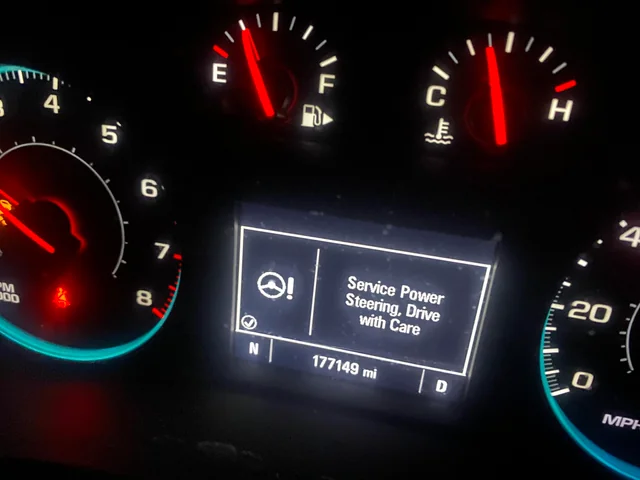
Experiencing issues with your Chevy Cruze can be frustrating, especially when the “Service Power Steering” message pops up at the exact moment you need confident, predictable steering. As an expert, I can tell you this warning is worth taking seriously, but it’s also rarely a mystery once you understand how the Cruze’s steering system is designed. Common causes include electrical problems or battery terminal corrosion, both of which can interrupt the clean, stable power supply that the steering system depends on.
The most helpful mindset is to treat this message as a diagnostic starting point rather than a verdict. Your Cruze is essentially telling you: “The steering assist system isn’t seeing the conditions it needs to operate normally.” That could mean low voltage, a weak ground path, a compromised cable, a sensor reporting implausible data, a blown fuse, or less commonly an internal problem with steering components or software. Knowing what might be wrong reduces stress because it gives you control: you can check the high-probability items first, confirm the real cause, and avoid replacing parts blindly.
This guide will walk you through how the system works, what the warning messages really mean, the most frequent failure patterns on the Chevrolet Cruze, and how to troubleshoot step by step from simple inspections you can do at home to deeper diagnostic strategies using scan tools. You’ll also get prevention tips so this doesn’t become a recurring dashboard surprise. Stick around for practical, safety-focused advice to tackle these issues and keep your Cruze running safely and steering smoothly.
Important safety note: If your steering suddenly becomes very heavy, inconsistent, or unpredictable, reduce speed, increase your following distance, and move to a safe location. Electric power steering failures usually leave you with manual steering ability, but it can require significantly more effort, especially at low speed, and that change can catch drivers off guard. If you feel unsafe driving the vehicle, arrange towing or professional assistance.
Understanding Your Chevy Cruze’s Power Steering System
Your Chevy Cruze uses an electric power steering system to help make steering easier and more precise. Unlike older hydraulic systems that rely on a belt-driven pump and fluid pressure, electric power steering (EPS) creates steering assist through an electric motor controlled by an electronic module. That design offers several benefits, improved fuel efficiency, adaptive steering feel, and fewer hydraulic leaks, but it also means the system is highly dependent on electrical health and accurate sensor feedback.
To understand why “Service Power Steering” appears, it helps to picture EPS as a closed loop control system. You apply steering input at the wheel, sensors measure your intent and the steering load, the control unit calculates how much assist is needed, and the motor provides that assist. If any part of that loop becomes unreliable—power supply, communication, sensor signal, or motor response—the control unit may reduce or disable assist and trigger the service message to protect the system and prevent unpredictable steering behavior.
In plain terms: the message usually doesn’t mean your steering rack instantly “broke.” More often, it means the EPS system is seeing an electrical or data problem and is refusing to operate at full capacity until it can trust its inputs again.
Components of the Electric Power Steering System
Your Cruze’s electric power steering system includes several key components. One major part is the control unit, which acts like the system’s brain. It receives data from sensors and adjusts steering assist in real time based on vehicle speed, steering torque, steering angle, and other operating conditions.
There’s also an electric motor that works with the control unit. It provides the force that helps you turn the steering wheel with minimal effort. Depending on the EPS design, the motor may be integrated with the steering column or the rack. In either configuration, the motor’s job is the same: add assist smoothly and predictably, without making the steering feel “numb” or overly light.
Additionally, sensors in the steering column detect the position and speed of the steering wheel, sending the information to the control unit. This ensures your steering feels responsive but not too sensitive. A key sensor in many EPS systems is the torque sensor (more on this later), which measures how much twisting force you apply to the steering wheel, essentially capturing your steering demand.
Epicyclic gear and steering rack are also part of the setup. These transfer the motion from the steering wheel to the wheels themselves. When everything functions well, these components make for a responsive drive. When something is off—whether mechanical friction, internal wear, or electronic control problems—the system may detect abnormal load or response and set a warning.
From a diagnostic perspective, it’s helpful to group EPS components into categories:
- Power supply and grounding: battery, alternator, battery terminals, ground cables, and related fuses.
- Control and communication: EPS control unit (module), wiring, connectors, and vehicle network communication.
- Sensing and feedback: torque sensor, steering angle/position sensors, vehicle speed signals, and other input data.
- Assist generation: the electric motor and gear reduction mechanism.
- Mechanical steering hardware: steering column, intermediate shaft, rack, tie rods, and alignment geometry.
This classification matters because it shapes your troubleshooting: you start with the highest probability, easiest to check items (power, grounds, and fuses), then move toward sensors and modules. Many Cruze power steering complaints are ultimately caused by voltage/ground issues rather than a failed motor or rack, so beginning with the electrical foundation often saves time and money.
How the Power Steering Enhances Driving
The power steering makes driving your Chevy Cruze easier, especially at low speeds or when parking. It adjusts assist based on speed. So, at slower speeds, the steering feels lighter, making maneuvering through tight spaces simple and less tiring.
On the highway, the system provides more resistance, giving you better control and a more planted feel. This balance reduces driver fatigue and enhances safety because the car responds in a stable, predictable way instead of feeling twitchy at speed.
The electric system is also energy efficient. Unlike traditional hydraulic systems, it doesn’t rely on constant engine-driven pumping, which can improve fuel efficiency. EPS typically draws significant power only when steering assist is needed, such as during parking, lane changes, and turns, rather than continuously consuming engine power.
By making real time adjustments based on conditions and driver input, you’ll find your Cruze feeling more stable and responsive. And because EPS is integrated with the vehicle’s electronics, it can interact with other systems (like traction and stability control). That integration is one reason the “Service Stabilitrak” message may sometimes appear around the same time as “Service Power Steering,” even though they sound like separate issues.
One more point many drivers don’t realize: EPS systems include built-in self-tests. When you start the vehicle, modules often run checks on voltage, sensor plausibility, and motor response. If the system sees borderline voltage during cranking (common with weak batteries) or detects unusual sensor readings, the warning may appear immediately on startup, even if steering feels normal at first. That’s why battery condition is such a frequent underlying factor.
Identifying Service Power Steering Messages
When you drive a Chevy Cruze, seeing a “Service Power Steering” message can be concerning. Dashboard warnings are designed to be attention-grabbing, but they’re also informative if you know how to read them. This section covers what the warning lights mean and how the “Service Stabilitrak” message relates to steering issues. Understanding these can help you identify and address any potential problems with your vehicle’s power steering system.
As an expert rule: treat steering warnings as time sensitive, even if the vehicle still feels drivable. Steering assist might work intermittently and then drop out under specific conditions (low voltage, heat, bumps, moisture). Addressing the root cause early can prevent a situation where steering becomes unexpectedly heavy in a parking lot, intersection, or during evasive maneuvering.
Service Power Steering Warning Light
If the “Service Power Steering” warning light appears on your dashboard, it’s time to take action. This light can indicate a variety of issues with the steering system, and the correct next step is to narrow it down logically instead of guessing.
Common causes include problems with the battery, such as battery terminal corrosion or a low charge. A faulty negative battery cable could also be the culprit. Because EPS can draw substantial current during steering events, any weakness in voltage supply or grounding can cause the steering module to detect undervoltage and disable assist.
In vehicles with hydraulic power steering, issues might relate to low fluid levels or leaks. You might also experience a stiffer steering wheel or notice unusual noises when turning. While the Cruze typically uses electric power steering, the broader point is still valid: if steering effort changes, noises appear, or you feel binding, it’s a sign that something isn’t operating as designed and should be inspected promptly.
It’s important to address these signs promptly to avoid more significant problems. To troubleshoot, you may start with a battery check to ensure all connections are clean and tight. Regular maintenance checks can help prevent these issues from cropping up unexpectedly.
What the warning often feels like in real life:
- Intermittent heavy steering, particularly during parking maneuvers.
- Warning appears after startup, then may go away after driving, common with borderline battery voltage.
- Steering assist cuts out briefly over bumps or during turns, possible wiring/connector sensitivity.
- Multiple lights appear at once (traction/stability, power steering, check engine), suggesting a shared electrical or communication issue.
Even if assist returns, the system may have stored fault data. That stored information can make diagnosis faster and more accurate, so it’s smart to scan for codes rather than simply clearing messages and hoping they stay away.
Interpreting Service Stabilitrak Messages
The “Service Stabilitrak” message often appears alongside the “Service Power Steering” light. This can be confusing, as Stabilitrak is related to the traction control system. When you see this message, it may mean there’s an issue with components like the steering wheel position sensor.
Here’s the practical connection: modern vehicle safety systems share information. Stabilitrak and traction control use steering angle/position data, wheel speed data, and yaw/acceleration data to determine if the vehicle is going where the driver intends. If steering position data becomes unreliable, the stability system may disable itself or request service. Likewise, if the vehicle’s electrical system is unstable, multiple modules can report faults even if only one component is truly failing.
A malfunctioning sensor might send incorrect information to the car’s systems, potentially affecting both traction and steering. Additionally, problems with the check engine light can complicate matters, as engine and steering systems are interconnected, especially through shared power supply, grounds, and vehicle communication networks.
To investigate, ensure the car’s engine chip and other electronic systems are functioning correctly. Address any dashboard lights promptly to maintain optimal vehicle performance.
Expert tip: when multiple messages appear together, resist the temptation to replace multiple parts at once. Instead, start with foundational checks—battery voltage, charging system output, terminal condition, and ground cable integrity—because a single voltage/ground fault can trigger a cascade of warnings across systems that are otherwise healthy.
Common Power Steering Issues in the Chevrolet Cruze
If you’re experiencing power steering problems with your Chevrolet Cruze, you’re not alone. Many owners face issues due to electrical faults, mechanical failures, or software glitches. Understanding these can help you find a solution faster and help you prioritize the most likely causes before you spend money on parts.
From a technician’s viewpoint, Cruze steering complaints often fall into recognizable patterns:
- Voltage-related faults (weak battery, poor alternator output, corroded terminals) that appear intermittently and are often worse in cold weather.
- Ground cable issues (especially the negative battery cable) that create unpredictable electrical behavior across multiple systems.
- Sensor plausibility faults where steering angle/torque data is inconsistent, causing EPS to reduce assist and stability systems to throw additional warnings.
- Mechanical wear or binding that increases steering load and triggers abnormal readings or poor steering feel.
- Software or module behavior that requires code scanning, updates, or module-level diagnosis.
Let’s break these down into the main categories you’ll most often encounter.
Electrical Issues and Battery Problems
Electrical problems are a common cause of power steering failure in the Chevy Cruze. The battery and alternator play crucial roles in maintaining the power steering system. Electric power steering requires stable voltage and a solid ground path, especially when you’re turning the wheel at low speed, where assist demand (and electrical current draw) is highest.
If the battery voltage drops below the required level, you may see a Power Steering Fault message. This often happens because of battery terminal corrosion or a bad battery ground cable connection, leading to weak or inconsistent power supply.
Check the connections for any signs of corrosion. Cleaning and securing them might fix the issue. Ensuring your battery maintains between 12.3V to 12.6V is key to avoiding these problems. Regular battery checks can also prevent surprise failures when you’re on the road. If you notice flickering dashboard lights or a failing engine start, it’s a good time to test your battery and alternator.
To expand on the voltage numbers in a practical way:
• Engine off (resting voltage): A healthy, fully charged battery is often around 12.6V. Around 12.3V can indicate partial charge, and lower values can signal a weak battery or parasitic drain.
• Engine running (charging voltage): Many vehicles charge around the mid 13V to mid 14V range depending on conditions and charging strategy. If charging voltage is low or unstable, steering faults become more likely, especially with electrical loads on (headlights, blower motor, defroster).
Why corrosion matters so much: corrosion adds resistance. Resistance causes voltage drop under load. EPS is a high load system during steering input, so even “minor looking” corrosion can become a major problem when the motor demands current. That’s also why a Cruze may steer fine on a straight highway but throw a warning during a tight parking maneuver.
Also pay attention to the negative battery cable. A cable can look fine externally yet have internal corrosion or poor contact at the terminal or chassis connection. Because the entire vehicle depends on a stable ground reference, a weak ground can trigger multiple unrelated-seeming faults—power steering, traction control, and even engine performance alerts.
If your Cruze shows repeated electrical symptoms, intermittent warnings, flickering lights, or random resets, address battery and ground integrity first. It’s one of the highest return diagnostic steps you can take.
Steering Rack or Power Steering Pump Failures
Mechanical failures like a bad power steering rack or pump can result in difficult steering. In the 2013 Cruze, such failures were noted, often due to wear and tear or leaks. While many Cruze configurations use electric assist (and therefore don’t rely on a traditional belt driven hydraulic pump), the broader mechanical concept remains: if the rack assembly, steering linkage, or related hardware develops wear, binding, or internal failure, steering feel can degrade and faults can appear.
Damage to the power steering rack or hoses can lead to fluid leaks, making it harder for the hydraulic system to function effectively. Even in electric systems, any mechanical resistance in the rack or column increases the load the motor must overcome. That added load can trigger unusual sensor readings or cause the system to reduce assist if it detects abnormal conditions.
Inspect the steering components if you notice a whirring noise or resistance when turning the wheel. Look for fluid leaks under the vehicle. Addressing these mechanical issues quickly can prevent further complications and maintain smooth steering. Regular maintenance and timely replacement of worn parts can extend the lifespan of these components.
Expert diagnostic pointers for mechanical steering concerns:
- Noise characterization helps: a whine, grind, click, or clunk can suggest very different problems (motor/gear noise vs. suspension/ball joint noise vs. rack issues).
- Steering effort pattern matters: heavy only in one direction can suggest mechanical binding or alignment geometry issues.
- Don’t ignore tire condition and alignment: uneven tire wear, low tire pressure, or poor alignment can make steering feel abnormal and can stress steering components.
If you suspect rack issues, professional inspection is often best. Steering is a critical safety system, and improper DIY repairs can create unsafe handling. However, you can still perform safe preliminary checks (fluid leaks, loose components, visible damage) before scheduling service.
Software Glitches Impacting Steering Controls
Sometimes, software glitches affect the steering controls, causing erratic behavior or sudden inoperability. These glitches can arise from updates, corrupted learned values, or bugs in the vehicle’s electronic control unit. For the 2013 model, such software issues often require professional diagnostics to resolve.
If your steering suddenly becomes unresponsive, scanning for error codes using an OBD-II reader can help identify the problem. In some cases, a software update from the dealership might be necessary to fix these glitches. Make sure the vehicle’s software is up to date to minimize such risks and ensure optimal performance of your Chevy Cruze’s steering system.
Here’s what experienced technicians look for when software or module behavior is suspected:
• Repeatable faults with no physical cause found: If wiring and power are confirmed healthy but the message persists, module logic becomes a stronger suspect.
• Communication-related trouble codes: Network faults can make modules “drop offline,” producing warnings that come and go.
• Faults that follow battery replacement or low-voltage events: Some modules can behave unpredictably after repeated low-voltage starts, and a relearn or update may help stabilize operation.
Software solutions are real, but they must be justified by diagnostic evidence. In other words: don’t assume “software” just because the problem feels intermittent. Intermittent issues are often electrical connections. Software is typically considered after you’ve verified the fundamentals—battery, charging, grounds, fuses, connectors, and sensor data sanity.
Diagnostic and Troubleshooting Steps
When your Chevy Cruze shows a service power steering alert, it’s crucial to know what steps to take. A clear diagnostic routine prevents wasted time, unnecessary parts replacement, and repeat repairs. Begin by checking the power steering fluid level (where applicable), then inspect fuses and electrical connections, and finally identify and replace any faulty sensors that could be causing issues.
From an expert’s standpoint, the most efficient troubleshooting sequence usually looks like this:
- Confirm the symptom and conditions: When does the message appear (startup, turning, bumps, rain, cold mornings)? Does steering feel heavy consistently or intermittently?
- Check battery voltage and terminal condition: This is the highest-probability cause and the easiest to verify.
- Inspect fuses, grounds, and connectors: Look for blown fuses, loose connections, corrosion, and harness damage.
- Scan for codes: Even if the warning disappears, modules often store history codes that point to the root cause.
- Evaluate sensors and module data: Especially steering torque/angle signals and any communication faults.
Let’s go step by step through the checks described in your guide and expand them with practical professional context.
Checking for Low Power Steering Fluid Levels
Your Chevy Cruze may face power steering issues if the fluid level is low. Start by locating the power steering fluid reservoir, which is typically near the engine. The cap will have markings indicating the proper fluid level.
Use the dipstick attached to the cap to check the fluid level. It should be between the “min” and “max” marks. If it’s low, add the recommended type of fluid specified in your owner’s manual.
Regularly checking and maintaining fluid levels can prevent further issues. Low Power Steering Fluid is a common cause of handling problems, so resolving this could fix your steering issue promptly.
Expert clarification: because your Cruze uses an electric power steering system, fluid level checks may not apply in the same way they do on a traditional hydraulic setup. However, the underlying principle remains valuable: always confirm what type of steering system your specific trim/model year uses, then check the relevant “supporting resources” (electrical supply for EPS or fluid integrity for hydraulic systems). If a mechanic previously converted or modified components, or if you’re diagnosing multiple vehicles, this step remains a valid part of a broader steering diagnostic checklist.
If you do find evidence of fluid leakage (for vehicles with hydraulic assist), treat it as urgent. Leaks can escalate quickly, and fluid loss can damage components and compromise steering performance. Even with EPS, visible leaks in the engine bay should be investigated because they can contaminate wiring and connectors, creating electrical issues that also trigger steering warnings.
Inspection of Fuses and Electrical Connections
Inspecting the fuses and electrical connections is crucial when diagnosing a service power steering issue. Begin by locating the fuse box, often found beneath the dashboard on the driver’s side or under the hood.
Identify the fuse related to power steering using your vehicle’s manual. Pull the fuse and check if it’s blown. A burnt-out fuse will halt the electrical supply, affecting the steering system.
Check for corrosion or damage in electrical connections. If you find any corroded areas, clean them gently with a small brush. Replacing faulty or blown fuses with new ones can often resolve electrical issues and restore the power steering.
Professional-level guidance that makes this step more reliable:
- Don’t only “look” at fuses—test them if possible: some fuses crack internally in a way that’s hard to see. A basic test light or multimeter can confirm continuity.
- Inspect battery terminals closely: corrosion can hide between the terminal and the cable clamp, not just on the visible outer surface.
- Check the chassis ground point: the negative battery cable must connect cleanly to the chassis/engine. Rust, paint, or looseness here can cause major voltage drop under load.
- Think in terms of “voltage drop under load”: EPS may only fail while turning because that’s when current draw peaks. Connections that seem “fine” at rest can fail under load.
If you want to be especially thorough, measure battery voltage while turning the steering wheel at idle (in a safe, stationary condition). A significant voltage dip during steering input can support the idea that battery/charging/connection health is the root issue.
Also note that battery related steering faults can appear after jump starting. Jump starting can introduce voltage spikes, and loose jumper connections can cause instability. If the warning began immediately after a jump, inspect battery terminals and consider a full battery/charging test.
Identifying and Replacing Faulty Sensors
Faulty sensors can trigger the Chevy Cruze’s service power steering message. Sensors play a key role in transmitting important data that helps manage the steering system. If the EPS module can’t trust sensor input, it may reduce assist or disable it as a safety precaution.
One common sensor issue involves the torque sensor, which monitors steering wheel angle and movement. If your vehicle’s steering feels stiff or unresponsive, the sensor could be faulty.
Use diagnostic tools like an OBD-II scanner to identify any error codes associated with faulty sensors. Replacing a faulty sensor with a new one can often eliminate steering problems and restore normal function. Always ensure to follow vehicle guidelines or consult a professional for sensor replacement.
Expert expansion: sensor diagnosis should be evidence based. Here’s how professionals typically validate a sensor problem before replacing parts:
- Pull diagnostic trouble codes (DTCs): The EPS module and other modules may store codes pointing to torque sensor signals, steering angle signals, or voltage faults.
- Check for related codes in other systems: If “Service Stabilitrak” appears too, look for steering position sensor or communication codes that explain the overlap.
- Review live data (if your scan tool supports it): Watch steering angle/torque values while gently turning the wheel. Dropouts, spikes, or inconsistent readings are strong indicators.
- Inspect connectors: Many “sensor failures” are actually connector corrosion, water intrusion, or pin fit issues.
- Confirm power and ground to the sensor/module: A sensor can’t report correctly if its reference voltage or ground is unstable.
Replacing sensors without confirming wiring integrity is one of the most common DIY pitfalls. A corroded connector can make a brand-new sensor appear “bad.” For long-term reliability, always address the underlying cause, especially if moisture, corrosion, or harness damage is present.
After sensor replacement, some systems require calibration or relearn procedures. If steering feels odd afterward or warnings persist, professional calibration with the right scan tool may be necessary to align sensor values with the module’s expectations.
Maintenance and Prevention
Keeping your Chevy Cruze’s power steering in the best shape involves regular maintenance tasks. These tasks ensure smooth handling and prevent unexpected service messages, enhancing your driving experience. The goal isn’t just to avoid a dashboard warning, it’s to preserve predictable steering feel and minimize the chance of sudden assist loss in inconvenient or unsafe situations.
From an expert perspective, prevention is mainly about maintaining two things:
1) A clean, stable electrical foundation (battery health, alternator output, clean terminals, solid grounds).
2) Regular inspections that catch early wear, corrosion, or fluid leaks before they trigger faults.
Here’s what you need to focus on to keep everything running well.
Routine Check-Ups and Fluid Top-Ups
Regularly check your power steering fluid to keep the system running smoothly. Low fluid levels can lead to poor steering performance and unwanted noises.
Performing a fluid check is simple. Locate the power steering reservoir, usually marked with a steering wheel icon, and see if the fluid level falls between the “MIN” and “MAX” markers. If not, you might need a top-up. Use the correct type of fluid for your Chevy Cruze, as specified in the owner’s manual.
Keeping track of service intervals is also important. Check the manual for how often you should replace the fluid. Consistent maintenance prevents common issues like leaks and reduces wear on the system components.
Expert angle: even in vehicles where EPS is the primary assist method, “fluid top-up discipline” still represents a broader maintenance philosophy, verify levels, inspect for leaks, and keep consumables within spec. Engine oil leaks, coolant leaks, and brake fluid seepage can contaminate connectors and wiring harnesses. Electrical contamination is a stealth cause of intermittent EPS warnings, so keeping the engine bay clean and leak free helps indirectly prevent steering faults.
Also consider routine tire and alignment checks as part of steering health. Underinflated tires or poor alignment increases steering effort, which increases EPS workload. Over time, extra workload can amplify the impact of borderline electrical conditions (weak battery, corroded terminals), making warnings more likely.
Keeping the Battery and Cables in Good Shape
A healthy battery is crucial for the power steering system. If it’s not well-maintained, you might experience the “Service Power Steering” message. Check the battery’s age and condition regularly. Look for any corrosion or loose connections on the Negative Battery Cable.
Clean any corrosion using a mixture of baking soda and water. Ensure all cables are securely connected, especially after harsh weather or long trips. Replacing an old or weak battery can prevent sudden power steering failures.
Routine inspection helps detect any issues early, reducing the risk of being stranded due to battery problems.
Expert prevention checklist for battery/cable health (simple but extremely effective):
- Check terminal tightness every few months or after any battery service.
- Inspect for white/green corrosion and clean it early, don’t wait until it becomes thick and crusty.
- Verify the ground point is clean where the negative cable attaches to chassis/engine.
- Test battery and alternator annually (or before winter), especially if the battery is aging.
- Watch for early electrical symptoms like slow cranking, dim lights, or random warnings those are often “pre-failure” indicators.
If you live in an area with heavy road salt, humidity, or extreme temperature swings, increase the frequency of terminal and ground inspections. Environmental conditions accelerate corrosion, and corrosion is one of the most common and most preventable contributors to EPS warnings on the Cruze.
Finally, if your Cruze has had repeated steering warnings, consider documenting the circumstances each time (weather, temperature, time since startup, whether accessories were on). Patterns often lead directly to the cause: cold-start voltage dips, wet-weather connector moisture, or load-related electrical stress.

