
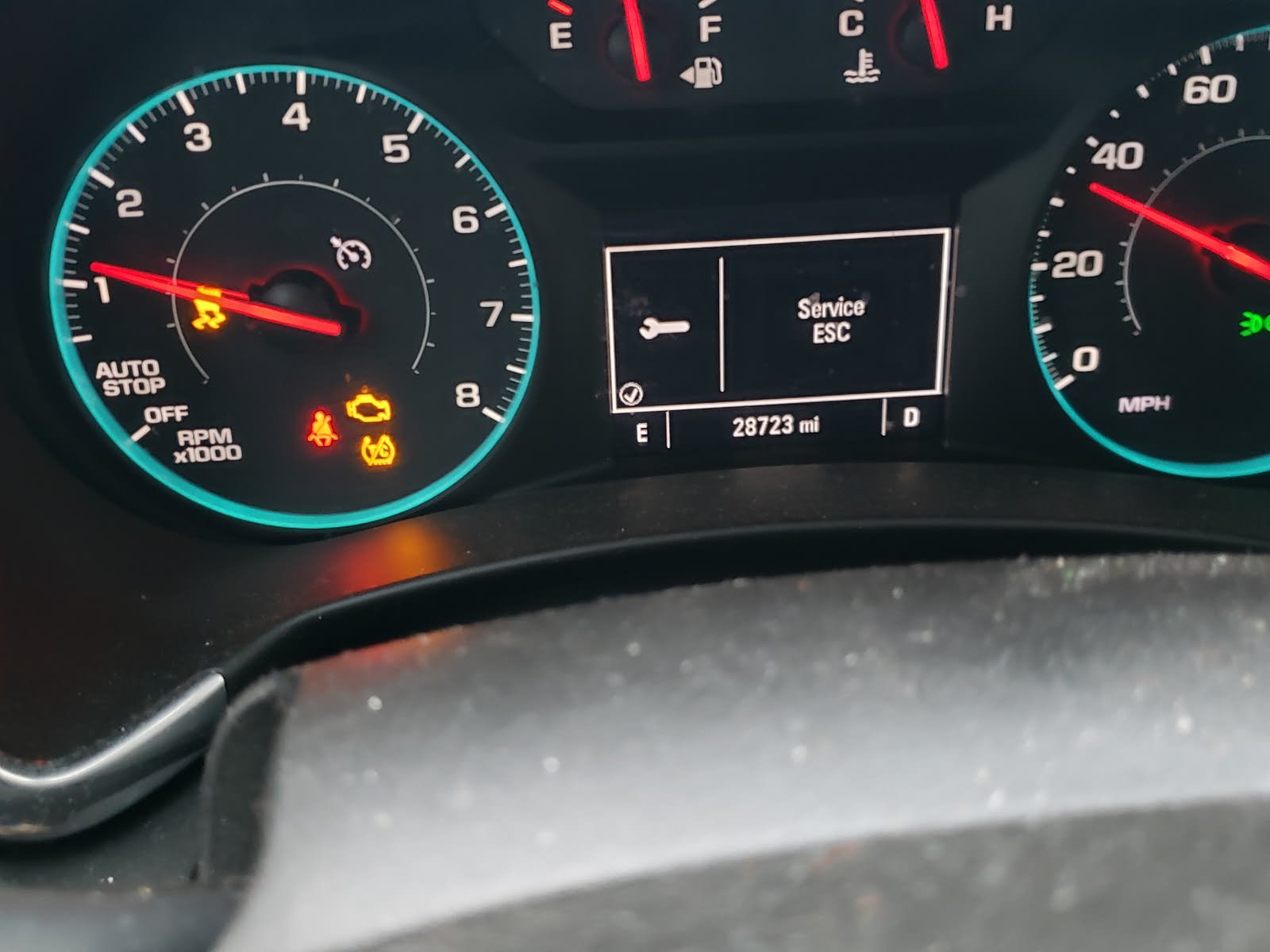

It starts as a typical drive. You are behind the wheel of your Chevy Traverse, perhaps navigating a rainy highway or simply commuting to work, when a chime interrupts your music. You glance down at the instrument cluster, and there it is: the amber “Service ESC” warning light, often accompanied by “Service StabiliTrak.” For many drivers, this moment triggers immediate anxiety. Does this mean the brakes are failing? Is the engine about to stall? Is it safe to drive home?
This indicator is not just a nuisance; it signals a breakdown in communication within your vehicle’s Electronic Stability Control (ESC) system; the invisible hand that keeps your SUV pointed in the right direction during emergency maneuvers. While the warning can be intimidating, it is a safeguard designed to alert you before you find yourself in a skid you cannot control. As automotive experts, we are here to demystify this warning. From the physics of yaw rates to the intricacies of wheel speed sensors, this comprehensive guide will walk you through every bolt, sensor, and software glitch that causes this error, and exactly how to fix it.
The Science of Stability: What is the ESC System?
To fix the car, you must first understand the machine. The Electronic Stability Control (ESC) system in your Chevy Traverse; often marketed by General Motors as StabiliTrak; is widely considered the most significant safety advancement since the invention of the seatbelt. It is a sophisticated network of hydraulics, sensors, and computer algorithms designed to correct a driver’s loss of control instantaneously.
The Invisible Co-Pilot: Role of ESC in the Chevy Traverse
The Chevy Traverse is a substantial vehicle. When a large SUV enters a curve too fast or encounters a patch of black ice, physics takes over. The momentum wants to carry the vehicle in a straight line, regardless of where you turn the steering wheel. This is where ESC intervenes.
The primary function of the ESC system is to mitigate understeer (where the car plows forward despite the wheel being turned) and oversteer (where the rear of the car swings out, commonly known as fishtailing). Unlike a human driver, who can only press one brake pedal to slow all four wheels, the ESC system acts as a virtuoso conductor. It can apply brake pressure to a single wheel; for example, the left-front wheel only; to pivot the car back onto your intended path. It does this in milliseconds, often correcting a slide before you even realize you were in danger.
The ESC operates in perfect synergy with the Traction Control System (TCS) and the Anti-lock Braking System (ABS). While TCS prevents your wheels from spinning freely on wet pavement during acceleration, and ABS prevents them from locking up during panic stops, ESC manages the vehicle’s lateral stability. Understanding this “Safety Trinity” is crucial because a failure in one often triggers warning lights for all three.
Anatomy of the System: Key Components
The “Service ESC” light is a general distress signal from the Electronic Brake Control Module (EBCM). To diagnose it, we must look at the specific soldiers in this army:
- Wheel Speed Sensors (WSS): Located at each wheel hub, these magnetic sensors (often Hall Effect or Magnetoresistive) count the rotation of the tire. If three wheels are moving at 45 mph and one is moving at 10 mph, the system knows a lock-up or skid is occurring.
- Steering Angle Sensor (SAS): Located within the steering column behind the clock spring, this sensor tells the computer exactly where you want to go. It measures the degree of steering input and the speed at which you are turning the wheel.
- Yaw Rate & Lateral G Sensor: Usually mounted under the center console or driver’s seat (close to the vehicle’s center of gravity), this gyroscope measures the vehicle’s actual movement. It detects if the car is spinning on its axis (yaw) or sliding sideways (lateral acceleration).
- The Hydraulic Modulator: This is the mechanical heart of the system. It contains the pump and valves that physically squeeze the brake calipers without your foot touching the pedal.
At the center of this web is the Electronic Control Unit (ECU) and the EBCM. These computers compare the data from the Steering Angle Sensor (where you want to go) with the data from the Yaw Sensor (where the car is actually going). If there is a discrepancy, ESC activates. When the “Service ESC” light is on, the computer has detected that data from one of these sensors is missing, implausible, or corrupted.
Why You Feel a Loss of Power
Many Traverse owners report that when the ESC light flashes, their vehicle feels sluggish. This is intentional. The system has the authority to retard ignition timing and cut fuel injection to the engine. By reducing torque from the engine, the ESC reduces the energy feeding the instability. While this enhances safety on ice, a malfunctioning system can mistakenly cut power on dry pavement, which is why resolving this warning is critical for performance as well as safety.
Deep-Dive Diagnostics: Common Causes of the “Service ESC” Warning
When the “Service ESC” light illuminates on your dashboard, it is rarely the computer itself that has failed. More often, it is a peripheral component sending bad data. Based on years of analyzing General Motors SUV platforms, here are the most frequent culprits.
1. The Achilles Heel: Wheel Speed Sensor Failure
In the Chevy Traverse, the wheel speed sensors are notoriously susceptible to the elements. Because they are mounted on the wheel knuckles, they endure extreme heat from the brakes, vibration from the road, and bombardment by water, salt, and road debris.
Over time, two things happen. First, the sensor itself can fail internally due to thermal cycling. Second, and more commonly on older Traverses, the magnetic reluctor ring (part of the wheel bearing hub assembly) can crack or become packed with rust and brake dust. If the sensor cannot “read” the ring clearly, the signal drops out. The EBCM interprets this signal loss as a system fault, disabling ESC and triggering the light.
2. The Hidden Culprit: Low or Contaminated Brake Fluid
It seems too simple to be true, but hydraulic pressure is the lifeblood of the ESC system. If your brake fluid levels drop below the sensor line in the master cylinder reservoir, the system assumes it cannot generate enough pressure to intervene in a skid.
However, it isn’t just about the level; it is about the quality. Brake fluid is hygroscopic, meaning it absorbs moisture from the air over time. High water content lowers the boiling point of the fluid and can corrode the internal valves of the ABS modulator. Modern GM sensors are sensitive enough to detect pressure irregularities caused by old fluid, triggering the service light.
3. Steering Angle Sensor (SAS) Drift
The ESC needs to know exactly where “center” is. If you have recently had a wheel alignment, replaced a battery, or hit a significant pothole, the steering angle sensor’s calibration can drift. If the sensor thinks the wheel is turned 10 degrees to the left when you are actually driving straight, the ESC computer becomes confused. It expects yaw (turning motion) that isn’t happening. To protect you from a false activation, it shuts down and lights up the dashboard.
4. Engine Misfires and the “Limp Mode” Connection
This is a scenario that baffles many DIY mechanics. You might notice the “Service ESC” light come on alongside the Check Engine Light, accompanied by a rough idle. Why would a spark plug issue affect the brakes?
The answer lies in the CAN Bus network. The ESC system relies on torque management from the engine to control the car. If the engine is misfiring, the Engine Control Module (ECM) cannot guarantee precise torque output. Because the ESC cannot rely on the engine to help stabilize the car, the system disables itself automatically. In this case, the ESC light is a symptom, not the disease.
5. The Brake Pedal Position Sensor
On the Chevy Traverse, the brake light switch is not just a simple on/off switch for the tail lights. It is a complex position sensor that tells the computer how hard you are pressing the pedal. If this sensor malfunctions (a common issue in GM vehicles of this era), the ESC system receives conflicting data regarding driver intent.
Expert Troubleshooting: Diagnosing the “Service ESC” Light
Guesswork is expensive. Replacing parts blindly can lead to hundreds of dollars in wasted money. To fix the “Service ESC” light efficiently, you need a systematic approach. Here is the professional workflow for diagnosing the Chevy Traverse.
Step 1: The OBD-II Scan (Reading the “C” Codes)
The vast majority of basic code readers only read “P” codes (Powertrain). To diagnose ESC, you need a scanner capable of reading “C” codes (Chassis) and ABS modules. Connect a capable OBD-II scanner to the port under the dashboard. You are looking for codes such as:
- C0035 – C0050: These specifically point to wheel speed sensor faults (Left Front, Right Front, etc.).
- C0460: This indicates an issue with the Steering Angle Sensor position.
- C0131: This typically points to pressure sensor faults within the ABS/ESC module.
Step 2: The “Hard Reset” Strategy
Before buying parts, rule out a software glitch. Computers in modern vehicles can freeze just like a laptop. To perform a hard reset:
- Turn the vehicle off and open the hood.
- Disconnect the negative (black) battery terminal.
- Wait for at least 15 to 20 minutes. This allows the capacitors in the modules to discharge, clearing volatile memory.
- Reconnect the battery and start the car. Turn the steering wheel all the way to the left lock, then all the way to the right lock. This helps the system “relearn” the center position. drive the car for a few miles to see if the light returns.
Step 3: Visual Inspection of Wiring Harnesses
Lift the vehicle (using proper jack stands for safety). Inspect the wiring harnesses leading to each wheel hub. In the Chevy Traverse, the harness near the rear control arms is prone to chaffing. Look for frayed wires, exposed copper, or connectors that are packed with mud or corrosion. A simple $2 roll of electrical tape and a cleaned connector can sometimes save you a $500 repair bill.
Preventative Maintenance: Keeping Your ESC Healthy
The old adage “an ounce of prevention is worth a pound of cure” holds true for automotive electronics. While you cannot prevent every sensor failure, you can significantly extend the life of your ESC system with diligent maintenance.
Battery Voltage and Electrical Health
Modern General Motors vehicles are incredibly sensitive to voltage fluctuations. A weak battery that still cranks the engine might drop below the 12-volt threshold required by the EBCM during startup, triggering a false “Service ESC” code. Have your battery and alternator load-tested annually, especially if you live in colder climates where battery efficiency drops. Clean terminals prevent resistance that confuses sensitive sensors.
The Importance of Wheel Bearings
In the Chevy Traverse, the wheel speed sensor is often integrated directly into the wheel hub assembly. When wheel bearings begin to wear out, they develop “play” or wobble. This wobble increases the gap between the sensor and the reluctor ring, causing erratic signal readings. If you hear a humming noise that increases with speed, address your wheel bearings immediately. Replacing a worn hub often solves the ESC light simultaneously.
Software Updates and Factory Recalls
Cars today are software-defined machines. GM frequently releases Technical Service Bulletins (TSBs) and software updates for the EBCM to widen parameters and prevent false flags. Periodically check with your dealership or use the NHTSA website to see if your specific VIN has open recalls related to the StabiliTrak system. A simple “reflash” of the computer at the dealership might be the only fix required.
Is It Safe to Drive With the “Service ESC” Light On?
This is the most common question we receive. The short answer is: Yes, but with significant caveats.
When the “Service ESC” light is illuminated, your vehicle enters a fail-safe mode. The Electronic Stability Control is disabled, and likely the Traction Control is as well. However, your standard hydraulic braking system usually remains fully functional (unless the red “BRAKE” light is also on). You can drive the car to work or the shop, but you must alter your driving habits.
Without ESC, your Traverse will handle like a vehicle from the 1980s. It will not correct a slide on icy roads, and it will not prevent wheel spin when accelerating in the rain. We strongly advise against high-speed highway driving or driving in inclement weather until the system is repaired. Furthermore, be aware that if you are involved in an accident on slippery surfaces, insurance adjusters may check the vehicle’s “black box” (EDR) to see if safety systems were active or ignored.
Your Chevy Traverse is a robust machine designed to protect your family. The “Service ESC” light is its way of asking for help so it can continue to protect you. By understanding the system, performing regular maintenance, and addressing warnings promptly, you ensure that your vehicle remains the safe, reliable fortress it was built to be.