
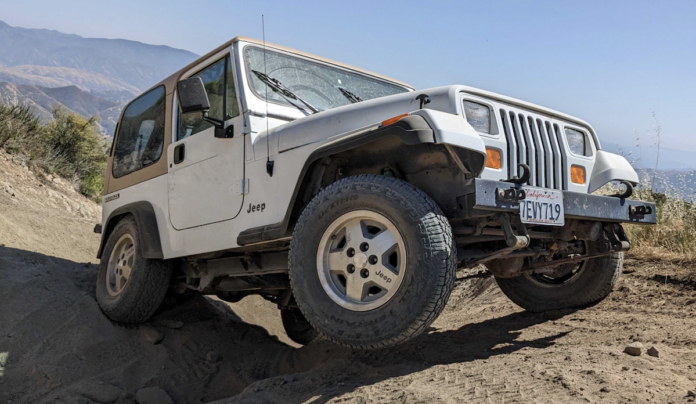
You’re ready to leave, you shift to Park, but your Jeep won’t shut off. Or worse; it won’t start, flashing “Vehicle Not in Park” across the dash even though the shifter is exactly where it should be. Frustrating doesn’t even begin to cover it, because this warning traps you in the worst kind of problem: the vehicle behaves as if something is mechanically wrong, yet everything feels normal at the shifter.
Here’s the truth from a diagnostic standpoint: this message is often not a transmission failure. In many cases it’s a communication and confirmation problem; one that can be triggered by something as “small” as a low-voltage event, a failing auxiliary battery, a wiring harness that’s flexed itself into an intermittent open circuit, or safety software doing its job so aggressively that it looks like a malfunction.
That’s why you’ll see owners replacing expensive parts and still having the message return. The Jeep isn’t “lying”; it’s reacting to the data it has. Your job is to identify why the Jeep can’t confidently confirm Park, and then fix the root cause. This guide breaks down what the warning means, why it appears on different Jeep models for different reasons, and how to fix it without throwing money at the wrong components.
To make this easy, we’ll cover:
- What the “Vehicle Not in Park” message actually means in modern shift-by-wire Jeeps
- The hidden dual-battery problem on Wrangler JL and Gladiator JT (2018–2024) and why it causes brownouts
- The Cherokee KL “Service Shifter” harness failure and the official TSB-based fix (not the $800 quote)
- Grand Cherokee WK2 Auto Park behavior and why it can look like a fault
- When the transmission range sensor truly is failing (P0705/P0706) and what that repair involves
- How the 4xe “Park Outside” advisory is a fire-risk issue, not a Park-detection issue
- How to use Manual Park Release (MPR) for recovery when everything else fails
Safety note: If your Jeep will not shut off, or it shuts off but then won’t restart, treat it like a safety-critical issue. Avoid parking on slopes, chock the wheels if needed, and don’t leave the vehicle unattended unless you’re confident it cannot roll.
What “Jeep Vehicle Not in Park” Actually Means
In many modern Jeeps, the shifter is no longer a purely mechanical device that physically moves the transmission into gear. Instead, it’s essentially a digital request device; a switch or joystick-style interface that sends a command to the vehicle’s computers. When you move the selector to Park, you’re asking the vehicle to engage Park through electronic control.
Here’s the simplified chain of events: you shift to Park → the request goes to the Transmission Control Module (TCM) → the TCM commands actuators/solenoids → the parking pawl engages inside the transmission → sensors report back to confirm the requested state.
When you shift to Park, the TCM instructs a solenoid to engage the parking pawl; a metal latch that locks the drivetrain so the vehicle can’t roll. The system then expects confirmation that Park has been successfully achieved. If the TCM cannot confirm the pawl engagement (or the confirmation signal becomes unreliable), the Jeep treats the situation as unsafe.
Here’s where things get messy. If the TCM can’t confirm Park, it reports that to the Body Control Module (BCM). The BCM then enforces safety rules, which can include:
- Refusing to allow the engine to shut off (because it believes the vehicle is not secured)
- Refusing to start the engine (because it can’t verify safe start conditions)
- Displaying warnings such as “Vehicle Not in Park,” “Service Shifter,” or “Shift to P Then Desired Gear”
- Triggering other warning lights if voltage or communication is unstable
This is a safety feature designed to prevent rollaway incidents. But when the system glitches, you can be forced to deal with an error message that feels disconnected from reality.
The Transmission Range Sensor is often the “tattletale” in this story. This sensor reports the selected gear position. If the sensor fails, wiring intermittently opens, or voltage drops at the wrong moment, the sensor report becomes inconsistent. The dash then lights up even though the shifter is physically in Park and the transmission may even be mechanically in Park.
Expert clarification: “Vehicle Not in Park” doesn’t always mean “the vehicle is literally in Drive or Neutral.” It often means “the computer is not confident enough to certify that Park is engaged.” That difference is the reason battery voltage, wiring integrity, and software safety logic can all trigger this message.
A Technician’s Fast Diagnostic Approach (So You Don’t Guess)
Before we get model-specific, here’s a universal diagnostic flow that applies to most Jeep platforms. It’s built around the most common causes in the field, ordered from cheapest/fastest to more complex.
- Check for low-voltage symptoms: slow cranking, flickering electronics, multiple warning lights, ESS warnings.
- Scan for codes if possible (even a basic scanner): see whether P0705/P0706 or body/TCM communication codes are present.
- Test the battery system properly: on JL/JT, include the auxiliary battery; don’t assume the main battery is the whole story.
- Look for model-specific known failures: Cherokee KL shifter harness, WK2 Auto Park behavior, 4xe recall advisories.
- Inspect wiring/connectors at known stress points (center console, shifter bezel, underhood battery connections).
- Only then consider hardware replacement like a transmission range sensor or shifter module.
This order matters. Most unnecessary spending happens when owners assume “Park issue” equals “transmission replacement,” when the actual failure is power supply or a small harness under the shifter trim.
Why Your Wrangler or Gladiator Won’t Start (The Hidden Battery Problem)
If you own a 2018–2024 Wrangler JL or Gladiator JT, there’s a high probability your vehicle has two batteries under the hood. The main battery handles engine cranking. The auxiliary battery (a small 12V AGM unit mounted underneath/near the main battery assembly) supports electronics during ESS (Engine Stop/Start) events.
Here’s the kicker: when that auxiliary battery starts failing, it can behave like an electrical parasite. It doesn’t just “stop helping”; it can pull down the entire system, causing undervoltage events that confuse modules. That’s when you see a cluster of warnings: “Vehicle Not in Park,” “Stop/Start Unavailable,” plus a bunch of unrelated lights that appear to have nothing to do with the shifter.
This happens because the Park confirmation process and the module communication required to validate it are voltage-sensitive. If the system voltage dips at the wrong moment, the TCM can lose state temporarily and the BCM will assume Park cannot be trusted.
The Voltage Drop That Tricks Your Jeep
When you press the start button, your Jeep performs a fast systems check. If voltage drops below roughly 11 volts (a common threshold during a brownout scenario), the TCM can briefly lose communication or momentarily reset. The Jeep may crank or attempt to start, but the module state becomes inconsistent.
When voltage recovers milliseconds later, the BCM sees a confused or partially rebooted TCM and does what it’s designed to do: assume the worst and lock out certain operations. That’s why you can see multiple warning lights; ABS, airbag, power steering; because many modules don’t like low voltage, and they’ll flag faults even if the underlying “problem” is simply unstable power.
This is also why replacing only the main battery can “fix” the problem temporarily; then the warning returns days or weeks later. The auxiliary battery remains the weak link and continues to drag the system down during critical events.
Expert insight: On these platforms, “Vehicle Not in Park” is often a symptom of undervoltage, not a cause. Fix the undervoltage problem and the Park message often disappears as a side effect.
How to Actually Diagnose the Aux Battery
Standard battery testers can mislead you here. Because the batteries are connected in a way that allows the healthier main battery to “mask” the aux battery’s weakness, you may see acceptable voltage readings even when the aux battery is failing under load. To diagnose correctly, you need to isolate the auxiliary battery and test it on its own.
The real test:
- Disconnect the negative cable from your main battery
- Disconnect the aux battery’s negative (it’s usually bonded to the main terminal clamp)
- Test the aux battery alone
If the aux battery reads under 12 volts at rest or fails to hold a charge, it’s a strong suspect. A new aux battery is typically around $80–$120. But Jeep owners discovered there’s another approach that some prefer; especially if they dislike ESS.
Additional battery checks that improve accuracy:
- Measure resting voltage after the vehicle sits for a few hours.
- Measure voltage during crank (if you have a meter that can capture min voltage).
- Load test the battery if it’s older than 3 years, especially in hot climates.
- Inspect battery terminals and grounds for corrosion and looseness (micro-interruptions can trigger the same symptoms).
Loose or corroded terminals are underestimated. A terminal that’s “kind of tight” can still allow voltage drop under load, and modules will react as if there’s a battery failure even when the battery itself is acceptable.
The Fuse 42 Bypass (And Why It Works)
Many owners decide they don’t actually need the auxiliary battery; especially if they don’t care about auto-stop/start. A common workaround is to remove Fuse 42 from the Power Distribution Center under the hood. This tells the computer the ESS system is not installed.
After removing Fuse 42, many owners disconnect the auxiliary battery’s negative terminal and operate the vehicle using the main battery only. The result in many cases: fewer random warnings, reduced low-voltage behavior, and no more recurring “Vehicle Not in Park” messages triggered by aux-battery drain.
No more “Vehicle Not in Park” errors. No more dead batteries. You lose auto-stop/start, but most people are comfortable with that tradeoff. If you use this route, the main battery now carries more responsibility, so replacing it with a quality AGM unit is a wise move.
Expert caution: This bypass is widely discussed by owners, but it is still a modification. Consider warranty implications and local regulations. If you’re unsure, consult a qualified technician or keep the system stock and replace the auxiliary battery properly.
Cherokee Owners: Your Problem Is Different (And Cheaper to Fix)
If you’re driving a 2014–2018 Cherokee KL and you see “Service Shifter” along with “Vehicle Not in Park,” the failure pattern is often very different from JL/JT battery issues. In many KL cases, you’re dealing with a known wiring harness weak point near the shifter bezel that can degrade over time from repeated movement.
This is one of those problems where the vehicle’s behavior can feel dramatic compared to the underlying cause. The system is behaving correctly from a safety standpoint; if the shifter signal is unreliable, the vehicle cannot risk assuming Park. But the reason the signal is unreliable can be as simple as wiring fatigue.
The Shifter Bezel Wiring Failure
The bezel around the gear shifter contains a circuit board and wiring that connects to the floor harness. On many Cherokee KLs, FCA’s design leaves too little slack and minimal strain relief. Each time you move the shifter from Park to Drive, the wiring flexes. Over years of use, that repeated flexing can cause conductor fatigue, cracking, or connector corrosion.
A common sign is that the PRNDL indicator lights (the LEDs showing the gear position) flicker, go dim, or cut out. If the TCM or BCM cannot read a stable gear position signal, the system often defaults to “not in Park” to protect against rollaway risk.
Why the failure is intermittent: Harness fatigue often behaves like a “sometimes” problem. It may work when warm and fail when cold, or work until you bump the console, or fail after a specific shift movement. That intermittent nature is a hallmark of wiring fatigue rather than mechanical transmission failure.
The TSB Fix (That Most Dealers Won’t Tell You About)
Chrysler issued Technical Service Bulletin 08-054-18 addressing this exact fault pattern. The solution is not necessarily replacing the entire shifter assembly (which can be quoted at $800 or more). Instead, the TSB solution is commonly associated with installing a jumper harness, part number Mopar 68413957AA.
This $130 harness typically takes about 45 minutes to install if you’re reasonably handy. It can save $600–$700 in labor and unnecessary parts replacement.
The repair usually involves:
- Removing center console trim (clips and screws)
- Unplugging the old harness from the shifter base
- Installing the reinforced wiring with improved connectors and slack
- Reassembling trim and verifying PRNDL illumination and shifting signals
Aftermarket options like Dorman 601-402 can include both the bezel and harness if the bezel is cracked or cosmetically damaged. Either route can be a DIY fix for many owners, as long as you work carefully and avoid breaking trim clips.
Expert tool tip: Use plastic trim tools rather than metal screwdrivers for console removal. It reduces cosmetic damage and lowers the risk of snapping clips that hold the console securely.
The Grand Cherokee “Auto Park” Confusion
If you own a 2014–2015 Grand Cherokee WK2 with the monostable shifter (the one that springs back to center), your “Vehicle Not in Park” experience can be confusing because the shifter’s physical position doesn’t always match what your brain expects. In many cases, what feels like a malfunction is actually the vehicle applying aggressive safety logic.
The WK2 monostable shifter behaves more like a joystick than a traditional PRNDL lever. That design choice reduced mechanical complexity but created a serious user-interface problem: drivers could unintentionally leave the vehicle in Neutral or a drive range because the shifter always returns to center.
What Happened With the Monostable Shifter
The monostable shifter works like a spring-loaded controller. Push forward for Reverse, pull back for Drive, and it returns to center. The problem is that “center” doesn’t tell the driver what gear is engaged. Drivers could believe they selected Park when they actually did not.
After several rollaway incidents; including the tragic death of actor Anton Yelchin; Chrysler issued Recall S27, adding Auto Park software logic to reduce rollaway risk.
Key point: In this scenario, “Vehicle Not in Park” is not always a component failure. It may be the system warning you that your current conditions can cause a rollaway, and that the vehicle is intervening.
How Auto Park Triggers the Error
Auto Park automatically shifts your Jeep to Park if all these conditions are met:
- You’re going under 1.2 mph
- Transmission isn’t in Park
- Seatbelt unbuckles
- Driver door opens
This catches people off guard when they open the door to check parking lines while reversing. The vehicle can shift to Park abruptly and display “Auto Park Engaged” or “Shift to P Then Desired Gear.” It can feel violent because the drivetrain suddenly locks while you’re still moving slightly.
It’s not broken. It’s trying to prevent your SUV from rolling. But it can feel like a malfunction if you don’t know the logic exists. Pro tip: if you’re in 4WD Low, Auto Park is disabled; the system will typically chime and warn instead of forcing Park.
Expert driving habit: If you must open the door during low-speed maneuvers, bring the vehicle to a complete stop first and keep your foot firmly on the brake. Treat Auto Park as an active safety system, not a passive feature.
When Your Transmission Actually Has a Problem
It’s important to be fair: sometimes “Vehicle Not in Park” does point to a genuine hardware failure. If diagnostic codes like P0705 or P0706 are present, the Transmission Range Sensor (or the circuitry supporting it) can be failing.
The Transmission Range Sensor reports gear selection to the control modules. When it fails, the vehicle truly cannot confirm whether it is in Park, Neutral, Drive, or Reverse. In that case, safety logic will block starting or shutting down.
You may also experience:
- No start (even though you’re in Park)
- Reverse lights staying on in Drive
- Inability to shift out of Park even with the brake pressed
- Shifting behavior that feels inconsistent or delayed
- Unexpected gear display behavior on the instrument cluster
Replacing the sensor can require significant work; often involving transmission pan removal depending on design. Many shops quote around $300–$500 for diagnosis and replacement. It’s not the most common failure, but it does occur; especially when vehicles go long intervals without transmission service or when connectors and wiring near the transmission are exposed to harsh conditions.
Expert caution: Don’t assume P0705/P0706 automatically means “sensor replacement.” These codes can also be triggered by wiring faults, connector corrosion, or low-voltage communication failures. A proper diagnosis should include wiring checks and power/ground verification before parts replacement.
The 4xe Fire Risk (Park Outside Warning)
Wrangler 4xe and Grand Cherokee 4xe owners face a unique scenario that can be mistaken for a Park-related drivetrain issue. Recent NHTSA recalls 25V-741 and 24V-720 warn of a high-voltage battery fire risk even when the vehicle is parked and off.
The concern involves Samsung SDI high-voltage battery cells, where internal separator damage can increase risk of thermal runaway. Stellantis issued a “park outside, away from structures” advisory covering a large population of vehicles. If your VIN is affected, the guidance is not optional.
If your VIN is affected:
- Don’t charge the high-voltage battery
- Park outside until the remedy is applied
- Contact your dealer immediately
- Follow any interim instructions from the recall notice and dealer
The “park outside” instruction is literal; not a transmission error, not a “not in Park” failure, but a fire safety precaution. Treat it as a high-severity safety issue.
Expert note: This warning demonstrates why reading the exact message matters. “Vehicle Not in Park” is a shift-confirmation issue. “Park Outside” is a safety advisory tied to recall conditions.
How to Manually Release Park When Everything Fails
Dead battery? Fried TCM? Major electrical failure? If your Jeep is stuck and you need to load it onto a flatbed, you may need the Manual Park Release (MPR). Jeep hides the release differently by model, but the purpose is consistent: it forces the transmission into Neutral so the vehicle can be moved short distances for recovery.
Critical safety rule: Always secure the vehicle before using MPR. Use wheel chocks and keep the vehicle on level ground if possible. Once you release Park, the vehicle can roll.
Wrangler JL / Gladiator JT
Look for a small panel on the driver’s side dashboard (left of the steering wheel) or the side of the center console. Remove it to access the MPR mechanism. You’ll typically find an orange tether strap. Pull it straight out horizontally until it locks. This forces the transmission into Neutral for loading.
To reset: Pull slightly to release tension, unlatch the mechanism, and feed the strap back in.
Expert tip: If you’re using MPR because of battery failure, plan recovery first. Once you release Park, you’ve changed the safety state of the vehicle; be ready with chocks and a tow plan.
Grand Cherokee WK2
Open the center console armrest bin. Find the rectangular access panel on the floor or front wall of the bin area. Inside is usually a bright orange or red tether strap. Pull it upward until it clicks into the vertical position.
To reset: Pull up slightly while pressing the release clip, then guide it back down.
Cherokee KL / Compass MP
You’ll typically need to remove the shifter boot bezel with a trim tool. Lift the rubber boot to expose the white or yellow plastic mechanism at the shifter base. There is a release lever or slot; push it while pulling the gear selector out of Park into Neutral.
Critical warning: MPR only places the transmission into Neutral; it does not change the transfer case state. You cannot flat-tow a 4WD Jeep for miles using MPR. Doing so can destroy a ZF transmission and create a much bigger repair. MPR is for short-distance recovery onto a tow truck only.
Expert towing note: If you must move the vehicle with MPR, keep it slow and controlled, and let a tow professional handle longer relocation.
Quick Reference: What’s Wrong With Your Jeep
This table summarizes common symptom patterns and the most likely causes. It’s not a substitute for scanning codes, but it’s a strong “first-pass” triage tool.
| Your Symptoms | Your Jeep Model | Likely Culprit | The Fix |
|---|---|---|---|
| No crank, “Stop/Start Unavailable,” multiple warning lights | Wrangler JL, Gladiator JT, Compass | Dead auxiliary battery | Replace both batteries or do Fuse 42 bypass |
| “Service Shifter,” PRNDL lights flickering | Cherokee KL 2014-2018 | Shifter bezel wiring harness | Install Mopar jumper harness 68413957AA |
| “Auto Park Engaged” when opening door | Grand Cherokee WK2 2014-2015 | Monostable shifter safety logic | Software update (Recall S27) or driver education |
| Won’t start, codes P0705/P0706 | Any model | Failed Transmission Range Sensor | Replace sensor (dealer repair) |
| “Park Outside” warning | Wrangler 4xe, Grand Cherokee 4xe | High-voltage battery fire risk | Don’t charge; contact dealer immediately |
| Won’t shut off, warning appears after rain or after console work | Multiple models | Connector moisture or harness disturbance | Inspect/clean connectors; check for water intrusion; scan codes |
| Intermittent “Vehicle Not in Park” after bumps or vibration | Multiple models | Wiring/connector intermittency | Harness inspection, continuity testing, connector reseating |
Expert use: If your symptoms match a known pattern (JL/JT dual-battery issues or KL harness failures), start there. Those two categories account for a large percentage of real-world cases.

DIY Checklist: What You Can Safely Do Before Visiting a Dealer
Not every owner wants to wrench; and not every owner should. But there are safe, low-risk checks you can do that often solve the issue or at least prevent you from paying for unnecessary parts.
- Verify the simple stuff: Make sure the brake pedal is pressed firmly during start; ensure doors are fully closed; confirm you’re actually in Park.
- Look for low-voltage clues: slow crank, weak lights, multiple unrelated warnings.
- Inspect battery terminals: check for looseness and corrosion; tighten safely if needed.
- If JL/JT: test aux battery properly (isolated test), or consider the Fuse 42 route if you accept ESS deletion.
- If KL with “Service Shifter”: inspect bezel lighting and plan for harness repair rather than full shifter replacement.
- If WK2 monostable: understand Auto Park triggers; don’t assume failure if message appears during door-open low-speed maneuvers.
- Scan for codes if you can (even a basic scanner helps), and document them before clearing anything.
Doing these steps before you call a dealership gives you leverage: you can speak in symptoms and patterns, not just frustration. That usually produces a better diagnosis.
When You Should Stop DIY and Get Professional Diagnostics
There are cases where professional tools and expertise are the right path; especially when safety and module logic are involved. Consider dealer or qualified specialist diagnosis if:
- The warning persists after battery testing and replacement
- You have repeat P0705/P0706 codes after clearing
- The vehicle will not shut off reliably
- The vehicle cannot be safely parked without chocking wheels
- Multiple module communication codes appear (possible CAN bus or power distribution problems)
- Your vehicle is affected by an active recall (especially 4xe advisories)
Professional diagnostics typically involve scanning all modules (BCM, TCM, ABS, etc.), checking live gear-position data, validating voltage under load, and verifying harness continuity. This is where a specialist can outperform guesswork and save you money long-term.
Final Thought
We’ve covered the most common causes of the Jeep “Vehicle Not in Park” message and the practical fix for each. The key takeaway is that this warning is often a confirmation problem, not a catastrophic transmission failure. Low voltage from a dying auxiliary battery, an aging harness at the shifter bezel, or aggressive safety logic can all create the same symptom; even though the underlying causes are very different.
As mentioned, you can fix some issues yourself, but you’ll need the help of a specialist to handle complex electrical faults, sensor failures, or module communication problems. If your Jeep is still under warranty, contact your dealership; but before you do, make sure it isn’t something simple like undervoltage, a door-ajar condition, or a known harness issue you can correct without unnecessary parts replacement. Good luck, and take it step-by-step.

