
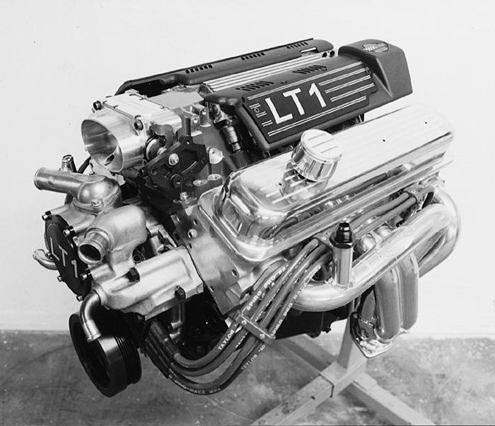
GM is popular for tweaking the alphanumeric naming system of its high-performance engines, and few names generate as much recognition as “LT1.” The small-block LT1 engine is one of the trademark performance designs associated with the Chevrolet brand; whether you’re talking about the classic LT-1 era or the modern Gen V LT1 found in late-model performance cars and trucks. But when you’re diagnosing misfires, routing plug wires, setting up ignition timing, or simply trying to understand how the engine produces smooth power, one topic sits at the center of the discussion: the firing order.
So what does an LT1 engine firing order mean, and why do technicians treat it like a “non-negotiable” detail? In this article, I’ll be looking at the firing order of a multiple-cylinder engine, using the LT1 as the core reference point. We’ll cover what firing order is, how it affects vibration and exhaust flow, how multiple-cylinder sequencing actually works in a four-stroke engine, and how to determine firing order when you don’t have it memorized. We’ll also clarify the differences between LT1 generations, because “LT1” can mean different things depending on the year and platform; yet the underlying ignition fundamentals remain the same.
If you’re a DIY enthusiast, this guide will help you avoid the most common mistakes that cause rough running: incorrect plug wire routing, misunderstanding cylinder numbering, misreading distributor rotation direction, and confusing LT-based firing orders with LS firing orders. If you’re a technician, this guide provides a structured explanation you can use to teach new apprentices or customers why firing order matters beyond just “because the manual says so.”
Let’s start with the engine itself; because the LT1 name has history, and understanding that history will help you avoid confusion when you’re looking up specs.
Definition and History of the LT1 Chevy Engine
An LT1 engine is a small-block performance engine introduced in the 1970s by the Chevy division of General Motors. It is designed as a boisterous engine intended for racing. Built with high winding, a high-lift camshaft, and solid valve lifters, this engine is available in Camaro and Corvette. The LT1 comes with a 350cu 5.7 L engine and is part of the popular high-performance ZR-1 option. During its early years of production, the LT1 engine was limited to maximum performance ratings of 300hp (horsepower) and 240 lb.ft. (torque).
No doubt, the LT1 small-block aluminum-head engine offers more sophistication than you would find with the original LT1 cast-iron Fuelie small-block engines. Again, the LT1 not only boasts an incredible reverse-flow cooling system; it’s also a perfect pick for its modern electronic fuel injection principle. Yet, it runs smaller valve sizes of 1.94/1.50.
Now, let’s add some expert clarity without changing the meaning of what you’ve read: “LT1” is a nameplate that GM has used in more than one era, and that’s why it can confuse people when they search for firing order. In enthusiast conversations you’ll often see these references:
- Classic LT-1 (with a hyphen): commonly associated with early performance small-blocks (late 1960s through early 1970s). These engines were built for high-performance applications, and they helped cement the LT name in Chevrolet’s performance vocabulary.
- Gen II LT1 (no hyphen, often written LT1): the 5.7L small-block used in the early 1990s (Camaro, Firebird, Corvette, Caprice/Impala SS). This is the “reverse-flow cooling” LT1 many technicians think of, famous for OptiSpark ignition and EFI.
- Gen V LT1: the modern 6.2L direct-injection small-block used in contemporary performance platforms (such as later Corvettes and Camaros). It’s technologically very different, but the firing-order discussion still matters in diagnostics and ignition-related work.
The key takeaway: the LT1 badge spans multiple generations. When you are looking up specifications, always match them to the engine generation, model year, and vehicle platform. Fortunately, the firing order for the traditional Chevrolet small-block V8 family is consistent in the way most owners expect, and we’ll cover that in detail.
Before we get to the numbers, let’s define firing order properly, because many people think it’s just “plug wire routing.” It’s more than that; it’s the engine’s rhythm.
What is LT1 Engine Firing Order?
The order in which the cylinders are sparked is called the firing order. In other words, the firing order is the order of sparking in the cylinder of a multi-cylinder engine. The firing order of a given internal combustion (IC) engine depends on the number of cylinders in the engine. The firing order often corresponds to the order in which the spark plugs are passed. The order is different if you’re using a diesel engine. The firing order of a diesel engine corresponds to the order in which fuel is injected into each cylinder.
The firing order affects the vibration, sound, and evenness of power output from the engine. The engine firing order must be maintained and proper ignition timing should be ensured to keep the engine operation smooth.
Let me say here that the firing order differs from engine to engine, depending on their configurations. For example, the firing order of a two-cylinder V-shaped engine is completely different from that of a four-cylinder inline engine. As a technician or mechanic, you need to identify the engine configuration of your LT1. If you’re dealing with a multiple-cylinder engine, like the LT1, firing order also means a sequence in which power is produced inside the cylinder. I will explain this in detail shortly.
In practical service terms, “firing order” is the sequence the engine follows to deliver power strokes to the crankshaft. It is chosen to reduce vibration, distribute heat, manage exhaust scavenging, and produce smooth torque delivery. If you get the order wrong; especially when routing spark plug wires on engines with distributors or distributor-like ignition distribution; your engine will misfire, run rough, backfire, or fail to start.
For the LT1 family, the firing order is also a foundational detail for:
- Ignition wire routing (especially on distributor and OptiSpark setups)
- Misfire diagnosis (knowing the next cylinder in sequence helps identify patterns)
- Camshaft selection and tuning (aftermarket camshafts may use different lobe arrangements and require correct reference)
- Engine sound and balance (the sequence influences how the engine “feels” under load)
Now let’s go deeper into how firing order works inside a multi-cylinder, four-stroke engine; because once you understand the mechanics, the numbers stop feeling random and start making sense.
How does LT1 multiple-cylinder Engine Firing Order Work?
In your car’s ignition system, the distributor transmits sparks to each of the spark plug leads, one at a time. The number of sparks the distributor produces in one revolution is equal to the number of cylinders in the engine.
In a four-cylinder engine, for example, each cylinder requires a spark and they get sparked one by one in every 720 degrees of camshaft revolution. What it implies is that a spark takes place in every 180-degree of the crankshaft revolution. There is an order in which this sparking takes place.
The power strokes also need to be equally placed to get an equally balanced movement of the crankshaft. Three main factors that could potentially affect the LT1 engine firing order are:
- Engine vibration
- Development of back pressure
- Engine cooling system
Let’s translate the four-stroke timing into a clean mental model. Every cylinder in a four-stroke engine needs two crankshaft revolutions (720 degrees) to complete the full cycle: intake, compression, power, exhaust. The camshaft makes one revolution during that time (360 degrees) because it rotates at half crank speed. A spark event is timed near the end of the compression stroke so the power stroke can begin.
So in a V8 like the LT1, you have eight cylinders, each needing a power stroke every 720 degrees. The engine spreads those power strokes out so the crankshaft receives a power event every 90 degrees of crank rotation (720/8 = 90). This spacing is part of why V8s feel smooth; they deliver power frequently and evenly.
Now, why does the sequence matter if power strokes are evenly spaced anyway? Because even spacing is not the only goal. The sequence also affects:
- Vibration control: The crankshaft and engine mounts experience different loading depending on which bank fires next.
- Thermal balance: Alternating between banks helps distribute heat load across the cooling system.
- Exhaust pulse management: Exhaust pulses traveling through manifolds and exhaust pipes can create pressure waves. The firing order influences pulse timing and reduces backflow risk.
Let’s imagine that you first fire cylinder 1 of your LT1 engine. There’s a force acting downwards on the first cylinder that produces forces in certain directions (say A and B of magnitude. However, A bears more force than B. If you fire cylinder 2 immediately after firing cylinder 1, bearing A will be forced to shoulder a higher load. This can cause your engine to vibrate. To reduce the degree of vibration, you’ll need to fire cylinder 3 immediately after firing cylinder 1.
The underlying principle here is sound even if the example uses simplified labels: firing consecutive cylinders on the same bank or in certain adjacent patterns can “stack” load in one direction and amplify vibration. Alternating and sequencing cylinders thoughtfully spreads force more evenly across the crankshaft and engine block.
Similarly, in case you fire cylinders 1 and 2 in quick succession, you run the risk of heating half part of your engine. This can cause a load imbalance in your engine’s cooling systems. To decrease the load, you’ll need to equally fire cylinder 3 immediately after cylinder 1. Likewise, firing cylinders 1 and 2 in succession also may result in high pressure in the exhaust pipe. The far-reaching effect is a backflow of exhaust gas. Firing cylinder 3 after 1 gives the exhaust gas sufficient time to leave the engine, thus helping you to prevent excessive pressure in the exhaust pipe.
For a V8 like the LT1, the firing order is designed to avoid concentrating heat and exhaust pulses on one bank repeatedly. This improves the engine’s long-term thermal stability and can help reduce exhaust reversion effects, especially under certain load and RPM conditions.
If you drive a four-cylinder LT1 engine, the possible firing orders are 1-3-4-2 or 1-2-4-3. However, the 1-3-4-2 firing sequence is the more commonly used. For a 6-cylinder engine, the firing orders are multiple. They can 1-5-3-6-2-4, 1-5-4-6-2-3, 1-2-4-6-5-3, or 1-2-3-6-5-4. Most commonly, the order 1-5-3-6-2-4 is used.
These examples help illustrate a key point: firing order is dependent on engine configuration. However, the LT1 we’re discussing as a Chevy small-block is most commonly associated with the V8 firing order used across traditional Chevrolet small-block families. We’ll show the LT1 V8 firing order explicitly in the model table below; and also include a quick “sanity check” so you can verify your plug wire routing correctly.
LT1 V8 Cylinder Numbering (Critical for Correct Plug Wire Routing)
Before you even touch firing order on a Chevrolet V8, you must understand cylinder numbering; because firing order numbers are meaningless if you don’t know which physical cylinder is “1,” “3,” “5,” and so on. This is where many DIY mistakes begin.
On most Chevrolet small-block V8 engines (including LT1-era layouts), cylinders are typically numbered:
- Driver-side bank: 1-3-5-7 (front to rear)
- Passenger-side bank: 2-4-6-8 (front to rear)
This is one of the most important foundation details in ignition work. If you misidentify the front cylinder on either bank, you can route wires perfectly according to the firing order; and still have a no-start or violent misfire because you’re using the wrong cylinder numbering map.
Expert tip: Always confirm cylinder numbering from a trusted service manual or engine documentation when you’re working on an unfamiliar platform. Different manufacturers number cylinders differently (some number left-to-right across the engine, others alternate). Chevy’s traditional V8 numbering is consistent and widely used, but verification is still a good habit.
How to determine the firing order of an engine?
Supposing you don’t know the firing order of a given engine, how will you determine it? It’s pretty simple. Take the following steps.
- Mark the intake valves or all the exhaust valves for easy identification
- Start the engine
- Turn the engine crankshaft in the normal direction of rotation until the intake valve is opened. The direction of rotation can be clockwise or counterclockwise, depending on your engine configuration
- Put an eye on the engine to see the intake valve opening system; that is, check which cylinder exhausts after rotating.
- Mark the time cylinder 1 starts firing
- Keep rotating the crankshaft in the normal turning direction
- Check which cylinder will have exhaust next
- Repeat and continue the process until all the cylinders have undergone exhaust stroke
This method is a classic mechanical approach and it teaches an important concept: firing order is tied to valve events and crankshaft position, not just ignition wiring. In practice, technicians rarely determine firing order from scratch on modern vehicles because service data is readily available. But the method remains valuable for engine builders, older engines, or unknown swap engines where you’re verifying configuration.
For safety and practicality, here are additional expert notes when applying a determination method in real work:
- Disable ignition and fuel when rotating manually: this reduces risk and prevents accidental start.
- Use proper tools to rotate the crankshaft: correct socket size and rotation direction matters.
- Confirm TDC on compression for cylinder 1: this is how you align distributor/OptiSpark reference correctly.
Most LT1 applications won’t require this level of work just to find firing order, but understanding the relationship between crank angle, cam events, and spark timing makes you more effective at diagnosing ignition issues.
Select Firing order for Different Models
The table below provides firing order examples for several models and configurations. Use this as a quick reference, but always verify against your specific year, engine code, and service manual because minor variations and labeling mistakes can occur in online sources and even printed charts.
| Model/Make | Firing order | Distributor rotation Direction |
| 200 GMC V6 Somana 4.3L | 1-6-5-4-3-2 | Clockwise |
| 200 GMC Inline Somana 4.3L | 1–5–3–6–2–4 | Counterclockwise |
| Chev y V8 LT1 | 1–8–4–3–6–5–7–3 | Clockwise |
| 1995 Chevy Impala Caprice | 1-8-4-3-6-5-7-2 | Clockwise |
| 1994 Chevy Camaro 5.7L | 1-8-4-3-6-5-7-2 | Clockwise |
| 1991 Chevy S10 4.3L | 1-6-5-4-3-2 | Clockwise |
| Nissan V6 | 1–2–3–4–5–6 | Counterclockwise |
| 991 Chevy S10 2.8L | 1-2-3-4-5-6 | Clockwise |
| LS V8 Chevy | 1–8–7–2–6–5–4–3 | Clockwise |
Important expert note: the standard LT1/Gen II small-block Chevrolet V8 firing order is widely known as 1-8-4-3-6-5-7-2. If you ever see “1–8–4–3–6–5–7–3” listed for an LT1, treat that as a likely typo rather than a new firing order. You can see the correct sequence explicitly in the Impala/Caprice and Camaro rows above.
This is exactly why professional workflow emphasizes verification. The cost of a firing order mistake can range from “engine won’t start” to backfires that damage intake components on certain engines. Always cross-check firing order from at least one reliable service reference for your exact engine.
Distributor Rotation Direction and Why It Matters on LT1 Applications
Firing order is only half the story when you’re routing ignition wires on distributor-based systems. The other half is distributor rotation direction. If you route wires in the correct firing order but you go around the cap in the wrong direction, the engine will misfire just as badly as if you used the wrong firing order.
In classic distributor systems, the rotor turns clockwise or counterclockwise depending on camshaft and gear design. The table above includes rotation direction for the listed vehicles. For LT1-related applications like the 1994 Camaro 5.7L and 1995 Impala/Caprice, the distributor rotation direction is listed as clockwise. That means once you identify the #1 terminal on the distributor cap, you follow the firing order around the cap in a clockwise progression.
For the Gen II LT1 specifically, many vehicles use the OptiSpark distributor system mounted at the front of the engine. While the physical design differs from a traditional rear-mounted distributor, the idea is similar: ignition distribution follows a defined rotation and terminal mapping. If you’re servicing an OptiSpark-equipped LT1, use service literature to ensure you’re routing wires correctly and that the correct cap/rotor installation is used.
Expert tip: if you’re unsure of rotation direction and you don’t want to guess, you can often confirm rotor direction by slowly rotating the engine by hand (with ignition disabled) and observing rotor movement (where applicable). But the simplest and safest method is using a verified service reference for your exact model.
Common LT1 Firing Order Problems (Symptoms and Diagnosis)
Most people search for “LT1 firing order” because the engine is not running correctly. Here are the most common symptom patterns associated with firing order or plug wire routing errors:
- No-start condition after tune-up work (plug wires replaced incorrectly)
- Backfiring through intake (spark events happening at the wrong time relative to intake valve position)
- Backfiring through exhaust (misfire or incorrect ignition timing causing unburned fuel ignition in exhaust)
- Rough idle / shaking immediately after plug wire replacement
- Loss of power and “dead” feeling under throttle
- Check engine light with multiple misfire codes (on OBD-II vehicles)
Expert approach to diagnosis is simple: if a vehicle ran fine before plug wires were touched and now runs terribly, assume a routing issue first. Confirm cylinder numbering, identify #1 terminal on the cap/distributor, confirm rotation direction, and then follow the firing order around the cap. Do not rely on wire length as a routing guide; replacement sets sometimes have similar lengths and can mislead you.
If the vehicle has not recently been serviced and you’re chasing a misfire, firing order is less likely to be the root cause. In that case, you’re looking more at ignition components, spark plug condition, coil output, fuel delivery, compression, or in the case of OptiSpark, distributor/venting/moisture-related issues. But even then, firing order knowledge helps you interpret which cylinder is next in sequence and whether a problem seems isolated to one bank or distributed across the engine.
Is the LT1 a 6.2-liter or 5.5-liter engine?
The LT1 is a 6.2-liter engine. It sounds counter-intuitive, right? You don’t want your engine to thirst for gasoline due to fuel inefficiency. Each cylinder of the Chevy LT1 engine contains two valves. This alchemy may seem archaic to many mechanics and auto enthusiasts. Yet, the design reinforces the engine’s top-class performance. It not only enables a greater inflow of air into the engine. A two-valves-per-cylinder system also eliminates or at least reduces shrouding. Hence, it ensures the exhaust gasses go out away from the engine more efficiently.
This is a great point to clarify with expert context: the modern Gen V LT1 is indeed commonly known as a 6.2L engine. But earlier LT1 references; especially Gen II LT1; are also widely known as 5.7L (350 cubic inches). This is why matching your information to the correct engine generation matters. The design philosophy may differ across decades, but the core idea remains: airflow, combustion efficiency, and exhaust evacuation determine performance and drivability.
Two valves per cylinder may seem “old school,” but two-valve designs can deliver excellent low-end torque and strong flow characteristics when properly engineered. Reduced shrouding and efficient port design can help the cylinder breathe effectively. And even in modern engines, the total system; intake design, combustion chamber shape, cam profile, injection strategy; matters more than “valve count” alone.
From a firing order standpoint, engine displacement doesn’t change firing order by itself. What changes firing order is the crankshaft and camshaft design and how engineers choose to sequence combustion events for balance and efficiency. That’s why both classic and modern Chevrolet V8 families can share familiar firing order patterns; even when the fuel delivery and ignition technologies are completely different.
Frequently Asked Questions (LT1 Firing Order)
What is the LT1 V8 firing order?
The common Chevrolet LT1 V8 firing order is 1-8-4-3-6-5-7-2. If you’re routing plug wires, confirm cylinder numbering first (1-3-5-7 on the driver bank, 2-4-6-8 on the passenger bank), then confirm distributor/OptiSpark rotation direction and follow the sequence correctly.
What happens if I wire the firing order wrong?
Most commonly, the engine will misfire severely, run rough, backfire, or fail to start. Incorrect firing order creates spark events at the wrong time relative to valve position and piston stroke, which disrupts combustion sequencing. On some engines, repeated backfiring can damage intake components.
How do I find cylinder #1 on an LT1?
On most Chevrolet V8 layouts, cylinder #1 is the front cylinder on the driver-side bank. The driver bank typically runs 1-3-5-7 front to rear, and the passenger bank runs 2-4-6-8 front to rear. Always verify with service information if you are working on an unfamiliar swapped engine or non-standard layout.
Is LT1 firing order the same as LS firing order?
Not necessarily. Many LS engines use 1-8-7-2-6-5-4-3 (as shown in the table). Mixing up LS and LT1 firing order is a common mistake when searching online. Always confirm which engine family you have before routing wires or diagnosing sequence-related problems.
Final Thoughts
Understanding an LT1 engine firing order of your Chevy vehicle isn’t rocket science. You must first know the type, configuration and capacity of the engine installed in your vehicle. This will give you an insight into how the engine pistons fire.
To close with an expert’s practical advice: firing order is a foundational detail that affects everything from smooth idle to exhaust pulse behavior. If you’re doing tune-up work, take photos before removing plug wires, label wires, and verify cylinder numbering. If you’re diagnosing a rough-running LT1, use firing order knowledge as part of a systematic approach; confirm ignition, fuel, and mechanical health rather than guessing.
Most importantly, always cross-check your firing order and rotation direction against reliable service information for your exact model year and engine generation. The LT1 name spans multiple eras, but careful identification and a methodical process will keep you on the right track; and keep your Chevy running the way it was engineered to run: smooth, powerful, and consistent.

