
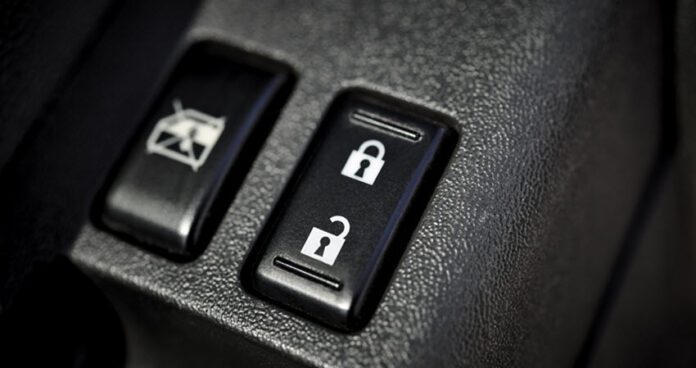

Imagine turning your key or pushing the button on your Mercedes key fob ; and nothing happens. It’s really annoying when the central locking system suddenly stops working, leaving you locked out or unable to secure your car. Whether the key fob no longer unlocks the doors or the entire system ignores you, this guide explains the common reasons and simple steps to identify and resolve the issue.
What Causes Mercedes Central Locking Problems?
Mercedes cars feature advanced central locking systems that utilize both electronic and mechanical components to work together. When something goes wrong, the problem usually comes from one of these main areas:
Electrical System Failures
The central locking needs a steady 12-volt power supply that goes through certain fuses in your Mercedes. Reports show that electrical issues cause about 72% of central locking problems in Mercedes models made after 2005, and bad fuses are behind roughly 38% of those.
For example, in W212 E-Class cars, fuse 8 (7.5 amp) in the rear fuse box (called the SAM module) supplies power to important parts like the antenna booster and alarm. If your car battery voltage falls below 11.5 volts, it can create communication errors (like fault code U110D00) that stop the central locking from working.
Key Fob Issues
Your key fob sends signals to an antenna usually located in the roof, using either infrared or radio waves. Here are the most frequent key fob troubles:
- Weak or dead battery (CR2025 type should show at least 3.0 volts)
- Interference from nearby electronic gadgets
- The fob has lost its connection (sync) with the car
- Damage inside the fob from drops or water
Door Lock Actuator Failures
The small motors called door lock actuators (parts numbered M14/5 to M14/9) fail in about 23% of Mercedes cars with lots of miles. You might notice these signs if one is going bad:
- Grinding or strange noises when locking or unlocking
- Doors lock but refuse to unlock (or the opposite)
- The inside lock button feels very hard to move
- Locks work sometimes but fail in rain, cold, or heat
How to Diagnose Mercedes Central Locking Problems
Step 1: Check Your Key Fob
Always begin with the easiest things before checking more complicated parts:
- Put in a brand-new CR2025 battery
- Test with your spare key to see if the problem stays
- Look for any visible damage on the fob
If the spare key works fine, the issue is almost certainly with your main key fob.
Step 2: Inspect the Fuses
A blown fuse is one of the top reasons central locking fails in every Mercedes model. Here’s how to check:
| Model | Critical Fuse | Location | Rating |
|---|---|---|---|
| W212 E-Class | Fuse 8 | Rear SAM module | 7.5A |
| W220 S-Class | Fuse 15 | Trunk fuse box | 15A |
| W163 ML-Class | Multiple fuses | AAM module | 15A each |
To check fuses:
- Find the right fuse box (often in the trunk or under the dash)
- Pull out the fuse and look for burn marks or melted plastic
- Use a multimeter to check voltage on both sides (a drop under 0.2V is okay)
- Swap any bad fuse with one that has the exact same amp rating
Step 3: Test the Door Lock Actuators
If fuses are good, check the door lock motors next:
- Listen carefully when you press lock/unlock ; any grinding or odd clicking?
- Try moving the lock knob by hand on each door ; too much resistance means trouble
- See if some doors work while others don’t ; this usually means one bad actuator
How to Fix Common Mercedes Central Locking Problems
Resetting Your Key Fob
Sometimes the key fob just loses its connection to the car. You can often fix this with a quick reset:
- Put the key in the ignition
- Pull it out right away and within 10 seconds press the lock button
- Quickly press the unlock button 5 times (all within about 3 seconds)
- The doors should lock and unlock automatically to show it worked
This simple reset fixes communication problems between the fob and car for many owners, often without buying anything new.
Replacing Fuse 8 in W212 E-Class Models
If fuse 8 is blown in your W212 E-Class:
- Disconnect the negative battery cable first for safety
- Take off the trim panel on the left side of the trunk (use a Torx T25 screwdriver)
- Find fuse 8 (small 7.5A blade type) in the rear fuse box
- Put in a new 7.5A fuse
- Reconnect the battery and test your keyfob locking
This quick fuse swap fixes a large number of central locking issues in E-Class models. Check out this helpful video for a visual guide.
Fixing Antenna Amplifier Issues
The antenna amplifier (often labeled A2/35 in older models like the W211) helps your car pick up the radio signals from your key fob. Over time, moisture or rust can build up in the wires that supply power to this amplifier, blocking the signal and causing remote locking to fail.
- Find the antenna amplifier ; it’s usually attached near the roof or in the rear pillar area
- Use a multimeter to check for about 12 volts (give or take 0.5 volts) at the first pin
- Look closely at the wiring for any green corrosion or rust, especially where wires join in the C-pillar section
- Put some dielectric grease (a special protective gel) on all the connections to stop rust from coming back
Checking CAN Bus Communication for Errors
Your Mercedes uses a special network called CAN Bus to let all the electronic parts talk to each other. If there’s a problem in the wires or connections, the central locking commands might not get through.
- Check the “Terminal 15” power signal ; it should show between 11.5 and 12.6 volts
- Measure the voltage difference between CAN-High and CAN-Low wires ; it should be around 2.5 to 2.7 volts
- Test the resistance between the CAN-High (X30/10) and CAN-Low (X30/11) points ; a normal reading is about 60 ohms (plus or minus 5%)
- Fix any broken wires or clean/replace rusty connectors
Model-Specific Central Locking Solutions
W220 S-Class Short Circuit Resolution
In W220 S-Class models, fuse 15 blowing repeatedly is a frequent issue caused by a short circuit:
- Lift out the rear seat cushion by removing the four Torx T40 bolts
- Unplug the big connector (X26) from the SAM module
- Check for good insulation resistance on pin 8 (the 15A circuit)
- Replace or repair any corroded or damaged wires running from X26/8 to the antenna amplifier (A2/35)
This repair method works very well for stopping repeated fuse failures in older S-Class cars.
W163 ML-Class AAM Reprogramming
In ML-Class (W163) vehicles, the All-Activity Module (AAM or N10) controls the locking signals. Sometimes it just needs a quick software adjustment:
- Hook up a proper Mercedes diagnostic tool to the X11/4 diagnostic port
- Go into the AAM control module settings menu
- Turn on the “Automatic locking at 15 km/h” option
- Turn the ignition off and on again, then test all locking features
This reprogramming step often restores normal communication and gets the central locking working smoothly again.
Preventative Maintenance for Your Central Locking System
Follow these easy habits to help avoid central locking troubles in the future:
- Put dielectric grease on the antenna amplifier plugs once a year
- Clean the fuse box contacts with electrical cleaner every six months
- Change the key fob batteries every two years ; even if they still seem okay
- Keep your car’s software up to date by visiting an authorized Mercedes service center
Recent repair statistics show that doing these simple maintenance steps can cut down central locking problems by over 40%.
Advanced Troubleshooting Techniques
Testing Door Lock Actuators
If you think a door lock motor (actuator) might be faulty:
- Remove the door panel using the correct method for your model
- Unplug the electrical connector from the actuator
- Apply 12 volts in short bursts (about 200 milliseconds each) and watch/listen for movement
- It should move smoothly without any grinding or clicking noises
- Replace any actuator that pulls more than 4.2 amps or feels stuck mechanically
Diagnosing Intermittent Central Locking Problems
Problems that come and go can be the trickiest. Try these tips to track them down:
- Test the locks in different weather ; some issues only show up when it’s humid or rainy
- Compare voltage readings with the engine running versus turned off
- Notice any patterns (like only in the morning, or when it’s hot/cold)
- Try the key fob from various distances around the car
Power Supply Issues Affecting Central Locking
A weak car battery or poor charging can make the central locking act up:
- Check battery voltage while under load ; it should stay above 11.5 volts
- Look for any small drains that slowly kill the battery over time
- Make sure all ground wires are clean and tight (no rust or looseness)
- Confirm the alternator is charging correctly ; 13.8 to 14.2 volts when the engine is running
In W220 S-Class models, the two-way protection sensor (B32) fails in about 89% of cars after 12 years because water gets inside. This sensor helps the locking system know what’s happening, so when it fails, it often causes ongoing locking issues.
The Role of Module Communication in Central Locking
Today’s Mercedes cars have several control modules that need to “talk” perfectly for everything to work:
| Module | Function | Common Failure Mode |
|---|---|---|
| AAM/N10 | Handles locking signals | Software glitches or corruption |
| SAM | Manages power to different systems | Bad fuses or relays |
| EIS | Electronic ignition switch | Problems recognizing the key |
| A2/35 | Antenna amplifier | Poor signal pickup |
When these modules lose connection, your central locking might work only sometimes or stop completely. The best way to fix it is to test each part one by one in the system chain.
Whether it’s a quick fuse swap or a deeper electrical fix, knowing how your Mercedes central locking works puts you in control. With basic tools and a step-by-step approach, most owners can solve these problems without always needing a trip to the dealer. Stay safe on the road!