


You’re cruising along in your hybrid or electric vehicle, and suddenly a message flashes across your dashboard: Refill Inverter Coolant. If you’ve never seen it before, it can feel a little alarming. But don’t panic just yet. In most cases, it simply means your inverter coolant level has dropped below the acceptable threshold, and topping it off will clear the warning right away.
But here’s the thing. What happens when you refill the coolant and the warning still won’t go away? That’s when a simple top-up turns into a genuine problem, and it usually points to something deeper going on inside your vehicle’s cooling system. Ignoring it at that stage isn’t just risky; it can lead to expensive damage to your inverter and drivetrain components.
Whether you drive a Toyota Prius, a Ford Escape Hybrid, a Lexus hybrid, or any other EV or plug-in hybrid on the market, this guide will walk you through exactly what the refill inverter coolant warning means, why it shows up, what causes it, and how to fix it properly. We’ll cover everything from basic coolant refills to sensor failures and ECM malfunctions so you can handle this warning with confidence.
What Exactly Is an Inverter Coolant, and Why Does Your Vehicle Need It?
Before we talk about warnings and fixes, let’s get something straight: you need to understand what inverter coolant actually is and what role it plays in your vehicle. Once you grasp this, everything else makes a lot more sense.
An inverter coolant is a specialized fluid used exclusively in electric and hybrid vehicles. It’s not the same as the regular engine coolant you’d find in a conventional gasoline-powered car. The chemical composition is different, the operating parameters are different, and the components it protects are different. You can’t just swap one for the other and expect things to work out.
So, what does it cool? The inverter. Every electric and hybrid vehicle relies on an inverter to convert direct current (DC) power from the battery pack into alternating current (AC) power that the electric motor can actually use. Without this conversion process, your EV or hybrid simply wouldn’t move. The inverter is, in many ways, the heart of the electric drivetrain.
Here’s where it gets interesting. The process of converting DC to AC generates a significant amount of heat. We’re talking about high-voltage electronics working at full capacity, especially during acceleration, hill climbing, or sustained highway driving. That heat needs to go somewhere, and if it doesn’t, you’re looking at reduced performance, component degradation, and potentially catastrophic failure of the inverter unit itself.
To deal with this heat, automakers designed a dedicated cooling circuit for the inverter. An electric pump pushes the inverter coolant through channels surrounding the inverter, absorbing excess thermal energy and carrying it away to be dissipated. Think of it like the radiator system in a traditional car, but purpose-built for high-voltage electrical components instead of a combustion engine.
The coolant itself is typically a low-conductivity fluid. That’s an important detail. Because it circulates around high-voltage electronics, it needs to have very low electrical conductivity to prevent short circuits or electrical arcing. Regular engine coolant, which is formulated for metal engine blocks and aluminum radiators, doesn’t meet these requirements and could actually cause damage if used in the inverter cooling loop.
In most hybrid vehicles like the Toyota Prius or Camry Hybrid, you’ll find two separate cooling systems: one for the gasoline engine and one for the inverter and electric motor components. They’re completely independent circuits with their own reservoirs, pumps, and coolant types. This is why your vehicle can throw an inverter coolant warning even when your engine coolant level is perfectly fine.
What Does the Refill Inverter Coolant Warning Actually Mean?
Now that you know what inverter coolant does, let’s talk about the warning itself. A refill inverter coolant warning is a dashboard message telling you that the coolant level in the inverter cooling circuit has dropped below the minimum safe level. It’s your vehicle’s way of saying, “Hey, I don’t have enough fluid to keep the inverter from overheating.”
In many cases, this is a straightforward situation. Coolant levels naturally decrease over time due to minor evaporation or very small seepage that’s barely noticeable. A simple top-up with the correct specification of inverter coolant typically clears the warning, and you’re back on the road without any issues.
But sometimes, the warning sticks around even after you’ve refilled the coolant to the maximum line. Or it comes back within days or weeks of a refill. When that happens, the warning isn’t just about low coolant anymore. It’s signaling a deeper problem within the cooling system, whether that’s a leak, a faulty sensor, a broken pump, or even an issue with the vehicle’s computer.
Picture this scenario: you own a 2015 Toyota Prius, and one morning the refill inverter coolant message pops up. You check the reservoir, notice it’s a bit low, top it off, and the warning clears. Great. But three weeks later, the same message appears. You top it off again. Two weeks after that, it’s back. At this point, you’re not dealing with normal coolant consumption. Something is actively draining the system, and you need to figure out what.
The refill inverter coolant warning can also illuminate if the system detects abnormal temperatures even when coolant levels appear adequate. This could indicate that while there’s fluid present, it’s not circulating properly, or the sensors monitoring the system are giving bad readings. Either way, the vehicle’s computer treats it as a potential threat and alerts you.
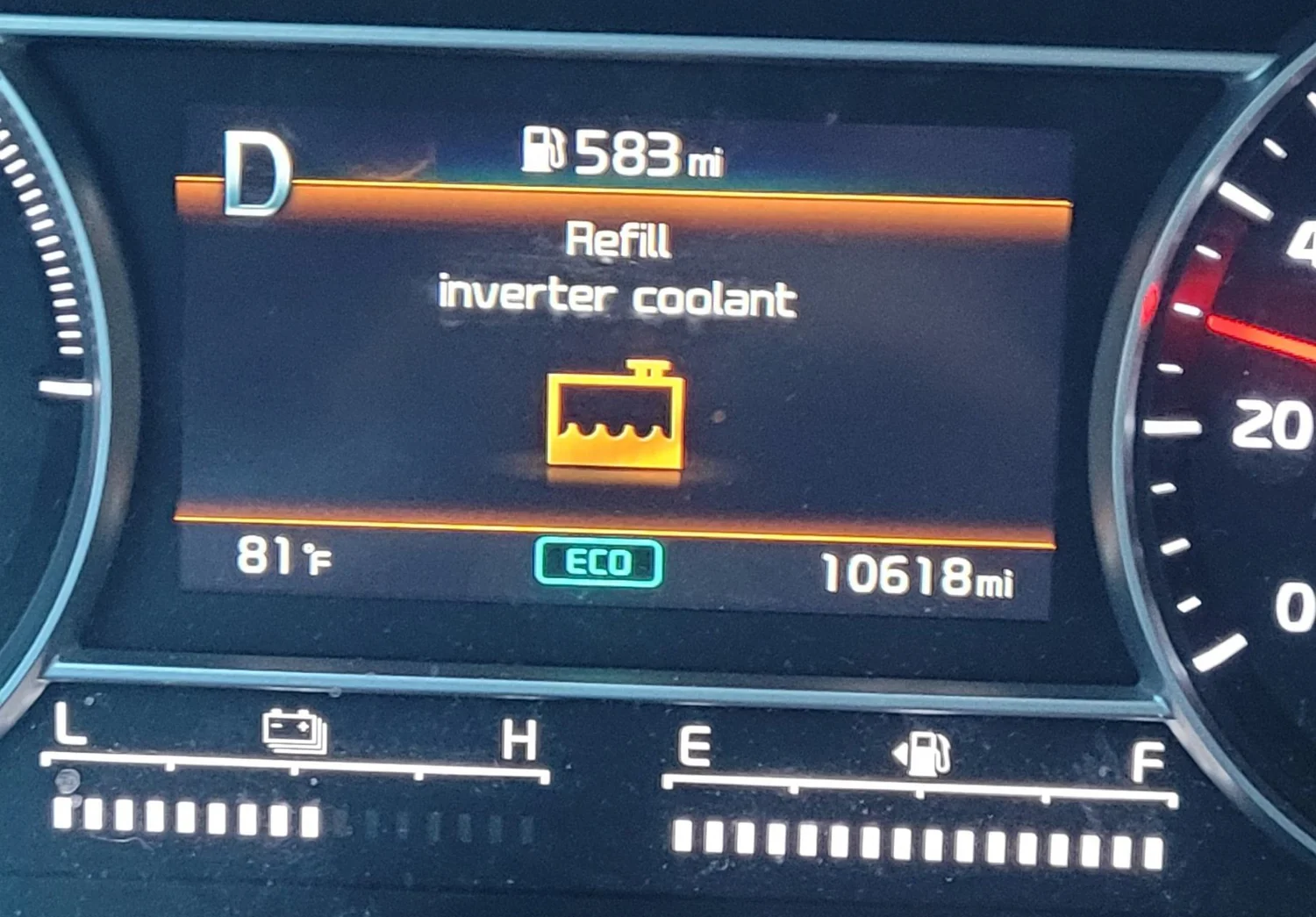
One thing to keep in mind is that different manufacturers may display this warning differently. Some vehicles show a text message on the multi-information display. Others might illuminate a warning light on the instrument cluster. The Toyota Prius, for instance, has a specific “Refill Inverter Coolant” text warning, while other hybrids might show a generic cooling system alert. Regardless of how it’s displayed, the underlying message is the same: your inverter cooling system needs attention.
Why Does the Inverter Coolant Warning Light Come On? The Top Causes Explained
The inverter coolant warning doesn’t just pop up randomly. There’s always a reason behind it, though sometimes that reason isn’t as obvious as you’d expect. Most of the time, the root cause is low coolant or something that’s actively causing the coolant to drop. But other component failures can also trigger the warning even when coolant levels look fine.
Here are the most common culprits behind a refill inverter coolant warning:
- Low coolant level in the inverter reservoir
- Coolant leaks in the inverter cooling circuit
- A faulty coolant temperature sensor
- A damaged or failing coolant pump
- A malfunctioning Engine Control Module (ECM) or Hybrid Control Module
Let’s break each of these down in detail so you know exactly what you’re dealing with and how to address it.
How to Fix the Refill Inverter Coolant Warning for Good
Fixing the inverter coolant warning isn’t a one-size-fits-all solution. The right fix depends entirely on what’s causing the warning in the first place. That’s why proper diagnosis is the first and most important step. Throwing parts at the problem without understanding the root cause will waste your time and money.
Here’s a detailed look at each cause and the specific steps to fix it.
1. Low Coolant Level: The Simplest Fix You’ll Ever Do
This is the most common reason for the refill inverter coolant warning, and it’s the easiest to resolve. When coolant in the inverter reservoir drops below the minimum mark, the system can’t adequately cool the inverter during operation. The temperature sensor detects the rising heat, sends that data to the ECM, and the ECM triggers the warning on your dashboard.
The solution is simple. Open the hood, locate the inverter coolant reservoir (which is separate from the engine coolant reservoir in hybrid vehicles), and fill it to the appropriate level with the manufacturer-recommended coolant. For Toyota hybrids, this is typically Toyota Super Long Life Coolant (SLLC) or an equivalent that meets Toyota’s specifications. Don’t use generic coolant or engine coolant as a substitute.
Once you’ve topped off the coolant, start the vehicle and let it run for a few minutes. In most cases, the warning will clear on its own. Some vehicles may require you to drive for a short distance before the system resets. If the warning clears and doesn’t come back within the next few weeks, you’re good. It was simply a case of normal coolant consumption over time.
Here’s a practical tip: get into the habit of checking your inverter coolant level during regular maintenance intervals. Many hybrid owners focus on oil changes and tire rotations but completely forget about the inverter cooling system. A quick visual check of the reservoir every few months can catch low levels before the warning ever appears.
Also, pay attention to the color and condition of the coolant when you check it. Fresh inverter coolant is typically pink or red (depending on the brand and specification). If it looks dark, murky, or has particles floating in it, that’s a sign the coolant has degraded and needs to be flushed and replaced entirely, not just topped off. Degraded coolant loses its thermal properties and its low-conductivity characteristics, which can compromise the safety and performance of the inverter cooling system.
The cost of a coolant refill is minimal. A bottle of the correct specification coolant typically runs between $15 and $30, and the process takes less than five minutes. Compare that to the cost of replacing a damaged inverter (which can run into the thousands), and it’s clear why staying on top of your coolant levels is such a smart move.
2. Coolant Leaks: When the Refill Doesn’t Stick
So you’ve refilled the inverter coolant, and the warning went away. But a few days or weeks later, it’s back. You check the reservoir, and sure enough, the level has dropped again. This pattern is a strong indicator that you’ve got a leak somewhere in the inverter cooling circuit.
Coolant leaks in the inverter system can be tricky to find because the cooling lines often run through tight spaces under the vehicle. But there are some telltale signs you can look for. Start by checking underneath your vehicle after it’s been parked for several hours. Look for puddles or wet spots, especially ones that are pink, red, or bright green (depending on the coolant used). Inverter coolant has a slightly sweet smell, similar to engine coolant, so your nose can actually help here too.
If you spot a leak, the next step is tracking down exactly where it’s coming from. Common leak points in the inverter cooling circuit include:
Coolant hoses and connections: Over time, the rubber hoses that carry coolant can develop cracks, especially in areas exposed to heat cycling. The clamp connections at each end of the hose can also loosen or corrode, creating slow drips that add up over time.
The coolant pump: The electric pump that circulates inverter coolant has seals that can wear out, leading to leaks around the pump housing. If you notice coolant pooling near the pump’s location, this is likely the source.
The radiator or heat exchanger: The inverter cooling system usually has its own small radiator or heat exchanger. Corrosion, road debris impact, or age-related degradation can cause pinhole leaks in this component.
The inverter unit itself: In rare cases, the coolant channels within the inverter housing can develop leaks. This is a more serious issue and typically requires professional repair or inverter replacement.
O-rings and gaskets: Various sealing components throughout the cooling circuit can deteriorate over time, especially if the coolant hasn’t been changed at the recommended intervals. Old coolant can become acidic and attack rubber seals.
Once you’ve identified the leak source, the fix is generally straightforward: replace the leaking component. A cracked hose gets replaced with a new one. A leaking pump gets swapped out. A corroded radiator gets a new unit. The key is not to ignore the leak and just keep topping off the coolant. Eventually, you’ll run the system dry during a drive, the inverter will overheat, and you’ll be looking at a much bigger repair bill.
If you can’t visually locate the leak, a pressure test can help. A mechanic can pressurize the inverter cooling system and watch for pressure drops or use a UV dye and blacklight to trace the leak path. This is especially useful for very small leaks that don’t leave obvious puddles.
Here’s a real-world example to illustrate the point. Imagine you own a 2012 Toyota Prius with about 120,000 miles on it. The inverter coolant warning starts popping up every two weeks. You keep refilling, but the level keeps dropping. A mechanic performs a pressure test and discovers a hairline crack in one of the coolant hoses near the inverter. The hose replacement costs about $150 including labor. Had the leak been ignored, the inverter could have overheated during a highway drive, potentially resulting in a $3,000 to $5,000 repair. That $150 fix just saved you a small fortune.
3. Faulty Coolant Temperature Sensor: When the Warning Lies to You
Sometimes the refill inverter coolant warning comes on even though the coolant level is right at the max line and there are no leaks anywhere. When this happens, the problem might not be with the coolant itself but with the sensor that monitors it.
The engine coolant temperature sensor (or in this case, the inverter coolant temperature sensor) is a small electronic device that measures the temperature of the coolant flowing through the inverter cooling circuit. It sends this data to the ECU (Engine Control Unit) or the Hybrid Control Module, which uses it to determine whether the inverter is operating within safe temperature limits.
When this sensor fails or starts malfunctioning, it can send wildly inaccurate readings to the vehicle’s computer. It might report extremely high temperatures even when the inverter is running perfectly cool. Or it might send no signal at all, which the ECU interprets as a fault condition. Either way, the vehicle’s computer doesn’t know the real temperature and defaults to triggering the warning as a safety precaution.
Think about it this way. If your home thermostat was broken and always showed 100°F even when your house was a comfortable 72°F, your air conditioning would run nonstop. The same logic applies here. A bad sensor gives bad data, and bad data leads to false warnings.
Diagnosing a faulty temperature sensor usually involves using an OBD-II scanner (or a more advanced hybrid-specific diagnostic tool) to read the real-time sensor data. If the sensor is reporting temperatures that don’t match reality, or if it’s throwing a specific diagnostic trouble code (DTC) related to the coolant temperature circuit, that confirms the sensor is the problem.
The fix is to replace the faulty sensor with a new one. This is something most moderately skilled DIYers can handle, though the difficulty depends on the sensor’s location in your specific vehicle. The replacement sensor needs to match the exact specification for your vehicle’s make, model, and year. Using a generic or incorrect sensor can lead to continued false readings or new problems.
Sensor replacement costs are relatively modest. The sensor itself typically costs between $20 and $80, depending on the vehicle. Labor charges at a shop might add another $50 to $150. It’s a small price to pay for getting accurate readings and clearing that persistent warning.
One more thing to watch for with temperature sensors: corroded or damaged wiring connectors. Even if the sensor itself is fine, a corroded connector or a damaged wire in the harness can disrupt the signal. Before replacing the sensor, inspect the wiring and connector for any visible damage, corrosion, or loose connections. Sometimes cleaning the connector with electrical contact cleaner is all it takes to solve the issue.
4. Damaged Coolant Pump: The Circulation Problem
The coolant pump is the workhorse of the inverter cooling system. Its job is to keep coolant flowing continuously through the circuit, pulling it from the reservoir, pushing it through the channels around the inverter to absorb heat, and then cycling it back through the radiator or heat exchanger to cool down before starting the loop again. When this pump fails, everything falls apart.
A damaged or failing coolant pump can cause two major problems. First, without proper circulation, coolant sits stagnant instead of moving through the inverter. The inverter heats up rapidly because there’s no fluid flow to carry the heat away. The temperature sensor picks up this spike and triggers the warning.
Second, a failing pump can develop seal leaks. The seals around the pump shaft and housing are under constant pressure and heat stress. As they wear down, they can start to seep coolant, contributing to a gradual loss of fluid in the system. So you might experience both overheating symptoms and a dropping coolant level at the same time.
How do you know if the pump is the problem? There are a few signs. If the pump is electric (which most inverter coolant pumps are), you might be able to hear it running when the vehicle is on. A healthy pump makes a soft humming or whirring sound. If you hear nothing, grinding noises, or unusual vibrations from the pump location, that’s a red flag.
You can also diagnose pump failure with diagnostic tools. Most hybrid vehicles monitor the pump’s operation and will set a diagnostic code if the pump isn’t drawing the expected current or isn’t running when commanded. A qualified mechanic with hybrid diagnostic experience can read these codes and confirm whether the pump has failed.
Replacing a coolant pump isn’t the simplest DIY job. The pump is often located in a tight area, sometimes requiring the removal of other components to access it. The replacement process involves draining the cooling circuit, removing the old pump, installing the new one with fresh seals, refilling the system with the correct coolant, and then bleeding any air pockets from the lines. Air trapped in the cooling circuit can cause hot spots and continued overheating even with a brand-new pump, so proper bleeding is essential.
Because of the complexity and the importance of getting it right, this is one repair that’s often best left to a professional, especially one who has experience working on hybrid vehicles. The cost of a coolant pump replacement varies by vehicle, but expect to pay between $300 and $800 for parts and labor. It’s not cheap, but it’s a fraction of the cost of replacing a heat-damaged inverter.
5. Malfunctioning ECM: When Your Vehicle’s Brain Gets Confused
This one is less common, but it does happen. The ECM (Engine Control Module) or the Hybrid Control Module is the computer that processes all the sensor data from your vehicle’s systems. It reads the coolant temperature, monitors pump operation, checks fluid levels, and decides when to trigger warning messages. When this computer starts malfunctioning, it can send out warnings that don’t match reality.
A failing ECM might misinterpret perfectly normal sensor readings as fault conditions. Or it could fail to process data correctly and default to a safe mode that includes triggering the inverter coolant warning. In some cases, the ECM might be receiving corrupted data due to wiring issues between the sensors and the module.
Wiring problems are actually one of the most common reasons for ECM-related false warnings. Over time, the wiring harness that connects sensors to the ECM can develop issues. Corrosion on connector pins, chafed wire insulation that causes short circuits, or rodent damage to wiring can all lead to intermittent or persistent false warnings. Before assuming the ECM itself is bad, it’s worth having the wiring harness thoroughly inspected.
Software glitches are another possibility. Like any computer, the ECM runs on software that can sometimes have bugs or become corrupted. Automakers occasionally release software updates (Technical Service Bulletins or TSBs) to address known issues. A dealer or qualified hybrid technician can check whether there are any relevant updates for your vehicle and reflash the ECM if needed.
Improper installation of aftermarket parts or recent repair work can also cause ECM confusion. For example, if someone recently replaced a sensor but used the wrong specification, the ECM might receive data that’s outside the expected range and interpret it as a fault. Or if a wiring connector wasn’t fully seated during a repair, it could cause intermittent signal loss.
Diagnosing ECM problems requires advanced diagnostic equipment and expertise. A standard code reader might show you the fault codes, but interpreting them in the context of ECM behavior requires deeper knowledge. This is definitely a job for a professional, ideally one who specializes in hybrid vehicles.
If the ECM itself has failed and needs replacement, it’s one of the more expensive repairs on this list. A new ECM can cost anywhere from $500 to over $1,500 depending on the vehicle, and it often needs to be programmed to your specific vehicle’s VIN and configuration. That said, complete ECM failure is relatively rare. In most cases, the issue turns out to be a wiring problem or a software glitch that can be resolved without replacing the module.
How the Inverter Cooling System Differs from Your Engine Cooling System
One of the most common mistakes hybrid vehicle owners make is confusing the inverter cooling system with the traditional engine cooling system. They’re two completely separate systems, and understanding the differences will help you avoid some costly errors.
Your gasoline engine has its own cooling system with its own radiator, thermostat, water pump, and coolant reservoir. This system uses conventional engine coolant (usually a mix of ethylene glycol and water) designed to handle the extreme temperatures of internal combustion. The operating temperature range for engine coolant is typically between 195°F and 220°F.
The inverter cooling system, on the other hand, operates at lower temperatures and uses a coolant specifically formulated for electrical component cooling. This coolant has lower electrical conductivity, which is essential because it flows around high-voltage components. If you accidentally used regular engine coolant in the inverter system, it could potentially cause electrical issues or damage to the inverter’s internal components.
The two systems also have separate reservoirs. On most hybrid vehicles, the inverter coolant reservoir is usually located near the inverter unit, often on the passenger side of the engine bay. The engine coolant reservoir is typically closer to the radiator. They’re usually different sizes and may have different-colored caps or labels to help you tell them apart.
When your vehicle shows a refill inverter coolant warning, it’s talking about the inverter system only. Checking your engine coolant level won’t help and will likely lead to confusion. Always make sure you’re looking at the right reservoir.
What Type of Coolant Should You Use for Your Inverter?
Using the wrong coolant in your inverter cooling system is a mistake you don’t want to make. Each manufacturer specifies a particular type of coolant that meets the thermal, chemical, and electrical requirements of their inverter design.
For Toyota and Lexus hybrid vehicles, the recommended inverter coolant is typically Toyota Super Long Life Coolant (SLLC) or its equivalent. This is a pre-mixed coolant that doesn’t require dilution with water. It’s formulated to provide excellent heat transfer while maintaining very low electrical conductivity.
For other manufacturers, the specifications vary. Ford hybrids, Honda hybrids, Hyundai/Kia EVs, and other brands each have their own coolant requirements. Always check your owner’s manual for the exact specification. If you’re not sure, ask your dealer or a hybrid-certified mechanic. Using the wrong coolant can void your warranty, damage your inverter, and create safety hazards.
One thing to avoid is mixing different coolant types. Even if two coolants are the same color, they might have incompatible chemical formulations. Mixing them can cause the coolant to gel, lose its thermal properties, or become corrosive to the cooling system components. If you’re not sure what’s currently in the system, the safest approach is to flush the entire system and refill with fresh coolant of the correct specification.
Can You Drive with the Refill Inverter Coolant Warning On?
This is a question a lot of hybrid owners ask, and the honest answer is: it depends on the situation, but you shouldn’t push your luck.
If the warning just appeared and your coolant level is only slightly below the minimum, you can probably drive a short distance to get home or to a parts store to pick up the correct coolant. Keep the drive short, avoid heavy acceleration, and monitor your vehicle’s behavior closely. If you notice any unusual sounds, reduced power, or additional warning lights, pull over immediately.
But here’s what you absolutely should not do: ignore the warning and keep driving as if nothing happened. The inverter is a high-voltage component operating under significant electrical and thermal stress. Without adequate cooling, it can overheat in a matter of minutes under heavy load. Overheating can cause permanent damage to the inverter’s power transistors (IGBTs), which are among the most expensive components in a hybrid drivetrain.
In some vehicles, the hybrid control system will automatically reduce power output or even shut down the hybrid system entirely if the inverter temperature gets too high. This is a built-in safety measure, but it can leave you stranded on the side of the road if it happens during a drive. Not exactly an ideal situation, especially on a busy highway or in extreme weather.
The safest approach is to address the warning as soon as it appears. If you can refill the coolant immediately, do it. If you suspect a deeper issue, get the vehicle to a qualified mechanic as soon as possible. Don’t wait until the warning becomes a more serious problem.
How Often Should You Replace or Flush Your Inverter Coolant?
Regular maintenance of the inverter cooling system is often overlooked, even by people who are diligent about other aspects of vehicle maintenance. But it’s just as important as changing your engine oil or rotating your tires.
Most manufacturers recommend replacing the inverter coolant every 100,000 miles or 10 years, whichever comes first. Some recommend shorter intervals, especially for vehicles that operate in extreme temperatures or harsh driving conditions. Check your owner’s manual or maintenance schedule for the exact recommendation for your vehicle.
Even if the coolant level looks fine and the color still appears fresh, the chemical properties of the coolant can degrade over time. The corrosion inhibitors can become depleted, the pH level can shift, and the coolant’s ability to manage heat can diminish. A system flush replaces all the old coolant with fresh fluid, restoring the system to optimal performance.
During a coolant flush, a mechanic will also inspect the hoses, connections, pump, and radiator for signs of wear or damage. This is an excellent opportunity to catch potential problems before they cause a warning or leave you stranded. Preventive maintenance is always cheaper than reactive repairs.
Step-by-Step: How to Check and Refill Your Inverter Coolant
If you’ve never checked or refilled your inverter coolant before, here’s a simple walkthrough. Keep in mind that this process may vary slightly depending on your vehicle, so always consult your owner’s manual for model-specific instructions.
Step 1: Park on a level surface and turn off the vehicle. Let the engine and electrical systems cool down for at least 30 minutes. You don’t want to open a pressurized cooling system while it’s hot.
Step 2: Open the hood and locate the inverter coolant reservoir. On most hybrid vehicles, it’s labeled or color-coded. It’s separate from the engine coolant reservoir. If you’re not sure which is which, check your owner’s manual or look for diagrams online specific to your vehicle.
Step 3: Check the coolant level. The reservoir should have “MIN” and “MAX” markings on the side. The coolant level should be between these two marks when the vehicle is cool. If it’s below the MIN line, you need to add coolant.
Step 4: Add the correct coolant. Slowly pour the manufacturer-recommended inverter coolant into the reservoir until the level reaches the MAX mark. Don’t overfill it, as the coolant needs room to expand as it heats up during operation.
Step 5: Replace the cap securely. Make sure the cap is properly seated and tightened. A loose cap can allow coolant to evaporate or leak, leading to low levels and triggering the warning again.
Step 6: Start the vehicle and monitor. Start the car and let it run for a few minutes. Watch the dashboard to see if the warning clears. If it does, you’re likely good to go. If it persists, there may be a deeper issue that requires professional diagnosis.
Step 7: Recheck the level after driving. After a short drive, let the vehicle cool down again and recheck the coolant level. If it has dropped significantly, you may have a leak that needs to be addressed.
Preventive Measures: How to Keep the Inverter Coolant Warning Away
The best way to deal with inverter coolant issues is to prevent them from happening in the first place. Here are some practical steps you can take to keep your inverter cooling system in top shape:
Check coolant levels regularly. Make it part of your routine maintenance to visually inspect the inverter coolant reservoir at least once a month. It takes 30 seconds and can save you from unexpected warnings and potential damage.
Follow the manufacturer’s maintenance schedule. Coolant flushes and replacements are recommended at specific intervals for a reason. Don’t skip them, even if everything seems fine. The coolant degrades over time in ways you can’t see just by looking at it.
Use only the correct coolant specification. Never substitute engine coolant for inverter coolant, and never mix different coolant types. When in doubt, consult your dealer or a hybrid specialist.
Address leaks immediately. If you notice any signs of coolant leakage, whether it’s a wet spot under the vehicle, a sweet smell, or a gradually dropping coolant level, get it checked out right away. Small leaks become big leaks if left unattended.
Don’t ignore warning lights. Dashboard warnings exist for a reason. They’re your vehicle’s way of communicating that something needs attention. Responding promptly to warnings can prevent minor issues from becoming major repairs.
Have the cooling system inspected during regular service visits. Ask your mechanic to include the inverter cooling system in their routine inspection. A quick check of the hoses, pump, and connections can catch developing problems early.
Common Mistakes Hybrid Owners Make with Inverter Coolant
Even well-intentioned vehicle owners can make mistakes when dealing with inverter coolant. Here are some of the most common errors and how to avoid them:
Using the wrong coolant. This is the number one mistake. Regular engine coolant and inverter coolant are not interchangeable. Using the wrong type can damage the inverter and void your warranty. Always use the manufacturer-specified product.
Confusing the two coolant reservoirs. Hybrid vehicles have separate reservoirs for engine coolant and inverter coolant. Adding coolant to the wrong reservoir won’t solve the problem and could create new ones. Take a moment to identify the correct reservoir before adding fluid.
Ignoring recurring warnings. If the refill inverter coolant warning keeps coming back after repeated top-ups, there’s an underlying issue. Continuing to just add coolant without investigating the cause is like putting a bandage on a wound that needs stitches.
Overfilling the reservoir. Too much coolant can cause pressure issues in the system. Fill to the MAX line and no higher. The system needs some space for thermal expansion.
Skipping the coolant flush. Even if levels stay adequate, the coolant’s chemical properties break down over time. Skipping the recommended flush interval can lead to corrosion, reduced cooling efficiency, and premature component failure.
When to Call a Professional: Signs You Need Expert Help
Not every inverter coolant issue can be handled in the driveway with a bottle of coolant and a good attitude. Some situations call for professional intervention. Here’s when you should pick up the phone and call a hybrid-certified mechanic:
The warning persists after refilling the coolant to the correct level. The warning comes back repeatedly within short time periods. You notice coolant under the vehicle but can’t identify the source. You hear unusual noises from the cooling system area, such as grinding, whining, or complete silence where a pump hum should be. You see additional warning lights or messages on the dashboard alongside the inverter coolant warning. Your vehicle enters a reduced power mode or the hybrid system shuts down.
Any of these scenarios suggests a problem that goes beyond a simple coolant refill. A professional with hybrid diagnostic tools and experience can pinpoint the issue quickly and get you back on the road safely.
When choosing a mechanic, look for one who has specific experience with hybrid and electric vehicles. Not all general mechanics are familiar with the inverter cooling system or the high-voltage components involved. A specialist will have the right tools, diagnostic software, and training to handle these systems safely and effectively.
Don’t Let a Simple Warning Turn Into an Expensive Repair
Inverter coolants are built for electric and hybrid vehicles only. They can’t be used interchangeably with conventional engine coolants because the chemical formulations serve entirely different purposes. One protects a combustion engine from overheating; the other protects sensitive high-voltage electronics while maintaining low electrical conductivity.
When a refill inverter coolant warning keeps showing up on your dashboard, don’t just keep topping off and hoping for the best. Take the time to properly diagnose the root cause. Whether it’s a simple low-level situation, a leak, a bad sensor, a failing pump, or a computer glitch, there’s a fix available for every scenario. The sooner you address it, the less it’s going to cost you.
And if you’ve tried all the recommended fixes and the warning still won’t go away? That’s your cue to get professional help. Don’t keep driving and risking permanent damage to one of the most expensive components in your hybrid drivetrain. The inverter isn’t something you want to replace because you put off a repair that could’ve been simple and affordable.
So here’s the bottom line: treat the refill inverter coolant warning like your vehicle talking to you, because that’s exactly what it is. Listen to it, respond to it, and take action before a minor alert becomes a major headache.