
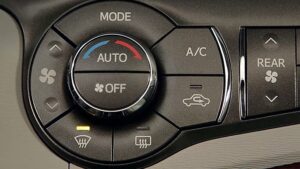

There are few things more frustrating than entering your Toyota on a sweltering July afternoon, pressing the A/C button, and being greeted by a blast of hot air. Conversely, shivering through a sub-zero morning commute because your heater refuses to wake up is an equally miserable experience. If you are experiencing these maddening climate control malfunctions, rest assured that you are not alone, and more importantly, you are not necessarily looking at a massive repair bill.
Historically, automotive heating and cooling systems were purely mechanical. You slid a lever, which pulled a physical steel cable, which flapped a plastic door inside the dashboard. Today, Toyota’s Heating, Ventilation, and Air Conditioning (HVAC) systems are highly sophisticated, tightly integrated digital networks. They rely on an orchestra of microprocessors, ambient sensors, thermistors, sun-load detectors, and motorized actuators. While this modern architecture provides incredible comfort—such as dual-zone automatic temperature control and eco-friendly efficiency—it also introduces a new variable: software glitches.
When this intricate digital network falls out of synchronization, the system can exhibit bizarre, seemingly random behaviors. A momentary voltage drop, a dying battery, a software calibration hiccup, or a sensor transmitting illogical data can cause your Toyota’s climate system to behave erratically. The good news? A vast majority of these infuriating issues are not catastrophic hardware failures. They are simple logic errors that can be completely resolved with a proper system reset.
This comprehensive, expert-level guide is designed to empower you. We will walk you through the inner workings of your Toyota’s HVAC ecosystem, explain exactly why these glitches occur, and provide you with step-by-step, proven reset procedures. We will also dive deep into model-specific quirks, teach you how to differentiate between a software glitch and a mechanical failure, and outline a rigorous preventative maintenance schedule. Grab your safety glasses and let’s take control of your vehicle’s climate.
The Anatomy of Modern Toyota Climate Control Systems
To truly understand why a reset works, you must first understand what you are resetting. The days of simple on/off switches are long gone. When you adjust the temperature dial in a modern Camry, RAV4, or Highlander, you are not directly moving any physical components. Instead, you are sending a digital request to the A/C Amplifier (Toyota’s terminology for the climate control module).
This central computer takes your request and analyzes a wealth of real-time data from across the vehicle. It checks the outside ambient temperature. It checks the internal cabin temperature using a small thermistor usually located behind a slotted grille near your steering wheel. It evaluates the amount of solar radiation hitting the windshield via a sun-load sensor. In hybrid models like the Prius, it even communicates with the hybrid powertrain computer to determine how much electrical power can be spared for the electric A/C compressor.
Once the A/C Amplifier processes all this data, it sends electrical commands to a series of stepper motors, known as actuators. These tiny motors physically open and close plastic doors (blend doors and mode doors) inside the HVAC box hidden deep behind your dashboard. They mix hot air from the heater core with freezing air from the A/C evaporator to achieve the precise temperature you requested. If any part of this digital-to-physical translation process breaks down, you experience a climate control failure.
Why Do These “Smart” Systems Fail? The Expert Breakdown
Toyota is globally renowned for its bulletproof reliability. However, even the most robust engineering cannot defy the laws of physics and electrical degradation. The malfunctions you experience generally fall into one of three distinct categories: electrical/software anomalies, calibration drift, or physical hardware degradation.
1. The Digital Hiccup: Voltage Drops and Network Errors
The most common culprit for sudden, inexplicable HVAC behavior is a minor electrical event. Automotive computers are highly sensitive to voltage fluctuations. If your car battery is aging and drops below a certain voltage threshold while cranking the engine, the climate control module may experience a “brownout.” During this split-second loss of stable power, the module can lose its memory of where the blend doors are currently positioned. Similarly, jump-starting the vehicle, replacing the battery, or experiencing a blown fuse can scramble the module’s volatile memory. When the system boots back up, it literally does not know up from down, resulting in air blowing from the wrong vents or at the wrong temperature.
2. Calibration Drift: When the Module Loses Its Bearings
Actuators are relatively simple devices, but they rely on perfect calibration. The A/C Amplifier needs to know the exact electrical resistance that correlates to a door being 100% open or 100% closed. Over thousands of miles of driving, extreme temperature changes inside the dashboard cause the plastic gears inside the actuators to expand, contract, and subtly wear down. Furthermore, dust and debris can create physical resistance against the blend doors. Over time, the actuator’s learned “end stops” (the absolute limits of its movement) become inaccurate. This is known as calibration drift. When this happens, the system might think the door is fully closed when it is actually slightly open, allowing unwanted hot air to bleed into your cold A/C stream.
3. The Physical Toll: Mechanical Degradation
While resets can cure software and calibration issues, they cannot fix broken physical parts. Constant movement over the years can cause the plastic teeth on actuator gears to shear off completely. When this happens, the motor spins, but the door doesn’t move, often producing a rhythmic tapping or clicking sound from behind the glovebox. Additionally, physical issues like a clogged heater core, a leaking A/C evaporator, or a failed compressor clutch will manifest as climate control failures that no amount of digital resetting can cure.
Ranking the Most Common Toyota HVAC Symptoms
Before we break out the tools, let’s look at the symptoms. Understanding exactly what your system is doing (or failing to do) is the first step in successful diagnosis. Based on decades of automotive diagnostic experience, here are the most common complaints, reordered logically from the most frequent software-related issues to the most severe hardware faults:
- The Ghost in the Machine: Auto-switching to Recirculation Mode. You set the system to draw fresh air from outside, but a few minutes later, the recirculation light illuminates on its own. This is often a logic loop issue or a misinterpretation of ambient air quality sensors.
- The Split Personality: Temperature Inconsistencies. The driver’s side is blowing freezing cold A/C, while the passenger side is blowing uncomfortably warm air (or vice versa). This is the hallmark sign of a dual-zone system that has suffered a calibration drift or a failed blend door actuator on one side.
- The Stubborn Thermostat: Inability to Maintain Set Temperature. You set the dial to 72°F, but the cabin alternates between freezing and boiling. The system is constantly overcorrecting due to faulty cabin temperature sensor readings or lagging actuator response.
- The Silent Treatment: Unresponsive Controls or Blank Display. You press the buttons, turn the dials, but nothing happens. The screen might be completely dark. This points heavily toward a localized loss of power (blown fuse), a frozen control module, or a disconnected wiring harness behind the dash.
- The Breathless Vent: Blower Motor Problems. You hear the A/C compressor engage, but no air comes out of the vents, or the airflow is pathetically weak even on the highest setting. This moves away from software and heavily suggests a clogged cabin air filter, a failing blower motor resistor, or a seized blower motor.
As a seasoned automotive diagnostician will tell you: if your symptom is intermittent, erratic, or changes based on how you press the buttons, a software reset has incredibly high odds of success. If the symptom is permanent, consistent, accompanied by loud mechanical noises, or involves leaking fluids, a reset is merely a diagnostic stepping stone before physical repairs begin.
The Masterclass: Quick DIY Reset Methods for Toyota Climate Control
Now that we understand the theory, it is time for practical application. The following four reset methods are the industry standard for reviving confused Toyota HVAC systems. They are arranged in a specific hierarchy—from the least invasive, highly targeted approach, to the complete “nuclear option” system reboot.
Crucial Safety Protocol Before You Begin:
- Secure the Vehicle: Always park your Toyota on a completely flat, level surface. Engage the emergency parking brake. Ensure the transmission is securely in Park (or in gear for manual transmissions).
- Remove Conductive Items: When working near the fuse box or the battery, remove all metal jewelry, rings, watches, and dangling necklaces to prevent accidental short circuits that could cause severe burns or fry delicate electronics.
- Hybrid/EV Awareness: If you drive a Prius, RAV4 Hybrid, Highlander Hybrid, or any other electrified Toyota, you must be acutely aware of the high-voltage systems. The resets below deal with the low-voltage (12V) system. Never touch the bright orange high-voltage cables under the hood. Stick strictly to the standard 12V battery and interior fuse boxes.
Method 1: The Surgical Strike (HVAC Fuse Reset)
This is undeniably the most effective, elegant, and safest reset technique for modern Toyota vehicles. Why? Because it isolates the problem. By pulling the specific fuse for the climate control, you perform a hard power-cycle on the A/C Amplifier without wiping out the memory of your engine control unit (ECU), your transmission shift points, or your radio presets. It is the automotive equivalent of forcing a frozen smartphone to restart.
Step-by-Step Procedure:
- Complete Shutdown: Turn the ignition completely off and remove the key from the cylinder (or keep the smart fob away from the start button).
- Locate the Fuse Box: Open the hood. Your primary fuse box is typically a black plastic rectangular box located near the 12V battery. Some models also have an interior fuse box located under the driver’s side dashboard near your left knee.
- Consult the Schematic: Unclip the lid of the fuse box and flip it over. You will find a printed diagram. Look for the fuse designated for the climate system. It is usually labeled as “HVAC,” “A/C,” “AIRCON,” “HTR,” or “BLW” (blower).
- Extract the Fuse: Using the small plastic fuse puller (usually clipped inside the fuse box lid) or a pair of needle-nose pliers, carefully pull the fuse straight up and out. Avoid twisting, as this can bend the metal terminal pins.
- The Golden Wait Time: Do not plug it right back in. Wait a minimum of 60 seconds. Automotive modules contain internal capacitors that hold a residual electrical charge. Waiting allows these capacitors to drain completely, ensuring a true wiping of the module’s volatile memory.
- Reinstall and Initialize: Push the fuse firmly back into its slot. Ensure it is seated flush.
- The Hands-Off Calibration: Start the vehicle’s engine. Do not touch any climate control buttons, dials, or touchscreens for at least 60 seconds. This is the most critical step. During this first minute of power restoration, the A/C Amplifier is actively sweeping all the actuator doors from full open to full close to relearn their physical end-stops. Interrupting this process by demanding cold air immediately will cause the calibration to fail.
Expert Insight: While the fuse is out, hold it up to a light source. Look at the U-shaped or S-shaped metal filament inside the plastic casing. If that filament is broken, melted, or scorched black, the fuse is blown. A reset will not work; you must replace the fuse with a new one of the exact same amperage rating. Never install a higher amperage fuse to “stop it from blowing”—that is a guaranteed way to melt your wiring harness or start a fire.
Method 2: The Technician’s Secret (Diagnostic Mode Reset)
Toyota engineers built a hidden backdoor into the climate control panel. This hidden diagnostic mode is an incredibly powerful tool. It goes beyond a simple power cycle; it allows the system to run a self-check, display specific error codes (pointing exactly to which sensor or actuator is failing), and forcefully clear “soft faults” from the computer’s memory that a simple fuse pull might leave behind.
Step-by-Step Procedure:
- Preparation: Ensure the vehicle is entirely powered off.
- The Button Combination: Press and hold down both the AUTO button and the RECIRCULATION button (the icon showing a U-turn arrow inside a car silhouette) simultaneously. Do not let go.
- Power On: While keeping both buttons firmly depressed, turn the ignition key to the “ON” position (do not crank the engine). If you have a push-button start, press the start button twice without putting your foot on the brake pedal.
- Entering the Matrix: Continue holding the buttons until you see the climate control display screen light up entirely, or all the indicator lights begin to flash in sequence. You are now officially in Diagnostic Mode.
- Reading the Codes (Optional but Recommended): At this point, the screen may flash a two-digit number. For example, “00” means no faults detected. “21” points to a solar sensor issue (common if you are doing this in a dark garage). “41” might point to a blend door servo. Jot down any numbers you see before proceeding.
- The Clearing Sequence: To wipe the codes and force a reset, press and hold the FRONT DEFROST and REAR DEFROST buttons together simultaneously for about 3 to 5 seconds.
- Confirmation: The display should eventually revert to showing zeros or normal digits, confirming the internal fault memory has been purged.
- Exit Strategy: Turn the ignition completely off, wait 10 seconds, and then start the engine normally to test the system.
Expert Context: Why does this work when pulling a fuse doesn’t? Some Toyota A/C Amplifiers utilize Non-Volatile Random-Access Memory (NVRAM) for storing certain emission or safety-related climate codes. NVRAM does not erase when it loses power. The only way to clear these stubborn, sticky logic errors is through this specific button combination or by using a professional OBD2 bi-directional scan tool.
Method 3: The Nuclear Option (Battery Disconnect Reset)
If the targeted fuse reset and the diagnostic mode have failed to resolve your erratic climate behavior, it is time for the hard reset. Disconnecting the main 12V battery power-cycles every single computational module in the entire vehicle. This is highly effective when the climate control issue is actually a symptom of a larger CAN bus (Controller Area Network) communication error between the main Engine Control Unit and the HVAC module.
Step-by-Step Procedure:
- Power Down: Turn off the ignition, remove the key, and ensure all lights and accessories are turned off.
- Locate the 12V Battery: Open the hood. (Note: On some Toyota hybrids like the older Prius, the 12V battery is located in the trunk/cargo area, not under the hood).
- Disconnect the Negative Terminal FIRST: Using a 10mm wrench or socket, loosen the nut on the negative battery terminal (marked with a minus “-” sign and usually connected to a black cable). Lift the terminal off the battery post and tuck it safely aside so it cannot spring back and accidentally touch the post. Never start with the positive terminal to avoid creating a massive short circuit with your wrench touching the car’s body.
- Disconnect the Positive Terminal: Next, remove the positive terminal (marked with a plus “+” sign, usually under a red plastic cover).
- The Deep Drain: Leave the vehicle completely disconnected for a minimum of 15 to 20 minutes. To expedite the draining of residual module power, you can step on the brake pedal a few times, or touch the negative and positive cables together (ensure they are completely detached from the battery first!).
- Reconnect in Reverse Order: Reattach the positive terminal first, tighten it securely. Then reattach the negative terminal. You may hear small sparks; this is normal as the systems wake up.
- The Relearn Phase: Start the engine. Let it idle. As with Method 1, do not touch the climate controls for a few minutes while the actuators find their home positions.
Important Professional Cautions: This method is highly effective but comes with collateral damage. You will wipe the vehicle’s short-term fuel trim data, meaning the engine might idle slightly rough for the first few miles of driving as it relearns the optimal air/fuel ratio. You will likely lose your radio presets, Bluetooth pairings, and clock settings. Furthermore, you may need to recalibrate the auto-up/down power windows. (To do this, hold the window switch down until the window fully opens and keep holding for 3 seconds, then pull the switch up until it fully closes and hold for 3 seconds).
Method 4: The Temperature Sweep (Blend Door Actuator Reset)
If your specific complaint is solely related to the temperature—for example, the system only blows hot air even when set to “Lo,” or the driver’s side doesn’t match the passenger’s side—the issue is isolated to the blend door actuator. This quick mechanical sweep attempts to force the actuator motor to push past any minor binding and relearn its geometric extremes.
Step-by-Step Procedure:
- Initial State: Turn off the ignition and remove the key for 30 seconds to allow the system to go to sleep.
- Accessory Mode: Turn the ignition to the “ON” position, but do not crank the engine. We want the electronics alive but the engine quiet so we can hear the dashboard.
- The Deep Freeze: Rapidly turn the temperature control dial (or press the down button) all the way to the absolute coldest setting (“Lo” or “Max A/C”). Wait 10 seconds. Listen closely for the faint whirring of the motor behind the dash.
- The Inferno: Now, rapidly turn the dial all the way to the absolute hottest setting (“Hi”). Wait another 10 seconds. Again, listen for the motor.
- System Recalibration: Turn the ignition completely off. Wait 30 seconds.
- Test: Start the engine and test if the temperature control has regained its smooth, linear progression.
Expert Tip: This method requires active listening. When transitioning from cold to hot, if you hear a rapid “click-click-click-click” or a grinding noise that sounds like a plastic zipper, the reset has failed. That noise is the sound of stripped plastic gears slipping against each other inside the actuator housing. No software reset can restore missing plastic teeth; the actuator must be physically replaced.
Deep Dive: Toyota Models Most Prone to Climate Glitches
While Toyota shares engineering architecture across its lineup, certain vehicle models and generations exhibit specific, recurring patterns when it comes to HVAC behavior. This is largely due to differences in dashboard packaging, actuator supplier variations, and dual vs. tri-zone complexity. Here is a granular breakdown of common model-specific traits and the most effective diagnostic paths.
Toyota Camry (Generations XV40, XV50, XV70)
The Camry, America’s best-selling sedan, frequently features dual-zone automatic climate control in its XLE and XSE trims. Because the blend door actuators are sandwiched tightly against the firewall, they are subjected to intense thermal cycling.
- Common Complaint: Extreme temperature fluctuations; one side blowing hot while the other blows cold. The touchscreen interface becoming unresponsive.
- The Go-To Fix: The HVAC Fuse Reset (Method 1) is overwhelmingly successful for interface issues. For the temperature split, the Camry-Specific Recirculation Reset (detailed further down in this guide) often corrects the logic error. If clicking is heard, the driver’s side blend actuator (located near the gas pedal) is a common mechanical failure point.
Toyota RAV4 (Generations XA30, XA40, XA50)
The RAV4 is designed for utility and varied environments, meaning its climate system works overtime. The XA40 generation (2013-2018) is particularly known for logic loop errors regarding air intake.
- Common Complaint: The system becomes inexplicably stuck in recirculation mode, causing the windows to fog up rapidly in cold or rainy weather. Inconsistent A/C cooling performance during highway driving.
- The Go-To Fix: The Diagnostic Mode Reset (Method 2) is the silver bullet here. By forcing the system to re-evaluate the ambient humidity and temperature sensors, it usually breaks the logic loop that is pinning the fresh air door shut.
Toyota Corolla (Generations E140, E170, E210)
Historically, the Corolla featured highly reliable manual climate controls. However, newer generations with automatic systems have seen a rise in actuator-related complaints.
- Common Complaint: Premature blend door actuator failure. The fan blows strongly, but the air is lukewarm regardless of the temperature setting. Weak airflow specifically from the defrost vents.
- The Go-To Fix: Start with the Blend Door Actuator Reset (Method 4). Because the Corolla’s HVAC box is relatively compact, the doors can sometimes bind on slight debris. If the sweep doesn’t clear the bind, physical replacement of the servo is usually required.
Toyota Highlander & Sienna (Multi-Zone Systems)
Large family haulers like the Highlander and Sienna feature massive, complex HVAC systems. They have dual zones up front, a completely separate climate zone for the rear passengers, and incredibly long refrigerant lines running the length of the vehicle.
- Common Complaint: Total chaos in temperature routing. The front blows cold while the rear blows hot. The rear controls become unresponsive to the driver’s master override.
- The Go-To Fix: Because these systems utilize a complex local interconnect network (LIN) to communicate between the front and rear modules, the Battery Disconnect (Method 3) is the most efficient way to force a complete network handshake and resynchronize the entire vehicle’s climate ecosystem.
Toyota Prius & Hybrid Models
Hybrids are a completely different animal. They do not rely on a serpentine belt driven by a running engine to spin the A/C compressor. Instead, they use a high-voltage, variable-speed electric scroll compressor.
- Common Complaint: The A/C suddenly shuts down when the vehicle switches from gas to EV mode at a stoplight. Flashing A/C light on the dashboard.
- The Go-To Fix: Be very careful here. While a standard 12V battery disconnect can clear minor interface glitches, a flashing A/C light on a Prius often indicates a high-voltage insulation fault or a lack of specific ND-11 hybrid compressor oil. Do not attempt DIY refrigerant recharges on hybrids; mixing standard PAG oil with hybrid POE oil will destroy the electric compressor’s insulation and can electrify the vehicle’s chassis. Seek professional hybrid diagnostic help.
Decoding the Results: Signs the Reset Worked (Or Failed)
Patience is paramount. After executing any of the reset procedures above, do not judge the success or failure based on the first ten seconds of operation. A modern system takes a moment to establish its sensor baselines. Let the engine run for three to five minutes, ideally taking the car for a short drive so the system can register changing engine RPMs and airflow over the condenser.
Signs of a Victorious Reset (Observe in this order):
- Interface Response: The buttons, touchscreen icons, and digital readouts respond instantaneously to your touch without lag or freezing.
- Mode Door Accuracy: When you press “Defrost,” air hits the windshield. When you press “Floor,” air hits your feet. The transitions should take about 3-5 seconds and be relatively quiet.
- Thermal Symmetry: In a dual-zone system, setting both sides to 70°F results in identically tempered air flowing from both the driver and passenger dashboard vents.
- Stable Regulation: When left in “AUTO” mode, the fan speed appropriately ramps up to cool the cabin quickly, and then gently tapers down to a quiet whisper to maintain the target temperature.
- Clean Displays: No flashing A/C lights, no random diagnostic codes popping up on the infotainment screen.
Red Flags That Demand Immediate Professional Attention:
If you experience any of the following symptoms after a reset, stop troubleshooting software. You have a physical, potentially dangerous hardware issue:
- Acrid or Burning Odors: A smell of burning plastic or ozone from the vents indicates a melting electrical connection, a failing blower motor resistor, or a seized blower motor drawing massive amperage. Turn the system off immediately to prevent a dashboard fire.
- Sweet, Syrupy Smells or Fog: If your interior smells like maple syrup, and a greasy fog coats the inside of your windshield when you turn on the heater, your heater core has ruptured and is spraying toxic engine coolant into the cabin air.
- Audible Hissing from the Dashboard: A distinct “hissing” or “sighing” sound that occurs right after the A/C compressor engages usually indicates a critically low refrigerant charge. The sound is the expansion valve starving for liquid Freon.
- Neon Green or Oily Puddles: While clear, odorless water dripping under the car on a hot day is normal A/C condensation, a puddle of bright neon green, slightly oily fluid under the front bumper means your A/C condenser has sustained rock damage and is bleeding refrigerant oil with UV dye.
- Violent Shaking or Squealing: If turning on the A/C causes the engine belt to squeal loudly or causes the entire engine to vibrate noticeably, the A/C compressor clutch is failing or the compressor internals have seized solid.
Hardware Troubleshooting: When Resets Are Not Enough
If you have faithfully executed the resets and the system is still malfunctioning, it is time to pivot from software to hardware. Think of the reset as clearing away the “noise.” What remains is the true mechanical failure. Here is an expert-level guide to diagnosing the physical components of your Toyota’s HVAC system.
1. The Electrical Foundation: Relays and Fuses
We already discussed pulling the fuse, but what if the fuse keeps blowing immediately upon startup? This is known as a dead short. Somewhere in the wiring harness, a hot wire has rubbed bare and is touching the metal chassis of the car. Alternatively, a component like the blower motor has internally shorted out. Never put a larger fuse in to “fix” this. You must trace the wiring.
Furthermore, Toyota vehicles rely heavily on the Magnetic Clutch Relay (A/C MG CLT relay). This small square box in the under-hood fuse panel acts as the heavy-duty switch that turns the A/C compressor on. These relays are notorious for failing intermittently as they age. A classic mechanic’s trick is to find an identical relay in the fuse box (often the horn relay) and swap them. If the horn stops working but the A/C suddenly blasts cold air, you have found your culprit. A new relay is a cheap, five-dollar fix.
2. The Refrigerant Cycle: Pressures and Leaks
Air conditioning systems are completely sealed closed-loops. They do not “consume” or “burn” refrigerant over time like an engine burns oil. Therefore, if your Toyota is low on refrigerant (Freon), you have a physical leak somewhere in the system.
The Danger of “A/C Pro” Cans: Many DIYers rush to the auto parts store and buy a can of refrigerant with a cheap gauge attached. Experts highly advise against this for modern vehicles. These cans only measure the low-pressure side of the system, blinding you to the dangerously high pressures on the other side. Overcharging a system is just as bad as undercharging it; it can literally blow out the seals on your compressor. Furthermore, many retail cans contain “stop leak” chemicals. These additives react with moisture to form a thick, gummy sludge that can permanently destroy the microscopic passages inside the A/C expansion valve. If you suspect a leak, it must be found with an electronic sniffer or UV light, repaired, placed under a deep vacuum to remove moisture, and recharged by weight using professional manifold gauges.
3. The Mechanical Heart: Compressor Diagnostics
The A/C compressor is the heart of the system, pumping refrigerant vapor under immense pressure. On traditional gas-engine Toyotas, look at the front of the compressor (driven by the serpentine belt) while the engine is running and the A/C is turned on.
- Normal Operation: The outer pulley always spins, but the inner hub (the clutch) should audibly “click” and begin spinning in unison with the pulley. It may cycle on and off periodically.
- Rapid Cycling: If the clutch clicks on for two seconds, clicks off for two seconds, and repeats this rapidly, the system is protecting itself. It detects critically low refrigerant pressure and is shutting down to prevent the compressor from running dry and self-destructing.
- Dead Clutch: If the inner hub never spins, check the MG CLT relay mentioned above. If the relay is good, check the wiring plug at the compressor. If power is reaching the compressor but it refuses to engage, the clutch coil has burned out.
4. The Physical Obstruction: Actuators and Doors
If the A/C pipes under the hood are freezing cold to the touch, and the heater hoses going into the firewall are burning hot, the engine bay components are working perfectly. Your problem is entirely under the dashboard. A faulty blend door actuator is failing to route that available hot or cold air into the cabin.
To diagnose this, a professional technician will plug a bi-directional scan tool into the OBD2 port. This $5,000 piece of equipment allows the mechanic to bypass the dashboard buttons and send direct digital commands to each individual actuator, watching real-time data to see if the actuator’s internal potentiometer is accurately reporting its position. If the computer commands 100% open, but the sensor reports stuck at 40%, the actuator is condemned and must be replaced.
Ninja-Level: Model-Specific Recalibration Shortcuts
Through years of collective experience, Toyota master technicians and enthusiastic owners have discovered highly specific button combinations that force localized recalibrations on certain models. These are not documented in standard owner’s manuals.
The Camry Recirculation Loop Breaker (2012-2017)
If your XV50 Camry is stubbornly refusing to switch between fresh air and recirculated air, try this highly specific maneuver:
- Sit in the driver’s seat with the doors closed. The car should be completely off with the key removed.
- Locate the RECIRCULATION button. Press and firmly hold it down.
- While continuously holding the button, insert the physical key into the ignition and turn it two clicks to the “ON” (Accessory) position. Do not start the engine.
- Keep holding the button. Stare at the small LED indicator light above the button. After about 5 to 10 seconds, that light should begin to blink rapidly.
- Once the blinking stops and goes solid, release the button. Start the car normally.
The Expert “Why”: This specific key-cycle bypasses the A/C Amplifier’s standard boot-up protocol and forces a hard reset exclusively on the intake servo motor logic path. It is a brilliant, surgical fix for a very specific annoyance.
The RAV4 Temperature Standardization Reset (2013-2018)
RAV4 models with automatic climate control can sometimes suffer from a confused baseline, meaning what it thinks is 70°F is actually 60°F or 80°F.
- Start the engine and let it idle in Park.
- Press the AUTO button.
- Manually adjust the temperature dial exactly to 73°F (23°C). This specific temperature acts as the mathematical center-point for the module’s algorithms.
- Simultaneously press and hold both the AUTO button and the A/C button for a full 5 seconds.
- The entire LCD display will flash several times. This confirms the system has accepted 73°F as its new baseline calibration point.
- Turn the ignition off, wait 30 seconds, and restart.
The Expert Preventative Maintenance Schedule: Avoiding Future Glitches
An ounce of prevention is worth a pound of cure, especially when dashboard removal labor can exceed $1,000. While you cannot prevent a random electrical glitch, you can significantly extend the mechanical life of your Toyota’s HVAC system by adhering to these expert-level maintenance practices.
1. The First Line of Defense: The Cabin Air Filter
This is the single most neglected component in modern vehicles. Located behind the glovebox in almost every Toyota made since 2000, the cabin air filter acts as the lungs of the HVAC system.
If this filter becomes choked with leaves, dust, pollen, and pet hair, two devastating things happen. First, airflow drops dramatically, making the system feel weak. Second, the blower motor has to work twice as hard to pull air through the blockage. This creates intense electrical resistance, generating heat that prematurely burns out the blower motor resistor or melts the wiring harness. Expert recommendation: Replace the cabin filter strictly every 15,000 miles or once a year. Upgrade to an activated-carbon filter to neutralize odors.
2. The Winter Workout: Lubricating the Seals
One of the biggest mistakes drivers make is turning the A/C system entirely off from November until May. Refrigerant (Freon) carries a specialized oil suspended within the gas. This oil lubricates the internal pistons of the compressor and keeps the hundreds of rubber O-rings throughout the system swollen and pliable.
If the system sits dormant for six months, the oil settles. The rubber O-rings dry out, shrink, and crack, leading to massive refrigerant leaks in the spring. Expert recommendation: Run your A/C system for at least 10 to 15 minutes once a week, even in the dead of winter. (Note: Most Toyota automatic climate systems actually do this for you secretly by engaging the A/C compressor when you turn on the windshield defroster, as cold A/C air is naturally dehumidified and clears condensation faster).
3. Clearing the Cowl: Preventing Water Intrusion
Open your hood and look at the black plastic trim panel at the base of the windshield (the cowl). This area is full of intake grilles where the HVAC system sucks in fresh air. If you park under trees, pine needles, leaves, and debris will accumulate here. Over time, this organic matter decomposes into a thick muck that blocks the rubber water drains.
When it rains, the water cannot drain out. Instead, it rises and pours straight down the fresh air intake, flooding the blower motor housing and soaking the cabin air filter. This leads to horrific mold odors, destroyed blower motors, and rusted electrical connections. Expert recommendation: Once a month, physically scoop out any leaves resting on the windshield cowl.
4. The Evaporator Core Hygiene
The evaporator core is a tiny radiator buried deep in your dashboard that gets freezing cold. As warm, humid air passes through it, condensation forms. Normally, this water drips down and exits under the car through a rubber drain tube. However, in dark, damp environments, mold and bacteria can bloom on the wet evaporator fins, resulting in the dreaded “dirty sock” smell when you turn on the A/C.
Expert recommendation: To prevent mold growth, form a habit of turning off the A/C button, but leaving the fan running on high, about two minutes before you reach your destination. This blasts ambient air across the evaporator, drying the fins completely before you turn the car off and park it in a dark garage.
The Economics of Repair: DIY Resets vs. Professional Diagnostics
Understanding the financial implications of climate control repair highlights exactly why mastering these DIY reset methods is so incredibly valuable. Automotive HVAC repair is notoriously expensive, largely due to the sheer amount of labor involved in disassembling modern dashboards.
When you take your vehicle to a dealership with a complaint of “weird temperature issues,” the technician’s very first step is not to tear apart the dashboard. Their first step is exactly what you just learned: checking for voltage codes, pulling the fuse, executing a hard battery reset, and running a recalibration sweep using their scan tool.
Dealership diagnostic fees generally run between $150 and $200 just to pull the vehicle into the bay. If a simple 60-second recalibration fixes the issue, you will still be charged that minimum diagnostic fee. By attempting the fuse reset, the diagnostic mode, and the battery disconnect in your own driveway, you are essentially performing a $200 diagnostic sweep for absolutely free.
If the resets fail, you have still gained immense value. You have eliminated software logic as the culprit. When you do eventually speak to a mechanic, you can bypass the guesswork. Saying, “My driver’s side blows hot, my passenger side blows cold. I’ve already performed a full battery drain reset and an actuator sweep, but the issue persists, and I hear a faint clicking noise on the left side,” changes the entire dynamic. You instantly communicate that you are an informed consumer, and you guide the technician directly to the mechanical fault—saving them time, and saving you diagnostic money.
Estimated Cost Breakdown for Hard Failures:
- Blend Door Actuator Replacement: The part itself is usually $50 to $150. However, depending on its location (some are easily accessed behind the glovebox, others require pulling the entire dashboard), labor can run from $100 to $800. Total expected: $200 – $950.
- A/C Compressor Replacement: A catastrophic failure requiring a new compressor, condenser (to catch metal shrapnel), expansion valve, system flush, and Freon recharge. Total expected: $1,200 – $2,500.
- Heater Core Replacement: The part is incredibly cheap ($60), but it is the absolute deepest component inside the dashboard. It requires total removal of the steering column, airbags, center console, and dash pad. Total expected: $1,000 – $1,800 in pure labor.
- A/C Amplifier / Control Module: If the computer itself is fried, replacement modules range from $300 to $900, plus an hour of programming labor.
Understanding the CAN Bus: Why Network Errors Affect Your A/C
To truly reach an expert level of understanding, we must briefly look at the nervous system of your Toyota: the Controller Area Network (CAN bus). In cars built before the early 2000s, if you pressed an A/C button, a dedicated copper wire carried 12 volts directly from that button to a relay. It was a one-to-one analog connection.
Modern Toyotas use a CAN bus. This means all the computers in the car (Engine, Transmission, ABS, Body Control, and Climate) are strung together on a two-wire network, constantly chatting with each other using digital packets of data.
When you press the A/C button today, the control panel sends a digital message out onto the network: “Driver has requested A/C.” The Engine Control Unit (ECU) intercepts this message. The ECU then checks its own sensors: Is the engine overheating? Is the driver demanding full throttle to pass a truck? Is the battery voltage dangerously low? If the answer to any of those is yes, the ECU will aggressively block the A/C command. It prioritizes engine survival and safety over cabin comfort.
This is why your climate control might randomly stop blowing cold air when you are accelerating up a steep mountain pass on a hot day. It is not broken; the CAN bus has simply temporarily disabled the compressor to give the engine more power and prevent overheating. Once you crest the hill, the A/C will magically return. Understanding this network hierarchy prevents you from chasing ghost problems.
However, if the CAN bus experiences a “packet collision” or a spike in electrical noise (often caused by cheap aftermarket LED headlights or poorly installed remote starters), messages can get corrupted. The Climate module might send a message that the ECU misunderstands, resulting in erratic behavior. This is precisely why the Battery Disconnect Reset (Method 3) is so vital—it clears the network chatter and forces all modules to reboot and shake hands with each other cleanly.
Frequently Asked Questions: Expert Q&A
To round out your diagnostic arsenal, here are the most frequently asked questions regarding Toyota climate control issues, answered from a master technician’s perspective.
Q: Why does my A/C only blow cold air when I’m driving on the highway, but gets warm when I sit at a stoplight?
A: This is a classic symptom of airflow failure over the condenser. When you are moving at 60 MPH, ram-air cools the hot refrigerant in the condenser grille. When you stop, you rely entirely on the electric radiator cooling fans to pull air through the condenser. Open the hood while the A/C is on and the car is parked; if the big plastic fans behind the radiator are not spinning, the fan motors or relays are dead. Alternatively, this can indicate a slightly low refrigerant charge, where the compressor needs higher engine RPMs to generate enough pressure to cool the cabin.
Q: I hear a sound like rushing water or gurgling behind my dashboard when I accelerate. Is this related to the climate control?
A: Yes and no. That rushing water sound is coolant flowing through the heater core inside your dashboard. However, you should not be able to hear it. Hearing it means there are trapped air bubbles in your engine’s cooling system. This is a severe warning sign that your engine is low on coolant, possibly due to a failing water pump or a blown head gasket. Check your engine coolant reservoir immediately when the engine is cold.
Q: Can I use a generic OBD2 scanner to reset my Toyota’s climate control?
A: A basic $20 generic code reader from Amazon will only communicate with the Engine Control Unit (checking for check engine lights/emissions). It cannot “see” or talk to the Toyota A/C Amplifier module. To scan, reset, and calibrate climate control systems via the diagnostic port, you need a professional-grade, bi-directional scan tool with specific Toyota software loaded onto it (often costing $400+). This is why the manual manual button combinations and fuse pulls outlined in this guide are so valuable for DIYers.
Q: Does the “Eco” mode button in my Prius/Camry/RAV4 affect the air conditioning?
A: Absolutely. When you engage “Eco” driving mode, you are giving the central computer permission to restrict energy consumption to save fuel. One of the first things it restricts is the climate control. It will lower the blower fan speed and cycle the A/C compressor off much more frequently. If you feel like your A/C is weak, check your drive modes—switching to “Normal” or “Sport” will instantly restore full aggressive cooling power.
The Final Verdict: Taking Control of Your Climate
Automotive heating and cooling systems are complex marvels of modern engineering, blending high-pressure phase-change physics with intricate digital networks. When a Toyota climate system behaves erratically, it is incredibly easy to panic and envision a massive repair bill. However, as we have explored in deep detail, the reality is often much more manageable.
Your Toyota is a driving computer. Just as you wouldn’t throw away a laptop because the web browser froze, you shouldn’t assume your A/C compressor is destroyed just because the vents are blowing the wrong temperature. By systematically applying the targeted fuse reset, utilizing the hidden diagnostic modes, or executing a full battery discharge, you can clear the digital cobwebs and force the actuators back into perfect synchronization.
If the resets solve your issue, you have just saved yourself hundreds of dollars and a frustrating trip to the dealership. If the problem persists, or if you encounter the physical symptoms of grinding gears, burning smells, or hissing leaks, you are now armed with the technical vocabulary and diagnostic understanding to have an informed, intelligent conversation with a professional mechanic. Stay cool, stay warm, and drive with confidence knowing you are now the master of your vehicle’s climate.