
In normal conditions, the Toyota 4Runner is engineered with a robust, well-integrated door lock system that feels almost effortless: press the key fob, hear the actuators cycle, and you’re secured. But even a “bulletproof” design can develop weak points over time. When the door locks stop responding to the key fob; or the locks behave inconsistently; it’s a signal to stop guessing and start diagnosing. The root cause can be as simple as a drained fob battery, or as involved as wiring damage inside the door jamb, a failing actuator/solenoid, a blown fuse, or a switch and relay issue. The good news is that these problems are usually diagnosable with a structured approach and fixable once you identify the true failure point.
Door locks are not just a convenience feature; they’re one of your vehicle’s primary security and safety components. A lock that refuses to engage leaves your vehicle vulnerable; a lock that fails to release can trap you outside (or, in rare scenarios, make exiting more difficult if multiple components fail at once). And while it’s completely reasonable to feel annoyed when the locks act up, frustration doesn’t restore electrical continuity or revive a weak actuator. The solution is a calm, methodical check of the likely causes and the correct repairs.
So, how do you fix Toyota 4Runner door lock problems the right way; without replacing parts blindly? You start by understanding how the system works, then you narrow the fault by symptoms (single door vs. all doors, fob vs. interior switch, intermittent vs. constant), and finally you apply the correct fix. Read on; this guide walks you through the system, the common failure points, practical tests, and the repairs that actually solve the problem.
The Toyota 4Runner Door Lock System and How it Works
To diagnose door locks like a professional, you need a clear picture of what happens between your finger pressing a button and the latch locking. In a Toyota 4Runner, the door lock system is essentially an electrical control chain that ends in a mechanical action. At the center of it is the actuator assembly located near the latch inside each door. The actuator is mounted beneath (or integrated with) the door latch mechanism and uses electric power to move a linkage that locks or unlocks the door.
Most 4Runner configurations use a combination of: (1) a key fob (remote transmitter), (2) a receiver and body controller/body ECU (the “decision maker”), (3) lock/unlock switches (driver door and sometimes passenger doors), (4) wiring harnesses and connectors (the “path”), and (5) actuators/solenoids and the latch mechanism (the “muscle” and “hardware”). When you press a lock/unlock switch inside the cabin, the switch signals the controller, and the controller commands the actuators to move.
When you press the key fob, the transmitter inside the fob broadcasts a radio signal with a digital code. The vehicle’s receiver and body controller interpret that code. If the code matches what the vehicle expects, the body controller then supplies power and ground in the proper direction (lock or unlock) to the door lock actuators. In other words: the fob does not power the locks; it requests the body controller to do it.
Because the system is a chain, a fault anywhere in that chain can create a lock problem. A weak fob battery may mean the controller never receives a clean request; a blown fuse or failing relay may prevent power from reaching the actuators; damaged wiring or moisture intrusion may create intermittent opens or shorts; and worn actuators may physically fail to move the latch even if the controller is commanding them correctly. When any of these components develop an issue unexpectedly, you’ll experience inconvenience; and the symptom pattern is often the clue that reveals the cause.
It’s also worth remembering that you have more than one way to operate the locks. Those different methods are incredibly useful diagnostically, because they help you separate a “remote signal problem” from a “vehicle-side lock circuit problem.”
There are several different ways you can unlock or lock your car. You can:
- Use a key
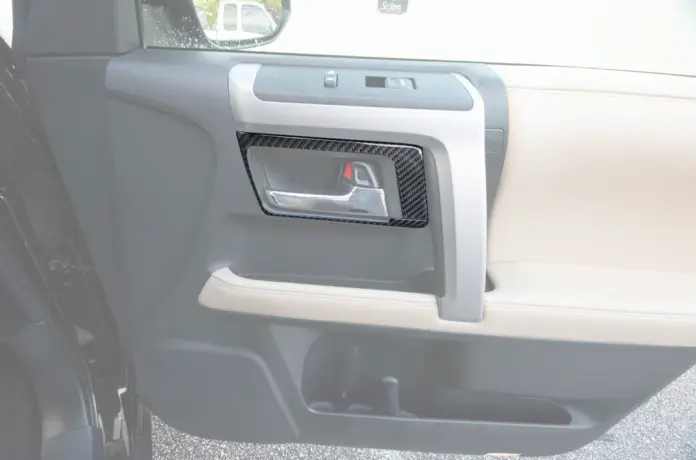
- Pull the door knob inside your car
- Press the unlock button right beside the driver’s seat
- Open or lock with a key fob
Expert diagnostic tip: Always test at least two methods. If the key fob fails but the interior switch works reliably, your likely suspects shift toward the fob (battery, transmitter) or the receiver/body controller input. If neither the fob nor the interior switch operates the locks, you’re more likely dealing with fuses/relays, wiring, or actuator power delivery. If only one door misbehaves while the others operate normally, the odds strongly favor a door-specific actuator/solenoid, linkage, or door harness issue.
Another professional habit: Pay attention to sound. A healthy actuator typically makes a crisp “thunk” or “click.” A weak actuator may sound sluggish, strained, or squeaky, and sometimes you’ll hear the motor spin without a solid mechanical movement; especially if internal gears are worn.
How to Reset Door Lock Problems in Toyota 4runner
This section focuses on the real-world causes that make a Toyota 4Runner lock system fail and the fixes that restore proper operation. The failure pattern can look different depending on where the fault lives: you may have a single door lock that refuses to respond, a key fob that suddenly won’t lock or unlock anything, or a scenario where all four door locks stop responding at once. Each symptom category points you toward a different set of likely causes.
These are common reasons why your Toyota 4Runner doors give you a headache; and yes, you’ll learn how to fix them. But before you replace any parts, approach it like an expert: confirm the symptom, isolate which inputs work (key, interior switch, fob), and then check the most likely failure points in a logical order. That approach prevents the classic mistake of buying an actuator when the actual issue is a blown fuse; or swapping fob batteries endlessly when the door switch is the real culprit.
Quick reset checklist (safe, non-invasive steps): While “resetting” doesn’t fix broken hardware, it can help in cases where the system is temporarily confused or the fob signal is marginal.
- Step 1: Try the spare key fob if you have one. If the spare works, the issue is likely the original fob (battery or internal damage).
- Step 2: Replace the key fob battery (details below) and test again.
- Step 3: Check whether the interior lock/unlock switch works. This separates “remote problem” from “vehicle lock circuit problem.”
- Step 4: If everything is dead (no switch response, no fob response), check fuses/relay first before touching the doors.
- Step 5: If one door is inconsistent, suspect that door’s actuator, solenoid, or wiring in that door.
Now let’s break down the major failure points one by one.
Burnt Fuse
Fuses are the system’s protective “weak link” by design. Their job is to protect wiring and modules from excessive current draw. In a door lock circuit, the fuse (and often a relay) ensures the actuator receives the correct power supply without allowing an overload to damage the harness or control module. If a fuse sees too much current; due to a short circuit, water intrusion, an actuator motor beginning to seize, or wiring insulation damage; it can blow. Once that happens, current delivery to the door lock system can stop immediately.
When the relevant fuse is blown (or the relay has failed), it’s common for all four doors in the power locking system to stop responding; especially to the interior switch and the fob; because the controller can’t push power through the circuit. In that situation, replacing the blown fuse or faulty relay can restore operation, but there’s an important caveat: if the fuse blows again, you likely have an underlying short or an actuator drawing excessive current that must be addressed.
How to fix: Locate the fuse and check if the metal squiggle at the center is still in connection. If not, replace the fuse with another of the same voltage.
Expert notes that save time and money:
- Use your owner’s manual or the fuse box cover diagram to identify the correct lock-related fuse and relay. Don’t guess based on appearance; multiple circuits share similar fuse sizes.
- Replace only with the same amperage rating. Installing a higher-rated fuse can let wiring overheat and cause expensive damage.
- If the new fuse blows immediately, stop replacing fuses. That’s your confirmation of a short circuit or overload that needs proper diagnosis (often with a multimeter or a professional scan tool).
From an expert perspective, a “burnt fuse” is rarely the full story; it’s a symptom of an electrical event. Sometimes that event is simply age-related, but many times it’s a sign of moisture intrusion, harness damage, or an actuator motor failing mechanically and pulling too much current.
Door lock switch
The door lock switch is the driver’s command center for power locks. In most 4Runner setups, the switch on the driver’s door can lock or unlock all doors at once. When it starts failing, you may find that pressing lock does nothing, pressing unlock does nothing, or the switch only works intermittently. Sometimes you’ll notice it works in one direction (lock) but not the other (unlock), which often indicates internal contact wear inside the switch assembly.
Because the door switch lives in a high-use area, it’s exposed to repeated pressing, temperature swings, and sometimes moisture or spilled drinks. Over time, internal electrical contacts can wear or contaminate, causing unreliable signals to the body controller. And if the body controller doesn’t receive a clean lock/unlock request, it won’t command the actuators the way you expect.
How to fix: Basically, a bad lock switch button will require a substitute for the whole switch assembly.
Professional troubleshooting tip: If the key fob locks/unlocks the doors reliably but the interior door lock switch does not, the switch becomes a prime suspect. Conversely, if the interior switch works but the fob does not, the switch is likely fine and your attention should shift toward the fob/receiver side.
Installation caution: The driver door panel may include wiring for window switches and sometimes side airbags depending on trim and model year. If you’re replacing the switch assembly yourself, work carefully, disconnect the battery when appropriate, and avoid probing airbag-related connectors. If you’re unsure, a technician is the safer choice.
Door lock actuator
The door lock actuator is the component that turns electrical commands into physical movement of the lock mechanism. Every time you press lock/unlock, the actuator motor (or motor-driven gear set) moves a linkage that locks or unlocks the latch. In the real world, actuators wear out because they have moving parts, small motors, gears, and sometimes plastic components that fatigue. When an actuator begins to fail, the first sign is often inconsistency: it works in warm weather but not cold, it works after multiple presses, or it locks but won’t unlock (or the reverse).
If you press the lock switch and one door doesn’t respond while the others do, that door’s actuator becomes the most likely culprit. If the locks make a weak sound or move only partway, the actuator may be failing mechanically or drawing abnormal current. This is also one of the most common causes of a “single-door lock failure” that drivers experience after years of normal use.
How to fix: Let an automotive expert ascertain the working conditioner of the actuator, and replace it if necessary.
Why an expert check matters: Actuator replacement requires opening the door panel and working near linkages, rods, and wiring. A professional can verify whether the actuator is truly dead, whether the linkage is jammed, or whether the issue is actually in the door harness or ground connection. This prevents you from replacing an actuator only to discover the real problem is a broken wire in the door jamb.
Advanced diagnostic clue: If an actuator “works” with the key but not with power, the mechanical latch is likely fine, and the issue is electrical. If the actuator receives power but still cannot move the lock, the mechanical portion may be binding or the actuator gearset may be stripped.
Key fob
Your key fob is a small transmitter powered by a tiny battery. Over time, the battery voltage drops. As the battery weakens, the fob’s signal may become too weak or inconsistent to reach the vehicle reliably; especially if you’re farther away, if there’s radio interference, or if you’re pressing the button through a pocket or bag. The end result is the familiar annoyance: you press lock/unlock and nothing happens, or it works only after several presses.
In many cases, a fading fob battery is the simplest, cheapest fix in the entire diagnostic list. It’s also one of the most overlooked because people assume the vehicle is at fault. Always start here if the problem is limited to the remote function and the interior switch still works.
How to fix: All you need to do is replace the batteries. If it works, then it’s great. Otherwise, you can replace the key fob itself.
Expert guidance for better results:
- Use the correct battery type recommended for your specific key fob (it varies by year/trim and fob design). If you’re unsure, check the owner’s manual or the existing battery number.
- When replacing the battery, avoid touching both battery surfaces with bare fingers unnecessarily; skin oils can contribute to poor contact over time.
- If a new battery doesn’t fix it, confirm the fob buttons aren’t physically damaged and the fob hasn’t been exposed to water. Water intrusion inside the fob can cause corrosion on the circuit board.
Important distinction: If the fob is confirmed good (fresh battery, spare fob also fails) and the interior switch also fails, you likely have a vehicle-side issue rather than a transmitter problem.
Wiring
Wiring is the hidden infrastructure of your door lock system, and it’s a frequent cause of intermittent faults. Heat, vibration, and moisture are the enemies here. Over time, wiring insulation can become brittle. Moisture can enter connectors and create corrosion. Wires can also fatigue and break internally; especially in the door jamb area where the harness bends repeatedly each time you open and close the door.
If a wire is broken in the relay or in a key part of the harness, the door lock may fail completely. If there’s an electrical short, the locks may behave sporadically, fuses may blow, or the system may work one moment and fail the next. It’s understandably irritating to unlock your door effortlessly, only to find yourself “stuck” a moment later when the same system refuses to respond; but this on-and-off pattern is classic wiring behavior.
A wiring or electrical short in the door lock system can also cause a car’s door lock to function sporadically.
How to fix: Let an automotive technician check the wiring system and replace it with a new one.
What a technician typically does (so you know what you’re paying for): A skilled tech will often perform voltage drop tests, continuity tests, and connector pin-fit inspections. They may also flex the harness (especially in the door jamb boot) while commanding locks to reproduce the fault. This is a targeted approach that identifies the exact point of failure rather than replacing random parts.
DIY-friendly observation: If one door fails more often than others and the failure changes when you open the door wider or move the door, suspect the door harness near the hinge area. That’s a known stress zone across many vehicles, not just the 4Runner.
Solenoid
The solenoid is part of the mechanism that converts an electronic command into a mechanical action. In many door lock designs, the actuator assembly includes motor-driven and solenoid-like components working together to move the lock linkage. When the solenoid portion is weak or faulty, you may notice delayed movement, partial movement, or a lock that refuses to complete the cycle.
The solenoids receive electronic signals from your key fob when you press it. It then converts the signals to mechanical actions. When the solenoids are faulty, you may experience difficulty locking or unlocking your car. Visit a mechanic to open the door panel and replace the solenoid.
Practical note: In real repair work, “solenoid” issues are often addressed by replacing the complete actuator/latch assembly because the component is integrated and not cost-effective to rebuild. A mechanic will advise whether your 4Runner’s configuration supports component-level repair or requires a full assembly replacement.
Symptom clue: If you hear a faint click but the lock pin barely moves, that can indicate a weak actuator/solenoid that’s receiving power but can’t generate enough mechanical force. This is common in colder temperatures or when internal lubrication has thickened with age.
Frost
Cold weather introduces a very different type of “failure,” and it’s one many drivers experience seasonally. In freezing conditions, moisture can enter lock mechanisms, latch areas, or door seals and then freeze. When that happens, the lock may feel stuck, the actuator may strain, or the mechanical linkage may not move freely. Even if the electrical system is working perfectly, ice can physically prevent the mechanism from completing its travel.
Under excessive cold weather, door locks may become overpowered by moisture. This in turn may affect your door lock system. To fix, defrost by using a hair dryer or a lighter.
Safety refinement from an expert: A hair dryer is generally the safer option. If you use any open flame method, extreme caution is required to avoid damaging paint, plastic trim, weather stripping, or wiring; and to avoid personal injury. Many professionals prefer warm air, de-icing products designed for automotive locks, and allowing the vehicle to warm gradually rather than applying direct flame near door seals.
Prevention tip: If your area is prone to freezing rain or wet snow, keeping door seals clean and conditioned and addressing moisture intrusion early can reduce freeze-ups. A lock that “freezes” repeatedly may also be telling you that the door’s moisture barrier or drain paths need attention.
A Technician’s Diagnostic Roadmap (So You Don’t Chase the Wrong Fix)
Before we move into the FAQ section, here’s a structured diagnostic roadmap; the same kind of reasoning an experienced technician uses. It’s designed to help you decide whether you should start with the fob, the fuse, the switch, the actuator, or wiring.
1) Confirm the scope: one door or all doors?
If one door fails (for example, the driver door won’t unlock but all others do): suspect that door’s actuator/solenoid, the linkage, the latch assembly, or that door’s wiring/connectors.
If all doors fail: suspect a blown fuse, faulty relay, body controller command issue, failed door lock switch, or a broader wiring/ground problem affecting the system.
2) Compare inputs: key fob vs. interior switch vs. mechanical key
Mechanical key works, but power does not: the latch is likely mechanically capable; your issue is in electrical control or power delivery.
Interior switch works, but fob does not: start with the key fob battery or fob replacement; then consider receiver/body controller input issues if a known-good fob still fails.
Neither switch nor fob works: go straight to fuse/relay checks, then wiring and controller diagnostics.
3) Listen for actuator noise
When you command lock/unlock, stand near the affected door and listen.
- No sound at all: possible loss of power/ground to the actuator, broken wiring, blown fuse, failed switch, or a dead actuator motor.
- Weak click / strained sound: actuator is getting some power but struggling; common with failing actuators or binding mechanical linkages.
- Normal sound but no lock movement: possible linkage disconnection or latch mechanism issue inside the door.
4) Check for patterns: weather, moisture, and intermittency
If the issue appears mainly during cold snaps, frost is a strong suspect. If it happens after rain or car washes, suspect moisture intrusion into connectors, the latch area, or the door module area. If it changes with door movement, suspect the harness in the hinge/jamb region.
This pattern-based thinking is not “guessing.” It’s evidence-based troubleshooting; one of the fastest ways to diagnose lock issues without replacing good parts.
FAQs
How do I know if my door actuator is not working?
You’ll know a defective actuator if you begin to hear strange or squeaking noises from the inside of your door. Secondly, if the power door locks stop working or are working intermittently. These are indications of a bad actuator.
Additional expert clarification: A failing actuator often shows up as a “temperature-dependent” symptom. It may work when the cabin is warm and fail when it’s cold, or work after repeated button presses because the motor temporarily overcomes internal friction. Another sign is when a lock pin moves only halfway or bounces back. Also, if one door is noticeably slower than the others, that’s not normal behavior; it’s typically early-stage actuator weakness.
What not to ignore: If an actuator is failing and continues to be commanded repeatedly, it can increase current draw and in some cases contribute to fuse issues. While that outcome isn’t guaranteed, it’s one reason professionals recommend addressing weak actuators promptly instead of waiting for a complete failure at the worst possible time.
How can I fix a failing single-door lock?
It’s pretty straightforward. If a single door fails to lock or unlock, there’s an issue with the actuator. As I explained earlier, the actuator powers the door-locking system. When the actuator goes bad, you’ll need to take the following steps.
Before you start (expert safety and prep): Set aside time, work in good lighting, and gather basic trim tools so you don’t break plastic clips. If your model has side airbags in the door, disconnecting the battery and waiting a short period before unplugging connectors is a common precaution. Also, take photos as you go; reassembly becomes much easier when you can reference the original clip and rod routing.
*Locate the door panel in the door handle or behind the speakers.
*Unscrew the bolts holding the door panel
*Gently pull out the panel with a remover
*Disconnect the wire connecting the power door locks to the interior of your door
*Peel back the plastic shroud around the door
*Find the actuator and replace it
Expert installation notes (to prevent comebacks): When you install the replacement actuator, confirm all linkages are seated correctly and move freely. A misrouted rod or partially seated clip can make the lock bind, which can mimic an actuator problem even with a brand-new part. Also, ensure the moisture barrier (plastic shroud) is resealed properly; this barrier is critical because it keeps water that enters the door shell from reaching electrical connectors and interior trim.
Post-repair check: Before fully reinstalling the door panel, test the lock with the interior switch and the key fob. Confirm smooth lock/unlock travel several times. This “test before reassembly” habit is standard practice in professional shops because it prevents you from removing the panel twice.
Can I remove or fix my car’s actuator myself?
Working on your car’s actuator can be a pain in the neck. However, if you’re ready and inclined to go through the stress, cool. Otherwise, seek the help of a trained mechanic or locksmith.
Realistic expert perspective: Yes, a skilled DIYer can replace an actuator, but it’s not always “easy,” especially if access is tight, clips are brittle, or the latch/actuator assembly is integrated. If you’re uncomfortable removing trim panels, working around electrical connectors, or dealing with small linkage clips, professional help can be worth it. A locksmith can sometimes help with mechanical lock issues, but for power lock electronics and actuator assemblies, an automotive technician is often the best fit.
When DIY is most reasonable: One door actuator replacement with clear symptoms, no wiring damage, and no fuse/relay issues. When multiple doors fail or symptoms are intermittent, diagnostics can be more complex; and that’s where professional tools and experience shine.

Preventing Toyota 4Runner Door Lock Problems (Long-Term Reliability Tips)
Once you’ve fixed the immediate issue, prevention is how you avoid repeating the same repair in six months. Door locks live in a harsh environment: they deal with vibration, dust, humidity, road salt (in many regions), and repeated mechanical cycling. A few smart habits dramatically reduce repeat failures.
- Address moisture early: If you notice water inside the door, fix the moisture barrier and confirm drain holes aren’t clogged.
- Avoid slamming doors repeatedly: Occasional slams happen, but constant slamming increases mechanical stress on latch/actuator components.
- Use quality replacement parts: Cheap actuators and switches often fail sooner or behave inconsistently.
- Protect the key fob: Keep it dry, avoid impact drops, and replace the battery at the first sign of reduced range.
- Watch door jamb wiring: If you ever see cracked rubber boots or pinched harness routing, correct it before wires fatigue and break.
These steps don’t change the design of the system, but they reduce the most common stressors that cause failure; especially moisture and harness fatigue.
Final Thoughts
Door lock problems in a Toyota 4Runner typically trace back to a handful of components: the actuator, relay, key fob, key fob battery, door lock switch, wiring, or cold-weather moisture/frost. Whether you’re stuck outside your 4Runner trying to get in, or stuck inside dealing with a lock that won’t respond, it’s rarely a pleasant experience; especially when time is not on your side.
Because door locks are part of your vehicle’s security, it’s wise to take immediate action. The right repair depends on the true cause, and the fastest way to get there is to diagnose logically: determine whether the issue is isolated to one door or affects all doors, test multiple inputs (fob and interior switch), and then address the most likely failure points; starting with simple items like fuses and fob batteries before moving on to actuators and wiring repairs.
Professionals have the tools and expertise to diagnose complex power lock faults efficiently; especially intermittent wiring shorts and control-side issues; while many smaller problems (like a fob battery or a straightforward actuator replacement) can be handled by capable DIYers. Either way, once you restore reliable locking, you restore peace of mind; and that’s exactly what a 4Runner should deliver.

