
Having your Toyota display an “EPB Malfunction” warning can be both frustrating and unsettling; especially when you’re not sure whether the car is safe to park, whether the brake will release, or whether the problem is going to turn into an expensive repair. This electronic parking brake issue can appear across multiple Toyota models, including the Camry, Corolla, RAV4, and C-HR. The encouraging reality is that most EPB malfunctions have a clear root cause and a predictable fix once you understand how the system is designed to behave.
In practice, EPB warnings often fall into one of a few buckets: low battery voltage, actuator wear or failure, software/calibration issues, or wiring/connector faults. Some of these are simple (charging or replacing a weak 12V battery can immediately restore the system), while others require scanning for diagnostic trouble codes (DTCs) and following model-specific service procedures. This guide walks you through the causes, diagnosis, and fixes for Toyota EPB malfunctions in a structured, technician-style way; so you can act with confidence instead of guessing.
Safety note: If your EPB is stuck engaged and you must move the vehicle, do not attempt to “force” movement. Dragging a locked rear brake can damage pads/rotors, overheat components, and in some cases trigger additional brake system faults. Use the appropriate release method for your model and consult your owner’s manual when needed.
What is the Toyota Electronic Parking Brake?
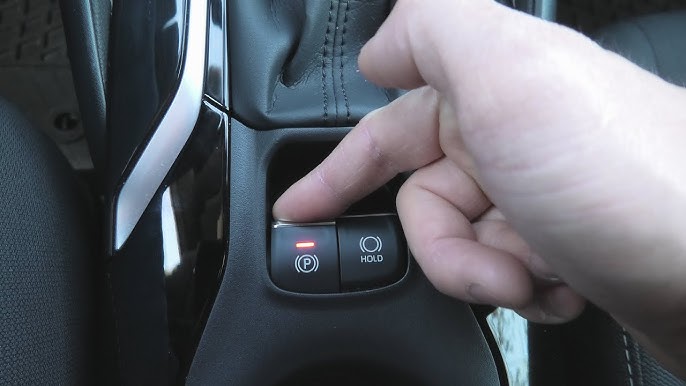
The Electronic Parking Brake (EPB) in your Toyota replaces the traditional handbrake lever (or foot-operated parking brake) with an electronic control button. When you press the EPB switch, the vehicle commands electric actuators; typically integrated into the rear brake calipers; to clamp the brake pads against the rotors. That clamping force holds the vehicle stationary when parked and provides a secure parking brake function without a mechanical cable running from a lever to the rear wheels.
From an engineering perspective, EPB systems bring two major advantages: (1) they enable automation (auto apply/release features), and (2) they allow the brake system to integrate more tightly with vehicle computers and stability control logic. The tradeoff is that when the system detects unreliable conditions; such as low battery voltage or actuator overcurrent; it may protect itself by going into a fail-safe strategy, which can trigger warning messages like “Parking Brake Unavailable” or “EPB Malfunction Visit Your Dealer.”
Modern Toyota EPB systems include convenient features like:
- Automatic engagement when shifting to Park
- Automatic release when accelerating
- Brake Hold function for temporary stops
These convenience functions are built on a network of sensors and control modules. For example, auto-release may depend on brake pedal input, seat belt status, door/hood signals, gear position, and vehicle speed. If one required signal is missing or implausible, the system may refuse to auto-release or may set a warning. So while EPB makes driving easier, the system’s electronic complexity can create new failure modes that don’t exist in a purely mechanical handbrake.
To troubleshoot EPB issues effectively, it helps to know what the system is “looking for” during normal operation:
- Stable 12V power to drive actuator motors and maintain module communication
- Correct actuator feedback confirming the brake has applied/released as commanded
- Valid sensor inputs such as wheel speed signals, gear position, and brake pedal status
- Software integrity (no memory/calibration failures and no internal ECU faults)
When a Toyota displays an EPB malfunction message, it’s usually because one of these conditions isn’t being met; or the system cannot confirm it is being met.
Most Common Causes of Toyota EPB Malfunctions
EPB malfunctions can look similar on the dashboard, but the causes vary widely. The most accurate way to identify the root cause is to retrieve the stored DTCs and interpret them with battery health, vehicle history, and symptom behavior in mind. That said, there are repeat offenders; and one of them is overwhelmingly common.
Weak Battery – The #1 Culprit
A weak or failing 12V battery is the most frequent cause of EPB errors in Toyotas. EPB actuators are electric motors that draw meaningful current when applying or releasing the parking brake. The system needs stable power not only for the motors but also for the brake ECU and network communication. When voltage drops too low, the module may log faults or disable EPB functions to prevent incomplete application/release events.
As a practical threshold, when battery voltage falls below roughly 11.5V, it becomes very common to see an “EPB Malfunction” message. Even if the car still starts, a marginal battery can sag under load at exactly the wrong moment; during EPB apply/release; triggering warnings that feel “random” to the driver.
Signs your battery is causing the EPB issue:
- Warning appears after your car sits unused for days
- Other electrical systems act sluggish
- Warning clears after a jump start or battery charge
The fix is usually straightforward: charge the battery fully and test it, or replace it if it fails a load test or is nearing end-of-life. Many EPB warnings disappear immediately once stable voltage is restored. If your battery is older than about 3–5 years (climate and driving pattern dependent), replacing it proactively can prevent recurring electronic warnings across multiple systems; not just EPB.
Expert tip: Battery voltage alone isn’t the full story. A battery can measure “okay” at rest and still collapse under load. That’s why a proper load test (or conductance test) is more informative than a single voltage reading.
Hybrid note: On Toyota hybrids, the 12V battery doesn’t crank the engine the way it does on non-hybrids, but it still powers critical computers and relays. A weak 12V battery can create surprising system warnings even though the vehicle seems to “run fine” once started.
Actuator and Motor Failures
The EPB system uses electric actuators (usually integrated into the rear calipers) to apply clamping force. Over time, these actuators can wear, bind, or fail. Mechanical and electrical failure modes include:
- Stripped internal gears
- Motor burnout
- Sensor malfunctions
When actuator failure occurs, the system typically stores very specific codes. Common examples include C060B49 (Left Actuator Internal Failure) and C061049 (Right Actuator Internal Failure). At this point, DIY fixes become limited because internal actuator failures generally require component replacement.
Unfortunately, actuator failures can be expensive if the vehicle is out of warranty. Costs can vary by model and region, but replacement can be significant; often costing between $1,200-$2,000 per caliper depending on the parts strategy (OEM vs remanufactured), labor rates, and whether related components (pads/rotors) are replaced at the same time.
How actuator failures usually feel: You may hear unusual electric motor noises from the rear, the EPB may apply but not release (or vice versa), or the brake may cycle and then throw a fault. In some cases, one side may work and the other does not, and the vehicle will detect a mismatch.
Why actuators fail: Repeated use in harsh environments (road salt, moisture), insufficient rear brake service, or forcing piston retraction without proper service mode can stress the actuator. Ignoring rear brake maintenance can also increase actuator load because the system must work harder to apply the parking brake when components are binding.
Software Glitches and Calibration Errors
Because EPB is computer-controlled, it can be vulnerable to software bugs and calibration failures. This doesn’t mean the system is “bad”; it means the module relies on data integrity. When software misinterprets current draw, actuator position, or calibration states, it can trigger a warning even if the hardware is fine.
Common software-related failure modes include:
- False detection of overcurrent conditions
- Calibration mismatches
- ECU memory failures
The 2020–2021 Toyota Corolla and RAV4 models are well-known for EPB software-related issues that can generate C059746 (Calibration Memory Failure). Toyota released official software updates to correct these problems.
From a technician’s perspective, software faults are often identified by a combination of (a) repeatable codes, (b) symptoms that don’t match mechanical wear (for example, normal actuator sounds and normal brake behavior), and (c) model-year patterns confirmed by TSBs or recall campaigns. If your Toyota falls within a known affected range, a dealer-performed ECU update can be the most cost-effective fix.
Why software updates matter: EPB doesn’t operate alone. It communicates with the skid control ECU and stability systems. When Toyota revises software, it can refine how modules interpret signals and manage fail-safe conditions. A tiny logic improvement can eliminate repeated false warnings.
Wiring and Connector Problems
Electrical issues; sometimes called “electrical gremlins”; can trigger EPB warnings even when the battery and actuators are healthy. EPB wiring lives in harsh conditions: near wheels, under the vehicle, exposed to moisture, salt, vibration, and flex. Over time, connectors can corrode, wiring insulation can chafe, and harness routing can be disturbed by previous repairs.
Common wiring-related triggers include:
- Damaged wiring harnesses
- Corroded connectors
- Faulty wheel speed sensors
These faults often show up as intermittent EPB malfunctions; for example, a warning that appears after hitting bumps, during wet weather, or after driving through slush. Some Toyota owners have reported resolving EPB warnings by cleaning, reseating, or repairing actuator wiring connections. That makes sense: a poor connection can cause voltage drop or communication errors during actuator operation, which the ECU interprets as a malfunction.
Expert diagnostic clue: If the EPB warning comes and goes, especially tied to road vibration or moisture, suspect wiring/connectors before replacing expensive actuators. Actuator internal failures usually don’t behave like “sometimes good, sometimes bad.”
How to Diagnose a Toyota EPB Malfunction
The fastest path to a correct repair is accurate diagnosis. EPB is a networked, computer-managed system, which means the vehicle usually stores fault codes when something goes wrong. Those codes are your roadmap. Pair them with battery testing and symptom behavior, and you can avoid unnecessary parts replacement.
Below is a practical diagnostic flow that mirrors how professionals approach EPB faults: retrieve codes, assess power supply, attempt safe resets, and then escalate to actuator/wiring/software investigation as needed.
Check for Diagnostic Trouble Codes (DTCs)
When your Toyota displays an EPB malfunction message, the system typically stores DTCs that point to the failing area. Common EPB-related codes include:
- C059704: Internal ECU failure
- C060962: Parking brake switch signal mismatch
- C13B800: General actuator malfunction
Dealerships use Toyota Techstream, which provides full module access, live data, and guided tests. However, many aftermarket OBD2 scanners can retrieve Toyota-specific brake/EPB codes if they support enhanced protocols (not just generic engine emissions codes). When shopping for a scanner, look specifically for ABS/SRS/EPB coverage for Toyota vehicles. A basic code reader that only pulls P-codes may not show the EPB codes you need.
Pro-level approach: Record the codes before clearing anything. Codes provide history. If you clear them too early, you can remove valuable evidence about whether this was undervoltage-related, actuator-related, or software-related. Also note whether the warning is current/active or stored/history.
Perform a Manual Reset
For minor electronic hiccups; especially those caused by temporary voltage dips or transient logic errors; a manual reset may clear the warning. This is not a cure for mechanical failure, but it can restore operation if the system simply got “stuck” in an abnormal state.
For minor EPB glitches, a simple reset procedure might clear the warning:
- Turn the ignition ON (without starting the engine)
- Press and hold the EPB button for 10-15 seconds
- Restart the vehicle and test functionality
This can work for temporary electronic faults, but it won’t fix an actuator with stripped gears, a corroded harness connector, or an ECU calibration memory failure that requires a software update. If the warning returns immediately after the reset, treat it as a persistent fault and move to battery testing and code-based diagnosis.
Expert caution: If your EPB is stuck applied and the vehicle is not safe to move, do not repeatedly toggle the EPB switch hoping it “eventually works.” Repeated cycling under fault conditions can overheat actuator motors and worsen the problem.
Test Your Battery
Because battery issues are the most common EPB trigger, battery testing should be near the top of your checklist; even if the vehicle starts. EPB motors demand stable voltage and current. A battery that is marginal can create EPB warnings long before it leaves you stranded with a no-start.
Testing battery voltage is a good first step:
- Use a multimeter to check voltage (should read 12.4-12.7V when off)
- Check voltage while running (should read 13.7-14.7V)
- Have your battery load-tested if it’s more than 3 years old
A battery can look acceptable at rest and still fail under load; especially when EPB actuators apply. If your warning appears at startup, after sitting, or during cold weather, suspect battery health even more strongly. Also check battery terminals for corrosion and verify that terminal clamps are tight. Loose terminals can create brief voltage drops that confuse modules and trigger EPB warnings.
Bonus check: If your running voltage is outside the typical 13.7–14.7V range, you may have a charging system issue (alternator/charging control) contributing to undervoltage faults.
Toyota EPB Malfunction: Model-Specific Issues
While Toyota’s EPB architecture is broadly similar across many models, certain model years have known patterns; often tied to software, calibration logic, or early-production component changes. Understanding these patterns can save time because it helps you prioritize the most likely cause. Always confirm using your VIN and official campaign information when available.
Toyota RAV4 EPB Problems
Recent RAV4 models (2019–present) have experienced several recurring EPB issues. Owners commonly report warnings that appear suddenly, especially after a low-voltage event or after the vehicle sits unused.
Recent RAV4 models (2019-present) have experienced several common EPB issues:
- Software calibration errors in 2019-2020 models
- Actuator failures in higher-mileage vehicles
- False warnings triggered by low battery voltage
Toyota released a software update for the RAV4 that addresses many of these concerns. If your RAV4 shows EPB warnings, check whether your vehicle is covered by any active recalls or technical service bulletins. When a software update is available, it can be the simplest “big” fix; often restoring reliable operation without replacing hard parts.
Practical diagnostic hint for RAV4 owners: If you see EPB warnings alongside other messages related to stability control or braking, a scan tool is especially important. EPB doesn’t operate in isolation; it often shares data with skid control and ABS systems. Wheel speed sensor faults, for example, can contribute to broader brake system warnings.
Toyota Corolla EPB Malfunctions
The Corolla’s EPB system (2020 onward) has shown notable patterns that often point to calibration memory failures and software-related behavior. Drivers may notice EPB warnings that persist until an update is performed, even though the brake seems to function occasionally.
The Corolla’s EPB system from 2020 onwards has shown several patterns:
- Calibration Memory Failure (code C059746) is particularly common
- Software updates are usually required to resolve issues
- Actuator failures typically occur at higher mileage
Toyota Australia issued a recall for Corolla Cross models in 2023 due to EPB software flaws that could cause intermittent failures. This highlights a key point: not every EPB malfunction is “hardware.” Software can absolutely be the root cause, and official campaigns exist for that reason.
What Corolla owners should watch for: If the warning appears with no change in sound or feel when applying/releasing the EPB, and the vehicle is within known software-affected years, prioritize checking for ECU updates or TSB applicability before replacing components.
Toyota Tundra EPB Issues
The 2022–2023 Tundra models were subject to recall 23TC06 addressing EPB malfunctions caused by software logic errors. The issue could falsely trigger failsafe modes, which in turn generated EPB warnings and reduced expected functionality.
The remedy involved a dealer-performed update to the skid control ECU software. This example is important because it shows how EPB can be affected by control units that aren’t labeled “EPB ECU” in everyday language. In many Toyotas, EPB functionality is tightly coordinated with skid control logic, which is why updates may reference skid control ECU software rather than only the EPB switch or actuator.
Tundra owner takeaway: If your truck is within this model year range and shows EPB warnings, check campaign status before paying for diagnosis. A recall fix is often straightforward and cost-free.
Toyota Camry, Corolla, RAV4, and C-HR: What They Share
Across the Camry, Corolla, RAV4, and C-HR, you’ll see similar EPB behavior patterns because Toyota tends to standardize system logic. They share common dependencies such as battery voltage stability, actuator feedback, and network communication integrity. That’s why low battery voltage can trigger EPB warnings across such a wide range of models. It also explains why a corroded connector at a rear actuator can cause intermittent failures in vehicles that otherwise drive normally.
When diagnosing, treat the model-specific information as a prioritization tool; not a guarantee. The correct answer is still found by combining codes, symptom timing, battery testing, and inspection.
DIY Solutions for Toyota EPB Malfunctions
Some EPB problems are absolutely DIY-friendly; particularly battery-related warnings and minor electronic glitches. Other EPB faults require scan tools, calibration routines, or part replacement. The key is knowing where the safe DIY boundary is. The sections below focus on practical steps that reduce risk and maximize results.
Battery Maintenance to Prevent EPB Problems
Since battery issues cause the majority of EPB warnings, basic battery maintenance is one of the most effective “repairs” you can do; even before a malfunction occurs. A stable electrical foundation prevents EPB faults and reduces the likelihood of other computer-controlled features glitching (start/stop systems, infotainment resets, sensor warnings, etc.).
Since battery issues cause most EPB warnings, regular battery maintenance can prevent problems:
- Clean battery terminals to ensure good connections
- Test battery voltage every 6 months
- Replace batteries older than 3-5 years proactively
- Consider a battery tender for vehicles that sit unused
This preventative approach can save you from unexpected EPB warnings and potential towing expenses. It can also help you avoid the “domino effect” where low voltage triggers multiple warning lights, making diagnosis more confusing than it needs to be.
Expert battery tip: If you frequently drive short trips, the battery may never fully recharge. That increases the likelihood of undervoltage-related EPB warnings, especially in cold weather. An occasional longer drive or periodic battery maintenance charging can help.
Using Toyota EPB Service Mode for Brake Work
If you’re replacing rear brake pads or rotors on a Toyota equipped with EPB, you must put the system into Service Mode (sometimes called “maintenance mode”). Service Mode retracts the actuator and prevents the system from applying itself during the brake job. Skipping this step is one of the most common DIY mistakes; and it can damage actuators or create persistent warning messages afterward.
If you’re replacing brake pads or rotors on a Toyota with EPB, you must use Service Mode to avoid damaging the system:
- With ignition ON, press the brake pedal
- Pull and release the EPB button 3 times
- Push and release the button 3 times
- Hold the button down until actuators retract
This sequence retracts the electric actuators, allowing safe brake service. Skipping this step has caused many DIYers to damage their EPB systems during rear brake jobs, especially when attempting to push the caliper piston back using traditional methods meant for non-EPB calipers.
Professional best practice: After completing brake service, confirm the system exits Service Mode correctly and apply/release the EPB a few times to verify consistent operation. If a warning appears immediately after a brake job, suspect incorrect service mode procedure, actuator overtravel, or a calibration state that needs to be reset with a scan tool.
Emergency Manual Release Procedure
If your EPB won’t disengage and you must move the vehicle (for example, to clear a driveway or load onto a flatbed), some models offer an emergency manual release mechanism. Because EPB designs vary, the exact method and location differ by Toyota model and year.
If your EPB won’t disengage and you need to move the vehicle:
- Remove the small access panel near the EPB button
- Locate the manual release cable
- Pull the cable firmly while applying brake pressure
- Release slowly to avoid sudden vehicle movement
This emergency procedure varies by model; check your owner’s manual for the exact location and instructions for your specific Toyota. If your model does not have a manual release cable, you may need a scan tool procedure or professional assistance to release the EPB safely.
Safety reminder: If you successfully disengage the EPB manually, ensure the vehicle is secured (wheel chocks, parking on level ground) before exiting. Manual release may disable normal holding force until the system is restored.
Toyota EPB Recall and Technical Service Bulletin Information
Toyota has issued EPB-related recalls and technical service bulletins (TSBs) for certain models and years. These documents are important because they confirm known patterns and provide official repair steps. A TSB does not automatically mean your vehicle is covered for free repair, but it can guide correct diagnosis. A recall, by contrast, typically provides a remedy without cost under the campaign terms.
Toyota has issued several EPB-related recalls and service bulletins worth checking:
| Model Years | Models Affected | Recall/TSB Number | Issue |
|---|---|---|---|
| 2022-2023 | Tundra | 23TC06 | Software errors triggering false EPB warnings |
| 2023 | Corolla Cross | Toyota Australia Recall | Software flaw causing intermittent EPB failures |
| 2020-2021 | Corolla, RAV4 | T-SB-0078-21 | ECU calibration errors (code C059746) |
Always check whether your vehicle is included in any campaigns by entering your VIN on Toyota’s recall lookup page or the NHTSA website. These resources are the quickest way to confirm whether a software update or recall repair is available for your exact vehicle.
Expert note: Even if your vehicle is not covered by a recall, TSB information can still help you. If a service bulletin describes your exact symptom and code, it can prevent unnecessary parts replacement and point directly to the correct repair (often a software update).
Real Owner Experiences with Toyota EPB Malfunctions
Owner reports can be helpful when interpreted carefully. A single online post does not replace professional diagnosis, but real-world cases often illustrate patterns; especially intermittent wiring faults and post-service calibration problems. Below are two examples that highlight how EPB issues can be misdiagnosed until someone checks the basics: connectors, service mode procedures, and proper reset/calibration steps.
Case Study: 2018 Toyota C-HR Intermittent Failure
A Toyota C-HR owner reported on Reddit that their EPB warning would appear after driving over bumps. After multiple dealer visits, a technician discovered a corroded connector at the left actuator. A simple harness replacement resolved an issue that had confused mechanics for weeks.
Lesson from this case: Intermittent EPB warnings; especially those triggered by vibration; often point to connection integrity rather than actuator internal failure. Corrosion can create voltage drop under load. When the actuator motor draws current, resistance at a corroded connector can cause abnormal readings, triggering faults even if the motor itself is healthy.
Case Study: 2019 Lexus RX350 Post-Brake Service Error
After replacing rear brake pads without enabling Service Mode, an RX350 owner faced persistent EPB warnings. Using a VXDIAG VCX Nano tool with Toyota Techstream software, they reset the system at home, avoiding a $450 dealership fee.
Lesson from this case: EPB service mode is not optional. When EPB calipers are forced back without proper retraction procedures, the actuator can detect abnormal movement or lose expected calibration states. Sometimes the fix is as simple as performing the correct reset/calibration routine with the right tool; but if the actuator is physically damaged, replacement may be required. The earlier you correct the procedure, the better the odds you avoid permanent damage.
Professional context: Lexus systems share much of Toyota’s braking architecture. If you see EPB problems after brake service on Toyota or Lexus, always revisit service mode steps before replacing expensive components.
Preventative Maintenance Best Practices
EPB malfunctions are often preventable. Most of the prevention strategy comes down to two themes: keep electrical power stable and follow correct procedures during brake service. These best practices reduce the likelihood of nuisance warnings and the risk of expensive actuator failures.
To minimize the risk of EPB malfunctions:
- Monitor battery health: Regularly test voltage and replace aging batteries
- Ensure software is current: Check for available ECU updates during service visits
- Use proper brake service procedures: Always activate Service Mode before rear brake work
- Avoid forceful releases: Don’t manually disengage the EPB without pressing the brake pedal
Following these practices can significantly reduce your chances of experiencing EPB problems. And just as importantly, they reduce the chance that a minor fault (like undervoltage) becomes a bigger issue (like repeated actuator strain from cycling under poor power conditions).
Additional expert habits that help:
- Park on slopes using the parking brake properly: brake pedal applied, engage EPB, then shift to Park. This reduces strain on drivetrain parking mechanisms.
- Inspect rear brake components on schedule. Seized slide pins or uneven pad wear can increase actuator workload.
- Wash underbody areas in salt-heavy climates. Road salt accelerates connector corrosion near the rear wheels.
Understanding Your Toyota EPB Warning Messages
Toyota uses different warning messages to communicate severity and likely system state. The text on the cluster is not random; it often tells you whether the vehicle is reporting a general fault, a serious condition requiring diagnosis, or a state-based message (such as the brake being engaged while you attempt to drive).
Different warning messages can indicate specific problems:
| Warning Message | Likely Meaning |
|---|---|
| “EPB Malfunction” | General system error – could be battery, actuators, or ECU |
| “EPB Malfunction Visit Your Dealer” | More serious issue requiring professional diagnosis |
| “Release Parking Brake” | EPB is engaged but you’re attempting to drive |
| “Parking Brake Unavailable” | System has entered failsafe mode |
The vehicle’s behavior also provides clues:
- If the brake engages automatically when it shouldn’t, suspect software issues
- If it won’t release despite proper battery voltage, suspect mechanical problems
- If warnings come and go, look for electrical connection issues
Here’s how an expert typically uses these clues:
- Consistent warning + consistent malfunction (always present, always fails the same way): more likely a hard fault (actuator, ECU, or wiring open/short).
- Intermittent warning (comes and goes): commonly undervoltage, connector corrosion, or harness movement issues.
- Warning after brake service: frequently service mode procedure error or calibration state problem.
- Warning after sitting unused: strongly suggests battery state-of-charge is low.
When you match message type with symptom behavior and stored codes, diagnosis becomes much more accurate.
The Future of Toyota EPB Technology
Toyota continues refining EPB systems, and newer models generally show improved reliability and better diagnostic logic. This is typical of automotive technology: early versions introduce convenience features but also reveal new edge cases; later software and hardware iterations reduce nuisance faults and improve robustness.
Toyota continues to refine its EPB systems, with newer models showing improved reliability. Future developments may include:
- Integration with advanced driver assistance systems
- Enhanced self-diagnostic capabilities
- More robust fail-safe mechanisms
- Simplified service procedures for technicians
These improvements aim to address the reliability concerns seen in earlier EPB implementations while adding new convenience features. As the industry leans further into electronic control systems, EPB is also likely to integrate more deeply with stability control strategies and automation features; especially as vehicles adopt more advanced parking assist and driver assistance functions.
Toyota’s shift to electronic parking brakes reflects the broader industry move from mechanical linkages to electronic control. This shift adds convenience features like auto-hold and automatic engagement, but it also introduces more dependencies: battery voltage stability, network communication integrity, and correct calibration/software states. The upside is that once you understand how the system works and what it needs to operate properly, most EPB warnings become far less intimidating; and far more solvable.
If your Toyota shows an EPB malfunction warning, start with fundamentals: test battery health, scan for codes, and check for software campaigns. Those three steps solve (or clearly identify) the majority of cases. And if the issue turns out to be actuator-related, you’ll at least know you’re replacing parts for the right reason; not because of guesswork.

