

A strange, “funny” little noise coming from your engine is one of those problems that can drive even experienced owners up the wall. When that sound turns out to be a wrist pin knock; sometimes called wrist pin slap; it can feel especially unsettling, because it tends to be persistent, hard to pinpoint, and easy to confuse with other internal engine noises. If the noise becomes frequent and lingering, it’s not just annoying; it’s a warning that something in the piston-and-rod assembly may not be operating the way it should.
I’ll be upfront: wrist pin knock is often difficult to diagnose with confidence on the first listen. Depending on the engine design, the sound can mimic lifter tick, piston slap, spark knock, or even early rod bearing noise. But the good news is that wrist pin knock does leave clues; specific patterns in when it appears, how it changes under load, and how it reacts when you disable a cylinder. With a careful study of the guide provided in this article, you shouldn’t have a problem identifying a wrist pin knock, separating it from similar noises, and choosing the correct next step; whether that means adjusting a valve, correcting an external loose component, or replacing a failing wrist pin. Let’s get started.
Table of Contents
Because this is an internal-engine issue, I’ll also stress one practical principle: do not rely solely on “internet sound diagnosis.” The goal here is to build a structured process; observe the conditions, perform safe tests, and confirm the source before spending money. That approach saves you time, prevents unnecessary repairs, and reduces the risk of turning a small mechanical issue into major collateral engine damage.
What is a Wrist Pin Knock and How Severe is it?
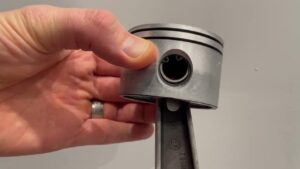
Let me start by explaining what a wrist pin is and what “wrist pin knock” actually means in practical engine terms. In an internal combustion engine, the wrist pin (also called a piston pin or gudgeon pin) is the hardened steel pin that links the connecting rod to the piston. Mechanically, it’s the pivot point that allows the connecting rod to swing as the crankshaft turns while the piston moves up and down in the cylinder bore. The pin passes through the piston skirt and sits inside the piston’s pin bosses.
When everything is healthy, the wrist pin fits precisely and moves as designed, with lubrication and clearances carefully controlled. When something goes wrong; such as excessive clearance, poor lubrication, a damaged bushing (on certain designs), or a pin that is bent; the wrist pin can “tap” or “knock” as the piston changes direction. That tapping is what you hear as wrist pin knock.
Typically, there are two types of wrist pins: the (semi-) floating pin and the anchored or fixed pin. With the support of a bushing, the fixed wrist pin hinges within the end of the connecting rod. The piston pivots around the pin rather than the pin moving freely through the piston bosses. On the other hand, the semi-floating pin connects to the rod through friction and/or retention methods, allowing the piston to pivot more freely within the piston pin bosses. Different engines use different retention strategies (clips, interference fits, or bushings), and that detail matters when it comes to wear patterns and repair methods.
When the wrist pin goes bad, a wrist pin knock occurs. You’ll often notice it under specific RPM and load conditions rather than at idle. Many drivers report that it’s most noticeable when the engine speed (revolutions per minute) holds steady or increases gradually; especially in the midrange where cylinder pressure and engine load are significant. A common observation is that the knocking sound becomes audible around 1500–2000 rpm. It can be very rare to notice the noise when you back out of the rpm, during deceleration, or when the car is stationary; although severe wear can make it audible almost anytime.
Why does RPM matter? Because at certain speeds and loads, the piston changes direction faster and the forces acting on the pin and piston bosses increase. In a healthy engine, those forces are controlled by tight clearances and stable lubrication. In a worn or damaged system, those forces cause the pin to “click” or “double tap” as the piston transitions through the top and bottom of its travel.
When your car piston reverses from the top dead center (TDC) to the bottom dead center (BDC), the wrist pin knock can present as a light double click. A cracking noise often comes up only when your car is moving and the engine comes under load. However, a badly worn wrist pin, damaged bushing, or bent pin can cause the funny noise to occur even when the engine isn’t under meaningful load, because the clearance is excessive enough that the pin “rattles” regardless of cylinder pressure.
This is where owners get understandably anxious: the sound may start small, and you might initially suspect a valve clatter. But as the sound becomes deeper, sharper, or more frequent, it creates a “lower-end” character that makes you worry about rod bearings. That concern is valid; because some wrist pin noises can masquerade as bottom-end issues. Should you inspect the valve clatter? Yes. In fact, it’s wise to verify valve train noise early because valve adjustments, lifter issues, or even exhaust leaks can sound deceptively similar; yet are far easier and cheaper to fix than internal piston/rod work.
Now, let’s address severity. A wrist pin knock is not automatically an immediate engine death sentence, but it’s also not a sound you should ignore and “hope goes away.” Severity depends on the root cause:
- Minor clearance or early wear: may produce a light tapping that worsens slowly. The engine may run for a while, but wear accelerates and can contaminate oil with metal particles over time.
- Lubrication-related pin noise: may be tied to oil pressure, oil viscosity, or oil contamination. This can worsen quickly if oil quality and cooling aren’t corrected.
- Bent pin or major boss damage: can progress into piston damage, connecting rod stress, and potential catastrophic failure if left unchecked.
Even when the engine continues to run, the risk is collateral damage. A loose wrist pin can pound the piston bosses, wear the rod small end (where applicable), and eventually change piston motion enough to cause skirt scuffing or ring sealing problems. That’s why diagnosis and timely repair matter.
Before moving into repair steps, let’s make sure you can distinguish wrist pin knock from a few other “famous” engine noises. This comparison will make the later troubleshooting steps far more effective.
Wrist Pin Knock vs. Piston Slap vs. Rod Knock vs. Spark Knock
Many owners lump every tapping noise into one category, but each noise has a different cause and a different repair pathway. Here’s a practical, expert-oriented breakdown:
Wrist pin knock: Often a light, sharp double-tap or clicking sound that can show up under load at mid RPM. It may change noticeably with cylinder disable testing (when the load on the piston is removed). It can also be more noticeable when the engine is warm, depending on clearance and oil condition.
Piston slap: Usually more noticeable on cold start. It’s often a hollow, skirt-related slap that reduces as the piston expands with heat. Piston slap can be common on some engine designs and may not always indicate imminent failure, though it can still indicate wear.
Rod knock (rod bearing): Typically deeper, heavier, and more alarming. It tends to get worse with load, and it often becomes louder with quick throttle blips. It is commonly present across a wider RPM range and is a true “stop and diagnose now” issue because it can lead to immediate failure.
Spark knock / detonation: Sounds like marbles rattling in a can and occurs under load, especially when accelerating. It is combustion-related, not a mechanical pin problem. Detonation can still damage pistons and pins, but the cure is often fuel quality, timing, carbon buildup, or knock sensor/engine management related.
Because these noises can overlap, the safest strategy is to use controlled tests rather than guessing. That leads us into the repair-and-diagnosis section, where you’ll learn how to find the offending cylinder and decide whether the wrist pin is actually the issue.
How to Fix a Wrist Pin Knock
The primary fix for a confirmed wrist pin knock is straightforward in concept: replace the failing wrist pin and correct any related component damage (piston pin bosses, connecting rod small end, and; where applicable; bushings or retaining clips). In some cases, a faulty connecting rod can also produce a knocking noise, especially if the small end is worn or out-of-round. Either way, the piston and connecting rod assembly must remain synchronized and properly aligned at all times, and the wrist pin must fit and move exactly as the engine design intends.
That said, here’s the critical professional caution: don’t jump straight to wrist pin replacement until you confirm the source. Engine noises are deceptive. A valve issue, loose accessory, timing component, or even a cracked flexplate can sound like an internal knock. The goal is to verify the “bad cylinder” behavior first, then confirm the mechanical condition during teardown if needed.
But you must first identify if your wrist pin is bent. A bent wrist pin won’t install smoothly or nicely in the piston pin boss. As a symptom, you’ll feel some resistance or hear an audible knock as you try to install the pin in its boss. Alternatively, you may also notice an air gap at the top of the wrist pin. This may disappear on the outside but indicate on the inside.
To make this more practical: a correctly sized wrist pin should slide/fit according to the design specification (press-fit vs. floating). If the pin is supposed to float, it should move without binding. If it is press-fit, it should press in smoothly with proper support and alignment; without cocking, gouging, or “sticking” halfway. Resistance that feels uneven often points to a bent pin, damaged boss, or alignment problem in the rod.
Now that you’ve established that there’s a bent wrist pin, what should you do? It’s simple in principle: you remove and replace the bad pin, then inspect the related parts for damage so the new pin isn’t installed into a compromised assembly.
However, most owners aren’t finding a bent wrist pin by hand during a rebuild; they’re hearing a knock in a running engine and trying to locate the source. That’s where cylinder isolation testing becomes useful. The steps below outline a classic method, but I’ll also include safety notes and modern alternatives, because ignition systems vary by vehicle.
- Step 1: Park your car on a level ground
- Step 2: Start the engine and allow it to idle. The engine will run and the wrist pin knocks
- Step 3: Pull out or short each plug wire, one after another, using a test light. The noise gets quieter when there’s no load on the piston. There’s a likelihood that the noise gets louder as you pull the plug wire 1 and quieter on numbers 3, 5 or 7.
- Step 4: The noise from the wrist pin will naturally disappear as soon as you get to the bad cylinder section.
- Step 5: However, if the noise doesn’t go away, you may need to go check the valve. A little valve adjustment may be all you need
Let’s clarify what’s happening in that test. Disabling a cylinder reduces combustion pressure in that cylinder. If a knock is highly dependent on combustion loading; like wrist pin noise or rod bearing noise; the sound often changes when the load is removed. A wrist pin knock may reduce significantly or disappear when the offending cylinder is disabled because the piston is no longer being driven down with full force.
Safety note: pulling or shorting plug wires is an older technique that can be risky on modern ignition systems, and it can damage coils or create dangerous voltage spikes. If you have coil-on-plug ignition, it’s safer to disable cylinders using a scan tool (power balance test), temporarily unplugging an injector, or using manufacturer-approved procedures. If you’re not sure, consult a professional. The concept; cylinder isolation; remains valid, but the method should match your vehicle’s ignition design.
Once you have identified the cylinder where the noise changes dramatically, you’ve narrowed the suspect area. From there, the next steps depend on the severity of the noise, oil condition, and engine history. In some cases, a borescope inspection (through the spark plug hole) can show unusual piston movement, scuffing, or damage. In others, oil analysis or dropping the oil pan to check for metal debris can help determine whether you’re dealing with a pin issue, a bearing issue, or broader wear.
If you proceed to teardown, the professional approach is to inspect:
- piston pin bosses (for ovaling, cracks, or galling)
- connecting rod small end (for wear and alignment)
- wrist pin surface condition (scoring, discoloration, wear patterns)
- retaining clips (if applicable)
- oil condition and lubrication pathways (to ensure the cause is corrected)
Replacing a wrist pin without addressing the cause; such as oil starvation, improper assembly, or contamination; can lead to the new pin developing the same problem.
Common Causes of Wrist Pin Knock (So You Don’t Repeat the Failure)
Wrist pin knock is usually the result of a condition that changes clearance, lubrication, or alignment. In the workshop, the most common causes include:
- Lubrication problems: low oil pressure, clogged oil passages, wrong oil viscosity, or neglected oil changes can reduce lubrication at the pin interface.
- Overheating and oil breakdown: excessive engine heat can thin oil and reduce film strength, increasing metal-to-metal contact.
- Detonation (spark knock) over time: repeated detonation hammers pistons and pins, accelerating wear and potentially deforming components.
- Improper installation: misaligned press-fit installation, incorrect clearances, or damaged clips can start a failure chain.
- Worn piston bosses or rod small end: once the bore becomes oval, the pin can no longer sit correctly under load.
Understanding the “why” matters because it affects repair scope. Sometimes replacing a pin is not enough; piston replacement, rod reconditioning, or machine work may be required to restore correct geometry and clearances.
In case there is a loose bolt that holds the fuel pump drive cam I had a similar noise in my 351C engine in my 53 Ford. The bolt that holds the cam gear and fuel pump drive cam, the wrist pin knock will come up.
This example is worth highlighting because it captures a real diagnostic trap: external or timing-related noises can mimic internal knocks. In that 351C scenario, a loose bolt holding the cam gear and fuel pump drive cam created a noise that sounded like wrist pin knock. When bolts loosen, components shift, and those shifts can create rhythmic tapping or knocking synchronized with engine speed; exactly the kind of sound that makes owners fear piston or rod issues.
Consequently, you may find that the pump cam is hitting the timing cover. You shouldn’t allow the noise to linger for too long to avoid the connecting rod from breaking or causing any damage to the engine. In that case, you should tighten the bolts to hold the wrist pin securely in place. Alternatively, you may need to replace the bolts in case they’ve lost their threads.
To refine the takeaway: if the noise source turns out to be external; such as a loose cam bolt, timing component interference, or accessory contact; address it immediately. Not only will it remove the noise, but it can also prevent secondary damage (for example, a timing cover worn through or a gear that fails). The key is not to assume “internal knock” until you’ve inspected obvious external suspects. A careful inspection around the timing cover, accessory drive, and valve train can prevent unnecessary engine disassembly.
The other technique is to run thicker oil in the range of 15WD-50WD. This may lessen the noise at least temporarily. You can also go with 20-grade thinner oil to cushion the wrist pin noise.
Oil viscosity changes can sometimes reduce noise temporarily, but it’s important to treat this as a diagnostic aid or short-term mitigation; not a true repair. A thicker oil (often written as 15W-50 rather than “15WD-50WD”) can increase oil film strength and reduce mechanical tapping by improving cushioning between surfaces. Conversely, some engines respond differently, and certain operating conditions or oil pump designs may favor a different viscosity strategy.
However, masking a wrist pin knock with oil does not correct the underlying clearance or damage. If the pin is worn, bent, or the piston boss is damaged, the problem remains and can worsen. Also, using a viscosity outside the manufacturer’s recommendation can create other issues; especially in cold climates where thick oil reduces flow at startup. If you consider viscosity changes, treat them carefully and ideally discuss them with a qualified technician who understands your engine’s needs.
In professional practice, oil choice is part of a bigger picture: oil pressure health, oil temperature control, and maintenance intervals all matter. If you suspect wrist pin knock, it’s wise to confirm that oil pressure is within spec and that the engine is not running excessively hot, because heat and low pressure accelerate wear.
FAQS
Wrist pin knock is one of those topics that generates a lot of confusion because it overlaps with other engine noises. These FAQs address the most common questions I hear from owners and DIY builders when diagnosing or rebuilding engines.
Should a Wrist Pin Rotate?
Normally, the wrist pin should rotate between the piston bosses. This way, it can ensure that the connecting rod can maintain a smooth and nice spot from side to side. By design, the piston boss should be at an angle of 90 degrees to the crankshaft and the wrist pin.
To expand on that: whether the pin rotates and where it rotates depends on whether the design is floating, semi-floating, or fixed. On floating designs, the pin may rotate in both the piston and the rod bushing (if used), distributing wear and preventing localized hot spots. On fixed/press-fit designs, rotation is controlled differently. The principle remains the same: the assembly must maintain alignment, smooth articulation, and proper lubrication so load is distributed evenly.
If a pin is not rotating where it should (or is rotating where it should not), you can get uneven wear and noise. This is one reason why correct clearances and correct assembly technique are critical during rebuilds.
Can a wrist pin knock go away with time?
The severity of a pin knock is no doubt and when you hear the sound, it means that your engine isn’t in good condition. Note that a wrist pin knock isn’t an issue that’ll resolve itself or naturally die off or go away unattended. There are steps to take to fix the wrist pin knock.
In reality, what sometimes happens is this: the noise changes with oil temperature, driving style, or fuel quality, and the owner mistakenly believes it “went away.” But an internal clearance issue rarely heals. If it becomes quieter, it’s usually because the conditions changed (oil thickness, load, ambient temperature), not because the worn parts repaired themselves. If you suspect wrist pin knock, treat it as a mechanical condition that requires diagnosis and correction.
Is Wrist Pin Knock Dangerous to Drive With?
It can be. If the knock is light and intermittent, you may have time to diagnose and plan repairs, but continued driving risks worsening wear in the piston pin bosses and connecting rod small end. If the noise becomes loud, frequent, or you notice performance changes (misfire, oil pressure drop, increased oil consumption), you should reduce driving and schedule inspection quickly. The danger isn’t only the pin; it’s the possibility of collateral engine damage if parts fail under load.
Can Low Oil Cause Wrist Pin Knock?
Yes, low oil level or low oil pressure can contribute to wrist pin noise because the pin interface depends on stable lubrication. If oil is low, aerated, contaminated, or overheated, the protective oil film becomes weaker, and metal-to-metal contact can occur. Even if oil level is “okay,” poor oil quality or clogged passages can still create localized lubrication problems. This is why checking oil level, oil condition, and oil pressure is a smart early diagnostic step.
What Tools Help Diagnose Wrist Pin Knock More Accurately?
Several tools can improve accuracy and reduce guesswork:
- Mechanic’s stethoscope: helps localize noise, though internal sounds can transmit widely through engine structure.
- Scan tool with cylinder balance/power balance: allows safer cylinder disable testing than pulling plug wires.
- Borescope: can reveal piston scuffing or unusual marks without immediate teardown.
- Oil filter inspection: cutting open the filter can reveal metal debris that indicates internal wear.
Tools don’t replace experience, but they reduce the chance of misdiagnosis; which is the biggest risk with engine noises.
Conclusion
Usually, a wrist pin knock often sounds like a piston slap or lifter noise, especially when the pin has bent and got bad. When this happens, the pin can create a repeating tap as the piston changes direction on the downstroke and upstroke, producing a lifter-like sound that confuses many owners during the early stage of the problem.
A wrist pin knock could also resemble lower-end noises or noise from worn journals. That’s exactly why you should diagnose carefully: cylinder isolation, inspection of valve train behavior, and verification of oil condition can prevent misdiagnosis. Regardless of the exact comparison, the guiding principle remains the same; don’t let the noise linger. If the issue is truly a wrist pin knock, it can worsen and cause collateral damage to pistons, rods, cylinder walls, and oil quality. Acting promptly can be the difference between a targeted repair and a major rebuild.
If you take one expert-level lesson away from this guide, let it be this: engine noises are patterns, not mysteries. Document when it happens, how it changes under load, and how it responds to controlled testing. Once you do that, the path to the correct fix becomes far clearer; and far less expensive.