

The automobile has long stopped being a luxury reserved for a small circle of affluent motorists. In modern life, it is a practical, time-saving tool that helps millions of people commute, travel comfortably, and move cargo—from everyday groceries to heavy suitcases—without the physical strain that earlier generations simply accepted as normal. Yet the car’s accessibility does not make automotive knowledge obsolete. On the contrary: the more widely cars are used, the more relevant it becomes to understand where they come from, how manufacturers differ, and why certain brands earned trust while others disappeared.
When we talk about “car brands,” we are not only speaking about mass-market household names. The automotive universe also includes coachbuilders and design houses, contract manufacturers, experimental EV specialists, historic marques that shaped early motoring, and even fictional brands that influenced car culture as powerfully as real-world engineering. Each type of brand plays a distinct role. Some build entire vehicles, others assemble them for global OEMs, and some contribute by innovating in aerodynamics, materials, motorsport, or battery systems. Understanding these differences is the foundation of informed comparison.
Table of Contents
What brands of cars begin with the letter V?
The letter V appears at the start of many automotive names across the world—covering manufacturers that helped shape the earliest decades of the global car industry and companies that still influence mobility today. You will immediately recognize Volkswagen and Volvo, and you may also know niche names such as Venturi and Vector. Beyond those, there are numerous lesser-known manufacturers whose stories—brief or long, local or international—form part of the larger automotive record.
This topic becomes particularly meaningful when you are choosing a future “iron horse,” comparing models for practical ownership, or building a collection as a hobby. However, knowledge about brands is not limited to personal curiosity. It also matters in professional contexts: market research helps new and established businesses refine their positioning, understand supply chains, identify competitors, and build credible strategies. In addition, the history of the automotive industry is inseparable from the history of technology and society—showing how manufacturing, urban planning, energy systems, and even cultural identity evolved together.
Accurate, detailed information is more than trivia. It can prevent costly mistakes, support smart purchasing decisions, and improve the success of business initiatives—whether in sales, marketing, logistics, restoration, or parts supply. The pace of innovation also keeps accelerating: compared to even half a century ago, new models and revised platforms arrive with far greater frequency. Add to that the sheer number of brands created worldwide over the last 150 years—since the first workable self-propelled designs—and it becomes easy to see why automotive information can feel scattered and difficult to process.
That is why a structured list is valuable. When brand histories are organized, alphabetized, and made searchable, you can move quickly from curiosity to clarity: identify the manufacturer behind a name, understand what it produced, place it in a time period, and compare it meaningfully with other “V” marques. In the guide below, the brands are presented in a cleaner order (alphabetical where practical), with each entry refined for readability while preserving all key facts, names, dates, and URLs.
How to use this list like an expert: treat each entry as a “brand passport.” First, note the founding year and location—these often explain engineering traditions and market priorities. Next, identify the brand type (mass-market automaker, contract manufacturer, coachbuilder, tuning house, or motorcycle maker). Finally, look for partnerships and platform sharing; those relationships are central to modern automotive economics and frequently explain how young brands scale quickly.
Vaillante

Vaillante is not a real-world car manufacturer. Instead, it is a fictional automotive universe created by Jean Graton for the famous French comics centered on racing driver Michel Vaillant. Despite being imaginary, Vaillante became a meaningful symbol within motorsport storytelling—capturing the romance of speed, the drama of competition, and the belief that progress is driven by ambition and teamwork. In the series, Vaillante is depicted as an advanced company that designs its own racing cars and operates a team capable of competing at the highest levels.
The stories place Vaillante in elite arenas such as the 24 Hours of Le Mans and Formula 1 championships. Through this narrative lens, the author explored more than lap times: he reflected on innovation, passion, and strong family ties—values that mirror what many real racing teams and manufacturers emphasize. Even though Vaillante does not sell production cars, its cultural footprint is real, and it demonstrates how design and brand mythology can shape how audiences perceive motorsport.
The Vaillante logo uses a circular emblem divided into three color fields—blue, white, and red. Together, they create a sharp white “V” that reads as a bold wedge against the tricolor background. The design clearly echoes French identity while communicating speed and decisiveness through its geometric simplicity.
Vale Motor
The Vale Motor Company began in 1931 in Maida Vale, London, and its origin story is refreshingly human: it was founded as a hobby venture rather than as a large industrial enterprise. Its creator, Pownall Pellew, started assembling what became known as the Vale Special. Financing came from Pellew and two partners, Allan Gaspar and Robert Owen Wilcoxon—who was also the brother of well-known film actor Henry Wilcoxon. In those early years, production was decidedly hands-on, with cars built largely by hand.
Most Vale vehicles were produced in lightweight form and typically used an open two-seat body layout, reflecting the British tradition of compact sports “specials” designed for simplicity and driving feel. In 1933, the company introduced the Vale “Vixen,” adding another chapter to its short but distinctive timeline. Overall, the marque is credited with creating approximately 60 to 80 cars before operations ended in 1935—making Vale Motor a small yet memorable example of pre-war craftsmanship and enthusiast-led engineering.
Valmet Automotive
Valmet Automotive Group is widely recognized as Finland’s largest contract manufacturer of automobiles. Established in 1968 in Uusikaupunki, Finland, the company built its reputation not by selling vehicles under its own consumer brand, but by providing engineering and manufacturing capacity to other automakers. This “behind-the-scenes” role is critical in the modern industry: contract manufacturers can scale production, provide specialized expertise, and accelerate time-to-market for global OEMs.
A particularly important pillar of Valmet’s work is the development of environmentally responsible propulsion technologies, including electric vehicles. Its activities include the design and production of modular battery systems—an area that has become strategically essential as EV adoption expands. Valmet Automotive operates plants in Germany and Poland, underlining its European manufacturing footprint.
Alongside cooperation with Mercedes-Benz, Porsche, Saab, Opel, and Fisker to produce components, the company has been manufacturing electric vehicles since 2009. In 2021, it announced plans connected to the production of solar-powered electric cars, reinforcing its focus on forward-leaning mobility solutions.
Van Hool

Van Hool is associated with large-scale transport solutions rather than passenger cars, but it remains an essential automotive manufacturer in the broader sense of vehicle production. The company was founded in 1947 in Koningshooikt, Lier, Belgium (often mistakenly described as Dutch due to the region’s language and proximity). Its core output includes semi-trailers, buses, and trolleybuses—vehicles that define public mobility and commercial logistics.
Bus body production began in its founding year, setting the company’s direction early. A notable milestone arrived in 1957 with cooperation involving Fiat VC. Expansion and new production capacity led to the construction of a factory in 1964. In 1971, Van Hool established a subsidiary in Zaragoza named Van Hool España, S.A., which was later sold in 1983. Today, the manufacturer is capable of producing up to 1,500 complete buses annually, demonstrating how specialized vehicle makers can achieve significant industrial scale outside the passenger-car spotlight.
Vanden Plas

Vanden Plas is a name with deep historical roots and a narrative that spans countries, industries, and even wartime production. The brand began in 1870 in Brussels, Belgium, founded by Guillaume van den Plas as a manufacturer of wheels, bridges, and luxury carriages. This origin matters: early coachbuilding was closely tied to carriage craftsmanship, and many later automotive body specialists emerged from that same tradition.
By 1898, the company was producing its first automobile bodies. In 1912, it was acquired by Theo Mazuy, who relocated operations to England and established Vanden Plas Ltd. During World Wars I and II, the brand—working as part of the Aircraft Manufacturing Co.—produced aircraft including the De Havilland DH 98 Mosquito and supplied spare parts. That wartime experience often influenced postwar manufacturing standards, especially in materials and production discipline.
In 1949, the Belgian coachbuilder chapter ended. From 1959 onward, the British brand continued producing cars, and its long journey concluded with liquidation in 1991. Vanden Plas remains a strong example of how prestige bodywork, industrial shifts, and global events shaped the identity of automotive names.
Vandenbrink Design
Vandenbrink Design was founded in 2006 in Amsterdam, the Netherlands, by Michel van den Brink and Robert Koemans. The company operates as an engineering and design specialist, focused on the creation and assembly of distinctive automotive bodies—projects that typically sit well beyond the boundaries of series production. In an era when platform sharing is common, niche body engineering remains one of the clearest ways to create genuine exclusivity.
Early on, the company collaborated with the Italian brand Ferrari, where Vandenbrink’s work received strong praise—an important endorsement in a world where reputation is currency. In 2009, it began developing a carbon-fiber tourist bus called Fra Mauro, based on the Spyker C8 Spyder chassis. The company has also pursued the Vandenbrink GTO project, inspired by early Italian performance icons—specifically referencing the 1962 Ferrari 250 GTO and the 599 GTB Fiorano as design touchstones.
From an expert perspective, Vandenbrink Design illustrates how small studios can shape perception and desirability. Even when volumes are low, impact can be high—because design excellence travels through media, collector circles, and the broader culture of automotive aspiration.
Vehículos Automotores Mexicanos

Vehículos Automotores Mexicanos—better known as VAM—started operating in the mid-1940s and became an important name in Mexico’s automotive story. Initially, the company served as a local assembly facility for Willys-Overland, producing jeeps and small trucks that were in strong demand during the postwar period. This early focus placed VAM at the practical end of mobility: vehicles designed to work, endure, and support economic rebuilding.
By the 1960s, the company moved toward greater independence and began manufacturing passenger cars under its own name. Licensed models from American Motors Corporation formed the foundation. Crucially, VAM engineers went beyond straightforward assembly: models such as the Gremlin, Hornet, Javelin, and Pacer were adapted to suit Mexico’s climate and road conditions. Reinforced structures, suspension changes, and overall durability improvements were applied to meet local operating realities—an approach that reflects a mature understanding of regional engineering demands.
The VAM logo features a rounded-corner form where the negative space becomes a right-pointing arrow. The arrow is not explicitly drawn; it appears between four triangular shapes—two gray triangles on the left and two red triangles on the right. Beneath this symbol is “VAM” in large red letters. The “V” and “A” mirror each other without traditional crossbars, while the “M” continues the same geometric logic, reinforcing a cohesive industrial identity.
Vauxhall Motors

Vauxhall Motors is a historic British automotive company and, since 2021, a subsidiary of Stellantis. Founded by Alexander Wilson in 1857, it originally took its name from its location on the River Thames. The company’s earliest products were marine engines—an origin that aligns with a broader pattern in industrial history, where expertise in engines and metalwork frequently preceded automotive production.
In 1903, the company adopted the name Vauxhall Iron Works Company and entered car manufacturing, relocating to Luton. By the 1950s, Vauxhall’s international relationships expanded through a contract with Opel and Holden, reflecting the growing globalization of automotive design and production. In 2017, Vauxhall was acquired by France’s Groupe PSA, and the brand’s current era is defined by platform and technology integration across the Stellantis portfolio.
Vauxhall’s main products remain passenger cars and light commercial vehicles—segments where brand trust, service networks, and practical ownership costs often matter as much as styling or raw performance.
VDL Nedcar
VDL Nedcar is a major Dutch vehicle manufacturer founded in 1967 in Born, Netherlands, by the van Doorn brothers. Its story illustrates the strategic importance of manufacturing capacity: the facility’s ownership and branding changed as market conditions, partnerships, and industry restructuring evolved.
After acquiring a controlling stake in 1975, Volvo renamed the company Volvo Car B.V. and became full owner by 1976. Following the crisis of the 1990s and joint operations involving the state, Volvo, and Mitsubishi, the company was renamed Netherlands Car B.V. in 1996. The site assembled models for German brands including DAF and Volvo, showing how contract and partnership manufacturing can connect national industries and keep production ecosystems alive through changing economic cycles.
Vegantune Evante
Vegantune Evante emerged in the 1980s and represented a turning point for Vegantune, a name previously associated with tuning and modifying Lotus cars. With the Evante, the ambition shifted from improving someone else’s vehicle to creating an original model that still respected the spirit of classic British sports cars. The goal was not nostalgia for its own sake; rather, it was a careful attempt to blend familiar lightweight sports-car character with updated engineering decisions.
The Lotus Elan served as the base concept, but the project was not a simple copy. Engineers reworked and adapted the design to meet new technical requirements—an approach that is common in low-volume specialist manufacturing, where leveraging an existing architecture can reduce complexity while still allowing substantial differentiation.
The Evante logo reflects restraint and confidence: the word EVANTE sits inside a horizontal oval with a thick black outline. The letters are bold, large, and subtly stretched, echoing the visual language of 1960s and 1970s automotive typography and resembling styles such as Compacta Bold or ITC Machine. The result is a period-appropriate identity that still reads clearly today.
Veilside

Veilside Co., Ltd. is a Japanese company rooted in tuning culture and performance creativity. It was founded by Masao Ono (a car tuning company owner), former race car driver Chris Kraft, and Vernon Fotheringham. The brand is best known in this context for its connection to the Vemac RD320R hybrid race car. Developed in 2002, the RD320R competed in Japan’s Super GT GT300 class for a decade, continuing through 2012, and participated in more than 150 races.
Veilside is also described as a major developer of concept cars for leading Japanese automakers. That role is significant: concept development often influences production trends in styling, packaging, and even brand storytelling—well before consumers see the final showroom product. In other words, Veilside’s value lies not only in performance parts or racing visibility but also in shaping ideas that can ripple through the industry.
Velie

The Velie Motor Vehicle Company was founded in 1908 in Moline, Illinois, and built on the foundations of the earlier Velie Carriage Company (established in 1902). Like many early American manufacturers, Velie’s first car was assembled from a mixture of sourced components—an approach typical of the era, when specialized suppliers and standardization were still emerging.
By 1910, Velie had sold 1,000 cars, demonstrating early market traction. In 1911, the company expanded into trucks and introduced the four-seat Velie 40. Technological steps followed: in 1914, the Continental model introduced an electric starter and dual ignition, and in 1920 the Model 34 Universal was released. The founder’s death in 1928 led to the closure of the company—an outcome not uncommon in early automotive history, when leadership and capital structures were often tightly tied to individuals rather than institutions.
Vemac
Vemac emerged in the 1990s through cooperation between Japanese engineers and British specialists. The brand’s guiding idea was to fuse two respected traditions: British chassis tuning and driving dynamics, paired with the Japanese emphasis on quality control and precision. This combination is logical from an engineering standpoint—lightweight sports cars depend on suspension geometry, structural rigidity, and predictable feedback as much as they do on horsepower.
The mission was to produce sports cars that could serve on everyday roads while also remaining credible on a race track. Vemac gained recognition with its RD-series models, including the RD180, RD200, and RD320R. The brand’s identity is therefore strongly linked to a “dual-use” philosophy—machines designed to feel alive in ordinary driving yet capable of serious performance when pushed.
The Vemac logo is built from triangles. An inverted black triangle with rounded corners forms the base. Inside it, three smaller triangles—green, blue, and red—are separated by white lines and collectively form another black triangle in the center. Above the emblem, the word VEMAC appears in a light outline sans-serif style reminiscent of late-20th-century futuristic graphics and neon signage, reinforcing the brand’s performance and technology orientation.
Vencer
Vencer is a Dutch performance-focused marque founded in 2010 by entrepreneur Robert Cobben in Vriesenwijn, the Netherlands. The company positions itself in the high-end sports car category, producing expensive, high-performance vehicles aimed at buyers who value rarity and mechanical drama. The brand’s first car—and the starting point for its sports-car direction—was the Vencer Sarthe.
The Sarthe prototype was presented in 2013 at the Top Marques Motor Show in Monaco by its owner, Prince Albert II of Monaco. It was sold through a dealership based in China, illustrating how niche European manufacturers often rely on international sales channels to reach a small but global customer base. The 2015 model was assembled by hand and is described as one of the most expensive models sold in Europe—an emphasis that aligns with the brand’s artisanal positioning and low-volume exclusivity.
Vermorel
Vermorel traces its roots to 1850, when Antoine Vermorel founded a family company dedicated to agricultural machinery—an industrial origin that reflects how many early car makers began with mechanical equipment for farms, factories, or transport. Vermorel assembled its first car in 1899, but full-scale automobile production began later, in 1908. That timeline fits a familiar pattern: experimentation first, followed by industrial commitment once technology and demand matured.
In the post-war period, the company introduced the Vermorel “Type X,” described as featuring innovative equipment for its time. Beyond automobiles, the company produced a range of engineering products, suggesting a diversified manufacturing identity rather than dependence on a single category. After multiple ownership changes, the brand ultimately closed in 1965, closing a long chapter that had spanned the transformation from agricultural mechanization to modern industrial mobility.
Veritas

Veritas was founded in 1947 in Grafschaft, Germany, by Ernst Loof (then head of BMW Motorsport), test driver Cork Meyer, and road racer Lorenz Dietrich. The company distinguished itself through an emphasis on lightweight bodies for racing models—an engineering priority that remains central to performance design today. Weight reduction improves acceleration, braking, handling, and efficiency, often delivering more real-world performance than power increases alone.
In 1949, Veritas presented several models at the Paris Motor Show: the Saturn coupe, Scorpion roadster, Comet Sportwagen rally car, and Comet S Rennsportwagen, all based on the BMW 328 chassis. In the same year, a dealer agreement was signed with Panhard, leading to the assembly of the Dyna Veritas ultra-lightweight sports car. In 1951, the company produced a four-door Saturn coupe. However, Veritas closed in 1953.
The brand was later revived in the 1990s, and the Veritas RS III was released in 2001. This kind of revival is common in collector-driven segments, where heritage names retain emotional and marketing value even decades after original production ends.
Vernon-Derby

Vernon Derby appeared in the late 1920s as a Franco-British collaboration between the British company Derby and the French firm Vernon. In the UK, Derby had established a reputation for compact, lightweight vehicles suited for city use and short-distance travel. As the European market evolved, expansion required new production capacity and a different operating approach—conditions that often push manufacturers toward partnerships, licensing agreements, or local assembly.
The alliance in France created a new chapter: production moved, the cars gained a fresh national context, and the Vernon Derby name signaled adaptation to European tastes. The brand emphasized small but elegant cars aimed at buyers seeking refined style, comfort, and a balance between British elegance and French engineering sensibilities. In expert terms, this is a classic example of product localization—maintaining a brand’s core identity while adjusting to regional expectations.
The Vernon Derby logo used the word ‘Derby’ in black, with a decorative flourish highlighting the first letter D. The remaining letters flowed smoothly in a slightly slanted line, and the final “y” extended downward at an angle—an elegant finish that visually unified the word into a single graceful signature.
Vector Motors
Vector Motors Corporation was an American manufacturer based in Wilmington, California, and its roots trace back to Gerald Wiegert’s Vehicle Design Force and Vector Aeromotive—both founded in 1971. The brand produced its first automobile in 1989 and completed production in 1993. After its transition to Vector Motors Corporation, the company’s focus centered on sports car development.
Vector gained attention as the first American maker positioned to challenge elite European performance brands such as Ferrari and Lamborghini. During its first decade, more than 50 models were developed—a striking number that suggests intense experimentation and ambition, even if only a small portion reached production. Following Wiegert’s death in 2021, the company’s future became uncertain. Regardless of what comes next, Vector’s legacy remains an important chapter in the story of American supercar ambition.
Venturi

Venturi Automobiles was founded in 1984 by Claude Poiret and Gérard Godefroy and became known as a French designer and manufacturer with an emphasis on performance and distinctive styling. The company is headquartered in Fontvieille (Monaco), and its production facility is associated with high-end electric vehicles today. Venturi’s story is particularly relevant in discussions of reinvention—how brands shift focus in response to market realities and technological change.
In 2000, the company went bankrupt. Among its notable products are multiple coupe and Transcup model lines, including Atlantique 300, 300 GTR, MVS Venturi, Venturi Atlantique, and Venturi 400 GT. In 2001, the brand was acquired by Guild Pallanca Pastor, and production was reoriented toward electric motors. This strategic pivot led to the Venturi Fétish, reflecting a broader industry movement: performance identity increasingly defined not only by combustion engines, but by torque delivery, battery integration, and advanced power electronics.
Vespa

Vespa, developed by Piaggio after World War II, became one of the most recognizable symbols of Europe’s return to everyday life. The earliest scooters were engineered as straightforward, affordable mobility for a wide audience—students, workers, and office employees who needed dependable transportation in rebuilding cities. Over time, Vespa evolved far beyond utility and became a cultural icon associated with fashion, freedom, and the comfort of urban movement.
The name Vespa means “wasp” in Italian, a fitting description given the scooter’s profile—narrow through the center with a broader rear, echoing the insect’s shape. This kind of naming is powerful branding: it provides instant imagery and emotional connection without needing technical explanation.
The Vespa logo is a flowing wordmark drawn as though in one continuous line, suggesting motion and lightness. The letters tilt upward to the right, creating an energetic, optimistic feel. It is not tied to a standard typeface; instead, the hand-drawn character and calligraphic curves reinforce the elegance and personality of the Italian brand.
Victress Manufacturing Company

The Victress Manufacturing Company was founded in California in 1952, a period when American car culture encouraged experimentation in design, performance, and materials. The brand’s first model, the S1A, was designed in 1951 by Hugh Jorgensen and William “Doc” Boyce-Smith. Victress models were built on Ford or Mameco Corp. chassis, highlighting a common approach among low-volume makers: leveraging established mechanical foundations while innovating in bodywork and styling.
In 1954, Victress merged with the Merrill Powell Company and produced several C2 and C3 models. Notably, the C2 coupe influenced multiple iconic Corvette-related developments: it became the basis for the GM Q-Corvette, XP700, the 1961 Corvette, and the 1963 Corvette Stingrays. In 1959, a Pioneer model with a fiberglass body was introduced, reflecting the era’s interest in lightweight composite materials. By 1961, the company was acquired by LaDawri, closing the Victress chapter as an independent name.
Victoria
The German brand Victoria began in Nuremberg in the late 19th century with bicycle production and built a strong reputation for reliability and quality. As mobility technology matured, the company expanded into motorcycles, scooters, and compact cars. In the first half of the 20th century, Victoria collaborated with respected engine manufacturers, including Fafnir, JAP, and BMW—relationships that often served as a shortcut to higher performance and improved reliability in an era when engine development demanded significant expertise.
Victoria’s vehicles gained recognition for solid performance and forward-thinking engineering for their time. The logo is a case study in contrast: it combines two different typographic voices. One side features the word “Crown” in a square, heavy, restrained style. The other side presents “Victoria” as elegant italic script, suggesting craftsmanship and heritage. The decorative “V” extends into a chrome-like horizontal line over “Crown,” visually tying the two styles together into one coherent mark.
Victory
Victory entered the American motorcycle market in the late 1990s as a Polaris Industries project. The strategic aim was clear and ambitious: create a modern, technologically advanced alternative to Harley-Davidson while maintaining the unmistakable spirit of American heavyweight motorcycles. Victory focused not only on power and styling but also on high reliability and build quality—two factors that heavily influence long-distance touring confidence.
From the beginning, Victory positioned itself around heavy cruisers designed for comfortable travel on American highways. Over time, the brand became a serious competitor in the premium cruiser and touring segment, demonstrating that even strongly established categories can be disrupted when engineering and product planning are aligned with rider expectations.
The Victory emblem is centered on a large stylized “V” with a multilayered outline. A metallic silver outer edge frames a deep red interior with smooth transitions. A broad metallic band crosses the middle and carries the bold sans-serif word VICTORY. Beneath it sits MOTORCYCLES in a thinner, lighter font on black, stretched across the width. The word “USA” appears at the bottom of the red field, emphasizing origin and cultural identity.
Vignale
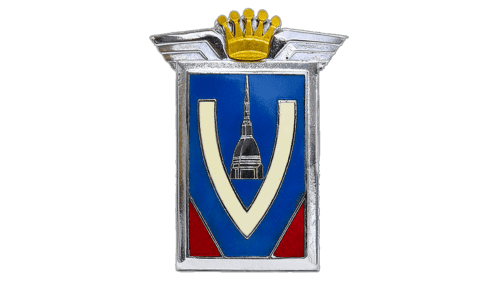
Vignale was founded in Turin in the late 1940s by Alfredo Vignale as a coachbuilding workshop dedicated to custom-designed automobiles. In postwar Italy, such specialized craftsmanship was in high demand, and Vignale quickly became associated with refined taste, high-quality construction, and a talent for shaping metal into unmistakable form. The workshop collaborated with many top-tier manufacturers, including Ferrari, Maserati, Lancia, Fiat, and Alfa Romeo, producing exclusive bodies that enhanced both the car’s prestige and the owner’s status.
The Vignale logo communicates Italian heritage with a strong visual narrative. It uses a vertical shield with a raised metallic frame, crowned by a golden crown with five rounded points and flanked by broad silver wings. Inside is an ivory “V” with three-dimensional edging set on a dark blue background shaped to match. At the center of the “V” is a stylized depiction of Turin’s Mole Antonelliana, rendered in restrained gray tones—an elegant geographic signature linking the brand to its home city.
Vinci

Vinci is a Portuguese car brand founded in 2007 by engineers and entrepreneurs determined to demonstrate that Portugal could create its own supercar. The ambition was not limited to speed alone. The group sought to produce a technologically advanced vehicle that could represent Portuguese engineering capability on an international stage. Their early result was the Vinci GT prototype, a concept blending classic American muscle-car cues with modern technical thinking.
The design approach combined retro spirit with futuristic lines—taking familiar proportions and reinterpreting them through contemporary bodywork. This is a classic specialist-brand strategy: use recognizable visual language to create emotional appeal while integrating modern engineering to meet performance expectations.
The Vinci logo centers on the word VINCI in uppercase blue letters with a rigid, precise typeface. To the right sits a bright red emblem built from four separate shapes, some with rounded corners that soften the overall severity. The mark resembles a mechanical connector or component, visually reinforcing ideas of precision and reliability.
Vinaxuki

Vinaxuki was a Vietnamese manufacturer established in 2004 in Hanoi. The company produced mini-trucks and cars under its own name and also built some vehicles associated with Chinese brands. Its catalog—until closure in 2015—shows the pragmatic focus of a company serving domestic transport needs, where durable utility often matters more than brand prestige.
Over its operational period, Vinaxuki produced 38 truck models, including 3450T, 5500TL, 8500TL, 2500BA, 3000BA, 4500BA, 5000BA, and 7000BA. It also produced two semi-truck models and touring vehicles such as the Vinaxuki Pickup 650X and the Songhuajiang HFJ6376 minivan. Additionally, it had two bus models based on its platform. Taken together, this lineup demonstrates a broad attempt to cover multiple commercial and passenger-use cases within a developing automotive market.
VinFast
VinFast is a modern representative of Vietnam’s automotive industry. Founded in 2017 by Pham Nhat Vuong in Hanoi, the company established production in Hai Phong, Vietnam. In 2018, VinFast introduced prototypes at the Paris Motor Show—an intentional move signaling international ambition—and began mass production in early 2019.
The early lineup included the Vinfast Lux A2.0 sedan, based on the BMW 5 Series F10, and the Vinfast Lux SA2.0 crossover, based on the BMW X5 (F15). The company also purchased a license from General Motors and sold the Vinfast Fadil five-door mini-hatchback domestically. From an industry standpoint, this approach illustrates how young manufacturers can accelerate development by legally leveraging proven platforms while building manufacturing capability and brand presence in parallel.
VLF Automotive
VLF Automotive is an American automaker associated with a sequence of branding and organizational developments. Its predecessor was founded in 2012 by Bob Lutz and Gilbert Villarreal. After designer and entrepreneur Henrik Fisker joined the team, the organization expanded its capabilities and, in 2016, adopted the VLF name—formed from the first letters of the founders’ surnames (and also referenced alongside the VL Automotive naming in the brand’s timeline).
The predecessor introduced its first model, the Destino, in 2013. In 2016, the Force 1 VLF sports car followed, and in 2018 the Rocket V8 was developed in collaboration with Galpin Auto Sports. The brand’s narrative reflects a common specialist-market pattern: build identity through high-visibility halo cars, leverage notable leadership, and use partnerships to amplify engineering and production capabilities.
Virago Cars Limited

Virago Cars Limited began its corporate life in 2004 as VR Automotive Limited, operated by Andrew Knowson and David Musgrave Morris. The following year, it was renamed Virago Cars Limited. Originally based in Solihull in the West Midlands, the company later moved its headquarters to Coventry in 2008. Production ran from 2005 to 2010, placing the brand firmly in the modern niche-manufacturer era—where specialist sports cars often rely on small teams, targeted visibility, and tight production windows.
The brand is particularly associated with the Virago Coupé sports car introduced in 2008. By 2011, the company had become defunct and was renamed Nacouz Services Limited, and the brand name itself was also closed. This outcome underscores a reality of specialist manufacturing: even strong concepts can struggle without sustained capital, supply stability, and long-term regulatory and commercial support.
Vivinus
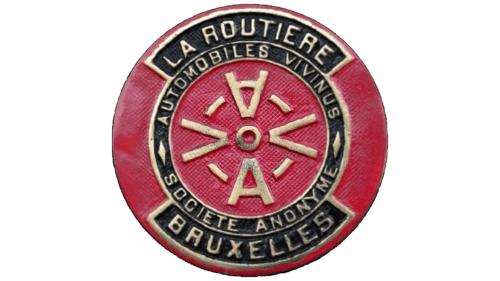
Vivinus was founded in Brussels at the end of the 19th century by engineer Alexandre Vivinus, one of the early European figures to recognize the potential of motor vehicles. The company initially produced bicycles—the dominant personal transport solution of the time—before shifting its attention toward motorization. Vivinus began experimenting with mounting engines on lightweight wheeled frames, and by 1895 the first Vivinus cars appeared.
These early vehicles were extremely simple: small four-wheeled designs using belt drives, single-cylinder engines, and minimal technical complexity. They were aimed at city residents ready to move beyond bicycles to something faster and more comfortable. In expert terms, this is an early example of “micro-mobility scaling up”—an attempt to transition users from pedal power to motor power without demanding a radical change in user expectations or infrastructure.
The Vivinus emblem was circular with classic red, black, and gold. A bright red textured center carried a gold mark stylized as a wheel, formed from four letters—two V’s and two A’s—joined into a single structure with short spoke-like strokes. Around it, a black ring carried gold inscriptions: “Automobiles Vivinus,” “Société Anonyme,” and “Bruxelles,” plus “La Routière,” emphasizing road and urban purpose. The result is an emblem that blends branding, geography, and function in one compact design.
Voisin

Voisin was founded in 1905 by Gabriel Voisin in Issy-les-Moulineaux, France, originally producing Lux Avions vehicles. After World War I, the company moved into car production in 1919, using Knight-type bushing-valve engines. A defining feature of the brand was its extensive use of light alloys—an advanced approach for the time that reduced mass and improved performance.
Voisin gained broader recognition with the Laboratoire Grand Prix car of 1923, which featured a “monocoque” chassis and a fan integrated into the cooling system. Among the brand’s best-known models are the Voisin C5 (1924), the C25 Aérodyne (1934), and the C26 and C27 Aérosport Coupé. The brand closed in 1946, but it remains a historically important example of how advanced materials and aerodynamic thinking entered automotive design earlier than many assume.
Volga

The Volga brand emerged in the mid-1950s at the Gorky Automobile Plant (GAZ) and became one of the most recognizable symbols of the Soviet automotive era. Engineers developed the new model to be more prestigious and comfortable than basic mass-market cars, positioning it between the simpler Moskvich and the more utilitarian Pobeda. This positioning gave Volga a special status on Soviet roads, where ownership and use often reflected professional role, institutional assignment, or economic standing.
Volga vehicles were valued for robust construction, spacious interiors, and reliability. They were widely used by government services, taxi fleets, and higher-income private owners. The first and most iconic model was the GAZ-21, known for smooth body lines, a large chrome grille, and high ground clearance—features well suited to Soviet road conditions and climate demands.
The early Volga emblem took the form of a shield with a thick black border. Inside, “Volga” appeared in cursive script with elongated, connected letters and a slight rightward slant. Beneath the name was a running deer—the symbol of Gorky—shown in a simplified silhouette, angled diagonally with raised front legs. The emblem combined local identity with motion, reinforcing both origin and purpose.
Volkswagen

Volkswagen is a German brand of global significance, founded in May 1937. Today, it operates as a key brand within Volkswagen AG, a group that sold more than 6.2 million vehicles in 2019 alone. The modern headquarters is located in Wolfsburg, Germany. From an industry perspective, Volkswagen represents large-scale manufacturing discipline, platform strategy, and the ability to deliver vehicles across multiple segments and markets.
The brand’s origin story is tied to 1933, when Adolf Hitler, Jakob Werlin (Daimler-Benz), and Ferdinand Porsche met at the Hotel Kaiserhof. During that meeting, requirements for a new vehicle were outlined: durability, reliability, affordability, assembly at a new German factory, and public accessibility. The concept of accessibility shaped the name itself—Volkswagen, or “people’s car.” The first result was a prototype based on the Porsche Typ 60, setting the stage for one of the most influential automotive legacies of the 20th century.
Volvo
Volvo Cars—known domestically as Volvo Car Corporation or Volvo Personvagnar AB—was founded in 1927 in Gothenburg, Sweden. The Volvo trademark itself was registered earlier, in 1915, for the sale of bearings to the American market. However, the name was not used for automobiles until 1927, when it appeared on the Volvo ÖV4, developed under SKF’s auspices. In 1935, Volvo became independent, marking a major structural milestone in the brand’s development.
In 1944, the Volvo PV444 was developed, an important step in the brand’s product evolution. Since 2010, Volvo Cars has been owned by Geely Automobile, representing a modern era defined by global ownership structures while preserving Swedish design identity and engineering priorities. In professional analysis, Volvo stands as a brand whose reputation is often tied to long-term product philosophy and consistent positioning rather than short-lived trend cycles.
Vorsteiner
The name “Vorsteiner” appears in automotive discussions often enough to warrant inclusion in a letter-based index, but the entry here is presented as a heading without additional detail in the provided source text. In professional research workflows, such headings typically function as placeholders—reminding the reader that the brand name exists in the ecosystem and may require a dedicated profile depending on context, market, or product category.
If you are using this list for comparison or market mapping, treat this as a prompt to verify the relevant manufacturer or brand identity via official channels, product documentation, or regional registries. This is especially important in the automotive world, where similarly named entities can exist across different niches (manufacturing, tuning, design, aftermarket components, or motorsport).
Vortex

Britannia Vortex Automotive Limited is a manufacturer associated with Kenilworth, Warwickshire. It emerged from Phantom Automotive Limited, founded in 1997 by Adrian Greville Smith, David Abel, Graham Winston Astbury, and Norman Morris. In 2008, the brand—previously known as Virago Cars—was renamed again, continuing a sequence of identity changes that is not unusual among specialist makers adapting to shifting ownership, strategy, or market positioning.
Under the Vortex Automotive Limited name, vehicles produced from 2010 onward include the Vortex F1, Vortex V 2, and Vortex BT 1200, among others. The brand relocated to Kenilworth, Warwickshire, reinforcing its connection to the UK’s long tradition of small-volume sports and performance engineering. From an expert lens, Vortex reflects a segment where product identity often evolves alongside corporate structure.
VŪHL

VŪHL is a Mexican-American joint venture founded in 2010 in Querétaro by brothers Iker and Guillermo Echeverria, based on the Etxe automotive design agency. The brand gained attention for creating an ultra-light supercar, the VŪHL 05, first presented at the Goodwood Festival of Speed in 2013—a venue known for highlighting engineering purity and performance theatrics in equal measure.
The name VŪHL translates as VEHICLES OF ULTRA-LIGHTWEIGHT AND HIGH PERFORMANCE, clearly stating the company’s technical philosophy. The venture was founded by a founding father with three decades of race-car building experience, reinforcing the credibility of its lightweight performance focus. In expert terms, VŪHL’s identity is built around the idea that reducing mass can be the most direct path to sharper dynamics, responsiveness, and driver engagement.
VDS
“VDS” appears here as a heading without accompanying description in the provided content. In structured brand lists, acronyms can be particularly challenging because they may refer to multiple entities across different countries and automotive subfields. As an expert practice, you would confirm which VDS is relevant by cross-checking location, product category, and historical period.
If you encountered “VDS” in documentation (parts catalogs, motorsport references, registrations, or manufacturer records), the most reliable route is to trace it back to an official name, trademark, or corporate registry entry. This prevents misidentification—an easy error when abbreviations overlap across industries.
Virango
Virango is listed here as a heading without additional narrative in the supplied text. As with any brand name presented without context, it is best treated as an index entry awaiting verification and expansion. In automotive research, names can represent manufacturers, model lines, tuning companies, design projects, or limited-run initiatives, and the same name may be reused or repurposed over time.
For accurate interpretation, connect the name “Virango” to supporting data such as country of origin, product type, active years, or associated corporate entities. This ensures you compare like with like when analyzing the broader landscape of “V” brands.
Vision
Vision is included as a heading-only entry in the original material. In automotive terminology, “Vision” can appear as a brand name, a concept label, or a model designation—so clarity depends entirely on context. Index-based lists often include such headings to ensure the reader does not overlook a name they may encounter elsewhere, even if details are not immediately available in the current dataset.
If “Vision” is relevant to your research or purchasing decision, the recommended approach is to identify the specific company or product line tied to the name through official sources, publication archives, or regional market references. That step is essential for accurate comparisons, especially when names are broad or frequently reused.