


Across the full span of automotive history, few industries can match the speed and depth of change seen in the car world. Compare a modern vehicle—quiet at highway speed, packed with safety systems, aerodynamically refined, and increasingly electrified—to the earliest machines that simply proved “self-propelled travel” was possible, and the scale of progress becomes instantly obvious. The modern automobile is the result of countless breakthroughs in materials, manufacturing, combustion science, electronics, and design.
As a practical starting point for that timeline, it’s difficult to overstate the importance of Karl Benz. In 1886, the German inventor secured a patent for the Benz Patent-Motorwagen, widely recognized as the first true automobile. From that moment forward, the industry expanded through waves of new companies, fierce competition, and engineering leaps—producing machines that changed not only transportation, but also economies, cities, and culture. Along the way, a select number of automobiles earned “legend” status because they introduced new ideas, perfected old ones, or set standards that competitors spent decades trying to match.
Table of Contents
Classic cars are especially fascinating because many of their design solutions and engineering choices feel almost too ambitious for the tools and materials available at the time. Their bodywork, proportions, and mechanical layouts often reveal a level of creativity that still influences modern designers. They are also historical artifacts: the interiors reflect period tastes and ergonomics; the engines reveal what performance meant at the time; and the overall construction shows how manufacturers balanced durability, cost, and innovation. In that sense, truly great cars are not merely “old vehicles”—they are working documents of industrial evolution.
What follows is an expanded, expert-curated selection of automobiles that our editors consider among the best ever made. “Best,” in this context, is not limited to outright speed or luxury. Instead, we weigh a blend of factors: engineering significance, design impact, influence on later vehicles, real-world performance, and the ability to represent a turning point in automotive history. This is also not meant to be the final word—great-car lists should invite discussion. Your thoughts and comments are welcome.
How We Chose These Cars (What “Best Ever” Really Means)
Before diving into individual models, it helps to clarify the criteria. In professional automotive analysis, a vehicle earns “all-time great” status when it does at least one of the following exceptionally well—and ideally several at once:
- Introduces a meaningful innovation (layout, materials, powertrain design, safety concept, or manufacturing approach).
- Influences future vehicle design across brands or segments (shaping what becomes “normal” later).
- Represents peak execution for its category—where the engineering and design feel unusually coherent.
- Creates a cultural or motorsport legacy that outlives the product cycle.
- Delivers real-world usability in addition to performance or style, proving it’s more than a poster car.
With those principles in mind, the cars below are arranged in a way that highlights both historical progression and category variety: icons of performance, engineering breakthroughs, and vehicles that reshaped what the everyday driver could expect from a car.
Jaguar E-Type Lightweight
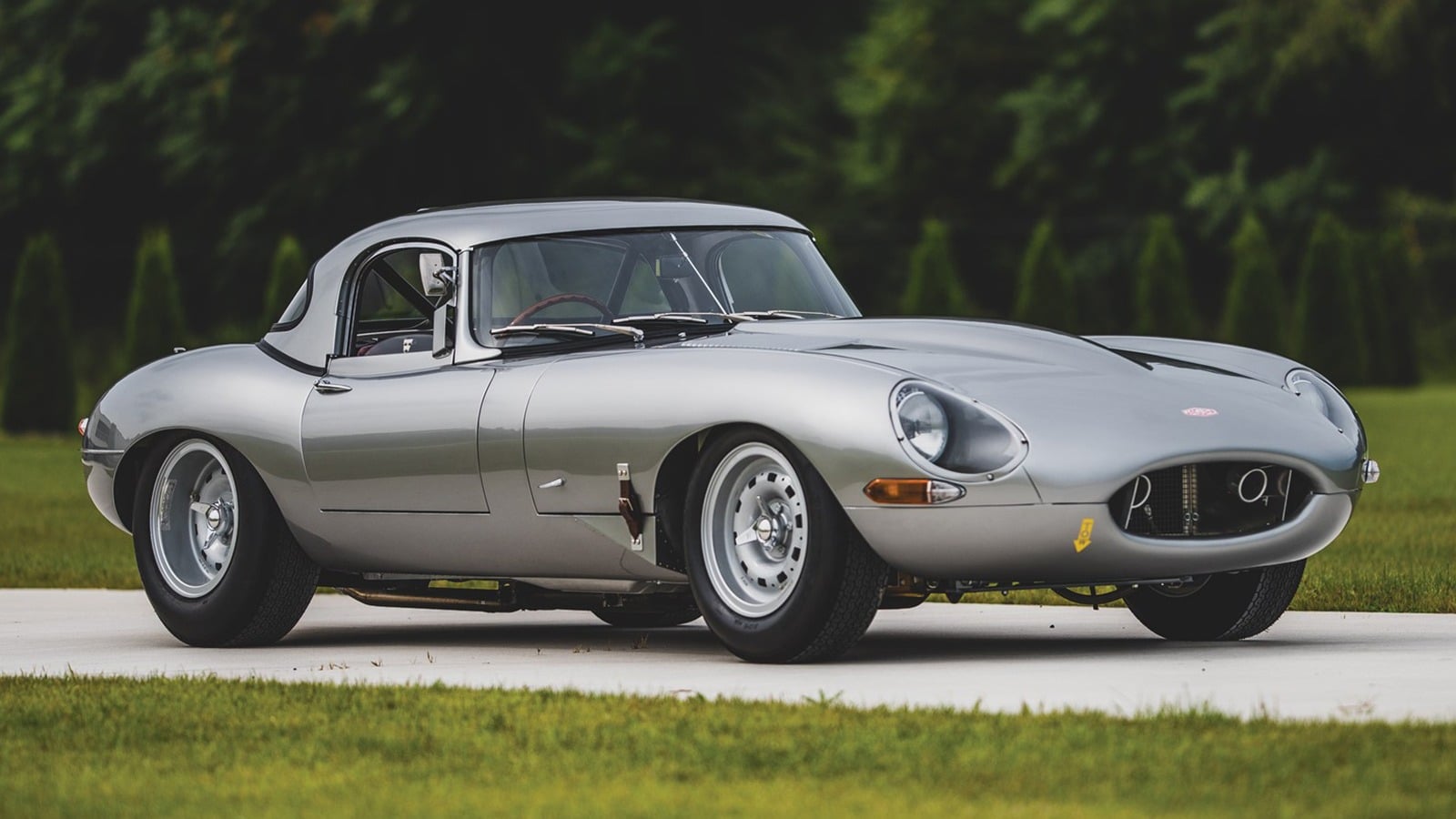
No discussion of all-time great automobiles is complete without the Jaguar E-Type Lightweight and the influence of the broader E-Type lineage. The Lightweight variant, in particular, achieved near-myth status because it distilled Jaguar’s performance philosophy into a focused competition tool: reduce mass, refine aerodynamics, and pair the chassis with a strong engine that could deliver usable power across racing conditions.
This version rose quickly in multiple motorsport settings. It featured an aerodynamic body and carried elements of Jaguar’s racing knowledge from the D-type—an era when lessons learned on track translated directly into road-car credibility. Power came from a 3.8-liter Jaguar engine producing around 300 horsepower, a figure that allowed the Lightweight to compete effectively against a wide range of rivals, especially when you consider its emphasis on reduced weight and efficient speed rather than brute-force mass.
Scarcity is part of the story, too. Instead of building the 18 Jaguar E-Type Lightweights originally planned, the manufacturer completed only 12. That limited production amplifies collector interest, but it also underscores something deeper: even legendary cars can be shaped by constraints—financing, racing regulations, and shifting priorities. For historians and enthusiasts, the E-Type Lightweight is a perfect example of how engineering intent, motorsport relevance, and rarity can combine into a single, enduring identity.
From an expert standpoint, the E-Type Lightweight deserves its reputation because it represents a moment when design beauty and mechanical seriousness aligned. It is not just admired; it is respected—by designers for its form, and by engineers for its purpose.
Lamborghini Miura

When the Lamborghini Miura debuted in 1966, it didn’t simply raise the performance bar—it helped define what the world would come to recognize as a modern supercar. At the time of its introduction, the Miura was widely regarded as the world’s fastest production car, and its impact was amplified by how radically it looked and felt compared to conventional high-performance machines.
Designed by Marcello Gandini, the Miura carried the kind of visual drama that instantly separated it from its peers. But the real engineering story was its layout: it became the first production supercar to combine a mid-mounted engine with a two-seat configuration in a way that set a template for decades. Its 3929cc V12 engine gave it the power—and the sound—to become an icon. More importantly, the mid-engine configuration improved balance and handling potential, especially at speed, making the Miura feel like an exotic from a different era compared to front-engine performance cars of the day.
In the expert view, the Miura’s greatness is not only about numbers. It represents a turning point in automotive imagination: it proved that a road car could carry racing-style architecture and still function as an object of desire for wealthy customers who wanted something beyond “fast”—they wanted revolutionary. The Miura also foreshadowed how design houses and manufacturers would collaborate to build brands around emotion, theater, and technological daring.
By 1974, the Lamborghini Countach stepped in as successor, pushing the same philosophy into an even more extreme direction. But the Miura remains the foundational statement: the car that made “supercar” feel like a category rather than a description.
NSU Ro80

The NSU Ro80 is one of the clearest examples of a vehicle being “ahead of its time.” When it entered the market, it looked futuristic not only in styling, but in concept. A sleek silhouette, a practical four-door layout, and a front-engine configuration helped it appeal to buyers who wanted something modern—and it quickly became a standout in its segment.
The Ro80 was introduced in 1967 and remained in production until 1977. Its defining technical feature was its Wankel engine, which used triangular-shaped rotors rather than traditional pistons. The advantage was smoothness: the rotary design reduced vibration and could deliver refined power in a way that felt advanced for the era. In theory, it was an elegant solution—a compact engine with a distinctive operating character.
But the Ro80 also demonstrates a harsh engineering reality: innovation must survive real-world durability and operating costs. One of the most significant drawbacks was fuel consumption, and the rotary’s rotor seals proved vulnerable—prone to corrosion and wear, which could compromise reliability and long-term ownership satisfaction. Over time, those issues contributed to the decision to end production. This is exactly why the Ro80 remains historically important: it shows how the industry experiments, learns, and sometimes retreats—not because an idea is “bad,” but because execution and longevity must match the promise.
From an expert perspective, the Ro80 deserves a place on any great-cars list because it represents a bold attempt to rewrite engine conventions. Even where it struggled, it influenced how engineers and consumers thought about alternative powertrain design—an influence that still echoes today as the industry shifts toward electrification and new propulsion concepts.
Lamborghini Countach LP400 ‘Periscopio’
When the Lamborghini Countach arrived in 1974, it didn’t merely follow the Miura—it aggressively redefined what an exotic car could look like. Designed by the Italian design house Bertone, the Countach became an icon of its time, and in many ways an icon of the entire supercar concept: sharp angles, dramatic proportions, and a “spaceship” stance that looked like it had escaped from a concept studio and accidentally made it into production.
Extraordinary features helped set it apart. Cooling ducts were integrated as functional design statements. The now-famous gull-wing doors became part of the Countach’s identity, turning everyday entry and exit into a performance of theater. And the LP400 “Periscopio” detail—an early solution that improved rearward visibility—reflected how designers and engineers tried to solve practical problems created by extreme shape and packaging.
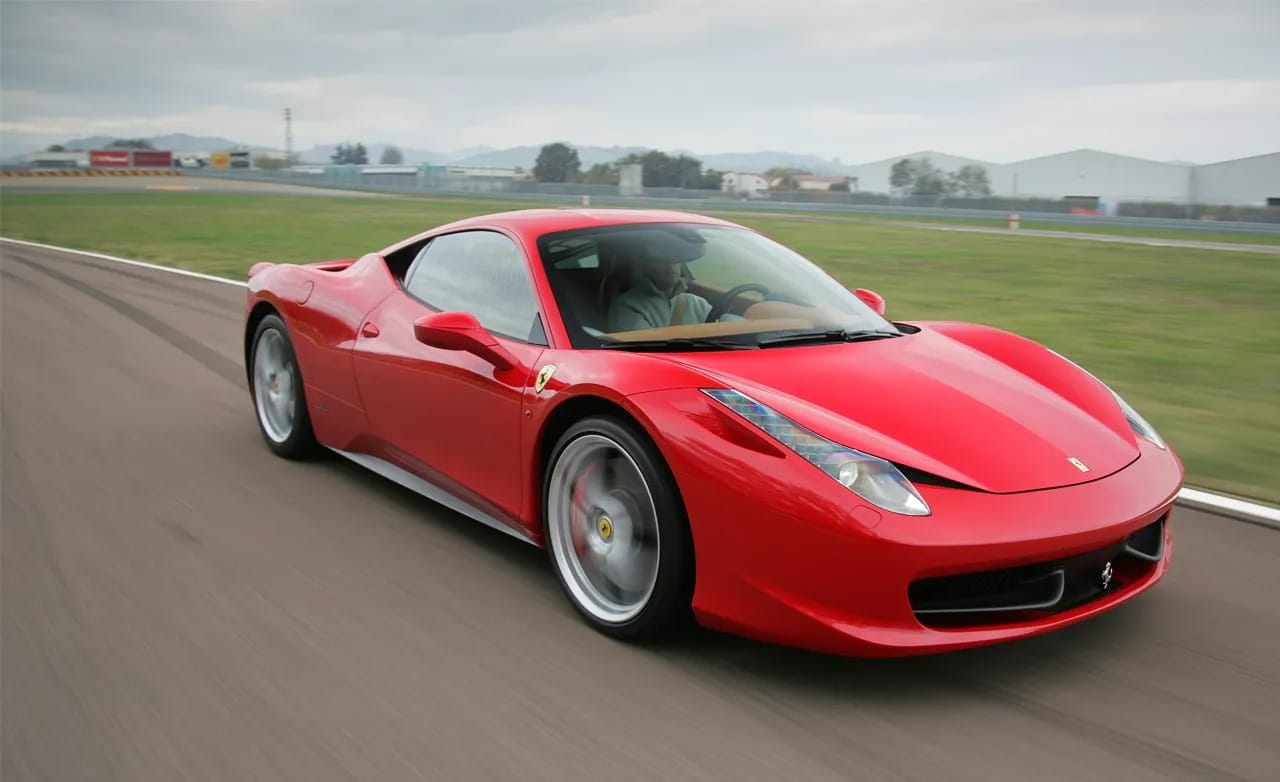
Production began in 1974 and continued until 1990, an unusually long run for a car so visually radical. That longevity is one reason the Countach feels timeless: it didn’t just shock at launch; it remained relevant by refusing to soften its design language. Even the fact that the image above shows another later Italian supercar (Ferrari 458 Italia) can be used as a useful comparison point—because it highlights how the Countach’s influence helped push the entire segment toward dramatic styling, aggressive stance, and a performance-first image that still defines exotic cars today.
From an expert viewpoint, the Countach is “best ever” material because it combined brand-building design with uncompromising intent. It wasn’t designed to be safe or polite. It was designed to be unforgettable—and it succeeded.
Mercedes-Benz 300 SL “Gullwing”
If the Countach represents theatrical futurism, the Mercedes-Benz 300 SL represents something equally rare: engineering discipline turned into beauty. The 300 SL is often praised for its distinctive doors, but its importance goes deeper. It showcased how a road car could be derived from serious performance thinking, blending advanced structure with high-speed capability in a form that still looks purposeful today.
In expert terms, the 300 SL’s greatness lies in how it balanced innovation with refinement. It didn’t rely on excess. It relied on intelligent design choices that made it competitive, distinctive, and durable enough to become a lasting symbol of German engineering identity.
Ferrari 250 GTO
The Ferrari 250 GTO remains one of the most important performance cars ever built—not simply because it is rare or valuable, but because it represents a period when racing DNA and road legality could exist in an almost pure form. It is often discussed in collector terms, but the expert perspective is that it’s a masterclass in balancing aerodynamics, engine character, handling, and competitive intent.
Cars like the 250 GTO also illustrate why “best ever” lists cannot be built from specifications alone. Legacy is created by influence, by motorsport credibility, by the way a car becomes a benchmark that later vehicles measure themselves against. The 250 GTO is a benchmark in that sense—still referenced whenever the discussion turns to the intersection of rarity, competition success, and design integrity.
Porsche 911
Some cars become legends because they are extreme. The Porsche 911 becomes a legend for the opposite reason: it evolved continuously while protecting its identity. The 911’s silhouette is one of the most recognizable in the world, and its long lifespan demonstrates an uncommon kind of engineering success—keeping a core concept relevant across decades of changing regulations, technology, and customer expectations.
From an expert standpoint, the 911’s greatness comes from coherence. It is not simply “fast”; it is communicative. It teaches the driver about weight transfer, traction, and control. It is also one of the best examples of iterative improvement in automotive history: each generation refined the concept without abandoning it, proving that evolution can be as revolutionary as reinvention.
Ford Model T
Any list of the best automobiles ever made must include at least one vehicle whose greatness is measured in social impact rather than performance glamour. The Ford Model T is that vehicle. While it will never be mistaken for a supercar, it reshaped daily life by helping normalize car ownership. It is one of the clearest examples of a product transforming society through accessibility.
From an expert lens, the Model T’s achievement is industrial: it contributed to the idea that a car could be produced consistently, serviced predictably, and owned by people who were not wealthy. That “democratization of mobility” is one of the most important themes in automotive history, and it is why vehicles like the Model T deserve a place alongside the Miura and Countach in any honest discussion of the “best ever.”
Volkswagen Beetle
The Volkswagen Beetle represents a different expression of mass mobility: simple packaging, broad usability, and a design that became globally iconic. Its cultural footprint is immense. It is a reminder that the “best” cars are often the ones that become part of everyday life for millions, not only the ones displayed behind ropes at concours events.
Expert readers tend to appreciate the Beetle for its identity stability—an instantly recognizable shape—and for the way it became a platform for customization, motorsport experimentation, and long-term ownership stories. Few cars have served as both basic transportation and cultural symbol so effectively.
Mini (Classic)
The classic Mini is one of the most influential small cars ever built because it proved that compact packaging can deliver real usability and genuine driving enjoyment. In professional design terms, it showed how efficient space management could produce a car that feels bigger on the inside than its exterior suggests—an approach that later became foundational for modern city cars.
The Mini also demonstrates a key point: innovation does not always require complexity. Sometimes it requires clarity. The Mini’s lasting reputation is built on that clarity—small size, practical layout, and a direct driving experience that made it beloved well beyond its original market purpose.
Citroën DS
If you want a single vehicle that represents bold European experimentation in mid-century design and engineering, the Citroën DS is a strong candidate. It is famous for being visually distinctive, but its real significance is the way it introduced advanced ideas and made them feel integrated rather than gimmicky.
From an expert perspective, the DS is a reminder that innovation can be comfortable. It pursued refinement, ride quality, and forward-thinking design at a time when many cars were still defined by stiffness, noise, and functional minimalism. It helped move the industry toward a more sophisticated understanding of what “premium” could mean beyond leather and chrome.
Shelby Cobra
The Shelby Cobra occupies a special place in automotive mythology because it represents a brutally effective formula: light chassis, large engine, maximum intent. It is the kind of car that reminds you how performance history often advances through bold combinations rather than incremental tuning.
From an expert standpoint, the Cobra’s importance is its influence on the performance narrative—especially the idea that a vehicle can be simple in concept yet extraordinary in impact. It also helped shape the cultural identity of American performance by proving that power and handling could be pursued in a focused, competitive package.
McLaren F1
For modern-era greatness, the McLaren F1 is an essential reference point. It became legendary not merely for speed, but for engineering priorities that still look uncompromising: low weight, meticulous materials selection, and driver-focused design. Even today, it is frequently cited as one of the most complete supercars ever created.
Expert readers tend to respect the F1 for its “systems” thinking. It wasn’t built as a marketing exercise. It was built as a technical statement: the best possible car under a clear philosophy. That purity is rare, and it is why the F1 remains a benchmark across generations.
Toyota Corolla
Including the Toyota Corolla in a best-ever list may surprise readers who associate greatness only with performance and exotic styling. But from an expert viewpoint, global influence matters. The Corolla represents reliability, mass production competence, and the ability to deliver consistent transportation to an enormous number of owners across many decades and markets.
In practical terms, cars like the Corolla set the baseline expectation for what a “good car” should be: starts every day, costs manageable amounts to run, and holds together over time. That baseline defines the real automotive world far more than supercars do—and that’s why the Corolla belongs here.
Honda Civic
The Honda Civic earns its place as an all-time great because it consistently demonstrates how engineering quality and everyday usefulness can coexist. Across its generations, it has been a practical compact car, an enthusiast platform, and a reputation builder for efficient powertrain design. It shows how a brand can win trust through repeatable excellence rather than one-time spectacle.
From an expert perspective, the Civic’s long-term influence is also cultural: it created a massive ecosystem of owners, tuners, and daily drivers who learned what dependable engineering feels like. Vehicles that build communities over time often leave a deeper mark than vehicles that merely impress once.
Jeep (Willys-era heritage)
Few vehicles shaped utility design the way early Jeep concepts did. The “Jeep” name became tied to a philosophy: simple, rugged mobility capable of handling harsh conditions. Even as the market evolved, that foundation influenced later off-road vehicles and the broader SUV category. In expert terms, Jeep heritage is one of the key roots of modern multipurpose vehicle design.
Greatness here is measured in capability and influence. The Jeep concept proved that a vehicle could be built not just for roads, but for tasks—work, terrain, and real-world demands. That idea remains central in today’s off-road and utility segments.
Land Rover Defender (classic utility ethos)
In the same spirit of capability-driven greatness, the classic Land Rover Defender ethos represents durable design built for demanding environments. This is not about high speed; it’s about high resilience. Expert readers often value vehicles like this because they reveal what “engineering honesty” looks like: simple solutions, repair-friendly layouts, and a focus on function that holds up under stress.
Utility icons also matter historically because they show how vehicles supported industries—agriculture, exploration, emergency services, and infrastructure. Those roles are less glamorous than racing, but arguably more essential to civilization’s daily operation.
Tesla Model S (modern EV milestone)
To represent the modern shift toward electrification, it is difficult to ignore the impact of the Tesla Model S era on public perception. Regardless of brand preference, the Model S contributed to changing what consumers believed electric cars could be: fast, long-range, technologically ambitious, and desirable in a way that earlier EVs struggled to achieve at scale.
From an expert angle, the “best ever” argument here is not that it invented electricity—it didn’t. The argument is that it helped move EVs from niche acceptance into mainstream aspiration, accelerating investment across the entire industry. In historical terms, that is a pivot moment.
Why These Classics Still Matter
The cars above demonstrate that automotive greatness has multiple forms. Some vehicles are celebrated because they look like nothing else and drive like machines from the future. Others are celebrated because they quietly carried millions of people through ordinary life with reliability and minimal drama. Some are famous because they proved an engineering concept; others because they made a brand legendary; others because they transformed manufacturing and ownership itself.
When you view the automobile industry through that broader expert lens, “best ever manufactured” becomes less about personal taste and more about historical significance. The Lamborghini Miura matters because it defined a supercar architecture. The Jaguar E-Type Lightweight matters because it tied beauty to competition intent and scarcity. The NSU Ro80 matters because it dared to push powertrain conventions forward—even if the market wasn’t ready to forgive its compromises. And icons like the Model T, Beetle, Civic, and Corolla matter because they shaped the world most drivers actually lived in.
That mix—innovation, influence, execution, and cultural imprint—is what separates a “good old car” from a truly legendary automobile.