

Construction vehicles have been around a lot longer than most people realize. The ancient Roman architect Vitruvius described cranes powered by human and animal labor back in the first century BCE. Fast forward a couple thousand years, and these machines run on internal combustion engines, electric motors, and hydraulic systems capable of moving thousands of tons of earth in a single day.
Without them, modern construction simply wouldn’t happen. Whether it’s digging foundations, paving highways, mining ore, or pouring concrete, heavy equipment does the work that no amount of manual labor could accomplish at scale. These machines use a principle called force amplification — they balance input power against movement to multiply the output force, making massive jobs manageable.
Table of Contents
Here are 23 types of construction vehicles worth knowing about, what they do, and why they matter.
1. Bulldozer — The King of the Job Site

The bulldozer is probably the most recognizable construction vehicle on the planet — and for good reason. It’s essentially a tractor with a massive metal blade mounted on the front, powerful enough to push enormous quantities of sand, soil, debris, and rubble.
What makes bulldozers so effective is their torque divider, which converts engine power into tremendous pulling capability. They can tow heavy loads, clear roads, remove obstacles like trees and vegetation, dig trenches, and even handle agricultural and military tasks.
Their wide tracks spread the vehicle’s weight over a large area, which dramatically reduces ground pressure. That’s why a bulldozer can move confidently across uneven, patchy terrain without sinking — something wheeled machines struggle with.
2. Loader — The Heavy Lifter

Loaders are built for one core task: scooping up loose material from the ground and moving it somewhere else — into a dump truck, a trench, or a stockpile. The large front bucket connects to two hydraulic arms (booms) that lift and carry sand, rock, soil, demolition rubble, and other materials without dragging them across the ground.
To put their scale in perspective, the LeTourneau L-2350 — one of the largest loaders ever built — has an operating payload of 80 tons (160,000 pounds). Its diesel-electric propulsion system produces 2,300 horsepower and supports an operating weight of 260 tons. That’s an absolute beast of a machine.
3. Scraper — Cut, Load, and Haul in One Pass

A scraper is a large vehicle with a wagon and a bladed bottom gate. As the wagon rolls forward, the blade scrapes up dirt, gravel, and other surface material, forcing it into the wagon. When the wagon’s full, the gate closes and the load gets hauled to the disposal site. Simple, efficient, and effective.
What sets scrapers apart from other earthmoving equipment is their ability to handle wet and heavy soil conditions effectively. They’re primarily used in highway construction, but also show up in mining and agriculture. The Caterpillar 613C and Terex TS-14b are two well-known examples.
4. Front Loader — The Versatile Dirt Mover

Also called a scoop loader, bucket loader, or front-end loader, this machine looks similar to a bulldozer but sits higher off the ground and rides on large wheels instead of tracks. That wheel setup lets it traverse rough terrain that would bog down smaller vehicles.
Front loaders feature a movable arm with a wide square bucket — though the bucket can sometimes be swapped out for hydraulic forks or other attachments. They’re primarily used for moving dirt, but they’re also common for transporting building supplies like bricks, metal bars, pipes, and digging tools. In colder climates, they double as snow removal machines.
5. Trencher — Built to Dig Narrow and Deep
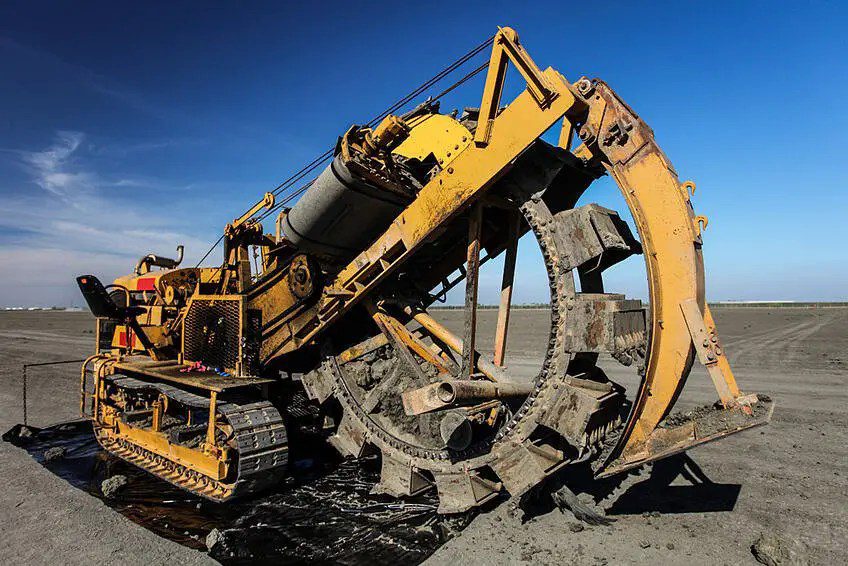
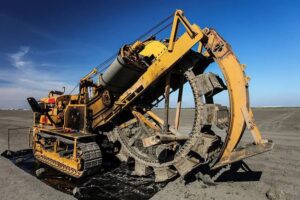
Trenchers are popular because of their adaptability. They handle trench digging, pipe laying, drainage installation, and even trench warfare preparation. They come in several varieties:
- Chain trenchers — Use a digging chain on a track system to rip through soil and dig deep, narrow trenches.
- Wheel trenchers — Use a toothed metal wheel to cut through pavement during road maintenance and to access underground utilities.
- Micro trenchers — Designed for urban environments where full-sized trenches would disrupt city life. They use a cutting wheel to create small, precise cuts in the surface.
Each type serves a different scale and environment, from rural pipeline projects to downtown utility work.
6. Bucket-Wheel Excavator — The Giant of Mining
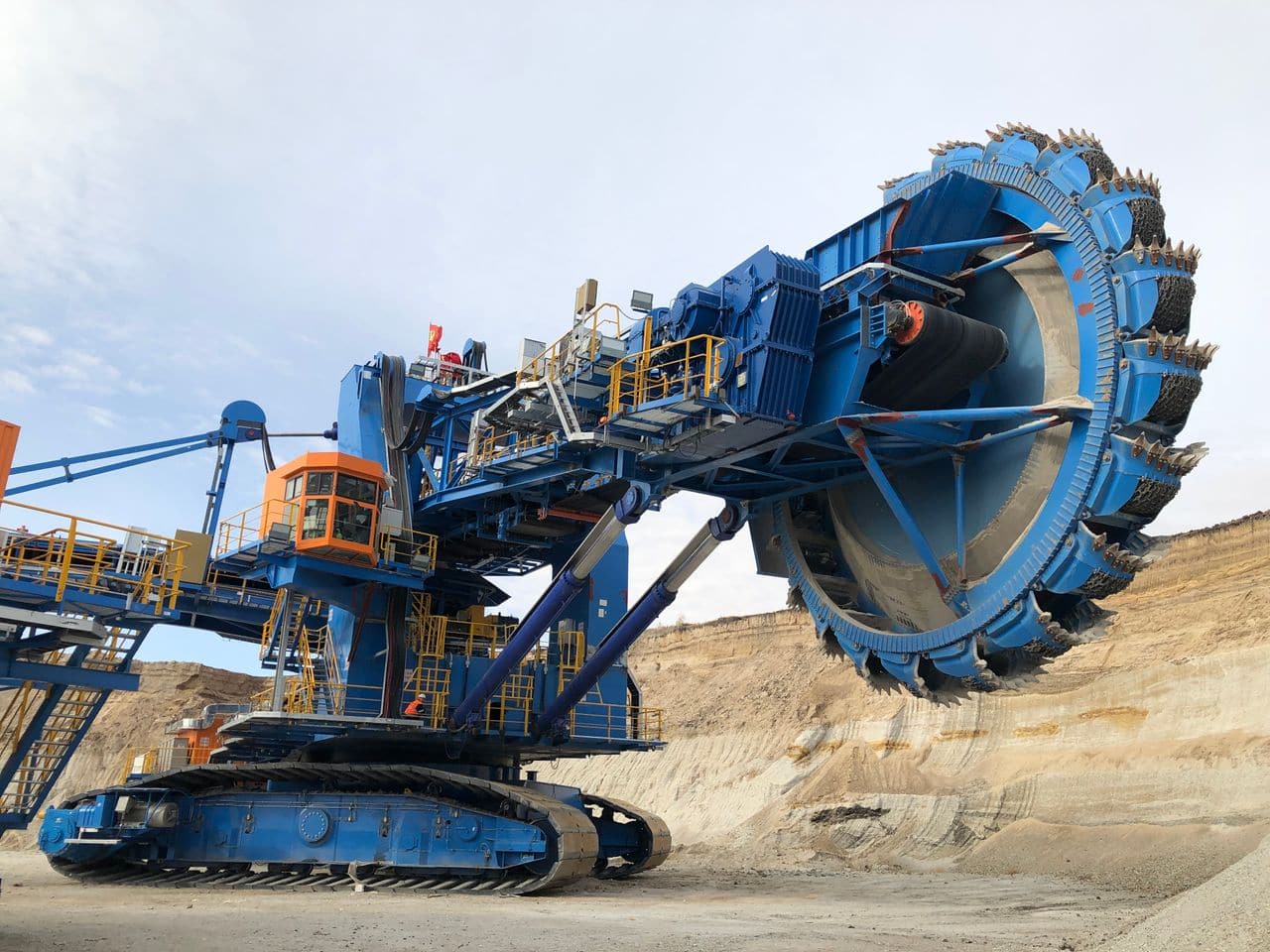
These are the machines that make everything else on this list look small. Bucket-wheel excavators are massive vehicles designed for large-scale mining operations, removing thousands of tons of overburden — the soil, rock, and material sitting above a coal seam or ore body — every single day.
Unlike conventional excavators, this machine features a large rotating wheel lined with continuous buckets. As the wheel spins, the buckets scoop material from the earth and feed it onto conveyor systems. They’re used primarily in lignite (brown coal) mining and industrial extraction of copper, uranium, and precious metals.
The most famous example? The Bagger 293, which holds the Guinness World Record as the heaviest land-based vehicle ever built. It weighs 31.3 million pounds, requires a crew of five, and can move 218,880 tonnes of soil per day. Let that number sink in.
7. Agricultural Tractor — From Farmwork to Construction Sites

The word “tractor” comes from the Latin word trahere, meaning “to draw.” The first tractors appeared in the late 1800s, built to replace the horses and oxen that pulled plows and carts. While they were originally designed for farming, tractors are now multi-purpose vehicles used across the construction industry.
Tractors are typically classified by their number of wheels — four-wheel (two-axle) models are the most common, followed by two-wheel (single-axle) versions. Both are engineered to produce high torque at low speeds, and the most powerful models run on diesel engines capable of pulling seriously heavy loads.
Modern tractors are far more sophisticated than their ancestors. They come equipped with hydraulic lifting systems, power-assisted brakes and steering, climate-controlled cabins, and GPS navigation for precise operation.
8. Concrete Mixer Truck — Keeping Concrete Ready to Pour

A concrete mixer truck does exactly what the name suggests — it mixes cement, sand, gravel, and water into concrete using a rotating drum mounted on the vehicle. The constant rotation keeps the mixture in a workable, liquid state during transport, giving workers adequate time to pour and shape the concrete before it begins to harden.
Portable mixer trucks are often used on smaller construction sites where lesser volumes of concrete are needed. Regardless of the project size, though, these trucks are essential. There are simply tasks on a job site that human workers can’t do by hand — and concrete mixing at scale is one of them.
9. Conveyor — Moving Materials Across the Site

You might wonder why a conveyor counts as a construction vehicle. Fair question. On many job sites, conveyor systems are mounted on wheeled shafts, making them mobile enough to be repositioned as work progresses. They’re used to transport heavy stones, bricks, aggregate, and other bulk materials from one location to another without requiring trucks to make repeated trips.
Beyond construction, conveyor systems are used across agriculture, automotive, mining, aerospace, pharmaceutical, food processing, and packaging industries. They can handle goods of virtually any shape, size, or weight.
10. Backhoe — The Small-Job Specialist
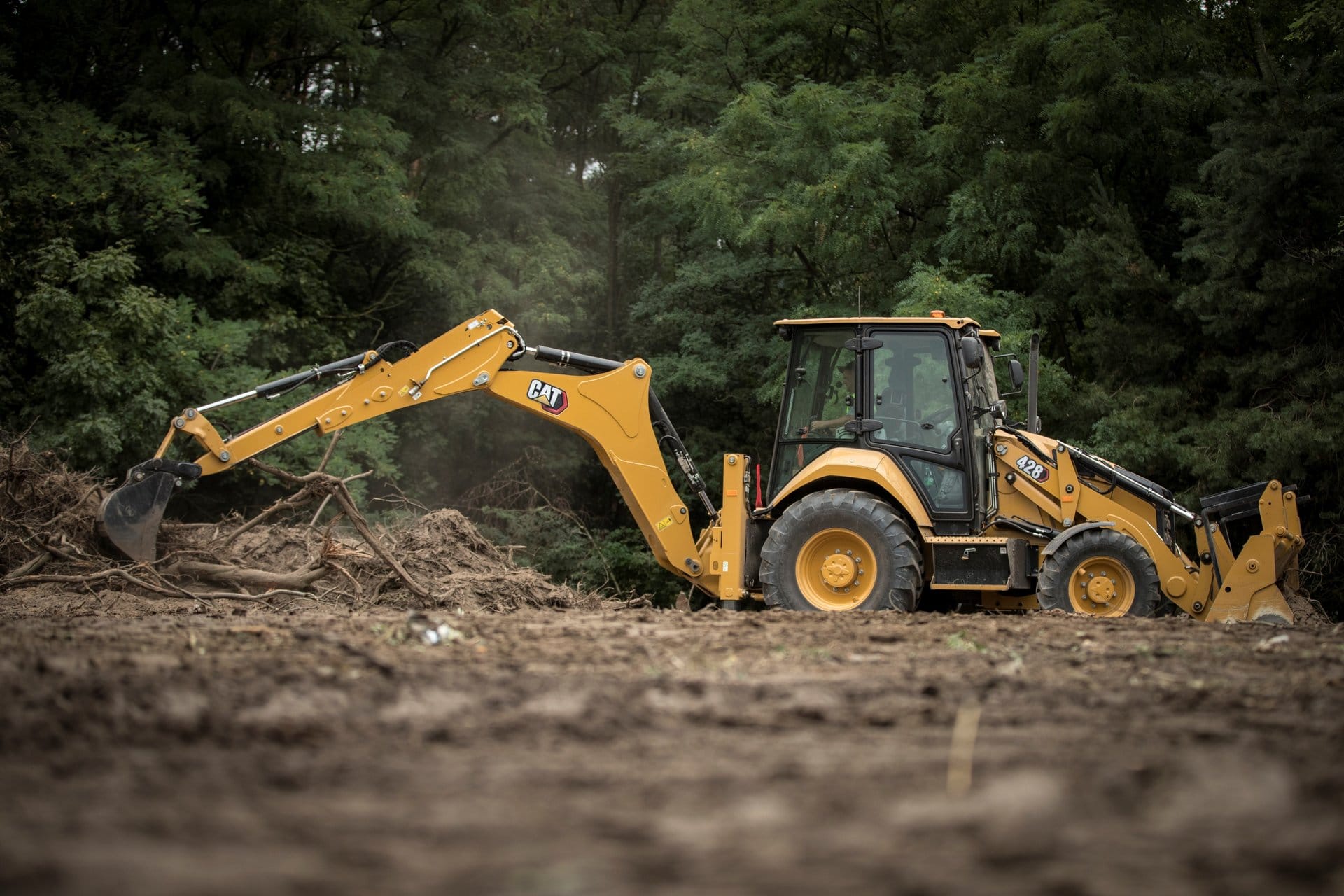
A backhoe is a digging machine with a bucket attached to a two-section articulated arm. The section closest to the vehicle is the boom, and the part that holds the bucket is the dipper. A pivot connects the boom to the vehicle, allowing the arm to swing 180 to 200 degrees.
Because of their modest size and flexibility, backhoes are typically used on smaller construction projects — repairing city roads, building residential homes, planting trees, removing dirt or snow, and even small-scale drilling in some areas. They’re the go-to machine when you need excavation capability without the footprint of a full-sized excavator.
11. Skid-Steer Loader — Small, Nimble, and Surprisingly Capable
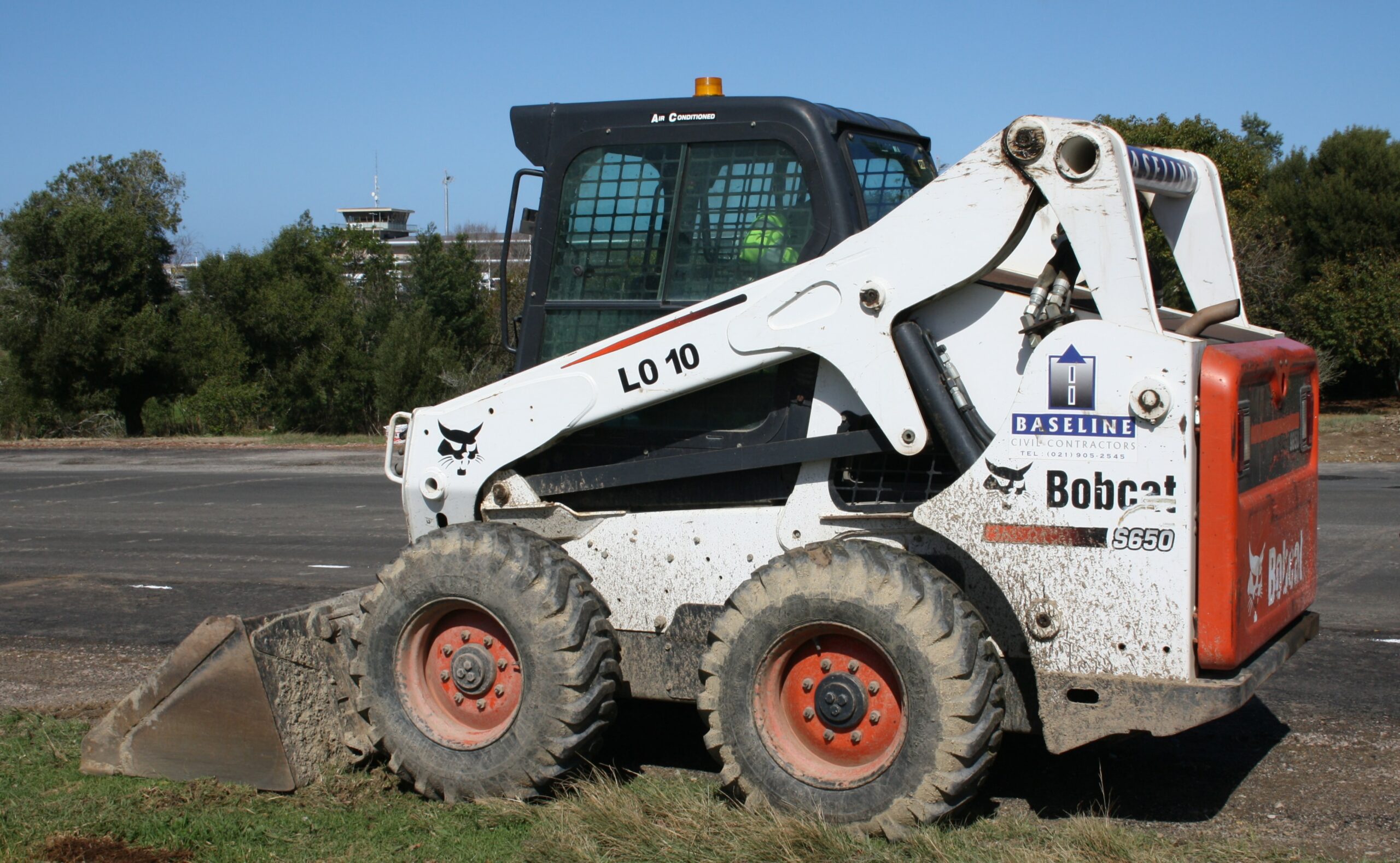
The skid-steer loader is a compact, multi-purpose machine primarily used for excavation. Its arms can be fitted with various attachments — buckets, augers, grapples, sweepers — to handle a wide range of construction and landscaping tasks.
Here’s what makes it unique: skid-steers don’t have a traditional steering mechanism. Instead, the four wheels on each side are mechanically locked together, and each side can be driven independently. To turn, the operator speeds up the wheels on one side while slowing the other. The faster-spinning wheels literally skid or drag across the ground — which is where the name comes from. When the turn is complete, the operator equalizes the speeds and the machine straightens out.
12. Forklift — The Warehouse and Job Site Workhorse

Forklifts move heavy loads that no human could lift manually. They’ve become indispensable on construction sites, in warehouses, and across industrial operations. They come in various sizes and configurations — from simple pallet jacks to large industrial telehandlers — each with different weight capacities.
The forks (or blades) can be raised, lowered, and tilted to compensate for uneven weight distribution. That tilt function is important — without it, heavy loads could slope forward and slide off the forks, creating a serious safety hazard.
13. Compactor — The Foundation Builder

If the ground isn’t compacted properly, the foundation can erode — leading to pipe breaks, leaks, slab fractures, and eventually structural failure. That makes compactors essential on virtually every construction project, regardless of size.
Compactors come in several types:
- Smooth rollers — Used in road construction
- Vibrating plate compactors — Used in tight, hard-to-reach areas
- Rammers — Used for trench compaction
- Baler-wrapper compactors — Used for making compact bales
- Garbage compactors — Used for reducing waste volume
Smooth roller compactors are the most widely used overall, but the right type depends entirely on the job and the site conditions.
14. Crawler Dozer — Stability Meets Power
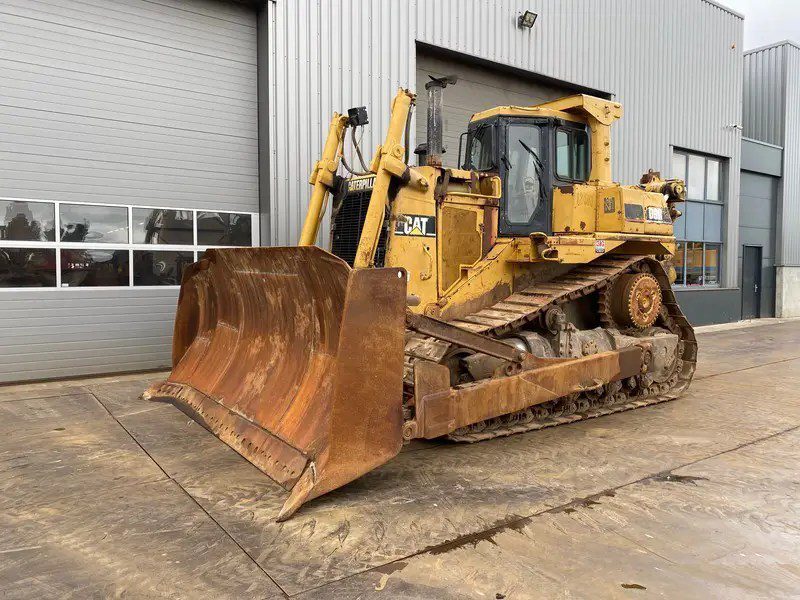
Crawler dozers are tracked vehicles built for outstanding stability and raw pushing power. They feature various blade configurations mounted on the front for moving material, and they’re frequently used in pioneering work — creating new roads, clearing land, or removing overburden during mining operations.
Smaller crawler dozers serve a different role. They’re used as grading tractors or for establishing precise contours using automated grade control systems. Whether you need brute force or surgical precision, there’s a crawler dozer built for it.
15. Crane — Reaching Heights Nothing Else Can
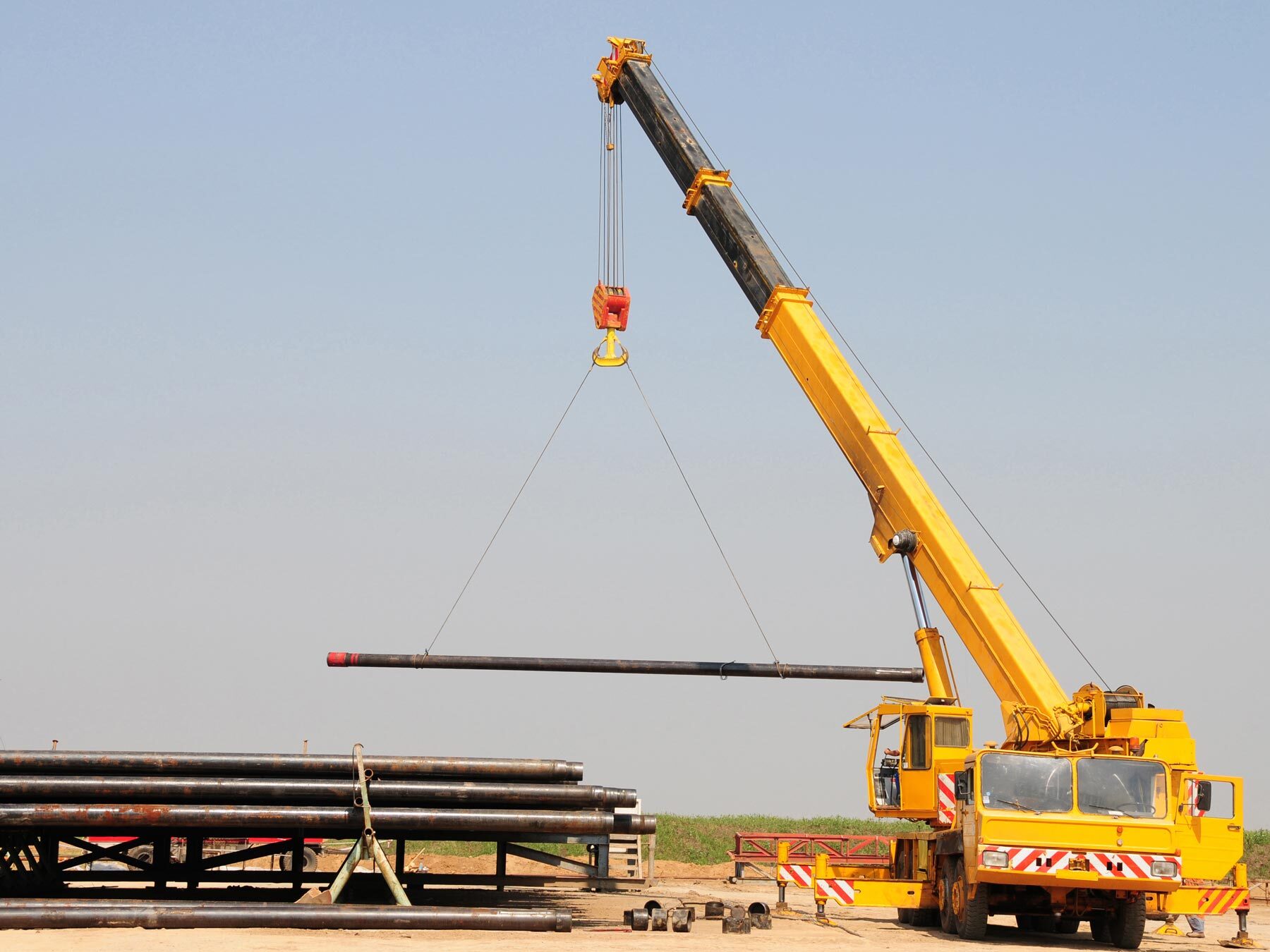
Cranes are built from systems of pulleys and cables that allow them to lift, lower, and horizontally move loads far beyond what any human crew could handle. They’re one of the most essential tools on any large construction site.
Because cranes are expensive and come in many specialized configurations, construction companies often rent them rather than buy. They fall into two main categories:
- Mobile cranes — Mounted on large wheels for stability and portability
- Tower cranes — Stationary cranes commonly used in high-rise construction
16. Feller Buncher — The Tree-Cutting Machine
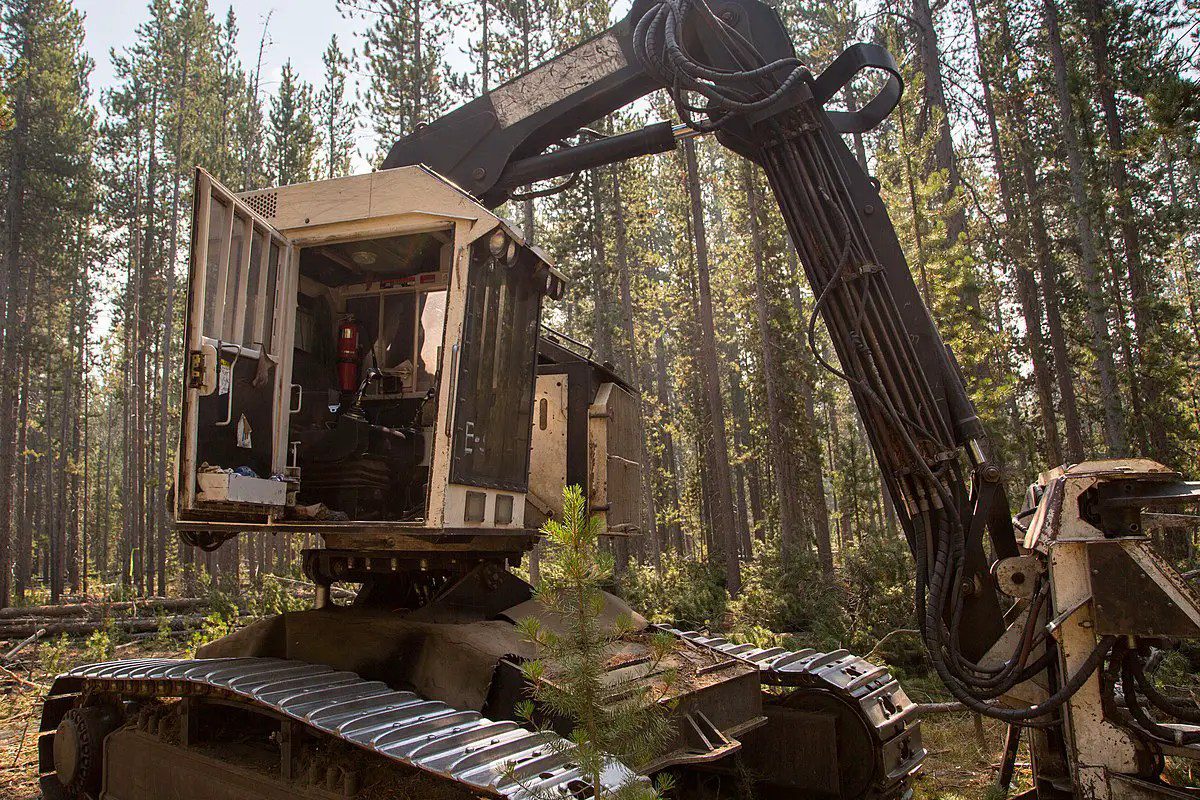
A feller buncher is a self-propelled machine with a cutting head attachment that can rapidly grab, cut, and fell a tree. Its primary job is to cut, hold, and place trees on the ground for further processing. The vehicle can be tracked or wheeled, and many models include a self-leveling cabin for operator comfort on uneven terrain.
Cutting heads come in three categories:
- Bunching heads — Handle multiple stems at once
- Processing heads — Can fell and process trees
- Felling heads — Cut and fell single stems but can’t process them
Feller bunchers are high-yield equipment used in both clear-cutting and thinning operations, particularly in areas where biomass removal is needed and stem sizes fall within the head’s capacity range.
17. Ballast Tamper — Keeping Train Tracks Straight
Every time a train passes over a section of track, it generates massive forces that gradually deform the track geometry. Rails, sleepers, and ballast all shift over time under that repeated stress. To maintain safe, precise geometry, the tracks need regular maintenance — and that’s where ballast tampers come in.
A ballast tamper packs track ballast tightly under railway ties to make them more stable. Modern versions can also level and align the rails, reducing the mechanical strain caused by passing trains. It’s a specialized machine for a very specific — and very important — job.
18. Dump Truck — The Hauling Standard
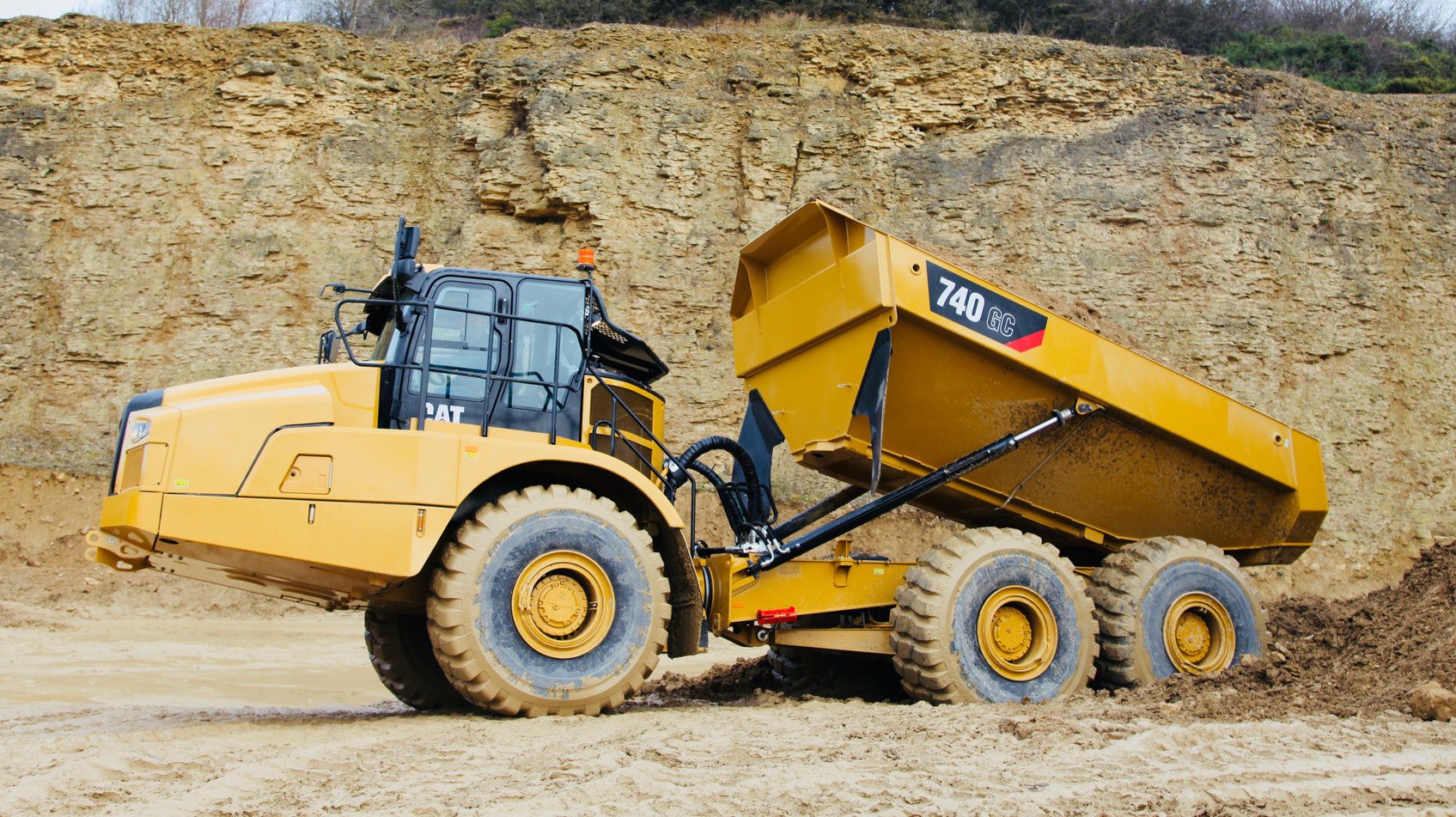
Dump trucks are one of the most common construction vehicles you’ll see on any job site. They haul construction debris away and deliver building materials to the work area. They come in several configurations:
- Off-road (articulated) dump trucks — Massive machines used in mining where huge amounts of aggregate need to be moved across rugged terrain
- Transfer dump trucks — Towed by a separate trailer with a movable cargo container, significantly boosting load capacity without sacrificing maneuverability
- Side dump trucks — The most efficient option for dumping large volumes of debris, with a side-tilt mechanism that makes them less prone to tipping over
Side dump trucks need more room to operate because of their length, so they’re preferred on larger sites with plenty of space to maneuver.
19. Reclaimer — Pulling Material Back from Stockpiles

A reclaimer is a volumetric machine designed to recover bulk commodities — grains, ores, and other materials — from stockpiles. Its capacity is measured in tons per hour, based on the average bulk density of the materials being reclaimed.
A typical bucket wheel reclaimer moves in three directions: vertically (by luffing the boom), horizontally (along the rail), and rotationally (by slewing the boom). Power is supplied through a cable network, and the configuration can be adjusted based on load requirements and flow rate. In high-wind conditions, a boom and bucket wheel combination manages high material flow rates effectively.
20. Grader — Creating Flat, Precise Surfaces
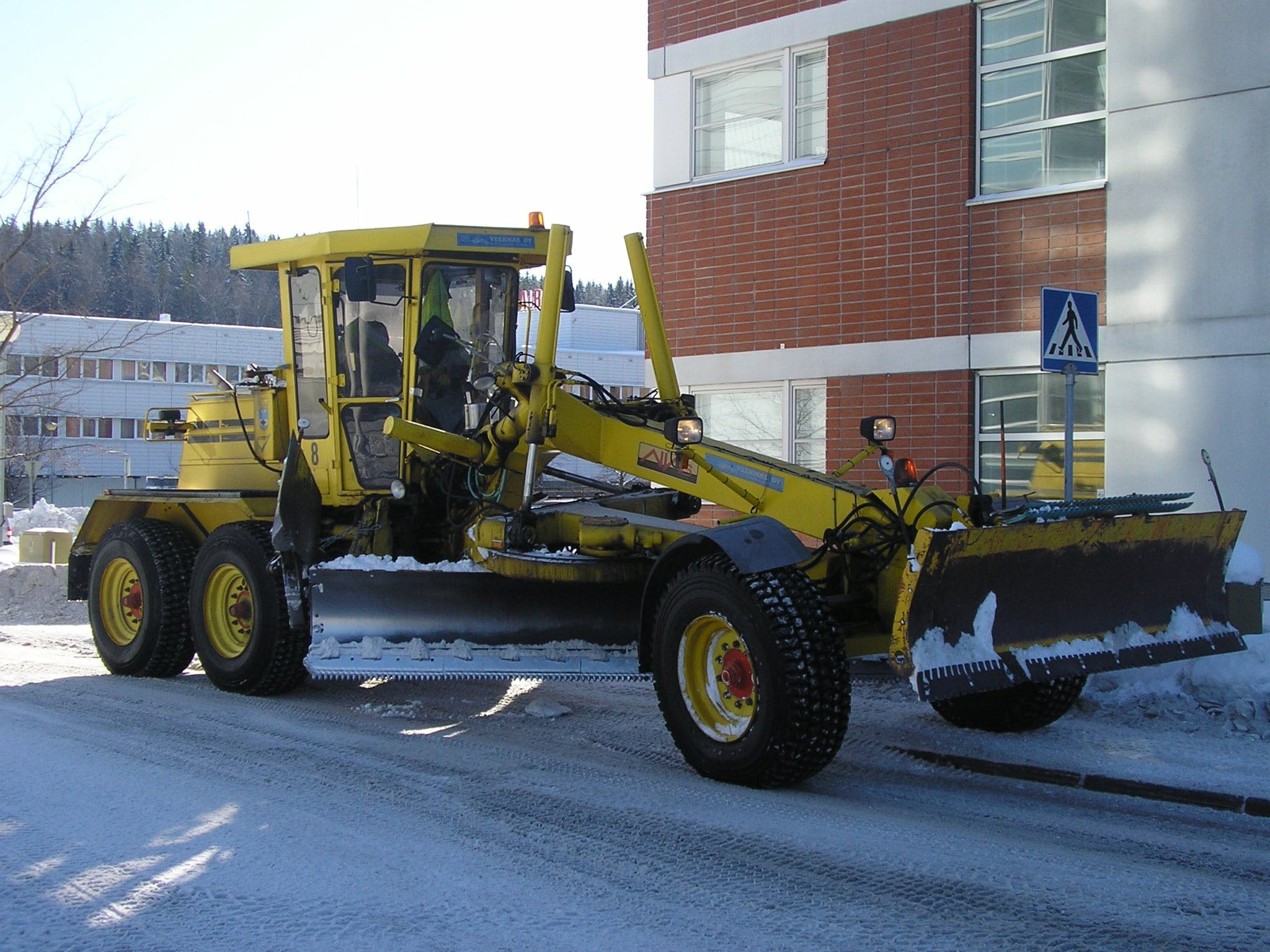
A grader is a large engineering vehicle with a long metal blade used to create flat surfaces — or surfaces with a specific slope — for road bases, railway foundations, and drainage systems. Depending on the job, they can also clear debris and snow.
You’ll see graders frequently on road construction projects, building developments, and infrastructure work, where they shape the final surface that pavement will be laid on. Most graders have a large blade mounted between the front and rear wheels that can be raised, lowered, and angled at either end. Some models offer optional attachments like rear rippers and front blades for additional versatility.
21. Telehandler — The Swiss Army Knife of Construction
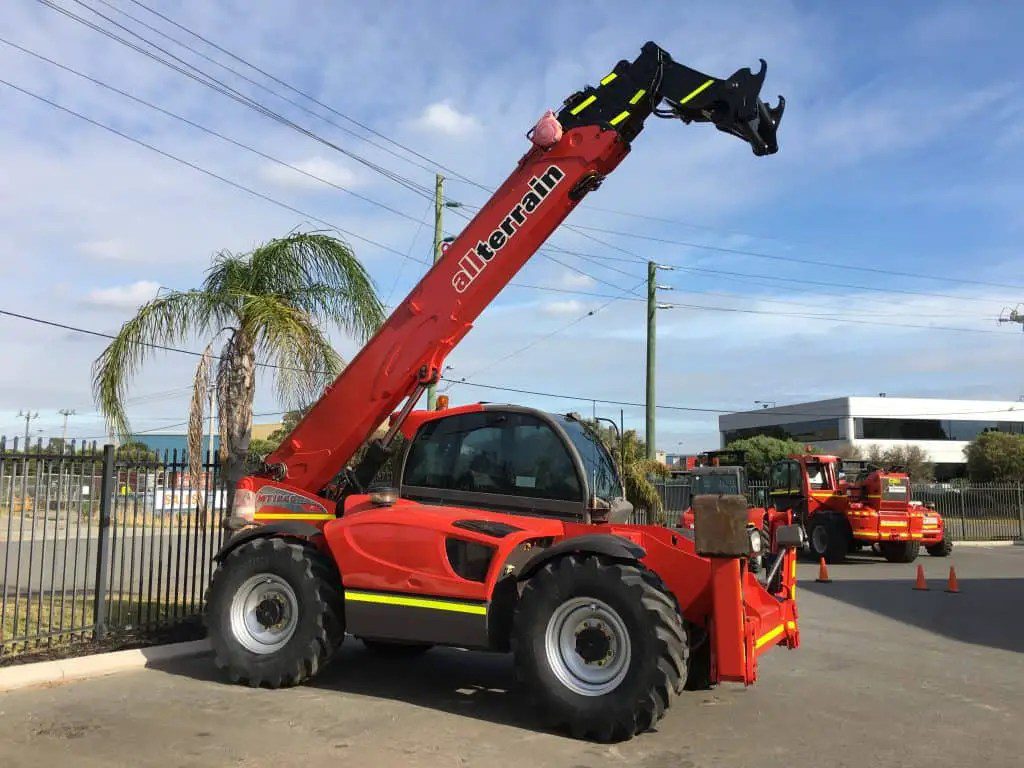
Think of a telehandler as a forklift crossed with a crane. It looks similar to a forklift but includes an extendable boom that gives it far more reach and versatility. The boom can be fitted with pallet forks, a bucket, a winch, a muck grab, and other attachments.
That flexibility is the telehandler’s biggest selling point. With the right attachment, it can function as a tractor, crane, lift truck, or aerial work platform. Wide off-road tires let it operate on virtually any terrain, making it useful in the field, the yard, and even farm stables.
22. Stacker — Building Stockpiles at Industrial Scale
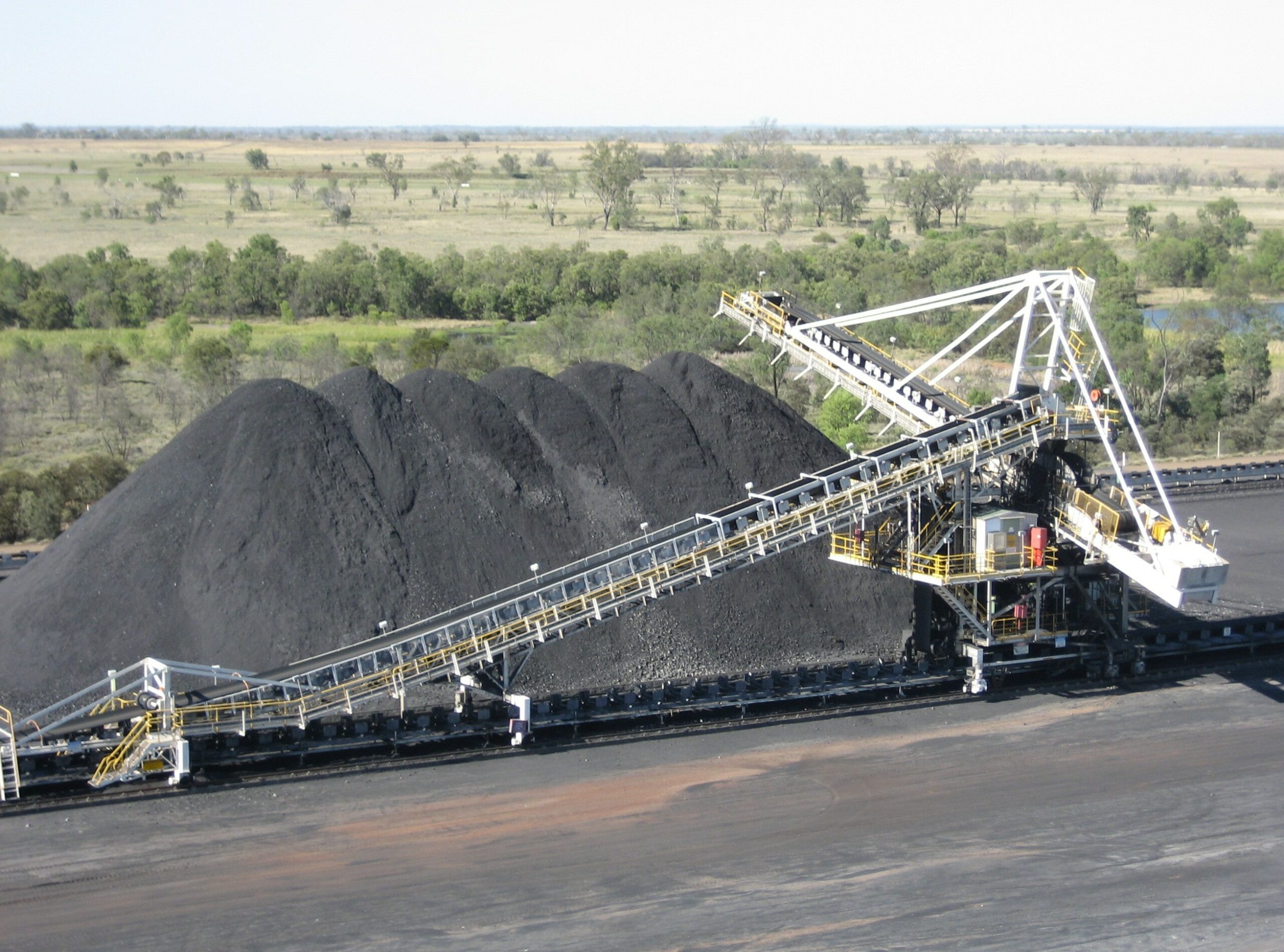
Stackers are enormous machines designed to pile large quantities of bulk materials — ores, grains, limestone, and more — onto stockpiles. Their capacity is measured in tons per hour, and they can move in two directions: forward/backward along the rail and vertically by raising and lowering the boom. Some stackers can also rotate to create stockpiles on both sides of the conveyor.
Modern stackers are either semi-automatic or fully automated, typically controlled by a programmable logic controller (PLC) with a human-machine interface. That automation allows operators to manage massive material flows efficiently with minimal manual intervention.
23. Combine Harvester — Multi-Tasking Across the Field
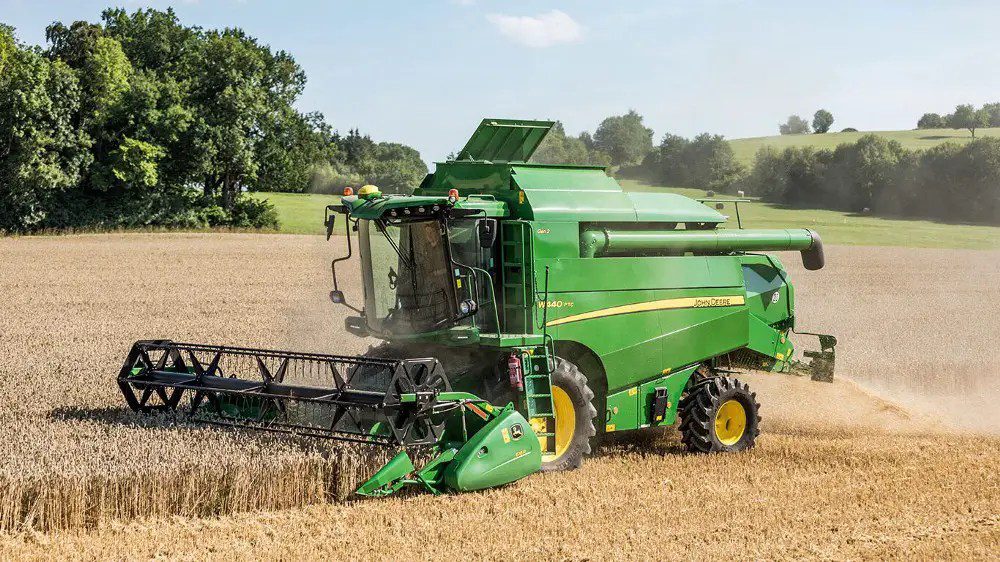
The combine harvester is a multi-purpose machine that handles reaping, threshing, gathering, and winnowing — all in a single pass across the field. The operator drives across the crop, and the machine independently cuts, threshes, and cleans the grain using revolving blades, wheels, sieves, and elevators.
Harvested grain collects in a tank onboard the combine, which is periodically emptied into a tractor-pulled cart driving alongside. The leftover stalks and chaff exit from the rear and fall back onto the field. These machines are essential for farmers harvesting large-scale crops like wheat, rice, corn, and legumes — boosting efficiency, output, and profitability in ways that manual labor simply can’t match.
From a single bulldozer clearing a lot to a bucket-wheel excavator stripping away entire hillsides of overburden, every one of these machines exists because there’s a job that nothing else can do as well. Which of these surprised you the most?