

V10 engines are a rare breed. Too exotic for mainstream production, too intoxicating to ignore — they sit in that sweet spot between the common V8 and the ultra-exclusive V12. Only a handful of manufacturers have ever dropped a ten-cylinder into a production car, and the ones that did created machines people still talk about years after the last one rolled off the line.
Here are four of the best cars that came with V10 engines — each one memorable for very different reasons.
1. Volkswagen Touareg V10 TDI — The SUV That Towed a 747
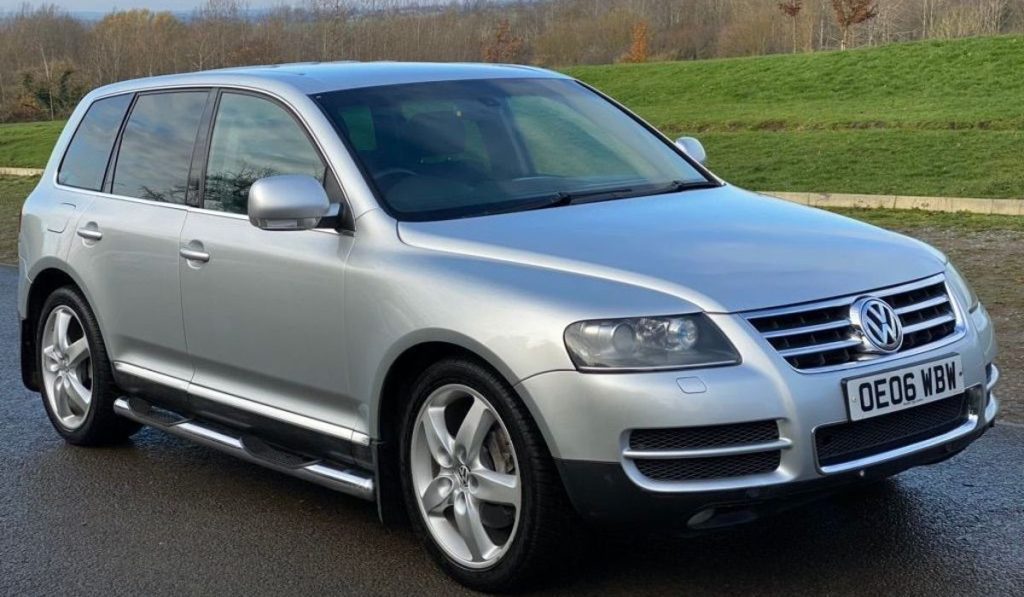
A V10 in a luxury SUV? Volkswagen wasn’t messing around. The Touareg V10 TDI packed a twin-turbo 5.0-liter diesel V10 that produced 309 hp and a staggering 553 lb-ft of torque — available from just 2,000 rpm. That low-end grunt made it feel like it could pull a building off its foundation.
And in a way, it proved that. VW famously demonstrated the Touareg’s towing capability by having it haul a Boeing 747. As a marketing stunt, it was unforgettable. The interior was pure upper-middle-class luxury, making it as comfortable on a highway cruise as it was capable off-road.
The Touareg V10 TDI’s legacy took a hit, though. Volkswagen’s “Dieselgate” emissions scandal cast a long shadow over the entire TDI lineup, and the V10 diesel that gave this SUV its unique character became part of that controversy. Even so, it remains one of the most audacious engine choices ever put into a family SUV.
2. Audi R8 — The Everyday Supercar With a Screaming V10
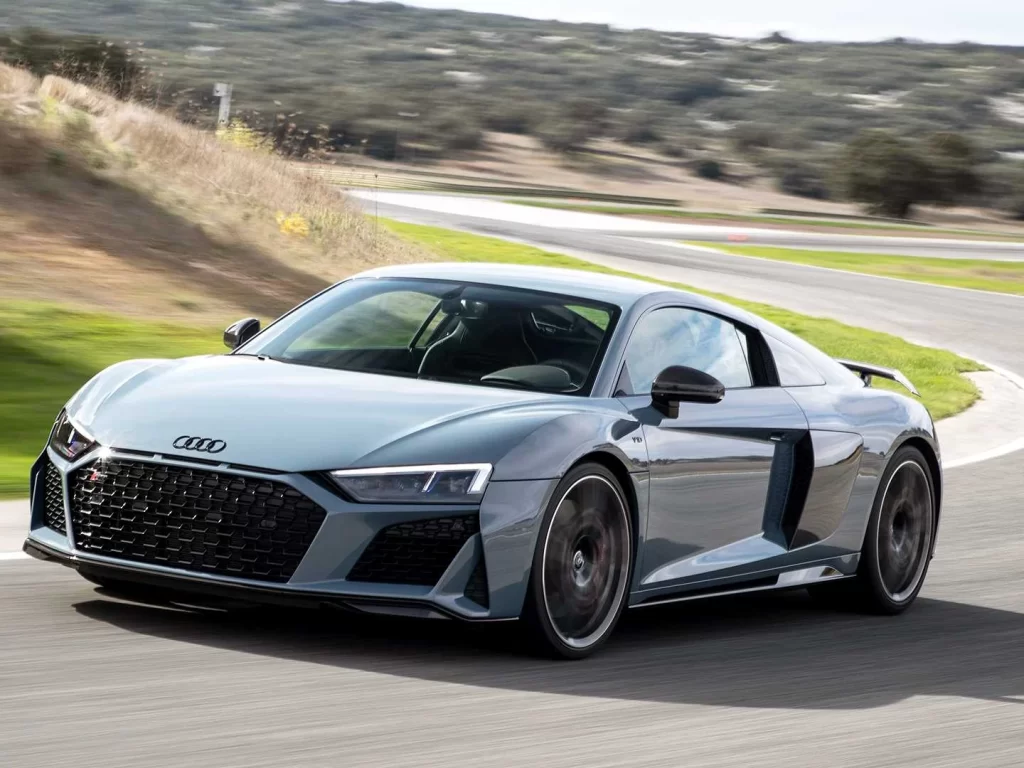
The Audi R8 debuted at the 2006 Paris Motor Show with a V8, but it was the V10 that turned it into a legend. Sharing DNA with the Lamborghini Gallardo (and later the Huracán), that naturally aspirated ten-cylinder engine gave the R8 a sound and character that no turbo four or twin-turbo V6 could replicate.
The 2008 V10 model started at 525 hp. Over the years, Audi kept pushing — by 2021, the V10 R8 was producing 620 hp, putting it on equal footing with the Lamborghini Huracán RWD. Same engine family, different personality. The R8 felt more refined, more daily-drivable, but no less thrilling when you buried the throttle.
Audi has confirmed the R8 is being phased out as the brand moves toward electrification. That makes it the end of an era — and a car that’ll only become more collectible over time.
3. 2016 Dodge Viper ACR — America’s Track Weapon

The Dodge Viper was always the muscle car that refused to be tamed. The ACR variant took it even further — serious aero upgrades, a massive rear wing for downforce through corners, and an 8.4-liter naturally aspirated V10 producing 645 hp at 6,200 rpm. No turbos. No superchargers. Just raw, screaming displacement.
On track, the Viper ACR was a genuine weapon. It set lap records at multiple circuits, embarrassing cars that cost two and three times as much. It was loud, aggressive, and completely unapologetic about what it was — a car built to go fast and make you work for it.
Dodge discontinued the Viper in 2017, and nothing has quite filled the hole it left. The 8.4-liter V10 was the largest engine on this list, and arguably the most American thing ever bolted into a sports car.
4. 2005 BMW M5 (E60) — Formula One Tech in a Sedan
The E60 BMW M5 holds a special place in automotive history as the last BMW to use a naturally aspirated engine in its M5 lineup. And it wasn’t just any engine — the S85 5.0-liter V10 was developed at BMW’s facility where Formula One engines were built. That F1 connection wasn’t just marketing fluff. The engine’s high-revving character, razor-sharp throttle response, and mechanical precision all reflected that racing heritage.
Output: 500 hp and 383 lb-ft of torque. That put it squarely in competition with the Audi RS6 Avant and the Mercedes-Benz E55 AMG — two formidable rivals that took very different approaches to making a fast sedan. The M5 chose screaming revs and naturally aspirated purity while its competitors leaned on forced induction.
The sound alone made it worth the price of admission. Rev that V10 past 7,000 rpm and it sounded less like a sedan and more like something that belonged on a starting grid. BMW moved to twin-turbo V8s afterward, and while those engines are faster on paper, nothing in the M5 lineup has matched the E60’s visceral character since.
V10 engines were never common — and they’re essentially extinct in new production cars today. But the machines that carried them left marks that turbocharged replacements still haven’t erased. If you ever get a chance to drive one, take it. That sound doesn’t come from a speaker.