
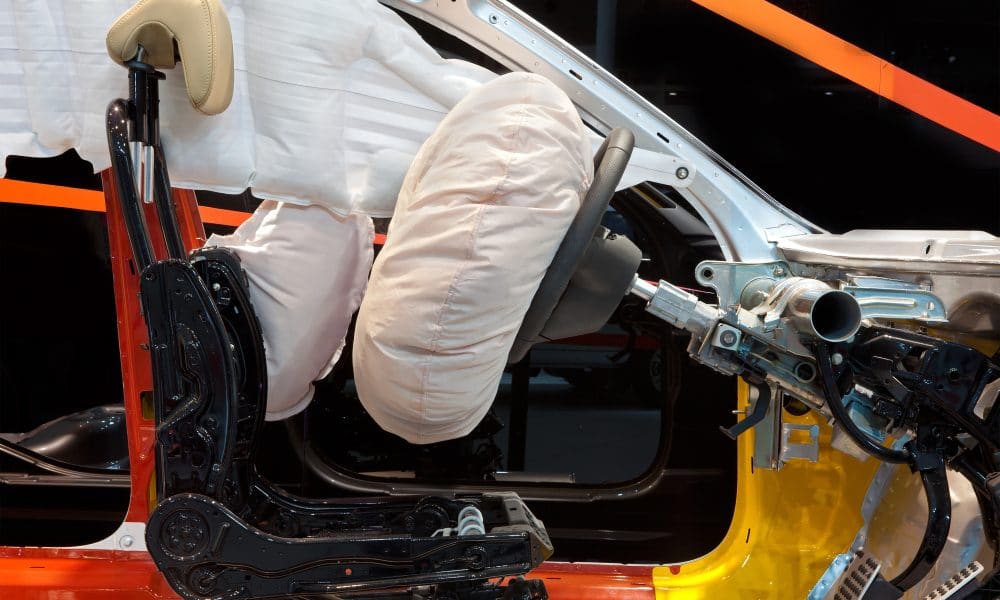

Airbags were introduced into cars with the primary goal of protecting occupants from injuries during collisions. This article delves into the intriguing journey of how airbags came to be a standard safety feature in modern vehicles.

Airbag Experiments
In 1952, a retired American engineer named John W. Hetrick experienced a minor collision in a ditch. During the incident, Hetrick and his wife instinctively raised their hands to shield their child from hitting the dashboard. Fortunately, everyone emerged unharmed. This small accident inspired Hetrick to conceptualize an airbag system for the steering wheel, dashboard, and the back of the front seat to protect rear passengers.
Table of Contents
Hetrick’s idea revolved around using compressed air to inflate the airbag upon sensing a sudden decrease in speed through a spring-loaded mechanism. Unfortunately, he couldn’t complete his project due to financial constraints.
Simultaneously, German inventor Walter Linderer developed a similar concept. His compressed air system differed in that the airbag would only deploy upon impact with the bumper. However, researchers in the 1960s discovered that this system took too long to inflate the airbags effectively for optimal safety.
Airbags Breakthrough
In 1967, mechanical engineer Allen Breed made a significant advancement in airbag technology. He contributed to the development of reliable sensors that the automotive industry could trust. These sensors were designed to ensure passenger comfort and safety. As a result, Mercedes-Benz decided to incorporate airbags into their vehicles.
Government Support For Airbags

The 1960s witnessed a sharp increase in road accidents in the United States. In response, the government began advocating for safety measures, including the installation of airbags in all cars. However, General Motors opposed this initiative, arguing that airbags could pose a risk to children.
Despite General Motors’ initial resistance, they eventually complied with government regulations in 1973. The Oldsmobile Toronado became the first car manufactured by General Motors to feature airbags. In 1991, the government enacted a law mandating the inclusion of airbags in all passenger cars. By 1999, airbags had reportedly saved 4,600 lives in car accidents, underscoring their critical role in enhancing automotive safety.