
As vaccination programs expanded and many travel restrictions gradually eased, the travel industry began to regain its rhythm. With demand rising again, travelers everywhere started booking trips with renewed enthusiasm; often sparked by destinations they discover online, especially through short-form posts, reels, and highly curated photo dumps.
If you spend any time on Instagram, this pattern will feel familiar: you scroll for a minute and suddenly you’ve seen a cliffside infinity pool, a glowing beach, a misty mountain bridge, and a “hidden” waterfall that looks like it belongs in a fantasy film. Everyone seems to be there. Everyone seems to be having the best time. And the algorithm is remarkably good at making you feel like you’re missing out if you don’t go too.
But should you really pack your bags and book flights based on what you see in a few seconds of content? In most cases, no; not without doing your homework. Social media is excellent for discovery, but it’s not a reliable planning tool by itself. The difference between beautiful and bookable is often the unglamorous stuff: crowds, weather, timing, safety rules, photography tricks, and what the experience actually feels like when you’re not standing in the exact spot where the influencer stood.
This article is a cautionary, reality-based guide to being wary of “Instaworthy” locations. It brings stunning, edited, carefully framed images side by side with the kind of reality that often greets travelers upon arrival. Sometimes, it’s not just about “managing expectations.” Sometimes, the marketing version of a place and the real-life version are two very different experiences.
To be clear, the goal isn’t to discourage travel or shame people for taking pictures. It’s to help you travel smarter: understand why certain destinations look unreal online, learn what commonly gets left out of the frame, and make decisions that protect your money, your safety, and your enjoyment.
Why “Instagram vs Reality” Happens (A Travel Expert’s Breakdown)
Before we dive into specific destinations, it helps to understand the mechanics behind “Instagram vs reality.” When a place looks dramatically better online than it does in person, it’s usually because of a combination of factors; none of which are inherently dishonest, but all of which can create a misleading expectation.
- Selective angles and framing: A camera can exclude crowds, trash, construction, fences, warning signs, and the parking lot that’s two steps away.
- Timing: Many viral photos are taken at sunrise, in the off-season, or during a brief weather window that makes the place look cinematic.
- Editing and color grading: Saturation, contrast, and “cinematic” presets can turn dull water into tropical turquoise and make a cloudy sky look dramatic rather than grey.
- Staging: Some “spontaneous” moments are carefully staged with props, hired photographers, or multiple retakes.
- Crowd compression: A wide-angle lens makes crowds look smaller, while certain focal lengths can also compress distance and exaggerate scale.
- Algorithm bias: Social media feeds reward extreme visuals. Ordinary beauty is less likely to go viral, so your perception becomes skewed toward “unreal” scenes.
The result: many travelers arrive expecting a serene, private moment and discover that the actual experience is noisy, busy, or limited by weather and access rules. That doesn’t mean the destination is “bad.” It means the decision to go should be made with full context.
How to Vet a Viral Destination Before You Book
If you’re planning travel based on social media inspiration, you don’t need to become cynical; you just need a verification habit. Here’s a simple professional framework that prevents most disappointment:
- Check recent, unfiltered sources: Search the location on Google Maps, read the newest reviews, and look at “Latest” photos; not top-rated.
- Confirm seasonality: Beaches, waterfalls, foliage, and ice scenes can change drastically by month, tide, and temperature.
- Look for crowd patterns: Find out peak hours, tour schedules, school holiday periods, and cruise ship arrival days.
- Estimate total cost: Entry fees, guided tour requirements, transport, and “photo spot” fees can add up fast.
- Assess safety realities: Cliff edges, strong currents, unstable steps, wildlife, and train tracks are not “aesthetic”; they’re hazards.
- Have a Plan B: If fog rolls in, if crowds explode, or if the place looks different that day, you need alternatives.
Now let’s explore the “Instaworthy vs. reality” examples; beautiful places that can still deliver an incredible trip, but only if you arrive with accurate expectations.
Scooch Over
Tokyo is celebrated for blending ultramodern skylines with traditional architecture and deliberate design. One particular “escalator view” scene has become a social favorite because it makes the city feel like a futuristic movie set; especially when photographed from the right angle, at the right moment.
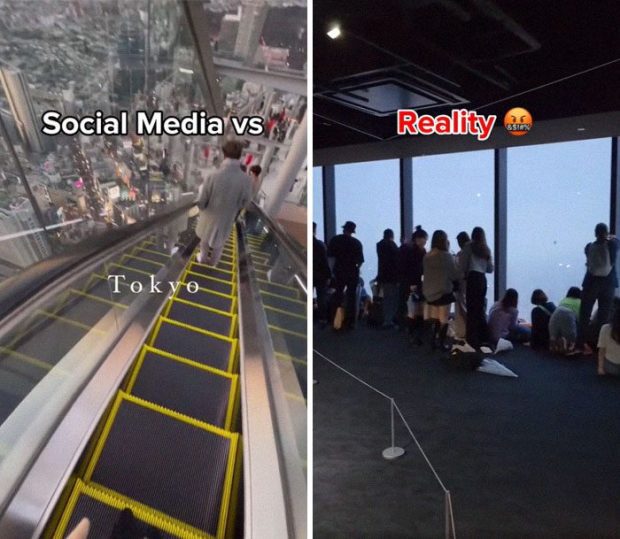
The Mori Tower in Roppongi Hills is genuinely a strong viewpoint, and it’s popular with both locals and visitors for its panoramic cityscape. But “panoramic view” is not a guaranteed product; atmospheric conditions decide whether you’re looking at Tokyo’s lights or at a wall of fog.
And here’s the twist: foggy days can attract even more people. Why? Because “moody” photos are a trend, and crowds tend to amplify when something becomes “the look.” The end result is that the experience can feel less like quiet sightseeing and more like waiting your turn for a shot.
Smart traveler tip: If you’re going for views, build flexibility into your schedule. When possible, check local weather and visibility forecasts. If you only have one day in Tokyo, treat observation decks as an “if conditions allow” activity, not the anchor of your trip.
Needs Social Distancing
For history lovers, walking among ancient Egyptian ruins is a bucket-list experience. The pyramids and the Valley of the Kings are more than famous names; they are physical reminders of how long human civilization has been building, collapsing, and rebuilding.
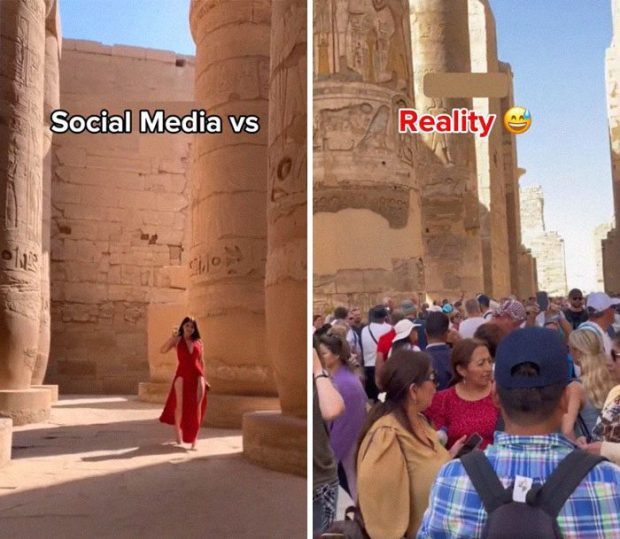
But the “solo explorer” aesthetic that social media often sells is rarely the default reality. Major archaeological sites attract major tourism flows, and those flows tend to arrive in waves; tour buses, guided groups, and peak-hour congestion.
Yes, the temples are massive. The columns are towering. The carvings are detailed. But the surprising part isn’t the architecture; it’s how quickly enormous spaces can still feel cramped when many visitors are competing for the same angles and the same vantage points.
Smart traveler tip: Timing is your strongest tool. Early mornings, late afternoons, and shoulder seasons can dramatically change the “feel” of a site. Also, consider hiring a guide who knows alternative routes and quieter corners; sometimes you don’t need a different destination, you need a different approach.
Long Lost
This is the kind of scene social media loves: a traveler running toward a castle as the sun drops low, turning the landscape into a painterly gradient. The framing suggests solitude, mystery, and a cinematic “main character” moment.
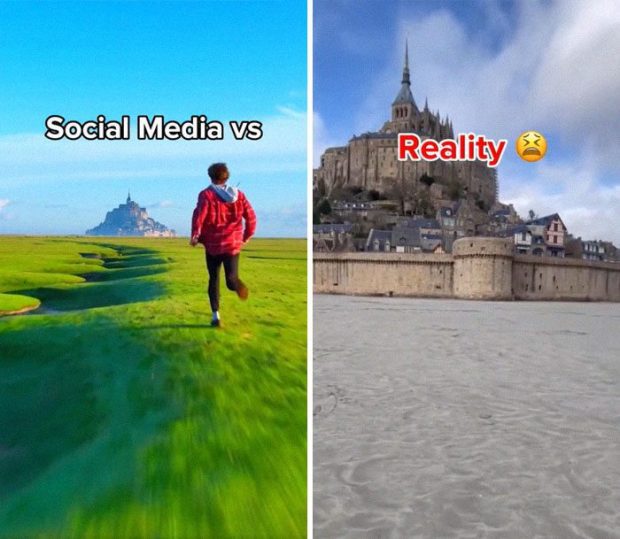
Closer to the gates, however, reality often changes: details become less magical, textures more ordinary, and crowds or restrictions more visible. What looked like a pristine “lost kingdom” from afar can become a more complicated sight up close; sometimes because of preservation barriers, sometimes because of how the surrounding environment has modernized around the attraction.
That doesn’t make the location worthless. It’s simply a reminder that distance often does half the work in iconic travel photography. Many places are at their best from specific vantage points, not from every angle.
Smart traveler tip: Identify the exact viewpoint of the viral photo before you go. If the “wow” factor depends on distance, look for designated viewpoints or trails that reproduce that perspective instead of assuming the magic is everywhere.
Stern View
Luxury boat dining content is designed to sell a feeling: calm water, tasteful plates, and a horizon that looks like it will hold still forever. From the stern, the ocean can feel like a private stage built for your vacation.
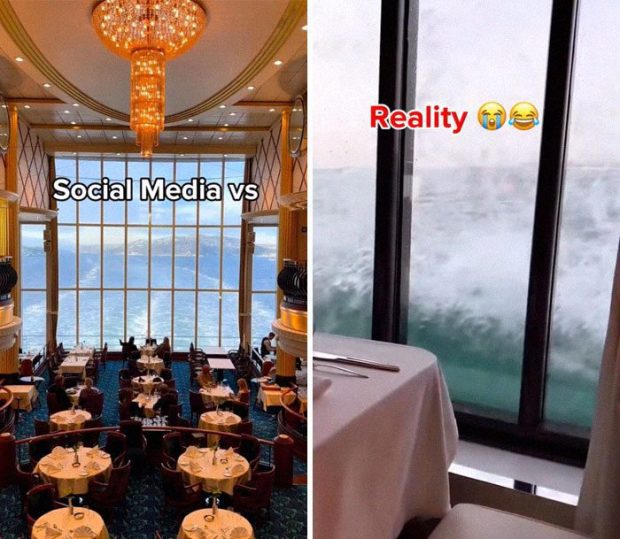
But water has moods. Once the boat picks up speed (or weather shifts), those gentle waves can become violent enough to turn a dreamy meal into a battle against motion sickness. The horizon tilts. The deck feels unstable. Your stomach starts negotiating terms.
This is a classic example of social media highlighting the “calm moment” and omitting the operational reality: boat rides involve motion, wind, spray, and sometimes harsh conditions; especially in open water.
Smart traveler tip: If you’re prone to seasickness, plan accordingly. Choose calmer routes, shorter trips, and stable vessels when possible. If the tour company can advise on sea conditions, ask before departure rather than after you’re already committed.
A Couple of Pigs
The idea of “vacationing with pigs” is the kind of novelty that social media spreads instantly. The imagery is playful: animals wading nearby, snouts breaking the surface, a quirky story you can tell for years.
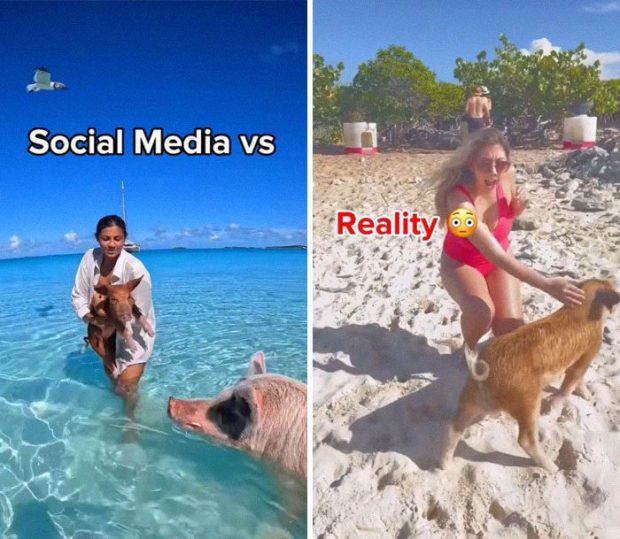
Reality, however, depends on the day, the beach, and the animals present. Instead of pigs, a visitor might encounter stray dogs; animals whose behavior can be unpredictable. Petting a dog that looks friendly in a travel moment can turn risky quickly if the animal feels threatened or territorial.
Smart traveler tip: Treat animal encounters with respect and caution. Don’t assume “cute” equals safe. If a location is known for animal tourism, research the ethical practices and local safety advice. Your vacation photo is not worth a bite, infection risk, or a stressful incident.
Hot Springs
Hot spring content sells serenity: steam rising, mineral water bubbling, and nature performing a quiet show around you. It’s the visual shorthand for “healing vacation.”
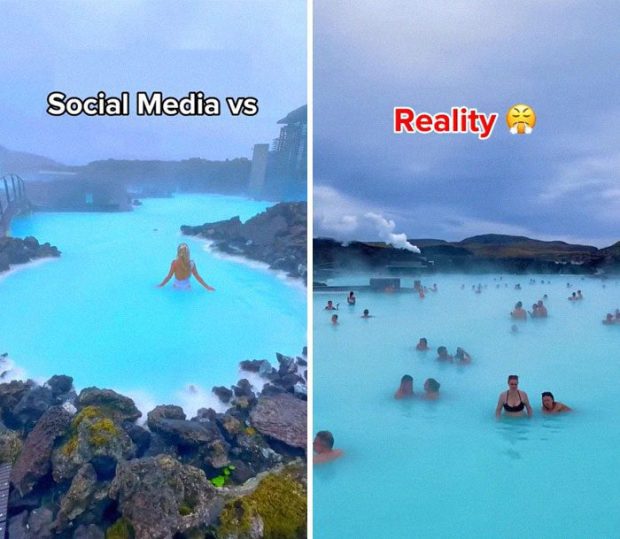
But hot springs are popular for a reason; and popularity often means noise. By the time you arrive, the “natural paradise” might come with crowds, chatter, laughter, splashing, and the sensation that you paid extra for a peaceful moment you can’t quite access.
This isn’t always a failure of the destination. It’s often a failure of expectation. Hot springs are shared resources. If the location is famous, it will rarely feel private during peak hours.
Smart traveler tip: Book time slots when possible, visit early or late, and research whether there are smaller nearby springs with fewer people. In many regions, the “best” hot spring is not the most photographed one; it’s the one you can actually enjoy.
Icy Betrayal
Seljalandsfoss in southern Iceland is one of those destinations that looks spectacular in every season; especially in videos where mist catches the light and everything feels epic and clean.
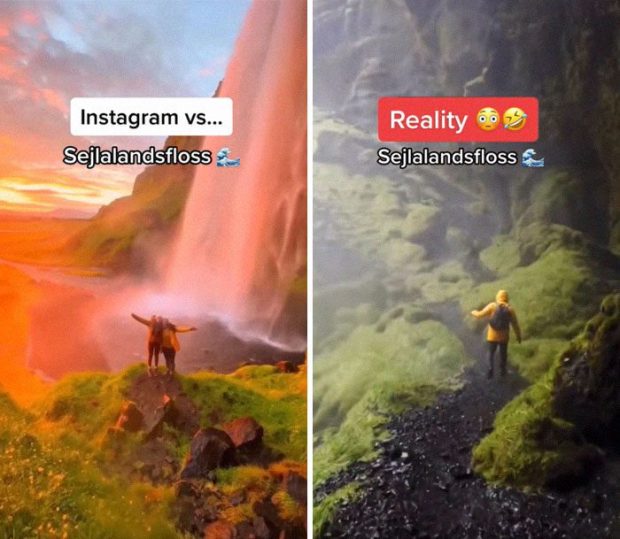
In the rainy season, though, the experience can shift from “photogenic stroll” to “careful survival walk.” Stronger flow creates heavier spray. Paths become slippery. Visibility drops. Without proper footwear, the route behind the falls becomes a lesson in physics and humility.
This is a classic example of how the same destination can deliver two completely different experiences depending on season and conditions.
Smart traveler tip: Pack for reality, not for reels. Waterproof layers, non-slip footwear, and lens protection can determine whether you enjoy the experience or spend it cold, wet, and irritated.
Time Your Trip
Diamond Beach in southern Iceland is famous for black sand scattered with glacier ice, creating a high-contrast landscape that feels almost unreal. It’s one of those scenes where the camera barely has to try.
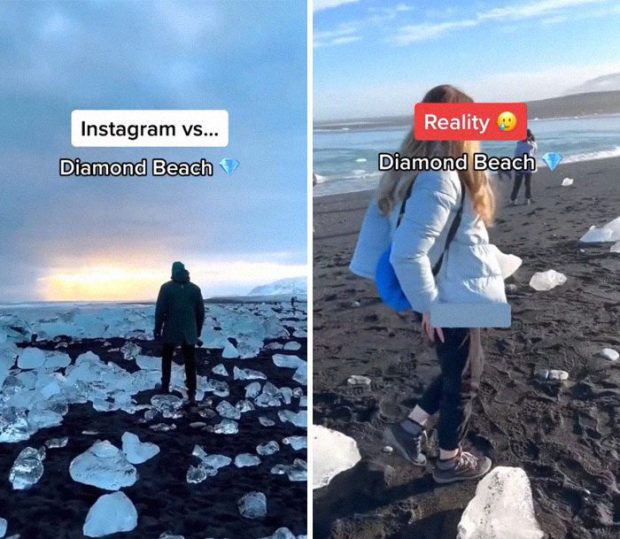
But there’s a key detail that social media often fails to emphasize: the number of icebergs varies. The beach may be dotted with ice one day and look noticeably emptier on another, depending on season, tides, and glacial activity.
Smart traveler tip: If the “ice scattered everywhere” look is essential to your plan, check recent photos from the past few days (not last year’s viral post). This is the most reliable way to confirm conditions for natural, variable landscapes.
Lights, Camera, Action
Social media thrives on drama, and staged “danger” shots are one of its favorite currencies. A cliff-hanging photo can look like a moment of genuine peril; heart pounding, fingers gripping rock, someone “rescuing” you heroically.
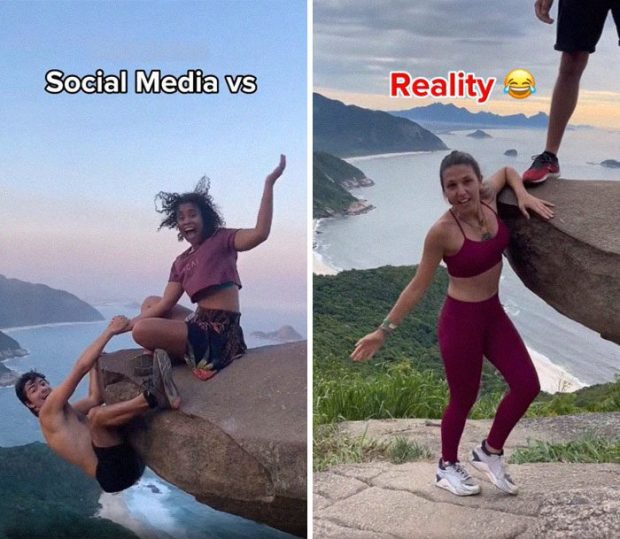
Often, it’s exactly that: staged. Trick shots, perspective manipulation, and “method acting” can create high-impact imagery that plays well on the feed; especially when viewers don’t see the safe ground just outside the frame.
And if trick shots aren’t enough, editing tools can take the performance even further. The photo might be entertaining, but it’s not a reliable guide for what’s safe or normal at the location.
Smart traveler tip: Never use a viral pose as your safety standard. If an action requires you to ignore warning signs, step past barriers, or trust unstable ground, it’s not “adventure”; it’s a preventable risk.
No Surprise There
A white sandy beach with crystal-clear water is the universal shorthand for “escape.” It’s the kind of image that promises silence, solitude, and a private horizon.
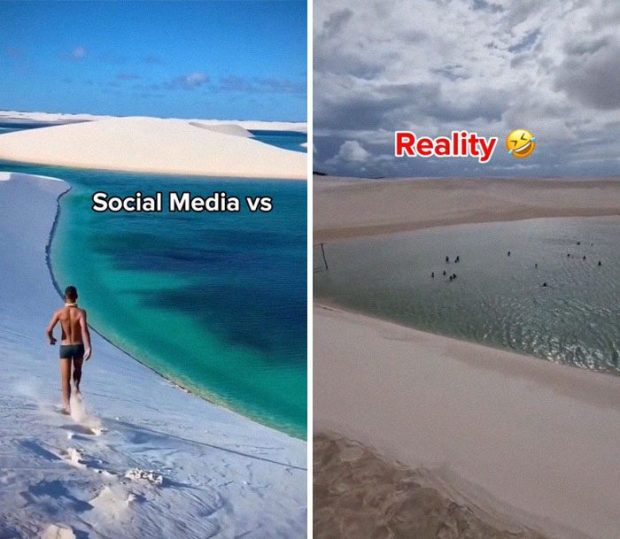
The reality is that the same beauty that attracts you attracts everyone else. Over time, “hidden beaches” are discovered, tagged, and repeated; until they become shared stages rather than secluded sanctuaries.
Smart traveler tip: If solitude is your priority, build your itinerary around times and places where solitude is possible: early mornings, weekdays, shoulder seasons, or less-promoted alternatives nearby. The most photographed beach is rarely the most peaceful beach.
Temper Your Expectations
Vietnam’s basket boats are a cultural icon and a visually striking experience; woven bamboo, bowl-shaped design, and centuries of practical use by local fishermen navigating shallow waters.
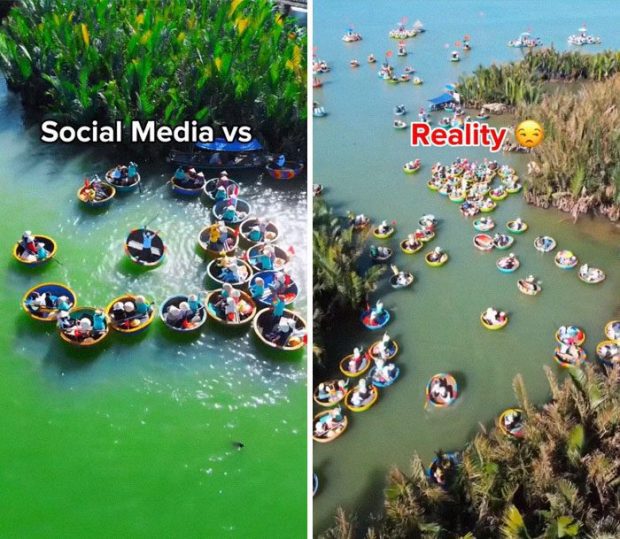
But a “magical waterway” experience can become a crowded activity quickly. Expect tourists. Expect fishermen. Expect a lot of motion. And yes; expect the occasional wobble that makes you question whether you’re about to become part of the river.
Smart traveler tip: This is a place where comfort and safety matter more than perfect clothing. Secure your phone, balance carefully, and don’t let the pursuit of a shot override basic stability. If you’re nervous, choose operators with clear safety practices and avoid peak times.
Rad Enough?
Dubai’s sand dunes are stunning and the city’s desert activities; like sandboarding; have become a signature attraction. It looks effortless online: strap in, slide down, laugh, repeat.
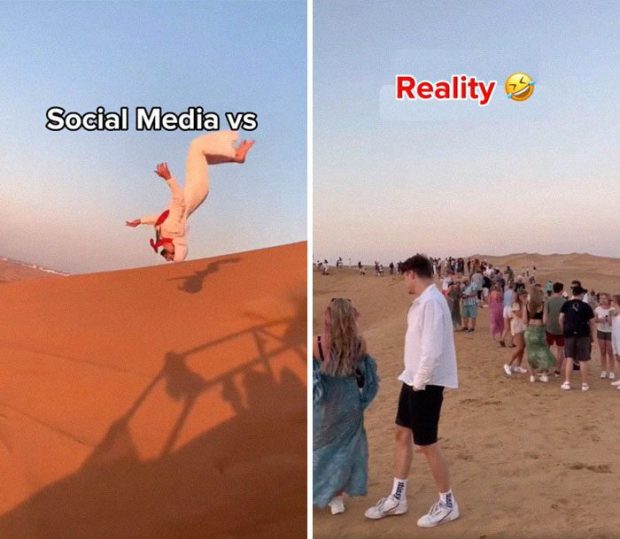
In real life, popularity creates queues. Lots of them. And queues change the emotional experience. The dunes are still beautiful, but the moment can feel less like adventure and more like waiting for your five-second turn.
Smart traveler tip: Book early morning sessions when temperatures are cooler and crowds are smaller. Also, treat desert activities as physical experiences: hydration, footwear, and sun protection matter more than aesthetics.
Bustling
“Idyllic beach + calm ocean” is a timeless travel fantasy. It’s also one of the most competitive tourist categories on Earth; because the supply of truly quiet, beautiful beaches is limited, while demand is massive.
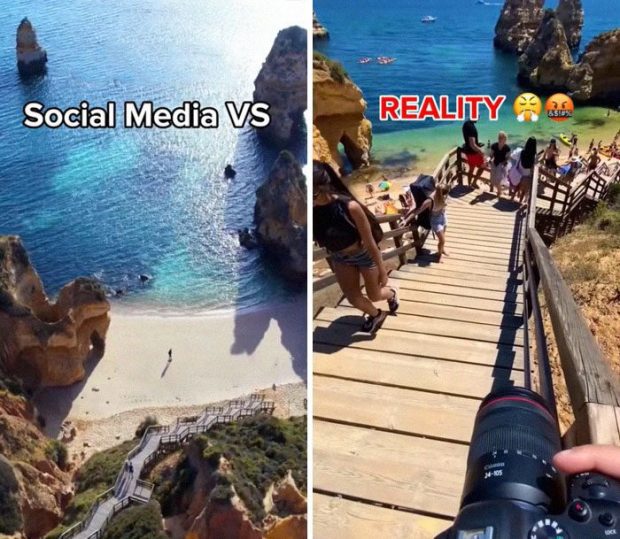
So yes, you can find stunning beaches in the Caribbean, the Mediterranean, Boracay, and beyond. But you should also expect other people to have the exact same plan. Overcrowding isn’t a glitch; it’s often the price of popularity.
Smart traveler tip: If your mental image involves silence, choose accommodations and itineraries that support it; private beach access, off-peak travel, or lesser-known islands and coves that don’t trend as aggressively online.
Hand of God
Vietnam’s Golden Bridge is one of the most visually distinctive modern attractions in recent years. The giant hands holding the bridge create an instant “wow,” and misty mountain surroundings can make it feel like you’re walking through a myth.
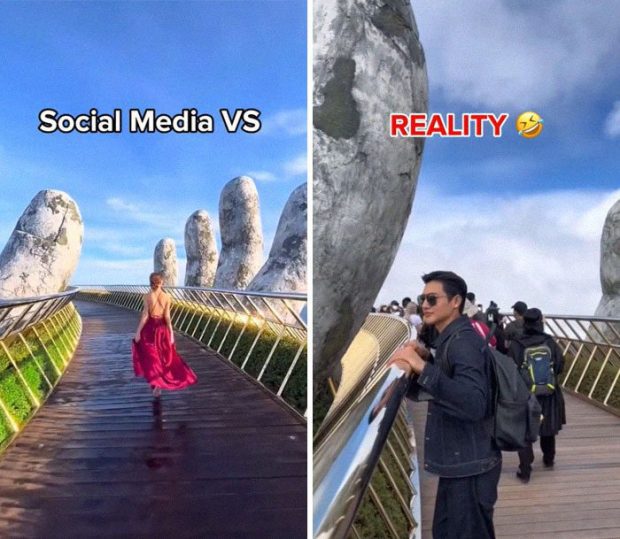
The bridge can be breathtaking, but the experience is heavily affected by crowd density. A “rare and elusive” moment here is not about mythical creatures; it’s about the moment the walkway isn’t packed with visitors trying to capture the same shot.
Smart traveler tip: If you want fewer people, plan for early arrival and consider weekdays. Also, adjust your expectations: iconic attractions usually involve sharing space, not owning it.
Stay Clean
Hills, trails, and scenic walks can be invigorating; and they often look pristine in curated photos. But walking outdoors means interacting with the ground. Mud, dust, loose stones, and surprise puddles don’t care about your outfit coordination.
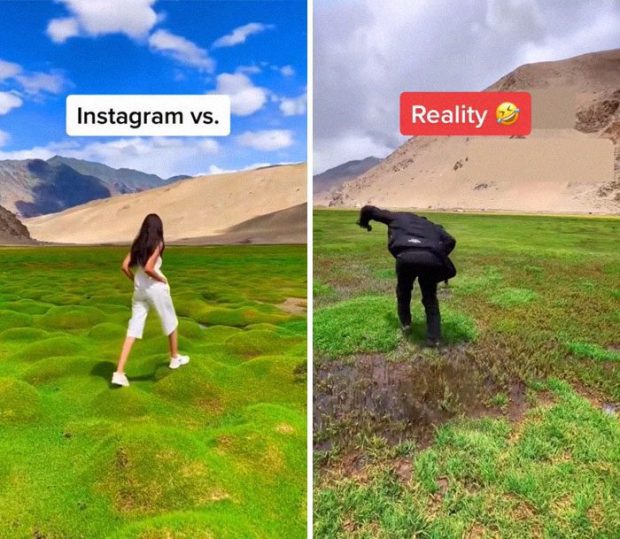
Bright or white shoes are particularly vulnerable. They photograph well for about five minutes; then reality arrives, usually as dirt you can’t unsee.
Smart traveler tip: Dress for the environment first, photos second. If you want stylish pictures, bring a “photo outfit” in a bag and change once you reach a clean viewpoint. Your feet will thank you, and your photos can still look great without sacrificing comfort.
Always a Windy Day
Beach photos rarely communicate wind accurately. A gentle breeze looks romantic on camera. Strong wind looks like chaos, and it comes with bonuses: salt spray, sea foam, and hair that refuses to cooperate.
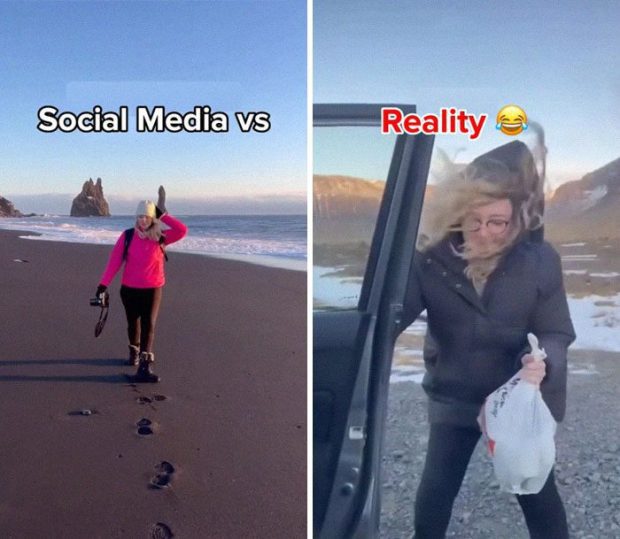
That sticky, salty foam can feel like it finds every surface. And wind will treat your hairstyle like a personal challenge. A beautiful beach can still be a high-maintenance environment.
Smart traveler tip: Bring a hair tie or headband, and consider simple protective items like sunglasses and a light scarf. If you’re planning photos, time them when wind is lower, or embrace the windy look intentionally rather than fighting it.
Not So Terrifying
Clear water travel content makes the ocean look like an aquarium: depths visible, rocks sharp, blues intense. The fantasy is “perfect visibility, perfect calm.”
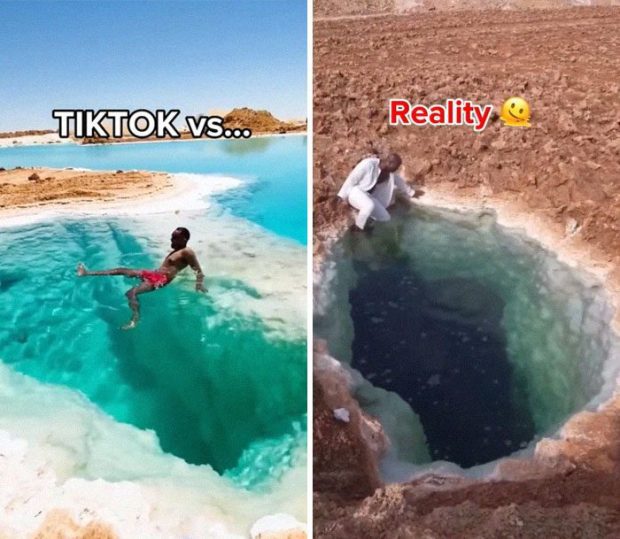
But oceans are seasonal, and visibility changes. Water can be cloudy due to weather, tide cycles, algae blooms, or sediment churn. That doesn’t erase the fun; it simply changes the experience.
Smart traveler tip: If visibility is a major reason you’re going (snorkeling, diving, underwater photos), research the best season and check recent local reports. If you’re going for relaxation, remember you can still float, swim, and enjoy the water even when it isn’t crystal clear.
Can’t Get A Hint
Breakfast in a pool overlooking the ocean is a premium travel aesthetic; sunlight, a tray of food, and the illusion of private luxury.
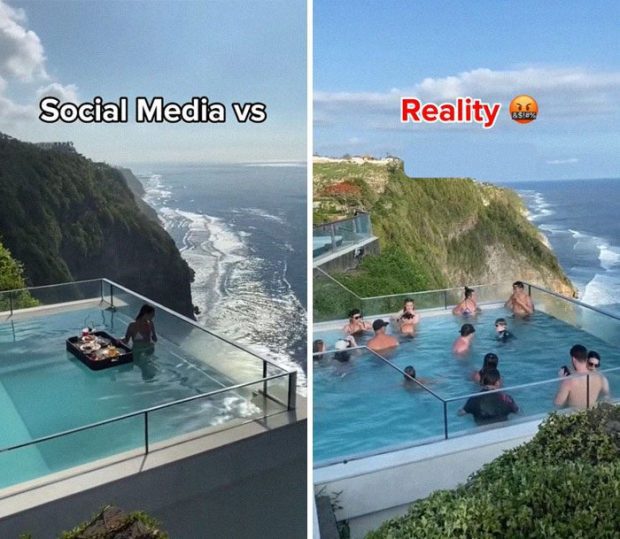
But pools are shared spaces, and strangers don’t always vanish because you want a photo. Instead, they dodge eye contact, chat awkwardly, and continue existing; rudely, from the perspective of your curated moment.
Smart traveler tip: If a “private pool moment” is important, book accommodations that truly support it (private plunge pool, timed access, or off-peak hours). Otherwise, accept that shared luxury is still shared.
Ancient World
The Jordan Heritage Site carries an aura of history; ancient ruins, architectural remnants, and a setting that makes you imagine the scale of the past.
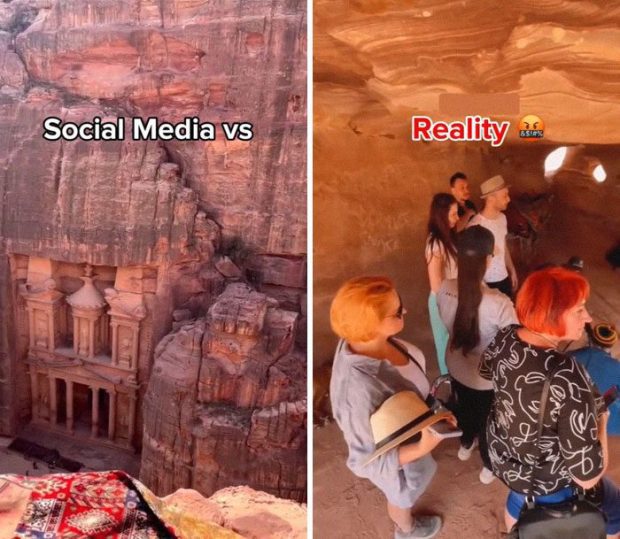
But visiting can involve harsh conditions: heat, dryness, and the steady flow of tourists. You can prepare for weather with sunscreen and hats, but you can’t fully control the crowd.
Smart traveler tip: Plan for comfort and conservation. Hydration, shade breaks, and realistic pacing matter. If you try to “power through” just to recreate a viral photo, you may spend the trip exhausted instead of inspired.
Playful Creatures
Wildlife encounters can be unforgettable. Standing near an elephant can make you feel small in the best possible way; like you’re briefly inside a nature documentary.
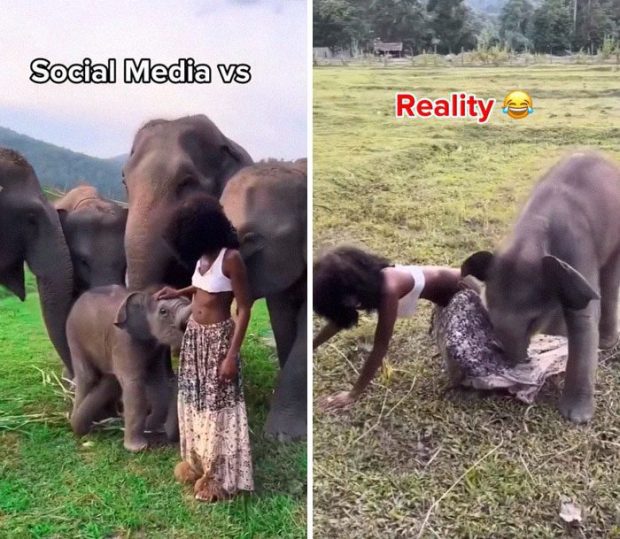
But animals; especially young ones; don’t follow your script. Baby elephants can become fascinated and playful in ways that are inconvenient, embarrassing, or even risky. What reads as “cute” on video can be stressful when you’re the one being targeted by curiosity.
Smart traveler tip: Choose ethical operators, respect distance rules, and listen to guides. Wildlife tourism should prioritize animal welfare and human safety, not viral footage.
Trekking
Canyon trekking content often makes locations look vast, empty, and cinematic; like you’re the only person brave enough to enter the landscape.

In reality, the path can look ordinary from certain angles; dusty ground, scattered rocks, and tourists everywhere. The “wonder” may still exist, but you may need to shift perspective to feel it.
Smart traveler tip: Don’t underestimate the value of immersion. Instead of chasing the exact photo you saw online, focus on the sensory experience: echoing canyon sound, temperature shifts, and scale. Photos capture surfaces; your experience captures depth.
Green Foliage
Swamp landscapes can look surreal: orange or unusual hues in water, dense green foliage, and a sky that turns the whole scene into a high-contrast painting.
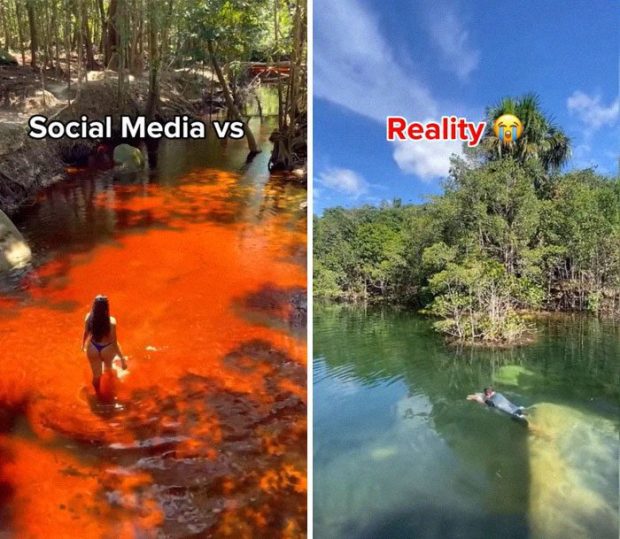
But water color can shift depending on light, sediment, algae, and season. A traveler expecting a vivid orange might find a duller green instead; plus the added psychological “bonus” of feeling wary about wildlife like gators.
Smart traveler tip: For environments like swamps, safety and timing are non-negotiable. Go with local expertise, follow posted guidelines, and remember that “pretty water” is still water with ecosystems; some of which deserve respectful distance.
Unkempt
Coastal villas and seaside cycling routes can look pristine online; clean water, calm midday light, and a sense of effortless luxury.
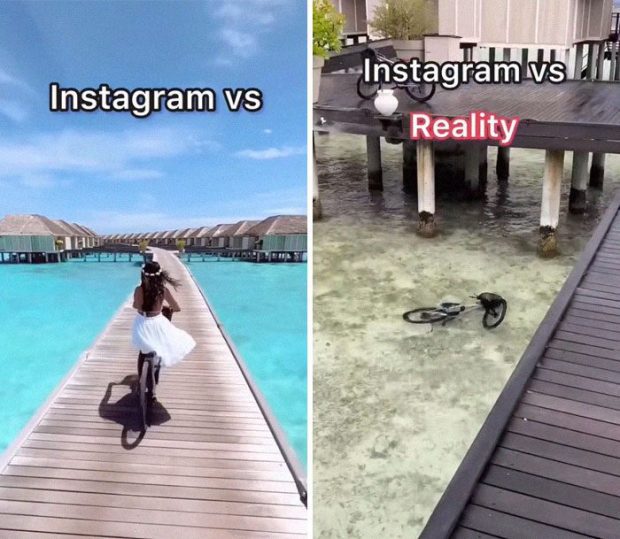
But reality can include debris, garbage, and disappointing water quality; sometimes even floating abandoned items. The difference between “before” and “now” may be a reminder that tourism and local infrastructure don’t always scale together.
Smart traveler tip: Read recent reviews and look at recent traveler photos before booking. Environmental conditions can change quickly, and older viral images may not reflect current cleanliness.
Still Cold and Uninviting
Cold-water destinations can look hypnotic in photographs; glassy surfaces, icy blues, and a cabin vibe that feels “cozy minimalism.”
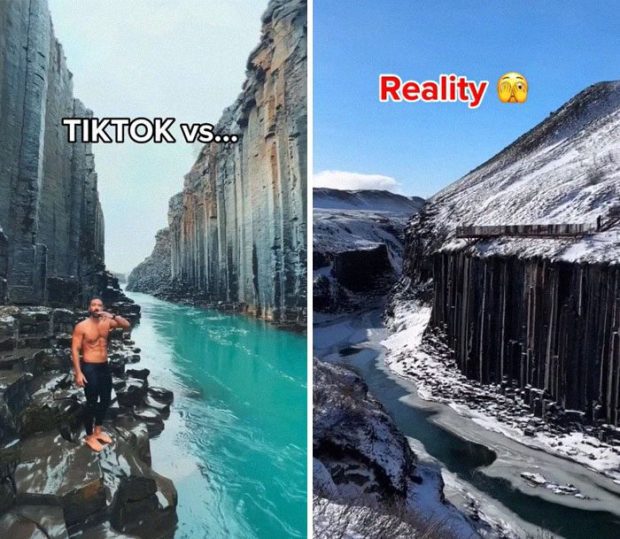
Arrive at the wrong time of year, and the mood shifts. You can see your breath. The water looks less like a spa invitation and more like a dare. The difference between “I might swim” and “absolutely not” can be one seasonal change.
Smart traveler tip: If your trip includes cold-water activities, research seasonal temperatures and pack appropriately. A destination can still be wonderful in cold weather, but you need to plan for a different kind of comfort.
Listen to the Horn
The Maeklong Railway Market is famous precisely because it’s unusual: it operates on a railway track, and vendors adjust as trains pass through.
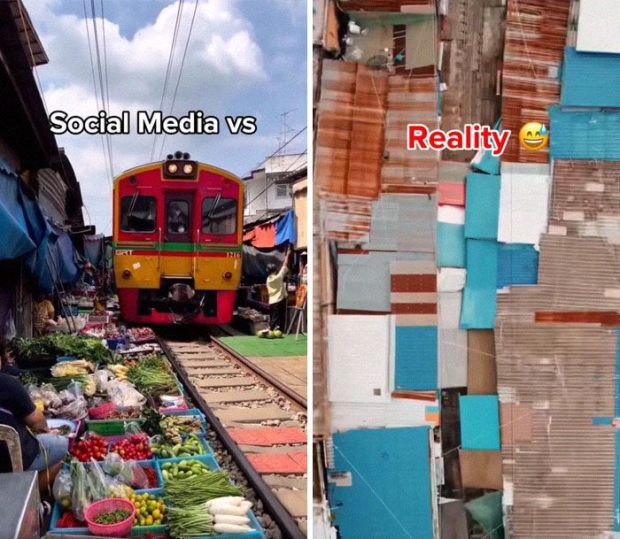
That uniqueness comes with real risk. Trains pass frequently and at speed. Visitors must stay alert, follow safety cues, and respect that this is not a theme park ride; it’s active infrastructure.
Smart traveler tip: Don’t let the camera distract you from your surroundings. If you want photos, take them from safe positions and prioritize awareness. The best travel story is one that doesn’t end in an accident.
Crisp to Dull
Autumn in Japan can look like a living painting; reds, oranges, and yellows layered across parks and streets in dramatic contrast.
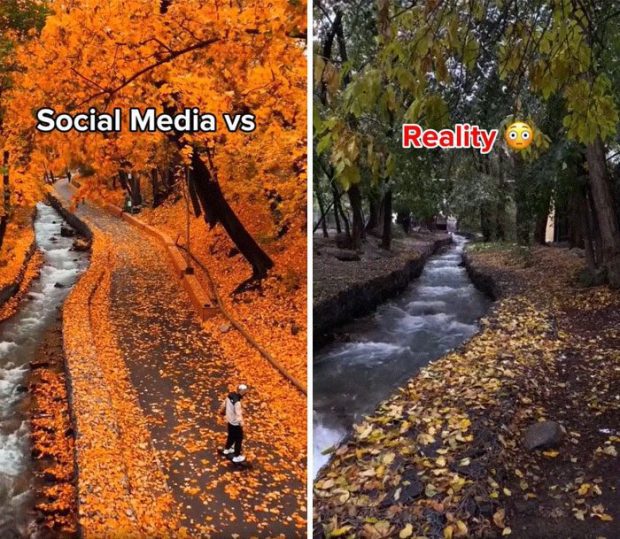
But color peaks don’t last forever. As the season progresses and cold weather sets in, leaves fade and drop. What looked like a kaleidoscope in a viral post may become a duller palette if you miss the window.
Smart traveler tip: For seasonal phenomena (foliage, blossoms, auroras), plan around the seasonal window, not the calendar month. Even a two-week difference can change the result dramatically.
Unnatural Wonder
Some travel photos depict structures that look ancient; stone textures, carved patterns, and dramatic lighting that suggests centuries of history.
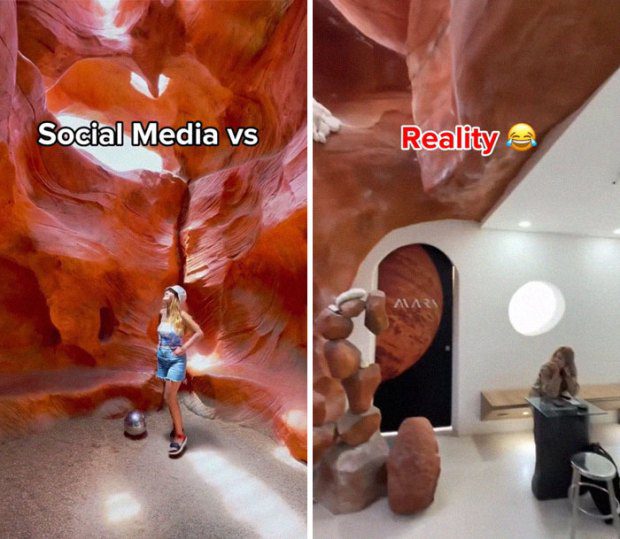
But sometimes the “ancient wonder” is brand-new; a studio set or recently built structure designed specifically for filming. It may still be visually impressive, but the story is different from what the photo suggests.
Smart traveler tip: If the history is part of the appeal, verify whether the site is historical, reconstructed, or newly built. There’s nothing wrong with visiting modern attractions; but it’s better to choose them intentionally rather than by illusion.
Death-Defying
Volcanic landscapes can look dramatic: sulfur scent, ash tones, dark clouds, and the feeling that you’re standing on a living, dangerous planet.
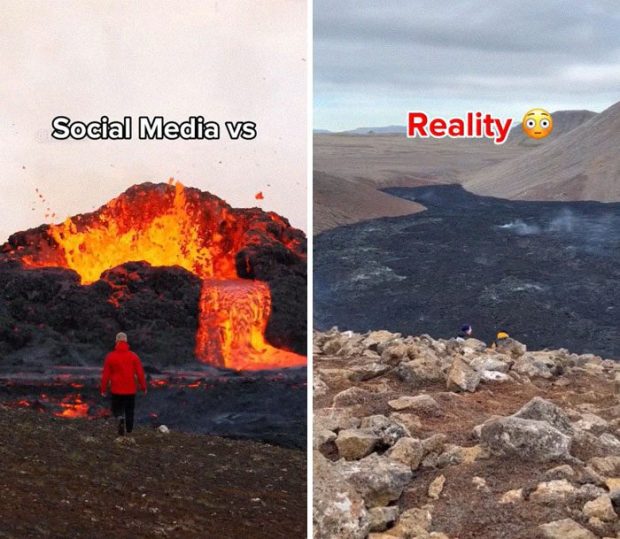
At other times, volcanic rock can look underwhelming; solidified magma often resembles ordinary dark stone. Social media can overpromise “lava drama” when the reality is geological quiet.
Smart traveler tip: If you’re visiting active volcanic areas, safety protocols are not optional. Follow local guidance closely. Don’t treat dangerous zones as photo sets, and understand that nature doesn’t schedule cinematic moments on demand.
Business Partners
Turning an abandoned airplane into a shop is creative, unusual, and exactly the sort of thing that gets shared online because it’s unexpected.
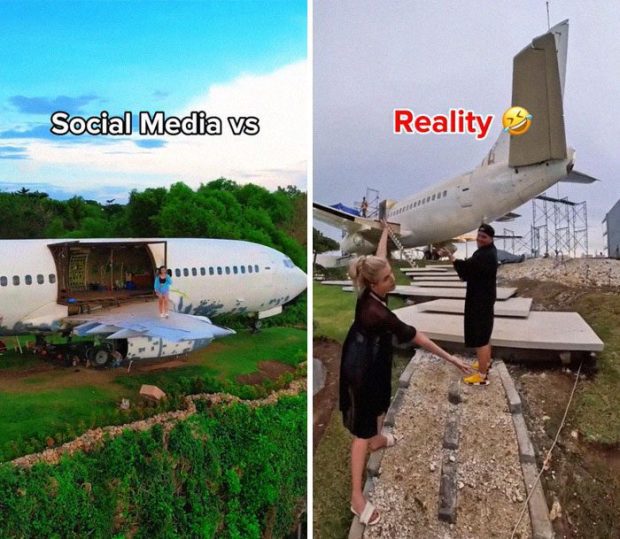
But “unique” doesn’t always mean “Instagram-perfect.” Some places are interesting in real life but don’t translate into the polished fantasy that social media encourages. The value may be the story and the novelty, not the photo.
Smart traveler tip: Decide what you want from a destination: the story, the experience, or the photo. If it’s the story, you’ll enjoy more places. If it’s only the photo, you’ll be disappointed more often.
Wish Not Granted
The Trevi Fountain in Rome is iconic, and the coin-toss legend is one of travel’s most enduring rituals.
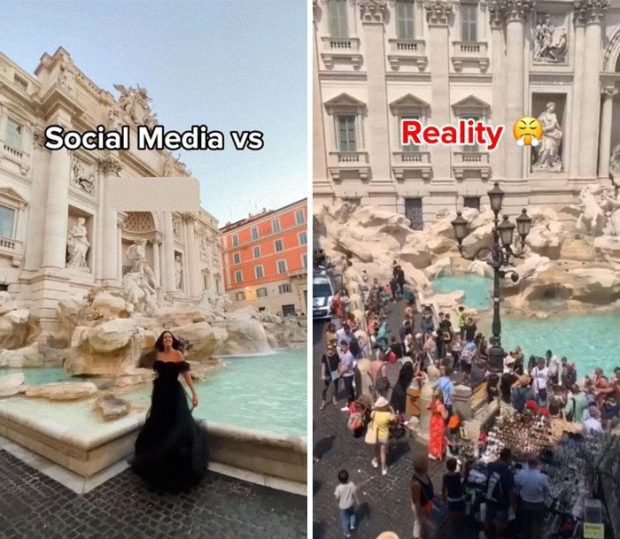
But iconic places come with crowds, noise, and constant cameras. The fountain can still be beautiful, but the atmosphere may not be peaceful, especially during peak tourism hours.
Smart traveler tip: If you want a quieter moment with famous landmarks, visit very early in the morning or later at night when possible. And accept that some icons are better appreciated as “collective experiences” rather than private moments.
Learn How to Swim
Waterfalls are cinematic by default; sound, mist, and movement create a natural spectacle. Add a confident model, and the photo can look effortlessly glamorous.
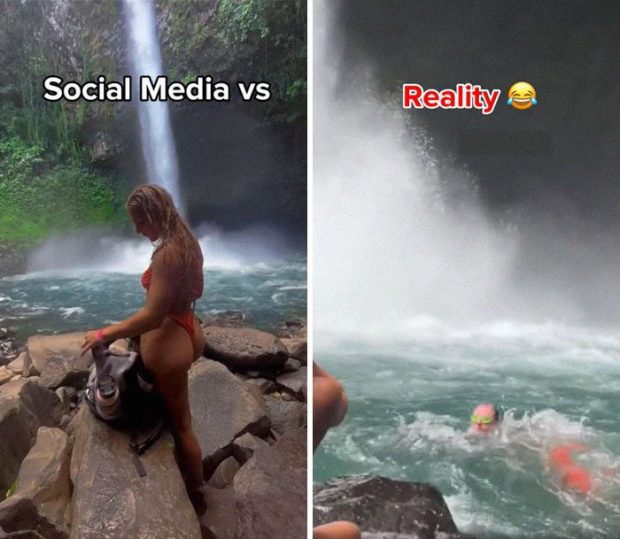
But in real water, confidence matters. Not everyone swims well, and slippery rocks, currents, and deep pools are serious hazards. Looking good near water does not automatically translate into being safe in it.
Smart traveler tip: Use safety gear when appropriate; life vests are not “uncool,” they’re intelligent. The best travel experiences are the ones you finish safely.
Angle Matters
Large events like Expo 2020 Dubai can deliver impressive installations; but the perceived scale often depends on camera angle, lighting, and timing.
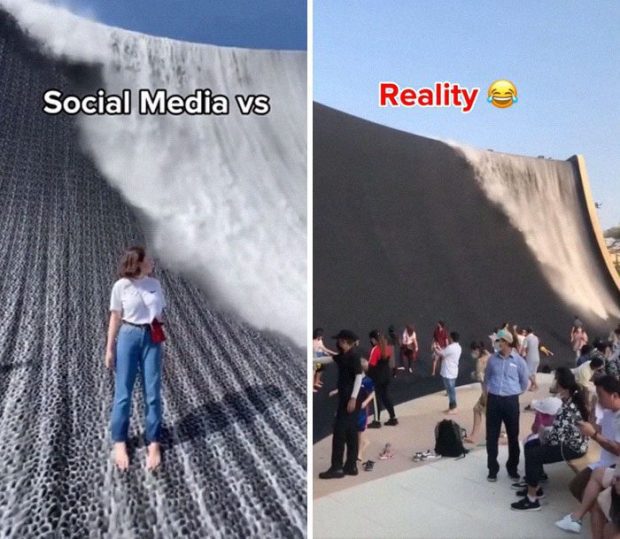
Arrive expecting a grand spectacle and you might be met with something smaller, simpler, or less dramatic than you imagined. That doesn’t mean it’s “bad.” It means the viral content may have optimized perception more than it reflected scale.
Smart traveler tip: For man-made attractions, compare multiple visitor photos and videos from different angles. If the “wow” depends on one angle, that’s useful information; not a deal-breaker, but a reality check.
Just That Second
Photography captures moments, not averages. A flash photo by the pool can create the illusion of perfect weather, perfect light, and perfect comfort.
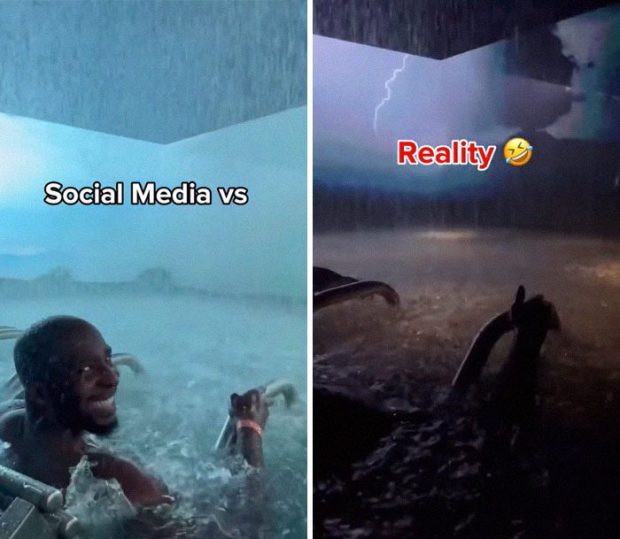
Remove the flash; or take the next photo; and the truth can appear: ominous skies, heavy rain, and a scene that looks nothing like the first frame. This is a powerful reminder that social media often shows the best two seconds of a two-hour experience.
Smart traveler tip: When planning, don’t rely on “best moment” visuals. Look for information about typical conditions, not rare highlights. Your trip will be made of averages.
Sharp Fall
Cliff-hanging photos are popular because they trigger a visceral reaction. They look thrilling, dangerous, and dramatic; everything the algorithm rewards.
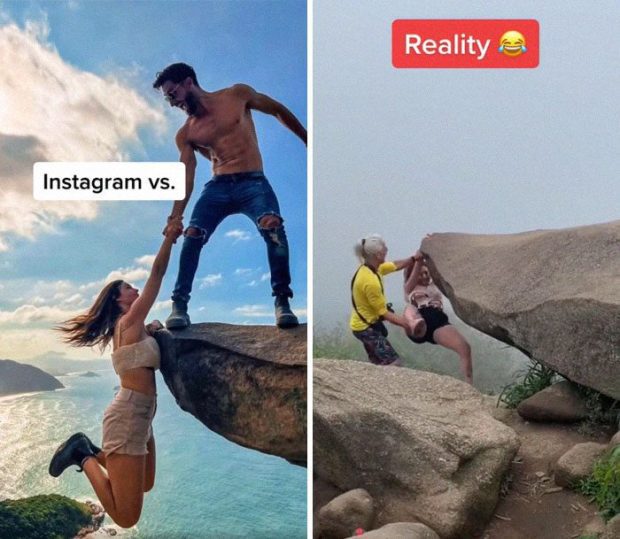
But many of these shots are faked with low angles. The danger is implied, not real. The problem is that some travelers try to recreate the “real danger” version, stepping beyond safe zones for authenticity.
Smart traveler tip: If you want the shot, take the safe version. A low-angle trick is not “cheating”; it’s smart risk management. Your travel photos should never require emergency services.
Underwater Waterfall
Mauritius is famous for clear waters and an “underwater waterfall” that looks like sand plunging into the deep ocean; an image that feels almost impossible.
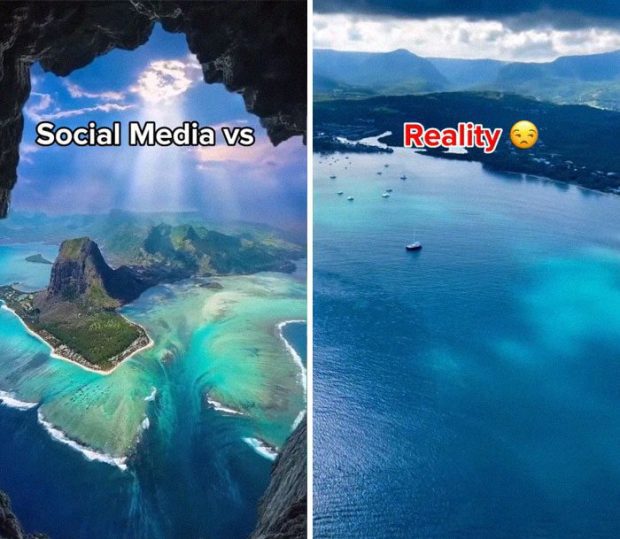
In reality, it’s an optical illusion created by sand and silt patterns shaped by underwater currents. It’s still beautiful; but the “waterfall” isn’t literal. The magic is physics and perspective, not a real cascade.
Smart traveler tip: When a destination is famous for an illusion, research the best viewpoint. Many illusions require aerial perspectives or very specific angles that you may not access casually.
Nice View
A skyline view of New York City can feel like a dream; especially framed through “luxury hotel” storytelling. Floor-to-ceiling windows, perfect light, and the impression that you’ve arrived.
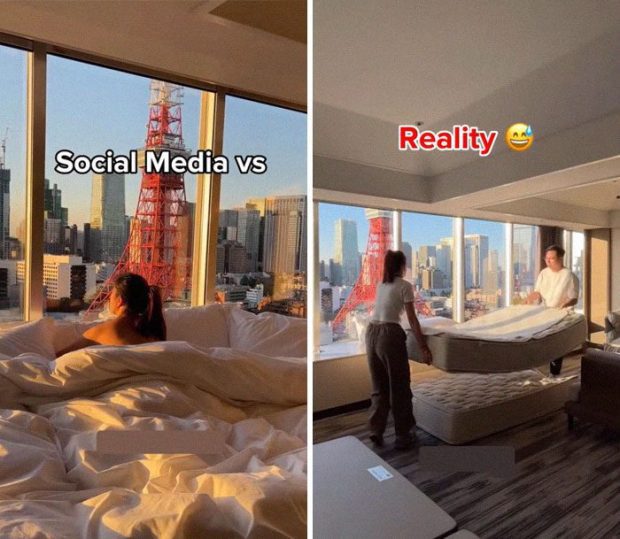
But sometimes the “luxury” is improvised: mattresses on the floor, sheets used as props, and framing doing the heavy lifting. The view may be real, but the story is carefully constructed.
Smart traveler tip: If accommodations are part of the fantasy, verify them beyond a single photo. Read reviews, confirm room type, and remember that staging is common in short-form content.
Taking Shade
Shipwreck photos can look rugged and adventurous; sun on metal, ocean in the background, and a traveler who appears fearless.
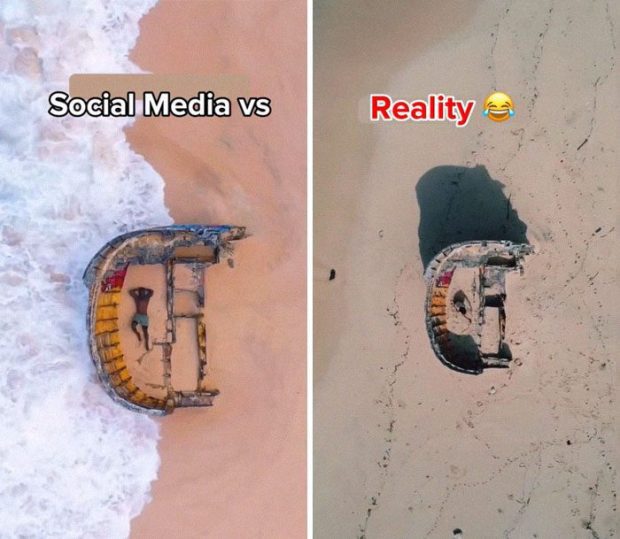
But sun exposure is real, and the comfort window can be short. What looks like an all-day vibe can be a five-minute pose before heat and glare send you running for shade.
Smart traveler tip: Plan for sun: water, protective clothing, and realistic timing. Photos are quick; heat is relentless.
Love-Hate
Social media is a double-edged sword. It introduces the world to beautiful places; and then it sends the world there. The moment a location becomes a “safe haven” online, it often becomes a shared, crowded space offline.
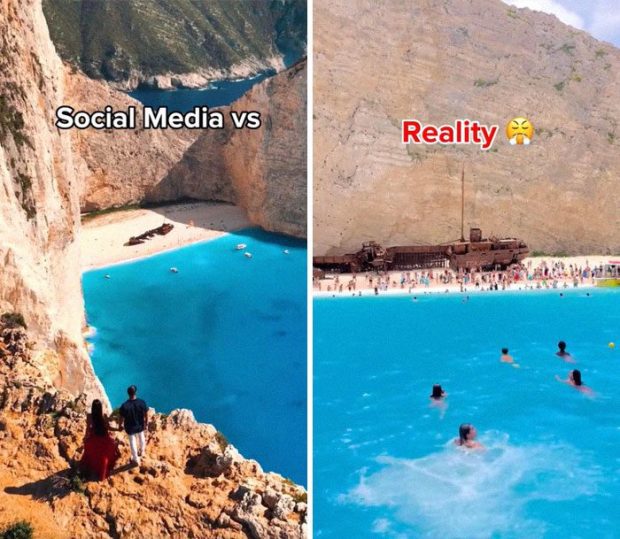
What was once tranquil can become overrun with tourists, boats, and even jet skis. The location doesn’t necessarily lose beauty; but it can lose calm.
Smart traveler tip: If tranquility is the goal, avoid “peak virality” destinations or visit in off-peak times. Also consider supporting local communities by exploring lesser-known alternatives rather than overloading one fragile location.
Breaking Bali
Bali’s jungle pools and overlooking resorts create some of the most copied travel imagery online; lush greenery, still water, and a sense of private paradise.
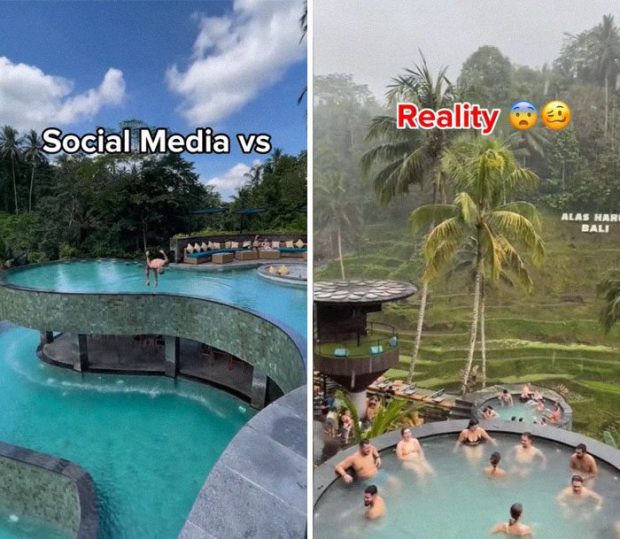
But what happens when everyone wants the same paradise at the same time? Crowds. Selfie queues. People negotiating for “the spot.” The pool may still be stunning, but the experience can feel less restorative than the photos suggest.
Smart traveler tip: If you want the calm version of Bali, you need the calm timing: early morning swims, off-season stays, or accommodations that prioritize privacy. Otherwise, accept the social nature of famous resorts.
Submersible
Underwater hotels are a travel fantasy: fish outside your window, waves above, and the feeling that you’re living inside the ocean.
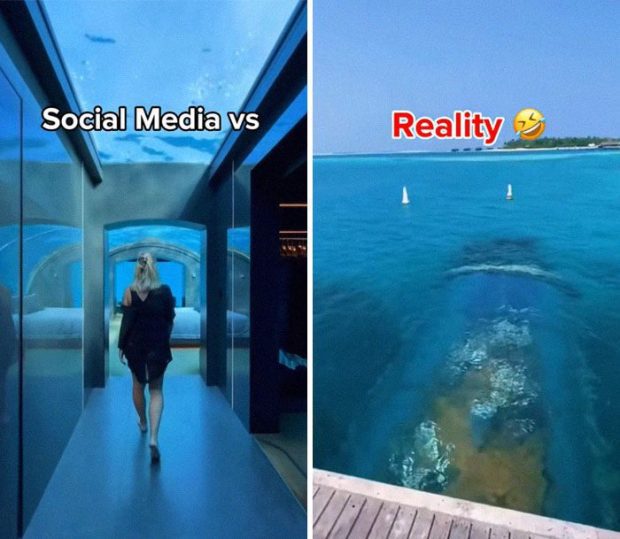
But sometimes the “underwater” claim is technically true while the experience is less dramatic. Being only 2 meters below the surface can feel more like a submerged resort than the deep-sea suite you imagined.
Smart traveler tip: Verify specifics: depth, window views, and what marine life is actually visible. Don’t let marketing words substitute for measurable details.
A Trip to Skogafoss
Some destinations look warm in photos because the framing suggests sunshine and comfort. Beaches in particular are often shot in flattering light that hides how harsh the environment can be.

Skogafoss Beach reality: cold, barren, windy, and physically unforgiving. The sand is rough, the water frigid, and the vibe is dramatic in a way that doesn’t invite swimming. It’s still a powerful landscape; but it’s not a tropical vacation.
Smart traveler tip: Separate “beautiful” from “comfortable.” Some places are best enjoyed fully clothed, fully layered, and fully aware that nature doesn’t care about your vacation mood board.
Coron
Coron Lake looks like the definition of tranquil: blue water, lush surroundings, and that “I’m finally away from everything” feeling.
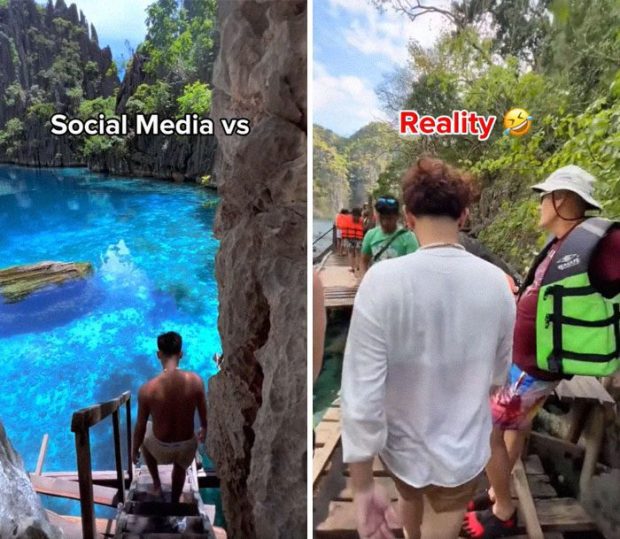
Visit during peak season and that tranquility can evaporate into crowd noise, camera shutters, and constant movement. The lake remains beautiful, but the atmosphere shifts from peaceful to competitive; everyone chasing their own perfect shot.
Smart traveler tip: If you want serenity, avoid peak travel dates. If you can’t, embrace the social nature of the place and adjust your expectations accordingly. Serenity is often a scheduling outcome, not a destination feature.
Glitz to Gone
Beach photos often capture calm moments; sun, gentle waves, and a model who looks like she’s in perfect control of the scene.
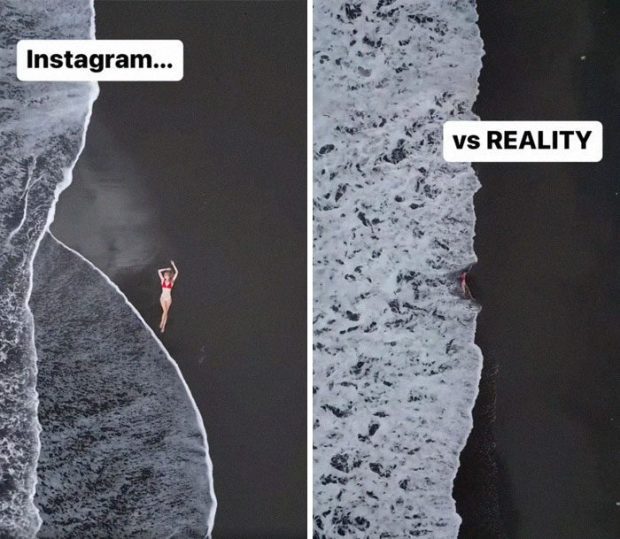
Reality includes rogue waves. And rogue waves don’t negotiate. One unexpected surge can turn a “goddess” moment into panic in seconds.
Smart traveler tip: Treat oceans with respect. Stay aware of wave patterns, avoid turning your back on the water in risky conditions, and don’t trade safety for aesthetics.
Careful
Swamp canoe experiences can be serene and immersive; quiet water, dense vegetation, and that close-up view of an ecosystem most people never see.
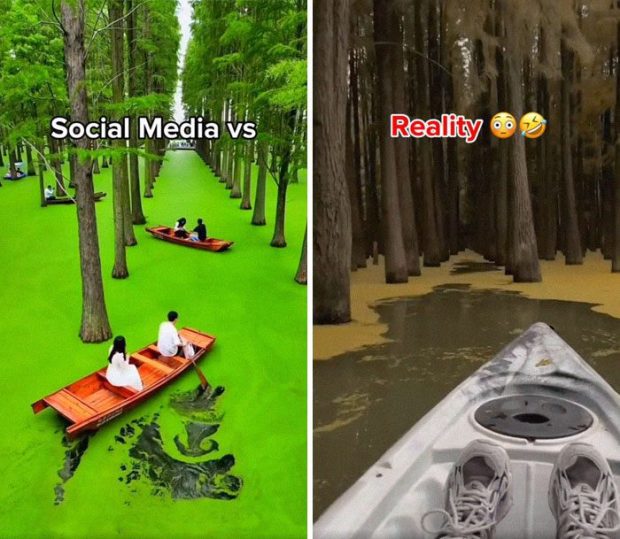
But after heavy rainfall, water can turn murky and brown, changing visibility and mood. And if wildlife is part of the ecosystem, caution becomes part of the experience. You may not see an alligator nearby; and if you do, it may be too late to “fix” your choices.
Smart traveler tip: Follow safety guidance, keep your limbs inside the canoe, and choose reputable operators. Nature tours are not “cute content”; they’re interaction with real ecosystems.
Zero Visibility
Cloud-walk destinations look magical online: stairs descending into mist, a sea of clouds, and the feeling that you’re walking through the sky.
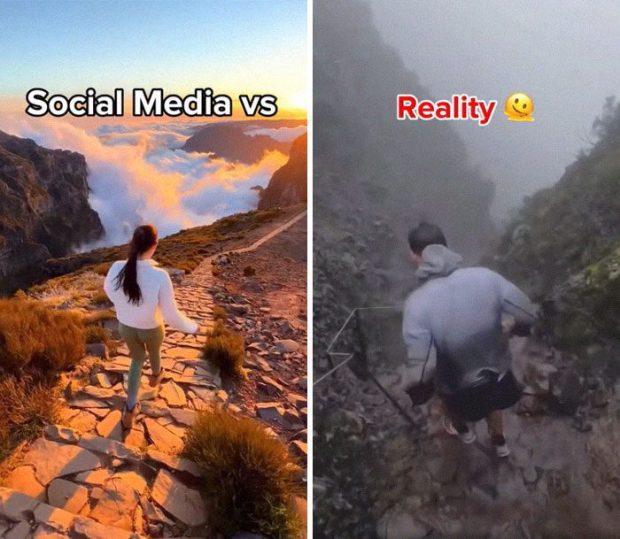
But mist is water. It can sting, reduce visibility, and make steps slippery. Maintaining balance becomes work. The experience can still be memorable, but it’s not always comfortable; or safe without care.
Smart traveler tip: Wear footwear with grip and slow down. A “magical” photo is not worth a fall on wet steps.
Where’d the Magic Go
Bioluminescent beaches are one of the most viral natural phenomena online: every step lights the sand in electric blue, and the scene looks like a fantasy effect.
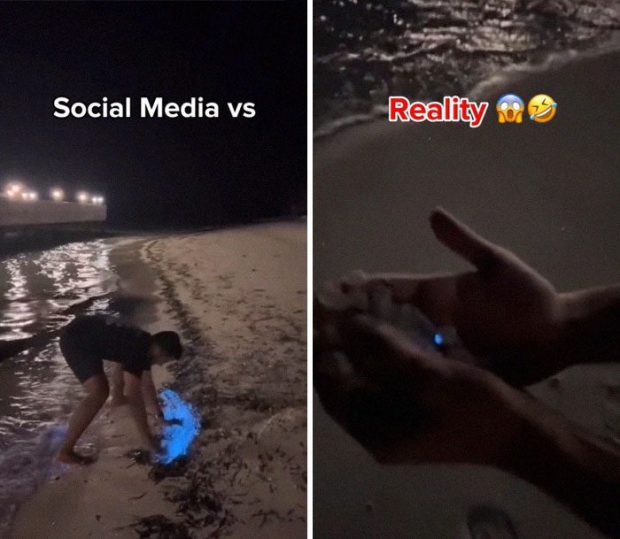
But bioluminescence is not an “always on” feature. It’s seasonal and condition-dependent. These beaches can be glowing one week and completely dark the next. The magic exists; but it doesn’t operate on your itinerary.
Smart traveler tip: Research conditions before buying tickets. Look for recent reports, local guidance, and timing windows. When nature is the attraction, it’s wise to plan with flexibility rather than certainty.
The Real Takeaway: Travel Better, Not Just More
The destinations above share one theme: they can be incredible, but they’re rarely “effortless.” Social media often removes friction from the narrative; crowds, weather, danger, queues, discomfort, seasonal changes; because friction doesn’t trend as well as fantasy.
So here’s the practical conclusion from an expert travel-planning perspective:
- Use Instagram for inspiration, not confirmation. Confirm reality with recent reviews, unfiltered photos, and local conditions.
- Plan for crowds when a place is famous. The more viral it is, the less private it will be; unless you time it strategically.
- Respect nature and infrastructure. Oceans, cliffs, wildlife, and train tracks don’t care about your photo.
- Understand seasonality. Ice, fog, foliage, bioluminescence, and water clarity are variable; your timing is the difference.
- Choose experiences, not just visuals. A place can be worth visiting even if it doesn’t look like the viral post; if it feels meaningful in real life.
Travel is still one of the best investments you can make in perspective and memory. Just don’t let a perfectly edited photo be the only voice in the room when you’re making expensive decisions.

