
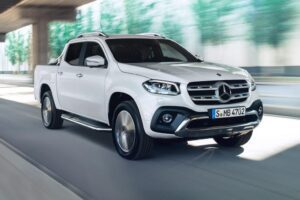

There are moments in automotive history that seem destined for greatness on paper but crumble spectacularly when reality hits. The Mercedes-Benz X-Class is one of those fascinating tales—a premium pickup truck that carried the iconic three-pointed star, wrapped in luxury leather and cutting-edge technology, yet ultimately couldn’t survive in the brutal arena dominated by battle-tested workhorses like the Toyota Hilux, Ford Ranger, and Mitsubishi L200.
From 2017 to 2020, Mercedes-Benz dared to do what seemed impossible: bring genuine luxury to the utilitarian world of pickup trucks. The X-Class represented an ambitious vision, a bold statement that said, “Why should pickup truck buyers settle for basic interiors and bare-bones features when they could have Mercedes-Benz refinement?” It was a question that made sense in boardrooms but would ultimately find a harsh answer in showrooms across the globe.
Table of Contents
This is the comprehensive story of how one of the world’s most prestigious automakers ventured into unfamiliar territory, partnered with Nissan to build what should have been a game-changer, and ended up creating one of the automotive industry’s most memorable commercial failures. It’s a tale of ambition, miscalculation, market realities, and the unforgiving nature of pickup truck buyers who know exactly what they want—and what they definitely don’t.
The Bold Vision: Why Mercedes Decided to Build a Pickup Truck
To understand why the X-Class failed, we must first understand why it existed at all. Mercedes-Benz has always been synonymous with luxury sedans, high-performance sports cars, and premium SUVs. The brand built its reputation on vehicles like the S-Class sedan, the G-Wagon SUV, and performance legends from AMG. Pickup trucks seemed like an odd fit for a manufacturer whose vehicles are often parked in front of country clubs rather than construction sites.
But the global pickup truck market in the mid-2010s was experiencing explosive growth. In markets like Australia, Thailand, South Africa, and parts of South America, pickup trucks weren’t just tools for farmers and construction workers—they were becoming lifestyle vehicles. Wealthy professionals were buying them. Families were using them as daily drivers. The segment was lucrative, and Mercedes saw an opportunity.
The idea was deceptively simple: take the proven capability of a pickup truck platform and wrap it in Mercedes-Benz luxury. Imagine pulling up to a luxury hotel not in an S-Class or E-Class, but in a pickup truck with a Mercedes badge, premium leather seats, ambient lighting, a state-of-the-art infotainment system, and that unmistakable sense of refinement that only Mercedes could deliver. It was supposed to be the best of both worlds—rugged capability meets three-pointed star prestige.
Market research seemed to support the concept. Wealthy buyers in places like Sydney, Johannesburg, and Buenos Aires were already buying top-trim Hilux and Ranger models loaded with options. If they were willing to spend premium money on well-equipped Toyotas and Fords, surely they’d be willing to pay even more for a genuine Mercedes-Benz, right?
The strategic thinking made sense. Mercedes-Benz had successfully conquered the SUV market with vehicles like the GLE and GLS. They had proven that buyers would pay premium prices for Mercedes capability combined with luxury. The pickup segment seemed like the next logical frontier. What could possibly go wrong?
The Nissan Partnership: A Foundation Built on Compromise
Here’s where the story gets complicated. Building a pickup truck from scratch is extraordinarily expensive. The engineering challenges are immense—you need a ladder-frame chassis strong enough to handle serious payload and towing capacity, suspension systems that can cope with both empty running and fully loaded work duty, and powertrains designed for low-end torque and durability rather than smoothness and refinement.
Mercedes-Benz, despite its engineering prowess, didn’t have a modern pickup truck platform. Creating one entirely in-house would have cost billions and taken years. So they made a decision that would ultimately doom the X-Class before it even launched: they partnered with Nissan and based the X-Class on the Nissan Navara platform.
The Renault-Nissan-Mitsubishi Alliance had existing pickup truck architecture. The Nissan Navara (known as the Frontier in some markets) was a proven, capable pickup that sold globally. On paper, the partnership made perfect business sense. Nissan would provide the engineering foundation—the chassis, suspension, and powertrains—while Mercedes would handle the design, interior refinement, and brand positioning. It was supposed to be a win-win: Nissan would get validation from Mercedes’ involvement, and Mercedes would get a shortcut to the pickup market.
The X-Class was manufactured at Nissan’s Barcelona plant in Spain for European markets and at Renault’s facility in Argentina for Latin American markets. Mercedes engineers worked to differentiate the X-Class from its Nissan cousin, adding unique body panels, a completely redesigned interior, Mercedes-Benz technology, and attempting to tune the suspension for a more refined ride quality.
But here’s the fundamental problem that Mercedes never solved: you can’t disguise a Nissan Navara by putting a Mercedes badge on it. And more importantly, pickup truck buyers—the people who actually spend their money in this segment—are not easily fooled.
What Made the X-Class Special (On Paper)
To be fair to Mercedes, the X-Class wasn’t just a badge-engineered Navara with leather seats. The company genuinely tried to create something distinct and premium. Let’s examine what made the X-Class different from its Nissan donor vehicle.
Exterior Design: The Mercedes Family Face
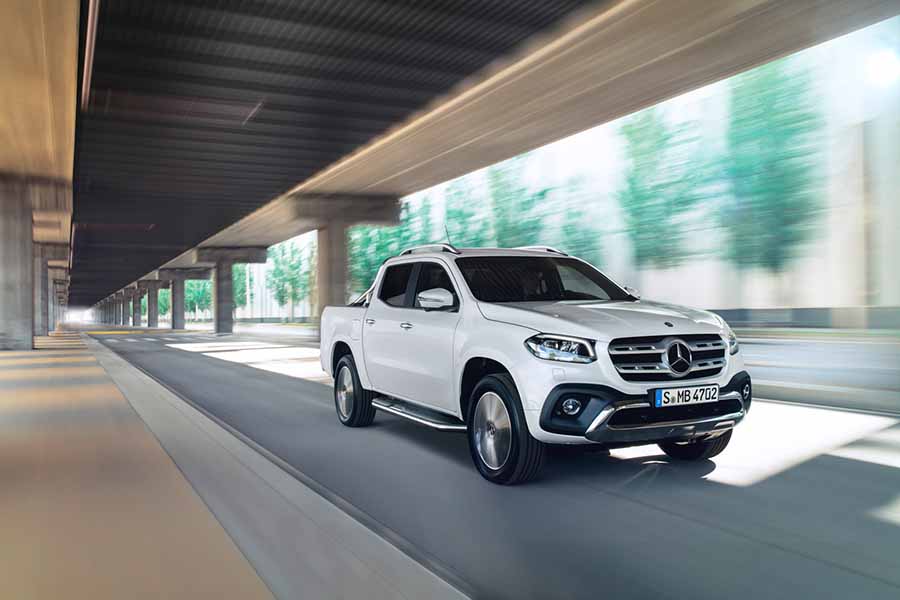
The most immediate difference was the styling. While the X-Class shared its basic proportions with the Navara, Mercedes designers completely reimagined the front end. The X-Class featured Mercedes-Benz’s signature grille design, swept-back headlights with LED technology, and body sculpting that echoed the design language of Mercedes SUVs. From certain angles, it genuinely looked like a Mercedes—sophisticated, modern, and unmistakably premium.
The rear received similar attention, with distinctive LED taillights and Mercedes badging. The overall visual package was cohesive and attractive. If you saw an X-Class in a parking lot, you’d recognize it as a Mercedes product, not a rebadged Nissan. The design team deserved credit for that achievement.
Interior Luxury: Where Mercedes Really Tried
Step inside the X-Class, and the difference from the Navara became immediately apparent. Mercedes equipped the X-Class with materials, technology, and attention to detail that were genuinely class-leading for a pickup truck. We’re talking about soft-touch materials on the dashboard, genuine leather upholstery, metallic trim accents, ambient lighting, and a build quality that felt vault-solid.
The seats offered both heating and ventilation—features rarely seen in pickup trucks at the time. The steering wheel was a thick, leather-wrapped unit that felt lifted straight from a Mercedes sedan. The instrument cluster featured a configurable digital display, and the center console housed Mercedes’ COMAND infotainment system with navigation, smartphone integration, and a premium sound system.
For buyers coming from traditional pickups, the cabin experience was transformative. This wasn’t a workplace on wheels—it was a luxury lounge that happened to have a cargo bed attached. You could genuinely imagine wearing a business suit while driving the X-Class without feeling out of place, something that couldn’t be said for most competitors.
Technology and Safety Features
Mercedes loaded the X-Class with advanced safety technology that was unprecedented in the pickup segment at launch. We’re talking about adaptive cruise control, lane-keeping assist, blind-spot monitoring, automatic emergency braking, and a 360-degree camera system. These were features you’d expect in a Mercedes sedan, not in a vehicle designed to haul building materials.
The infotainment system offered genuine smartphone integration, voice control, and connectivity features that made traditional pickup truck technology look primitive by comparison. Mercedes was genuinely trying to bring S-Class thinking to the pickup world.
Suspension and Ride Quality
Mercedes engineers spent considerable time retuning the Navara’s suspension to deliver a more refined ride quality. The X-Class used different dampers, revised spring rates, and additional sound deadening to create a driving experience that felt more Mercedes-like—smoother, quieter, and more composed on paved roads.
When driven unladen on highways, the X-Class delivered a ride quality that genuinely felt premium compared to competitors. It was less truck-like, less harsh over bumps, and more comfortable during long-distance cruising. For someone who viewed their pickup primarily as transportation rather than a work tool, this was a meaningful improvement.
The Fatal Flaw: The Nissan Heart Beating Beneath
Despite all these genuine improvements and luxury features, the X-Class suffered from one insurmountable problem: underneath all that Mercedes refinement was still a Nissan Navara. And this reality manifested in ways that proved fatal to the X-Class’s market acceptance.
The Powertrain Problem
The most glaring issue was the engine lineup. Instead of developing Mercedes-Benz powertrains for the X-Class, the truck launched with engines borrowed directly from the Nissan parts bin. The initial lineup included a 2.3-liter four-cylinder diesel engine producing either 163 horsepower or 190 horsepower, depending on the tune. These were Nissan engines, not Mercedes engines, and they felt like it.
Pickup truck buyers are intimately familiar with their engines. They know how they sound, how they feel, and how they perform under load. Diesel pickup owners can identify their engine’s character from a mile away. The Nissan diesel in the X-Class sounded coarse, felt underpowered when towing or hauling heavy loads, and lacked the refinement that buyers expected from a vehicle wearing the Mercedes-Benz badge.
Later, Mercedes did introduce a more powerful V6 diesel engine option—a 3.0-liter unit producing 258 horsepower and developed specifically for the X-Class. This engine felt more appropriate for a Mercedes product, delivering stronger performance and a smoother power delivery. But it came too late, was only available in certain markets, and couldn’t overcome the damage already done to the X-Class’s reputation.
The transmission situation was similarly compromised. The X-Class used either a six-speed manual or a seven-speed automatic transmission—both borrowed from the Nissan/Renault alliance. The automatic in particular felt clunky and unrefined compared to the smooth-shifting automatics Mercedes used in their cars and SUVs. It was functional but hardly premium.
Capability Questions
Pickup truck buyers are practical people who care deeply about real-world capability. They want to know: How much can it tow? What’s the payload capacity? How does it handle off-road? Can it handle the abuse that work and adventure demand?
The X-Class’s capabilities were respectable but not class-leading. Towing capacity maxed out at around 3,500 kg (7,716 lbs) depending on the market and configuration—competitive but not exceptional. Payload capacity hovered around 1,000 kg (2,204 lbs), which was adequate for most users but again, nothing special.
More damaging was the perception issue. Serious truck buyers questioned whether a luxury-focused Mercedes could truly deliver the bulletproof reliability and ruggedness that defined segment leaders like the Toyota Hilux. The Hilux had earned its legendary status through decades of abuse in the world’s harshest environments—war zones, Australian Outback, African deserts, South American jungles. The Hilux was unkillable.
Could the X-Class make the same claim? Would it survive the same punishment? Buyers weren’t convinced, and Mercedes had no heritage in the segment to prove otherwise.
The Authenticity Problem
Perhaps the most damaging issue was one of perception and authenticity. Pickup truck buyers tend to be brand-loyal and deeply skeptical of pretenders. They could see through the marketing immediately: the X-Class was a Nissan Navara in a Mercedes suit.
Automotive journalists and YouTube reviewers didn’t help matters. Nearly every X-Class review pointed out the Nissan DNA, the shared platform, the borrowed engines. Comparisons with the Navara were inevitable, and they always ended with the same question: “Why would you pay significantly more for an X-Class when you could get essentially the same truck as a Navara for thousands less?”
The answer—”because it’s a Mercedes”—wasn’t compelling enough. The three-pointed star carried weight in the luxury car segment, but it held no special meaning in the pickup world. Hilux buyers didn’t care about badges; they cared about reputation, capability, and value. The X-Class couldn’t compete on those terms.
The Market Reality: Why Pickup Buyers Rejected the X-Class
To understand the X-Class failure, we need to understand the pickup truck buyer mindset, which is fundamentally different from the luxury car buyer psychology.
Pickup Buyers Value Substance Over Style
Luxury car buyers often purchase based on image, prestige, and how the vehicle makes them feel. They’re buying into a brand story. Pickup truck buyers, conversely, are ruthlessly practical. They want capability, reliability, low running costs, and proven performance. They’re willing to pay for genuine capability improvements, but they’re skeptical of paying for luxury features that don’t enhance the truck’s core mission.
When the X-Class launched with a starting price significantly higher than a top-spec Hilux or Ranger, buyers asked a simple question: “What am I getting for that extra money?” The answer—a nicer interior, more technology, and a Mercedes badge—didn’t justify the premium for most buyers.
The Toyota Hilux Standard
The Toyota Hilux isn’t just a pickup truck; it’s a global institution. It’s the vehicle of choice for UN peacekeeping missions, aid organizations, military forces, and commercial operators who need absolute reliability. The Hilux has a mythical reputation for indestructibility, famously demonstrated by Top Gear’s attempt to kill one (which survived being submerged, set on fire, crashed, and ultimately perched on top of a building scheduled for demolition).
For Mercedes to succeed in this market, the X-Class needed to either match the Hilux’s legendary durability or offer something so compelling that buyers would willingly sacrifice that peace of mind. It did neither.
Regional Market Realities
The X-Class’s failure wasn’t uniform across all markets—it varied by region, revealing important insights about pickup truck market dynamics.
Europe: European buyers were perhaps most receptive to the X-Class concept. Europe has a smaller pickup market, and those who buy pickups often do so more for lifestyle than work. The X-Class’s premium positioning and car-like driving dynamics had some appeal. But European pickup sales volumes were never going to support the X-Class business case alone.
Australia: Australia is one of the world’s most important pickup markets, and Aussies take their trucks seriously. The market is dominated by the Hilux, Ranger, and other established workhorses. Australian buyers were intrigued by the X-Class but ultimately couldn’t justify the price premium. When you could buy a fully loaded Hilux SR5 or Ranger Wildtrak for significantly less money with proven reliability and strong resale value, the X-Class was a hard sell.
South Africa: Similar story—the pickup market is huge, practical, and value-conscious. South African buyers want trucks that can handle rough roads, heavy loads, and minimal maintenance. The X-Class felt too delicate, too expensive, and too unproven.
Latin America: Despite being manufactured in Argentina specifically for this market, the X-Class struggled. Latin American pickup buyers are among the most practical in the world, and they weren’t swayed by Mercedes luxury when Toyota, Ford, and Chevrolet offered proven capability at better prices.
Nigeria and West Africa: The X-Class barely registered in markets like Nigeria, where pickups like the Hilux, Isuzu D-Max, and locally-produced options like the Innoson IVM dominate. Nigerian buyers want trucks that can handle poor roads, carry heavy loads, and survive with minimal maintenance. The X-Class’s complexity, parts availability concerns, and premium pricing made it completely unsuitable for the market.
The Pricing Problem: Too Expensive to Justify
Let’s talk numbers, because pricing was perhaps the single biggest factor in the X-Class’s commercial failure. Mercedes positioned the X-Class as a premium product with premium pricing. In most markets, the X-Class started at roughly 20-30% more than an equivalent Navara and 15-25% more than a comparable Hilux or Ranger.
For example, in the UK market, the X-Class launched with prices starting around £33,000, while a well-equipped Hilux could be had for under £28,000. The top-spec X-Class Power model with the V6 engine pushed toward £50,000—a price that put it in Range Rover territory, not pickup truck territory.
The value proposition simply didn’t work. For the X-Class to justify its premium pricing, it needed to offer either:
- Significantly better capability (it didn’t—it was comparable or slightly worse than competitors)
- Legendary reliability and lower running costs (unproven and unlikely given the complexity)
- Brand prestige that mattered in the segment (the Mercedes badge meant nothing to traditional pickup buyers)
Without any of these advantages, the X-Class was fundamentally overpriced for what it offered. And in the pickup market, where buyers are notoriously value-conscious and willing to shop around, overpricing is a death sentence.
What Mercedes Got Right (But It Wasn’t Enough)
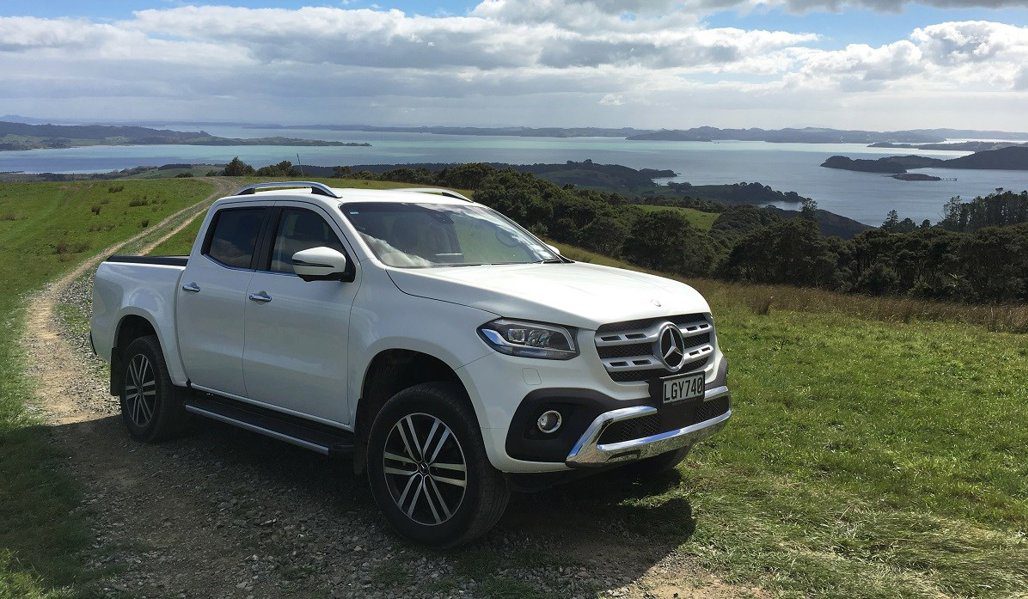
Despite the ultimate failure, we should acknowledge what Mercedes genuinely got right with the X-Class, because there were real innovations and genuine attempts at excellence.
Interior Refinement
The X-Class absolutely delivered on interior quality. If you spent time in the cabin, you could tell you were in a Mercedes product. The materials, fit and finish, and attention to detail were genuinely class-leading. For someone who used their pickup as a daily driver and spent hours behind the wheel, the X-Class cabin was a more pleasant place to be than any competitor.
Technology Integration
Mercedes brought tech features to the pickup segment that others hadn’t prioritized. The digital instrument cluster, sophisticated infotainment, and advanced driver assistance systems were genuinely ahead of the competition at launch. This was 2017-2018, remember—competitors have since caught up, but at the time, the X-Class led in technology.
Design Execution
Say what you will about the platform underneath, but Mercedes designers created a genuinely attractive pickup truck. The X-Class looked cohesive, modern, and premium. It didn’t look like a rebodied Navara; it looked like a Mercedes that happened to be a pickup. That’s harder to achieve than it sounds, and the design team deserves credit.
The V6 Engine (Eventually)
When Mercedes finally introduced the 3.0-liter V6 diesel in the X-Class Power variant, they delivered an engine that felt appropriately Mercedes-like—smooth, powerful, refined. If this had been the launch engine across all markets, the X-Class story might have been different. But it came too late and was too expensive to change the narrative.
The Beginning of the End: Poor Sales and Strategic Retreat
Despite heavy marketing investment and a global launch campaign, X-Class sales never approached the volumes Mercedes needed to justify continued production. Let’s look at the numbers:
In 2018, Mercedes sold approximately 16,700 X-Class pickups globally. In 2019, that number dropped to around 15,300 units. To put this in perspective, Toyota sells more Hilux pickups in a single month in some individual markets than Mercedes sold X-Class trucks globally in an entire year.
The Hilux regularly sells over 100,000 units annually in Australia alone. The Ford Ranger moves similar volumes. Even in smaller markets, established pickups sell in numbers that dwarf what the X-Class achieved globally.
By mid-2019, it was clear the X-Class wasn’t going to reach commercial viability. Mercedes-Benz faced a decision: continue losing money on every X-Class sold while investing in next-generation development, or cut losses and exit the segment entirely.
In May 2020, Mercedes officially announced the end of X-Class production. The Barcelona plant built the final X-Class, and Mercedes withdrew from the pickup truck market completely. The entire adventure lasted just three years—from 2017 to 2020—and by all accounts, the program lost hundreds of millions of euros.
Why the Failure Happened: The Deeper Lessons
The X-Class failure wasn’t just about one truck being misjudged. It represents several deeper lessons about automotive markets, brand positioning, and the danger of assumptions.
Lesson 1: Platform Sharing Has Limits
Mercedes learned that you can’t successfully premium-ize a product when buyers can see straight through to the cheaper mechanicals underneath. Platform sharing works when the donor vehicle is invisible to consumers or when the shared elements don’t compromise the premium positioning. The X-Class failed this test—everyone knew it was a Navara underneath, and that knowledge destroyed the premium narrative.
Lesson 2: Brand Prestige Isn’t Universal
The three-pointed star carries immense weight in luxury sedans and SUVs. But that prestige doesn’t automatically transfer to every vehicle category. Pickup truck buyers have their own hierarchy of brands, built on decades of reputation for toughness and reliability. Mercedes had no equity in that hierarchy, and they couldn’t buy their way in with luxury features alone.
Lesson 3: Know Your Customer
Mercedes fundamentally misunderstood pickup truck buyers. They assumed these buyers wanted luxury and would pay for it. In reality, most pickup buyers want capability, reliability, and value. Those who want luxury already buy top-trim versions of proven trucks—they don’t need a Mercedes badge if it compromises other priorities.
Lesson 4: Authenticity Matters
In the age of social media and YouTube reviews, you can’t fake authenticity. Every automotive journalist and influencer pointed out the X-Class’s Nissan origins. Every comparison test highlighted the mechanical similarities with the cheaper Navara. Every forum discussion questioned why anyone would pay the premium. Mercedes couldn’t control the narrative because the truth was too obvious.
Lesson 5: Heritage Is Earned, Not Bought
The Hilux didn’t become legendary overnight. It took decades of real-world performance in the harshest conditions. The same for Land Cruiser, Ranger, and other established players. Mercedes thought they could shortcut this process through engineering and luxury. They learned that in the pickup world, reputation must be earned through years of proven toughness.
The X-Class Legacy: A Rare Mercedes You Might Never See
Today, the X-Class exists in automotive history as a fascinating footnote—a bold experiment that didn’t work. If you live in Nigeria or most of West Africa, you’ve probably never seen one. They were never officially sold in large numbers in the region, and the few that might have been privately imported are exceptionally rare.
If you ever do spot an X-Class on Nigerian roads, you’re looking at one of the rarest Mercedes-Benz vehicles in the country. It’s a conversation piece, a reminder of the time when the mighty Mercedes tried to play in Hilux territory and discovered that some battles can’t be won with luxury alone.
For collectors and automotive enthusiasts, the X-Class has developed a certain curiosity value. It’s not valuable in the traditional sense—used X-Class prices have fallen dramatically as owners discovered the resale market is tiny and demand is weak. But it represents an interesting “what if” in automotive history.
What Could Have Saved the X-Class?
It’s worth speculating: was the X-Class doomed from the start, or could different decisions have led to success? Here are some alternative scenarios:
Scenario 1: Mercedes-Only Engineering
If Mercedes had invested in developing their own platform, engines, and transmissions specifically for the pickup market, the X-Class could have been genuinely unique. Imagine an X-Class with a Mercedes diesel engine derived from the Sprinter van, a Mercedes transmission, and Mercedes chassis engineering. It would have been expensive to develop, but it could have been authentic. The problem: the development costs would have been astronomical, potentially billions, for a market Mercedes wasn’t sure existed.
Scenario 2: Lower Pricing Strategy
What if Mercedes had accepted lower margins and priced the X-Class more competitively—perhaps just 5-10% above a Hilux instead of 20-30%? Would more buyers have taken the chance? Possibly, but even at lower prices, the Nissan platform problem remained. And Mercedes’ brand positioning makes it nearly impossible to compete on price—doing so devalues the brand.
Scenario 3: Focused Market Strategy
Instead of trying to sell globally, what if Mercedes had focused exclusively on European markets where the lifestyle pickup concept had more traction and where buyers cared less about hardcore capability? They might have carved out a profitable niche. But would that niche have been large enough to justify the development costs? Probably not.
Scenario 4: The Ultra-Luxury Route
What if Mercedes had gone completely the opposite direction—making the X-Class even more luxurious, more expensive, and positioned it as a unique luxury lifestyle vehicle rather than trying to compete with working trucks? Think of it as a pickup version of the G-Class—a status symbol that happened to have a bed. This might have worked in limited numbers for wealthy buyers who wanted something truly unique, but the volumes would have been tiny.
The harsh truth is that none of these scenarios likely would have resulted in commercial success. The fundamental problem was that Mercedes was trying to create a market that didn’t really exist—a mass-market luxury pickup truck. The buyers who wanted luxury were already buying loaded Hilux and Ranger models. Those who wanted a Mercedes were buying SUVs.
The Broader Context: Mercedes’ Success Story Continues
It’s important to remember that the X-Class failure, while embarrassing and expensive, hasn’t significantly damaged Mercedes-Benz as a company. In their core markets—luxury sedans, SUVs, and performance vehicles—Mercedes continues to thrive.
The S-Class remains the benchmark for luxury sedans. The E-Class is one of the best-selling premium midsize cars globally. Mercedes SUVs, from the compact GLA to the luxurious GLS, are selling in record numbers. The AMG performance division continues to produce some of the most desirable high-performance vehicles on the planet. The EQ electric vehicle lineup is competing seriously with Tesla and other EV manufacturers.
In 2022, Mercedes-Benz sold over 2 million vehicles globally and reported strong profits. The X-Class program, despite its failure, was a relatively small part of Mercedes’ overall business. The company learned from the experience, absorbed the losses, and moved on to focus on markets where they have genuine competitive advantages.
This is actually one of the most important lessons from the X-Class story: even successful companies fail sometimes, and the mark of a strong organization is the ability to recognize failure, cut losses, and refocus on core strengths. Mercedes did exactly that.
The Innoson IVM Factor: What Nigerian Pickup Buyers Actually Want
It’s worth contrasting the X-Class failure with the success of vehicles like the Innoson IVM pickup truck in Nigeria. Innoson represents everything the X-Class wasn’t: locally produced, affordable, practical, simple, and designed specifically for Nigerian conditions.
Nigerian pickup buyers want:
- Durability: Vehicles that can handle poor roads and heavy loads
- Affordability: Purchase prices and running costs that make business sense
- Parts availability: Easy access to spare parts and service
- Simplicity: Mechanically simple vehicles that can be repaired anywhere
- Payload capacity: The ability to carry heavy loads for commercial use
The X-Class offered none of these advantages. It was expensive, complex, unproven, and would have been a nightmare for parts and service in Nigeria. Meanwhile, the Hilux, D-Max, and locally-produced options like Innoson thrive because they understand the market’s real needs.
This is why you don’t see X-Class pickups on Nigerian roads. They were never designed for markets like Nigeria, and Nigerian buyers were smart enough to recognize that immediately.
Conclusion: The Truck That Proved Even Mercedes Can Fail
The Mercedes-Benz X-Class stands as one of the most fascinating failures in modern automotive history. It had everything going for it on paper: a prestigious brand name, genuine luxury features, sophisticated technology, and attractive design. But it failed because it fundamentally misunderstood the pickup truck market and the buyers who drive it.
Pickup truck buyers don’t buy trucks to feel prestigious—they buy them to haul, tow, work, and adventure. They value capability over comfort, reliability over refinement, and authenticity over luxury. The X-Class, for all its Mercedes-Benz sophistication, couldn’t deliver what these buyers actually wanted.
The partnership with Nissan, while pragmatic from a business perspective, proved fatal from a perception standpoint. Buyers could see through the premium veneer to the Navara underneath, and they couldn’t justify paying Mercedes money for Nissan mechanicals, no matter how nice the leather seats were.
But here’s the thing: the X-Class failure doesn’t diminish Mercedes-Benz as a manufacturer. It actually reinforces an important truth—success in one automotive segment doesn’t guarantee success in another. The skills, reputation, and brand equity that make Mercedes dominant in luxury sedans and SUVs don’t automatically transfer to pickup trucks.
The mighty Mercedes failed in pickup production, yes. But their sedans, SUVs, and sports cars remain unstoppable in their respective segments. The company learned an expensive lesson, acknowledged the failure, and moved on to focus on what they do best.
If you ever see an X-Class on the road—and in Nigeria, you almost certainly won’t—remember that you’re looking at a rare piece of automotive history. It’s a Mercedes that tried to play in Hilux territory, thought it could win with luxury and technology, and discovered that some games require different rules than you’re used to playing by.
The X-Class may have failed commercially, but it succeeded in teaching us all something valuable: that to be truly successful, you sometimes have to endure failure, learn from it, and have the wisdom to know when to walk away. Mercedes walked away from the pickup market, and in doing so, they demonstrated the kind of strategic discipline that keeps great companies great.
The three-pointed star still shines brightly—just not on pickup trucks. And you know what? That’s perfectly okay.