
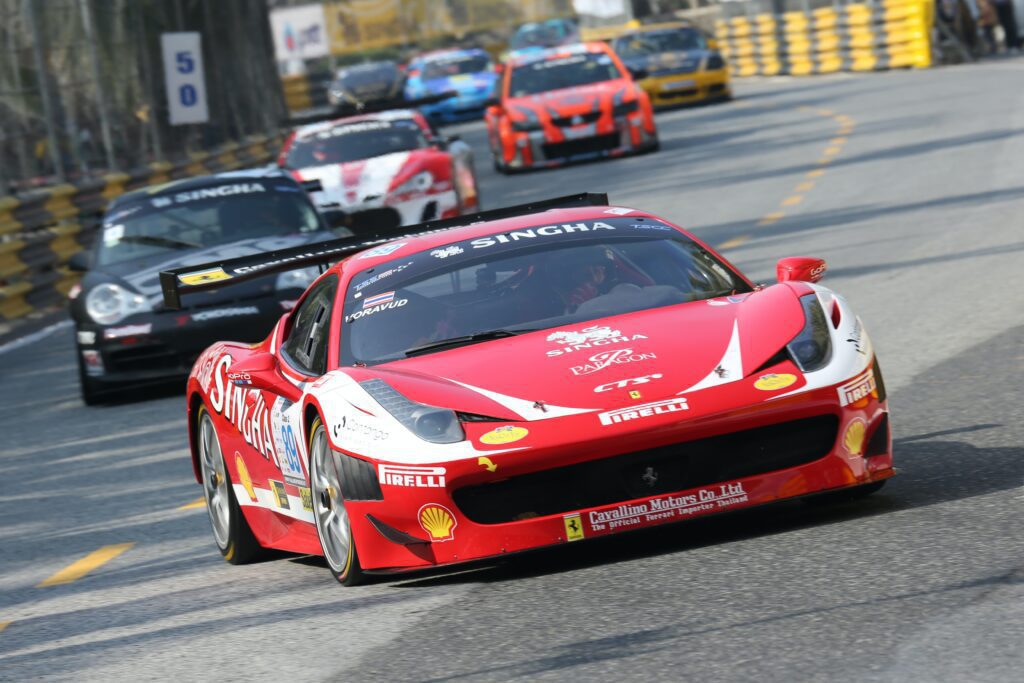

Race car driving sits at a rare intersection of adrenaline and exposure. It is among the most exhilarating forms of motorsport; and also one of the most financially vulnerable. The headline cost is the race car, but any experienced driver will tell you that the car is only the beginning. Consumables (tires, brake pads, rotors, fluids), spares, engine and gearbox refreshes, data systems, safety equipment, transport, tools, track time, crew labor, and workshop overhead can quickly turn “a weekend hobby” into a serious financial commitment. Add the reality of high-speed incidents, and insurance stops being a luxury purchase. It becomes a core risk-management tool for the driver, the vehicle, and everyone else operating around the sport. That leads to the practical question most newcomers ask; and many veterans still revisit as their competition level changes: who actually insures race car drivers and their cars?
The most accurate answer is that race drivers and race cars are insured through a layered ecosystem rather than a single one-size-fits-all policy. Coverage can come from specialty motorsport insurers and brokers, from policies carried by teams and car owners, and sometimes through event or track-related insurance programs. The “who” depends on what is being insured (the driver’s body, the car, third-party liability, tools/spares, transport, or the team’s operations) and under what conditions (professional competition, club racing, time trials, track days, or testing). Understanding those distinctions is the difference between being properly protected and discovering; after an incident; that your policy never applied in the first place.
This guide unpacks the issue in the same way a motorsport insurance specialist would: by separating driver risk from vehicle risk, and separating on-track risk from off-track operations. You’ll learn why personal auto insurance usually does not apply to racing, why drivers often carry a combination of personal and commercial policies, what kinds of liability and property coverage teams and owners typically need, and why coverage requirements tend to expand dramatically as you move from amateur events to professional competition.
How Race Drivers Are Classified (and Why It Matters for Insurance)
To begin, it helps to understand how most race drivers are structured legally and commercially. Race car drivers are generally treated as independent contractors rather than employees. This classification matters because it typically pushes the responsibility for arranging insurance onto the individual driver; particularly when it comes to personal injury protection, liability exposures tied to driving activities, and coverage for personally owned equipment.
In other words, most drivers cannot assume a “company benefits package” exists the way it would in a traditional job. Even when a driver is associated with a team, the driver may still be expected to handle certain categories of protection independently. That can include medical coverage for injuries, disability insurance that protects income after an injury, and sometimes even certain liability layers depending on contracts, sanctioning body requirements, and sponsor agreements.
For professional drivers, this contractor structure often becomes even more formal. Contracts may specify who carries which policy, what limits are required, and who is responsible for deductibles, retentions, and uninsured losses. For amateur drivers, the structure is often informal, but the financial reality remains: if you don’t arrange coverage, you are effectively self-insuring; meaning you are paying losses out of pocket.
Why Your Regular Auto Insurance Usually Doesn’t Cover Racing
In real-world terms, drivers often rely on a blend of personal and commercial insurance policies to protect themselves and their assets. However, one of the most common; and most expensive; misunderstandings in motorsport is assuming a standard personal auto policy will “carry over” to the track. In most cases, personal auto insurance does not cover damage, injury, or liability arising from racing activity, competitive events, timed runs, or track sessions, depending on policy language.
The logic is straightforward from an insurer’s perspective. Street driving is already a high-frequency risk environment, but it is regulated, speed-limited, and statistically modeled at scale. Racing, by definition, increases speed, reduces reaction time, amplifies the consequences of mistakes, and introduces intentional performance behavior such as late braking, high lateral loads, and close-quarters driving. The risk profile is fundamentally different, which is why many personal policies include exclusions for:
- Racing or speed contests
- Timed events
- Use on a closed course
- Track days or driver training events (varies heavily by insurer)
- Any vehicle not licensed for road use (race-prepped cars, many track-only builds)
Even when a track day is “non-competitive,” the policy wording may still exclude it because the vehicle is being used in a high-performance environment on a closed course. This is why drivers need racing-specific coverage, and why “I thought my insurance would handle it” is one of the most common phrases heard after an incident.
So Who Insures Race Car Drivers and Their Cars?
Race car drivers and cars are typically insured through specialty insurers and brokers who write motorsport-related risks, alongside coverage carried by teams/owners and sometimes event-based programs. Rather than one universal insurer, motorsport coverage is usually assembled as a portfolio. The “who” can include:
- Specialty motorsport insurance providers and brokers who offer policies designed for on-track use (liability, physical damage, participant accident, transport, and more).
- Team or owner policies that insure vehicles, equipment, premises, and business operations, sometimes extending protection to drivers under defined conditions.
- Event organizers and sanctioning bodies who often carry event liability insurance and may provide certain participant protections depending on the series and jurisdiction.
- Tracks and facilities that carry premises liability and operational coverage; this does not automatically protect drivers or their cars but can shape how incidents are handled legally.
- Personal insurance carriers for health, life, and disability coverage; though these may require careful review because some policies contain hazardous-activity or professional sport exclusions.
It is crucial to recognize that some of these policies protect the event, the facility, or the organization; not necessarily the driver or the driver’s vehicle. A track’s liability policy, for example, is primarily designed to protect the facility from claims arising from premises hazards or operational negligence. It is not the equivalent of “insurance for your race car.” Similarly, an event policy may satisfy contractual and regulatory requirements but still leave individual participants responsible for their own injury and vehicle damage.
Driver Coverage: What Race Car Drivers Typically Need
Because drivers are typically independent contractors, they often build coverage around personal protection first and liability second. The goal is to avoid a scenario where one accident creates both a health crisis and a financial catastrophe. In broad terms, drivers may need insurance that addresses:
1) Personal injury protection and medical coverage
Even with the best safety systems; HANS devices, harnesses, cages, fire suppression, energy-absorbing structures; injuries happen. Medical costs can be significant, and recovery can be long. Drivers typically depend on personal health insurance, but it is essential to verify whether the policy contains exclusions related to professional racing or hazardous sports. Some policies cover amateur participation but not professional competition; others may limit coverage based on activity type. The details vary, and assumptions are risky.
2) Disability and income protection (especially for professional drivers)
For a driver whose income depends on physical ability; whether through racing, coaching, sponsorship activity, or related work; disability coverage can be just as important as medical coverage. A driver may survive an incident but lose months of earning capability. Disability insurance is often overlooked by amateurs and becomes non-negotiable for professionals.
3) Liability coverage tied to driving activity
Liability insurance is critical for race car drivers because it helps protect them from legal claims that could arise from on-track incidents. Racing involves shared space, high speed, and split-second decisions. If an incident leads to claims; whether justified or not; legal defense alone can be costly. Liability coverage is designed to address that exposure, though it must be written to apply to motorsport conditions. Again, a standard personal auto policy typically will not respond.
4) Protection for personal equipment
Drivers often own high-value gear: helmets, suits, HANS devices, radios, data equipment, and personal tools. Depending on value and usage, personal property coverage may be insufficient; especially if the policy excludes business or professional-use gear. Dedicated coverage may be needed for high-end personal equipment, particularly for drivers who travel frequently and keep gear in trailers or team transport.
Car and Team Coverage: How Race Cars and Operations Are Insured
Race teams and car owners have their own distinct insurance requirements. Even when the driver is responsible for personal insurance, the team or owner usually carries policies that protect business operations, vehicles, and property. In practice, coverage needs tend to fall into two major categories: liability (claims made by others) and property (things you own that can be damaged or stolen).
Liability insurance (beyond the driver)
Liability exposure is not limited to the driver. Teams, owners, and support personnel can face claims related to:
- Operations in the paddock (pit activities, refueling, equipment movement)
- Mechanical failure allegations (if a third party argues negligence in preparation)
- Premises or workshop exposures
- Transport-related incidents involving trailers and equipment
- Sponsor obligations and contractual risk allocation
Teams may carry general liability policies tailored to motorsport operations, and in professional environments, additional layers (excess liability or umbrella structures) may be used to meet contractual requirements.
Property insurance for equipment, tools, and structures
In addition, teams and owners may need property insurance to address damage to equipment, tools, and physical structures associated with racing operations; whether at the track, in a workshop, or during transport, depending on the coverage terms and the insured locations. This is where many teams discover gaps: a policy that covers items “at the shop” may not cover them “in transit,” and a policy that covers “scheduled equipment” may require itemized listings and declared values.
Because so many motorsport losses occur during movement (loading/unloading, trailer theft, transport accidents), teams often consider specialized transport and inland marine-style coverages. The goal is to insure the equipment where it actually lives: not only in a garage, but on the road, at hotels, in paddocks, and in temporary setups.

Professional vs Amateur Coverage: Why the Level of Competition Changes Everything
It’s worth highlighting that the scope and limits of coverage usually depend on the level of competition. Professional drivers and teams generally require broader, more specialized protection because both the risk profile and the financial stakes are significantly higher. At the professional level, vehicles tend to be more valuable, replacement parts are more expensive, schedules are tighter, and contracts introduce additional liabilities. There may also be international travel, higher spectator presence, and greater media exposure; all of which increase the likelihood of litigation following major incidents.
That said, amateur racers also need coverage of some kind. Even in grassroots motorsport, a single incident can create substantial repair bills, liability exposure, or losses tied to equipment and logistics. The difference is typically scale, not the existence of risk. An amateur’s incident might involve a smaller budget and less contractual complexity, but the personal financial impact can be just as devastating if coverage is absent.
In practical terms, higher levels of competition often require more of the following:
- Higher liability limits and more robust legal-defense structures
- More comprehensive property schedules (cars, spares, tools, rigs)
- More precise policy wording that addresses race conditions and series requirements
- Better-defined insured parties (teams, owners, drivers, sponsors)
- Additional coverage categories such as event cancellation or specialized transport
Meanwhile, amateur and club-level racing often prioritizes affordability and simplicity, with drivers focusing on the most critical exposures: personal injury, liability, and catastrophic vehicle loss. Even at that level, the key is alignment; your policy must match what you actually do on track, not what you tell yourself you do.
The Common Coverage Gap: “I’m Covered” vs “I’m Covered for Racing”
Many drivers believe they are insured because they have multiple policies; auto, homeowners, health, maybe an umbrella policy. The issue is not whether they have insurance; it’s whether they have insurance that applies to motorsport conditions. Racing introduces three gap patterns that show up repeatedly:
- Activity exclusions: The policy explicitly excludes racing, speed contests, timed events, or closed-course use.
- Vehicle classification issues: The race car is not a “street vehicle” and is therefore not eligible under personal auto frameworks.
- Location and transport limitations: Tools and equipment may be covered at home but not in a trailer, at a track, or during transit.
The professional approach is to treat motorsport as its own risk category, with its own insurance architecture. That is exactly why specialized motorsport coverage exists: it is built around the reality of how racing actually happens.
A Practical Way to Think About Motorsport Insurance
If you want a clear mental model, think in layers. Each layer answers a different question:
- Driver protection: If I get hurt, who pays medical bills, and how do I protect my financial stability during recovery?
- Third-party protection: If someone claims I caused damage or injury, who pays for defense and potential settlement?
- Vehicle protection: If the car is damaged, can I repair or replace it without collapsing my budget?
- Operational protection: If tools, spares, or transport equipment are stolen or damaged, can the team continue functioning?
Answering those questions honestly; based on how and where you race; is far more useful than purchasing coverage based on generic assumptions. The “right” policy is the one that matches your real operating conditions and your actual financial exposure.
What to Ask Before You Buy (or Assume You Have) Coverage
Because policy wording matters so much in motorsport, an expert-level approach includes asking direct, specific questions. Whether you’re speaking to an insurer, a broker, or reviewing a team’s coverage, these questions reduce surprises:
- Does the policy explicitly cover racing, competitive events, timed runs, or track sessions?
- Is coverage limited to certain tracks, series, or event types?
- Are there restrictions on who may drive the car (named drivers, approved drivers, license level)?
- Are modifications, engine swaps, or non-OEM parts required to be disclosed?
- Does coverage apply during transport, loading/unloading, and storage?
- What are the deductibles or retentions, and how are claims valued (agreed value vs market value)?
- Are safety requirements specified (cage certification, fire system, harness dates)?
These questions do not remove risk, but they turn uncertainty into knowledge. In a sport where risk is part of the attraction, the goal is not to eliminate danger; it is to eliminate avoidable financial shock.
Summary
In summary, race car drivers and their cars are typically insured through a combination of personal and commercial policies. Drivers usually need coverage specifically designed for racing exposure, while teams and owners commonly require liability and property insurance to protect operations, equipment, and financial interests. Regardless of whether the racing is professional or amateur, insurance remains a core component of motorsport; helping protect drivers and the high-value assets that make racing possible.
The key takeaway is simple: the motorsport insurance question is not “Do I have insurance?” It is “Do I have insurance that applies to the exact way I race?” Once you understand the independent-contractor reality, the limits of personal auto insurance, and the distinct needs of teams and owners, you can build coverage that supports your racing; rather than leaving your finances exposed to one unexpected incident.