

Remember when buying an electric car meant choosing between a cramped city runabout or emptying your retirement account? Those days are officially over. The EV market has matured to the point where “affordable” no longer has to mean “barebones,” and you can now shop around the $40,000–$50,000 range and still get legitimate driving range, modern safety tech, and features that used to be reserved for premium brands.
In 2026, the under-$50,000 EV category is the new battleground for mainstream buyers. This is where automakers compete on the things that actually affect your day-to-day life: efficiency (MPGe), real-world range consistency, interior practicality, road-trip charging convenience, software quality, and long-term ownership confidence. It’s also where incentives and financing can shift the “best value” crown from one model to another depending on where you live and how you buy.
Table of Contents
If you’re ready to make the switch to electric but need to keep your budget in check, you’re in the right place. Below, you’ll find every electric car under $50,000 available in 2026 (based on the list provided), organized by starting price and expanded with the kind of context that helps you buy wisely: what each vehicle does well, where it compromises, and which type of driver it suits best.
Whether you’re hunting maximum range, faster charging, cutting-edge tech, a comfortable family crossover, or simply the best long-term value, there’s an EV here that fits your needs and your wallet. The key is knowing what to prioritize—because in this price range, you don’t just choose a vehicle; you choose an ownership experience.
A Quick Reality Check: Why “Under $50K” EV Shopping Is Different in 2026
Ten years ago, the “affordable EV” conversation was mostly about compromise: short range, slow charging, and spartan interiors. In 2026, the conversation is far more nuanced. Now you’re deciding between different kinds of strengths. Some EVs in this bracket deliver standout efficiency; others deliver excellent range; others focus on cabin comfort, luxury refinement, or charging convenience. That’s a good problem to have—but only if you approach the shopping process with a clear plan.
As an expert rule of thumb, EVs under $50,000 now tend to fall into three buyer-driven categories:
- Daily-value EVs: high efficiency, sensible range, predictable ownership, and “quiet competence.”
- Road-trip-friendly EVs: competitive range plus charging performance and charging network access that reduces travel stress.
- Premium-feel EVs: refinement, quiet cabins, materials, and comfort-first tuning—sometimes at the expense of the biggest range numbers.
This guide is designed to help you identify which category matches your life—and then pick the best model within that category.
How to Read This List (So You Pick the Right EV)
Before jumping into the lineup, here’s the expert framework I recommend using when shopping EVs under $50,000. Most buyers focus on range first—which makes sense—but range is only one piece of the electric ownership puzzle. A “great” EV for one driver can be a frustrating EV for another depending on charging access, commute length, climate, and lifestyle.
Start With Your Driver Profile (Then Match the EV)
To keep this guide practical, I’ll reference a few buyer profiles. If you know which one sounds most like you, you’ll narrow the field quickly:
- Commuter-first: short-to-medium daily mileage, want low operating costs and easy home charging.
- Road-trip capable: frequent highway miles, want range + fast charging + reliable public charging access.
- Family utility: space, comfort, safety tech, and practical cargo layout are priorities.
- Tech-forward: want the newest interface, driver assists, and a “future-feel” cabin design.
- Premium on a budget: want quietness, materials, ride quality, and refinement without paying luxury-EV prices.
Once you identify your profile, the rest becomes far simpler. You’re no longer shopping “every EV.” You’re shopping the EVs that match your life.
1) Price vs. Real Cost (MSRP, incentives, charging, and time)
The prices listed here are starting points, but your actual cost can move significantly depending on:
- Destination fees and dealer add-ons (which can quietly push a “$44K EV” into the high-$40Ks).
- Federal and state incentives (some vehicles qualify for tax credits in certain configurations; some qualify through lease structures even if purchase credit rules don’t apply).
- Home charging setup (a 240V Level 2 installation may be a one-time expense that transforms your daily convenience).
- Your time (charging speed and charging network access affect how “easy” road trips feel).
Put simply: the cheapest sticker price isn’t always the cheapest real-world EV to own, and a slightly higher upfront price can be worth it if it saves you daily charging hassle for years.
2) Range is a tool—charging speed is the multiplier
Two EVs can have similar range but feel very different on a trip. Why? Charging speed and charging curve (how fast the car charges at various battery levels) determine whether a stop is “grab coffee” or “eat lunch and wait.” Vehicles like the Hyundai IONIQ 5 and Kia EV6 are celebrated not only for range, but for the way they can add usable miles quickly.
If you almost never road-trip, charging speed matters less. If you road-trip regularly, it matters a lot.
3) Efficiency (MPGe) matters most for everyday drivers
MPGe is a helpful way to compare efficiency across EVs. Higher MPGe generally means:
- Lower electricity cost per mile
- Less battery drain for the same trip
- Potentially better real-world performance in cold weather (though all EVs lose range in winter)
If your driving is mostly commuting and errands, efficiency can be more important than maximum range.
4) Software and usability matter more in EVs than most people expect
In a gas vehicle, you can mostly ignore your infotainment system and still have a fine ownership experience. With EVs, software is more integrated into daily life because it affects:
- How the car estimates range
- How it routes you to charging stations (and whether those stations are actually usable)
- How easily you can monitor charging at home or on the road
- How driver-assist systems behave in everyday traffic
So, when you test-drive an EV, treat the interface like you’re test-driving the ownership experience—not just the car.
All Electric Cars Under $50,000 in 2026 (Ranked by Price)
Below is the full list as provided, arranged from the lowest starting price to the highest under-$50,000 entry. Each model includes an expert breakdown of strengths, limitations, and who it’s best for.
Toyota bZ4X – $40,600
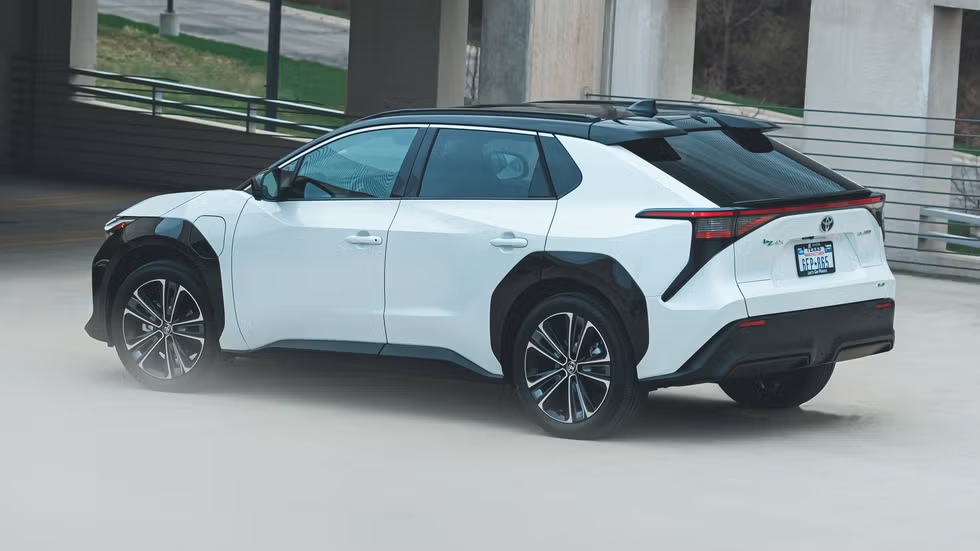
Starting at the bottom of our price range, the Toyota bZ4X offers something you can’t get from most competitors: Toyota’s long-standing reputation for durability and ownership confidence, translated into an all-electric package. This compact SUV comes standard with all-wheel drive—still an uncommon inclusion at this price point—and it delivers 114 MPGe in the city.
What makes the bZ4X appealing is its straightforward approach to electric driving. You won’t find a “shock and awe” styling strategy or gimmicks designed to dominate social media. Instead, the bZ4X aims for practical usability: a comfortable cabin, a manageable footprint, and Toyota’s familiar approach to safety and driver assistance features.
However, the bZ4X does lag behind some rivals in terms of range. If you’re planning frequent long road trips, you may want to prioritize vehicles further down this list that lean harder into highway range and charging convenience. But for a commute-heavy lifestyle—especially if you want AWD peace of mind—this is a strong “start here” option in the under-$50K segment.
Best for: Commuter-first buyers who want AWD and brand confidence.
Watch-outs: Not the strongest choice for frequent, long-distance road-tripping compared to higher-range competitors.
Expert buying tip: If you’re considering the bZ4X, your best test-drive is a “normal day” drive. Bring it through your typical commute route, pay attention to seating comfort, visibility, and how the vehicle’s interface explains range. A practical EV should feel predictable, not dramatic.
Kia Niro EV – $40,995
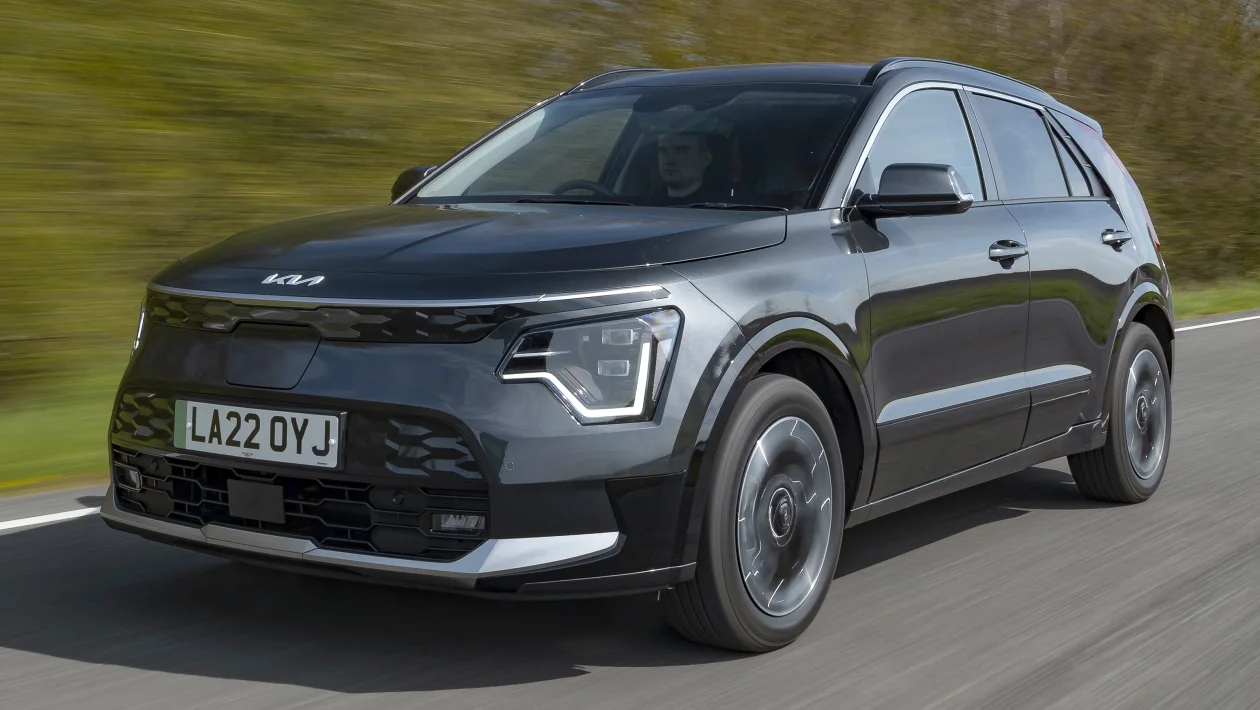
About $400 more than the Toyota puts you into Kia territory with the Niro EV—one of the quiet efficiency champions on this list. The Niro EV delivers an impressive 126 MPGe in the city, which makes it one of the most energy-efficient vehicles in the under-$50K category.
The Niro EV excels in urban and suburban environments. Its compact size makes parking and tight streets easy to manage, and the elevated seating position gives you a confident view of traffic. Inside, Kia’s infotainment is typically user-friendly and modern, and passenger space is better than many buyers expect when they first see the vehicle’s exterior dimensions.
The main limitation: the Niro EV is front-wheel drive only. If you need AWD for winter traction, steep driveways, or rural conditions, you’ll need a different model. Also, charging speeds are not the headline feature here—this is a vehicle optimized for efficiency and everyday practicality rather than “fastest charging on the highway.”
Best for: City/commute drivers who want maximum efficiency and easy daily use.
Watch-outs: No AWD; charging performance may feel average if you do frequent fast-charge road trips.
Expert note: If you drive mostly in town and can charge at home, efficiency is money. A high-MPGe EV like the Niro EV is often the kind of car that “quietly” saves you more than you expected because it simply uses less electricity for the same weekly routine.
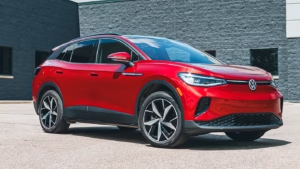
Volkswagen ID.4 – $41,420
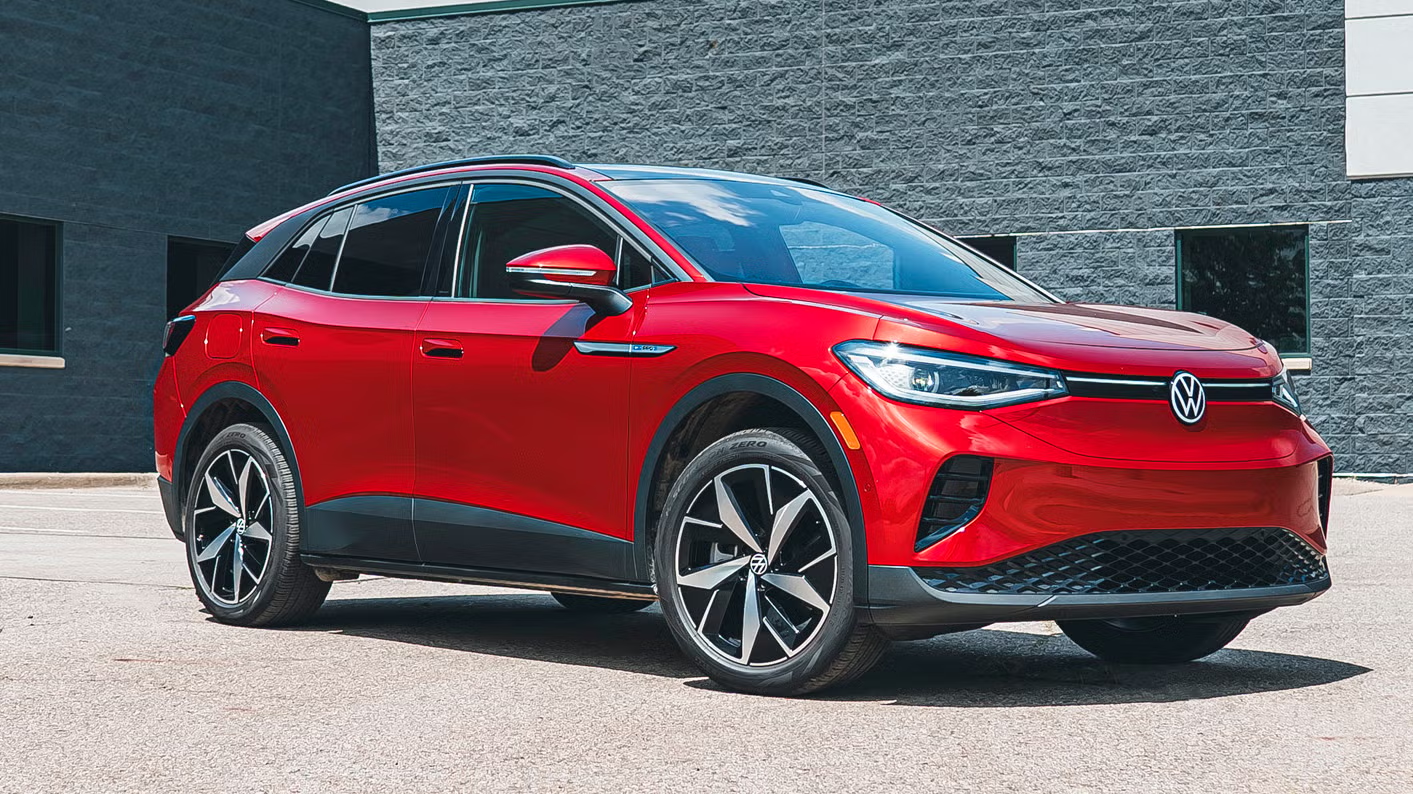
Volkswagen’s ID.4 brings a distinctly European flavor to the affordable EV SUV market. One noteworthy detail at this price point: rear-wheel drive is standard, which is less common in mainstream crossovers and contributes to balanced handling. In practical driving terms, this can translate to a “lighter” front end feel and a more composed steering response than you might expect from an affordable family EV.
The ID.4’s strength is refinement. The cabin tends to feel more upscale than the starting price suggests, with an intentionally clean design approach. The ride quality is also a highlight—soaking up rough pavement with a calm, stable character that favors comfort over harsh sportiness.
The ID.4 also benefits from Volkswagen’s association with the Electrify America network, which can improve long-distance charging coverage depending on your region. Range is competitive, though not the absolute class leader in this price band, making this a strong choice for buyers who prioritize comfort, build feel, and a composed driving personality.
Best for: Comfort-oriented buyers who want an EV that feels “grown-up” and stable on the road.
Watch-outs: Not always the top range value compared to the longest-range entries later on this list.
Expert buying tip: On your test drive, focus on ride comfort at 35–55 mph and at 70+ mph (if possible). Many EVs feel similar at city speeds, but refinement differences show up on rough pavement and long highway stretches.
Hyundai Kona Electric – $42,645
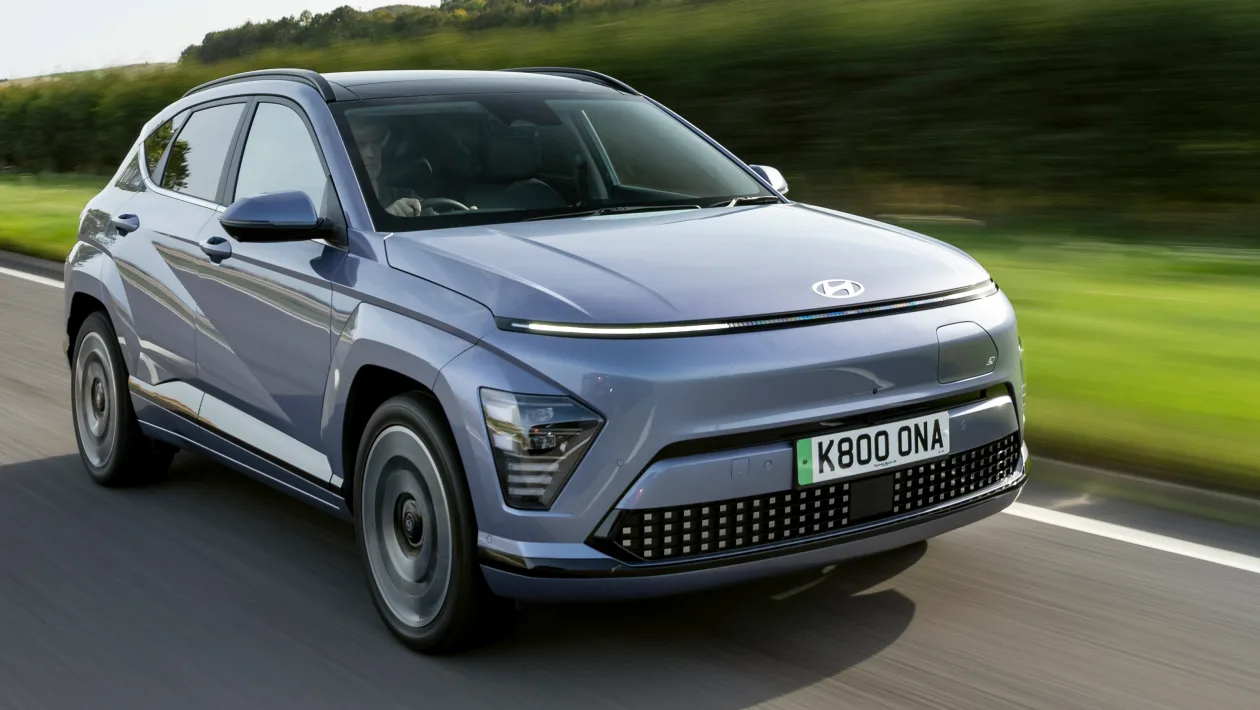
At just under $43,000, the Kona Electric is one of the most compelling value plays in the EV market. It delivers an outstanding 129 MPGe in the city—one of the best efficiency figures on this entire list—while still offering real crossover practicality. Hyundai has consistently positioned the Kona Electric as a “no-drama EV”: efficient, usable, and reasonably priced for what it delivers.
The Kona Electric’s efficiency shows up in everyday ownership. Higher MPGe typically means less electricity consumed per mile, which reduces operating costs and can make home charging feel “effortless” for commuters. The 258-mile range is also a strong number for most drivers, covering daily use comfortably and giving you room for weekend travel without feeling range anxiety.
Performance is adequate rather than aggressive, but that’s not a downside for most buyers in this segment. The Kona Electric’s mission is to be practical and cost-effective, not a sports car disguised as a crossover. If you value low energy use, predictable ownership, and solid everyday usability, it’s a smart pick.
Best for: Efficiency-focused commuters and practical buyers who want strong range without paying more.
Watch-outs: Not the most performance-oriented choice; prioritize it for value, not thrills.
Expert note: If you have a long commute and charge at home, the Kona Electric is one of those EVs that can feel like a “set it and forget it” appliance—in a good way. If you want daily simplicity, that’s a feature.
Subaru Solterra – $43,415
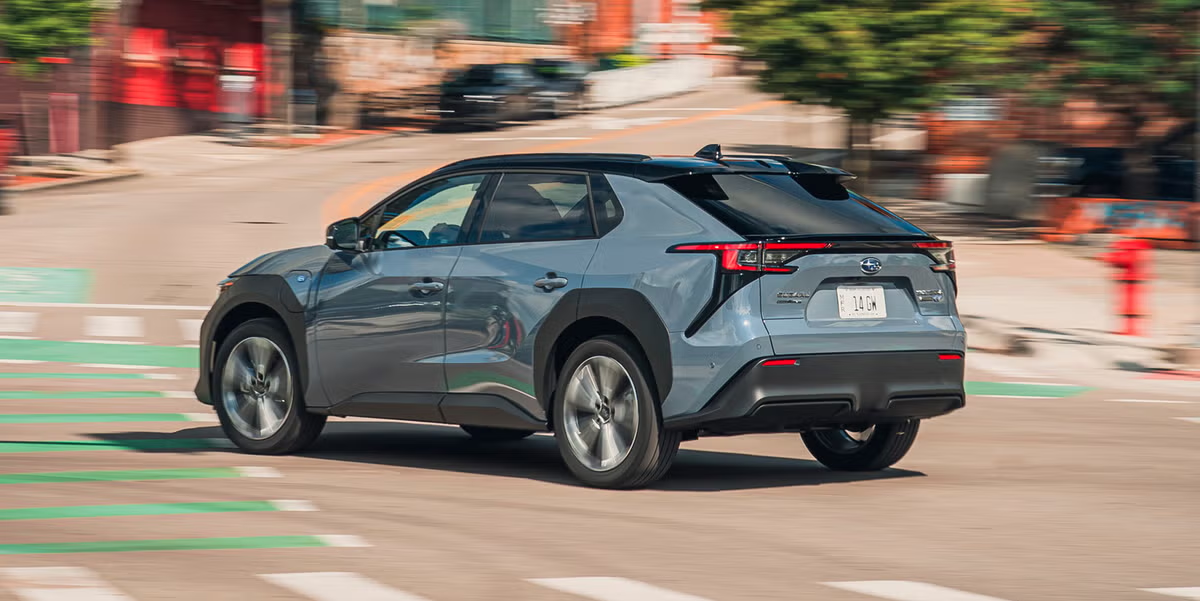
Subaru’s first dedicated electric vehicle brings the brand’s AWD identity into the EV world. The Solterra shares its platform with the Toyota bZ4X but applies Subaru’s familiar approach to capability and safety. For buyers who associate Subaru with winter confidence, outdoor lifestyle use, and long-term ownership, the Solterra is the “electric continuation” of that brand promise.
Standard all-wheel drive is the big headline. For snow-prone regions and drivers who don’t want to gamble with traction, AWD remains one of the most valuable functional features you can buy. The system is designed to handle slippery conditions with confidence, and the raised ride height provides extra clearance for light off-road use and rougher road surfaces.
Range is listed at 228 miles—competitive, though not exceptional. What you are buying here is not the longest highway range in the class. You are buying Subaru’s “capability-first” personality in an EV package, with the comfort that AWD provides for real-world seasonal driving.
Best for: Buyers in snowy climates who value AWD confidence and Subaru’s safety/capability identity.
Watch-outs: Range is solid but not class-leading; evaluate road-trip needs carefully.
Expert buying tip: If AWD is the reason you’re here, confirm your tires and winter strategy too. Even the best AWD system can’t overcome poor tires in snow; tire choice is still a major part of winter safety.
Hyundai IONIQ 5 – $44,200
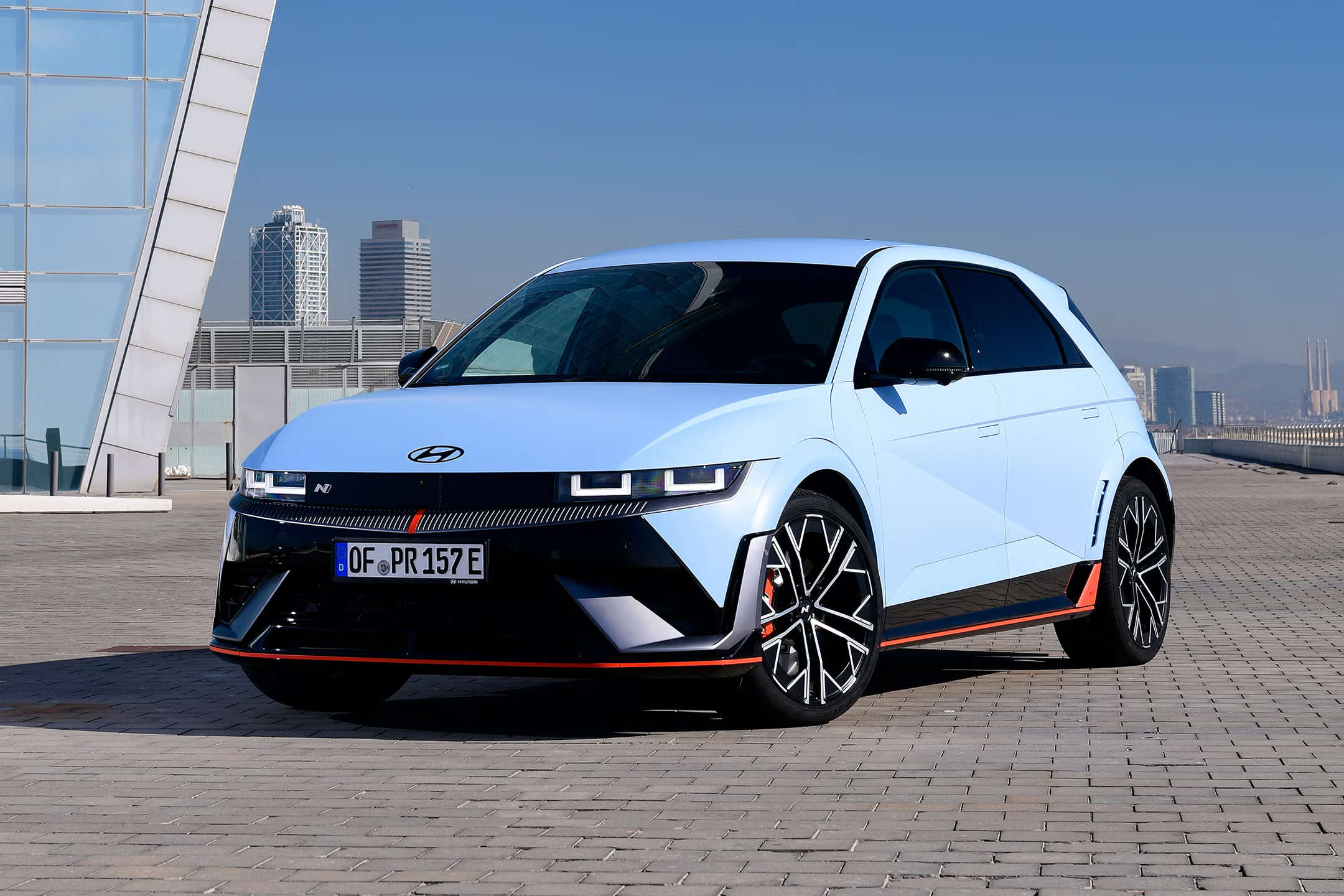
At this point in the price list, the EV options start feeling genuinely exciting rather than merely practical. The IONIQ 5 is one of the clearest examples of that shift. Its pixel-inspired design stands out, but the bigger story is charging. The IONIQ 5 is widely known for fast-charging capability—meaning it can regain meaningful range quickly, which transforms the road-trip experience from “wait and hope” into “stop, recharge, continue.”
Inside, the IONIQ 5 is a lesson in smart packaging. The flat floor and open cabin layout make it feel far larger than many compact crossovers. Add the flexible seating and modern dual-screen interface, and you get an EV that feels future-focused without being confusing.
Efficiency remains strong (127 MPGe city), and the 303-mile range is the kind of number that supports both daily commuting and longer travel with confidence. Combined with quick charging, this is one of the best “do everything” EVs in the under-$50K space.
Best for: Road-trip capable buyers who want fast charging, strong range, and standout design.
Watch-outs: For some shoppers, styling is love-it-or-leave-it; prioritize a test drive to confirm comfort and visibility.
Expert note: If you want a single EV that covers commute life and road-trip life without constant compromise, this is one of the most balanced entries on the list. The biggest question is whether its styling and cabin layout fit your taste.
Kia EV6 – $44,375
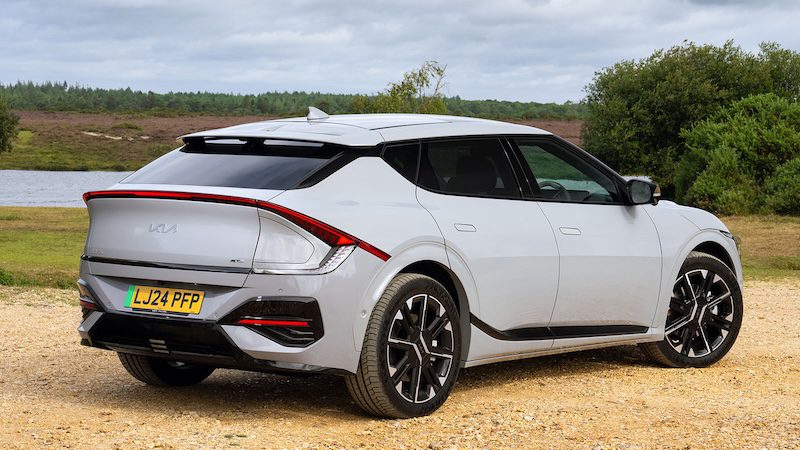
Sharing core architecture with the IONIQ 5, the Kia EV6 leans into a sportier, more driver-focused identity. The design is more aggressive and coupe-like, and the overall driving feel tends to prioritize responsiveness and engagement. If you want your EV to feel less like a “transport appliance” and more like a vehicle with personality, the EV6 is a strong candidate in this price bracket.
You still get the benefit of fast charging, and you still get strong efficiency (128 MPGe city). Range is listed at up to 310 miles, making it one of the longer-range entries on this list. That combination—range plus charging speed—means the EV6 can be an excellent road-trip tool without sacrificing daily comfort.
The interior balances futuristic styling with usable controls. The curved display gives it a premium feel, and the cabin design supports a driver-first layout that many buyers prefer over the “open lounge” vibe of some rivals.
Best for: Drivers who want road-trip capability and a sportier, more engaging EV personality.
Watch-outs: If you prioritize maximum rear headroom or an upright cargo shape, compare it directly with boxier crossovers.
Expert note: This is the EV for buyers who want their electric car to still feel like “a driver’s car.” It’s not about being the fastest or the flashiest; it’s about having a responsive, confident feel that makes daily driving enjoyable.
Chevrolet Equinox EV – $44,795
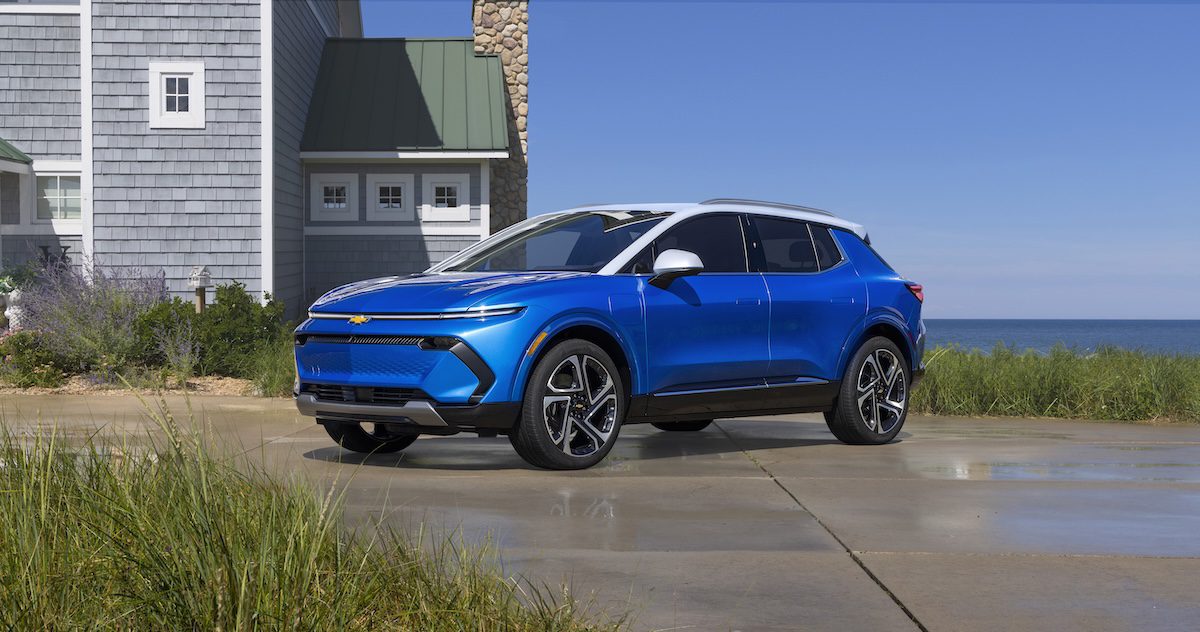
GM’s Equinox EV brings mainstream American practicality to the electric crossover segment, and its headline number is hard to ignore: about 300 miles of range, which is among the strongest in this price tier. For buyers who want an EV that can comfortably handle longer commutes and occasional road trips without anxiety, this model makes a strong value argument.
It also offers access to Tesla’s Supercharger network, which is increasingly important for the long-distance EV experience. Charging infrastructure is often the hidden differentiator between EVs that feel “easy” and EVs that feel “work.”
Efficiency is also competitive at 117 MPGe city, and the interior space suits family use well. The vehicle’s tech suite is modern, though GM’s approach to in-car software and smartphone integration has sparked debate. Even if that isn’t a deal-breaker for you, it’s worth testing the infotainment and navigation experience in person, because EV drivers often interact with these systems more than gas-car drivers do.
The Equinox EV is eligible for the full federal tax credit, which can reduce the effective purchase price substantially. If your buying situation qualifies, it can become one of the strongest “range per dollar” plays in this entire list.
Best for: Value-focused buyers who want long range and a family-friendly crossover layout.
Watch-outs: Confirm you’re comfortable with the infotainment strategy and smartphone integration approach.
Expert note: For many buyers, this will be the “math winner.” If you want range, a crossover layout, and you qualify for incentives, the Equinox EV can deliver a very compelling cost-to-capability ratio.
MINI Countryman SE – $46,375
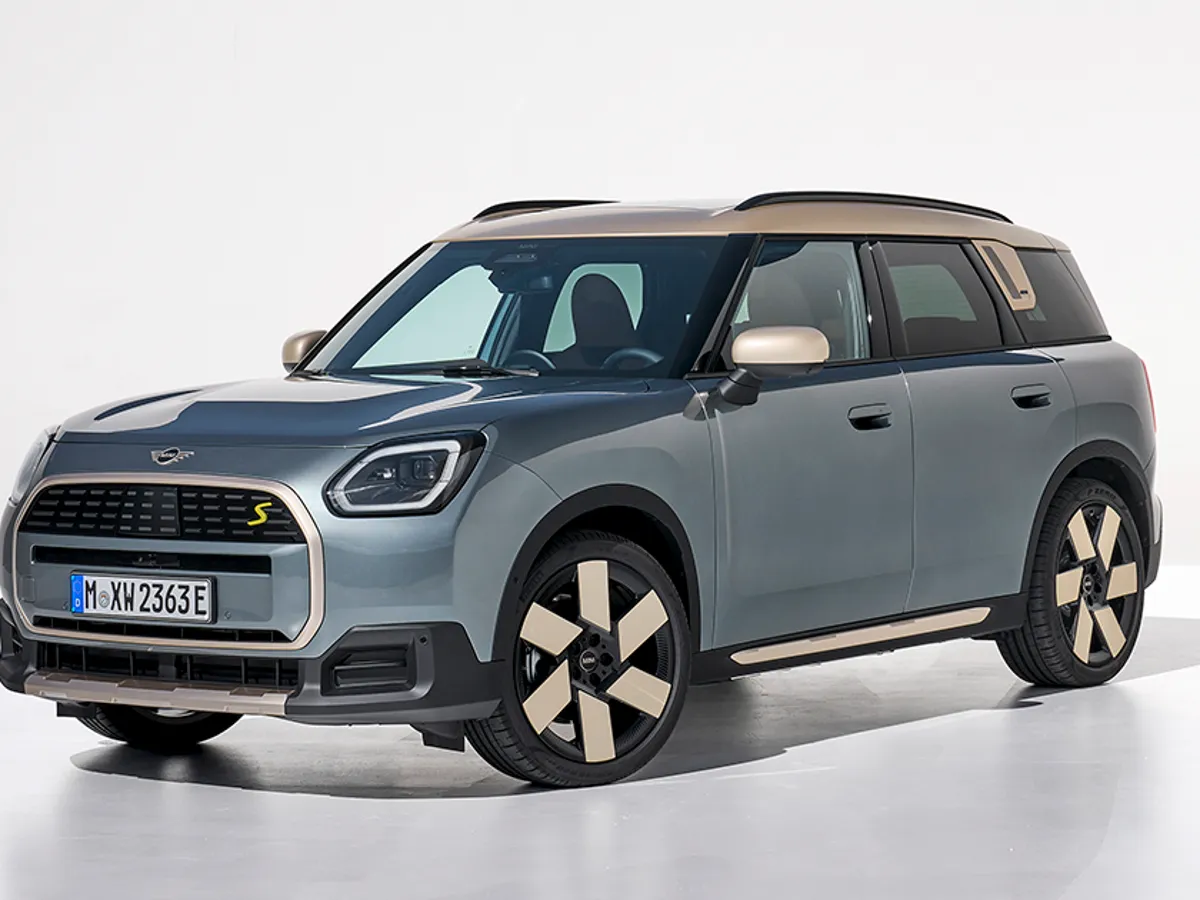
MINI brings its signature style to the electric crossover market with the Countryman SE, and it easily stands out as one of the most visually distinctive options in this price range. If you’re the type of buyer who wants a vehicle to feel like an expression of taste—not just a transportation tool—MINI is speaking your language.
The cabin aims higher on materials and design detail than many competitors. It feels premium, intentional, and “small luxury” in the way MINI often does. The technology package is modern, and the overall experience can feel more upscale than the sticker price suggests.
The trade-offs are clear: this model has the shortest range on this list, which limits its appeal if you do frequent long trips. It’s also smaller inside than many mainstream crossovers. But if your driving is mostly city and suburban use, and you prioritize style, refinement, and brand character, the Countryman SE is a compelling niche choice.
Best for: Style-first buyers who want a premium-feeling EV for urban/suburban life.
Watch-outs: Shorter range and smaller interior compared to mainstream crossovers in the same price band.
Expert note: The Countryman SE is less about the raw EV numbers and more about the ownership vibe—premium materials, distinctive design, and that MINI personality. If that resonates with you, the range compromise may be worth it.
Hyundai IONIQ 6 – $46,845
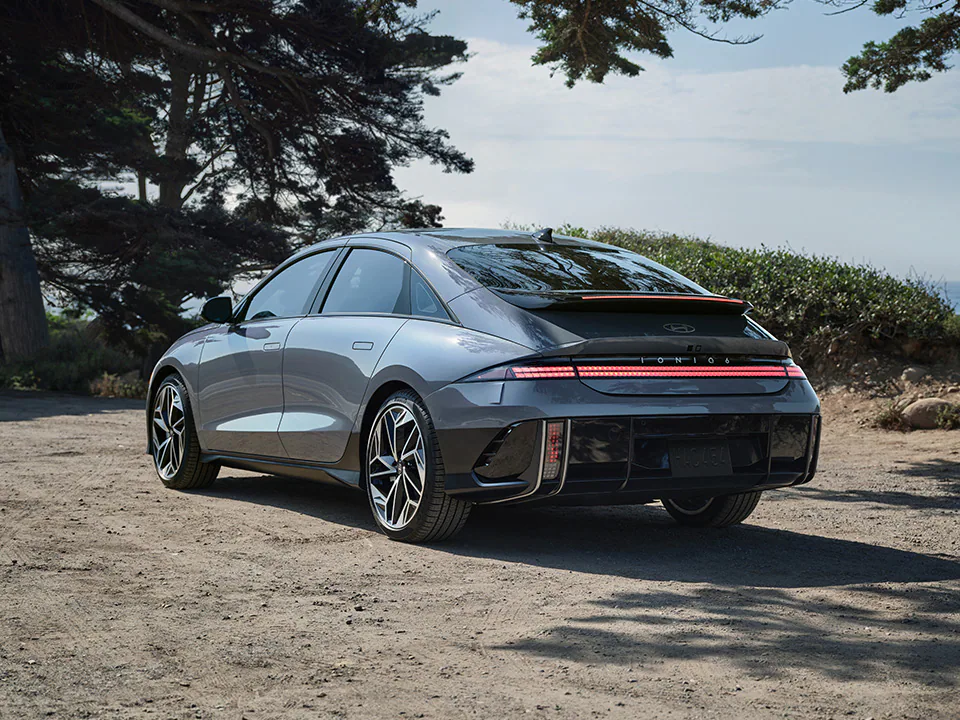
In a market dominated by SUVs and crossovers, the IONIQ 6 delivers something refreshingly different: an aerodynamic electric sedan built around efficiency. Its design isn’t just visual drama—it directly supports a strong 123 MPGe city rating and up to 305 miles of range. Aerodynamics matter in EVs, and the IONIQ 6 makes that engineering priority obvious.
The sedan format also changes the driving feel. You typically get a lower center of gravity and a more “car-like” sense of motion compared to tall crossovers. For drivers who enjoy a more planted feel on the highway, this can be a meaningful advantage.
Interior comfort and technology are modern and refined, though the sloping roofline can reduce rear headroom. That trade-off is common with aero-focused sedans: efficiency and design come with some packaging compromises. On the plus side, fast charging capability makes it practical for longer trips, and the overall experience feels premium for the money.
Best for: Efficiency- and range-focused drivers who want a sedan feel and strong highway manners.
Watch-outs: Rear headroom may be limited due to the roofline; check fit before buying.
Expert note: If you want the long-range feeling of a road-trip EV but prefer a sedan’s highway stability and efficiency, the IONIQ 6 is one of the most logical choices in the entire under-$50K segment.
Ford Mustang Mach-E – $46,990
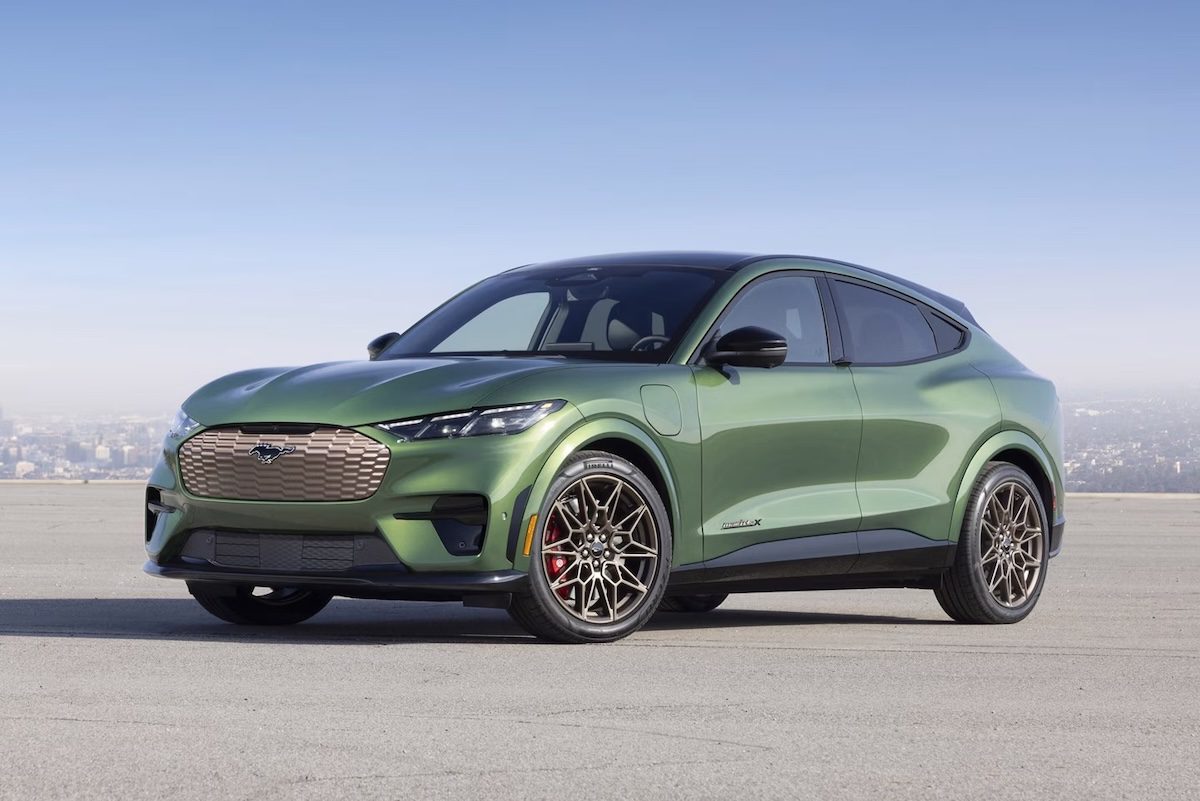
Ford’s Mustang Mach-E is one of the more personality-driven EV crossovers in this price band. It borrows the Mustang name and carries real performance credibility, pairing practical SUV utility with handling that feels more energetic than many mainstream competitors. Even if you’re skeptical about a “Mustang” that isn’t a coupe, the Mach-E makes a strong argument on driving feel alone.
The interior blends modern EV-tech presentation with familiar American usability. The large touchscreen anchors the cabin, while physical climate controls help keep daily interaction intuitive. Build quality feels solid, and the overall layout suits buyers who want modern features without a steep learning curve.
Range varies by configuration, but most trims stay competitive. The Mach-E also benefits from charging partnerships that include Tesla Supercharger access, which can significantly improve road-trip convenience depending on where you travel.
Best for: Drivers who want a more engaging EV crossover with strong brand identity and practical utility.
Watch-outs: Configuration matters—compare trims carefully if range is your top priority.
Expert buying tip: Treat the Mach-E like you would any performance-oriented vehicle: drive it on a route with corners and imperfect pavement. Its value shows up in how it feels when you’re not simply cruising straight.
VinFast VF 8 – $47,200
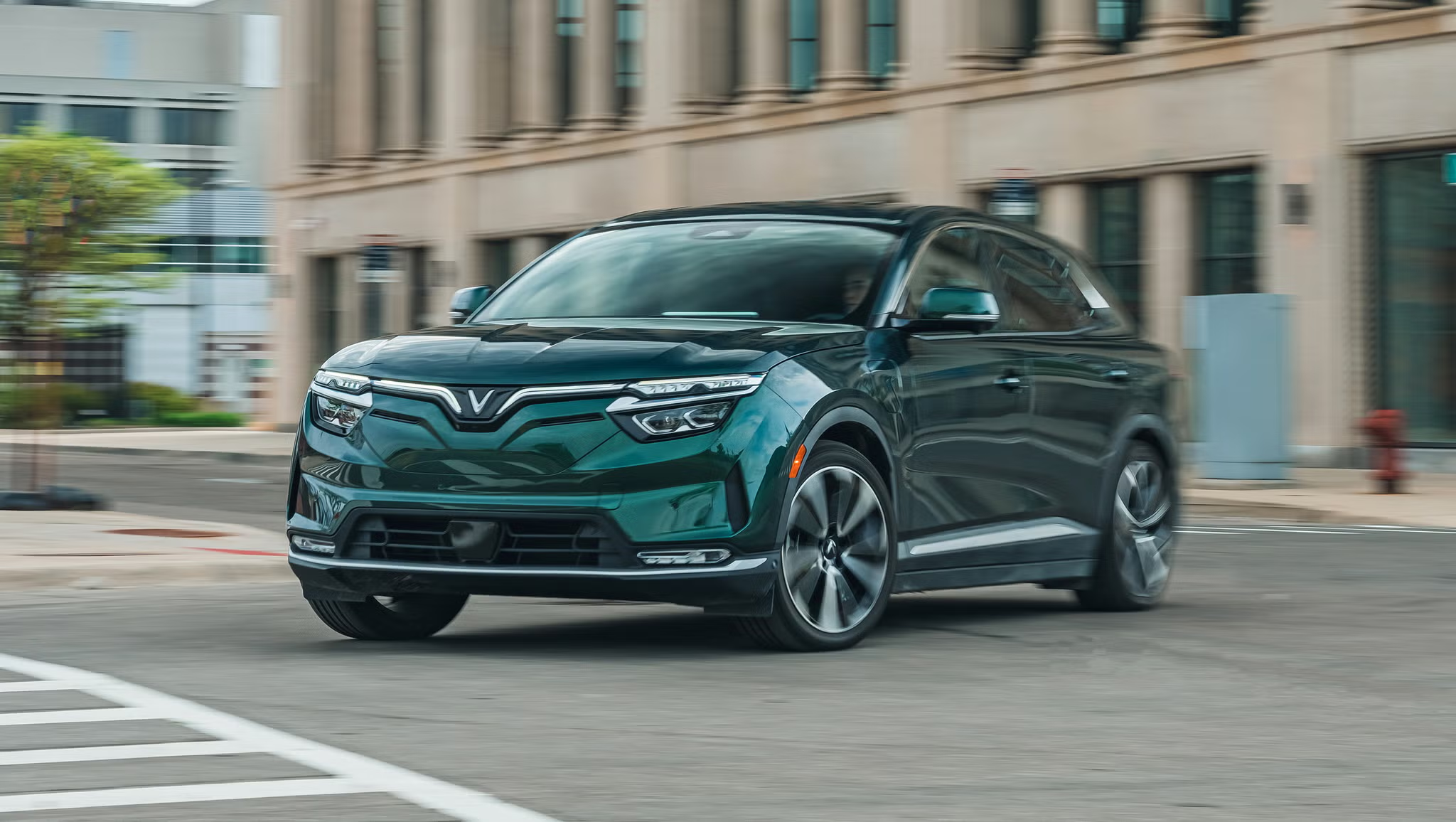
VinFast represents something new in the American EV market: a Vietnamese brand entering a highly competitive segment with aggressive pricing and feature content. The VF 8 is positioned as a tech-forward electric SUV offering a modern interior, a large screen experience, and a spec sheet designed to compete with established names.
From a buyer’s perspective, the VF 8 can be appealing because it offers strong perceived value: the cabin looks premium, the tech package feels modern, and the overall vehicle comes across as more expensive than its price suggests. In that sense, it’s a classic disruptor strategy—high content for the dollar.
The key caveat is brand maturity. Service network depth, parts availability, and long-term reliability confidence are still being built in the U.S. If you’re comfortable being an early adopter and you understand that ownership support may evolve over time, the VF 8 can be a compelling alternative. If you need the deepest service network and maximum long-term predictability, you may prefer a more established brand on this list.
Best for: Early adopters who want strong features for the price and don’t mind newer-brand risk.
Watch-outs: Service network and long-term reliability data are still developing compared with legacy automakers.
Expert buying tip: With any newer-market brand, confirm the service plan before purchase. Ask where the nearest authorized service center is, what typical repair turnarounds look like, and how software updates are delivered.
Honda Prologue – $48,850
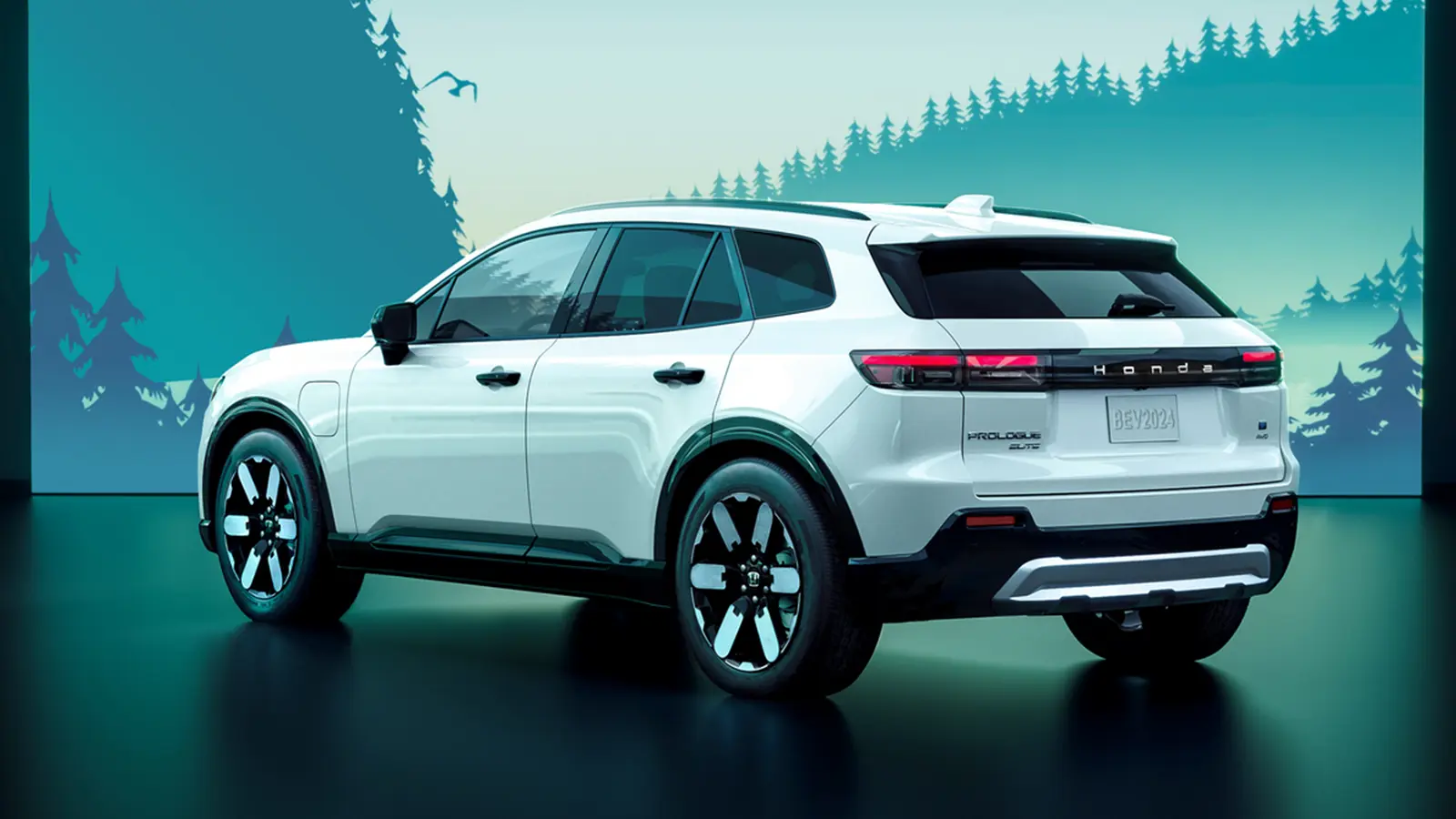
Honda’s entry into the electric SUV market brings a familiar promise: practicality, usability, and a reputation for long-term dependability. The Prologue aims to be the kind of EV that doesn’t require you to “learn a new lifestyle.” Instead, it leans into the strengths that made Honda a mainstream favorite—comfort, interior space, and an easy-to-live-with driving experience.
The interior emphasizes clear controls and real-world functionality. Passenger space is generous, the layout is intuitive, and the overall feel is refined rather than flashy. That makes it an excellent match for buyers who want an EV that feels mature and calm.
While it may not be the “most exciting” EV in this list from a styling or performance standpoint, it offers a valuable trait: confidence. For many buyers, the peace of mind associated with a Honda badge is a major part of the purchasing decision—and that matters as much as any spec sheet number.
Best for: Practical family buyers who want a mature EV experience and brand confidence.
Watch-outs: Not designed to be the sportiest or most “headline-grabbing” entry; its value is in usability.
Expert note: If your priority is “I want an EV that feels normal and dependable,” the Prologue aims directly at that buyer mindset. It may not win the spec-sheet war, but it can win the everyday-life war.
Chevrolet Blazer EV – $49,095
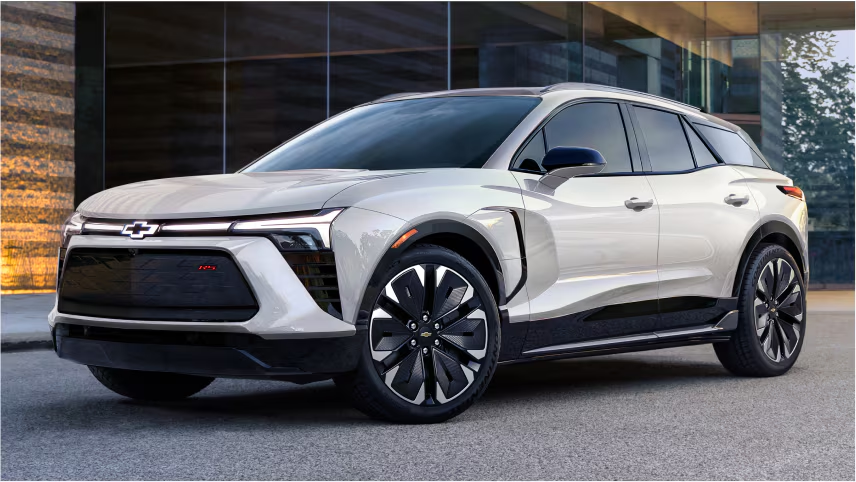
The Blazer EV is GM’s more premium take on the electric crossover idea, sitting above the Equinox EV in cabin feel and available technology. One standout feature is Super Cruise (when equipped), GM’s hands-free driving system, which is still uncommon at this price point and can be a major quality-of-life upgrade for highway commuters.
Interior space is generous, and materials are a step up from GM’s more budget-focused options. The tech package is comprehensive, though (like other GM EVs) the in-car software approach may differ from what some smartphone-centric buyers expect. This is a vehicle you should spend time with in person—sit in it, use the interface, and confirm it feels intuitive.
The Blazer EV offers competitive range and efficiency, plus access to Tesla’s Supercharger network for improved charging convenience. It is also eligible for federal tax credits in many cases, which can substantially reduce the effective price and strengthen its value case.
Best for: Buyers who want a more premium GM EV experience and advanced highway assist features.
Watch-outs: Confirm infotainment preferences; option selection matters for features like Super Cruise.
Expert buying tip: If Super Cruise is part of your reason for buying, confirm it’s included on the exact vehicle you’re considering. Many shoppers assume driver-assist systems are “standard,” when in reality they can be trim- and package-dependent.
Lexus RZ – $49,415
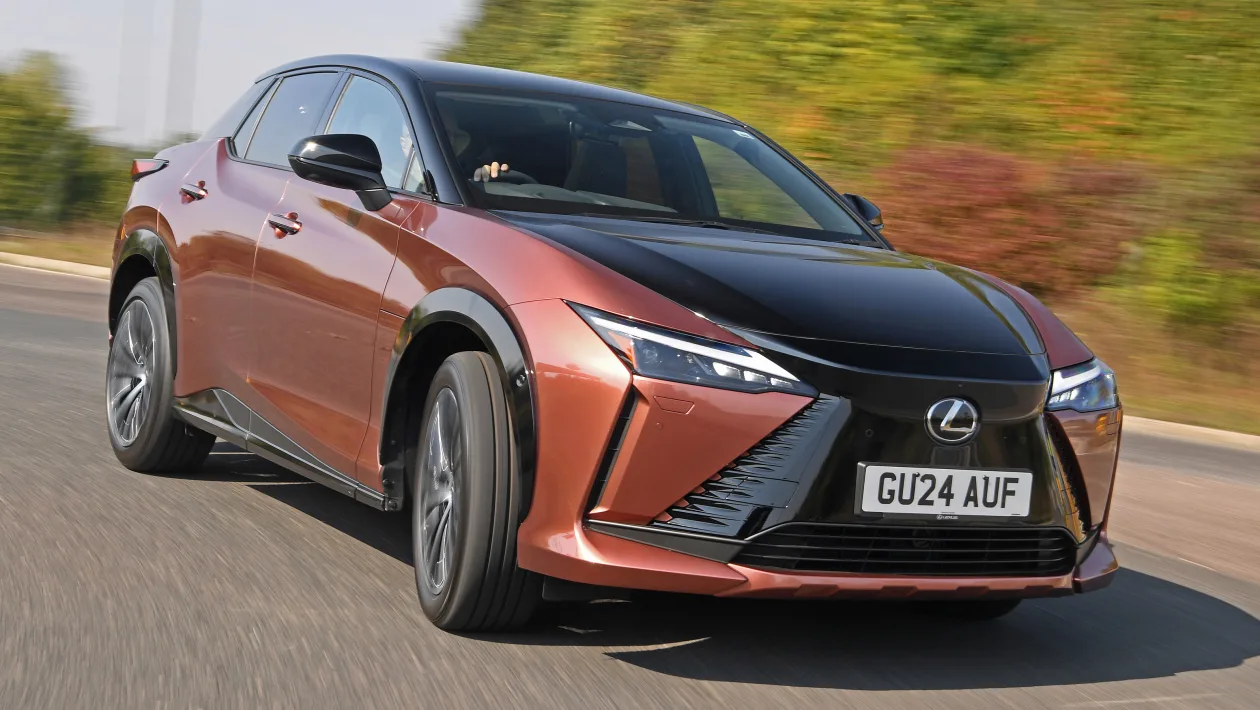
Near the top of our price range, the Lexus RZ brings genuine luxury to the “under-$50K EV” conversation. The main differentiator is refinement: cabin materials, quietness, and ride smoothness. If you want your EV to feel like a premium lounge rather than a tech experiment, Lexus typically delivers that experience very well.
The RZ prioritizes comfort and overall polish over maximizing range or headline-grabbing charging specs. That’s a deliberate luxury strategy: a calmer ride, a quieter cabin, and an interior environment that feels carefully finished. The technology is comprehensive, even if it’s not the flashiest in the segment.
Range is adequate rather than exceptional, and charging performance may not match some of the fastest-charging competitors. But if your driving is mostly daily commuting with home charging, and you prioritize comfort, interior quality, and a premium ownership feel, the RZ offers something that most under-$50K EVs can’t replicate.
Best for: Premium-on-a-budget buyers who prioritize comfort, quietness, and interior quality.
Watch-outs: Not the longest-range or fastest-charging entry; best for home-charging lifestyles.
Expert note: Luxury EV buying is often about how you feel after two hours in the car. If quietness, ride comfort, and interior calm are your priorities, the RZ is built for you.
Nissan Ariya – $49,760
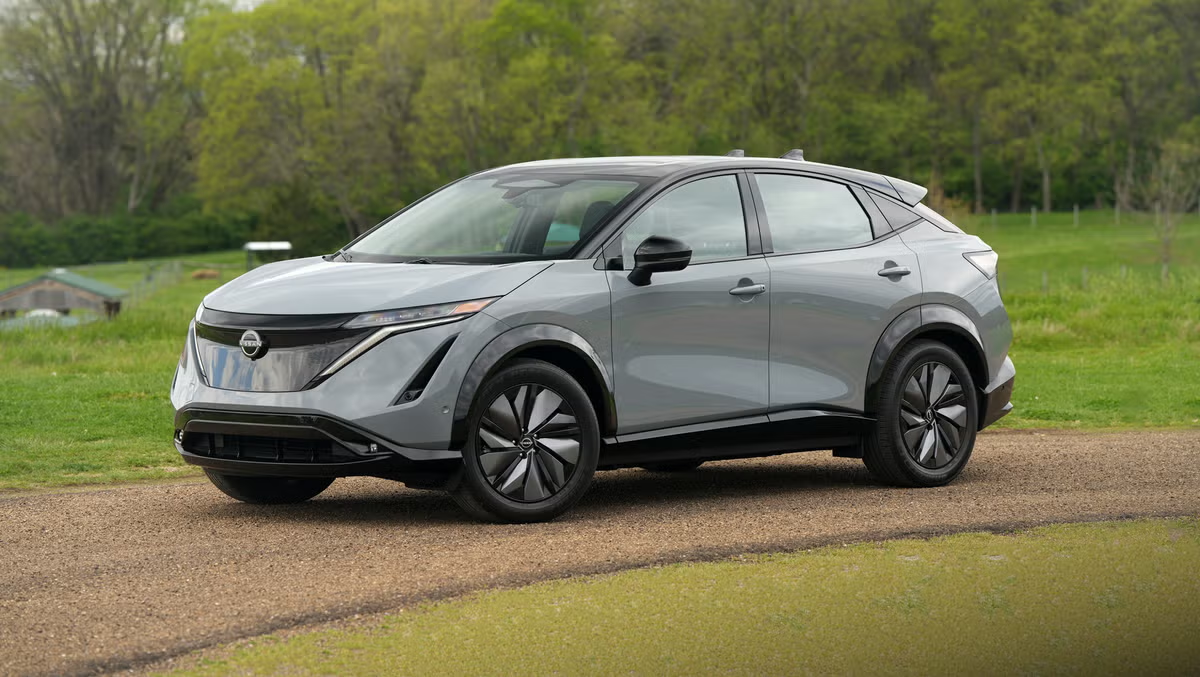
Rounding out the list, the Nissan Ariya brings deep EV experience into the crossover world. Nissan has been building electric vehicles longer than many manufacturers, and that experience often shows up in “polish”: the vehicle feels like a finished product rather than an early attempt.
The Ariya’s interior is modern and thoughtfully designed, with a clean aesthetic that suits the EV powertrain. Technology is comprehensive, and the overall driving experience tends to feel refined and stable—more “mature daily driver” than “hyper-aggressive performance crossover.”
Range is competitive, and all-wheel drive is available for buyers who need it. Charging integration is also designed to be straightforward, with tools that help you plan charging stops and manage public charging use more confidently.
Best for: Buyers who want a refined electric crossover from an experienced EV manufacturer.
Watch-outs: Compare trims carefully—range and features can vary meaningfully by configuration.
Expert note: If you want an EV that feels calm and finished—less “beta test,” more “daily driver”—the Ariya’s maturity is its selling point.
Quick Comparison Table (Under $50,000 EVs in 2026)
If you want a fast way to narrow your shortlist, this summary highlights the key “identity” of each vehicle based on the information provided above.
| Model | Starting Price | Best Known For | Primary Trade-Off |
|---|---|---|---|
| Toyota bZ4X | $40,600 | AWD value + Toyota ownership confidence | Not class-leading range |
| Kia Niro EV | $40,995 | High city efficiency (126 MPGe) | FWD only; average fast-charging appeal |
| Volkswagen ID.4 | $41,420 | Refined ride and upscale feel | Not always top range-per-dollar |
| Hyundai Kona Electric | $42,645 | Excellent city efficiency (129 MPGe) + solid range (258 mi) | More practical than thrilling |
| Subaru Solterra | $43,415 | Standard AWD + Subaru capability | Range (228 mi) not class-leading |
| Hyundai IONIQ 5 | $44,200 | Fast charging + spacious, modern design (303 mi) | Styling not for everyone |
| Kia EV6 | $44,375 | Sportier feel + fast charging + strong range (up to 310 mi) | Check rear space vs boxier rivals |
| Chevrolet Equinox EV | $44,795 | Long range (300 mi) + Supercharger access + tax credit eligibility | Infotainment strategy may not suit all |
| MINI Countryman SE | $46,375 | Style + premium feel | Shortest range; smaller interior |
| Hyundai IONIQ 6 | $46,845 | Aero efficiency (123 MPGe) + strong range (up to 305 mi) | Rear headroom compromise |
| Ford Mustang Mach-E | $46,990 | Engaging drive + SUV practicality + Supercharger access | Range varies by configuration |
| VinFast VF 8 | $47,200 | High feature content from a new-market brand | Service network still growing |
| Honda Prologue | $48,850 | Mature, practical EV experience | Less “exciting” than some rivals |
| Chevrolet Blazer EV | $49,095 | More premium GM EV + available Super Cruise | Infotainment preferences vary |
| Lexus RZ | $49,415 | Luxury refinement under $50K | Not the top range/charging performer |
| Nissan Ariya | $49,760 | Refined execution from an EV-experienced brand | Trim selection affects value |
Making Your Decision
Choosing the right electric car under $50,000 depends on your priorities and daily realities. The smartest EV purchase is the one that fits your life without creating new friction—whether that friction comes from limited range, inconvenient charging, or a cabin that doesn’t match how your family uses a vehicle.
If maximum efficiency is your goal, the Hyundai Kona Electric and Kia Niro EV lead the pack. For longer range, consider the Chevrolet Equinox EV or Hyundai IONIQ 6. If your lifestyle includes frequent highway travel, vehicles known for faster charging—like the Hyundai IONIQ 5 and Kia EV6—often feel “easier” to live with because they reduce time spent waiting.
Those who prioritize luxury should look at the Lexus RZ, while buyers who want a more spirited driving feel may prefer the Kia EV6 or Ford Mustang Mach-E. If all-wheel drive matters—especially for winter driving—models like the Toyota bZ4X and Subaru Solterra stand out early in the price range, while other models may offer AWD depending on trim selection.
Don’t forget incentives. Many of these vehicles qualify for federal tax credits, and some states add additional benefits that can significantly reduce effective purchase price. In real buying scenarios, incentives can reshuffle this entire list in terms of actual cost—so always evaluate your local eligibility before deciding.
A Smart Test-Drive Checklist for EVs Under $50K
Before you sign anything, run through these practical checks. They catch most “I wish I’d known” problems early:
- Visibility and comfort: check seat comfort, pillar blind spots, and rear visibility.
- Infotainment and navigation: confirm you like how the car handles maps, charging routing, and daily controls.
- One-pedal feel: test regen settings and see whether it feels natural in stop-and-go driving.
- Cabin noise: drive at 65–75 mph if possible; road noise can vary widely between models.
- Charging plan: ask about home charging requirements, connector type, and what public charging networks are easiest for that model.
A Practical “First Month of EV Ownership” Plan
One last expert tip: most EV frustration happens in the first month—not because the cars are bad, but because owners haven’t optimized their routine yet. Here’s a simple plan that makes almost any of these EVs easier to live with:
- Install or confirm home charging. Even a basic Level 2 setup changes everything.
- Set a charging routine. Charging “a little often” usually works better than charging “a lot rarely.”
- Learn the car’s range behavior. Track how your commute affects consumption in your climate.
- Do one practice public charge. Don’t wait until your first road trip to learn the process.
- Save your favorite chargers. Knowing two or three reliable locations near your life reduces anxiety to zero.
The electric car market is more competitive and affordable than ever, and 2026 is an excellent time to make the switch—especially if you approach the decision like a long-term owner rather than a short-term shopper. Pick the EV that matches your daily life, and the benefits (quietness, low operating costs, smooth power delivery) will feel obvious every time you drive.