

If you’re reading this, there’s a good chance you’re scared. Maybe you’ve heard the term “Death Rattle” thrown around on BMW forums, or maybe a mechanic just handed you a repair estimate that looks like a mortgage payment. Either way, you want answers, and you want them straight.
Here’s what I’m going to do: walk you through exactly what’s happening inside your engine, what the repair actually costs in today’s market, and how to make a smart financial decision based on logic instead of panic. The priority here is preventative maintenance, because fixing this before the chain snaps saves your engine. Fixing it after? That usually means buying a new engine entirely.
Which BMWs Are at Risk (And Why)
Not every BMW has this problem. But if your car falls into one of these two categories, you’re sitting in the danger zone.
The N20/N26 (2.0L Turbocharged Petrol): 2011 to 2016
This engine shows up in the 320i, 328i (F30), 528i (F10), X1 (E84), X3 (F25), and Z4. It’s a widely used powerplant, which means a lot of these are still on the road.
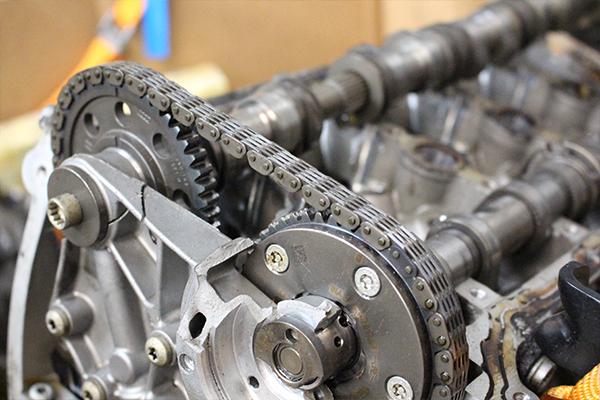
The fundamental flaw is the timing chain guides. BMW made them from a polycarbonate plastic that becomes brittle over time. When they disintegrate, the plastic shards don’t just disappear. They fall into the oil pan, clog the oil pickup tube, and starve the engine of lubrication. That’s not a slow, gradual failure. It’s the kind of thing that can destroy an engine surprisingly fast once it progresses past a certain point.
The N47 (2.0L Turbocharged Diesel): 2007 to 2015
Found in the 1-Series, 320d (E90/F30), 520d (E60/F10), and X3, this diesel engine has a different but equally serious issue. The timing chain stretches over time, or the sprocket teeth wear down, causing the timing to drift out of specification.
But here’s what makes the N47 especially painful to deal with: BMW engineered the timing chain at the rear of the engine, right against the firewall. To access it, the engine usually has to come out of the car. That single design decision is why this repair costs so much more on the diesel than the petrol.
What This Repair Actually Costs Right Now
Let’s talk real numbers. Pricing varies by region, but these figures reflect current industry standards across the US and UK markets.
Why Labor Eats Most of Your Budget
This isn’t a parts job. It’s a labor job. The components themselves are surprisingly affordable. What kills you is the number of hours it takes to get to them.
- Dealer labor rate: $180 to $275+ per hour
- Independent specialist labor rate: $120 to $170 per hour
When you look at your final invoice, expect 60 to 70 percent of the total to be labor charges. That’s normal for this repair. Anyone quoting you significantly less is either cutting corners or not doing the full job.
Current Cost Estimates by Engine Type
| Engine | What’s Included | Independent Specialist | Dealership |
|---|---|---|---|
| N20/N26 (Petrol) | Timing chain + oil pump drive + oil pan cleaning | $2,800 to $3,800 | $4,800 to $6,500 |
| N47 (Diesel) | Timing chain (engine-out procedure) | $3,500 to $5,500 | $6,000 to $8,500+ |
That’s a significant spread between independent shops and dealers. The work is identical. The parts can be identical. The difference is almost entirely in the hourly rate and the markup on genuine BMW-branded components.
Breaking Down the Parts Cost
The parts kit typically includes the chain, tensioner, guide rails, and sprockets. Here’s where the pricing splits:
- OEM-quality kit ($600 to $900): Brands like IWIS (which actually manufactures the chain for BMW) or Febi. These are the same components, just without the BMW packaging.
- Genuine BMW parts ($1,200+): Literally the same hardware in a box with a BMW logo on it.
My recommendation: go with an independent shop using OEM-quality parts. You get the same hardware without paying what I call the “Blue and White Roundel tax.” The IWIS chain in a plain box is the same IWIS chain that comes in the BMW box.
Why This Job Is So Expensive (The Labor Breakdown)
Understanding why the labor costs what it does helps you evaluate whether a quote is reasonable or inflated.
For the N20/N26 (Petrol): This isn’t just swapping a belt. The camshafts have to be locked in a precise position using specialized tools. But the critical step that separates a good job from a time bomb is the oil pan. It absolutely must come off. The broken plastic guide pieces fall into the pan and clog the oil pickup screen. If your mechanic quotes you a low price and doesn’t mention dropping the oil pan, walk away. Leave those plastic fragments in there and your engine will seize 5,000 miles later.
For the N47 (Diesel): Because BMW put the chain at the back of the engine, getting to it often means dropping the entire subframe and transmission, or pulling the engine out completely. It’s essentially open-heart surgery for a car. This is a 15 to 20-hour job even for an experienced technician. That’s why the labor bill is so eye-watering.
The “While You’re In There” List (Don’t Skip These)
Since you’re already paying for massive amounts of labor to open the engine up, it’s financially irresponsible not to replace certain overlapping components while everything is accessible. The labor is already done. You’re just paying for the parts.
- Oil pump drive chain module (essential for N20): The oil pump has its own separate chain assembly, and it fails right alongside the timing chain. Replace them as a pair. Always. No exceptions.
- Valve cover gasket: The cover has to come off anyway. Don’t put old rubber back on a freshly serviced engine. It will leak.
- Front main crank seal: The vibration damper is already removed. Put a fresh seal in to prevent future oil leaks. The part costs almost nothing compared to the labor you’d pay to access it later.
- Drive belt and tensioner: These have to come off to reach the timing components. If they look worn at all, swap them now for roughly $80 in parts.
- Oil pan gasket: Required since the pan is being dropped to clean out debris. This one isn’t optional.
Think of it this way: paying $40 for a gasket now saves you $800 in labor later when that same gasket starts leaking six months down the road. Any shop that doesn’t recommend these items either doesn’t understand these engines or isn’t looking out for you.
How to Tell If You Need This Repair Right Now
There’s a difference between being paranoid and being in genuine danger. Here’s how to figure out which camp you’re in.
The “Whine” (N20): A high-pitched whining sound that rises and falls with engine RPMs. It sounds like a supercharger or a remote-control car. This usually means the guides are failing and creating friction. Urgency: High. You’ve got some time, but don’t wait months.
The “Death Rattle” (N47 and N20): This is the one with the scary name, and it earns it. A distinct metallic clattering on a cold start that sounds like loose change tumbling around in a washing machine. It lasts two to three seconds, then quiets down as oil pressure builds. Urgency: Critical. This is a stretched chain slapping around before the tensioner catches up. Schedule the repair now.
Drivetrain Malfunction / Limp Mode: If the chain has stretched enough, the camshaft and crankshaft position sensors will fall out of sync with each other. You’ll likely see a “Drivetrain Malfunction” warning on the iDrive screen, and the car may go into limp mode. At this point, you’re driving on borrowed time.
The Physical Check (N20): A technician can open the oil fill cap and physically wiggle the timing chain with a pick tool. If there’s significant slack, the tensioner or chain has already failed beyond its service limit. This is a quick, no-cost check any competent BMW tech can do in minutes.
Should You Actually Fix It? (The Math That Matters)
This is the question everyone asks, and it deserves an honest answer.
The scenario: You’ve got a 2013 BMW 328i worth about $8,000 in trade-in value. The repair estimate is $3,500. That’s 45% of the car’s value. On the surface, it feels insane to spend that much.
But here’s what the math actually looks like when you think it through:
What happens if you sell it broken? You’ll get maybe $2,000 as a “mechanic’s special.” To replace it with something comparable, you’re spending $15,000 or more on a newer car. That newer car comes with its own maintenance needs, its own potential problems, and likely a monthly payment.
This is a one-time fix, not a recurring expense. BMW updated the design of the guides and chains in the 2015/2016 production runs. If your shop installs the updated components (and any good shop will), this issue is solved for the remaining life of the engine. You’re not kicking the can down the road. You’re permanently correcting a factory design flaw.
The verdict: If the transmission shifts smoothly, the body and interior are in decent shape, and you enjoy driving the car, fix it. Spending $3,500 to keep a luxury car on the road for another five years is dramatically cheaper than six months of payments on a new X3.
The only scenario where the repair doesn’t make sense is if the car has other major issues stacking up. Transmission problems, significant rust, or high mileage wear across multiple systems. If the timing chain is the only serious problem, the math overwhelmingly favors the repair.
Don’t Wait for the Noise to Get Worse
A timing chain job is expensive. An engine replacement is catastrophic. The difference between the two often comes down to whether you acted when the symptoms first appeared or waited until something broke.
Find a reputable independent European specialist. Ask them specifically if they use the updated guide components. Confirm they’re dropping the oil pan and cleaning the pickup screen. Get it scheduled.
If your engine is still quiet and you’re just here doing research because you own one of the affected models, that’s even better. You’re ahead of the problem. Get a tech to physically check the chain slack at your next oil change. Knowing where you stand beats wondering every time you turn the key.