
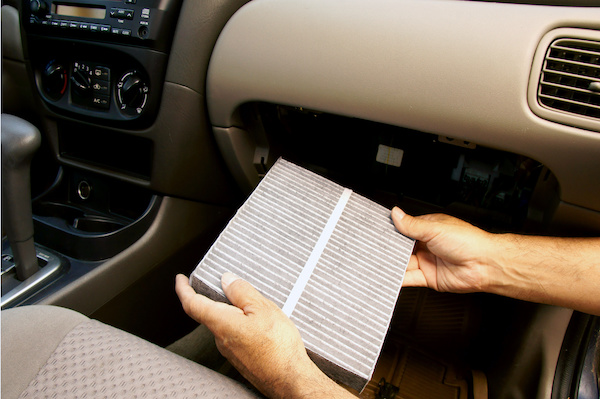
Ever installed a new cabin air filter and then paused; mid-reassembly wondering whether you just put it in backward? You’re not alone. Cabin air filter direction is one of the most common DIY maintenance “gotchas” because the part looks symmetrical, the housing is often hidden behind the glove box, and the markings can be confusing (especially when you see “UP” on one filter and “AIR FLOW” arrows on another).
And yet, getting the airflow direction correct is not a trivial detail. It directly affects your cabin air quality, the airflow volume you feel at the vents, how hard your blower motor has to work, and how quickly the filter loads up and needs replacement. If you drive in heavy traffic, dusty areas, wildfire smoke seasons, or high-pollen regions, the cabin filter becomes a genuine health and comfort component; not just “another service item.”
This guide walks you through everything you need to know about cabin air filter orientation so you can install it confidently the first time. We’ll cover: why direction matters, how to interpret arrows and “UP” markings, how vehicle HVAC design influences airflow, several practical methods to confirm the correct direction, and the real consequences of installing a filter backward. Along the way, you’ll also pick up professional habits that make future filter changes faster, cleaner, and more reliable.
Why Cabin Air Filter Direction Matters
Installing your cabin air filter in the correct direction isn’t just about following instructions; it has measurable impact on filtration performance and HVAC efficiency. Cabin air filters are typically designed as directional media, meaning the layers are engineered to do their best work when air flows through them from the intended side to the exit side.
When installed correctly, your filter can trap up to 98.7% of PM2.5 particles compared to only 84.2% when reversed.
Those numbers matter because PM2.5 particles are small enough to bypass your body’s natural filtration defenses more easily than larger particles. If you spend time commuting in traffic, driving behind diesel trucks, or living in regions affected by seasonal fires or urban smog, PM2.5 is one of the main “invisible” pollutants you want a cabin filter to reduce.
A properly oriented filter:
- Maximizes filtration efficiency
- Ensures optimal airflow (up to 20% more airflow than reversed filters)
- Extends the filter’s lifespan by 6-9 months
- Prevents excess strain on your HVAC system
What’s happening mechanically is straightforward: when the filter is installed in the intended direction, larger particles get caught in the “pre-filter” portion first, and finer particles are captured deeper in the media. When reversed, fine particles can overload the wrong layer early, clogging it faster and reducing airflow. That’s why you can see noticeable airflow reduction and earlier replacement intervals when the filter is installed backward.
This informative video demonstrates the impact of correct versus incorrect installation on airflow performance:

Expert context: Directionality matters even more with multi-layer filters that include activated carbon or electrostatic media. Carbon layers are often positioned to maximize odor and gas adsorption in the correct airflow direction. If reversed, you can still get some odor reduction, but the filter will not perform as designed; and it may load unevenly, which contributes to noise and HVAC strain.
Also remember: Reduced airflow isn’t just a “comfort” issue. It affects windshield defog/defrost performance. A clogged or incorrectly installed cabin filter can reduce the volume of air reaching the windshield vents; meaning slower clearing in humid or cold conditions.
Understanding Filter Directional Markings
One of the most confusing parts of cabin filter replacement is interpreting the markings. Filters are often sold by different brands than the original (OEM), and the same vehicle might use an OEM filter labeled “UP” while an aftermarket replacement uses a bold airflow arrow. That mismatch makes people second-guess their installation; even when they’re doing it correctly.
Here’s what the common indicators mean and how to interpret them like a professional.
Arrow Types and Their Meanings
- “UP” Arrows
- Found commonly on Toyota, Honda, and Subaru OEM filters
- Indicates gravitational orientation (which side should face up)
- Doesn’t necessarily indicate airflow direction
- Airflow Direction Arrows
- Common on aftermarket brands like FRAM, Bosch, and K&N
- Explicitly shows which way air should flow through the filter
- Must align with your vehicle’s actual airflow path
- Hybrid Systems
- Some manufacturers use both types of indicators
- Tesla, for example, has arrows that face rearward in the vehicle
Expert rule that eliminates most confusion: If the filter has an arrow labeled “AIR FLOW,” treat that arrow as the primary instruction. If it says “UP,” treat it as an orientation instruction (how the filter should sit in the housing). If both exist, they should be compatible when you visualize the filter in its installed position.
Why manufacturers do this: Some HVAC housings load the filter vertically and the filter frame is keyed to sit correctly when “UP” is correct. Other housings load the filter horizontally, and “UP” is less useful than a clear airflow arrow. Aftermarket brands tend to standardize on airflow arrows because they serve multiple platforms and reduce brand-specific confusion.
Important detail many DIYers miss: The filter housing itself often includes molded arrows or text such as “AIR FLOW” or “UP.” Those housing markings are usually more authoritative than the filter itself because the housing defines the vehicle’s airflow path. If you see housing arrows, match the filter arrow to the housing arrow.
How Vehicle Design Affects Airflow Direction
The direction your cabin air flows depends entirely on your vehicle’s HVAC design; specifically where the air intake is located and how the blower motor pushes or pulls air through the HVAC box. That’s why two vehicles can use similar-looking filters but require different arrow directions.
Here’s a breakdown by common vehicle origins. Treat these as general patterns; not unbreakable laws; because exceptions exist across model years.
Asian Vehicles (Toyota, Honda, Hyundai)
Many Asian vehicles pull air from the outside through the cowl (the area at the base of the windshield) and direct it downward through the filter into the blower housing. For these vehicles:
- OEM filters typically have “UP” arrows that should point vertically upward
- Aftermarket replacements often have airflow arrows that should point downward
Expert interpretation: This is not contradictory. “UP” refers to how the filter sits in the housing; the airflow arrow refers to air direction. In many designs, when the filter is oriented “UP” correctly, the airflow direction is naturally top-to-bottom, so the airflow arrow on many aftermarket filters points down.
Why cowl intake matters: The cowl area collects leaves, pine needles, and debris. If your vehicle is parked under trees, the cabin filter will load faster. Keeping the cowl area clean reduces debris reaching the filter and can extend filter life.
American Vehicles (Ford, GM, Tesla)
American manufacturers often design systems with top-to-bottom airflow:
- Ford F-150: Air flows from windshield toward floor (arrow down)
- Chevrolet Corvette: Features top-to-bottom flow (arrow down)
- Tesla Model 3: Has a unique orientation with arrows facing rearward
Expert note: Tesla’s cabin filtration is a good reminder that you should not rely purely on “rules of thumb.” Some vehicles have horizontal or non-traditional airflow pathways. That’s why a molded housing arrow, the old filter’s dirt pattern, or an OEM guide is often the most reliable source.
European Vehicles (BMW, Mercedes, VW)
European vehicles frequently use:
- Airflow direction arrows rather than “UP” indicators
- Often have bottom-to-top airflow (arrows point upward)
- Exception: Mini Cooper uses horizontal airflow
Expert nuance: Many European platforms prioritize packaging efficiency, and cabin filters may be located under the hood at the cowl area rather than behind the glove box. That design choice can change airflow direction and makes housing markings particularly valuable.
Why “bottom-to-top” is plausible: Depending on where the blower is placed relative to the filter, the system may pull air upward or push air upward. Always confirm with markings or testing rather than assuming.
How to Determine the Correct Direction
Not sure which way your filter should go? Here are foolproof methods to determine the correct orientation. The goal is to use at least two methods when possible; for example, match the arrow and also confirm with the old filter’s dirt pattern; so you can be confident.
Method 1: Check the Old Filter
Before removing your old filter completely:
- Note which side has accumulated dirt and debris
- This dirty side faces the incoming air
- Install the new filter with its airflow arrow pointing away from this side
Expert technique: Take a quick photo before pulling the old filter out. This prevents the common “I removed it and now I can’t remember which way it faced” moment. Photos are especially useful when the filter is installed vertically and the markings are not obvious.
Why the dirt pattern works: The first surface that incoming air hits becomes the “loading face,” where larger debris and dust accumulate. That side will usually look darker and more textured. If the dirt is heavier on one edge, it can also indicate uneven airflow through the housing, which you can sometimes address by ensuring the new filter is seated evenly and the access door is sealed properly.
Method 2: The Leaf Test
This simple test reveals your system’s airflow direction:
- Remove the filter
- Place a lightweight material (tissue paper or plastic film) over the filter housing
- Turn on the HVAC fan to maximum
- Observe which way the material moves
This practical demonstration shows you exactly how to perform the leaf test:

Expert safety note: Keep fingers and loose clothing away from moving fan components. Most cabin filter housings are upstream of the blower, so you typically won’t be near a spinning fan blade; but designs vary. If you hear the material being sucked in or you feel strong pull, stop and reassess placement.
What the leaf test tells you: It shows which direction air is moving at the filter opening. If the tissue is pulled inward toward the housing, air is being drawn through that opening. If it is pushed outward, air is being forced out (less common at the filter opening, but possible depending on HVAC design).
Why this is “foolproof”: It bypasses the marking confusion entirely by letting the vehicle’s airflow show you the truth. It’s especially useful when the replacement filter lacks clear markings or when “UP” markings on one brand conflict with airflow arrows on another.
Method 3: Consult Documentation
Check these resources:
- Your vehicle’s owner manual
- The filter manufacturer’s website
- Vehicle-specific forums
Expert note: The owner’s manual may not always show airflow arrow direction, but it often shows the correct filter orientation and access method. Manufacturer websites and vehicle forums can be helpful, but verify information because not every post accounts for model-year changes. If possible, use documentation that references your exact year and trim.
Best-case scenario: The filter housing itself has a molded arrow and you can match the filter arrow to it. That is usually more reliable than generic advice, because the housing marking is specific to the vehicle’s design.
Filter Media Structure and Directionality
Understanding how cabin air filters are constructed makes it easier to understand why direction matters. Cabin filters are usually not a single layer of paper. They’re engineered stacks of media designed for graded filtration and airflow efficiency.
Multilayer Construction
Cabin filters typically have:
- Pre-filter layer (catches larger particles)
- Electrostatic media layer (traps fine particles)
- Activated carbon layer (absorbs odors and gases)
This graded density structure works efficiently only when air flows in the intended direction. Reversing it means:
- Smaller particles clog the pre-filter (designed for larger debris)
- The filter becomes less effective and clogs faster
- Mold can grow more easily on the wrong side
Expert elaboration: When a filter is reversed, the “fine particle layer” can become the first line of defense and load up prematurely. Once that layer becomes restricted, airflow drops and the blower must work harder. This increases HVAC strain and can create whistling or higher fan noise. Also, when debris loads the wrong side, moisture retention patterns can change, increasing the chance of odor and microbial growth in humid climates.
Why filter frames are sometimes directional too: Some filters use an asymmetric frame or a reinforced pleat design intended to resist collapse in the correct direction. When reversed, the pleats may deform more easily under suction or pressure. That deformation reduces effective surface area and contributes to faster clogging.
A reality check: Not every filter is equally directional. Some basic particulate filters may show less dramatic differences when reversed than high-efficiency or carbon-equipped filters. But the safest practice is always to install according to markings, because you can’t visually confirm how a manufacturer designed the internal media layers.
Air Filter Direction Comparison Table
| Vehicle Make | Typical Airflow Direction | Arrow Direction | Special Notes |
|---|---|---|---|
| Toyota/Honda | Top to bottom | “UP” arrow faces up | Follow gravitational marking |
| Ford/Chevy | Top to bottom | Arrow points down | Follow airflow marking |
| BMW/Mercedes | Bottom to top | Arrow points up | European designs often reverse flow |
| Tesla | Front to back | Arrows face rearward | Unique horizontal flow |
| Subaru | Top to bottom | “UP” arrow faces up | Similar to other Asian manufacturers |
Expert caution about the table: This comparison is a helpful starting point, but always verify on your specific vehicle using housing markings, the old filter dirt pattern, or the leaf test. Automakers sometimes change HVAC housing design across generations, even when the model name stays the same.
Common Installation Mistakes to Avoid
Cabin filter installation is usually simple, but small mistakes can compromise performance. These errors can reduce filtration efficiency, lower airflow, and make your HVAC system work harder than necessary.
These errors can compromise your filter’s performance:
1. Confusing “UP” with Airflow Direction
“UP” indicates the filter’s gravitational orientation, not necessarily the direction of airflow. As demonstrated in the video below, these can sometimes be contradictory:

Expert fix: If you see “UP” on the filter frame but also see an airflow arrow on the filter or housing, prioritize the airflow arrow for airflow direction and treat “UP” as the correct physical orientation. If your housing has a molded arrow, match to that first.
Why the confusion exists: OEM filters often assume the housing design controls airflow when installed with “UP” correct. Aftermarket filters often assume you want explicit airflow markings. Both approaches can be “right” within their own context, but mixing them without understanding causes confusion.
2. Ignoring Filter Housing Clues
Look for:
- Molded arrows in the plastic housing
- Debris accumulation patterns
- Filter frame design constraints
Expert expansion: The housing is the vehicle’s “truth source.” If the housing indicates airflow direction, that is the direction air actually moves through the system. A filter with no markings can still be installed correctly by following housing arrows. Debris accumulation inside the housing also reveals airflow direction: the side closest to the incoming air will have more dust traces and debris.
Another housing clue: Some filter doors or housings are keyed so the filter only fits correctly one way. If the filter seems to “fight” you, stop and check orientation rather than forcing it.
3. Forcing the Filter
If installation feels difficult, you’re likely inserting it incorrectly. Properly oriented filters should slide in relatively easily.
Expert warning: Forcing the filter can crush pleats, deform the frame, or tear foam seals. Even if you get it “in,” a deformed filter can leak around the edges, allowing unfiltered air to bypass the media. If the filter is too tight, confirm you bought the correct part number and verify you removed the old filter completely (in some designs, a two-piece filter can be misinterpreted as one filter).
Cold weather note: Plastic tabs behind the glove box can be brittle in winter. If you’re working in a cold garage, warm the cabin slightly before snapping glove box sides inward or removing clips.
The Impact of Incorrect Installation on HVAC Performance
Getting the direction wrong leads to more than just poorer air quality. HVAC systems are engineered around airflow volume and pressure. A restriction anywhere; especially at the cabin filter; changes how the blower behaves and how effectively heat and A/C reach the cabin.
Getting the direction wrong leads to more than just poor air quality:
System Performance Issues
- Reduced airflow (up to 25% decrease)
- Blower motor strain (can lead to premature failure)
- Uneven cooling or heating
- Increased fan noise
Expert explanation of blower strain: Blower motors are designed to move air through a system with a certain expected restriction. If you increase restriction (by clogging the filter or installing it backward so it loads quickly), the blower draws more current to maintain airflow; especially at higher fan speeds. Over time, that additional load can contribute to early blower wear, noisy operation, or failure of the blower resistor/control module in some vehicles.
How uneven heating/cooling happens: If airflow is reduced, the amount of heat transfer at the heater core or evaporator changes. You may feel “cool but not cold” A/C or “warm but not hot” heat because the system simply isn’t moving enough air volume to deliver the temperature change effectively into the cabin.
Defrost performance is often the first thing to suffer: Many drivers don’t notice weak airflow until the windshield fogs. Reduced airflow means reduced drying/dehumidifying and slower clearing. That’s one reason cabin filter maintenance is a safety item as well as a comfort item.
Filter Life Reduction
A comprehensive analysis of filter performance shows incorrectly installed filters typically last only 12-15 months versus 18-24 months for properly installed ones.

Expert interpretation: Filter life is really “restriction life.” A filter is considered “done” when it becomes restrictive enough to noticeably reduce airflow or when odor and contamination become obvious. Reversed installation can shift how quickly restriction builds, because the media layers are loading in the wrong order. That’s why correct direction can extend useful service life.
Also note: Service life depends heavily on driving environment. In heavy pollen seasons, dusty rural roads, and wildfire smoke conditions, even correctly installed filters may need replacement much sooner than 12 months. Use time and mileage recommendations as guidelines, but let real symptoms and inspection confirm.
New Developments in Cabin Air Filter Technology
The cabin filtration industry continues to evolve. Vehicles are spending more time in dense traffic and more owners are paying attention to air quality; especially in cities and in areas affected by seasonal smoke or dust. In response, manufacturers are trying to improve filter performance and make installation less error-prone.
The industry is evolving to make installation foolproof:
Smart Filters
Newer technologies include:
- RFID tags that communicate with vehicle computers
- Asymmetric frames that physically prevent reverse installation
- Color-changing media that visually indicates flow direction
Expert perspective: Asymmetric frames are especially valuable because they eliminate human error. If the filter physically cannot be installed backward, direction confusion disappears. RFID integration can help vehicles track filter age and prompt replacement reminders more accurately, but adoption varies by manufacturer and model.
Practical limitation: Even “smart” filters won’t fix a dirty cowl intake or a clogged housing. Maintenance still matters. Technology helps, but airflow still obeys basic physics.
Standardization Efforts
The Automotive Filter Manufacturers Council is working on universal labeling standards:
- Standardized airflow direction symbols
- QR codes linking to vehicle-specific installation videos
- 3D arrow projections that align with housing markers
Expert note: QR-linked install guides are particularly helpful because cabin filter locations vary widely (glove box, passenger footwell, under hood). Even within the same vehicle brand, different platforms have different access paths. Clear, vehicle-specific instructions reduce broken glove box clips and misinstalled filters.
Maintaining Your Cabin Air Filter
Correct installation is only half the story. Proper maintenance keeps airflow strong, reduces odors, and prevents your HVAC system from working harder than it should.
Beyond correct installation, proper maintenance ensures peak performance:
Optimal Replacement Schedule
- Standard filters: Every 15,000-30,000 miles or once yearly
- High-performance or HEPA filters: Every 10,000-15,000 miles
- Driving in heavily polluted areas: Check every 6 months
Expert guidance on the schedule: Use those numbers as a baseline, but adjust based on reality. If you notice reduced airflow, persistent smells, or dust accumulation, replace earlier. If your filter comes out looking relatively clean after a year and you don’t have symptoms, you may be able to extend the interval. But don’t extend blindly; filters load gradually, and performance drop often isn’t obvious until it becomes severe.
Why HEPA-style filters often have shorter intervals: Higher filtration efficiency usually means higher restriction potential. HEPA-type cabin filters can trap finer particles but may load faster in dirty environments. That’s not a defect; it’s the trade-off of higher filtration.
Between Replacements
- Vacuum the filter surface (without removing) to extend life
- Keep cowl area clear of leaves and debris
- Run A/C occasionally in winter to prevent mold growth
Expert caution about vacuuming: Light vacuuming can remove loose surface debris, but it does not restore the filter’s full capacity and cannot reliably remove embedded fine particles. Treat vacuuming as a temporary extension measure, not a substitute for replacement.
Why running A/C in winter helps: A/C dehumidifies. Even in winter, briefly running A/C can reduce moisture buildup in the HVAC box, helping prevent mold and the musty smell that can develop on the evaporator and filter media.
Parking environment matters: Vehicles parked under trees accumulate more organic debris in the cowl area. Vehicles parked in dusty lots accumulate fine dust faster. Small habits; like clearing leaves at the base of the windshield; can significantly slow filter loading.
Making the Final Decision
When in doubt about your cabin air filter direction:
- Trust the debris pattern on your old filter
- Follow the manufacturer’s airflow direction (not necessarily “UP” indicators)
- Use the leaf test for confirmation
- Consider that most systems flow from the outside inward
Expert refinement: The most reliable order is: housing markings first (if present), then airflow arrows on the new filter, then old filter orientation/dirt pattern, then the leaf test. “Most systems flow from the outside inward” is generally true, but designs vary enough that you should still verify on your specific vehicle when possible.
Remember that proper installation means:
- Better air quality in your vehicle
- Extended filter life
- Improved HVAC system performance
- Potential fuel savings from reduced system strain
Expert note on fuel savings: The fuel savings from a cabin air filter alone will usually be modest, but the concept is real: when the blower motor works harder against restriction, it draws more electrical power, which ultimately is supplied by the engine through the alternator. Over time, reducing unnecessary strain helps overall efficiency and helps components last longer.
Getting your cabin air filter’s direction right isn’t just about following rules; it’s about making sure you and your passengers breathe cleaner air while extending the life of your vehicle’s ventilation system. Next time you change your filter, you’ll know exactly which way it should go, how to verify it with multiple methods, and how to avoid the common mistakes that reduce filtration and airflow.

