

Transmission fluid can tell you a lot before the transmission itself starts screaming for help. A quick color check can reveal whether the fluid is healthy, aging normally, overheated, contaminated, or flat-out done.
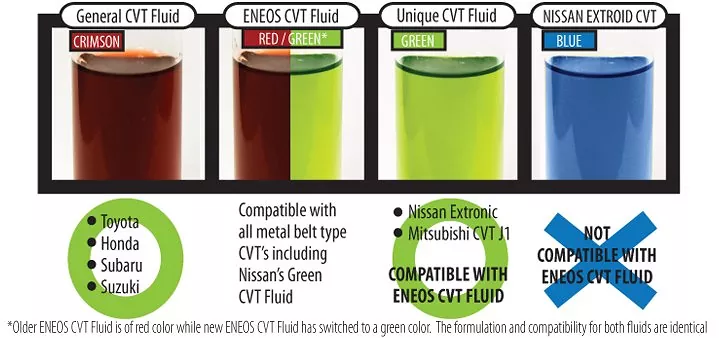
But here’s the catch: not all transmission fluid starts out red. Some CVT fluids are green, blue, or amber. Many European and dual-clutch setups use amber or golden fluid right from the factory. So if you judge every transmission by the old “red is good, brown is bad” rule, you can get misled fast.
Let’s go step by step and make sense of every color you’re likely to see.
1. Start With the Correct “Normal” Color
Before you decide whether the fluid looks bad, you need to know what “normal” looks like for your transmission. That depends on the type of transmission and the fluid it was designed to use.
- Standard Automatic Transmission (ATF): For roughly 90% of vehicles—such as Fords, Chevys, and many older Toyotas and Hondas—the normal baseline is bright translucent red. It should have a slightly sweet, petroleum-like smell.
- CVT (Continuously Variable Transmission): Common in many modern Nissans, Hondas, Subarus, and Toyotas. CVT fluid is often red, but it can also be green (Nissan NS-3), blue, or amber/yellow (Honda HCF-2).
- European / DCT: BMW, Audi, and Mercedes often use fluid that is amber, straw-colored, or golden when new.
If you own a Nissan CVT and the fluid looks green, that may be perfectly normal. If you pour standard red ATF into a transmission that requires blue CVT fluid, that’s a different story.
Important check: look at your owner’s manual before you top anything off. Using red ATF in a transmission that requires blue CVT fluid can destroy the transmission in less than 50 miles.
2. Use the Color Chart to Judge Transmission Health
Once you know what color your fluid is supposed to be, the next step is figuring out what the current color is telling you. This is where the fluid becomes a diagnostic tool.
| Color Observed | Condition State | Likely Cause | Recommended Action |
| Translucent Bright Red | Healthy / New | Fresh fluid, optimal condition. | Safe to drive. No action needed. |
| Dark Red / Light Maroon | Normal Wear | Standard heat cycles and mileage are darkening the dye. | Safe to drive. Plan for a fluid exchange at your next service interval, typically every 30k–60k miles. |
| Deep Maroon / Brown | Degraded / Oxidized | Fluid has overheated or is past its service life; lubricating properties are failing. | Schedule service soon. Change the fluid and filter within the next 1,000 miles to help prevent internal damage. |
| Black / Very Dark Brown | Failed / Burnt | Extreme overheating. The dark color is suspended charcoal from destroyed clutch packs. | Do not drive / tow. Do not flush this transmission; the grit may be the only thing holding the gears together. It needs professional diagnosis. |
| Pink / Milky / Frothy | Contaminated | “The Strawberry Milkshake.” Coolant has breached the radiator’s transmission cooler and mixed with fluid. | Tow immediately. Water destroys transmission glue and clutches instantly. Driving will ruin the transmission within minutes. |
| Green, Blue, or Gold | Specialty / CVT | If clean: Normal for specific imports and CVTs. If dark: Degraded specialty fluid. | Verify against your owner’s manual. If it matches factory spec and is clean, safe to drive. |
This table is especially helpful if you’re looking at fluid on a dipstick or a spot on the garage floor and trying to decide whether it’s a maintenance issue or a “don’t start the car again” issue.
3. Don’t Stop at Color—Check the Smell and Feel Too
Lighting can fool your eyes. A red fluid can look brown under a shop light, and an amber fluid can look darker than it really is. That’s why seasoned techs don’t rely on color alone.
Your nose and fingertips can tell you things your eyes can’t.
- The smell test:
- Sweet / petroleum: Normal.
- Burnt toast: The fluid has boiled and the clutch material is burning. That points to severe mechanical trouble.
- Rotten eggs: Usually associated with old gear oil in manual transmissions, not automatic ATF.
- The touch test:
- Put a drop of fluid between your thumb and index finger.
- Smooth and oily: That’s what you want.
- Gritty or sandy: That’s not dirt. It’s usually metal shavings or clutch material, which means the transmission is coming apart internally.
If the fluid looks only slightly dark but smells burnt, trust your nose. Burnt fluid is bad fluid, even if the color hasn’t fully turned black yet.
4. Make Sure It’s Actually Transmission Fluid
If you’re looking at a leak on the driveway, don’t assume it’s transmission fluid just because it’s dark or reddish. Different vehicle fluids can look surprisingly similar, especially once they’ve been on concrete for a while.
Here’s a quick way to tell them apart:
- Engine oil: Brown to black. Feels thicker and heavier than transmission fluid. Often smells like gas or exhaust.
- Coolant (antifreeze): Bright green, orange, or pink. It’s thin like water and feels slimy rather than oily. It usually has a sweet smell, similar to maple syrup.
- Power steering fluid: Often the exact same red ATF used in transmissions, though newer systems may use clear or amber fluid. Check the location of the leak: near the front of the engine belts usually points to power steering, while a leak under the center of the vehicle leans transmission.
Location matters here. A red puddle near the transmission pan means one thing. A red puddle near the front accessory drive can mean something else entirely.
5. CVT and Sealed Transmissions Need Extra Caution
Not every transmission behaves like a traditional automatic, and that’s where some owners get caught off guard. CVTs and sealed transmissions come with their own rules.
- If you have a CVT—like in a Nissan Altima, Subaru Outback, or Honda Civic:
- CVT fluid doesn’t always darken the same way standard ATF does.
- Danger zone: If you own a Nissan and the green or blue fluid starts looking muddy, the internal belt may be wearing down.
- CVT fluid depends heavily on friction modifiers. If it feels sticky or tacky, it’s degraded.
- If you have a sealed transmission—common in many modern Toyotas, Fords, and German cars:
- Many of these transmissions don’t have dipsticks.
- If you see a leak, you often can’t check the level yourself.
- A low fluid level in a sealed unit can cause cavitation, meaning the pump starts pulling in air bubbles. That can damage the pump quickly.
- Any visible leak on a sealed unit is a shop visit, not a “wait and see” situation.
That’s why a small leak on a sealed transmission is more serious than many drivers think. You can’t just top it off in the driveway and move on.
6. Watch for These Transmission Red Flags
If the fluid color falls into that maroon-to-brown gray area, don’t judge it on color alone. Pair the fluid condition with how the transmission is behaving.
If any of the symptoms below are happening, the fluid is no longer doing its job properly:
- Slipping: The engine revs high, but the vehicle moves slowly.
- Hard shifts: You feel a clunk or a jerk when the transmission changes gears.
- Delayed engagement: You shift into Drive or Reverse, and the vehicle takes 2 to 3 seconds to respond.
- Whining: A high-pitched sound that rises with vehicle speed, often pointing to a starving pump.
For example, if your fluid is dark maroon and the car now hesitates before moving in reverse, that’s not just old fluid. That’s the transmission telling you something is going wrong.
7. Use the Paper Towel Test for the Real Color
Looking at transmission fluid on a shiny metal dipstick can throw you off. The metal reflects light, and that can make the fluid seem cleaner—or dirtier—than it really is.
A better method is the old technician trick known as the paper towel test.
- Pull the transmission dipstick. In many vehicles, the engine needs to be running and the transmission in Park, but check the owner’s manual first.
- Lay a clean white paper towel on a flat surface.
- Dab the dipstick onto the towel.
- Wait about 30 seconds for the fluid to spread.
What you’re looking for: the paper towel shows the fluid’s true suspended color. If you see a watery halo around the drop, that can point to contamination. If you notice black specks in the center, you’re likely looking at debris that wasn’t obvious on the dipstick itself.
If you’re unsure whether the fluid is merely old or genuinely dangerous, this test gives you a much better read than the dipstick alone. Check the manual, match the correct fluid, and if the color says trouble, treat it like trouble.