
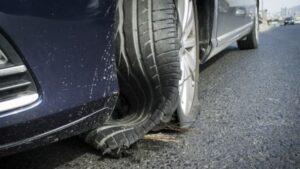

James Solomon has been a defensive driving expert with the National Safety Council for 34 years. He has taught driving courses for 47 years. And one of the best pieces of advice he can give has absolutely nothing to do with an automobile.
“If it sounds like there might be inclement weather the next day,” Solomon tells Mental Floss, “set your alarm an hour early. You’ll have enough time to get up, clean your car off, and drive slowly.”
Table of Contents
That is especially sound advice for a good part of the country. Winter brings a full catalog of driving threats: poor visibility, snowbanks, black ice, and conditions that can change from passable to dangerous within a single mile. But winter is not the only season with problems. Fog, deer, and road-hogging commercial trucks do not take breaks based on the calendar.
Every time you pull onto a public road, the environment around you is unpredictable. Experienced drivers understand this instinctively. The road is dynamic. What looks clear one moment can present a serious hazard the next. Objects fall from other vehicles. Animals dart across lanes without warning. Slow-moving machinery occupies roads built for faster traffic. Pedestrians appear where you least expect them.
The difference between a driver who handles these situations safely and one who panics or reacts badly is not reflexes alone. It is preparation. Knowing what types of hazards you are likely to encounter, and having a mental framework for how to respond before you are in the middle of it, is what keeps you in control when the unexpected happens.
We asked Solomon to break down 15 common driving obstacles and the best ways to handle each one. Here is what he had to say, along with additional guidance on hazards that every driver needs to think about.
1. Driving on Icy Roads: What to Do When Traction Disappears
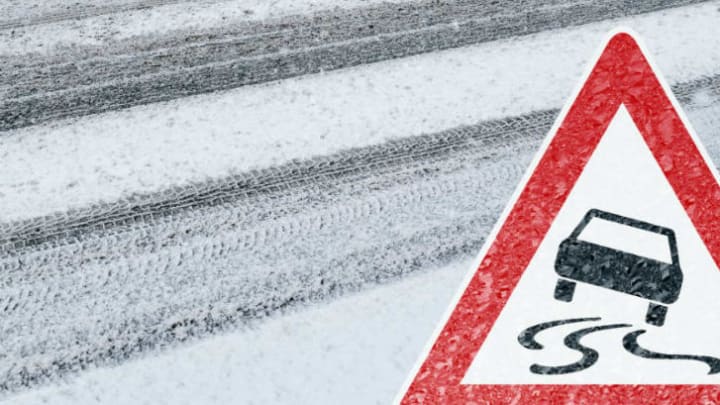
Nothing can jolt a driver like the sudden loss of control after hitting a slick patch of pavement. Some ice is obvious. But black ice, which forms when ice thaws and refreezes into an almost invisible layer on the road surface, can be nearly impossible to spot until your wheels are already on top of it.
What to Do: If your car goes into a skid or loses traction, the first thing to do is lift your foot off the accelerator completely. “You do not want power of any kind going to the wheels,” Solomon says.
What you do with the brakes depends on your vehicle. If you have a standard braking system without ABS, keep your foot entirely off the brake pedal. If you have an anti-lock braking system, which is standard on most newer cars, press the pedal down firmly and hold it. Do not pump the pedal. The ABS can pulsate the brakes far faster than your foot can, and pumping it interrupts that process.
At the same time, steer in the direction you want the front of the car to go. Once the vehicle begins to straighten, counter-steer in the opposite direction. “Steering and counter-steering should be done three to five times while braking,” Solomon says. Keep at it until you feel the wheels grip the pavement again.
That sequence sounds straightforward, but it takes practice to execute calmly when the car is sliding. If you live somewhere with regular winter conditions, an empty parking lot after a light snow is a worthwhile place to get a feel for what ABS braking and steering through a skid actually feels like before it happens on a live road.
2. Getting Stuck in a Snowbank: How to Get Moving Again Safely
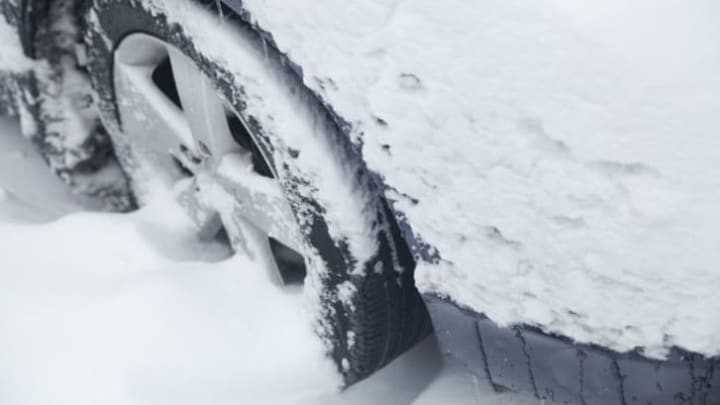
After a heavy snowfall, returning to a car buried in a drift is a common experience. As the wheels spin on the loose powder, traction disappears and so does your forward progress.
What to Do: A little foresight helps here more than anything. Solomon advises keeping a shovel, a brush, and a pair of traction mats in the trunk. Kitty litter can provide some traction as well, but the mats are reusable and tend to be more reliable.
If you are stuck, start by checking that you have enough room to move forward and backward, and confirm that snow is not blocking the exhaust pipe. A blocked exhaust pipe while the engine is running is a carbon monoxide risk, not just a mechanical inconvenience.
Clear snow away from around the wheels, then try moving forward and in reverse. If that does not free the car, place the traction mats under the drive wheels: front wheels for front-wheel drive, rear wheels for rear-wheel drive. Once the wheels are sitting on the mats, try turning gently to get out of the compacted snow rather than spinning further into it.
Solomon also cautions to keep an eye on passing traffic. Other drivers may have limited visibility in the same conditions and may not see a partially buried car until they are close to it.
3. Driving in Heavy Rain: Visibility, Hydroplaning, and What Not to Do Under an Overpass
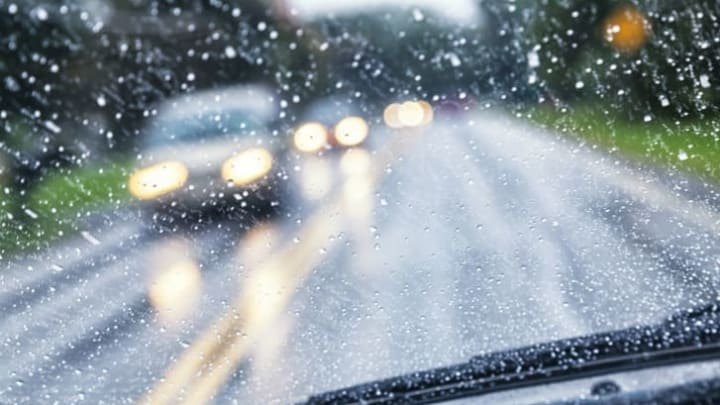
People do not always treat a heavy rainstorm with the same respect they give a snowstorm, but they probably should. A torrential downpour can reduce visibility to near zero and cause hydroplaning, where the tires ride up onto the surface of the water and lose contact with the road entirely.
What to Do: Tire condition matters more in the rain than most drivers realize. Make sure your tread depth is no less than 5/32 of an inch before driving in wet conditions, and preferably much more. New tires typically start around 10/32 of an inch. A worn tire at 2/32 dramatically increases stopping distance and reduces grip on a wet surface. A simple test: insert a penny upside down into the tread. If the top of Lincoln’s head is visible, the tires need replacing.
Solomon also recommends a seasonal wiper blade strategy: a more durable winter blade, a rain-specific blade for spring, and another fresh blade for late summer. He also points out something many drivers overlook entirely. If you regularly use automatic car washes with wax treatments, that wax builds up on the windshield. Wipers can start skating over the surface rather than cleaning it. A wax stripper from any automotive store dissolves that residue. “The first time you spray it on, you will get a crusty, filmy look, which is all the wax you are dissolving,” Solomon says. After that, the glass is clean and the wipers make proper contact again.
If the rain is still hammering down so hard that your wipers cannot keep up, you are probably driving faster than conditions allow. Pull over. Wait it out. But never stop under a highway overpass. “You are a sitting duck there,” Solomon says. “You are stopped with a guardrail or pillar next to you and your transmission locked. If another vehicle strikes you, there is nowhere for your car to go. That is a huge amount of weight hitting you.”
4. Blinded by Sun Glare: A Simple Problem With a Surprisingly Dangerous Edge
Winter or summer, the sun occasionally finds exactly the right angle to shine directly into your eyes. It is brief, it is unpredictable, and in the wrong moment on a busy road, it can be genuinely dangerous. Keeping sunglasses in the car is the most obvious solution, but there is more to it than that.
What to Do: “All cars come equipped with a sun visor,” Solomon says. “The problem is when people pull it down and the edge is pointed at their nose. In a collision, their face slams right into it.”
The correct technique is to pull the visor down and then push it all the way toward the windshield before slowly bringing it forward to block the sun. The bottom edge should remain angled toward the windshield, not pointing back toward you.
Solomon also keeps a baseball cap in his car specifically for glare situations. The bill of the cap can block sun from above without obstructing a forward view. If the glare is coming from the side window rather than the windshield, most sun visors detach on one end and can pivot to block peripheral light from the left.
5. A Tire Blowout at Speed: Why Your Instinct Will Betray You
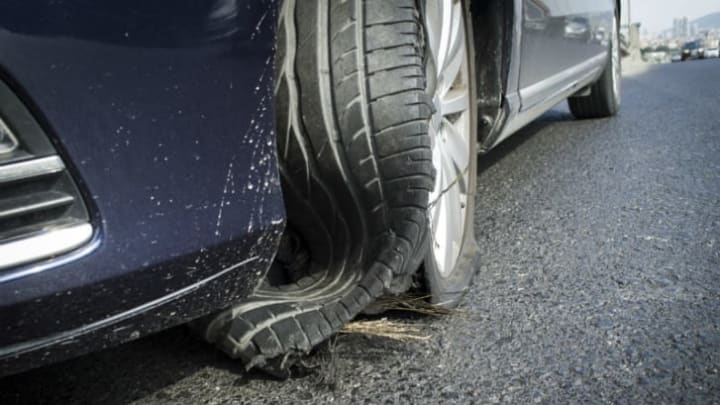
A slow puncture from a nail gives you time. A sudden blowout at highway speed does not. The tire is gone almost instantly, the car pulls hard in one direction, and most drivers instinctively do the worst possible thing.
What to Do: “The big mistake people make with a sudden loss of pressure is to hit the brake,” Solomon says. “But if the air went out that quickly, the tire is already gone.”
Braking hard on a blown tire can cause the car to spin. Instead, keep moving in a straight line. Activate your hazard lights, check your mirrors, and work your way toward the right shoulder gradually. Grip the wheel with both hands because the car will pull toward the side of the blowout. A blown front right tire will pull the vehicle left. A blown rear right tire creates a different handling sensation but demands the same calm, straight-line response.
“If you are in a skid, you may need to keep a little pressure on the accelerator to force the wheel to keep moving forward,” Solomon says. Once you are safely off the road and stopped, do not attempt to continue driving on a blown tire.
Prevention matters here. Check tire pressure at least once a week, especially as seasons change. Cold temperatures drop pressure; sudden warmth can over-inflate. The correct tire pressure for your vehicle is on a label inside the driver’s door jamb, not on the tire sidewall. The sidewall number is the maximum the tire can hold, not the operating target for your vehicle.
6. Brake Failure: The Steps That Can Save Your Life in the Worst-Case Scenario
Complete brake failure is rare on modern vehicles, but it does happen. When it does, the few seconds it takes to respond correctly are the difference between stopping safely and a serious crash. Panic is the enemy here.
What to Do: The first thing to do is activate your hazard lights and pump the brake pedal three or four times quickly. “Hit your emergency flashers because you cannot assume your brake lights are still working,” Solomon says. Pumping may help build pressure in a hydraulic system that has partially failed.
While doing that, glance down at the floor mat. A bunched floor mat behind the brake pedal is more common than most people expect and can physically prevent the pedal from traveling far enough to actuate the brakes. Make sure your mat fits correctly, is secured in place if that option exists, and that you are not doubling mats on top of each other.
If none of that helps, shift into neutral. “You want to deprive the car of forward motion,” Solomon says. Then reach for the emergency brake, usually a lever on the center console, and begin pumping it up and down. This engages the rear wheels and helps bring the car to a controlled stop. If your vehicle has an electronic parking brake, check the owner’s manual in advance so you know how it works before you ever need it in an emergency.
7. Someone Is Tailgating You: The Safest Way to Handle an Aggressive Driver
A vehicle riding aggressively close to your rear bumper puts you in a difficult position. If you need to brake suddenly, a collision is almost inevitable. If you respond with frustration, you risk escalating a situation that was already irrational.
What to Do: “What I want to do is encourage them to pass me,” Solomon says. “If I can, I will signal, move to the right-hand lane, and that will generally take care of it.”
If there is nowhere to go, wait until you reach an intersection or service station and make a turn or pull in. Remove yourself from the situation rather than trying to manage the other driver’s behavior.
Do not tap your brakes to signal irritation. Do not flash your lights. Do not gesture. “There is nothing you can do to stop them from tailgating,” Solomon says. “Tricks like tapping your brakes, no. You are dealing with an aggressive person and you are only going to make them more angry.” The goal is to get distance between you and them, not to win a confrontation you cannot safely have at 60 miles per hour.
8. Getting Sandwiched Between Commercial Trucks: How to Handle 80,000 Pounds of Pressure
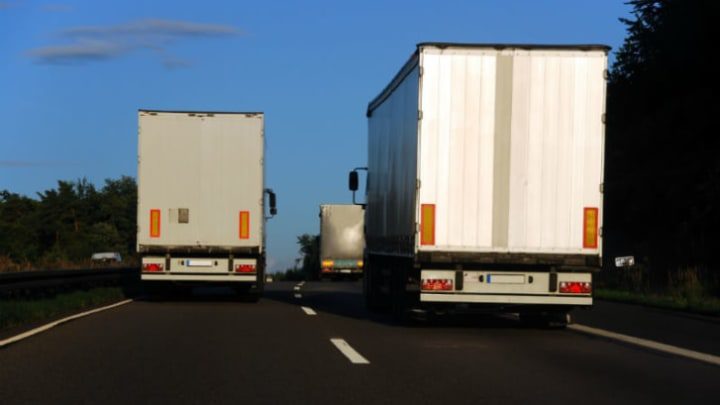
Being trapped between two 18-wheelers on a motorway is genuinely unsettling. You cannot see what is ahead, you cannot see past either truck, and if anything slows or stops suddenly, you have almost no reaction time.
What to Do: Before you attempt to pass, find out whether the driver actually knows you are there. “If I cannot see the driver’s rear-view mirror, they cannot see me,” Solomon says. “If I can see their reflection, then they can probably see me.”
Add at least an extra second to the standard three-second following distance rule when driving behind any large vehicle. That following distance, measured as the time between when the truck passes a roadside landmark and when you reach the same point, should grow to seven or even twelve seconds in bad weather. Rain, snow, and spray thrown off by truck tires can devastate visibility in seconds.
If you are stuck between two trucks on a three-lane road, reduce your speed by about five miles per hour and let both trucks move ahead of you. Eventually, one will pull ahead of the other, and you will have room to choose your lane and reposition. The same approach applies when caught between or near buses. Patience here is genuinely safer than impatience.
9. Driving in Fog: Why High Beams Make It Worse
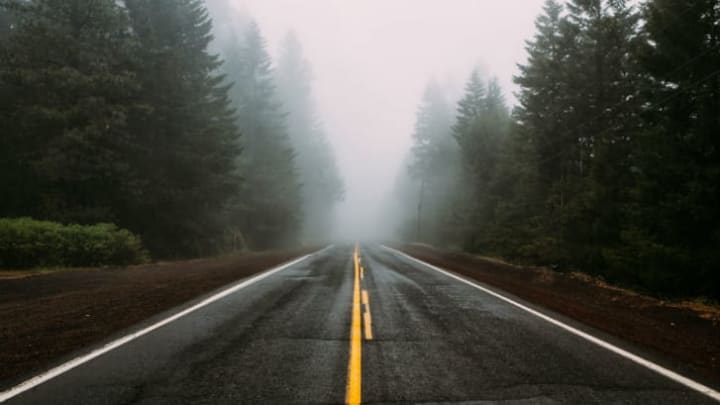
Dense fog can reduce visibility as severely as a bad snowstorm, and it often appears without much warning. Stretches of motorway that were perfectly clear a mile back can suddenly become a wall of white.
What to Do: Your instinct when you cannot see well is to turn on the brightest lights you have. With fog, that instinct makes things worse. “You will wind up seeing less,” Solomon says. “The beam shines further into the fog and reflects off the water particulates, shining the light right back into your eyes.”
Keep your lights at normal beam or use dedicated front fog lights if your vehicle has them. Slow down significantly. In serious fog, your speed should match your ability to stop within the distance you can actually see, not the distance the road is clear in ideal conditions. Turn on hazard lights if visibility drops to a level where your car could be difficult for others to see, and keep a safe distance from the vehicle ahead because brake lights in fog appear much more suddenly than in clear conditions.
10. Flying and Airborne Objects: The Hazard Nobody Talks About Enough
This happens more often than most drivers account for, particularly on motorways and national roads where traffic moves at speed. A plastic bag, a piece of timber from a flatbed, a strip of tire tread from a blown truck tire, a bird. At 70 mph, objects that seem harmless at rest become genuinely dangerous. A large plastic sheet can fully obscure a windscreen in an instant. A piece of road debris can crack glass, damage bodywork, or cause a tire blowout on contact.
The instinct to swerve sharply when something comes at the car is often the most dangerous response available. A sudden lane change at speed can put you directly into a vehicle that was invisible in your initial panic. The calmer approach is nearly always the safer one.
- Assess what is around you before reacting. A fast scan of adjacent lanes tells you whether you have room to move, or whether staying in your lane is actually the safer call.
- If the object is on the road surface ahead, try to steer around it rather than over it, but only if it is clearly safe to do so based on surrounding traffic conditions.
- If something has already hit the windscreen or is stuck to it, stay calm, activate hazard lights, reduce speed gradually, and pull over at the first safe opportunity. Do not try to remove anything from the windscreen while moving.
- If you suspect impact damage to a tire, to the underside of the car, or to any component, pull over safely and check before continuing. Driving on a damaged tire at highway speed is considerably more dangerous than stopping to inspect.
11. Slow-Moving Vehicles: Tractors, Road Equipment, and the Speed Differential Problem
Agricultural vehicles, road maintenance equipment, horse-drawn carriages, and low-speed utility vehicles are all legitimate road users on most public roads outside of motorways. Encountering one around a blind bend on a rural road, where the speed differential might be 40 or 50 mph, demands an immediate and calm response.
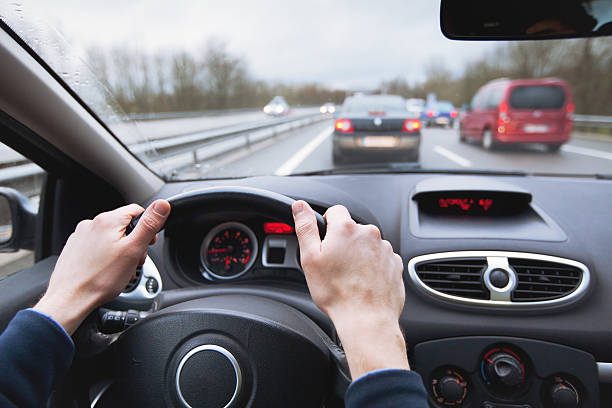
Most slow-moving vehicles are required by law to display reflective triangles or warning signs at the rear, specifically to give approaching drivers advance warning. In daylight on a clear road, these markings are visible from a good distance if you are scanning well ahead as you should be. At night or in poor visibility, that distance shrinks considerably, which is exactly why speed management on rural roads matters so much.
When you find yourself behind a slow vehicle:
- Increase your following distance significantly. A tractor traveling at 15 mph with you following at 60 mph gives almost no reaction time if anything changes ahead. Drop your speed and open up the gap well before you close the distance.
- Be especially careful around animal-drawn vehicles. Horses are unpredictable and can react suddenly to engine noise, sudden movement, or proximity. Pass slowly and at a wide berth, and do not accelerate aggressively until you are well clear.
- Only overtake when the road ahead is completely clear and you have enough distance to complete the pass safely. Never overtake on a bend, a hill crest, or anywhere your view ahead is limited.
12. Pedestrians: The Most Predictable Thing About Them Is Their Unpredictability
Pedestrians are the most vulnerable road users and among the most unpredictable. A marked crossing is not the only place someone will step into the road. It is simply the most anticipated place. In practice, pedestrians cross wherever it is convenient for them, regardless of markings, road conditions, or traffic.
The most dangerous pedestrian situations are often not the busiest city centers, where experienced city drivers naturally slow and scan constantly. The higher-risk moments are quieter residential streets in the evening, suburban roads near school end times, and areas near parks or late-night venues where pedestrian behavior is less predictable and drivers may have lowered their guard.
- Reduce speed in any built-up area, not just at marked crossings. A pedestrian stepping from between parked cars gives you almost no reaction time at anything above a slow speed.
- Watch your nearside when turning at junctions. A pedestrian may be crossing the road you are turning into, and they are easy to miss when your attention is on the road ahead and oncoming traffic.
- At night, many pedestrians wear dark clothing and are far less visible than they believe they are. Account for this by reducing speed on unlit residential roads even when the road appears clear.
- Near schools and parks, a child may run into the road without any warning whatsoever. Your speed in those areas should reflect that reality, not the posted limit as a target number to reach.
13. Domestic Animals: Dogs, Cats, and the Hazard That Appears Without Warning
In suburban areas and on country lanes near residential properties, domestic animals are a frequent and underestimated hazard. A dog can bolt into the road at full sprint from virtually nowhere, giving an attentive driver very little time to react. Cats are smaller, faster, and even harder to spot until they are directly in the vehicle’s path.
The most effective protection is speed management in environments where domestic animals are likely. Reducing your speed on residential streets, near properties with open gates or unfenced gardens, and in areas where you have previously seen animals near the road is the primary measure.
If you do strike a domestic animal despite all precautions, the right response is to stop. Try to locate the owner, knock on nearby doors, check for an ID tag on the animal if it is safe to do so, and if the animal is injured, contact local animal services or a veterinarian. Driving away from this kind of incident is both ethically wrong and, in many places, legally problematic.
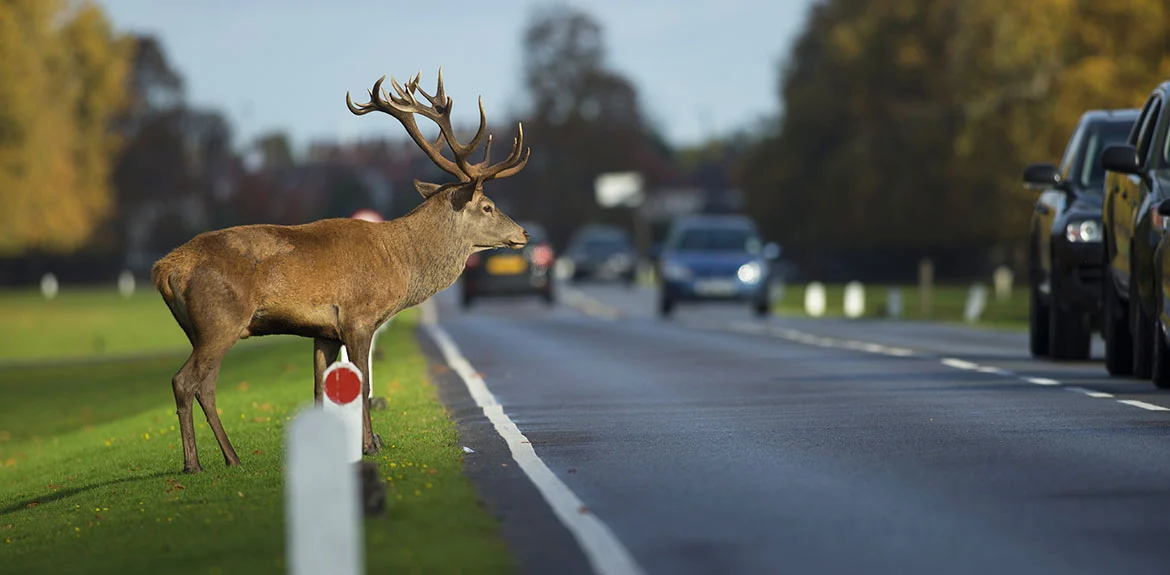
14. Wild Animals: When a Deer or Boar Can Total Your Car
Wild animals present a different category of hazard entirely. A fully grown deer or wild boar can cause catastrophic vehicle damage and serious injury in a collision. They are faster than domestic animals, completely unpredictable, and have no association between roads and danger.
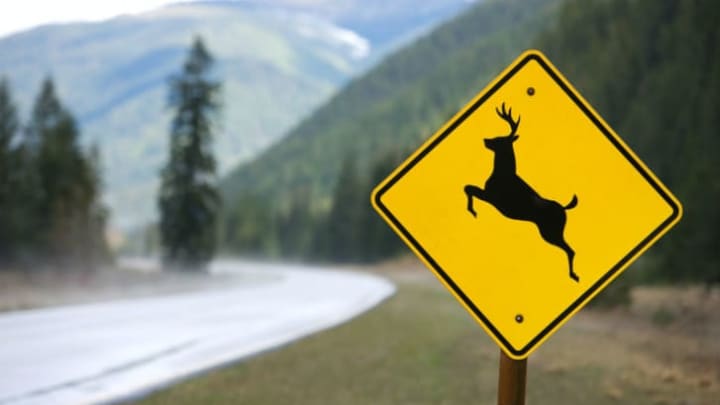
Wild animal strikes are increasing as development pushes into natural habitats and forces wildlife to cross roads they previously avoided. Roads passing through forested areas, open countryside, or near rivers carry the highest risk. Dawn and dusk are peak activity times for most species.
Key things to keep in mind on wildlife-risk roads:
- Take wildlife warning signs seriously. These signs are placed in areas with documented crossing activity, not arbitrarily.
- Use full beam headlights at dawn and dusk where traffic allows. Animal eyes reflect headlight beams and can give you earlier warning of an animal on or near the road.
- Deer rarely travel alone. If one crosses ahead of you, slow down significantly and expect more to follow immediately behind.
- If a collision with a large animal is unavoidable, do not swerve sharply into an adjacent lane or off the road. Losing control or entering oncoming traffic is typically far worse than the animal impact itself. Brake in a straight line and absorb the collision as best you can.
- After any strike with a large animal, pull over and check your vehicle before continuing. Radiator damage, a stuck hood, or tire damage from the impact can make continued driving genuinely dangerous.
15. Speed Bumps: Why They Damage Your Car When You Get Them Wrong
Speed bumps are a controversial feature of many residential and urban roads. Road safety data consistently supports their effectiveness. In areas where speed bumps have been installed, average vehicle speeds drop and the frequency and severity of pedestrian collisions decreases meaningfully. For that reason, they exist on roads around the world.
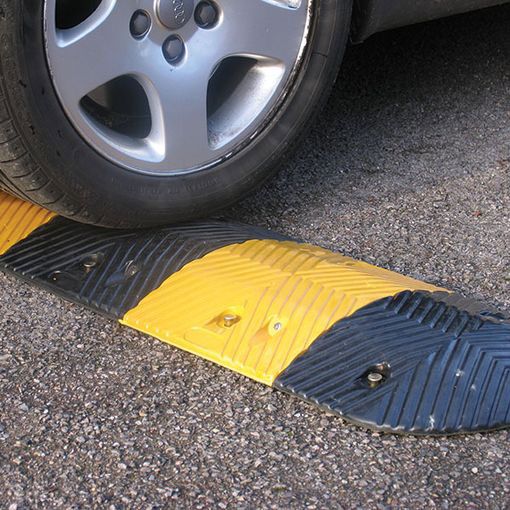
But for drivers and their vehicles, speed bumps approached at the wrong speed are a genuine source of mechanical damage. Hitting a bump at 30 mph in a car designed to cross it at 10 mph transfers a sudden, violent vertical force through the suspension and every component connected to it. Repeated exposure accelerates wear on:
- Shock absorbers and struts
- Control arm bushings
- Wheel bearings
- Exhaust hangers and pipes on lower-riding vehicles
- Steering components
The correct approach requires actual compliance rather than just slowing slightly at the last second. Reduce speed before the bump, not on it. Braking once the bump is already beneath you means the front suspension is compressed under braking when it absorbs the impact, which makes the force harder, not softer. Approaching at the appropriate speed, typically 10 to 15 mph or whatever is locally indicated, gives the suspension room to absorb the transition smoothly.
Lowered vehicles and cars with stiffer suspension are most vulnerable to speed bump damage. Owners of these vehicles may need to slow further than the indicated speed or, in some cases, approach at a slight angle so one wheel crosses at a time rather than both simultaneously.
The Principle That Connects All 15 of These Situations
Every hazard covered here, ice, snow, rain, glare, blowouts, brake failure, tailgaters, trucks, fog, airborne objects, slow vehicles, pedestrians, animals, and road features, is best managed not through exceptional reflexes but through sustained attention and appropriate speed for the environment you are actually driving in.
The driver who is scanning the road 200 to 300 meters ahead, traveling at a speed that gives them time to react to what they see, and who has a mental model of what hazards are likely in their current environment will handle most of these situations with a calmness that can look almost effortless from the outside.
The driver focused only on what is immediately in front of them, going faster than conditions justify, and reacting to situations rather than anticipating them will eventually encounter a hazard that their reaction time cannot handle. The road does not forgive that gap.
Concentration, appropriate speed, and the habit of looking well ahead: those three habits will protect you from the vast majority of road hazards better than any vehicle safety system currently available. They cost nothing and can be practiced on every single journey you take.