
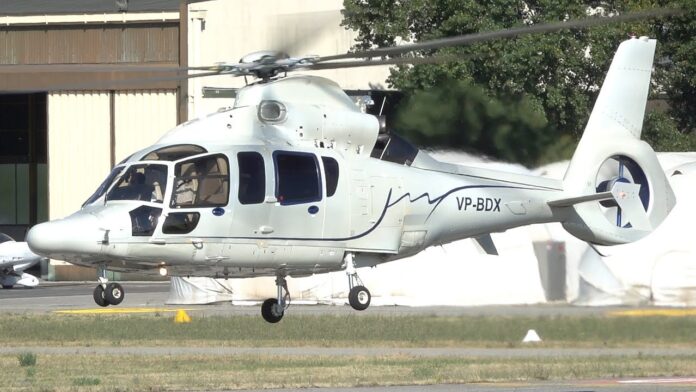
Helicopters have a way of making flight feel more personal. You’re lower, the view is wider, and the whole experience feels a lot more immediate than sitting in a commercial jet at 30,000 feet.
If you’ve never taken a helicopter ride, you’ve probably wondered about the basics. One of the biggest questions is simple: how far can a helicopter actually fly?
On average, helicopters can fly for 2.5 to 5 hours before needing to refuel. That works out to roughly 250 miles, which is farther than most people realize. But here’s the thing: range changes depending on the helicopter’s size, type, load, and several other factors.
The majority of helicopters can remain at a maximum altitude of around 5,000 feet, although people can fly either of the helicopters far higher. You also have to conform to the safety risk of a specified height range of 500 feet.
What Helicopters Can Do That Makes Them So Useful
Helicopters are different from airplanes in ways that really matter. They can travel slowly, move horizontally, and even reverse. They can also hover over one spot and land in an area no wider than the diameter of their blades.
That flexibility is why they’re used in situations where a runway just isn’t practical. If you need to reach a mountain rescue site, a packed city rooftop, or a remote construction zone, a helicopter makes a lot more sense than a fixed-wing aircraft.
Because of that, helicopters are used for all kinds of work, including:
- Missions of rescue
- Ambulance services via air
- Work on construction sites
- Deliveries of cargo
- Aerial surveys of unreachable regions
- Photographing and filming from the air
- Armed forces combat missions
- Tourism-related activities
Why There’s No One-Size-Fits-All Answer to Helicopter Range
Helicopters come in different shapes and sizes. You’ve got military models, private helicopters, and commercial aircraft, and they’re all built for different jobs. That’s why no one can give a single, universal answer for how far a helicopter can fly continuously.
For example, a military helicopter can fly faster than a regular helicopter, which usually travels between 150 and 175 miles per hour. So even before you get into fuel capacity or payload, speed alone already changes the picture.
The military’s CH-47F Wildcat helicopter currently holds the record for maximum speed in this article, with a top speed of 170 knots, or about 195 mph.
On the civilian side, the H155 is listed here as the fastest civilian helicopter, with a top speed of 200 mph (174 knots). The Eurocopter X3 is described as the quickest helicopter in the world, with a top speed of around 295 mph (255 knots).
The Legal Rules That Can Limit How Far a Helicopter Can Fly
Even if a helicopter is physically capable of flying a certain distance, pilots still have to work within legal restrictions. Helicopters, like other aircraft, are subject to rules set by government and aviation authorities.
Those rules can change based on where the helicopter is flying and what kind of airspace it’s moving through. In real life, a flight plan isn’t just about fuel and weather. It’s also about permission, boundaries, and compliance.
Some of the legal factors that can affect how far a helicopter can fly include:
- Restrictions on flying in populated locations, such as commercial airports
- Limits on flying over private lands, including land owned by businesses
- Whether the route requires passing through customs authorities
- Flying from one nation or border to another
So no, helicopters can’t simply take off and go anywhere they want. The regulations pilots follow when planning flights can directly affect the total distance they’re able to cover.
What Happens When a Helicopter Flies Too High?
A helicopter’s blades are designed to create lift. For that to work properly, the lift has to stay proportionate to the air density at a given height.
As altitude increases, air density drops. You can increase lift by raising blade pitch, but only up to a point. Once the blades reach their maximum lift ratio, they can’t create any more lift.
That means the helicopter won’t be able to keep climbing. It loses its ability to move properly and will most likely pitch upward while rolling to the left.
Put simply, flying too high can make the helicopter unstable because it can no longer generate the lift it needs. That’s one of the biggest reasons altitude limits matter so much in helicopter operations.
Interesting Helicopter Facts Most People Don’t Know
- Helicopters are also called choppers, rotorcraft, cargo planes, and whirlybirds.
- There are two rotors on the top and bottom of the helicopter.
- If the engine fails during flight, pilots are trained to use auto-rotation to land themselves and their passengers safely.
- They can lift extremely heavy loads. The Russian Mi-12 Homer can carry more than 40,000 kg to a height of 2,255 meters.
- Even though helicopters fly much slower than airplanes, their spinning rotors can reach the speed of sound.
- According to 15th-century documentation, Leonardo da Vinci created a helicopter design.
- In cherry farming, helicopters are sometimes used to dry overly wet cherries and stop them from bursting.
- There are about 56,200 helicopters around the world.
Can a Helicopter Fly Above the Clouds?
Yes, a helicopter can fly above the clouds—but only certain ones. According to the information here, helicopters can fly above low clouds such as cumulonimbus, stratiform, and stratocumulus clouds that form at around 6,000 feet.
Since a helicopter may fly as high as 10,000 feet, an intermediate cloud layer appearing around 6,500 feet is possible to fly above. So if you’re picturing a helicopter climbing through a low cloud layer into clear air, that scenario can happen.
The Main Factors That Affect Helicopter Range
Helicopter range doesn’t come down to one thing. It’s shaped by several factors working together, including fuel requirements and how much weight the aircraft has to carry.
For example, a helicopter carrying people, equipment, and extra cargo won’t behave the same way as one flying light. If you think about an air ambulance compared with a sightseeing helicopter, both are doing very different jobs—and that affects how far they can go before refueling.
Refueling in the air is expensive, so most pilots simply land and refuel instead. That’s why helicopter flight time before refueling usually falls between 2 and 5 hours, although some can go farther and others less.
The biggest range factors mentioned here are:
- Fuel capacity
- Helicopter size and type
- Payload or load weight
- Altitude
- Flight regulations
- Whether refueling is possible or practical
So, How Far Can a Helicopter Really Go?
The honest answer is: farther than most people expect, but not without limits. A typical helicopter can stay in the air for 2.5 to 5 hours and cover about 250 miles before it needs fuel, but that number can shift depending on the aircraft and the mission.
If you’re stepping into a helicopter for a scenic trip, an air tour, or even thinking about learning to fly one someday, range is only part of the story. The real key is understanding how fuel, altitude, payload, and regulations all work together—because that’s what determines what a helicopter can actually do once it leaves the ground.
Before you judge a helicopter by its size, remember this: it can hover, reverse, land almost anywhere, and still cover hundreds of miles. That’s not just impressive—it’s exactly why helicopters remain some of the most versatile aircraft ever built.

