
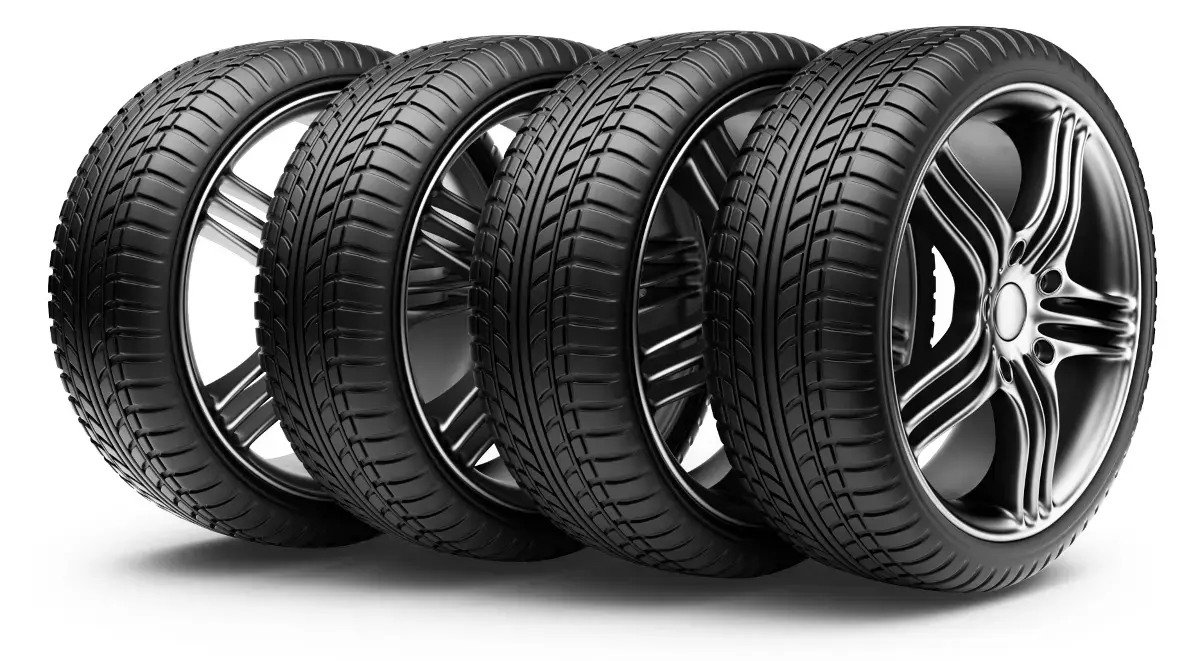

When people think about tire safety, they usually look at tread depth. That makes sense. Worn tread is easy to see. But here’s the thing: the more dangerous problem is often the one you can’t see right away; oxidation.
Tires age even when they look fine. A set can have deep tread, clean sidewalls, and barely any miles on it, yet still be unsafe because the rubber has chemically broken down over time. That’s why tire age matters just as much as tread wear, and sometimes more.
Below is a practical, in-depth guide to how tire aging works, how to check the date code, what warning signs matter, and when you need to stop driving on old tires. No guesswork. Just the stuff that actually matters.
1. Why Tires Age Even When They Look Fine
Rubber is an organic polymer. Over time, it goes through a chemical process called thermo-oxidative degradation. That’s the science behind why old tires become dangerous—even if they’ve barely been used.
In simple terms, oxygen works its way into the rubber and attacks the polymer chains. As that happens, the sulfur cross-links that give rubber its flexibility begin to harden and eventually break down.
- The mechanism: Oxygen penetrates the rubber structure and weakens the internal chemical bonds.
- The result: The rubber loses flexibility. Instead of absorbing bumps and flexing over road imperfections, it starts acting brittle.
- The hidden danger: This doesn’t just happen on the outside. It also happens internally, especially where the steel belts bond to the rubber body plies.
- What that can cause: Once that bond weakens, the steel belts can separate from the tire at highway speed. That leads to tread separation, where the tread peels off the tire carcass like a banana skin.
That’s not just a tire issue. That’s a vehicle-control issue. At interstate speed, it can turn into a crash in seconds.
The hard truth is this: a 10-year-old tire with full tread is scientifically more dangerous than a 2-year-old tire with 40% tread.
Why This Catches So Many Drivers Off Guard
This is why old RV tires, spare tires, and garage-kept weekend car tires can be risky. People assume low mileage means low danger. But mileage and age are not the same thing.
A tire can “look new” and still be structurally old. That’s what makes tire aging so deceptive.
2. How to Read the DOT Code and Find the Tire’s Real Age
If you want to know whether a tire is too old, the only reliable place to start is the DOT Tire Identification Number (TIN) on the sidewall.
Look for the letters DOT near the bead—the section where the tire meets the wheel. One important detail: the full date code is often stamped on only one side of the tire. So if you see DOT followed by a partial code but no date digits, check the inside sidewall facing the suspension.
How to Read a Modern DOT Tire Code
For tires made after 2000, you’re looking for the last four digits of the TIN.
- Format: WWYY
- Example: 3521
- Meaning: The tire was made in the 35th week of 2021
That’s your manufacturing date. Not the day you bought it. Not the day it was mounted. The actual date it was built.
If You See a 3-Digit DOT Code, Stop Right There
If the tire has a 3-digit date code—for example, 149—that means it was made before 2000. In that case, it was built in the 14th week of 1999 or possibly 1989.
Verdict: if your tire has a 3-digit date code, do not drive on it. At that point, it’s not an old tire. It’s hazardous waste with tread on it.
3. Tire Age Guidelines: What’s Safe, What’s Risky, and What’s Done
One reason drivers get confused is that there isn’t one universal global law on tire age. Different groups give different recommendations. Some are more conservative than others.
Here’s how those recommendations generally stack up:
| Source | Recommendation | Policy Details |
| Vehicle Manufacturers (OEM) | 6 Years | Many automakers, including Mercedes-Benz, Ford, and Toyota, recommend replacing tires 6 years after the production date, regardless of tread depth. |
| Safety Organizations | 6–10 Years | NHTSA: urges caution and regular inspection after 6 years. Consumer Reports: recommends replacement at 10 years max. |
| Tire Manufacturers | 10 Years (Maximum) | Companies like Michelin and Continental allow up to 10 years, but require professional annual inspections after year 5. |
| Professional Safety Standard | 6–8 Years | 6 years is the safe zone. Years 7–8 are probationary. Beyond 8 starts becoming a gamble. |
If you want the simple version, it’s this:
- 0–5 years: generally fine
- 6–7 years: caution zone
- 8–9 years: replacement is strongly recommended
- 10+ years: done
That’s the practical way to think about it.
4. What Makes Tires Age Faster Than Normal
Tire aging isn’t the same everywhere. Two tires with the same DOT code can age at very different rates depending on climate, use, and maintenance history.
Heat Is the Biggest Tire-Aging Accelerator
Heat speeds up oxidation. A tire in Phoenix, Arizona, ages much faster than one in a mild, temperate climate. According to the guidance here, a tire in a hot climate can age roughly twice as fast.
Rule of thumb: if you live in an area consistently above 80°F / 27°C, the safer lifespan drops to about 4–6 years.
Tires Need Movement More Than Most People Think
This one surprises people. Tires contain protective waxes called anti-ozonants, and those waxes migrate to the surface only when the tire rolls and flexes.
That means a vehicle that sits most of the year—like an RV, trailer, or weekend sports car—can actually be at higher risk of blowout than a daily driver. Static tires dry rot faster because those protective compounds never fully work their way to the surface.
Poor Inflation History “Cooks” the Tire from the Inside
If a tire spent time under-inflated, the extra sidewall flex created excessive internal heat. That heat permanently weakens the structure.
Even if the tire later gets aired up and looks normal, the damage may already be baked in. That’s why maintenance history matters almost as much as the date code itself.
5. The Warning Signs That Mean an Old Tire Is Becoming Dangerous
If your tires are over 5 years old, inspect them now—not the next time you happen to be at the shop. Use a bright flashlight and take your time.
- Ozone cracking (weather checking): Look for fine spider-web cracks in the tread grooves or on the sidewall.
- Minor: hairline cracks. Monitor them.
- Major: cracks deep enough to expose internal texture or wider than 1 mm. Replace the tire.
- Sidewall deformation: Run your hand across the sidewall. Any bubbles, bulges, or uneven waves mean the internal ply structure has failed.
- Texture test: Press your thumbnail into the tread.
- Pass: It leaves a temporary indentation and feels grippy.
- Fail: It feels like hard plastic and your nail slides off. That tire has hardened and won’t provide proper traction in an emergency.
- Discoloration: A chocolate-brown tone can be normal oxidation. But if the tire looks dusty, grey, or white, it’s severely dried out.
If you’re seeing sidewall cracks on a 7- or 8-year-old tire, the tread depth almost doesn’t matter anymore. The structure is already telling you the tire is aging out.
6. A Realistic Tire-Age Example: Why Good Tread Can Fool You
Let’s use the hypothetical case laid out in the original analysis, because it mirrors what shops see all the time.
Hypothetical vehicle data:
- Vehicle: Weekend sports car or RV
- Tire DOT code: 4214 (42nd week of 2014)
- Visual condition: Great tread depth at 8/32″, garage kept, minor sidewall cracking
- Climate: Moderate
What This Tire Is Really Telling You
- Age calculation: The tire is approaching or has passed 10 years old.
- Chemistry: Even though it looks healthy, the internal sulfur bonds have degraded and the rubber has lost a large portion of its elasticity.
- Risk profile: Minor sidewall cracking means the anti-ozonants are depleted. The tire may still hold air and look decent, but the risk of tread separation at highway speed is high.
Recommendation: replace it immediately. Deep tread in this situation is a false sense of security.
This is exactly why older low-mileage tires can be more dangerous than heavily used but newer ones. The tread fools people into trusting something that has already chemically aged out.
7. The Tire Age Decision Matrix You Can Actually Use
Once you’ve found the DOT date code, use this matrix to decide what to do next.
| Tire Age Range | Status | Action Required |
| 0 – 5 Years | GO | Routine maintenance only—check pressure, rotate, and inspect regularly. |
| 6 – 7 Years | CAUTION | Inspect annually for dry rot. In hot climates, replacement should be considered. |
| 8 – 9 Years | WARNING | Replacement recommended. Avoid sustained high-speed driving and heavy loads. |
| 10+ Years | NO-GO | DANGER. Replace immediately. Do not drive on them. That includes the spare. |
8. So, How Old Is Too Old for Tires?
If you want the safest answer, 6 years is where you start paying very close attention. At 7 or 8 years, you’re into the zone where careful inspection matters a lot. By 10 years, the debate is over—the tire is too old.
Tires are the only part of your vehicle touching the road, and the contact patch is about the size of a human hand. That’s all you get. Don’t gamble your safety—or anyone else’s—on old rubber just because the tread still looks decent.
Check the DOT code today. If the number says your tires are too old, replace them before they make the decision for you.