
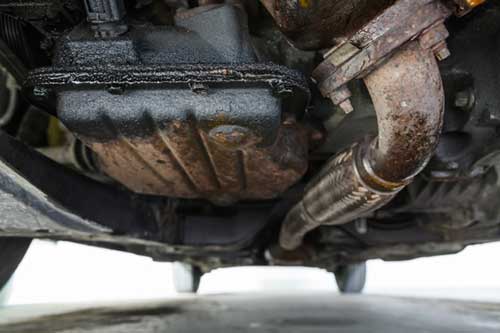
If you had to name the engine part that stores oil for lubrication, the answer is simple: the oil sump, also known as the oil pan.
Most people picture it as nothing more than a metal container bolted to the bottom of the engine. But that’s only half the story. In reality, the oil sump is a carefully engineered part of the engine’s lubrication system, and if it fails, the rest of the engine can go downhill fast.
Why the Oil Sump Matters More Than Most Drivers Realize
At the very bottom of the internal combustion engine’s lubrication system sits the oil sump. It may look simple from the outside, but it does far more than just “hold oil.”
It performs three core jobs, and each one matters:
- Fluid retention: It stores the engine’s motor oil and makes sure the oil pump always has a steady supply to pull from.
- Thermal regulation: It helps shed heat by radiating thermal energy from the oil into the passing air under the vehicle.
- De-aeration: It gives air bubbles time and space to separate from the oil before that oil is sent back into the engine’s bearings.
That last point is easy to overlook. But here’s the thing—oil mixed with too much air doesn’t protect engine bearings properly. And once bearing protection starts to fail, damage can happen quickly.
Inside the Oiling System: The Parts That Keep the Sump Working
The oil sump doesn’t work alone. It’s part of a larger fluid-control system, and the supporting parts around it are there for one reason: to keep the engine from losing oil pressure when it matters most.
That’s especially important during hard acceleration, sudden braking, or aggressive cornering. Think of a car on a racetrack or even a truck hitting a steep incline—the oil inside the pan moves around like any other liquid. If the system isn’t designed to control that movement, the oil pump can suck air instead of oil. That’s called oil starvation, and it can destroy an engine.
- The Oil Pickup Tube & Strainer: This is the “straw” the oil pump uses to draw oil from the sump. It sits at the deepest part of the pan with a carefully engineered clearance from the bottom. The built-in wire-mesh strainer keeps larger debris—like shaved metal or broken gasket material—from entering the oil pump or clogging small oil passages.
- Baffle Plates: These are internal walls inside the sump. Under high G-forces, oil sloshes violently, which is known as surge. Baffles help keep the oil near the pickup tube, often using one-way trap doors or slots, so the pump keeps drawing oil instead of air. No oil pressure means immediate risk to the bearings.
- Windage Trays: These sit between the crankshaft and the oil pool. As the crankshaft spins at high RPM, it creates a kind of localized storm inside the crankcase. That wind can whip the oil into foam. And foamy oil can’t carry hydrodynamic bearing loads properly. A windage tray helps strip oil off the crank, reduce aeration, and cut parasitic drag on the rotating assembly—which can free up horsepower.
- The Drain Plug & Crush Washer: This is the service point for oil changes. The drain plug uses a sacrificial crush washer, usually made of copper or aluminum, which deforms under the correct torque to create a leak-proof seal.
- Sump Gasket / Liquid Sealant: This seals the joint between the engine block and the oil pan. Depending on the engine design, that seal may come from a molded rubber or cork gasket, or from a carefully applied bead of RTV silicone.
Wet Sump vs. Dry Sump: Why the Design Changes Everything
Once you get into performance engines, the question isn’t just where the oil sits. It’s how the engine stores and manages it.
Most vehicles use a wet sump system. In that setup, oil drains by gravity into the pan at the bottom of the engine, and the oil pump draws straight from that pool.
A dry sump system works differently. Instead of relying on a deep oil pan, it uses a shallow scavenge pan and multiple pumps that pull oil out almost immediately and send it to a separate external reservoir. From there, the main pressure pump feeds the engine.
This is why dry sump systems show up in Formula 1, Le Mans prototypes, and high-end supercars. When a car is pulling serious G-forces, oil control becomes a survival issue for the engine, not just a packaging detail.
Wet Sump vs. Dry Sump Architecture at a Glance
| Parameter | Wet Sump System | Dry Sump System |
| Location of Oil | Internal (deep pan bolted under the block) | External (tall, remote cylindrical reservoir) |
| Complexity & Weight | Low (single internal pump, gravity return) | High (multiple external scavenge pumps, external lines, belt drives) |
| Cost | Highly economical to manufacture and service | Exceedingly expensive ($3,000 – $10,000+ upgrade) |
| Performance under G-Force | Prone to oil starvation during sustained high lateral/longitudinal G-loads | Immune to starvation; external tank ensures continuous solid column of oil |
| Center of Gravity (CoG) | High (engine must sit higher to clear the deep pan) | Low (shallow scavenge pan allows engine to be mounted inches lower in the chassis) |
| Common Applications | Consumer vehicles, light trucks, entry-level sports cars | Professional motorsports, extreme off-road, high-end exotics (e.g., Porsche GT3, Corvette Z06) |
What Oil Sumps Are Made Of—and Why That Matters
The sump’s material affects more than weight. It changes how the pan handles heat, impact, corrosion, and long-term wear.
Most oil sumps are made from one of three materials:
- Stamped Steel: Traditional and cost-effective.
- Pros: Very malleable. If road debris hits it, steel usually dents instead of cracking open, so the oil often stays inside.
- Cons: Poor at shedding heat, heavier than other materials, and vulnerable to rust.
- Cast Aluminum: The modern standard for many passenger and performance vehicles.
- Pros: Excellent at dissipating heat. It’s also rigid, and many cast aluminum pans are designed as stressed members that bolt to the bell housing to increase powertrain stiffness.
- Cons: Brittle. A hard hit from a rock or bottoming out can crack or shatter the pan, causing immediate oil loss.
- Composite Plastics (Polyamides): Increasingly used in weight-focused vehicle design.
- Pros: Lightweight, corrosion-resistant, and easy to mold into complex shapes around modern subframes.
- Cons: Can warp after repeated extreme thermal cycles, and it doesn’t resist impact as well as steel.
In the real world, that means a steel pan might survive a bad scrape with a nasty dent, while a cast aluminum one may crack and dump the engine’s oil onto the road in seconds.
The Most Common Oil Sump Failures—and How Pros Diagnose Them
Even a solid oiling system wears down over time. Heat cycles, poor maintenance, overtightened drain plugs, and road damage all take their toll.
Here’s how experienced technicians typically approach the most common failures:
- Gasket / RTV Degradation: This is the most common failure. Over time, heat causes rubber gaskets to harden and RTV sealant to shrink.
- Diagnostic approach: Clean the engine thoroughly, add UV fluorescent dye to the oil, run the engine to operating temperature, and trace the exact source of the leak with a UV light. That helps rule out leaks from higher up—like a rear main seal—that can drip downward and look like a pan leak.
- Stripped Drain Plug Threads: Usually caused by over-tightening, often with pneumatic tools or without a torque wrench, especially on aluminum pans.
- Diagnostic approach: Inspect the threads visually.
- Repair: Don’t replace the whole pan right away. A Time-Sert, Heli-Coil, or oversized drain plug may solve the problem.
- Impact Damage & Pickup Tube Starvation: A steel pan may not leak after an impact, but a dent can still push the pan upward until it sits nearly flush against the pickup tube.
- Diagnostic approach: If the vehicle has a heavily dented pan and a low-oil-pressure warning, suspect pickup tube restriction immediately. The pan needs to come off so the clearance can be measured again.
- Sludge Buildup: Usually caused by neglected oil changes, low-quality conventional oil, or short trips that never let the engine burn off condensation.
- Diagnostic approach: Remove the drain plug and inspect inside with a borescope. If you see thick, gel-like carbon deposits, the pickup screen may already be restricted.
- Repair note: The pan should be removed and cleaned manually. Chemical flushes are risky because they can break loose chunks of sludge and send them straight into the pickup screen.
Best Practices That Keep the Oil Sump and Lubrication System Healthy
If you want the lubrication system to last, the basics matter. A lot. Not glamorous, but absolutely worth it.
- Respect torque specs: Tighten the drain plug to the manufacturer’s exact spec using a calibrated torque wrench. That’s typically 25–30 lb-ft. “Tight enough” isn’t a professional measurement.
- Never reuse crush washers: A crush washer works because it deforms to fill tiny imperfections between the plug and the pan. Once it’s been crushed, it’s done. Replace it every time.
- Stick to oil change intervals: Use quality synthetic oil that can handle high shear loads and heat, and don’t stretch oil change intervals if you want to avoid sludge.
- Protect the pan physically: If the vehicle is lowered, used off-road, or driven in rally-style conditions, a steel or aluminum skid plate is a smart investment. It can keep a cast-aluminum sump from shattering after one hard impact.
Ignore the oil sump because it sits out of sight, and sooner or later the rest of the engine will force you to pay attention.

