
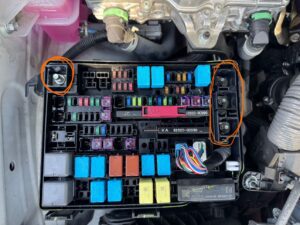

If your Toyota suddenly loses interior lights, your key fob stops responding, and the clock keeps resetting every time you switch off the ignition, it is easy to assume you are facing a serious electrical failure. In many cases, though, the real culprit is much smaller and far less dramatic: the DCC fuse. It is one of those components most drivers never notice until several unrelated systems appear to fail at once.
From a diagnostic perspective, the DCC fuse is important because it sits at the intersection of convenience electronics, memory functions, and low-level power management. That means a problem with this single fuse can create symptoms that feel much larger than the part itself. The good news is that it is usually easy to inspect, test, and replace. The better news is that understanding how it works can save you time, prevent unnecessary parts swapping, and help you troubleshoot Toyota electrical issues with far more confidence.
Table of Contents
In this guide, I’ll explain what the Toyota DCC fuse actually does, why Toyota removes or relocates it during shipping on some models, how its amperage and fuse style vary across platforms, what symptoms show up when it is missing or blown, where it is usually located, how to test it properly with a multimeter, and how to trace deeper faults when replacing the fuse does not solve the problem. I will also clarify the difference between the DCC fuse, the short pin, and ECU-DCC circuits—because Toyota’s terminology can be confusing even for experienced owners.
Think of this as your practical, expert-level field guide to one of Toyota’s most overlooked electrical components.
What Is a DCC Fuse?
The DCC fuse, often described as the Direct Current Control fuse, is one of Toyota’s key power-management components for circuits that require constant battery voltage. In some Toyota service material, it may also appear under the label D/C Cut fuse. Both terms refer to the same core idea: this fuse is part of the system that supplies, protects, and in some cases interrupts battery power to vehicle electronics that remain alive even when the engine is not running.
That last point matters. A modern Toyota does not become fully “dead” when you turn the ignition off. Several systems remain partially awake or at least continuously powered. These systems store memory, monitor inputs, or wait for commands from devices such as the key fob. The DCC fuse helps manage that constant-power path.
Typically, the DCC fuse is tied to functions such as:
- interior dome, map, and cargo lights,
- clock and radio memory retention,
- remote keyless entry,
- Body ECU or body control functions,
- Smart Key support systems,
- and memory-dependent comfort settings such as climate-control retention.
If you want a simple way to picture it, imagine the DCC fuse as a gatekeeper. It does not power the entire vehicle, but it manages one of the most important always-on electrical neighborhoods in the car. When that gate closes—whether because the fuse is blown, removed, not installed correctly, or affected by a downstream short—the vehicle suddenly loses several “small” conveniences that together feel like a major electrical breakdown.
This is why the DCC fuse is so deceptive in diagnosis. A driver may think the key fob is faulty, the radio is failing, the lighting circuit is damaged, and the Body ECU has gone bad—all at the same time. In reality, one interrupted power supply can explain them all.
Why the DCC Fuse Matters More Than Most Drivers Realize
In automotive electrical design, the parts that cause the biggest confusion are not always the biggest parts. Relays, modules, fuse links, and small control fuses can create symptoms that look random because they affect multiple systems at once. The DCC fuse is a textbook example of that principle.
Here is why it matters:
- It supports constant battery feed to systems that must retain data after shutdown.
- It protects critical low-current electronics from overload and short-circuit damage.
- It acts as part of Toyota’s battery-preservation strategy during shipping and storage.
- It can disable multiple vehicle conveniences at once, creating misleading fault patterns.
- It influences parasitic draw behavior, which becomes important in battery-drain diagnosis.
From an engineering standpoint, Toyota’s use of the DCC fuse is elegant because it serves both protection and logistics functions. In normal vehicle operation, it behaves like a protective fuse in a constant-power circuit. In shipping and storage, it can become part of a controlled power-reduction strategy. That dual role is one reason it is more interesting than a standard accessory fuse.
Why Toyota Removes It From New Cars
One of the least-known facts about Toyota electrical systems is that the DCC fuse is often intentionally removed, relocated, or left in a non-active transport position before the vehicle leaves the factory. This is not a mistake. It is a battery-preservation strategy.
Modern vehicles continue drawing battery power even when parked. This low but continuous current consumption is called parasitic draw. It is perfectly normal within limits. Systems such as the clock, memory functions, immobilizer circuits, remote-entry receivers, and body control electronics all require some standby power. A healthy modern vehicle might draw somewhere around 20mA to 85mA depending on platform design, module sleep behavior, and feature complexity.
That may sound insignificant, but over weeks of storage or overseas shipping it adds up. A Toyota battery may not have the reserve capacity to survive months of transport while feeding full standby demand the entire time. By interrupting the DCC-powered circuits during shipping, Toyota dramatically reduces battery depletion. In practical terms, that helps ensure the vehicle arrives at the dealership with a usable, healthy battery rather than a deeply discharged one.
Even a small steady current draw becomes a major battery load when multiplied across days, weeks, and shipping delays.
This is smart engineering rather than overcomplication. Battery damage from deep discharge begins long before many owners realize there is a problem. Toyota’s transport strategy is designed to avoid that damage before the vehicle ever reaches retail delivery.
In other words, if a new Toyota seems to have missing memory-powered functions before pre-delivery preparation, that does not automatically mean anything is broken. It may simply mean the DCC or related transport-power component has not yet been moved to its active operating position.
DCC Fuse Specs: Amperage and Color Codes
Not all Toyota DCC-related fuses are the same. As Toyota vehicles have become more electronically complex, the fuse ratings and physical fuse styles have changed. Older vehicles often relied on simpler 20A protection for dome and always-on memory circuits, while newer platforms distribute the load differently and may use multiple DCC-related fuse ratings depending on subsystem function.
Here is a simplified reference table for common DCC-related fuse values and styles:
| Amperage | Typical Color | Common Use | Fuse Style |
|---|---|---|---|
| 5A | Tan / Orange | ECU-DCC logic circuits on newer compact platforms | Micro Blade |
| 10A | Red | Secondary ECU-DCC supply on some hybrid and TNGA-based vehicles | Micro Blade |
| 20A | Yellow | Older DOME / DCC-style constant-power systems | Mini Blade |
| 30A | Green | Modern D/C Cut main power management circuits | Low-Profile Mini |
These ratings are not cosmetic details. The fuse value must match the circuit design. Installing the wrong amperage can lead to two bad outcomes:
- If the fuse rating is too low, it may blow repeatedly even under normal load.
- If the fuse rating is too high, the fuse may fail to protect the wiring and electronics during an overload.
From a diagnostic perspective, correct replacement matters as much as diagnosis itself. A DCC fuse that keeps failing should not be “fixed” by fitting a larger fuse. That only hides the real problem and increases risk to downstream modules and wiring.
What Happens When the DCC Fuse Is Missing or Blown?
When the DCC fuse is missing, blown, or not seated properly, the symptoms can seem surprisingly widespread. This is because the fuse feeds more than one isolated convenience circuit. It often supports a cluster of low-current systems that drivers interact with daily, which is why the failure feels immediate and irritating.
Typical symptoms include:
| Affected System | Likely Driver Complaint |
|---|---|
| Interior Lighting | Dome, map, cargo, or trunk lights stop working |
| Clock / Radio Memory | Clock resets and saved stations disappear after shutdown |
| Remote Entry | Key fob stops locking or unlocking the vehicle |
| Body ECU Functions | Unexpected warning behaviors or intermittent convenience failures |
| Climate Memory | HVAC settings return to defaults |
| ABS / VSC Related Modules | Dash warning lamps may appear on some models |
One of the most important clues is simultaneity. If several unrelated convenience features fail together, that usually suggests a shared power supply or control path rather than multiple independent failures. In Toyota vehicles, the DCC fuse is one of the first places I would look when the pattern includes dome lights, keyless entry, and memory loss all at once.
The Body ECU deserves special mention. It often needs continuous power to remain responsive to remote-entry commands. If that constant feed disappears, the ECU effectively stops “listening” in the way drivers expect. That is why key fob failure can show up immediately even when the fob battery itself is perfectly fine.
Where to Find the DCC Fuse on Your Toyota
There is no single universal DCC fuse location across all Toyota models. Placement depends on generation, platform, and electrical architecture. In many vehicles, the main DCC or D/C Cut fuse lives in the engine-bay fuse and relay block. On others, related convenience fuses may also appear in the interior fuse panel. This is why owners should always compare symptoms with the fuse-box diagram rather than relying on guesswork.
Toyota Camry
On many Camry generations, the primary DCC or DOME-related master protection is found in the engine compartment fuse box, usually near the battery or along the driver-side fender area. Some models also have an interior fuse panel under the dash, but the always-on master feed is commonly under the hood.
If a Camry shows dome-light failure, memory reset, and keyless-entry issues all together, the engine-bay fuse block is the most efficient first inspection point.
Toyota Corolla
On Corolla models from the late 2000s forward, the DCC or DOME fuse is often found in the engine-bay fuse box. Earlier versions often used a 20A yellow mini-blade fuse. Later generations moved to updated fuse-box layouts, but the right side of the battery area remains a common location for the under-hood box. Some interior fuse panels are located high under the dashboard and can be awkward to access, which is another reason technicians often start under the hood first.
Toyota RAV4
On many RAV4 generations, including hybrid variants, the main DCC-style transport or convenience-power fuse remains in the engine compartment relay block even if the 12V auxiliary battery is located elsewhere. This can be counterintuitive for owners, especially on hybrid layouts where the battery may sit in the rear cargo area. Older RAV4 generations can also show audio-system symptoms when DCC-related power is interrupted, which sometimes leads owners to chase stereo problems before checking the actual fuse.
Toyota Tacoma
On Tacoma trucks, the engine-bay fuse box is generally positioned near the driver-side fender and includes a clearly marked layout under the cover. These trucks are commonly modified with aftermarket lighting, winches, and accessory wiring, so DCC-related failures can sometimes be the result of overloading or poorly integrated constant-power accessories.
The practical lesson across all models is this: start with the engine-bay fuse block unless your model-specific diagram clearly indicates otherwise. It is usually the most likely home of the primary DCC or D/C Cut fuse.
How to Test a DCC Fuse With a Multimeter
Many owners still rely on visual inspection when checking fuses. That is understandable, but not ideal. A fuse can look intact and still be electrically open because of a fine internal crack, overheated terminal, or hairline break you cannot see through the plastic body. If you want a reliable answer, test it with a digital multimeter.
There are two main methods: the voltage drop test and the continuity test.
Voltage Drop Test (Fuse Installed)
- Set the digital multimeter to DC voltage.
- Leave the fuse installed in the fuse box.
- Touch the multimeter probes to the two exposed metal test tabs on top of the fuse.
- If the reading is approximately 0 volts, the fuse is usually good.
- If the reading is approximately battery voltage (often around 12V), the fuse is likely blown.
- If one side of the fuse shows power and the other side does not, that also points to an open fuse element.
This test is fast and efficient because it allows you to check the fuse without removing it.
Continuity or Resistance Test (Fuse Removed)
- Switch the meter to resistance (Ω) mode or continuity mode.
- Remove the fuse from the fuse box.
- Touch one probe to each blade terminal of the fuse.
- A healthy fuse typically shows very low resistance, often under 1.0 ohm.
- If the display shows OL, infinite resistance, or no continuity tone, the fuse is open and needs replacement.
From a diagnostic standpoint, I prefer the voltage-drop method when possible because it tests the fuse in the actual circuit environment. But either method is better than guessing by eye.
DCC Fuse vs. Short Pin vs. ECU-DCC: What’s the Difference?
Toyota terminology can confuse even technically minded owners because several related components perform similar logistics or power-distribution functions but are not interchangeable. The three terms that most often get mixed up are DCC fuse, Short Pin, and ECU-DCC.
| Component | Overload Protection? | Main Role | Typical Failure Effect |
|---|---|---|---|
| DCC Fuse | Yes | Circuit protection plus battery-drain management | Loss of convenience functions and memory power |
| Short Pin | No | Shipping/storage bridge in older transport strategies | Total interruption or incorrect bypass of B+ path |
| ECU-DCC | Yes | Precision logic power for electronic modules | Module warnings, communication faults, safety-system alerts |
The DCC fuse is the normal protected fuse element used to supply and protect a specific always-on circuit group.
The Short Pin is different. It is basically a solid conductor or bridge used in some older Toyota transport configurations. It is not a sacrificial fuse element. It is there to connect or disconnect circuits for shipping logic, not to provide proper overload protection. That is why it should never be treated as a substitute for a real fuse.
The ECU-DCC arrangement, seen on newer platform architectures, further refines the idea by splitting some of the load and logic functions across more precise fuse branches. This allows Toyota to cut power to certain convenience features while preserving operation of critical electronic systems that need to maintain limited functionality.
The practical takeaway is extremely important: these parts are related in concept but not interchangeable in function. Using the wrong part or misunderstanding its role can create diagnostic confusion or even serious electrical risk.
Pre-Delivery Service: What Dealers Must Do With the DCC Fuse
When a new Toyota reaches the dealership, the vehicle is not always in its final “customer-ready” electrical state. Pre-Delivery Service (PDS) includes a mandatory process of restoring or activating transport-disabled systems. The DCC fuse or related transport-power component is often part of that procedure.
On some models, the fuse is shipped in a blank or storage slot within the engine-bay relay block. That slot may physically resemble a normal active location, but electrically it functions as a holding position. The technician must move the fuse into its operating slot before customer delivery.
Once the fuse is installed into the live circuit, several systems may require initialization or calibration because they have been without their full normal battery feed during transport. Common examples include:
- Power windows: one-touch operation may need to be relearned.
- Power liftgate or tailgate: travel range and position may need calibration.
- Steering angle or electronic stability references: some platforms require wheel-centering or lock-to-lock routines.
- Infotainment setup: language, region, clock, and personalization screens may need initial confirmation.
From a service perspective, technicians may also clear stored communication or low-voltage trouble codes using Toyota’s diagnostic software. These codes may have appeared because certain ECUs woke up during transport without their full expected circuit support. That does not necessarily mean anything was broken; it simply means the vehicle had not yet been fully initialized into retail mode.
This explains why some new owners occasionally discover missing convenience functions on a just-delivered vehicle: a pre-delivery step may have been missed or completed incorrectly.
Aftermarket Electronics and DCC Fuse Failures
One of the most common reasons DCC-related circuits fail after years of normal operation is not Toyota design weakness at all—it is aftermarket modification. Constant-power circuits are attractive to accessory installers because they provide always-available 12V for devices that need standby operation. Unfortunately, that convenience also makes them vulnerable to overload, poor wiring practices, and parasitic drain.
Dash Cams With Parking Mode
Dash cams with parking mode are a frequent source of DCC-related problems. These devices need constant battery feed so they can keep recording or monitoring motion while the vehicle is parked. If the dash cam’s regulator fails, its wiring is poor, or its low-voltage cutoff is inadequate, it can overdraw the circuit or flatten the battery. In some cases, an internal short or adapter failure can blow the DCC fuse outright, killing dome lights, remote entry, and memory functions all at once.
Add-a-Circuit Fuse Taps
Fuse taps are convenient, but they are often misused. If installed carelessly in the DCC slot, they can overload the terminal connection, disrupt contact quality, or prevent the fuse-box cover from sealing properly. Once moisture enters, corrosion can spread through the fuse terminals and create intermittent power loss that is much harder to diagnose than a simple blown fuse.
From an expert perspective, constant-power circuits should be modified cautiously. If an accessory needs standby power, it should be integrated with proper protection, correct fuse sizing, and a clear understanding of the circuit’s existing load. The DCC fuse is not an unlimited accessory port. It is part of a calibrated power-management system.
How to Trace a Parasitic Draw Through the DCC Circuit
If replacing the DCC fuse restores function but the new fuse blows again—or if the battery keeps dying even though the fuse tests good—you may be dealing with a parasitic draw problem somewhere downstream. This is where diagnosis becomes more technical, and a structured method is essential.
The goal is to identify whether an always-on component in the DCC-controlled branch is drawing more current than it should when the car is parked.
Basic Parasitic Draw Test Procedure
- Make sure the vehicle is shut down completely and all obvious loads are off.
- Disconnect the negative battery cable.
- Connect an ammeter in series between the negative battery terminal and the cable.
- Do not rush. Wait for the vehicle’s control network to enter sleep mode. Depending on model, this may take 15 to 60 minutes.
- Observe the stabilized current draw. In many modern vehicles, anything notably above roughly 50–85mA deserves attention.
- Remove the DCC fuse and watch the current reading.
- If the draw drops sharply, the problem is likely in a DCC-controlled branch.
- Reinstall the DCC fuse and begin isolating downstream circuits one at a time by pulling related convenience fuses until the excessive draw disappears.
Common downstream offenders include:
- faulty dash cam power modules,
- aftermarket remote start systems,
- stuck interior-light relays,
- body ECU wake-up issues,
- or poorly integrated alarm systems.
The most important rule in parasitic draw diagnosis is patience. If you measure too early—before the network sleeps—you will read normal temporary module activity and may misdiagnose the car. Always let the system settle before drawing conclusions.
Common DCC Fuse Diagnostic Mistakes
Because DCC-related symptoms span several systems, owners and even inexperienced technicians sometimes misdiagnose the problem. Here are the most common errors I see:
- Replacing the key fob first: When the real issue is missing ECU standby power.
- Assuming the radio is defective: When the true problem is loss of memory feed through the DCC branch.
- Judging a fuse by sight alone: Instead of confirming it electrically with a multimeter.
- Installing the wrong fuse rating: Which either causes repeat failure or removes proper circuit protection.
- Confusing a short pin with a proper fuse: A particularly dangerous mistake.
- Ignoring aftermarket wiring: Even though it is often the real cause of overload or battery drain.
Good diagnostics begin with pattern recognition. When multiple convenience systems fail together, look for their shared feed before blaming each component individually.
The Future of the DCC Fuse
As vehicles become more software-defined, the physical role of components like the DCC fuse may gradually evolve. Newer electrical architectures increasingly rely on high-side power switches, smart FETs, and centralized gateway control to manage sleep states and standby draw electronically rather than through simple removable hardware. In that future, transport mode may be activated through software commands rather than by physically moving a fuse.
That said, for current-generation internal-combustion and hybrid Toyotas on the road, the DCC fuse remains a remarkably effective solution. It is simple, inexpensive, easy to service, and highly effective at solving both battery-preservation and circuit-protection needs. In an era of increasingly complex vehicle electronics, that simplicity is impressive.
In many ways, the DCC fuse represents a kind of elegant engineering compromise: low cost, high practical value, and a surprisingly broad influence on daily vehicle behavior.
Final Thoughts
The Toyota DCC fuse may be physically small, but its importance is anything but small. It supports some of the most noticeable convenience systems in the vehicle, helps manage constant-power behavior, plays a role in shipping battery protection, and often sits at the center of confusing multi-system electrical complaints. That is why understanding it gives you an advantage whether you are an owner, enthusiast, technician, or simply a driver trying to make sense of sudden electrical weirdness.
If your Toyota loses dome lights, forgets its clock settings, ignores your key fob, or suddenly behaves as though multiple comfort systems failed at once, do not start with expensive control modules. Start with the DCC fuse and the circuits around it. Inspect it properly. Test it with a meter. Confirm the rating. Look for downstream loads and aftermarket accessories. That simple sequence will solve—or at least clarify—a surprising number of Toyota electrical complaints.
In practical automotive diagnosis, small components often tell the biggest stories. The DCC fuse is one of them.