
So you’re thinking about removing your catalytic converter for better engine performance, but you’re worried about failing your next emissions test. That’s a legitimate concern. In most states, no cat means no passing grade.
But here’s the thing, there are ways people bypass the catalytic converter and still manage to get through emissions testing. Whether this is the right move for you depends on your vehicle, your local laws, and how comfortable you are with modifications. Let’s walk through how it all works.
What Actually Happens During an Emissions Test
Before you try to pass without a cat, it helps to understand what the test actually involves. It’s not just one check, it’s several, and each one can trip you up if you’re not prepared.
A trained technician plugs a diagnostic device into your vehicle’s OBD port and scans for Diagnostic Trouble Codes (DTCs). If your car’s computer has flagged any emissions-related problems, they’ll show up here. That’s your first hurdle.
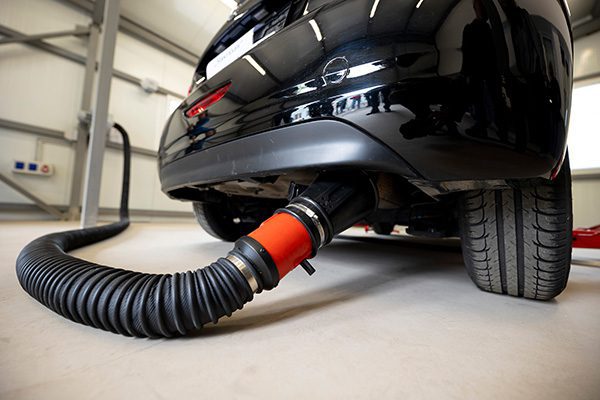
For older vehicles or those without OBD capability, a tailpipe emissions test is used instead. A probe goes into the tailpipe and directly measures the pollutants coming out. This is harder to fake because it’s measuring actual exhaust output, not just what the computer says.
On top of the electronic and tailpipe checks, there’s also a physical inspection of your emissions system. The inspector looks at a long list of components for leaks, damage, or missing parts:
- Oxygen sensor
- Catalytic converter
- Power Control Module (PCM)
- Exhaust manifold and pipes
- Evaporative emission canister
- Fuel tank pressure sensor
- Canister purge valve and vent valve
- Fuel fill cap
- Fuel tank vapor control valve
- Evaporative two-way valve
- Vapor recirculation tube
Any damage or missing parts in this system can cause a failure. And the catalytic converter; It’s one of the biggest factors in whether your vehicle’s emissions stay within acceptable limits.
What the Catalytic Converter Actually Does
The catalytic converter sits between the exhaust manifold and the rest of the exhaust system, underneath your vehicle. Its job is to filter harmful substances, particularly nitrogen oxides, out of your exhaust gases before they exit the tailpipe.
Inside the converter, metal catalysts trap nitrogen as exhaust gas flows through. It’s a chemical process that converts dangerous pollutants into less harmful ones.
The cat also has sensors that monitor oxygen levels in the exhaust. When those sensors detect high nitrogen oxide levels (meaning low oxygen), they send that data to the PCM. If something’s off or if the catalytic converter itself is damaged or missing, the PCM triggers warning lights and stores error codes.
Those stored codes are exactly what the emissions test scans for. No cat, codes get thrown, test gets failed. That’s the chain reaction you need to break if you’re going catless.
How People Pass Emissions Without a Catalytic Converter
Some car owners remove the catalytic converter because it creates a restriction in the exhaust flow. Without that restriction, you get less backpressure, better gas flow, lower operating temperatures, and in theory, more horsepower. That’s the appeal.
The obvious problem? Your vehicle’s emissions will increase, and your PCM will know the cat is gone. Both of those things mean a failed emissions test.
That said, there are modifications people use to work around this.
Straight Pipes and Downpipes
A straight pipe runs directly from the engine cylinders to the exhaust system with no catalytic converter or muffler in the path. It’s the simplest catless setup, just an unobstructed pipe.
If you’re running a turbocharged engine, a straight pipe might not be an option. In that case, a downpipe is the alternative. Downpipes come in two versions:
- Catted downpipe – Includes a high-flow catalytic converter. Less restriction than stock, but still has a cat.
- Catless downpipe – No catalytic converter at all. Maximum flow, but maximum emissions risk.
The Defouler Trick
Installing a straight pipe or catless downpipe alone won’t cut it. Your PCM will immediately detect the missing cat and throw codes—which means automatic failure at the emissions test.
That’s where a defouler comes in. A defouler is essentially a spacer that tricks your PCM into thinking the catalytic converter is still there. It repositions the downstream oxygen sensor so it reads differently, preventing the system from flagging the missing cat.
Without a defouler, the PCM stores catalytic converter-related trouble codes. Those codes show up during the OBD scan portion of the emissions test, and it’s game over.
Five Common Causes of Emissions Test Failures
Even with a catalytic converter in place, plenty of other issues can cause a failed test. If you’re trying to pass without one, you need everything else to be spotless.
1. A damaged or failing catalytic converter – When the cat degrades, it stops filtering properly and your vehicle starts emitting higher levels of carbon dioxide and other pollutants. This is actually the most common cause of emissions failures.
2. Electrical problems – Wiring issues can trigger the check engine light for no mechanical reason, or they can affect sensors like the oxygen sensor. Either way, the result is stored error codes that show up during testing.
3. Exhaust system damage – Clogs, leaks, or damaged oxygen sensors anywhere in the exhaust system will cause a failure. A clogged exhaust can also cause engine misfires and overheating problems that go way beyond just the emissions test.
4. Fuel and combustion issues – Your engine needs the right fuel-to-air ratio for clean combustion. When that mixture is off, combustion is incomplete, and the byproducts include higher levels of pollutants that the test will catch.
5. Ignition problems – The spark plug ignites the fuel-air mixture in the cylinder. A bad spark plug means incomplete combustion, unburned fuel escapes into the exhaust system, and that’s a guaranteed emissions failure. It’s a cheap part that causes expensive problems when neglected.
The Reality of Going Catless
Can you pass an emissions test without a catalytic converter? Technically, yes, with the right modifications done precisely. A properly installed straight pipe or catless downpipe with a defouler can prevent your PCM from throwing codes, which gets you past the OBD scan.
But here’s what you need to keep in mind: the modification has to be done with precision. One wrong step and your vehicle will still fail. If you’re not confident in your mechanical skills, this isn’t a YouTube and hope for the best situation. Have a professional handle it.
And be honest with yourself about the legal side. In many states, removing a catalytic converter is illegal regardless of whether you can pass the test. Know your local laws before you start unbolting anything, because passing the test doesn’t help much if you get fined for the modification itself.