
There are few things more jarring than starting your car, expecting a smooth commute, and instead being greeted by a glowing dashboard warning: “Toyota Parking Brake Unavailable.” It leaves you in a state of purgatory; hovering somewhere between immediate panic and utter confusion. Is the car safe to drive? Is this going to cost a fortune? Relax. While the alert looks menacing, it isn’t always the harbinger of mechanical doom. In many cases, it’s a simple cry for help caused by a door left slightly ajar or an aging battery.
However, in other instances, it serves as a digital breadcrumb trail leading to a deeper mechanical issue. In this comprehensive guide, we will dissect exactly what triggers this warning, analyze the impact on your wallet, and walk you through how to fix it yourself (when the automotive gods allow).
Decoding the Message: What Does “Parking Brake Unavailable” Actually Mean?
To understand the error, you have to understand the machine. Here is the reality: seeing this message does not necessarily mean your physical brakes are broken.
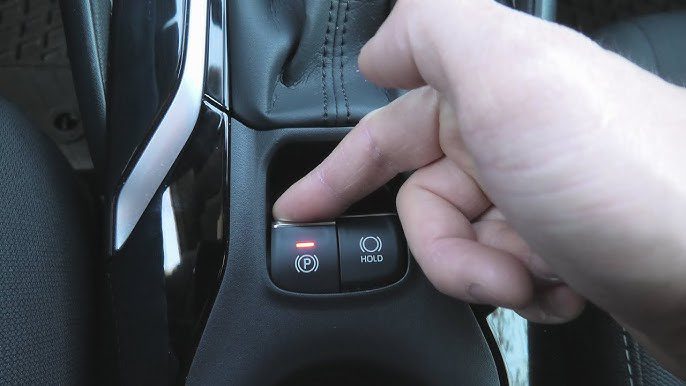
Gone are the days of the satisfying mechanical “yank” of a handbrake lever. Modern Toyotas utilize an Electronic Parking Brake (EPB). This system replaces steel cables with a computer brain and two high-torque electric motors mounted directly onto your rear brake calipers. When that dashboard screen flashes “unavailable,” it is essentially the Skid Control ECU (Electronic Control Unit) speaking to you. It has run a logic check and decided that, for one of several reasons, it is currently unsafe or impossible to engage the locking mechanism.
Think of it as your vehicle’s self-preservation instinct kicking in. It is saying, “I could technically try to clamp the brakes, but I won’t until you address this safety variable first.”
The Critical Distinction: “Unavailable” vs. “Malfunction”
Terminology is everything in automotive diagnostics. You need to distinguish between these two specific alerts:
- Unavailable: This is usually a conditional error. The hardware is functional, the motors are healthy, but the external conditions aren’t being met. This is often caused by user error (door open), environmental factors, or low voltage.
- Malfunction: This is the more serious alert. It indicates a hard failure within the system; a burned-out motor, a sheared internal gear, a severed wire, or a dead sensor.
If your dashboard screams “Malfunction,” you should prepare for a potential repair bill. If it says “Unavailable,” take a breath; it might just require a simple troubleshooting trick to resolve.
Public Enemy Number One: The 12-Volt Battery
Before you start ripping apart your center console or calling a tow truck, you need to check your battery. This cannot be overstated.
The Electronic Parking Brake system is notoriously power-hungry. To clamp the brake pads against the rotors with enough force to hold a 3,500-pound vehicle on an incline, the rear motors draw a significant surge of current; sometimes spiking between 20 to 30 amps. If your 12-volt battery is on its last legs, that heavy draw causes the system voltage to plummet below the ECU’s threshold (typically around 9.6 volts). When the computer detects this voltage drop, it aborts the operation and throws the “Toyota Parking Brake Unavailable” warning to protect itself.
The Hybrid Owner’s Trap
If you drive a RAV4 Hybrid, Prius, or Camry Hybrid, you are particularly susceptible to this diagnostic trap. You might assume your battery is pristine because the car turns on and gets into “Ready” mode without hesitation. But here is the catch: your high-voltage traction battery is responsible for starting the engine. The small, auxiliary 12-volt battery tucked in the trunk is responsible for the computers and accessories; including the parking brake.
A dead 12V battery in a hybrid rarely sounds like a sluggish starter motor. Instead, it manifests as electronic gremlins, with the parking brake error often being the very first symptom.
The Expert Quick Fix: Drive to an auto parts store like AutoZone or O’Reilly’s and ask for a free battery load test. A multimeter reading isn’t enough; you need to see how the battery handles a load. If it tests weak, replace it. Countless owners have saved hundreds in diagnostic fees simply by swapping out an old battery.
The Winter Chill: Cold Weather and Frozen Actuators
Do you live in the Rust Belt or the frozen North? Winter is absolutely brutal on electromechanical components, and your parking brake is no exception.
When the temperature drops to 0°F or below, two things happen simultaneously: your battery loses roughly 30-50% of its cranking power, and the lubricating grease inside the rear brake actuators thickens into a molasses-like sludge. The electric motors have to fight much harder to push the spindle, drawing excessive current. The ECU sees this struggle as a blockage and triggers a timeout error to prevent the motor from burning out.
Common symptoms of the “Winter Freeze” include:
- The warning appears exclusively on freezing mornings but vanishes in the afternoon.
- The brake functions normally once the vehicle has been driven and the components have warmed up.
- You see a “Christmas Tree” of dashboard lights (steering, pre-collision, parking brake) due to widespread voltage drops.
The Workaround: If a cold snap is coming, go into your vehicle settings via the dashboard menu and disable the “Automatic Parking Brake” mode. This prevents the brake from engaging automatically when you shift into Park, stopping the mechanism from freezing in the locked position overnight.
The Logic Check: Door Open? Seatbelt Unbuckled?
Modern vehicles are incredibly risk-averse. Your Toyota is programmed with strict safety interlocks to prevent the vehicle from rolling away if the driver isn’t fully secured. The automatic brake release function is essentially a logic gate that requires four “Yes” answers to operate:
- Is the driver’s door closed?
- Is the driver’s seatbelt buckled?
- Is the transmission in Drive or Reverse?
- Is the ignition fully ON (engine running or Ready mode)?
If you try to accelerate out of your driveway with the door slightly ajar or your seatbelt unclicked, the car will refuse to release the hold and will flash the parking brake unavailable message.
This is not a broken car; this is a smart car doing its job. Simply shut the door firmly, click your belt, and watch the warning clear itself.
The Dreaded RAV4 Hybrid “Cablegate”
If you own a 2019-2022 RAV4 Hybrid, you need to pay close attention, because your issue might be structural. This is widely known in the enthusiast community as “Cablegate.”
There is a documented design flaw involving the high-voltage orange cable that powers the rear electric motor (MGR). The connector for this cable is located under the vehicle, exposed to road spray. Over time, salt and water ingress can corrode the shielding on the connector, creating a high-voltage isolation fault. When the hybrid system detects this electrical leak, it enters a fail-safe mode and systematically shuts down non-essential systems; with the parking brake often being the first casualty.
Identifying the Symptoms
You likely have the cable corrosion issue if you see “Toyota Parking Brake Unavailable” accompanied by this specific cocktail of symptoms:
- “Hybrid System Malfunction” warning message.
- A persistent Check Engine light.
- “Pre-Collision System” failure alerts.
- Strange static interference on the AM radio (caused by electrical noise from the corroded shielding).
If this matches your situation, you aren’t dealing with a simple brake fix.
The Silver Lining: Recognizing the severity of the defect, Toyota released extended warranty coverage via Customer Support Program 22TE09. This covers the vehicle for 8 years or 100,000 miles. The fix involves replacing the entire under-floor wiring harness with an updated, better-sealed version.
The Cost Reality: If you are outside this warranty window, prepare yourself. Because the repair requires dropping the rear subframe and fuel tank, the out-of-pocket cost can range from $4,000 to $6,000.
The DIY Disaster: Brake Service Done Wrong
This is the most common way perfectly good actuators get destroyed. It is a $1,000 mistake that even professional mechanics make if they aren’t paying attention.
On older cars, you could compress the brake caliper piston with a C-clamp or a pair of pliers. Do not do this on an EPB caliper. The piston contains a threaded spindle mechanism connected to the electric motor. If you try to force the piston back physically, you will strip the internal plastic gears and shatter the actuator housing instantly.
The Mandatory Procedure: Entering Service Mode
Before you even touch a wrench to the rear brakes of an EPB-equipped Toyota, you must enter “Service Mode.” This diagnostic command tells the motors to retract the spindle fully, creating the physical space needed to compress the piston safely without damaging the gears.
Manual Service Mode Sequence (No Scan Tool Required):
| Step | Action |
|---|---|
| 1 | Park the vehicle on level ground and chock the wheels to prevent rolling. |
| 2 | Turn the ignition to the ON position (engine/hybrid system OFF). |
| 3 | Manually release the parking brake switch. |
| 4 | While holding the brake pedal down, push the EPB switch DOWN and hold it for 5+ seconds. |
| 5 | Listen closely for the whirring sound of the rear motors unwinding. |
| 6 | Watch the dashboard: the brake light should begin a slow flash, confirming Service Mode is active. |
| 7 | Turn the ignition OFF. You can now safely compress the pistons. |
To Exit Service Mode: Once your pads are changed, turn the ignition ON, hold the brake pedal, and pull the EPB switch UP. Hold it until the motors wind back in and clamp the rotor.
If you skip this, you will almost certainly trigger the “Toyota Parking Brake Unavailable” and “Malfunction” warnings because the actuator will be mechanically ruined.
The Invisible Glitch: Software Bugs and Recalls
Sometimes the hardware is fine, but the code running it is flawed. Toyota has issued several bulletins addressing software logic that is too sensitive or prone to errors.
The 2018 C-HR Sensitivity (Recall H0W / NHTSA 17V-717)
In this case, the Skid Control ECU software was programmed too aggressively. It would detect tiny variations in motor current caused by normal brush wear and oxidation, misinterpreting them as a broken circuit. The result? It disabled the brake unnecessarily.
The Fix: A trip to the dealer to update the ECU software with new detection thresholds.
The Tundra False Alarm (Recall 22TA11)
For 2022-2023 Tundra owners, a logic flaw in the Brake Actuator Assembly could cause false “overcurrent” readings. The computer hallucinated that the motors were drawing dangerous power levels when they were operating normally.
The Fix: A focused software update to the Brake Actuator Assembly.
Corolla & RAV4 Memory Loss (TSB-0078-21)
Certain 2020-2021 models suffer from code C059746, which is essentially a memory failure. The ECU forgets the calibrated position of the brake pads.
The Fix: Reprogramming the Brake Control Module with patched firmware creates a permanent solution.
Always run your VIN through the NHTSA database or call your local dealer to see if you have open campaigns.
Advanced Diagnostics: Reading the Trouble Codes
If the battery is good and the weather is warm, you need to interrogate the computer. However, a cheap $20 OBD2 scanner usually won’t cut it. You need a scanner capable of reading the ABS/VSC (Vehicle Stability Control) modules.
The Rosetta Stone of Toyota EPB Codes:
| DTC Code | Translation | Likely Fix |
|---|---|---|
| C13A8 | Tension sensor malfunction | Internal actuator failure (likely stripped gears). Requires replacement. |
| C0597 | ECU calibration data missing | Software reflash or, in rare cases, ECU replacement. |
| P0AA6 | High-voltage isolation fault | Critical Hybrid issue. Check the rear motor cable for corrosion. |
| C10CD | EPB switch circuit failure | The physical switch in your center console is broken. Replace the switch. |
| U0129 | Lost communication with Brake System Control Module | Electrical gremlins. Check battery voltage, fuses, wiring harness, and connectors. |
For the DIY mechanic, investing in a mid-range scanner like the Innova 5610 or an Autel MaxiCheck can save you the diagnostic fee by pinpointing these specific chassis codes.
The Financial Impact: What It Costs to Fix
The price tag for this warning light varies wildly based on the root cause. Here is a realistic breakdown of what you might pay.
Scenario A: The Battery
- New 12V AGM Battery: $180-$250 (installed).
- DIY Cost: $150 (parts only).
Scenario B: Actuator Replacement
- OEM Toyota Part (46310-33010): $670-$1,012 depending on dealer markup.
- Aftermarket Part: $400-$500 (Note: Quality varies).
- Labor: 1.5-2.5 hours ($200-$400).
- Total Bill: Expect between $600 and $1,400 per side.
Scenario C: Wiring Repair
- Connector Pigtail Kit: $20-$50.
- Labor: 1 hour ($100-$150).
Scenario D: The Hybrid Cable (Out of Warranty)
- Under CSP 22TE09: $0 (Free).
- Out of Pocket: A staggering $4,000-$6,000 due to the labor-intensive process of dropping the subframe.
Scenario E: Software Updates
- Dealer Service: Usually charged as a diagnostic fee ($150-$200).
- Independent Specialist: $100-$150 (if they have the Techstream software).
Expert Advice: When to DIY and When to Fold
Not every fix requires a master technician. Here is how to gauge your capabilities.
Green Light (Safe to DIY):
- Replacing the 12V battery (Easy).
- Checking door jamb switches and seatbelt sensors (Easy).
- Entering Service Mode to change brake pads (Moderate; follow instructions precisely).
- Clearing codes with a scanner (Easy).
Red Light (Call a Pro):
- Actuator Replacement: This often requires a “Zero Point Calibration” after installation, which needs a factory-level scan tool.
- Hybrid Cable Repairs: Working with high-voltage orange cables is dangerous. One mistake can be lethal. Leave this to certified hybrid techs.
- Software Updates: You cannot update your car’s ECU with a USB stick; it requires the proprietary Toyota Techstream system.
- Deep Electrical Tracing: If you are hunting for a “lost communication” break in a wiring harness, the frustration alone is worth paying a pro to avoid.
Your 5-Minute Driveway Troubleshooting Guide
Before you commit to a service appointment, run through this checklist. It resolves about 40% of cases.
- The Power Check: Drive to an auto parts store and get a free load test on your 12V battery.
- The Interlock Check: Ensure no “Door Ajar” lights are on. Buckle the seatbelt. Try to release the brake manually.
- The Reboot: Perform a “hard reset.” Turn the car off, disconnect the negative terminal on the 12V battery for 10 minutes, and reconnect it. This forces the computers to reboot.
- The Observation: Look for correlating warnings. Is the “Hybrid System” light on? That points to the RAV4 cable issue.
- The History Check: Did you or a mechanic recently touch the rear brakes? If so, suspect a damaged actuator from improper servicing.
If these steps fail, you are likely dealing with a hardware failure or a software glitch that requires professional intervention.
The Bottom Line
Seeing “Toyota Parking Brake Unavailable” feels like a major setback, but it is often just a symptom of a minor maintenance need. Start with the basics: battery health, door switches, and clean connections. For RAV4 Hybrid owners, checking your warranty status regarding the high-voltage cable is your first priority.
If you are brave enough to tackle your own brake job, memorize the Service Mode procedure; it is the difference between a $50 brake pad swap and a $1,500 repair bill.
Most importantly, do not ignore this warning. Your parking brake is a critical safety pillar, essential for hill starts and preventing roll-aways. Get to the bottom of the alert, fix the root cause, and get back to enjoying the reliability your Toyota was built for.