
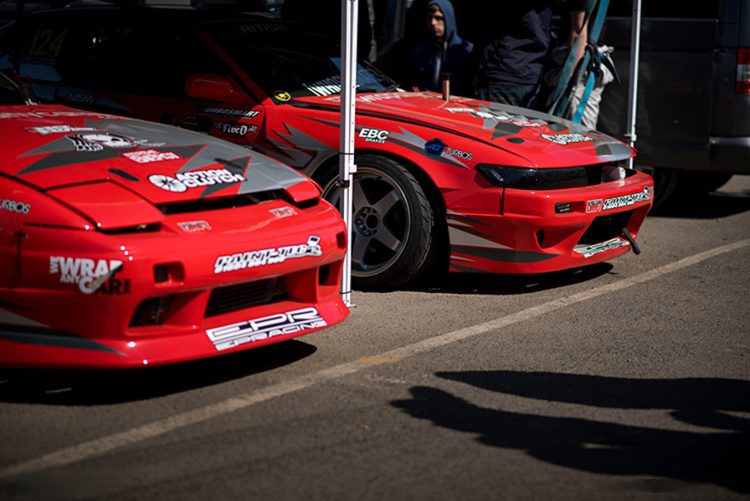
Few vehicles in automotive history illustrate the impact of geography on engineering quite like Nissan’s S-platform sports cars. The same company, working from the same basic blueprint, produced two fundamentally different driving machines for two fundamentally different markets. In Japan, the 180SX arrived as a turbocharged, pop-up-headlight fastback built for a culture that worshipped mountain pass driving and high-RPM thrills. In the United States, the 240SX showed up as a naturally aspirated, fixed-headlight coupe designed to satisfy insurance regulators, emissions bureaucrats, and fuel economy mandates.
Same platform. Same factory. Completely different cars. And the reasons for those differences come down almost entirely to regional regulations, cultural preferences, and geographic market forces. It’s a fascinating case study in how place shapes product, and it’s a story that continues to play out in the used car market, the modification scene, and collector circles to this day.
Whether you’re a JDM enthusiast dreaming of importing a Type X from a Japanese auction house, a budget-minded drifter looking for a cheap 240SX to thrash at your local grassroots event, or simply someone who’s curious about why these two cars exist as separate entities when they share so much DNA, this guide covers the full picture. We’ll break down the origins, the regional engineering differences, the technical specifications, the cultural significance, the market values, the best modifications, and ultimately which car wins depending on what you want to do with it.
Let’s get into the details.
How Geography Shaped Two Different Cars From One Platform
Nissan conceived the S-platform in the late 1980s as a lightweight, rear-wheel-drive chassis that could be adapted for global markets. The internal project, known as “Sil-Eight,” was built around three core principles: modularity (interchangeable engines and body panels across regions), regulatory adaptation (the ability to meet wildly different emissions and safety standards in different countries), and youth appeal (affordable pricing with strong aftermarket tuning potential).
That third principle is what made these cars legendary. But it’s the second one that explains why the 180SX and 240SX turned out so differently. The regulations that governed vehicle design in Japan during the late 1980s and early 1990s were nothing like the regulations in the United States. And those regulatory differences, rooted in each country’s unique geographic, economic, and political landscape, shaped every major engineering decision Nissan made for each market.
The JDM 180SX: Built for Japan’s Unique Automotive Ecosystem (1988 to 1998)
Japan’s domestic automotive market in the late 1980s and early 1990s operated under a set of conditions that existed nowhere else on Earth. The country’s Shaken inspection system imposed rigorous periodic vehicle inspections that effectively limited the practical lifespan of most cars, keeping the domestic fleet relatively young and ensuring a constant flow of nearly-new used vehicles into export channels. This system influenced how manufacturers designed cars for the home market because they knew most vehicles would be traded in or scrapped within 5 to 10 years.
Then there was the informal “Gentleman’s Agreement” among Japanese automakers, which capped advertised horsepower at 276 hp (280 PS). This wasn’t a government regulation but a voluntary industry pact designed to prevent a horsepower war that could attract unwanted regulatory attention. The agreement meant that every JDM performance car of the era, from the Nissan GT-R to the Toyota Supra to the 180SX, was officially rated at or below 276 hp, regardless of what the engine actually produced. In practice, many of these cars made more power than advertised, and the aftermarket existed to unlock the rest.
The 180SX was designed to thrive in this environment. It came exclusively with turbocharged engines: the CA18DET from 1989 to 1991, and the SR20DET from 1991 to 1998. Both engines were compact, rev-happy four-cylinders with strong tuning potential and the kind of power delivery that rewarded skilled driving on tight, technical roads.
The body featured a targa-style fastback design with pop-up headlights. Those flip-up headlights weren’t just a styling choice. They were partly a response to Japanese pedestrian safety considerations of the era, which favored retractable or flush-mounted headlight designs. The fastback roofline gave the 180SX a distinctive silhouette that became iconic in Japanese car culture, particularly on the touge (mountain pass) roads where these cars made their reputation.
Japan’s geography played directly into the 180SX’s strengths. The country’s mountainous terrain, narrow roads, and tight switchback passes demanded a car that was light, nimble, and responsive. The 180SX delivered on all three counts. Its relatively compact dimensions, turbocharged power delivery, and rear-wheel-drive layout made it ideally suited for the kind of driving that defined Japanese car culture in the 1990s.
The USDM 240SX: Engineered for American Regulations and Market Realities (1989 to 1998)
The American market that the 240SX entered was shaped by a completely different set of forces. The late 1980s and early 1990s in the U.S. were defined by two regulatory realities that directly influenced how Nissan configured the car for export.
First, there were the CAFE standards (Corporate Average Fuel Economy), which required automakers to meet fleet-wide fuel economy targets. A turbocharged engine in a sporty coupe would have dragged down Nissan’s corporate average, making it harder (and more expensive) to sell their trucks and larger vehicles in the American market. The solution was to drop the turbo and install a larger-displacement but naturally aspirated engine: the KA24DE, a 2.4-liter four-cylinder that produced 155 hp and prioritized fuel economy and low-end torque over high-RPM excitement.
Second, the U.S. was in the midst of what industry insiders called the “Insurance Crisis.” Insurance companies were hiking premiums on sporty cars, particularly turbocharged ones, to the point where young buyers (the target demographic for the 240SX) couldn’t afford the coverage. A naturally aspirated engine kept insurance costs manageable and made the car accessible to the college-age and early-career buyers Nissan was targeting.
The body design reflected American regulations too. The pop-up headlights of the JDM 180SX were replaced with fixed headlights on the 240SX. U.S. lighting regulations at the time had specific requirements for headlight height, brightness, and aiming that made fixed units simpler and cheaper to certify. The coupe bodywork (available in both S13 and S14 chassis codes) was slightly different from the Japanese fastback, with design choices driven by cost reduction and regulatory compliance rather than pure aesthetics.
Even the drivetrain differed between markets. Export-market 240SX models received a weaker R180 differential compared to the JDM 180SX’s R200 limited-slip differential. The reasoning was partly liability-driven. A less robust differential limited the car’s performance ceiling, which reduced the risk profile from an insurance and legal standpoint. For Nissan’s lawyers and accountants, this made perfect sense. For enthusiasts who later tried to drift these cars, it meant the differential was the first thing that needed upgrading.
America’s driving environment also shaped how the 240SX was used. Unlike Japan’s tight mountain passes, American roads tend to be wider, straighter, and faster. The KA24DE’s broad torque plateau (between 3,200 and 4,500 RPM) actually suited this kind of driving reasonably well, even if it lacked the turbocharged drama of the SR20DET. The car was comfortable on long highway cruises and capable enough on back roads to be fun without being intimidating. It was, in many ways, a perfectly calibrated product for its intended geographic market.
Production Timeline: Zenki and Kouki Across Both Markets
Both the 180SX and 240SX went through mid-cycle refreshes that Japanese enthusiasts refer to as Zenki (early model) and Kouki (late model). These updates are important for understanding the cars’ evolution and their current market values.
| Region | Zenki (Early) | Kouki (Late) | Chassis Code |
|---|---|---|---|
| Japan | 1988 to 1993 (CA18DET) | 1996 to 1998 (SR20DET with NVCS) | S13/S14 |
| United States | 1989 to 1994 (KA24DE) | 1995 to 1998 (KA24DE revised) | S13/S14 |
The Kouki 180SX models, particularly the Type X trim, have become some of the most sought-after variants. The Type X featured more aggressive front and rear bumpers, Nismo-style headlights, and additional aero components that gave the car a more aggressive stance. These visual upgrades, combined with the later SR20DET engine with NVCS (Nissan Valve timing Control System), created a package that commands significant premiums in today’s market. Enthusiasts often refer to this premium as the “Kouki tax,” and it’s a real factor when shopping for these cars.
On the American side, the Kouki 240SX received a revised version of the KA24DE with minor improvements but nothing that fundamentally changed the car’s character. The visual updates were subtler, and while the later S14 chassis brought a more modern look, the 240SX never achieved the same cult status in stock form that the 180SX enjoyed in Japan. Its cult status came later, after the drift community discovered it.
Under the Hood and Under the Skin: Technical Specifications Compared
Numbers tell a story that words sometimes can’t. When you line up the technical specifications of the 180SX and 240SX side by side, the differences that geography and regulation created become unmistakably clear.
Engine Performance: Three Powertrains, Three Personalities
| Component | 180SX (CA18DET Turbo) | 180SX (SR20DET Turbo) | 240SX (KA24DE NA) |
|---|---|---|---|
| Power/Torque | 175 hp @ 6,400 / 163 lb-ft | 205 hp @ 6,000 / 203 lb-ft | 155 hp @ 5,600 / 160 lb-ft |
| Tuning Ceiling (Stock Internals) | 350 hp | 450 hp | 250 hp |
| Redline | 7,200 RPM | 7,500 RPM | 6,500 RPM |
| 0 to 60 MPH | 6.8 seconds | 6.1 seconds | 8.4 seconds |
| Skid Pad Grip | 0.88g | 0.89g | 0.82g |
The numbers paint a clear picture. The SR20DET was the strongest engine offered in the 180SX, producing 205 hp and 203 lb-ft of torque from the factory, with the ability to reach 450 hp on stock internals with the right turbo upgrade. That’s an enormous tuning ceiling for a factory engine, and it’s one of the main reasons the SR20DET became the most popular engine swap in the 240SX community.
The earlier CA18DET was no slouch either, producing 175 hp from a smaller displacement 1.8-liter block. Its iron construction could handle turbo pressure surges up to 1.2 bar, giving it reasonable headroom for tuning. But the CA18DET had a known weakness: it was prone to oil starvation under sustained lateral loads, which made it problematic for drifting without modifications to the oil system. This engineering characteristic became particularly relevant as drifting culture grew and drivers pushed these engines sideways for extended periods on tight circuits.
The KA24DE, used exclusively in the American 240SX, took a completely different approach. At 155 hp, it was the weakest engine in the lineup by a significant margin. But what it lacked in peak power, it partially made up for in real-world usability. The KA24DE had a broad torque plateau between 3,200 and 4,500 RPM that made it easy to drive in traffic and comfortable on the highway. It was reliable, inexpensive to maintain, and well-suited to the daily driving duties that most 240SX owners actually used the car for.
That said, the KA24DE’s performance was held back by U.S. emissions equipment. The catalytic converters and restrictive exhaust system mandated by EPA regulations (specifically 40 CFR Part 86) choked the engine’s breathing and limited its output. With the right exhaust and intake modifications, the KA24DE could produce noticeably more power, but its tuning ceiling on stock internals (around 250 hp) was still well below the SR20DET’s potential.
This power disparity is why the SR20DET swap became the single most popular modification for USDM 240SX owners. Dropping a JDM SR20DET into a 240SX engine bay gives you 250 hp with essentially bolt-on OEM parts, and the architecture supports much more with aftermarket turbo upgrades. It’s a modification so common that it has its own sub-economy of swap kits, harness adapters, and mounting solutions.
Chassis Dynamics: How the Bodies Differ Beyond Looks
The differences between the 180SX and 240SX go deeper than engines and headlights. The chassis structures themselves have measurably different characteristics that affect handling, stiffness, and overall driving feel.
Structural rigidity is a major differentiator. Testing by Auto Garage Yokohama showed that the hatchback 180SX body averaged 15% less torsional flex than the 240SX notchback (coupe) body. That’s a significant difference in chassis stiffness, and it translates directly to sharper handling response and more predictable behavior during aggressive driving. The hatchback’s continuous roofline acts as a structural beam, tying the A-pillars to the rear quarter panels in a way that the notchback’s separate trunk lid and rear window can’t match.
Interestingly, the 180SX’s retractable headlights created a small tradeoff. The pop-up mechanism required cutouts in the front structure that reduced frontal rigidity by about 8%. But the flush-mounted lights in their retracted position gave the 180SX a lower drag coefficient of 0.34 compared to the 240SX’s 0.38. At highway speeds, that aerodynamic advantage translated to slightly better fuel efficiency and higher top speed potential.
Weight distribution is another area where the cars diverge. The 180SX carried a 53:47 front-to-rear weight distribution, while the 240SX sat at 52:48. That extra rear weight bias in the 180SX enhanced drift rotation, making it easier to initiate and sustain slides. The 240SX’s more neutral distribution made it slightly more stable in conventional driving but required more effort (or modification) to achieve the same drift angles.
Both variants shared the same basic suspension architecture: MacPherson struts up front and a multilink setup in the rear. But the damping rates and spring rates differed between JDM and USDM specifications, reflecting each market’s different driving conditions and priorities. The JDM models were tuned for responsiveness on tight roads, while the USDM models were calibrated for the smoother, longer-radius driving typical of American highways and suburban roads.
Some JDM 180SX models also came equipped with HICAS (High Capacity Actively Controlled Steering), a rear-wheel-steering system that turned the rear wheels slightly in the same or opposite direction as the fronts depending on speed. HICAS improved lap times at circuits like Tsukuba by approximately 1.7 seconds, but it added mechanical complexity and weight. Most drift-oriented owners immediately removed it, as the rear-steering input interfered with the precise tail control needed for sustained sliding. HICAS deletion kits remain one of the most common first modifications for imported 180SX cars.
Drift Behavior: How Each Car Initiates and Holds a Slide
The driving dynamics of these two cars during drifting are dramatically different, and those differences stem directly from the powertrain and chassis characteristics we’ve been discussing.
NORTH AMERICAN 240SX (KA24DE)
│
├── Drift Entry Angle: 27° (limited by throttle response)
│   └── Requires clutch kick or e-brake initiation
│
└── Exit Stability: 8/10 (long wheelbase counters over-rotation)

JDM 180SX (SR20DET)
│
├── Drift Entry Angle: 42° (boost hits at 3,200 RPM)
│   └── Lift-off oversteer achievable
│
└── Exit Stability: 6/10 (weight shift demands countersteering mastery)
The stock KA24DE 240SX is a more forgiving drift car. Its naturally aspirated power delivery is linear and predictable, which means there are no sudden surges of torque to catch you off guard. But that predictability comes with a limitation: the engine doesn’t produce enough power to break traction through throttle input alone at most speeds. You need a clutch kick or e-brake pull to initiate the slide, and maintaining angle requires careful throttle and steering coordination. The long wheelbase helps with exit stability, making the 240SX relatively easy to catch when a slide starts to get away from you.
The SR20DET 180SX is a different animal entirely. The turbocharged power delivery means boost comes on hard at around 3,200 RPM, and that sudden rush of torque can break the rear tires loose without any special initiation technique. Lift-off oversteer, where you simply release the throttle mid-corner to shift weight forward and unload the rear, is easily achievable. The 180SX can attack corners at steeper angles (up to 42 degrees in the simulated data above), but the exit stability is lower. The weight shift between boost-on and boost-off conditions requires fast, precise countersteering that demands a higher skill level from the driver.
In simple terms: the 240SX is the better car to learn drifting in. The 180SX is the better car to be fast in, once you’ve already developed the skills.
Cultural Geography: How Each Car Became an Icon in Its Home Market
The cultural significance of the 180SX and 240SX can’t be separated from the geographic and social contexts that produced them. Each car became legendary in its home market, but for completely different reasons that reflect the driving cultures of Japan and the United States.
The 180SX in Japanese Car Culture: Mountain Roads, Midnight Runs, and Manga Fame
In Japan, the 180SX was woven into the fabric of hashiriya culture, the underground scene of late-night street racing on mountain passes and urban highways. The car appeared prominently in Japanese media that both reflected and amplified this culture. In the manga and anime series Wangan Midnight, a 180SX appeared as the “BlackBird,” a menacing highway racer. In Initial D, the car served as a practice vehicle for the protagonist Takumi Fujiwara, cementing its status as an aspirational machine for young Japanese car enthusiasts.
The “Midnight Purple” color variant became particularly legendary, achieving holy grail status at Japanese used car auctions. A clean Midnight Purple 180SX, especially in Type X specification, can command prices that would have been unthinkable when these cars were just affordable used sports coupes in the early 2000s.
Japan’s geography directly shaped how the 180SX was used and celebrated. The country’s famous touge routes, winding mountain passes like Hakone, Irohazaka, and the roads around Mount Haruna, demanded precisely the kind of driving characteristics the 180SX offered: light weight, responsive steering, turbocharged power that could be modulated through tight switchbacks, and rear-wheel drive that rewarded skilled inputs. The car wasn’t just driven on these roads. It was perfected for them.
The social geography of Japanese car culture also mattered. Japan’s dense urban areas meant that most enthusiasts had limited space for working on cars, which fostered a strong network of specialized tuning shops that became cultural institutions in their own right. Shops like Top Secret, Trust/GReddy, HKS, and countless smaller operations built their reputations partly on 180SX and Silvia builds. The car became a canvas for the Japanese aftermarket industry, and the resulting builds ranged from subtle street machines to full-on time attack weapons.
The 240SX in American Car Culture: Grassroots Drifting and Formula D Stardom
The 240SX’s path to cultural significance in the United States followed a completely different trajectory. When it was new, the 240SX was a reasonably popular but not particularly exciting sports coupe. It sold decently to young buyers who wanted something rear-wheel drive and affordable, but it didn’t generate the kind of passionate enthusiasm that the 180SX enjoyed in Japan.
Everything changed when drifting crossed the Pacific. As Japanese drifting culture began to influence American enthusiasts in the early to mid-2000s, drivers needed cheap, rear-wheel-drive cars that could be modified without guilt and crashed without financial devastation. The 240SX was perfect. It was abundant in the used market, its parts were cheap, its chassis was inherently well-balanced for sliding, and its relatively weak stock engine meant insurance costs stayed manageable even for young drivers.
The 240SX became the backbone of American grassroots drifting. Events like Club Loose on the East Coast attracted hundreds of 240SX drivers, many running beater-spec cars with zip-tied bumpers, mismatched body panels, and the bare minimum of modifications needed to get sideways. The car’s affordability made drifting accessible in a way it couldn’t have been if the entry-level machine cost $25,000 instead of $2,500.
At the professional level, the 240SX chassis proved its worth in Formula Drift. Chris Forsberg’s 650 hp V8-swapped 240SX won multiple Formula D championships, demonstrating that the S-chassis platform could compete at the highest levels of competitive drifting. The car’s success in professional competition further fueled demand at the grassroots level, creating a feedback loop between pro drifting and amateur participation.
The 240SX also benefited from its appearance in popular video games, particularly Need for Speed Underground, which featured a customizable 240SX that introduced millions of gamers to the car. For an entire generation of American car enthusiasts, the 240SX was the first sports car they “built” and “drove,” even if it was only on screen.
America’s geographic characteristics influenced how the 240SX was used for drifting, too. The country’s abundance of large parking lots, abandoned industrial lots, and purpose-built drift circuits meant that American drifting evolved differently from Japanese touge culture. American drift events emphasized big, smoky slides at wide angles on open courses, while Japanese drifting emphasized precision and control on narrow, technical mountain roads. The 240SX’s forgiving handling characteristics and long wheelbase made it ideal for the American style of drifting, where entry speeds are higher and the courses are more spacious.
Regional Driving Culture at a Glance
- Japan: Rigorous touge (mountain pass) battles demanded nimble chassis control, precise throttle modulation, and the ability to navigate tight switchbacks at high commitment levels. This environment made the 180SX a cult car among serious driving enthusiasts.
- United States: The emphasis was on smoky, high-angle slides at events with wide courses and forgiving runoff areas. The 240SX became the economical “drift beater,” a car that could be thrashed without remorse and rebuilt cheaply when things went wrong.
What These Cars Cost Today and Why Prices Keep Climbing
The market for S-chassis Nissans has transformed dramatically over the past decade. Cars that were $3,000 beaters in 2012 now command five-figure prices, and the gap between JDM and USDM values reflects the geographic and cultural factors we’ve been discussing.
Current Market Values (2024 Estimates)
| Model | Average Price (Stock) | Modified (Stage 3) | “Drift Tax” Premium |
|---|---|---|---|
| 180SX Kouki (Type X) | $25,000 | $38,000 | +52% |
| 240SX Clean Title | $12,000 | $20,000 | +20% |
The price difference between a stock 180SX Type X at $25,000 and a clean-title 240SX at $12,000 tells you everything about how desirability, scarcity, and cultural cachet drive value in this market. The 180SX is rarer outside Japan (since it was never officially sold in the U.S.), it comes with the coveted SR20DET engine from the factory, and it carries the aesthetic prestige of the Type X package. The 240SX, while more affordable, has seen its own prices rise significantly as drift culture has pushed demand beyond the available supply of clean examples.
The “drift tax” is a phenomenon unique to this segment. Because these cars are overwhelmingly purchased for drifting or car show builds, sellers price them above what comparable non-enthusiast vehicles would fetch. A 1995 Honda Accord with the same mileage and condition as a 1995 240SX would sell for a fraction of the price. The 240SX commands a premium simply because of what it represents and what it can do.
Canadian imports have further inflated 180SX prices. Canada’s 15-year import rule (compared to the U.S. 25-year rule) allowed Canadians to import JDM 180SX models earlier than American buyers could. As these imported cars have trickled across the border or shown up at Canadian-based enthusiast events, they’ve driven awareness and demand. Since 2019, Canadian grey market imports have pushed 180SX prices up by approximately 30%.
For American buyers, the 25-year federal import rule means that the earliest 180SX models (1989 production) became legal for import in 2014, and the most desirable late-model Kouki variants (1996 to 1998 production) are only now becoming eligible. As each new model year becomes import-legal, expect prices to fluctuate as fresh supply meets pent-up demand before eventually stabilizing at levels that reflect the cars’ collector status.
The Best Modifications: Expert-Recommended Upgrades for Both Platforms
Whether you’re building a 180SX or a 240SX, the modification path follows a similar logic: address the platform’s weaknesses first, then build on its strengths. Here are the top five modifications recommended by experienced builders and tuners, arranged by priority and impact.
- Engine: SR20DET swap with a GT2871R turbo upgrade ($8,000 to $12,000). For 240SX owners, this is the single most transformative modification you can make. It replaces the KA24DE with the JDM turbocharged engine the car should have had from the factory. For 180SX owners who already have an SR20DET, the GT2871R turbo upgrade increases output to approximately 350 hp on the stock ECU and factory internals. This power level represents the sweet spot of reliable daily-drivable performance without pushing the engine into territory that demands forged internals.
- Suspension: KW Clubsport 3-way adjustable coilovers with SPL adjustable arms ($4,500). The factory suspension on both the 180SX and 240SX was designed for road comfort, not performance driving. Three-way adjustable coilovers allow independent tuning of compression, rebound, and ride height. SPL adjustable suspension arms add dynamic camber control, which is essential for maintaining tire contact during aggressive cornering and drifting. This combination transforms the car’s handling from “sporty economy car” to “precision driving tool.”
- Aerodynamics: Rocket Bunny V2 wide-body kit ($3,200 unpainted). Beyond the visual impact, the Rocket Bunny V2 kit provides functional aerodynamic benefits. Testing has shown it reduces aerodynamic lift by 17% at 100 mph, which translates to improved high-speed stability and more consistent tire contact. The wider fenders also allow fitment of wider wheels and tires, increasing the available grip footprint.
- Drivetrain: OS Giken limited-slip differential ($1,900) plus Z32 300ZX 5-lug hub conversion ($1,200). The OS Giken LSD replaces the weak open differential (240SX) or worn factory LSD (180SX) with a race-grade unit that distributes torque predictably to both rear wheels. The 5-lug conversion from the Nissan 300ZX upgrades the hub and brake mounting from the factory 4-lug pattern to a 5-lug pattern, which opens up a much wider selection of wheels and allows fitment of larger brakes.
- Safety: Bride Stradia seats with Takata harnesses plus bolt-in roll cage ($5,800). Any car that’s going to be driven hard on track or at drift events needs proper safety equipment. The Bride seats provide superior lateral support during aggressive maneuvering, the Takata harnesses keep the driver firmly positioned, and the bolt-in roll cage adds structural protection without requiring permanent welding to the chassis (important for cars that are also street-driven).
These five modifications, done in this order, create a well-rounded platform that’s capable of serious performance while remaining reliable and livable. The total investment is roughly $19,600 to $23,600 in parts alone, before labor and supporting modifications like upgraded fuel systems, intercoolers, and exhaust.
The Final Verdict: Which Car Wins Depends on What You Want to Do
There’s no single answer to the 180SX versus 240SX question because the right answer depends entirely on your use case, your budget, and what you value most in a driving experience. Here’s how they stack up across the most common ownership scenarios.
Scored Ratings Across Key Categories (1 to 10 Scale)
| Metric | 180SX | 240SX |
|---|---|---|
| Practicality | 6 | 8 |
| Tuning Potential | 9 | 7 |
| Drift Readiness | 10 | 9 |
| Collectability | 8 | 5 |
Best Choice by Use Case
- For drifting: 180SX wins. The SR20DET’s explosive torque delivery and the lighter chassis mean you need less modification to achieve competitive drift angles and sustained slides. The turbocharged power is simply better suited to the demands of maintaining traction-breaking torque through extended transitions.
- For daily driving: 240SX wins. The KA24DE’s reliability, widely available and affordable parts supply, and the fixed-roof design (which provides better insulation from road noise and weather compared to the 180SX’s targa-style roof) make it the more practical daily companion. It’s the car you can drive to work Monday through Friday and take to a drift event on Saturday without compromise.
- For show car builds: 180SX Kouki wins. The Type X’s iconic aesthetics, its rarity outside Japan, and its cultural significance in itasha and stance communities give it an edge in the show circuit. A well-presented 180SX Type X turns heads in ways that a 240SX simply doesn’t, regardless of how much money you’ve put into the build.
- For restoration projects: 240SX wins. The 240SX’s fixed-headlight design eliminates the pop-up mechanism that’s a common failure point and rust magnet on the 180SX. The USDM car also has roughly 25% easier compliance with California smog regulations, which matters enormously if you live in a state with strict emissions testing. Fewer complex systems mean fewer things to restore, repair, or replace.
Build Cost Reality Check
If your goal is a 500 hp show and drift hybrid build (a car that looks amazing and can hold its own at competitive drift events), here’s what the total investment looks like including the base car, engine work, suspension, aero, drivetrain, interior, and safety equipment:
- 180SX build: Approximately $43,000 total
- 240SX build: Approximately $32,500 total
The $10,500 difference comes primarily from the higher acquisition cost of the 180SX base car and the premium pricing on JDM-specific parts. The 240SX’s wider parts availability in the U.S. aftermarket keeps costs lower across the board. If budget is a primary concern, the 240SX gives you more car per dollar spent. If authenticity, pedigree, and cultural cachet matter more, the 180SX justifies the premium.
Resources and References for Further Reading
Nissan FSM: USDM Service Bulletin 1991-7 (Driveline Faults)
Best Motoring Vol. 48: “CA18DET Oil Baffle Solutions”
EPA Regulatory Document 40 CFR Part 86 (1992)
Auto Garage Yokohama Wind Tunnel Data (1994)
Tsuchiya, K. (2001). Drift Bible, Chapter 6.
JDM Importers Guild Annual Report (2023)
So Which One Would You Build?
In a perfect world where budget isn’t a factor, the smart money says grab an SR20DET-swapped 240SX. You get the best engine from the JDM market combined with the more affordable and easier-to-maintain USDM chassis. It’s the rational choice, and rationality has its merits.
But car enthusiasm has never been about rationality. For the purists, for the people who understand what a pop-up headlight 180SX represents in the larger story of Japanese automotive culture, for anyone who’s ever watched a grainy YouTube clip of a Type X attacking Hakone at 2 AM with its turbo spooling and its taillights cutting through the fog, nothing else will do. The 180SX isn’t just a car. It’s a piece of geographic and cultural history on four wheels.
The question isn’t which one is better. The question is which one speaks to you. And whichever one that is, don’t wait too long to buy it. These cars aren’t getting any cheaper, and they’re not getting any more plentiful. The window to own a piece of this story is closing a little more every year.