
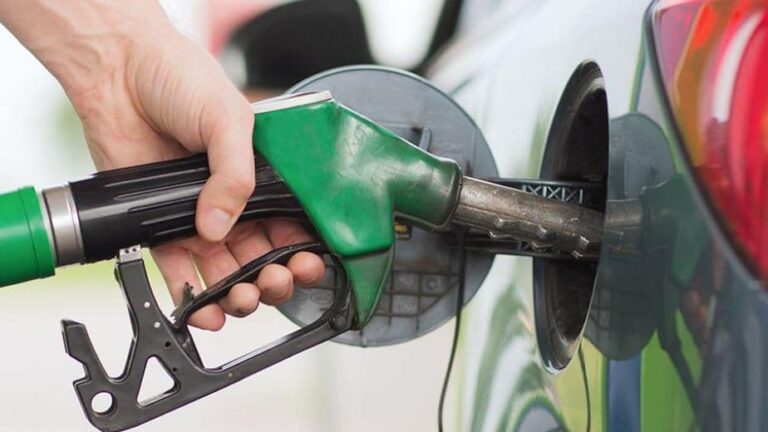
How many miles does a full tank of gas last? That question sounds simple, but it depends on two big things working together: how big your tank is and how efficiently your engine turns gas into miles. Different vehicles, different driving habits, different weather, even different tire pressure can all change the answer.
In most cases, a typical gas tank holds between 18 and 25 gallons. A lot of everyday vehicles average around 24 miles per gallon. If you multiply those together, you can see why many cars land somewhere in the “roughly a few hundred miles” range between fill-ups.
But here is the thing: fuel economy numbers are measured under controlled conditions. Real life is messier. So instead of treating the math as a perfect prediction, you want to use it as a planning tool. You need enough range to get you where you are going, and you want a buffer so you do not end up hunting for a gas station with a nearly empty tank.
Let us break it all down in plain English. You will see how to calculate your own range, why “mpg” and “miles per tank” are not the same, what city driving does to fuel economy, and how many commutes you can realistically fit into one tank.
How Far Can a Full Tank Take You?
When people shop for cars, one of the first numbers they look at is fuel economy, usually measured in miles per gallon, or mpg. The higher the mpg, the farther the car can go on the same amount of gas.
Still, mpg is only half the story. A vehicle with high mpg but a small tank might not go as far as you expect. On the flip side, a vehicle with lower mpg but a big tank can travel a lot farther than a smaller, more efficient car before you have to refuel.
Let us ground this in the common examples you already have. Some vehicles are gas-hungry and only achieve around 12 miles per gallon. Others are very efficient. For example, the Prius is often cited with fuel economy up to 55 miles per gallon depending on the exact model and conditions.
For perspective, a 2019 EPA study found that the average fuel efficiency for American vehicles was 24 miles per gallon. As engine designs and eco-friendly technologies improve, that average is expected to rise over time.
Now, let us turn those numbers into miles. A gas-guzzler rated at 12 mpg with a 25-gallon tank can travel about 300 miles on a full tank. That 300-mile figure sounds decent until you remember that 12 mpg is well below the national average for everyday vehicle fuel efficiency.
The Prius flips that story. Even with a smaller tank, typically 10 to 11 gallons, the high mpg gives drivers a huge range benefit. That is why you often see claims that a Prius can cover roughly 500 to 550 miles on a single tank.
Then there are the high-efficiency vehicles where you see numbers like 40 miles per gallon or more. That level of fuel economy is well above the national average of 24 mpg, and it is exactly why so many manufacturers invest in eco-friendly technologies.
In real purchasing decisions, higher fuel efficiency matters. For some buyers, it becomes the main reason to choose one model over another, because it affects the number of times you stop for gas, and it directly impacts monthly costs.
Certain vehicle types complicate the equation. SUVs, large trucks, and diesel pickups often come with oversized or dual tanks. You might see a single tank holding 30 to 40 gallons, or dual tanks totaling up to 50 gallons. Bigger tanks can stretch your range even if mpg is not as high.
Tank capacity matters, but range is what you care about day to day. That is why efficiency is so important. It is better fuel economy per gallon than just “more gallons” if you want fewer trips to the pump.
A quick range table you can skim
Here is a simple way to visualize the relationship between mpg and tank size. These are “math on paper” examples. Real-world mileage will vary, but the direction will be accurate.
| Tank Size | MPG | Estimated Miles on Full Tank |
|---|---|---|
| 25 gallons | 12 mpg | 300 miles |
| 10.5 gallons (typical Prius range) | 50 to 55 mpg | 525 to 578 miles (real-world may be lower) |
| 18 gallons | 24 mpg (average U.S.) | 432 miles |
| 25 gallons | 24 mpg (average U.S.) | 600 miles |
| 30 to 40 gallons | Varies (often lower than hybrids) | Often 500+ to 1,000+ miles depending on mpg |
Notice how the same mpg can create totally different range depending on tank size. Notice also how a big mpg difference can beat tank size differences by a wide margin, which is why efficient vehicles feel like they “never need gas.”
Why your real range usually lands below the headline math
You might see online range estimates that look perfect. In practice, most drivers get less than the absolute maximum because of how the fuel system works and how you drive. The fuel pump needs to stay submerged in fuel, and the car usually leaves some reserve fuel in the tank to protect the pump.
Also, “mpg” is measured in controlled conditions. If you drive mostly in stop-and-go traffic, your real mpg can drop. If it is cold outside, your mpg can drop too. If you drive fast on the highway, fuel economy usually drops as wind resistance increases.
That is why you should not use full-tank range as a guarantee. Use it as your best estimate, and then plan your refueling habits around a buffer. The buffer can be as simple as refueling when you still have a few dozen miles left in the tank rather than waiting until you are near empty.
What affects range the most in real life
Range is mpg times gallons, but the mpg part can change fast. If you want to predict what your next fill-up will feel like, these factors matter most.
- Driving speed and driving style: aggressive acceleration and high speeds burn more fuel.
- City versus highway driving: city driving usually cuts mpg because of stops and idling.
- Weather and temperature: cold starts and winter conditions lower efficiency.
- Wind and road conditions: headwinds and rough roads increase fuel use.
- Tire pressure: underinflated tires increase rolling resistance.
- Vehicle load: extra passengers and cargo increase demand.
- Engine condition: worn spark plugs, dirty air filters, or other issues can reduce mpg.
None of these factors changes the math formula. They change the input numbers, especially your real mpg. That is why the best “range prediction” comes from your own driving history over time.
How to Calculate Your Vehicle’s Travel Distance
Once you understand the relationship between tank capacity and mpg, calculating your travel distance becomes straightforward. The earlier math you saw is basically the same approach you can apply to any car.
Next time you are shopping for a car or considering a friend’s offer, you can quickly estimate the range on a full tank. You do not need advanced tools. You need just two pieces of info: tank capacity and fuel economy.
Here is the basic idea.
Step 1: Find the maximum tank capacity. This is usually listed in your owner’s manual or on reliable vehicle spec sources. For everyday cars, that often lands in the 12 to 18 gallon range, but some models range higher, and trucks can be far higher.
Step 2: Use city and highway mpg ratings. Vehicles commonly have two mpg ratings. One is for highway driving and one is for city driving. Highway tends to be better because the car keeps a steadier speed without constant stops.
Step 3: Calculate estimated range using the mpg rating. Range is basically:
Range (miles) = Tank capacity (gallons) × MPG
That gives you a “theoretical” full-tank range. Your real range might be a bit lower because of reserve fuel and driving conditions, but it still gives you a solid planning number.
If you are unsure about your vehicle’s city and highway mpg ratings, you can look them up online by checking the make, model, and year at https://www.fueleconomy.gov/ or similar fuel efficiency websites.
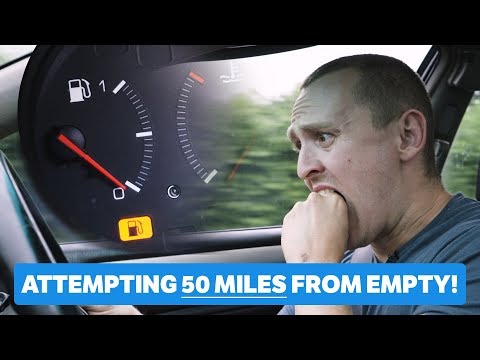
City mpg versus highway mpg: why it matters for range
City driving consumes more fuel. Stops at lights, turns, idling, and varying traffic speeds can reduce mpg. If you mostly drive in the city, your real mpg usually trends closer to the city estimate, not the highway number.
Highway driving is often more efficient. You maintain a steadier speed for longer stretches, and the engine spends less time in the stop-and-go workload pattern. That is why highway mpg is often higher.
So when you calculate travel distance, match your driving reality. If your daily routine is mostly city, use city mpg as your range estimate. If you do long highway drives, use highway mpg instead.
Worked examples (using the exact numbers you already have)
Let us apply the formula to the same scenarios mentioned earlier so you can see it in action.
| Scenario | Tank Capacity | Fuel Economy | Calculated Range |
|---|---|---|---|
| Gas-guzzling car | 25 gallons | 12 mpg | 25 × 12 = 300 miles |
| Prius-style efficiency (example) | 10 to 11 gallons | Up to 55 mpg | Roughly 500 to 550 miles depending on exact mpg and tank |
| Average U.S. vehicle | 18 to 25 gallons | 24 mpg | 18 × 24 = 432 miles, 25 × 24 = 600 miles |
That is the core method. If you want to estimate the range of a specific car, you just plug in that car’s tank size and mpg rating.
Commuting Considerations
Now that you know how fuel economy and tank size affect range, you can connect it to daily life. So how do these numbers impact the average American commute?
The typical American drives about 16 miles one way to work and spends roughly 24 minutes in the vehicle. That makes the round-trip commute 32 miles.
Most cars have tank capacities between 12 and 18 gallons. Larger vehicles such as trucks and SUVs often hold 20 to 25 gallons. The average U.S. vehicle achieves 24 miles per gallon.
Let us calculate what that means for your schedule.
For a car with a 16-gallon tank and 24 mpg, a full tank provides an estimated range of 384 miles. If your round-trip commute is 32 miles, that full tank can support about 12 trips to and from work.
That is not just a number. It tells you how often you will likely refuel if your driving stays consistent. Then you can connect it to cost. At $3.69 per 0.9 gallons, filling the tank costs approximately $59.
Yes, the price figure is odd-looking because it is expressed per 0.9 gallons. But the point is what most owners want: a rough, budget-friendly “how much does a full tank cost me” estimate that matches the same math behind miles traveled.
Of course, this calculation assumes you only travel to and from work. In real life, people also run errands, drive at night, take weekend trips, and deal with detours. Still, understanding the “commute baseline” helps you predict how long your tank will last when you add real-world driving.
A practical way to plan refueling around commutes
If you want a simple strategy, treat range like a safety budget, not a countdown clock. Many drivers refuel only when the needle approaches empty. That might feel normal, but it can increase stress and it can reduce the chance you get the best gas prices.
Instead, use your range estimate to set a reminder. For example:
- If your math says you get around 384 miles per tank and your commute is 32 miles round-trip, refueling around the 8th to 10th commute often feels comfortable.
- If your driving includes extra stop-and-go, winter, or heavy loads, refuel earlier than the “textbook estimate.”
- If your car has a low-fuel warning, do not treat it as a suggestion. It is a warning.
Here is a real-world example. Suppose you are planning a week with side trips after work. You know the base commute takes you toward 12 trips per tank in theory. If you add errands, you might only get 9 or 10 trips before you need gas. That is why planning with a buffer is such a big deal.
If you drive a lot, range becomes a lifestyle number
Fuel economy and range are not just math. They influence your schedule. If your tank is small or your mpg is low, you might end up filling up more often, which costs more time and more money if fuel prices vary.
If your mpg is high or your tank is larger, you have more flexibility. You can take detours without immediately thinking about the next gas stop. You can also avoid last-minute fill-ups, which often happen when fuel stations near you are busy or more expensive.
Final Thoughts
The distance a vehicle can travel on a full tank depends on its make, model, year, fuel efficiency, and tank capacity. Typical car tanks often fall around 12 to 18 gallons, while trucks and SUVs may hold 20 to 25 gallons or even more, especially if they have larger or dual tanks.
The average U.S. vehicle achieves around 24 mpg. With a 16-gallon tank, that supports about 384 miles before needing a refill. That is exactly why higher mpg, not just more gallons, is such a big deal for everyday budgets.
Here is the actionable thought: the next time you fill up, do not just look at the receipt. Track how many miles you actually get before the next fill. If your real range is consistently lower than your estimate, you have a clue that your driving pattern, tire pressure, or vehicle condition is affecting mpg.
Question for you: do you want your car to go farther on one tank, or are you happy with the current range and just want to know the real number you can count on?