
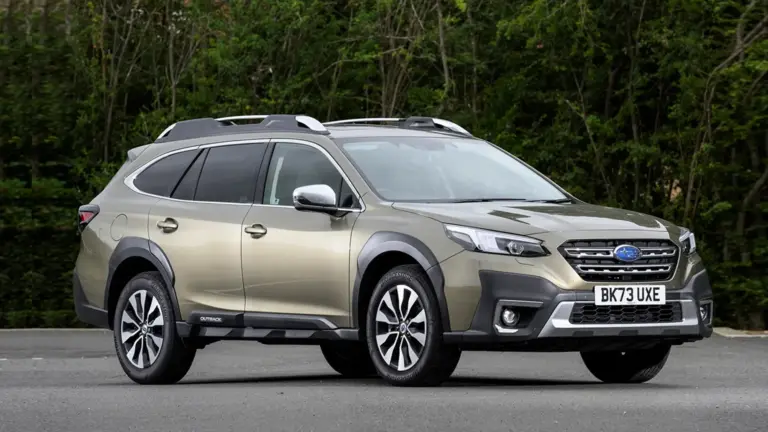
You walk out to your Subaru Outback on a Monday morning, coffee in hand, running about three minutes behind schedule. You turn the key or press the start button, and nothing. Maybe you get a sluggish crank that fades into silence. Maybe you get a series of rapid clicks. Maybe you get absolutely nothing at all. Just a dead dashboard staring back at you.
So you get a jump start from a neighbor, drive to work, and figure it was a one-time thing. Then it happens again on Thursday. And again the following Tuesday. Now you are starting to wonder what is going on. The battery is not that old. You did not leave any lights on. Nothing looks obviously wrong. But something is draining your battery while the car sits in the driveway overnight, and you have no idea what it is.
If you drive a Subaru Outback, you are far from alone in this experience. Battery drain is one of the most reported issues across multiple generations of the Outback, and it has been a particularly persistent complaint on the 2015 through 2020 models. Subaru forums are full of threads from frustrated owners who have replaced their batteries two or three times before finally tracking down the real culprit.
The maddening part? The cause is almost never the battery itself. The battery is the victim, not the villain. Something else in the vehicle is quietly sipping power while the car is supposed to be asleep, and over the course of a day or two, it drinks the battery dry.
This guide is going to walk you through every common cause of Subaru Outback battery drain, show you how to diagnose the problem yourself with basic tools, explain what the fixes cost, and help you understand when it is time to stop troubleshooting and hand it to a professional. Whether you drive a 2010 Outback or a 2023 model, the fundamentals are the same.
Understanding How Your Battery Works (And How It Gets Drained)
Before we get into the specific causes, it helps to understand the basics of how your Outback’s electrical system operates. This is not complicated, but knowing the fundamentals will make everything else in this article make a lot more sense.
The Three-Part Electrical System
Your Subaru Outback’s electrical system has three main components that work together:
The battery stores electrical energy as chemical energy. When you start the car, the battery provides a massive surge of current (several hundred amps) to the starter motor, which cranks the engine. Once the engine is running, the battery’s primary job shifts to acting as a voltage stabilizer and a backup power source.
The alternator is a generator driven by the engine’s serpentine belt. While the engine is running, the alternator produces electricity to power all of the vehicle’s electrical systems (lights, radio, power windows, sensors, computers) and simultaneously recharges the battery. A healthy alternator produces between 13.5 and 14.7 volts.
The vehicle’s electrical consumers are everything that uses electricity. This includes the obvious stuff (headlights, radio, heated seats) and the not-so-obvious stuff (the ECU, the body control module, the keyless entry receiver, the clock, the alarm system, and dozens of other modules that stay partially active even when the car is turned off).
When everything is working correctly, the cycle looks like this: you drive the car, the alternator keeps the battery charged while powering everything else, you turn the car off, the electronic modules go into a low-power sleep mode that draws a tiny amount of current (typically less than 50 milliamps), and the battery has more than enough stored energy to handle that small draw for days or even weeks.
Battery drain happens when something breaks this cycle. Either the alternator is not charging the battery sufficiently while the engine runs, or something is drawing too much current while the car is off, or the battery itself has lost the capacity to hold a charge. Sometimes it is a combination of two or all three.
What “Parasitic Draw” Means and Why It Matters
Every modern vehicle has some amount of electrical draw when it is turned off. This is called parasitic draw, and it is completely normal. The keyless entry system needs to listen for your key fob signal. The alarm system needs to stay active. The clock needs to keep time. The ECU needs to maintain its memory. All of these things require a small amount of electricity.
On a healthy Subaru Outback, the total parasitic draw should settle down to less than 50 milliamps (mA) within about 20 to 30 minutes of shutting the car off. Some modules take a few minutes to fully enter sleep mode, so the draw might be higher right after you turn the car off. But after everything has settled, 50mA or less is the target.
To put that in perspective, a typical Outback battery has a capacity of about 60 to 70 amp-hours. At a parasitic draw of 50mA (0.05 amps), that battery could theoretically sustain the draw for over 1,000 hours (about 6 weeks) before going dead. That is why a healthy car can sit in a garage for weeks and still start fine.
But if something is malfunctioning and the parasitic draw is 500mA (0.5 amps) instead of 50mA, that same battery would be drained in about 120 to 140 hours, or roughly 5 to 6 days. At 1,000mA (1 amp), you are looking at a dead battery in 2 to 3 days. And some parasitic draw faults can pull several amps, which will kill a battery overnight.
This is the math behind the “my battery keeps dying” complaint. The battery is not defective. Something is pulling more current than it should while the car is off.
The Most Common Causes of Battery Drain in the Subaru Outback
Now let us get into the specific culprits. These are listed roughly in order of how frequently they show up in Subaru Outback battery drain cases, based on repair data and owner-reported experiences across the major Subaru forums and repair databases.
Parasitic Draw From Electronic Modules That Will Not Go to Sleep
This is the single most common cause of battery drain on modern Subaru Outbacks, and it is also one of the most frustrating to diagnose because the car looks perfectly normal from the outside. No lights are on. No accessories are running. Nothing seems obviously wrong. But somewhere inside the vehicle, an electronic module is staying awake when it should be sleeping.
Your Outback has dozens of electronic control modules, each responsible for a different vehicle system. There is the ECU (engine control), the TCM (transmission control), the BCM (body control), the infotainment head unit, the power seat modules, the HVAC control module, the keyless entry module, the tire pressure monitoring system, and many more. Each of these modules is supposed to enter a low-power sleep mode within a few minutes of the car being turned off.
When one of these modules fails to enter sleep mode, it continues drawing power at its full operating current. A single module staying awake can easily pull 200 to 500mA or more, which is enough to drain a battery within a few days.
The modules most commonly implicated in Subaru Outback parasitic draw issues are:
- The infotainment head unit. The Starlink system used in 2015 and newer Outbacks has been a repeat offender. The head unit sometimes fails to fully shut down after the car is turned off, continuing to run background processes that draw significant current. Subaru has released multiple software updates to address this issue.
- The keyless entry and push-button start system. The receiver that listens for the key fob signal is supposed to operate in a low-power listening mode. When the module glitches, it can stay in a high-power active state, constantly searching for and processing signals.
- Power seat modules. On Outbacks equipped with power seats, the seat control modules have been known to stay active after shutdown, particularly on 2015 to 2019 models.
- The Bluetooth and telematics modules. These wireless communication modules occasionally fail to enter sleep mode, keeping their radios active and drawing power continuously.
A real scenario that plays out constantly on Subaru forums. An owner of a 2017 Outback reports that the battery dies every three to four days if the car is not driven. They replace the battery. The new battery dies in the same timeframe. They take it to the dealer, who cannot reproduce the problem because the car starts fine after sitting in their lot overnight. The owner eventually does a parasitic draw test at home and finds 380mA of draw with everything off. They start pulling fuses one at a time and discover that the fuse for the infotainment system drops the draw from 380mA to 35mA when removed. The head unit is the culprit.
A software update at the dealership (or in some cases, a head unit replacement) fixes the problem permanently. But the owner went through two batteries and three months of frustration before identifying the cause.
Aftermarket Accessories Drawing Power When They Should Not
This is a subset of the parasitic draw issue, but it deserves its own section because it is so common and so often overlooked. Many Outback owners install aftermarket accessories that are wired directly to battery power and continue drawing current when the car is off.
The most frequent culprits include:
- Dash cameras. Many dash cams are hardwired to the vehicle’s electrical system so they can run in “parking mode” and record while the car is parked. This is a feature, not a bug, but it comes at the cost of continuous battery draw. A typical dash cam in parking mode draws 200 to 400mA, which is enough to drain a battery within a week if the car is not driven regularly. Some dash cam kits include a voltage cutoff module that shuts the camera down before the battery gets too low, but not all do.
- GPS trackers. Fleet tracking devices, aftermarket GPS units, and stolen vehicle recovery systems that are hardwired to constant power will draw current 24/7.
- Aftermarket stereo systems, amplifiers, and subwoofers. If the remote turn-on wire is not properly connected (or if the amplifier has a built-in power supply that stays active), these can draw significant current even when the car is off.
- LED light bars and auxiliary lighting. If wired to constant battery power without a relay that cuts power when the ignition is off, these can draw current through their control modules even when the lights are not illuminated.
- Phone chargers or USB adapters left plugged into 12V outlets. Some 12V (cigarette lighter) outlets in the Outback remain powered even when the ignition is off. A charger plugged into one of these outlets will draw a small amount of current continuously, even if no phone is connected.
The fix for aftermarket accessory draw is usually straightforward. Either disconnect the accessory, rewire it to a switched power source (one that only has power when the ignition is on), or install a voltage cutoff relay that disconnects the accessory when the battery voltage drops below a safe threshold.
If your battery drain started shortly after installing any aftermarket accessory, that accessory is the first thing to investigate. Disconnect it completely and see if the drain stops.
A Failing Alternator That is Not Doing Its Job
The alternator is responsible for keeping your battery charged while the engine is running. If the alternator is not producing enough voltage or current, the battery gradually loses charge during normal driving. You might not notice the problem immediately because the battery has enough stored energy to start the car several times. But after a few days of short trips where the alternator is not fully replenishing what the starter used, the battery voltage drops below the threshold needed to crank the engine.
Alternator problems in the Subaru Outback typically manifest in one of three ways:
Low voltage output. A healthy alternator should produce between 13.5 and 14.7 volts while the engine is running. If the output is below 13 volts, the alternator is not charging the battery adequately. This can be caused by worn brushes, a weak voltage regulator, or a worn bearing that is allowing the rotor to wobble and reduce output.
Diode failure. The alternator uses a set of diodes (a “rectifier bridge”) to convert the AC electricity it generates into DC electricity that the battery and vehicle systems can use. When one or more diodes fail, the alternator’s output drops and it may also allow AC current to “leak” back into the electrical system, which can cause other strange electrical behavior and accelerate battery drain.
A failing diode can also create a parasitic draw path. Normally, electricity flows from the alternator to the battery. But a shorted diode can allow current to flow backward, from the battery through the alternator’s windings, even when the engine is off. This is a sneaky cause of battery drain because it does not show up as a draw on any specific fuse circuit. The current is flowing through the alternator itself.
Intermittent charging. Some alternator failures are not complete failures. The alternator charges fine most of the time but drops out intermittently due to a loose connection, an internal intermittent open circuit, or a voltage regulator that glitches under certain temperatures. These intermittent failures are maddening because the alternator tests fine at the auto parts store (which does a brief, static test) but fails during real-world driving conditions.
To test your alternator at home, you need a multimeter. With the engine running and no accessories on, measure the voltage at the battery terminals. You should see 13.5 to 14.7 volts. Then turn on the headlights, the air conditioning, the rear defroster, and the blower fan on high. Measure again. The voltage should not drop below 13 volts with all of these loads active. If it drops below 13 volts, the alternator is not keeping up with demand.
A more definitive test is a load test at an auto parts store or a repair shop. Many auto parts stores will test your alternator for free while it is still on the vehicle. The test puts a controlled load on the charging system and measures how the alternator responds.
An Aging Battery That Has Reached the End of Its Life
Sometimes the battery really is the problem. Not because of a parasitic draw or a charging issue, but simply because the battery is old and has lost its ability to hold a charge.
Automotive batteries have a finite lifespan. Most conventional lead-acid batteries last 3 to 5 years under normal conditions. In extreme climates (very hot or very cold), that lifespan can be shorter. Heat accelerates the chemical degradation of the battery plates. Cold reduces the battery’s available cranking power and makes the engine harder to turn over, putting more stress on an already weakened battery.
As a battery ages, its internal resistance increases and its capacity decreases. A battery that held 65 amp-hours of charge when it was new might only hold 40 amp-hours after four years. That reduced capacity means the battery has less reserve to handle parasitic draws, cold starts, and the high current demand of the starter motor. Even a normal, healthy parasitic draw of 40mA can drain an aged battery much faster than it would drain a new one.
The frustrating thing about battery aging is that it is gradual. The battery does not go from “perfectly fine” to “completely dead” overnight. It slowly deteriorates over months, and you might not notice anything until one cold morning when the combination of reduced capacity, increased internal resistance, and cold-temperature power loss all converge to produce a no-start condition.
If your Outback’s battery is more than three years old and you are experiencing intermittent starting problems, a battery load test is the logical first step. Most auto parts stores (AutoZone, O’Reilly, Advance Auto Parts, NAPA) will perform a load test for free. The test measures the battery’s cranking amps under load and compares them to the battery’s rated CCA (Cold Cranking Amps). If the tested CCA is significantly below the rated CCA, the battery needs to be replaced.
A specific number to watch for during a load test: if the battery voltage drops below 9.6 volts under load, the battery is considered failed and should be replaced.
Corroded, Loose, or Damaged Battery Connections
This cause is almost embarrassingly simple, but it is responsible for a surprising number of “battery drain” complaints that are not actually drain problems at all. They are connection problems.
The battery terminals on your Outback are exposed to the elements. Over time, they can develop corrosion (that white, green, or blue crusty buildup that forms on the terminal posts and cable clamps). Corrosion increases resistance in the connection. High resistance means the alternator’s charging current has a harder time getting into the battery, and the battery’s stored current has a harder time getting out to the starter.
The result can look identical to a battery drain. The battery seems fine one day and dead the next. You get it jump-started, it works for a while, then dies again. But the battery is not actually being drained. The connection is just too resistive to allow the full current flow needed for starting.
Here is how corroded connections mimic battery drain:
- You drive the car. The alternator runs, but because of the corroded connection, only a fraction of the charging current actually makes it into the battery. The battery charges partially, but not fully.
- You park the car overnight. The normal parasitic draw slowly depletes the partially charged battery.
- In the morning, the battery does not have enough charge to crank the engine, especially if it is cold.
- You assume the battery was drained overnight, when in reality, it was never fully charged in the first place.
The fix is about as cheap as car repairs get. A wire brush, some baking soda mixed with water, and five minutes of scrubbing can clean the terminals. After cleaning, apply a thin layer of dielectric grease or petroleum jelly to the terminal surfaces to slow future corrosion. Make sure the cable clamps are tightened firmly onto the posts. You should not be able to wiggle them by hand.
While you are at it, inspect the battery cables themselves. Look for fraying, cracking, or green corrosion creeping under the insulation. Also check the ground cable where it connects to the engine block or the chassis. This ground connection is just as important as the positive terminal, and it corrodes just as easily. A bad ground can cause a whole range of electrical issues, including poor charging and intermittent starting problems.
Software Bugs in the ECU and Body Control Module
This is a cause that is specific to newer Subaru Outbacks, and it has been a well-documented issue on the 2015 through 2020 model years in particular.
Modern vehicles are essentially rolling computer networks. Your Outback has a CAN bus (Controller Area Network) that connects all of the electronic modules together. When you turn the car off, the ECU sends a “go to sleep” command over the CAN bus, and all the modules are supposed to enter their low-power sleep states within a few minutes.
The problem arises when a software bug prevents one or more modules from receiving or processing the sleep command. The module stays awake, drawing full operating current, and the battery pays the price.
Subaru has acknowledged this issue through multiple Technical Service Bulletins (TSBs) and has released software updates to address it. If your Outback is in the affected model year range and you have not had the ECU or BCM (Body Control Module) software updated, this could be your problem.
A visit to the Subaru dealership for a software update is the fix. In some cases, this is covered under the vehicle’s warranty or a recall. In other cases, it is a paid service, typically in the $100 to $200 range for the reflash.
To check whether your vehicle has any open recalls or TSBs, enter your VIN at the NHTSA website (nhtsa.gov) or call your local Subaru dealership and ask them to run your VIN through their system.
A Starter Motor Drawing Too Much Current
This is a less common cause of battery drain, but it is worth mentioning because it can be mistaken for a battery problem. A worn starter motor with failing brushes, a dragging armature, or corroded internal connections can draw significantly more current than a healthy starter during cranking.
A healthy starter motor on a Subaru Outback typically draws 100 to 200 amps during cranking. A failing starter might draw 300 to 400 amps or more. That excessive current draw puts a disproportionate load on the battery, depleting more charge per start than normal. If you are making a lot of short trips (where the alternator does not have enough time to fully replenish the extra charge used during starting), the battery gradually falls behind.
Symptoms of a failing starter include slow cranking (the engine turns over sluggishly), a grinding noise during starting, or intermittent no-start conditions where the starter does not engage at all. If your battery drain is accompanied by any of these symptoms, have the starter tested.
Starter replacement on a Subaru Outback typically costs $300 to $600 including parts and labor, depending on the model year and engine configuration.
Interior or Trunk Lights That Stay On
This is the oldest cause of battery drain in the book, and it still catches people off guard. A light bulb that stays on continuously might only draw 5 to 15 watts, but that translates to roughly 400mA to 1.2 amps of continuous current. At that rate, a battery can be drained overnight.
The most common light-related drain sources in the Outback are:
- The trunk or cargo area light. If the trunk lid does not close fully (or if the trunk light switch is stuck), the cargo light stays on. Because the trunk is closed (or almost closed), you cannot see the light from outside the vehicle. The light burns away inside the sealed trunk, draining the battery, and you have no idea it is on.
- The glove box light. Same concept. A stuck switch or a glove box door that does not fully close keeps the light on.
- Under-hood light. Some Outback models have an under-hood light that activates when the hood is opened. If the hood latch sensor is misadjusted or stuck, the light may stay on with the hood closed.
- Door courtesy lights. If a door switch is faulty and tells the BCM that a door is open when it is actually closed, the interior lights may stay on indefinitely (or at least for much longer than the normal timeout period).
The diagnostic approach for light-related drain is simple. After dark, walk around the vehicle and look for any light leaking from seams around the trunk, doors, or hood. Open each compartment individually and check whether the light inside turns on and off properly when you open and close the compartment.
A stuck door switch or trunk switch costs $10 to $40 for the part and takes minutes to replace. It is one of the cheapest and easiest fixes in the entire battery drain category.
How to Test for Parasitic Draw Yourself
If you own a basic digital multimeter (even a $15 one from the hardware store), you can perform a parasitic draw test at home. This test will tell you exactly how much current your Outback is drawing while it is turned off, and it is the single most useful diagnostic step for battery drain issues.
What You Need
- A digital multimeter with a DC amps setting (most multimeters have a 10A or 20A range)
- A basic wrench set (10mm for the battery terminal on most Subarus)
- About 45 minutes of time (you need to wait for all modules to enter sleep mode)
The Step-by-Step Process
- Prepare the vehicle. Make sure everything is off. Doors closed, trunk closed, lights off, key removed from the ignition (or key fob well away from the vehicle if you have push-button start). Close all doors and then use the key to lock them (or do not lock them at all if your alarm system draws extra current when armed). The goal is to get the car into its normal “parked overnight” state.
- Wait 30 minutes. This is important. Modern vehicles have modules that take time to enter sleep mode. The infotainment system, the keyless entry module, and others may stay active for 10 to 20 minutes after the car is turned off. If you start your measurement too soon, you will see an elevated draw that is normal and will falsely think there is a problem. Walk away, get a cup of coffee, and come back in 30 minutes.
- Disconnect the negative battery cable. Using your wrench, loosen and remove the negative (black) battery cable from the negative terminal post. Be careful not to let the cable touch anything metal while it is disconnected.
- Set up the multimeter. Set your multimeter to the DC amps setting. Start with the highest range available (usually 10A or 20A). Connect the multimeter in series between the negative battery terminal and the disconnected negative cable. One multimeter lead goes on the battery post. The other goes on the cable clamp. The multimeter is now the bridge that allows current to flow from the battery through the vehicle’s electrical system and back.
- Read the draw. The multimeter will display the amount of current flowing through the circuit. This is your parasitic draw.
- Less than 50mA (0.050A): Normal. Your parasitic draw is within spec. If your battery is still dying, the problem is the battery itself (aged, weak, or defective) or the alternator (not charging sufficiently while driving).
- 50mA to 100mA: Borderline. This is higher than ideal but may not cause problems if you drive the car daily. Worth investigating if the car sits for more than a couple of days at a time.
- Over 100mA (0.100A): Excessive. Something is drawing too much power. Proceed to the fuse-pulling test to identify the circuit.
- Isolate the circuit (if draw is excessive). With the multimeter still connected and reading the draw, go to your fuse box and start pulling fuses one at a time. After pulling each fuse, check the multimeter reading. If pulling a specific fuse causes the draw to drop significantly (from 350mA to 40mA, for example), you have identified the circuit that contains the problem. Look at the fuse diagram to determine what components are on that circuit, and then investigate those components individually.
A few tips for a successful parasitic draw test:
- Do not open any doors during the test. Opening a door wakes up the interior lights, the BCM, and other modules, which spikes the draw temporarily and can confuse your results. If you need to access the interior fuse box, open the door, prop it so the door switch is depressed (the light stays off), and then wait another 10 to 15 minutes for everything to go back to sleep.
- Use a fuse puller. Most Subaru fuse boxes include a small fuse puller tool clipped inside the cover. Using this tool prevents you from accidentally shorting adjacent fuses with metal pliers.
- Write down your results. Keep a note of the draw reading after each fuse pull. This helps you identify patterns and makes it easier to explain the situation to a technician if you end up taking the car to a shop.
- Check both fuse boxes. The Outback has fuse boxes in two locations: one under the hood (engine compartment) and one inside the cabin (usually under the dashboard on the driver side or on the left side of the dashboard behind a small panel). Make sure you check both.
What If the Draw Comes Through the Alternator?
Here is a scenario that the fuse-pulling test will not catch. If the parasitic draw is flowing through the alternator (due to a failed diode, as discussed earlier), pulling fuses will not reduce the draw because the alternator is not on a fuse circuit. The current flows directly from the battery through the alternator’s main power cable.
To test for alternator-related draw, disconnect the main power cable from the back of the alternator while the multimeter is still in the circuit. If the draw drops significantly when the alternator is disconnected, the alternator has a failed diode and needs to be rebuilt or replaced.
How to Test Your Alternator at Home
If your parasitic draw test came back normal (under 50mA) but your battery is still dying, the alternator is the next suspect. A failing alternator that does not charge the battery sufficiently will produce the same symptom: a dead battery after a period of normal driving.
Basic Voltage Test
- Set your multimeter to DC voltage.
- With the engine off, measure the voltage at the battery terminals. A fully charged battery should read 12.4 to 12.7 volts. If it reads below 12.2 volts, the battery is significantly discharged and should be charged before testing the alternator.
- Start the engine and let it idle.
- Measure the voltage at the battery terminals again. With the engine running and no accessories on, you should see 13.5 to 14.7 volts. This confirms the alternator is producing voltage and sending it to the battery.
- Now turn on the headlights, the rear defroster, the air conditioning, and the blower fan on high. These are the biggest electrical consumers in the vehicle. Measure the battery voltage again. It should not drop below 13.0 volts with all of these loads active.
If the voltage stays below 13 volts with the engine running, or if it drops below 13 volts when you add loads, the alternator is not producing enough output. It needs to be tested more thoroughly (load tested at a shop) and likely rebuilt or replaced.
If the voltage reads above 15 volts at any time, the alternator’s voltage regulator is failing and overcharging the battery. This is less common but equally problematic. Overcharging can cause the battery to gas (produce hydrogen gas), overheat, and potentially swell or even crack. An overcharging alternator should be replaced promptly.
Model-Year Specific Battery Drain Issues on the Subaru Outback
While the general causes of battery drain apply to all Outback model years, certain generations have specific known issues that are worth calling out.
2010 to 2014 Subaru Outback (Fourth Generation)
These models are generally less prone to parasitic draw issues from factory electronics because the infotainment systems are simpler and there are fewer electronic modules overall. The most common battery drain causes on these models are:
- Aging batteries (many of these vehicles are now 10+ years old and may be on their second or third battery)
- Corroded battery terminals and ground connections
- Alternator failure (particularly on higher-mileage examples)
- Aftermarket accessory draws (dash cams, stereo systems)
- Trunk light or glove box light staying on
These are straightforward, old-school electrical issues that are typically easy to diagnose and fix.
2015 to 2019 Subaru Outback (Fifth Generation)
This is the generation with the most reported battery drain complaints. The introduction of the Starlink infotainment system, push-button start, expanded keyless entry functionality, and numerous additional electronic modules significantly increased the vehicle’s electrical complexity.
Known issues specific to this generation:
- Starlink head unit not entering sleep mode. Multiple TSBs have been issued for this problem. Software updates are available from the dealer.
- Keyless access system staying active. The proximity sensors and the push-button start receiver have been known to remain in a high-power state after shutdown on certain software versions.
- Body Control Module (BCM) software bugs. The BCM controls the sleep/wake cycle for many modules. A bug in the BCM software can prevent the entire network from entering sleep mode.
- Eyesight system module draw. On models equipped with Eyesight (the camera-based driver assist system), the Eyesight control module has occasionally been reported as a parasitic draw source.
If you own a 2015 to 2019 Outback and have recurring battery drain, your first call should be to the Subaru dealer to ask about TSBs and software updates for your specific VIN. There is a good chance a known fix exists.
2020 to 2024 Subaru Outback (Sixth Generation)
The current generation introduced an even larger 11.6-inch touchscreen infotainment system and further expanded the electronic feature set. Early reports from owners suggest that the battery drain issues have improved compared to the previous generation, likely thanks to lessons learned and more refined software. But they have not been eliminated entirely.
Reported issues on the sixth generation include:
- Infotainment system occasionally not shutting down properly (though less frequently than the fifth generation)
- The remote start feature (on models so equipped) keeping certain modules active longer than expected
- Over-the-air update processes occasionally triggering extended wake states
For any 2020 or newer Outback, make sure your infotainment software is fully up to date. Subaru has released multiple over-the-air updates and dealer-installed updates for these systems.
What the Fixes Cost
Here is a comprehensive breakdown of typical repair costs for the various causes of Subaru Outback battery drain. These estimates include both DIY costs and professional repair costs.
| Issue | DIY Cost | Professional Repair Cost |
|---|---|---|
| Battery terminal cleaning | $5 to $10 (brush, baking soda, grease) | $20 to $50 |
| Battery replacement (conventional) | $120 to $200 | $200 to $350 |
| Battery replacement (AGM/premium) | $200 to $300 | $280 to $420 |
| Alternator replacement | $200 to $400 (part only, DIY install) | $400 to $800 |
| Parasitic draw diagnosis | $0 to $30 (multimeter cost) | $100 to $200 (diagnostic fee) |
| Faulty relay or module replacement | $20 to $150 (part) | $100 to $350 |
| Infotainment head unit replacement | Not recommended DIY | $500 to $1,500 |
| ECU/BCM software update | Not available DIY | $100 to $200 |
| Starter motor replacement | $150 to $300 (part only) | $300 to $600 |
| Trunk/door light switch replacement | $10 to $40 | $50 to $120 |
| Wiring repair (rodent damage, corrosion) | $10 to $50 (supplies) | $100 to $400 |
| Ground cable cleaning or replacement | $5 to $30 | $50 to $150 |
The range is wide because the cause of battery drain varies so much. A $5 terminal cleaning can fix the same symptom as a $1,500 head unit replacement. This is exactly why proper diagnosis is so important. Do not start replacing parts until you know what the actual problem is.
Battery Selection: Why AGM Batteries Are Worth the Extra Cost
When it is time to replace the battery in your Outback, you have a choice between a conventional flooded lead-acid battery and an AGM (Absorbent Glass Mat) battery. The AGM costs more, typically $200 to $300 compared to $120 to $200 for a conventional battery. But for Subaru Outback owners, particularly those with the 2015 and newer models that have higher electrical demands, the AGM is almost always the better investment.
Here is why:
- Better deep-cycle tolerance. AGM batteries handle repeated partial discharges much better than conventional batteries. If your Outback has a moderate parasitic draw that occasionally depletes the battery more than it should (before you get the draw fixed), a conventional battery will suffer permanent damage from each deep discharge. An AGM battery can tolerate these deep cycles with significantly less degradation.
- Lower self-discharge rate. AGM batteries lose their charge more slowly when sitting unused. If your Outback sits for extended periods (vacation, seasonal use, remote parking), an AGM battery will hold its charge longer.
- Better performance in extreme temperatures. AGM batteries perform better than conventional batteries in both extreme cold and extreme heat. The Outback is popular in cold-weather states (Colorado, Vermont, Minnesota, Pacific Northwest), where cold cranking performance matters.
- Longer lifespan. A quality AGM battery typically lasts 4 to 7 years, compared to 3 to 5 years for a conventional battery. The higher upfront cost is often offset by the longer service life.
Popular AGM battery choices for the Subaru Outback include the Odyssey Extreme series, the Optima RedTop or YellowTop, and the Bosch S6 series. All of these are well-regarded in the Subaru community for reliability and longevity.
When installing a new battery (AGM or conventional), take a few minutes to clean the terminal posts and cable clamps, apply dielectric grease, and verify that the clamps are tight. Starting with clean, solid connections gives the new battery the best chance of performing well for its entire service life.
Climate Considerations: How Weather Affects Your Outback’s Battery
Where you live and what kind of weather your Outback endures has a significant impact on battery life and drain susceptibility.
Cold Climates
Cold temperatures are tough on batteries in two ways. First, the cold reduces the battery’s available cranking amps. A battery rated at 700 CCA at 32 degrees Fahrenheit might only deliver 500 CCA at 0 degrees. Second, cold engine oil is thicker and harder to pump, which means the starter motor has to work harder (and draw more current) to turn the engine over.
The combination of reduced battery capacity and increased starter demand is why cold mornings are when battery problems become most apparent. A battery that is marginal in warm weather might start the car fine in July but fail completely in January.
If you live in a cold climate:
- Use an AGM battery for better cold-weather performance.
- Consider a battery blanket or heated battery pad if you park outdoors in sub-zero temperatures regularly.
- Keep the battery terminals clean and free of corrosion, which increases resistance and makes the cold-start problem worse.
- Have the starter motor tested if you notice increasingly sluggish cranking. A worn starter draws more current, which puts additional stress on a cold-weakened battery.
Hot Climates
Heat is actually the bigger enemy of battery longevity, even though cold weather gets more attention. High under-hood temperatures accelerate the chemical degradation of the battery plates and cause the water in conventional (flooded) batteries to evaporate faster. A battery in Phoenix, Arizona, will typically last 2 to 3 years. The same battery in Seattle might last 5 years.
If you live in a hot climate:
- Check the battery’s health more frequently (every 6 months after the second year).
- If your battery has removable caps (some conventional batteries do), check the fluid level periodically and top off with distilled water if needed. Low fluid levels expose the plates to air, which causes sulfation and reduces capacity.
- Park in the shade when possible to reduce under-hood temperatures.
- Consider an AGM battery, which is sealed and does not lose fluid to evaporation.
When to Stop DIY Troubleshooting and Go to a Professional
Most Subaru Outback battery drain issues can be diagnosed with a multimeter and some patience. But there are situations where the problem exceeds the capabilities of basic home diagnostics. Here are the signs that it is time to take the car to a professional.
The Parasitic Draw is Intermittent and You Cannot Catch It
Some parasitic draw faults are intermittent. The draw might be normal for three days, spike to 800mA on the fourth day, and then drop back to normal. These intermittent drains often correlate with specific conditions (temperature, humidity, time since last drive, or a module that randomly wakes up). Catching an intermittent draw requires leaving a current clamp (a tool that clamps around a wire and measures current without breaking the circuit) connected for extended periods and logging the data.
Professional shops have current clamp data loggers that can record parasitic draw over days or weeks, capturing the spike when it happens and time-stamping it so the technician can correlate it with other events. This kind of equipment costs $500 to $2,000 and is not practical for most home mechanics to own.
You Suspect CAN Bus or Module Communication Errors
If your OBD2 scanner is showing U-codes (network communication codes) like U0100 (Lost Communication with ECM/PCM) or U0140 (Lost Communication with BCM), the problem is likely at the network level. These faults indicate that modules on the CAN bus are not communicating properly, which can cause modules to stay awake because they never receive the sleep command.
Diagnosing CAN bus issues requires a factory-level scan tool (or a professional-grade tool like an Autel MaxiSys or Snap-on Zeus) that can monitor CAN bus traffic, identify which modules are on and off the network, and pinpoint communication failures. This is beyond what a basic OBD2 code reader can do.
You Drive a Hybrid Outback (2019 and Newer)
The Subaru Outback gained a hybrid option (marketed as the Outback with the Subaru Starlink multimedia system and available hybrid powertrain) in recent years. Hybrid vehicles have both a conventional 12-volt battery and a high-voltage battery pack. Working on the 12-volt system is generally safe, but if there is any possibility that the drain involves the high-voltage system, do not attempt to diagnose or repair it yourself.
High-voltage hybrid battery systems operate at voltages that can cause serious injury or death. These systems should only be serviced by technicians with hybrid-specific training and the appropriate safety equipment (insulated gloves rated for the voltage, high-voltage disconnect tools, etc.).
The Problem Has Stumped You After Reasonable Effort
There is no shame in knowing when you have reached the limits of your tools and knowledge. A professional diagnostic session at a reputable independent shop or the Subaru dealership typically costs $100 to $200. That fee gets you access to thousands of dollars worth of diagnostic equipment, years of technician experience, and access to the manufacturer’s TSB database. If it saves you from replacing three parts that are not actually broken, the diagnostic fee pays for itself many times over.
Preventing Battery Drain Before It Starts
Once you have resolved your current battery drain issue, here are practical steps to prevent it from coming back.
- Clean your battery terminals every oil change. A wire brush, baking soda paste, and a coat of dielectric grease take five minutes and cost almost nothing. Do it every time you change your oil, and corrosion will never have a chance to build up.
- Get your battery load-tested annually. Most auto parts stores do this for free. A load test catches a declining battery before it leaves you stranded. Do it at the start of fall, before the cold weather makes a marginal battery’s weakness obvious.
- Keep your software current. Ask your Subaru dealer about software updates for the infotainment system, the BCM, and the ECU at every service visit. If a TSB exists for a sleep-mode bug on your model year, getting the update applied is free prevention against a battery drain issue.
- Be mindful of aftermarket accessories. If you install a dash cam, GPS tracker, or any other device that draws power, make sure it is either wired to a switched source (powered only when the ignition is on) or has a voltage cutoff feature that prevents it from draining the battery below a safe level.
- Drive the car regularly. If your Outback sits for more than a week at a time, consider a battery maintainer (also called a trickle charger or float charger). A quality maintainer like a Battery Tender Junior ($25 to $40) keeps the battery at full charge while the car sits without overcharging it. This is especially valuable for Outbacks that are stored seasonally or used infrequently.
- Do a quick light check before walking away. After you park and shut off the engine, take a moment to verify that no interior lights are still on, the trunk is fully closed, and the glove box is latched. This simple habit takes three seconds and can prevent an overnight drain from a stuck light.
- Check your ground connections annually. The main ground cable from the battery to the engine block and the chassis ground strap are exposed to the elements and corrode over time. A quick visual inspection and a tug to make sure the connections are tight can prevent charging and starting issues.
Your Outback’s Battery is Trying to Tell You Something
A dead battery is not just an inconvenience. It is a message. Something in your vehicle’s electrical ecosystem is out of balance. Either something is taking more than its share while the car sleeps, or the charging system is not putting enough back in, or the battery itself has aged to the point where it can no longer keep up.
The good news is that the vast majority of Subaru Outback battery drain issues are solvable, and many of them are solvable cheaply. A $5 terminal cleaning, a $15 multimeter test, or a free software update from the dealer can fix problems that people spend hundreds of dollars on batteries trying to solve.
The key is diagnosis. Do not keep buying batteries until you know why the last one died. Test the parasitic draw. Check the alternator output. Inspect the connections. Read the codes. Find the cause first, fix it second, and then put in a fresh battery with confidence that this one will last.
Because the next time you walk out to your Outback on a Monday morning, coffee in hand, running three minutes late, you want to hear the engine fire right up on the first crank. Not the sound of a starter clicking helplessly at a battery that something drained overnight while you slept.
What is quietly draining your Outback’s battery right now?