
You pull the dipstick to check your oil level and instead of seeing clear amber or dark brown oil, you see a milky, light-colored substance that looks like a chocolate milkshake. Your heart sinks because you know what this means. Water has gotten into your engine oil, and that is very, very bad news.
Water in engine oil is one of those problems that can destroy an engine shockingly fast if not addressed immediately. Unlike many automotive issues that develop gradually and give you time to respond, water contamination can cause catastrophic damage in a matter of miles or even minutes depending on how much water entered the system and where it came from.
In this comprehensive guide, I am going to explain everything you need to know about water in engine oil. We will cover how to identify it, what causes it, why it is so dangerous, what damage it causes, what to do if you discover it, how to fix it properly, and most importantly, how to prevent it from happening in the first place. By the end, you will understand why this problem demands immediate action and exactly what that action should be.
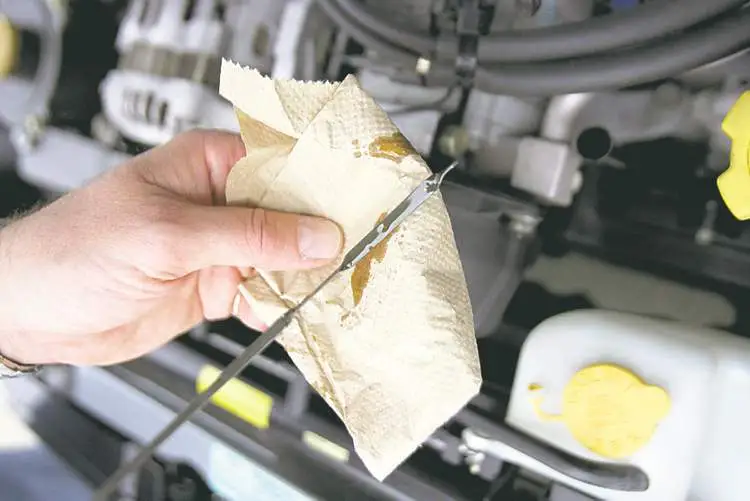
How to Identify Water in Your Engine Oil
The first step is recognizing that you have water contamination. There are several telltale signs, and knowing what to look for can help you catch the problem before it causes major damage.
The Milkshake Appearance
This is the classic symptom. When water mixes with oil, it creates an emulsion that looks like a tan or light brown milkshake. Pull your dipstick and if you see this milky, frothy substance instead of normal oil, you have water contamination. The oil should be translucent amber when new or dark brown to black when used, but always with an oily consistency. The milkshake appearance is unmistakable and means immediate action is required.
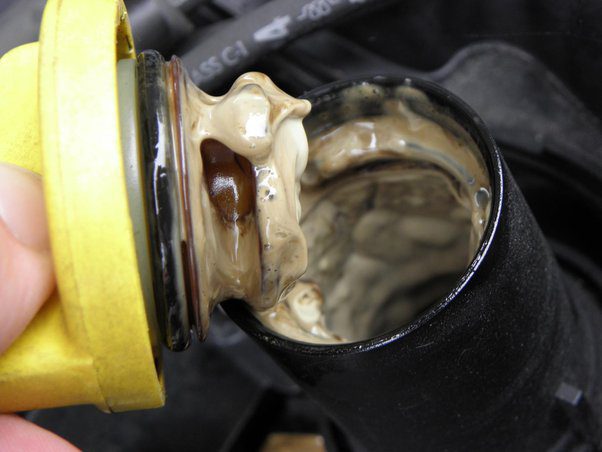
Check under the oil filler cap as well. Remove the cap and look at the underside. If you see creamy, light-colored deposits clinging to the cap, that is emulsified oil from water contamination. Some condensation on the oil cap is normal, especially in cold weather with short trips, but heavy, thick, creamy deposits indicate a real problem.
Coolant Level Dropping
If water is getting into the oil, it is often coming from the cooling system. Check your coolant reservoir. If the level keeps dropping and you are not seeing external leaks, the coolant is going somewhere internal, likely into the oil or combustion chambers.
Look at the coolant itself too. If it looks oily or has an oily film floating on top, that is oil contaminating the coolant, which means the barrier between the cooling system and lubrication system has failed somewhere.
White Exhaust Smoke
Thick white smoke from the exhaust, especially smoke that smells sweet like coolant, indicates coolant is entering the combustion chambers and being burned. This often accompanies water in the oil because the same failure that lets coolant into the cylinders usually lets it into the oil passages as well.
Normal condensation creates light white smoke when you first start a cold engine, and this clears quickly. The white smoke from coolant intrusion is thick, continuous, and does not clear as the engine warms up.
Engine Overheating
If coolant is leaking internally into the oil, the cooling system loses coolant and cannot regulate engine temperature properly. The temperature gauge climbs into the hot zone, the cooling fans run constantly, and the engine might overheat. This overheating combined with milky oil on the dipstick points clearly to internal coolant leakage.
Poor Engine Performance
Water-contaminated oil cannot lubricate properly. The engine might run rough, lose power, make unusual noises, or develop a knocking sound. These symptoms indicate the lubrication system is not protecting internal components, and damage is likely already occurring.
What Causes Water to Get Into Engine Oil
Understanding the causes helps you diagnose the specific problem and fix it correctly. Water contamination has several possible sources, ranging from minor to catastrophic.
Blown Head Gasket
This is the most common cause of significant water in oil contamination. The head gasket seals the interface between the cylinder head and engine block. It must seal combustion chambers, oil passages, and coolant passages, keeping these three separate while withstanding extreme heat and pressure.
When a head gasket fails, it can allow coolant to leak into oil passages or combustion chambers. This happens from overheating that warps the cylinder head, age and deterioration of the gasket material, improper installation during previous repairs, or manufacturing defects in the gasket.
A blown head gasket creates multiple symptoms. Water in oil, white exhaust smoke, overheating, rough running, and coolant loss all point to head gasket failure. This is a serious problem requiring engine disassembly to replace the gasket and inspect for additional damage like a warped cylinder head.
Cracked Cylinder Head or Block
Cracks in the cylinder head or engine block can allow coolant to leak into oil passages. These cracks typically result from severe overheating, freezing damage from running water instead of proper antifreeze, manufacturing defects, or extreme stress from detonation or other abnormal combustion.
Cracks are often invisible to the naked eye and require specialized testing to detect. Shops use pressure testing and sometimes magnetic particle inspection or dye penetrant testing to find cracks. If the head or block is cracked, replacement is usually necessary because welding cast iron or aluminum in these critical areas is difficult and often unsuccessful long-term.
Failed Intake Manifold Gasket
On some engines, especially certain GM V6 and V8 designs, the intake manifold gasket seals coolant passages. When this gasket fails, coolant can leak into the intake manifold and get pulled into the cylinders, or it can leak into the valley between the cylinder banks where it mixes with oil.
Intake manifold gasket failure is common on certain engines and creates symptoms similar to head gasket failure. The good news is that replacing an intake manifold gasket is significantly cheaper and easier than head gasket replacement.
Damaged Oil Cooler
Many engines have an oil cooler that uses engine coolant to regulate oil temperature. The oil cooler is essentially a heat exchanger with oil flowing through one side and coolant through the other. If the oil cooler develops an internal leak, coolant and oil can mix.
Oil cooler failure creates a unique situation where you might see coolant in the oil and oil in the coolant simultaneously. The contamination goes both ways because the leak allows the two fluids to intermix. Oil cooler replacement is necessary, along with flushing both the oil and cooling systems thoroughly.
Damaged Cylinder Liner or Sleeve
Some engines use replaceable cylinder liners or sleeves. If a liner is damaged or improperly installed, it can allow coolant from the cooling jackets to leak into the crankcase. This is less common than head gasket or crack issues but possible, especially on older engines or those that have been rebuilt.
Condensation
This is the least serious cause and the only one that does not indicate a real problem. In cold weather, especially with short trips where the engine never fully warms up, water vapor from combustion can condense inside the engine and mix with oil, creating a small amount of milky residue under the oil filler cap.
This condensation is normal and harmless if it is minor. It clears when you take a longer drive that gets the oil fully up to temperature, evaporating the water. However, if the milky appearance persists after a good long drive at operating temperature, or if you see it on the dipstick rather than just under the cap, you have a real problem, not just condensation.
Driving Through Deep Water
If you drive through water deep enough to submerge the engine, water can enter through the air intake, fill the cylinders, and cause what is called hydro-lock where the engine cannot turn over because water does not compress like air. If the engine was running when this happened and managed to ingest water, that water can end up in the oil.
Water can also enter through the crankcase breather or PCV system if submerged. This is less common than the other causes but can happen if you make poor decisions about driving through flooded areas.
Why Water in Oil Is So Dangerous
Understanding the damage water causes helps you appreciate why immediate action is critical. Water in oil attacks your engine from multiple directions simultaneously.
Complete Loss of Lubrication
Oil lubricates by creating a thin film between moving metal parts that prevents direct contact. Water cannot do this. When water contaminates oil, it destroys the oil’s ability to form a protective film. Metal components that should never touch suddenly grind against each other with only water between them.
This metal-on-metal contact causes immediate wear that can destroy bearings, cam lobes, cylinder walls, and other precision surfaces in shockingly short time. We are talking about damage that would normally take years happening in hours or even minutes of running with water-contaminated oil.
Corrosion of Internal Components
Water causes rust and corrosion on steel and iron parts inside the engine. Components like crankshafts, camshafts, cylinder walls, valve stems, and bearings are made from materials that corrode when exposed to water. This corrosion pits and damages precision surfaces, reducing their service life dramatically even if caught and fixed before catastrophic failure.
Oil Passage Blockage
The emulsion created when water mixes with oil is thicker and sludgier than normal oil. This gunk can clog the narrow oil passages, galleries, and channels that distribute oil throughout the engine. Blocked passages starve components of lubrication even though there is contaminated oil in the crankcase.
The oil pump pickup screen can also clog with this sludge, reducing oil flow throughout the entire system. This creates a cascading failure where lack of flow prevents lubrication to all engine components simultaneously.
Piston Ring Sticking
The water-oil emulsion can cause piston rings to stick in their grooves rather than moving freely to seal the combustion chamber. Stuck rings lose compression, allow oil burning, and reduce engine power. Fixing stuck rings often requires complete engine disassembly and rebuild.
Bearing Damage
Engine bearings are precision components with extremely tight clearances, often measured in thousandths of an inch. They absolutely require proper lubrication to survive. Water contamination destroys bearings rapidly through loss of lubrication, corrosion, and contamination embedding in the soft bearing material.
Spun bearings from water contamination can destroy the crankshaft, requiring complete engine replacement rather than just bearing replacement. This turns a bad problem into a catastrophic one.
What to Do If You Discover Water in Your Oil
If you find water contamination, immediate action is essential. Here is exactly what you should do.
Stop Driving Immediately
The moment you discover water in the oil, stop driving the vehicle. Every minute the engine runs with water-contaminated oil causes additional damage. If you are on the road when you discover it, get somewhere safe and shut off the engine. Have the vehicle towed rather than driving it, even short distances.
I know towing is expensive and inconvenient. But the engine damage from driving with water in the oil will cost far more than a tow bill. Do not try to limp the car home or to a shop. Stop immediately.
Assess the Severity
If the contamination is very minor, just a bit of moisture under the oil cap from condensation, and the oil on the dipstick looks normal, this might not be a real problem. Take the car for a good 30-minute highway drive to get everything up to full operating temperature. Then check again. If the moisture is gone, it was just condensation.
But if the oil on the dipstick looks milky, if there is heavy creamy residue under the cap, if the coolant level is low, or if you have any of the other symptoms mentioned earlier, you have a real problem that needs professional diagnosis and repair.
Get Professional Diagnosis
Have the vehicle towed to a qualified mechanic who can properly diagnose the cause of water contamination. The mechanic needs to determine whether it is a head gasket, cracked head, intake manifold gasket, oil cooler, or some other failure. This requires testing like compression checks, leak-down tests, coolant system pressure tests, and visual inspection.
Get a detailed written diagnosis and estimate before authorizing repairs. Understand exactly what failed, why, and what needs to be replaced. Ask about additional damage that might have occurred and how thoroughly the systems need to be flushed.
Repair the Root Cause
Whatever is allowing water to enter the oil must be fixed before anything else. A head gasket needs replacement, a cracked head needs replacement or repair, a failed oil cooler needs replacement. Skipping this step means the problem will just recur immediately.
When repairing head gaskets, the cylinder head should be inspected for warpage and resurfaced if necessary. Using a new gasket on a warped head just means the new gasket will fail quickly. The job needs to be done right, not just done fast.
Flush All Contaminated Systems
After fixing the failure that caused water intrusion, both the lubrication system and cooling system need thorough flushing. The oil system needs complete draining, flushing to remove all contaminated oil and sludge, fresh oil filter installation, and fresh oil fill.
Some mechanics recommend filling with cheap oil, running briefly, draining, and repeating this process multiple times to thoroughly flush all contamination. Others use special flushing chemicals. The goal is getting all the contaminated emulsion out of every passage and crevice in the engine.
The cooling system also needs flushing to remove any oil that got into the coolant and to ensure there is no residual contamination. Fresh coolant of the proper type for your vehicle should be installed after flushing.
Monitor for Recurring Problems
After repairs and flushing, monitor the oil and coolant carefully for the next few thousand miles. Check the oil regularly to confirm it stays clean without the milky appearance returning. Check coolant level to ensure it stays full without dropping. Any recurrence of symptoms means the repair was not successful and additional work is needed.
Preventing Water Contamination
Prevention is vastly better than dealing with water in oil after it happens. Here is how to minimize your risk.
Maintain your cooling system properly. Use the correct coolant type for your vehicle, not just water. Replace coolant according to the maintenance schedule. Fix cooling system leaks promptly. Keep the system filled to the proper level. A well-maintained cooling system is less likely to fail and cause internal leaks.
Avoid overheating your engine. Overheating warps cylinder heads and blows head gaskets. If the temperature gauge climbs into the hot zone, shut off the engine and have the car towed. Continuing to drive an overheating engine to save a tow bill is false economy that leads to far more expensive repairs.
Use quality replacement parts during repairs. When you do need head gasket or intake gasket replacement, use quality OEM or premium aftermarket gaskets, not the cheapest parts available. Cheap gaskets fail prematurely and you end up paying for the job twice.
Have cylinder heads properly inspected and resurfaced during gasket replacement. Putting a new gasket on a warped head guarantees failure. Professional shops measure head flatness and resurface as needed to ensure a proper seal.
Avoid driving through deep water. If you encounter standing water on the road, slow down or go around if possible. Never drive through water if you cannot see the road surface underneath. Water deep enough to reach the engine’s air intake can cause hydro-lock and water intrusion.
Check your oil regularly. Many people rarely check their oil, relying on the dashboard warning light. But that light only warns about low oil pressure, which means damage is already occurring. Check your oil monthly. Pull the dipstick, look at the level and condition. This takes 30 seconds and can catch problems like water contamination before they cause serious damage.
The Bottom Line on Water in Engine Oil
Water in engine oil is a serious problem that demands immediate action. It is not something you can ignore or put off until later. Every minute the engine runs with water-contaminated oil causes damage that shortens engine life and can lead to complete failure.
The telltale milky appearance on the dipstick or under the oil cap, combined with dropping coolant level, white exhaust smoke, or overheating, points clearly to internal coolant leakage into the lubrication system. The most common causes are blown head gaskets, cracked heads, failed intake manifold gaskets, or bad oil coolers.
If you discover water in your oil, stop driving immediately and have the vehicle towed to a qualified mechanic for diagnosis. The root cause must be repaired, both the oil and cooling systems must be thoroughly flushed, and the engine should be monitored carefully afterward for recurring problems.
Prevention focuses on proper cooling system maintenance, avoiding overheating, using quality parts during repairs, not driving through deep water, and regularly checking your oil to catch problems early. An ounce of prevention is worth many pounds of cure when it comes to water contamination. Your engine is the heart of your vehicle and deserves protection from this potentially catastrophic problem. Take it seriously, act immediately if you see symptoms, and your engine will serve you reliably for many more miles to come.