
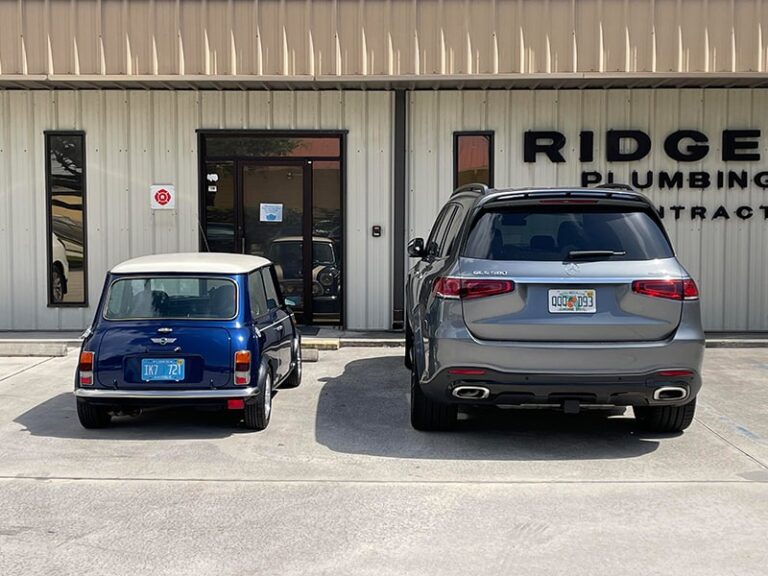
Most of us instinctively feel that a bigger, heavier vehicle is safer in a crash. There is something reassuring about sitting high up in a large SUV or pickup truck, surrounded by what feels like more mass and more metal. But is that feeling backed by actual data? And does a five-star crash test rating mean your car is as safe as those stars suggest?
The answers are more nuanced than most drivers realize and a study from the University of Buffalo has produced some findings that challenge the way we think about car safety ratings entirely.
Why Crash Test Ratings Do Not Tell the Full Story
Organizations like NHTSA and IIHS conduct standardized crash tests and publish safety ratings that car manufacturers proudly display in their advertising. A five-star rating is treated as the definitive seal of safety approval. The problem, according to researchers at the University of Buffalo, is that these ratings do not reliably predict real-world injury outcomes.
Many small and compact cars achieve top safety ratings in standardized crash tests. But when researchers analyzed actual road accident data, looking at which cars were involved in accidents and how severely the occupants were injured, the picture looked very different from what those ratings would suggest. Several vehicles with the highest crash test scores showed up with some of the worst real-world injury rates.
The reason comes down to what crash tests actually measure. Standardized tests evaluate how well a car protects its occupants when colliding with a fixed barrier or a vehicle of similar size and weight. They do not account for the physics of collisions between vehicles of very different masses, which is precisely the kind of collision that happens constantly on real roads.
The Physics of Car Crashes: Why Mass Changes Everything
To understand what the University of Buffalo study found, you need to understand a basic physics principle. In any collision, the damage each vehicle absorbs depends not just on the speed of impact but on the mass of both vehicles involved. A heavier vehicle transfers more of the collision energy to a lighter one. The lighter vehicle absorbs a disproportionate share of the total impact force.
Here is a concrete example. Imagine two cars of identical mass travelling toward each other at 37 mph each. They collide head-on. The total collision speed is 74 mph, but each car effectively experiences the equivalent of hitting a stationary concrete wall at 37 mph, the energy is split equally between them. In physics terms, the damage-equivalent speed factor for each car is 0.5 of the total collision speed.
Now change the scenario. Replace one of those identical cars with a much heavier SUV or truck. The mass difference changes the damage distribution completely:
- Compact car vs. SUV: The compact car absorbs damage equivalent to hitting a wall at 0.75 of the total collision speed. The SUV absorbs only 0.25.
- Compact car vs. heavy truck: The compact car absorbs 0.9 of the collision speed equivalent. The truck absorbs only 0.1.
- SUV vs. heavy truck: The SUV absorbs 0.8 of the collision speed equivalent. The truck absorbs 0.2.
Put in human terms: in a head-on collision at 37 mph between a heavy Land Rover SUV and a small Ford Focus, the SUV occupants experience roughly the same impact as hitting a stationary wall at around 19 mph. The Focus occupants experience something equivalent to hitting a wall at approximately 56 mph. The SUV walks away with bumper and hood damage. The smaller car is crumpled. The physics cannot be argued with.
What the University of Buffalo Study Actually Found
Professor Dietrich Yehle and his research team at the University of Buffalo analyzed real accident data to determine which vehicles produced the best and worst injury outcomes for their occupants. The findings were striking.
Vehicles With the Fewest Injuries
Large pickup trucks and SUVs dominated the low-injury category. Specific vehicles where occupants recorded the fewest injuries in accidents included:
What these vehicles have in common is significant mass and in several cases, significant price. The injury rate advantage for SUV occupants compared to compact car occupants involved in similar accidents was dramatic: two to three times fewer serious injuries, even though large vehicles were not involved in accidents any less frequently than small ones.
Vehicles With the Most Injuries
At the other end of the spectrum, small and compact cars produced the worst real-world injury outcomes. Vehicles in this category included:
- Nissan Versa hatchback
- Nissan Sentra
- Kia Forte
- Ford Fiesta
- Chrysler 200
- Dodge Caliber
- Scion TC
- Mitsubishi Galant
- Nissan Rogue
Many of these vehicles carry respectable crash test ratings. That is the uncomfortable truth in this data, a car that performs well when crashing into a barrier or another car of similar size may perform very poorly when it collides with the much heavier vehicles that share real roads with it.
The Two Key Factors That Drive Real-World Safety
Vehicle Weight
The University of Buffalo study found a remarkably consistent relationship between vehicle weight and injury outcomes. For every increase of approximately 500 kg (1,100 lbs) in vehicle weight, the occupants were 19 percent safer in an accident. This is a significant effect size.
To illustrate: a fully loaded large pickup truck can be 2.5 times heavier than a compact passenger car. Applying the research relationship, that mass advantage translates to roughly four times better occupant protection in an equivalent collision. That is not a marginal safety gain, it is a fundamentally different safety outcome.
Vehicle Cost
The study also found that vehicle price is directly correlated with real-world safety. For every additional $10,000 in vehicle value, the safety level improved by approximately 12 percent.
This relationship makes logical sense when you consider the economics of car manufacturing. Safety technology is expensive, advanced structural engineering, better materials, sophisticated restraint systems, and comprehensive driver assistance features all add to production costs. Manufacturers competing aggressively on price have to make trade-offs, and safety features that are not visibly obvious to a consumer at the point of purchase are an easy area to cut. More expensive vehicles, whether through higher manufacturing cost or market positioning, tend to incorporate more of these safety investments without the same pressure to reduce them.
The Important Exception: Large Low-Slung Sedans
The story gets more nuanced when you look at where SUVs and pickup trucks have a specific physical disadvantage compared to large, low sedans. The University of Buffalo findings point to something significant here that is worth understanding.
In a collision, the location of the vehicle’s centre of gravity relative to the point of impact matters enormously. The higher the centre of gravity above the collision point, the greater the rotational force, the flipping or tipping moment, that the vehicle experiences during a frontal impact. For a tall SUV or truck, this means occupants experience not just the primary frontal impact force but also a pronounced whipping or pitching motion as the vehicle rotates over its front contact point. This secondary motion causes its own significant injuries.
Large, low-slung sedans, vehicles like the Mercedes S-Class, Chevrolet Malibu, and Cadillac CT6, carry significant weight but keep that weight distributed low. Their centre of gravity sits at approximately the same height as the point of impact in a frontal collision, meaning there is very little rotational leverage created. The car decelerates smoothly and linearly rather than pitching forward. Occupants experience the impact force in one direction rather than being thrown both forward and upward.
This explains why large, low, heavy vehicles perform exceptionally well in real-world accident data. They combine the mass advantage with a physical geometry that minimizes the secondary rotational forces that cause additional harm in taller vehicles. As the researchers put it, the safest vehicle configuration is one that is heavy and low, maximizing the mass advantage while minimizing the torque disadvantage. Armored limousines, typically weighing around 3 tones and built long and low, represent the extreme application of this principle.
What This Means for Drivers in Practical Terms
This research raises a genuinely difficult ethical and practical question. If heavier vehicles are safer for their occupants, but that safety comes partly at the expense of occupants in lighter vehicles they collide with, then the individual choice to drive a large vehicle has collective consequences for road safety overall. This is a well-documented phenomenon in safety research, sometimes called the “arms race” of vehicle size.
For individual drivers making real purchasing decisions, here is what the research practically suggests:
- Do not rely solely on crash test ratings when evaluating a vehicle’s real-world safety. These ratings tell you about the car’s structural performance in a controlled test environment. They do not tell you what happens when that car meets a much heavier vehicle at real road speeds.
- Mass matters significantly in mixed-traffic collisions. A heavier vehicle provides a meaningful real-world safety advantage for its occupants that does not show up in crash test ratings.
- Height is not purely an advantage. Very tall vehicles with a high centre of gravity have a rotational disadvantage in frontal impacts that partially offsets the mass benefit. Large, low vehicles combine the benefits of mass without the penalty of height.
- Vehicle price correlates with safety investment. A higher-priced vehicle is more likely to have genuine safety engineering built into its structure, materials, and systems, not just better marketing around its crash test results.
- Advanced safety systems matter in addition to passive crash safety. Driver assistance technologies, automatic emergency braking, lane keeping assistance, blind spot monitoring, help prevent crashes from happening in the first place, which is ultimately better than any passive structural protection.
The relationship between vehicle size and safety is real, documented, and significant. But it is not the full picture. The safest outcome for everyone on the road is a combination of vehicles with genuine structural integrity, active safety systems that prevent crashes, and drivers who operate them with appropriate attention and judgment. Mass buys you survivability in a crash that has already happened. Good driving and good active safety systems reduce how often that crash happens at all.