
Used car parts are a smart buy. Most experienced car owners already know this. But the quality of what you get, and whether the whole experience is smooth or a headache, depends almost entirely on where you buy from. Not all junkyards are created equal, and knowing what separates a good one from a bad one can save you time, money, and a lot of frustration.
So what does a genuinely good car junkyard look like? What should you expect from one, and what are the red flags that tell you to walk away?
That is exactly what this guide covers.
Why People Buy From Car Junkyards in the First Place
The appeal is straightforward. New parts are expensive. Dealer prices especially can be shocking, and even aftermarket alternatives can stretch a tight repair budget. Used parts from a junkyard, on the other hand, can cost a fraction of the new part price while still being original, manufacturer-quality components.
The most commonly sourced items from junkyards fall into three main categories:
- Body parts such as bumpers, bonnets, doors, tailgates, wings, and headlights
- Mechanical components including alternators, starters, suspension parts, and complete engines or gearboxes
- Interior parts like door cards, dashboards, seat components, and trim pieces
Body parts are the biggest draw, and for good reason. When a car is lightly damaged in a collision, replacing a bumper or wing with a new one and then paying for painting on top of that is a significant expense. Finding the same part at a junkyard, already in the correct color, means you skip the paint cost entirely. The total bill can be less than half of what new would have cost. That is a compelling reason to look at used first.
How Junkyards Have Changed: From Chaotic Lots to Organized Operations
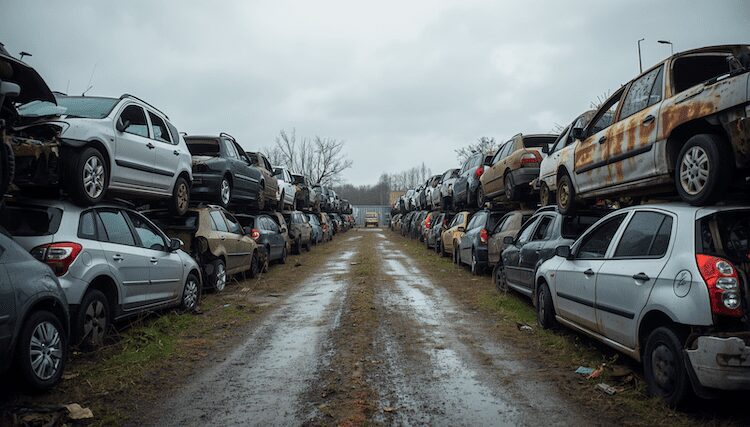
If your image of a car junkyard is rows of crushed cars sitting in a muddy field, with you wandering around trying to find a matching part, that picture is outdated for most reputable operations.
The old model had real problems. You would visit in person, spend hours looking, find something that seemed right, take it home, discover it was not compatible, and then deal with the battle of trying to return it or get your money back. There was no system, no organization, and often no accountability.
Things have changed significantly. Since around 2017, the majority of used car parts have been sold online, with estimates suggesting more than 80% of junkyard sales now happen through digital channels. The junkyards that understood this shift early restructured their entire operation around it. The ones that did not adapt have largely fallen behind.
Today, a well-run junkyard operates more like a parts warehouse than a scrap lot. And that shift benefits buyers in every way.
What a Good Car Junkyard Actually Looks Like
Whether you are buying in person or online, there are specific qualities that distinguish a professional, trustworthy junkyard from a disorganized one. Here is what to look for.
Wide Stock Across Multiple Makes and Models
The first sign of a good junkyard is range. A serious operation will carry parts from a broad selection of manufacturers and models, not just a handful of common brands. If a junkyard only has parts for two or three makes, its usefulness is limited.
The best operations stock parts from virtually every well-known manufacturer. This matters because it means when you submit a parts request, there is a realistic chance they have what you need rather than you having to move on to the next option.
Parts Are Dismantled and Organized Before You Ask
A good junkyard does not wait for a customer to request a part and then go dismantle the car. The best operations work proactively. When a vehicle comes in, the mechanics strip the usable parts immediately. Each piece is removed, inspected, and placed into a categorized storage system.
A front bumper, for example, does not stay on the donor car. It gets removed and placed on a shelf alongside other bumpers from various makes and models, all organized and ready to ship. When someone orders it, it goes straight from the shelf to the courier. No waiting for dismantling. No unnecessary delays.
For mechanical components like engines, alternators, and gearboxes, the same principle applies. Everything is dismantled, checked, and stored in an organized system before any order comes in.
A Proper Inventory Management System
This is where professional junkyards really separate themselves from amateur operations. The best ones use a proper inventory system, ideally with barcodes, to track every single part in their warehouse.
Here is what that looks like in practice. When a part is removed from a donor vehicle, it gets labeled with:
- The make and model of the vehicle it came from
- The year of manufacture
- Any additional compatibility information
- A barcode that links it to the digital inventory
The part then gets scanned and entered into a management system. When a customer requests, say, an alternator for an Audi A3, the seller can search the system immediately, confirm the part is in stock, see exactly where it is located in the warehouse, and have it ready for shipping within the hour. That kind of efficiency is only possible with a real inventory system behind it.
Without this, staff are guessing, searching manually, and often wasting both their time and yours. A barcode-based inventory is not a luxury for a serious junkyard. It is a baseline requirement.
Photos of Every Part
When you are buying a used part online, you cannot hold it in your hands. Photos are the next best thing, and a good junkyard provides them without you having to ask.
The ideal setup is straightforward. As soon as a part is dismantled and placed in storage, it gets photographed. Clear, well-lit images from multiple angles showing the actual condition of the part. These photos go directly onto the listing.
Online listings with photos consistently generate more interest and more trust than listings without them. From a buyer’s perspective, seeing the actual part you are going to receive removes a significant layer of uncertainty. From the seller’s perspective, it reduces disputes after delivery because the buyer knew exactly what they were getting.
Some junkyards only take photos on request. That is better than nothing, but it adds delay. The best operations photograph everything as a standard part of the process.
A Warranty on Every Part Sold
This one is non-negotiable. In most countries, any product sold online, including used car parts, is legally required to come with a minimum warranty period. A seller who offers no warranty is not just being unhelpful, they may be operating outside the law.
A reputable junkyard stands behind what it sells. If a part arrives and is not as described, or if it fails within the warranty period, you should have a clear process for getting a replacement or a refund. Check the terms before you buy. Any serious operation makes this information easy to find.
A Clear Returns Policy
Even with the best intentions and accurate listings, things sometimes go wrong. A part turns out to be incompatible. The photos did not reveal a hidden crack. The wrong item gets shipped by mistake. It happens.
A good junkyard accepts returns and makes the process straightforward. If a seller has no return policy, or the policy is buried in confusing terms designed to make returning difficult, that is a warning sign. Transparency around returns is a marker of a business that is confident in what it sells.
Presence on a Reputable Online Platform With Ratings
Perhaps the single most useful indicator of a trustworthy junkyard is its track record on a platform where buyers can leave ratings and reviews.
Think about how you choose a restaurant, a hotel, or a tradesperson. You check reviews. You see what other people experienced and use that to make a decision. Buying car parts works the same way. A junkyard that has fulfilled hundreds of orders, with buyers consistently rating the experience positively, gives you a level of confidence that no amount of self-promotion from the seller can match.
Reputable online platforms for used car parts connect buyers with multiple verified sellers, allow buyers to submit a single parts request that goes out to many sellers simultaneously, and display seller ratings so you can make an informed choice. This structure benefits everyone. Sellers who do good work build a reputation that brings more customers. Buyers can see exactly who they are dealing with before they commit.
Buying from an unknown seller with no history, no reviews, and no accountability is a gamble. Buying from a seller with a strong track record on a reputable platform is not.
Red Flags to Watch Out For When Choosing a Junkyard
Knowing what good looks like also means being able to spot what bad looks like. Here are the warning signs that should make you hesitant.
- No photos on listings. If a seller cannot be bothered to photograph what they are selling, that tells you something about how seriously they take the transaction.
- No warranty offered. This is a legal requirement in most places. A seller with no warranty is either uninformed or deliberately avoiding accountability. Neither is a good sign.
- No returns policy. Once you pay, you should have some protection. If a seller makes it clear there are no returns under any circumstances, walk away.
- No reviews or ratings. Every seller starts with zero reviews, so one or two is not a problem. But a seller who has been operating for a while and has no review history, or actively avoids platforms where reviews are possible, is a seller who does not want accountability.
- Vague part descriptions. “Fits most models” or “suitable for various years” are not useful descriptions for a used part. A good seller provides exact compatibility information: make, model, year, engine variant, and anything else that affects fitment.
- Slow or evasive communication. If a seller takes days to respond to a basic question, or avoids giving you a straight answer about stock availability, that slowness will only get worse once your money is involved.
What the Buying Process Should Look Like From Start to Finish
When you buy from a well-run junkyard through a reputable platform, the experience should be smooth and straightforward. Here is what a good transaction looks like from your side:
- You submit a parts request. You describe the part you need, along with your vehicle’s make, model, year, and any other relevant details. This goes out to multiple sellers on the platform simultaneously.
- You receive multiple offers. Sellers who have the part in stock respond with their price, condition details, photos if available, shipping cost, and estimated delivery time. You compare these offers side by side.
- You choose the best offer. Not necessarily the cheapest one, but the best combination of price, seller rating, warranty terms, and delivery speed.
- The part ships quickly. A well-organized junkyard with a proper inventory system can often get a part to the courier the same day or the next working day.
- You receive the part and verify it. Check it against the listing description and your vehicle’s requirements before having it installed.
- You leave a review. This helps future buyers make informed decisions, and it keeps the platform’s rating system meaningful.
The whole process, from submitting a request to having the part in your hands, can often be completed within a few days. For many parts, it is faster than waiting for a new part to arrive from a dealership.
Quick Reference: Good Junkyard vs. Poor Junkyard
| Quality | Good Junkyard | Poor Junkyard |
|---|---|---|
| Stock range | Multiple makes, models, years | Limited, unpredictable |
| Parts organization | Pre-dismantled, labeled, warehoused | Parts still on donor cars, chaotic |
| Inventory system | Digital, barcode-based | Manual or nonexistent |
| Photos | Standard for all listings | Rare or only on request |
| Warranty | Clearly offered and documented | Not offered or vague |
| Returns policy | Clear, fair, accessible | Absent or restrictive |
| Online presence | Active on rated platforms | No reviews, no accountability |
| Response time | Fast, helpful, accurate | Slow, evasive, vague |
| Shipping speed | Same or next day dispatch | Unpredictable delays |
Finding Good Junkyards Near You
The easiest way to find reputable junkyards is through dedicated online platforms that aggregate multiple sellers in one place. Search for used auto parts platforms that operate in your country or region. Look for platforms that:
- Verify or vet the sellers they list
- Display buyer ratings and reviews for each seller
- Allow you to submit a single parts request that reaches multiple sellers
- Provide a clear process for handling disputes
Some platforms even allow you to filter sellers by rating, location, or shipping speed. The more tools the platform gives you to evaluate sellers before committing, the better positioned you are to make a smart buying decision.
Local junkyards also exist, of course, and some are genuinely well-run operations. If you prefer to visit in person, look for the same qualities: organized storage, labeled parts, a proper inventory system, and staff who can tell you immediately whether a specific part is in stock. If nobody can give you a straight answer about availability, that tells you the operation is not running a proper system.
The used parts market has matured significantly. The days of wandering through a muddy lot hoping to stumble across the right part are largely behind us. Today, the best junkyards operate with the efficiency of a modern warehouse and the customer focus of a retail business. They have to, because buyers now have easy access to ratings, reviews, and multiple competing sellers. The ones who deliver on quality and service thrive. The ones who do not lose out.
Your job as a buyer is simply to choose from the former and avoid the latter. A few minutes reading reviews before you commit to a seller is one of the most valuable things you can do before buying any used car part.