
LPG, or Liquefied Petroleum Gas, is not a new concept. It has been used for decades in homes for cooking and heating, and for good reason. It burns cleanly, it is non-toxic, and it does not contaminate soil or water. But what a lot of drivers do not realize is that LPG has also become a genuinely viable fuel option for cars, and one that comes with some real advantages worth knowing about.
If you have ever driven past a pump labeled “Autogas” and wondered what it was all about, this guide breaks it all down. What LPG actually is, why it is considered a cleaner fuel, what the system inside your car looks like, and what each component actually does.
What Is LPG and Where Does It Come From?
LPG is a mixture of hydrocarbons, primarily propane and butane. It is produced in one of two ways: either as a byproduct of refining petroleum, or extracted directly from natural gas fields where it is separated from the oil and gas it is mixed with underground.
Unlike petrol, LPG is exceptionally pure. It contains no water and no impurities that would leave deposits behind. When it burns, the combustion is complete, which means no carbon buildup on pistons, piston rings, or spark plugs. That is a meaningful benefit for engine longevity over time.
Why LPG Is Considered a Safer and Cleaner Fuel
There is a common misconception that gas-powered vehicles are inherently more dangerous than petrol ones. The data suggests the opposite.
LPG actually has a smaller flammable radius than any other alternative fuel. Its ignition temperature is less than half that of petrol. And the system through which it is delivered to the engine is completely closed. There are no open exposures to the atmosphere, no evaporation, and no leakage risk during normal operation. The fuel travels from the pump to the tank and through the system through sealed valves and lines the entire way.
The LPG industry has also developed and continuously updated rigorous standards for the design, manufacture, and installation of every component in these systems. This is not a field that has been left to chance.
From an environmental standpoint, LPG produces significantly fewer harmful emissions than petrol. Major car manufacturers have recognized this, and some have invested directly in developing engines purpose-built for LPG. The technology has matured to the point where modern LPG systems can now use an oxygen sensor, the same type used in eco-friendly petrol cars, to continuously analyze exhaust gases and feed that information to a microprocessor. That microprocessor then fine-tunes the air-to-fuel mixture in real time, keeping combustion as efficient and clean as possible at every engine condition.
The Trade-Offs You Should Know About
No fuel system is perfect, and LPG is no exception. There are a few genuine trade-offs that anyone considering an LPG conversion should weigh up honestly.
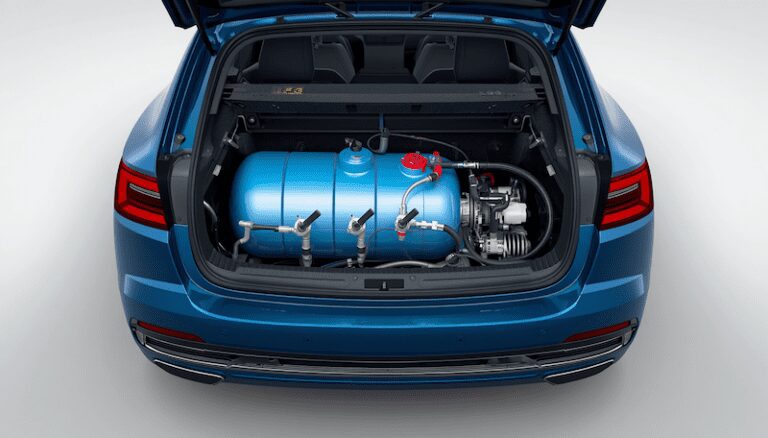
- Reduced boot space. The LPG tank has to go somewhere, and in most conversions, it lives in the boot. Depending on the tank type, this can eat into storage space noticeably.
- Upfront installation cost. Converting a car to run on LPG requires a professional installation, and that comes with a cost. It is an investment that pays back over time through cheaper fuel, but the initial outlay is real.
- Slightly lower performance. LPG systems typically deliver around 10% less dynamic performance compared to running on petrol. For most everyday drivers, this is barely noticeable, but it is worth knowing.
These drawbacks are manageable for most drivers, and the savings on fuel costs, the reduced emissions, and the cleaner engine operation more than offset them over the longer term.
The Main Components of a Car LPG System Explained
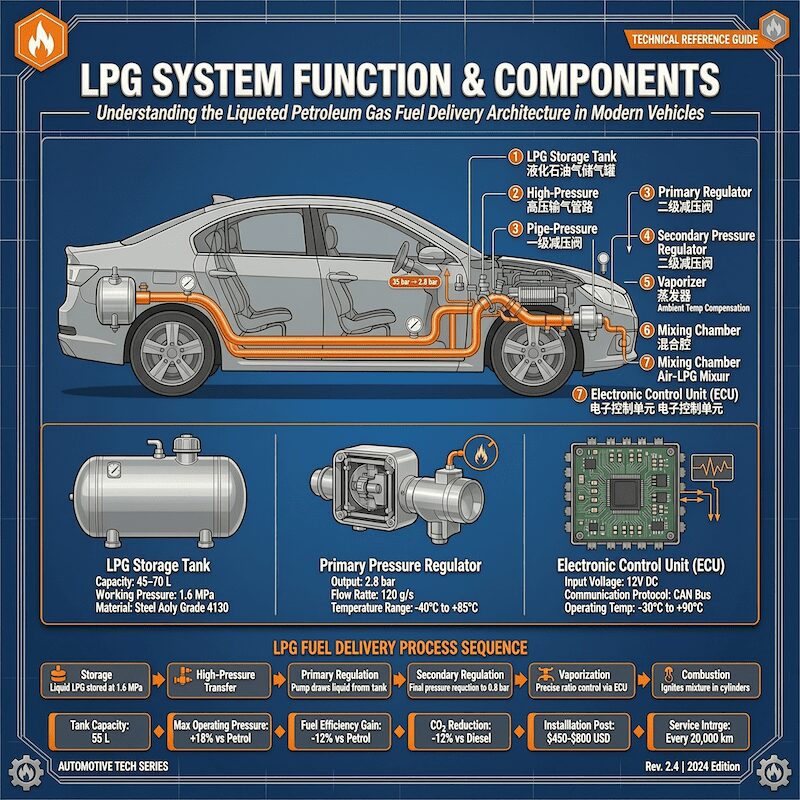
An LPG system fitted to a car is made up of several interconnected components, each with a specific role. Understanding what each part does helps you appreciate how the system works as a whole, and makes it easier to have an informed conversation with a mechanic if something ever needs attention.
1. The Reducer (Pressure Regulator and Vaporizer)
The reducer is one of the most important components in the system. It is an electro-pneumatic device that handles two jobs simultaneously: it reduces the pressure of the incoming gas, and it converts the liquid LPG into vapor so the engine can actually use it.
Here is how it works. LPG leaves the tank as a liquid under relatively high pressure, typically between 5 and 10 bar. The reducer brings that down in two stages. The first stage drops the pressure to around 0.8 to 1.2 bar. The second stage then adjusts the gas flow dynamically based on engine demand, responding to the vacuum created in the intake manifold. This ensures the engine gets exactly the right amount of gas at any given moment, whether you are idling at traffic lights or accelerating on a motorway.
2. The LPG Solenoid Valve
Sitting between the tank and the reducer, the solenoid valve acts as a gatekeeper. When the car switches from LPG back to petrol, this valve shuts off the gas flow to the reducer automatically. It also doubles as a filter, catching any impurities in the gas before they can reach the more sensitive components downstream.
It is a simple but essential part. Without it, you would have no clean way to stop gas flowing when it is not needed, which would waste fuel and potentially cause problems.
3. The Fuel Selector Switch
This is the control you interact with as a driver. The switch lets you choose between running on LPG or petrol. Most switches are simple push-button devices mounted within easy reach of the driver. Many also include a fuel level indicator so you can see how much LPG is left in the tank at a glance.
On older or simpler systems, you switch fuels manually by pressing the button. On modern injection-based systems, the switch can be set to automatic mode, where the car starts on petrol and transitions to LPG once the engine reaches operating temperature, without any input from the driver.
4. The Electronic Control Module
This is the brain of the LPG system. The electronic control module contains a microprocessor that continuously monitors signals from two key sensors: the oxygen sensor in the exhaust, and the throttle position sensor (TPS) which tracks how far you have pressed the accelerator.
Using this data, the module adjusts the stepper motor to control exactly how much gas the engine draws in. The goal is always the correct air-to-gas ratio for the current operating conditions. The system handles this calibration automatically, storing the correct parameters for different situations and making corrections on the fly when conditions change.
This real-time adjustment is what keeps the system running efficiently, keeps emissions low, and protects components like the catalytic converter and the oxygen sensor itself from unnecessary wear.
5. The Injector Emulator
Modern petrol-injected engines expect to see signals from fuel injectors at all times. When the car switches to LPG, the petrol injectors are no longer actually delivering fuel, but the engine management system still expects them to be operating. Without an emulator, the car’s computer would detect a fault and potentially throw error codes or go into a reduced-power mode.
The emulator solves this by cutting the voltage to the injectors while simultaneously sending a simulated signal to the engine management system, making it believe the injectors are still working normally. It is a clever electronic workaround that keeps everything running transparently while the car is on gas.
6. The Mixer
The mixer is a mechanical component that sits in the air intake path and handles the actual blending of gas and air before it enters the engine. It uses the Venturi principle, which is based on the pressure drop that occurs when air accelerates through a narrowed section of pipe, to draw the correct amount of gas into the airstream.
The design of the mixer varies depending on the engine it is fitted to. Each mixer is engineered specifically for a particular engine type to ensure the air-to-fuel ratio is correct across all throttle positions, from a light cruise to full acceleration. Matching the right mixer to the right engine is part of what makes a properly installed LPG system perform well on both fuels.
7. The LPG Tank
The tank is where the LPG is stored on the vehicle. Unlike portable gas cylinders, this tank is a permanent fixture. It is bolted to the car’s structure using metal straps and is filled at LPG pumps at service stations, the same way you would fill a petrol tank.
LPG tanks are built tough. The walls are made from 3.5mm steel that has been chemically treated to resist cracking, even in a collision. Every tank is equipped with a valve system that limits filling to a maximum of 80% of its total capacity. This buffer is deliberate. LPG expands when temperatures rise, and leaving that 20% headspace prevents dangerous overpressure situations in hot weather.
The tanks also have overpressure relief valves that open if internal pressure exceeds 25 atmospheres, venting gas safely outside the vehicle through a dedicated vent line rather than into the boot. Normal operating pressure in the tank sits between 2 and 8 atmospheres, varying with ambient temperature.
There are several tank configurations available to suit different vehicles and installation preferences:
- Cylindrical tanks mounted inside the boot
- Indoor toroidal (donut-shaped) tanks fitted in the spare wheel well inside the boot
- Exterior toroidal tanks mounted under the vehicle in place of the spare wheel
The toroidal tanks that replace the spare wheel are popular because they minimize the impact on boot space, though you do lose your spare tyre in the process.
8. The Multivalve
The multivalve is mounted visibly on the outside of the tank and serves as the central control point for everything going in and out of it. It is machined from bronze and other materials chosen specifically for their resistance to LPG.
Its primary job is to enforce the 80% filling limit. It contains a float mechanism that physically blocks further filling once the tank reaches that threshold. It also houses a solenoid valve that closes automatically when the car’s electrical system is switched off, sealing the gas inside the tank when the vehicle is not in use. Two manual shutoff valves are also incorporated, providing a way to fully close the multivalve if the system needs to be serviced or the car is out of operation for an extended period.
9. The Sealed Housing
The sealed housing is fitted over the multivalve and tank assembly. Its job is straightforward but important: it contains any potential gas leaks within the tank assembly and prevents them from accumulating in the boot or cabin of the vehicle. Any gas that does escape from the valve area is directed to the outside of the car through the vent line rather than into an enclosed space.
10. The Filling Device
This is the inlet point where LPG from the service station pump enters the tank. It is connected to the multivalve through a plasticized copper tube and incorporates a check valve to prevent backflow.
The filling nozzle at the pump connects to this device hermetically, meaning there is a sealed, airtight coupling every time you fill up. No gas escapes into the atmosphere during refueling. It is a closed loop from start to finish, which is part of why LPG filling is considered so safe despite the pressures involved.
How All the Components Work Together
It helps to picture the whole system as one continuous loop. LPG sits in the tank as a pressurized liquid. When you start the car and switch to gas, the solenoid valve opens. Gas flows to the reducer, which drops the pressure and converts the liquid into vapor. That vapor travels to the mixer, where it is blended with incoming air in the correct ratio. The electronic control module is watching everything through its sensors, making constant adjustments via the stepper motor to keep the mixture ideal. The emulator keeps the engine management system satisfied by simulating the injector signals it expects to see. And the selector switch on the dashboard gives you visibility and control over the whole process.
Every component in that chain has been engineered to work within the original design of the car, without permanently altering the vehicle or preventing it from running on petrol. That is the elegance of a properly installed LPG system. It adds a second fuel capability while leaving the car fully functional as a petrol vehicle whenever you need it.
If you are considering an LPG conversion, make sure the installation is carried out by a certified technician using approved components. A properly installed system is safe, efficient, and can pay for itself in fuel savings within a year or two depending on how much you drive. A badly installed one is neither safe nor efficient. The quality of the installation matters as much as the quality of the components themselves.