
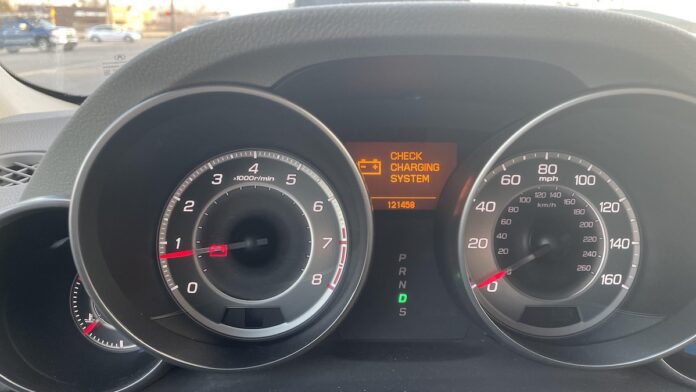

When the “check charging system” light pops up on your Acura’s dashboard, it’s telling you something pretty urgent: your car is running off stored battery power alone, and that power won’t last forever. In most cases, this warning means the alternator has stopped doing its job, a serpentine belt has snapped or slipped, or a battery cable has come loose. A dying battery can also be the culprit, though that’s less common than you might think.
Ignore this light, and you could find yourself stranded with a completely dead electrical system. So let’s dig into what’s actually going on, what triggers this warning, and how to fix it.
How Your Acura’s Charging System Works (And What Happens When It Doesn’t)
Your Acura’s charging system has one straightforward job: keep the battery charged and supply electrical power to everything in the car while the engine runs. It’s made up of three main players: the alternator, the battery, and the voltage regulator. They work as a team. When one fails, the whole system falls apart.
When the system detects a problem, your Acura displays the “check charging system” warning on the Driver Information Center (DIC). Sometimes this warning flickers on and off intermittently. Other times, it stays lit for days. Either way, it’s not something you should shrug off.
Here’s what’s really happening behind the scenes: if your alternator stops generating power, the battery picks up the slack. But a car battery isn’t designed to run the entire electrical system solo. Depending on what accessories you’re using, you might only have 30 minutes to an hour before everything shuts down. That includes your headlights, power steering, and eventually the engine itself.
What Actually Triggers the “Check Charging System” Warning
A failed alternator or a bad battery accounts for the vast majority of these warnings. But they’re not the only possibilities. Let’s go through each one so you know exactly what to look for.
A Worn-Out Alternator
This is the first thing most mechanics check, and for good reason. The alternator is responsible for generating the electrical power that keeps your battery topped off and your car’s systems running. It’s a workhorse, and like any workhorse, it wears down over time.
The most common failure points are the decoupler pulley and the internal bearings. When either of these wears out, the alternator can’t spin properly or maintain its output. The result? Your battery stops getting recharged, and the warning light comes on.
There’s usually a clue before total failure, though. Listen for an unusual whining or grinding noise coming from the engine bay. That’s often the sound of alternator bearings on their way out. In more advanced cases, your Acura might go into limp mode, or you could have trouble shifting gears. If you’re experiencing any combination of these symptoms alongside the warning light, the alternator is your prime suspect.
A Battery That Can’t Hold a Charge
The battery’s job is to store energy and deliver it when needed, most notably to the starter motor when you turn the key. But batteries don’t last forever. The average car battery gives you about three to four years of reliable service before it starts to degrade.
When a battery starts dying, it loses the ability to hold a charge effectively. Even if the alternator is pumping out the right voltage, the battery can’t store it. The charging system sees this imbalance and lights up the warning.
What kills batteries prematurely? A few things: extreme heat, repeated deep discharge cycles (like leaving your lights on overnight), engine vibrations over time, and overcharging from a faulty voltage regulator. If your battery is more than three years old and you’re seeing this warning, it’s a strong candidate for replacement.
A Broken or Slipping Serpentine Belt
Here’s one that people often overlook. The serpentine belt is the rubber belt that wraps around multiple pulleys at the front of your engine. It’s driven by the crankshaft and powers several accessories, including the alternator.
If that belt breaks, slips, or stretches out, the alternator pulley doesn’t spin at the right speed. That means the alternator can’t produce enough electricity to charge the battery. The “check charging system” light is the inevitable result.
A broken serpentine belt is usually pretty obvious because it affects more than just the charging system. You’ll likely notice your engine temperature climbing (since the belt also drives the water pump on many vehicles) and your power steering getting stiff. If all three symptoms show up at once, you almost certainly have a belt problem.
Loose or Corroded Battery Cable Connections
This one is the easiest to fix but also easy to miss. If the cable connections at your battery terminals are loose, corroded, or dirty, electricity can’t flow properly between the battery and the rest of the charging system. The car interprets this as a charging failure and throws the warning.
Other symptoms of loose connections include dim headlights, slow or hard cranking when you try to start the car, and flickering dashboard lights. Before you spend money on a new alternator or battery, it’s always worth popping the hood and checking whether the cables are snug and clean.
How to Diagnose and Fix the Problem
Before you replace anything, you need to figure out which component is actually causing the issue. Throwing parts at the problem without testing is a fast way to waste money. Here’s a systematic approach.
Test the Alternator Output First
Grab a voltmeter or multimeter and test the voltage at the battery terminals while the engine is running. You’re looking for a reading between 13.9 and 14.8 volts. That range means the alternator is producing enough power to charge the battery and run the electrical systems simultaneously.
If you’re seeing anything below 13 volts, the alternator isn’t putting out enough juice. Above 15 volts means it’s overcharging, which can fry your battery and damage electrical components. Either reading points to an alternator issue.
A word of caution: don’t test the alternator by disconnecting the battery while the engine is running. That old-school method can damage sensitive electronics in modern vehicles, and Acuras are no exception. Stick with the multimeter.
If the voltage is off, inspect the alternator’s bearings, decoupler pulley, diode, and voltage regulator. Depending on what’s failed, you might be able to repair the alternator, or you might need a full replacement. A new alternator for most Acura models runs anywhere from $300 to $700 installed, depending on the model and year.
Test the Battery Next
If the alternator checks out fine, shift your attention to the battery. With the engine off, use your multimeter to measure the battery’s resting voltage. A healthy battery should read between 12.2 and 12.6 volts. Anything significantly below that suggests the battery is losing its ability to hold a charge.
Also check whether the alternator is overcharging the battery, as that can cause premature failure. If the battery is more than three years old, it’s smart to have it load-tested at an auto parts store (most do this for free). A load test reveals whether the battery can actually deliver power under demand, not just sit there at the right voltage.
While you’re at it, give the battery a visual inspection. Look for cracks in the casing, corrosion buildup on the terminals, or any signs of fluid leaks. Any of these are good reasons to replace it. After three years of service, make it a habit to inspect the battery every time you get an oil change.
See Also: Awe-inspiring Car Tips and Tricks That Everyone Should Try
Inspect the Serpentine Belt
This is a quick visual check. Open the hood and look at the belt. Is it still intact? Is it actually gripping the alternator pulley, or is it just sliding over it? Look for missing chunks, frayed edges, glazing, or visible cracks in the rubber. If the belt is stretched out, loose, or out of alignment, it needs to be replaced.
Serpentine belt replacement is one of the cheaper fixes on this list, usually around $100 to $200 for parts and labor. It’s also a repair that many handy car owners can tackle in their own garage with basic tools and a belt routing diagram (usually found on a sticker under the hood).
Clean and Tighten the Battery Connections
If everything else looks good, go back to the basics. Disconnect the battery cables (negative first, always) and clean the terminals and cable connectors with a wire brush or steel brush. Scrub off any white or greenish corrosion buildup. Then reconnect the cables and tighten them securely.
This fix costs you nothing but 10 minutes of your time, and it resolves the issue more often than people realize. Corrosion creates resistance in the connection, and even a small amount can fool the system into thinking there’s a charging problem.
Don’t Guess. Test First, Then Fix.
Your Acura’s charging system will eventually show its age. That’s just the nature of mechanical and electrical components. But the “check charging system” warning is your early heads-up that something needs attention, and the sooner you act, the less likely you are to end up stuck on the side of the road.
Start with the alternator output and battery voltage tests. Check the serpentine belt visually. Inspect the battery connections. In most cases, one of these four checks will point you straight to the problem. A $20 multimeter and 30 minutes of your time can save you hundreds in unnecessary parts and towing fees.