
You know how to drive your car. You know how to turn on the wipers, blast the air conditioning, and fiddle with the radio. You probably even know what most of the warning lights on the dashboard mean. But there is an entire world of clever, practical, and surprisingly simple car tricks that no owner’s manual will ever teach you.
Some of these will save you money. Some will save you time. A few might actually save your life. And almost all of them use things you already have lying around the house. So before you spend another dollar at the auto parts store or the dealership, take a look through this list. We are willing to bet that at least a handful of these will make you say, “Why did I not think of that sooner?”
Pop Out a Dent With Hot Water and a Plunger
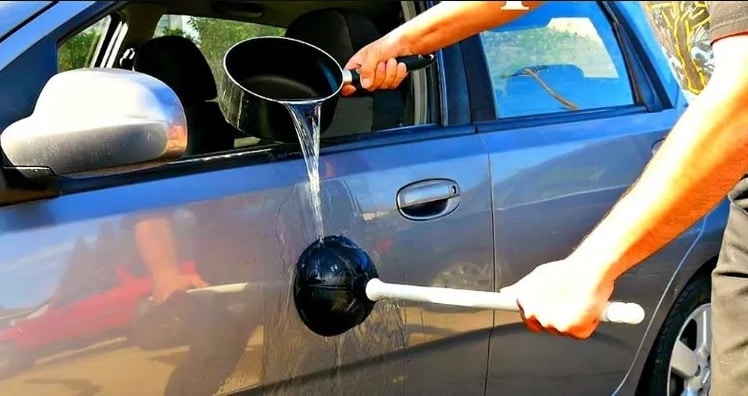
Just found an ugly dent on your car’s body panel? Before you start getting quotes from body shops, try this first. Boil a pot or kettle of water, pour it directly over the dented area, and then press a standard household plunger over the dent and pull.
The hot water softens the metal (or plastic, on many modern bumper covers) just enough to make it flexible. The suction from the plunger does the rest. If the panel is not severely creased or damaged, the dent should pop right back into shape. It will not look showroom-perfect in every case, but it will be dramatically less noticeable, and it costs you absolutely nothing.
Clean Foggy Headlights With Toothpaste
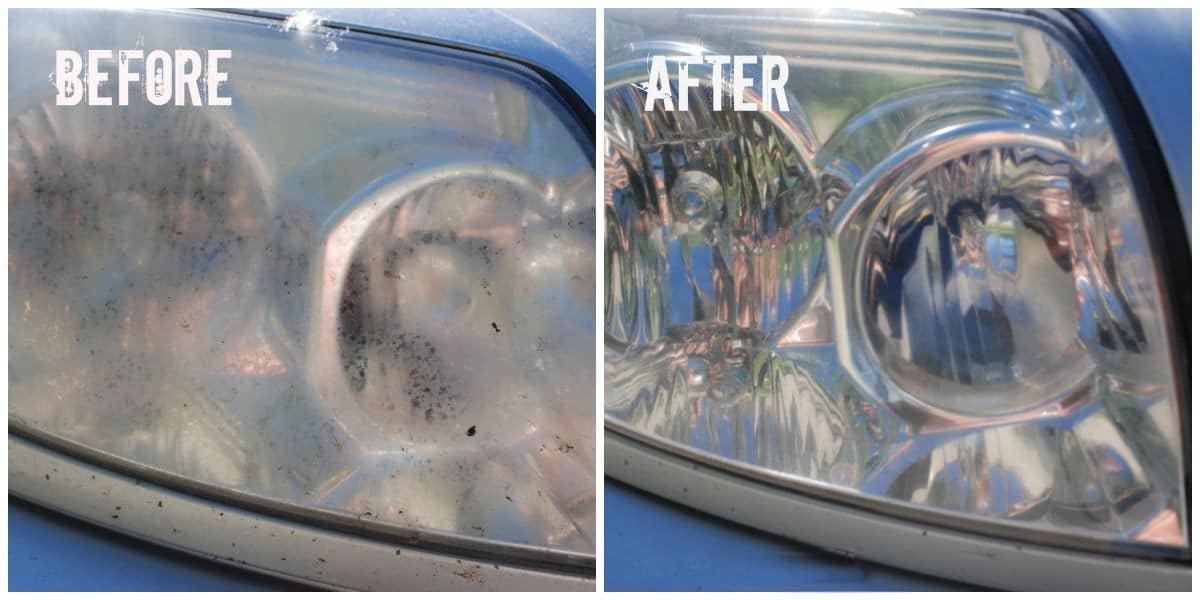
If your headlight lenses have gone cloudy and hazy, do not rush out to buy a specialty headlight restoration kit just yet. There is a good chance you already have a solution sitting on your bathroom counter.
Toothpaste contains mild abrasives that are designed to polish enamel on your teeth. Those same abrasives work surprisingly well on oxidized headlight plastic. Squeeze a generous amount of regular white toothpaste (not gel) onto the lens, rub it in with a cloth using circular motions, and then wipe it clean. You will need some elbow grease, but the clarity improvement is often remarkable.
One note: if the yellowing is on the inside of the lens rather than the outside surface, toothpaste will not help. In that case, you are probably looking at a lens replacement. But for external oxidation, which is what causes the majority of foggy headlight cases, toothpaste is a legitimate fix.
Open a Stubborn Keyring With a Staple Remover
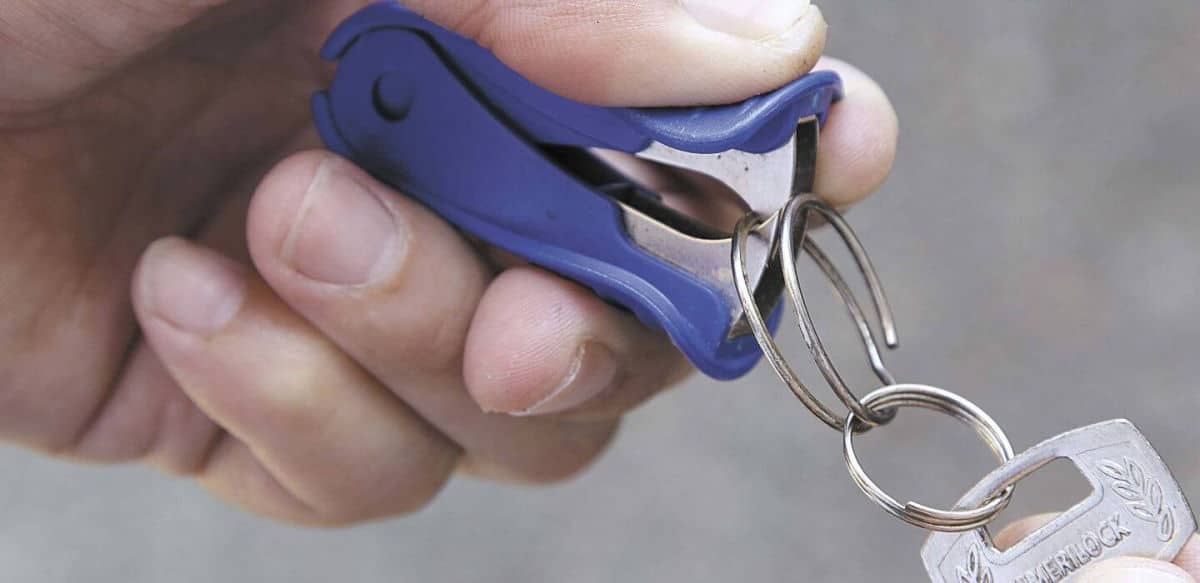
We have all been there. You need to add a new key to your keyring, and you spend five minutes trying to pry the metal loop apart with your fingernails, breaking one in the process and still not getting the key on.
Grab a staple remover from your desk drawer. Slide its teeth into the gap of the split ring, squeeze, and the ring pops open effortlessly. Slide your new key right on. It is so simple that you will be genuinely annoyed at yourself for never thinking of it before.
Keep Your Trunk Organized With a Shower Caddy
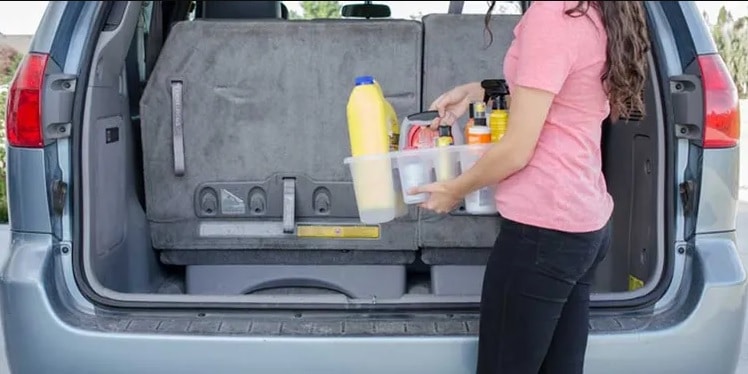
If you are the type of person who keeps emergency supplies in the trunk (oil, a funnel, rags, a flashlight, maybe some jumper cables), you know how quickly those items end up scattered everywhere. They roll around during turns, they get dirty, and when you actually need something, you spend five minutes digging through a mess.
A cheap plastic shower caddy from the dollar store solves this completely. Everything stays upright, organized, and contained. When you need something, you grab it. When you do not, the caddy keeps your trunk clean and your supplies in one place. It is a $3 solution to a problem that has been annoying you for years.
Protect Your Car Doors With Pool Noodles on the Garage Wall
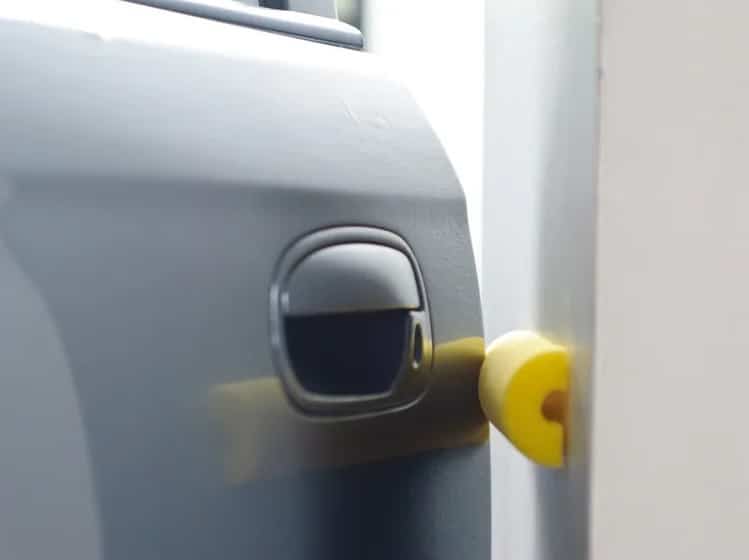
If you park in a tight garage and your door keeps swinging open into the wall (you can probably see the scuff marks), here is a fix that costs about two dollars.
Cut a pool noodle in half lengthwise and attach the pieces to the wall right where the door edge makes contact. You can use command strips, screws, or even some heavy-duty double-sided tape. The foam absorbs the impact, protecting both your door edge and the wall. It is not glamorous, but it works, and your car door will thank you for it.
Turn a Cereal Container Into a Car Trash Can
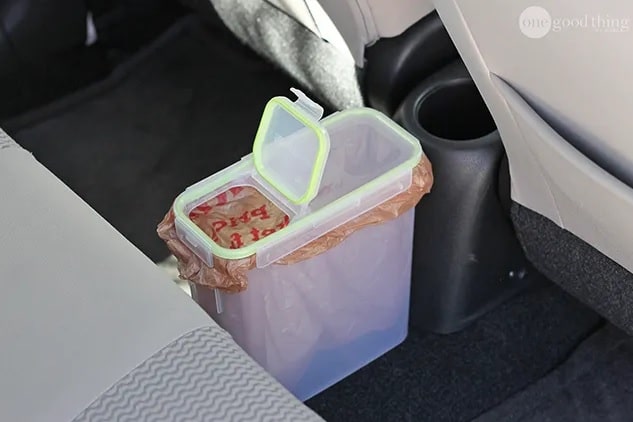
We all toss trash in our cars without thinking about it. Receipts, wrappers, napkins, empty coffee cups. And if you let it pile up, the smells start lingering in the cabin in ways that an air freshener cannot fully mask.
Take one of those small plastic cereal containers with a flip-top lid. Line it with a small plastic bag. Set it on the floor of the passenger side or behind the center console. Now you have a compact, sealable trash can that keeps garbage contained and odor-free. When the bag is full, pull it out, tie it off, and replace it. Your car stays clean, and the lingering french fry smell from three weeks ago disappears.
Cut Sun Glare With a Tinted Plastic Sheet
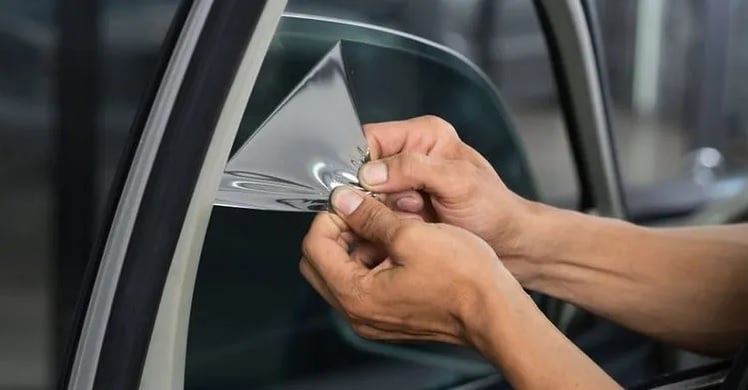
You are driving west in the late afternoon. The sun is low enough that your visor is completely useless, and your sunglasses are sitting on the kitchen counter at home. Sound familiar?
A small tinted plastic sheet that sticks to your windshield or side window using static cling can be a lifesaver. You can move it around to block the sun from whatever angle it is attacking you. It peels off cleanly when you do not need it. It is not a permanent window tint, so there are no legal concerns. Think of it as a portable, repositionable sun shield that goes wherever the glare is worst.
Park Facing East to Let the Sun Defrost Your Windshield
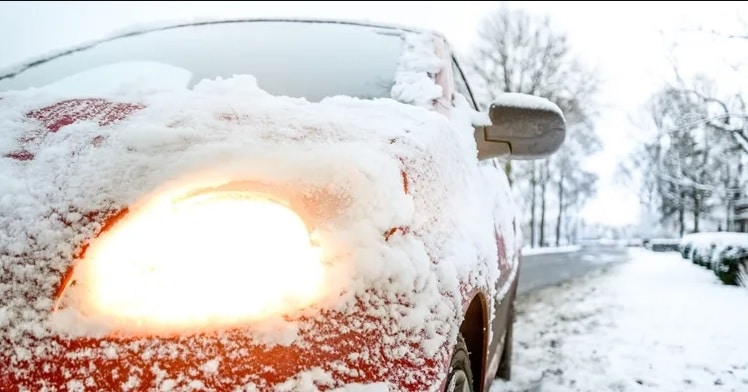
This sounds like superstition, but it is pure physics. The sun rises in the east. If you park your car facing east in the evening, the morning sun will hit your windshield first thing. By the time you walk out to your car, the sun has already started melting the frost on the front glass.
It will not completely defrost a heavily iced windshield, but it will give you a significant head start compared to parking in any other direction. If you leave for work after sunrise, you might not need the defroster or the ice scraper at all. A tiny adjustment to how you park can save you five to ten minutes of shivering in the driveway every cold morning.
Extend Your Key Fob Range With Your Head (Seriously)

Yes, this looks ridiculous. We know. But it actually works, and there is real science behind it.
If you are standing in a parking lot and your key fob does not have enough range to reach your car, hold the fob under your chin and press the button. The fluids in your head act as a conductor and slightly amplify the radio signal, extending its range. It is not magic. It is basic radio frequency physics. Try it once, see the difference, and then decide whether looking a little silly for two seconds is worth finding your car faster.
Use a MagnaDoodle as a Mess-Free Tray for Kids on Road Trips

Traveling with young kids presents two constant challenges: they make messes, and they get bored fast. A MagnaDoodle (or any magnetic drawing board) handles both problems at once.
First, it is an endlessly entertaining toy. Kids can draw, erase, and redraw without running out of paper or dropping crayons into the black hole between the seats. Second, and this is the part most people miss, the flat surface works as a lap tray for snacks. Crackers, fruit slices, whatever. The raised edges keep food contained, and cleanup is just a quick wipe. One toy, two problems solved.
Clean Your Wheels With Coca-Cola and Dish Soap
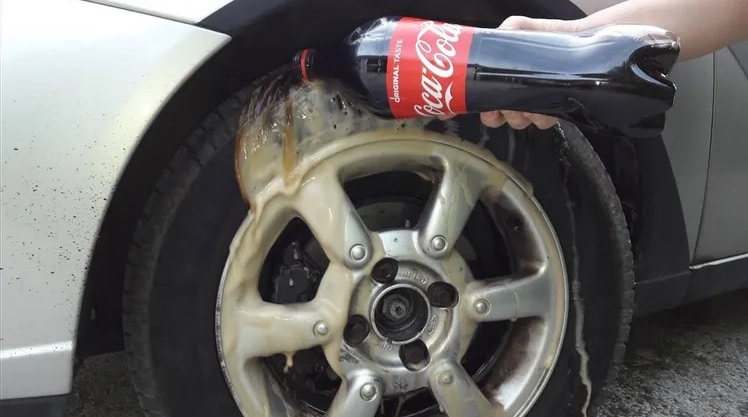
You have probably heard the “use Coke to clean things” advice a hundred times. But for wheels specifically, it genuinely works. The mild acidity in cola breaks down road grime and brake dust that clings to rims.
The trick is to mix the cola with a squirt of dish detergent. The detergent prevents the sugary residue from making your wheels sticky. Pour the mixture over the wheels, let it sit for a few minutes, scrub with a brush, and rinse with water. Your rims will come out looking noticeably cleaner without buying a specialty wheel cleaner.
Pantyhose Can Work as an Emergency Fan Belt (In a True Pinch)
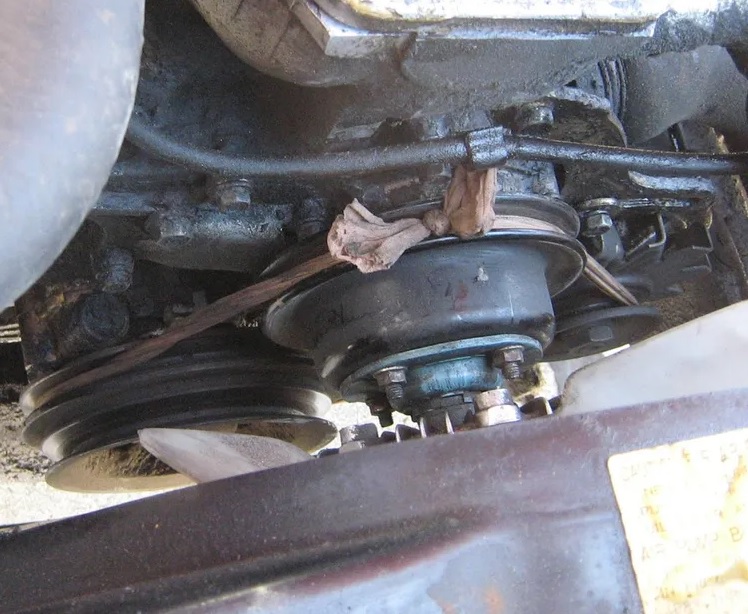
This is a survival hack, not a repair recommendation. If your serpentine belt or accessory belt snaps and you are stranded with no cell service and no way to call a tow truck, a pair of pantyhose can be twisted and routed around the pulleys as a temporary belt. It will get you to the nearest gas station or repair shop at low speed.
Big caveat here. This is a last-resort move. It carries a real risk of the improvised belt slipping, overheating, or getting caught in the engine. If you have any other option available, like calling for roadside assistance, use that option instead. But in a genuine emergency where you are truly stranded, it can be the difference between sitting on the side of the road for hours and getting to safety.
Cover Small Paint Scratches With Nail Polish
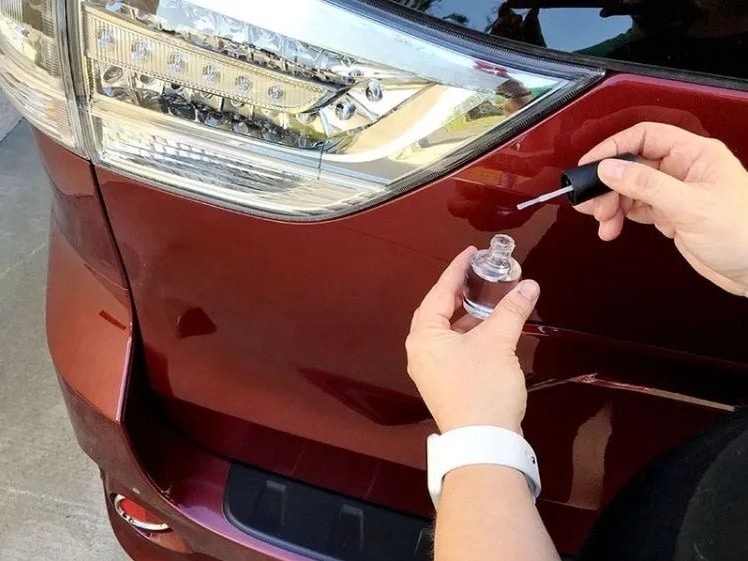
Getting a professional to fix a tiny scratch or paint chip usually costs way more than the damage warrants. But leaving it exposed means the bare metal underneath will rust, and the scratch will get worse over time. It also hurts your resale value.
Here is the cheap fix. Find a nail polish that closely matches your car’s paint color. Apply a thin layer over the scratch. It will not be invisible under close inspection, but from a normal viewing distance, it blends in remarkably well. More importantly, it seals the exposed area and prevents rust from starting. A $5 bottle of nail polish doing the job of a $200 body shop touch-up is a trade most people will happily take.
De-Ice Frozen Door Locks With Hand Sanitizer
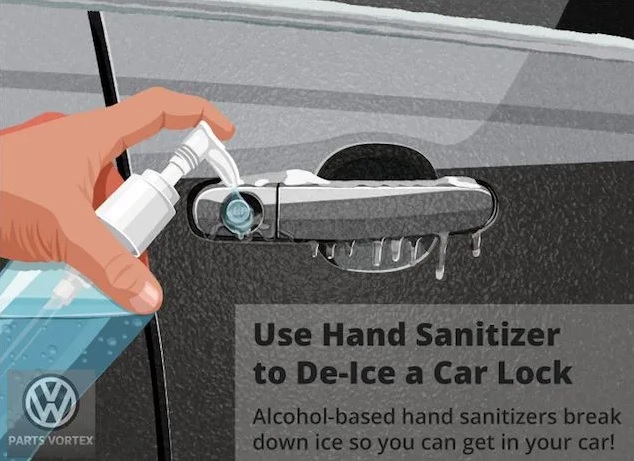
If you have ever stood in a freezing parking lot trying to get your key into a frozen door lock, you know how miserable it is. Pouring liquid into a stuck lock seems counterintuitive, but hand sanitizer is mostly alcohol, and alcohol melts ice rapidly.
Squirt a small amount onto the key or directly into the keyhole. The alcohol will dissolve the ice, and you will be able to turn the lock within seconds. Keep a small bottle of hand sanitizer in your jacket pocket during winter months, not in the car (since you cannot get into the car to access it if the locks are frozen).
Keep Seatbelt Buckles Cool in Hot Weather by Buckling Them When You Park

In the summer, the metal seatbelt buckle can get hot enough to burn your skin. You reach across to buckle up and get branded like cattle. Not fun.
Simple fix: when you get out of the car, buckle the seatbelt before you close the door. This keeps the metal buckle tucked between the seats and out of direct sunlight. When you get back in, the buckle will be warm instead of scalding. A two-second habit that saves you from a painful surprise every time you get in the car on a hot day.
Hang a Shoe Rack on the Back of the Front Seat for Backseat Storage
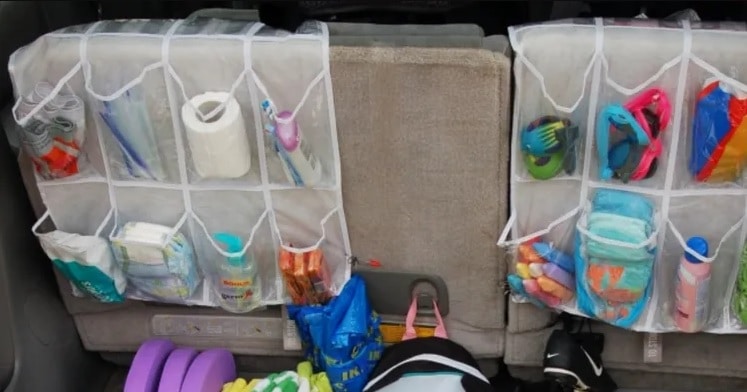
If you have kids, this one is a game-changer. Hang an over-the-door shoe organizer on the back of the driver or passenger seat headrest. All those backseat necessities (sippy cups, small toys, snacks, chargers, wipes) fit neatly into the individual pockets.
Everything is visible at a glance and within easy reach. It is way more practical than the built-in seatback pouches that come in some minivans, which are usually too deep to see into and too floppy to stay organized. A $10 shoe organizer keeps the backseat chaos under control better than most purpose-built car organizers that cost three times as much.
Stop a Windshield Chip From Spreading With Clear Nail Polish

A chip or small crack in your windshield will almost certainly spread if you leave it alone. Temperature changes, road vibrations, and bumps all put stress on the damaged area, and the crack grows a little bit every day.
If you cannot get the windshield repaired right away, apply a few drops of clear nail polish over and into the chip. The nail polish fills the void and acts as a temporary sealant, preventing moisture and dirt from getting in and slowing the spread of the crack. It is not a permanent fix, but it can buy you weeks or even months before the crack progresses to the point where repair is no longer possible and full replacement is required.
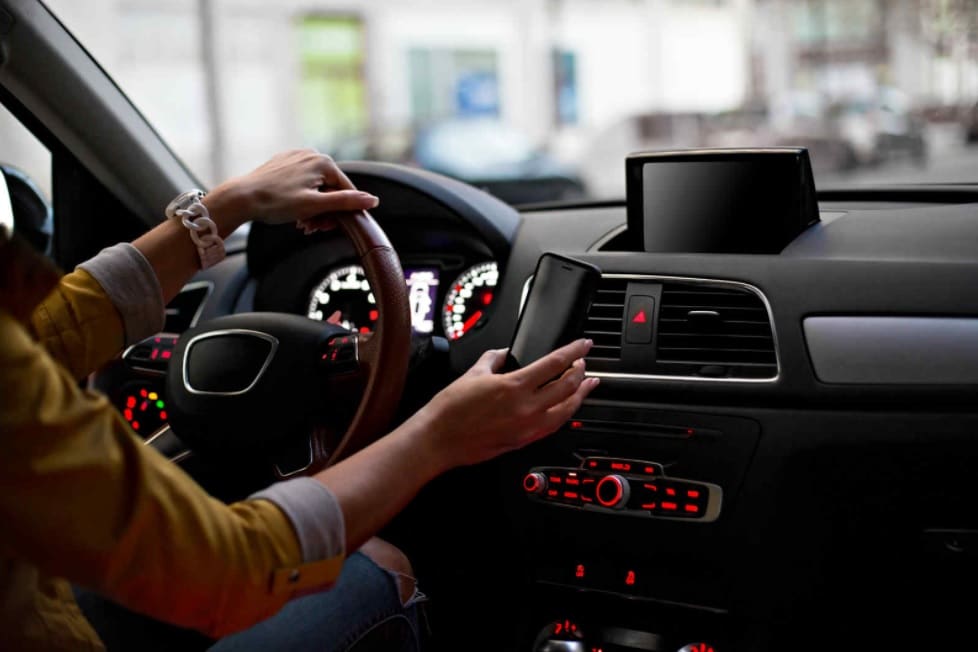
No Phone Mount? Use a Rubber Band Through the Air Vent
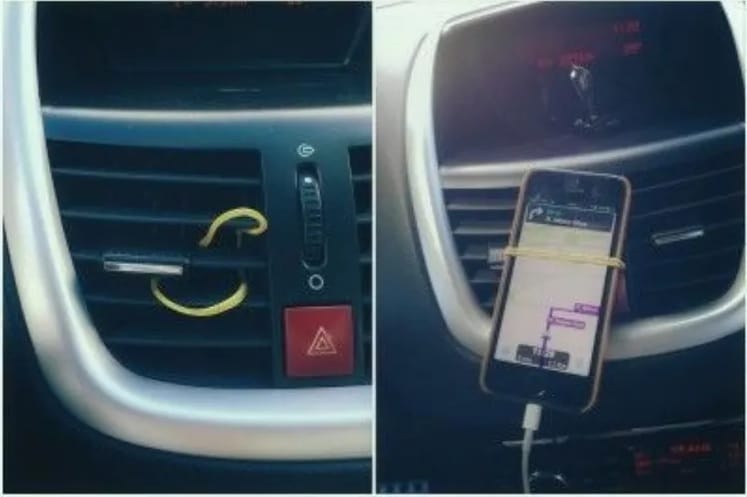
You need to see your GPS, but you do not have a phone mount and there is no co-pilot to hold the phone for you. Holding the phone in one hand while driving is dangerous and illegal in most places.
Take a thick rubber band, thread it through two of the horizontal slats on your center air vent, and wrap the top and bottom loops around your phone. The tension holds the phone upright and in your line of sight. It is not as elegant as a proper mount, but it works in a pinch, and it keeps your hands on the wheel and your eyes closer to the road.
Cool Down a Hot Car in Seconds With the Door Fan Trick
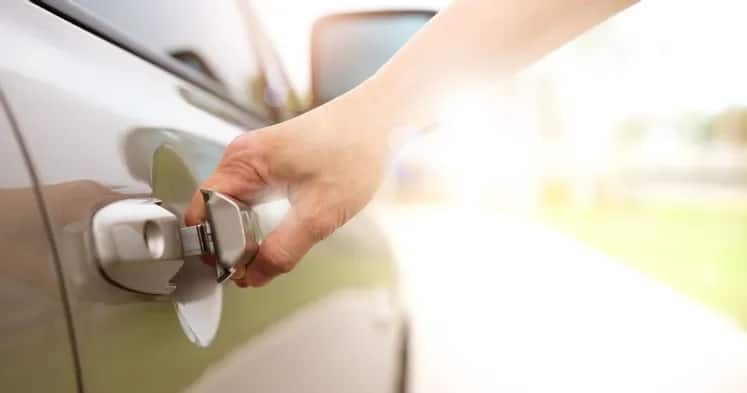
Your car has been sitting in the sun for three hours. You open the door and a wall of heat hits you in the face. You can barely breathe, let alone sit down on that lava-hot seat.
Here is how to flush the hot air out fast. Roll down the passenger-side window. Then go to the driver-side door and open and close it rapidly five or six times. This creates a pumping effect that pushes the trapped hot air out through the open passenger window and pulls cooler outside air in. The cabin temperature drops noticeably within seconds. It works so well that you will wonder why no one told you about this years ago.
Use Dryer Sheets as a Long-Lasting Air Freshener
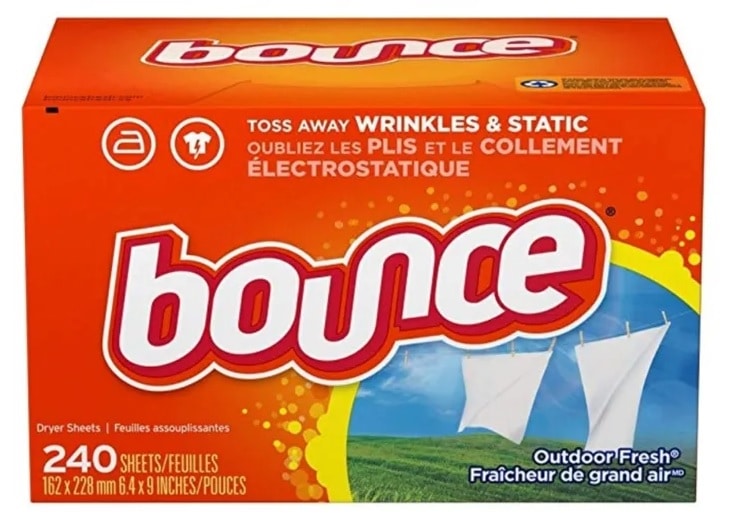
Those clip-on air fresheners and dangling tree-shaped things lose their scent in about a week. A box of dryer sheets lasts for months, costs about the same, and actually absorbs odors instead of just masking them.
Tuck a couple of sheets under the seats or in the door pockets. They are subtle, they do not obstruct your view, and they keep the cabin smelling fresh far longer than any hanging air freshener you have ever tried. You can get them scented or unscented depending on your preference.
The Nanotech Scratch Remover Cloth: A Product Worth Knowing About
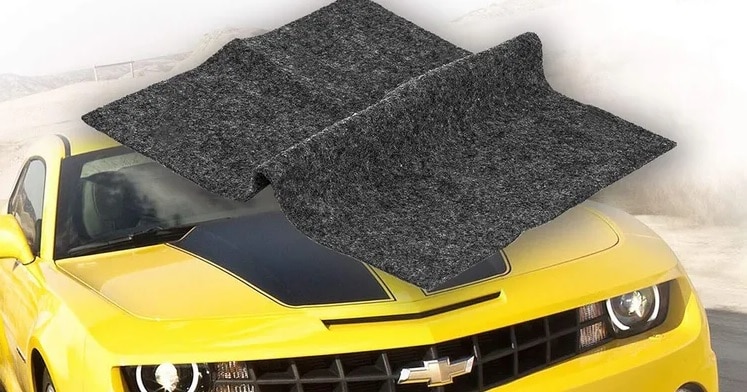
This is less of a hack and more of a product recommendation. Nanotech scratch remover cloths use a micro-abrasive technology to buff out light surface scratches, restore faded paint color, and protect the paint surface. Each cloth can reportedly be used 10 to 15 times, and many of them come with a one-year guarantee.
They will not fix deep scratches that go through the clear coat and into the base paint. But for swirl marks, light scuffs, and surface-level blemishes, they do an impressive job for a fraction of the cost of professional paint correction.
Make a DIY Car Air Freshener With Scented Wax Cubes and a Mason Jar
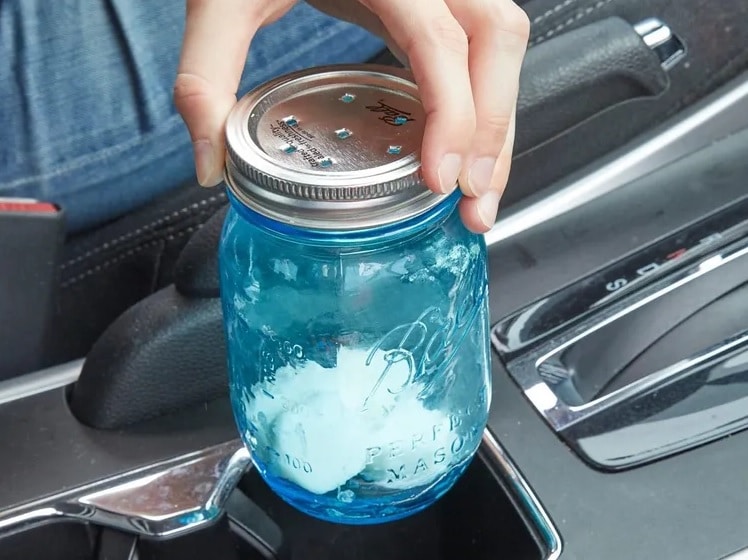
Here is another DIY air freshener that works beautifully. Drop a few scented wax cubes (the kind you use in a wax warmer at home) into a small mason jar. Punch a few holes in the metal lid and screw it on.
Place the jar in a cup holder or on the dashboard. As the car heats up in the sun, the wax softens and releases its fragrance into the cabin. The lid keeps the wax contained so it does not spill, and the scent lasts for weeks. You can swap the wax cubes when the scent fades. It costs almost nothing and smells better than most commercial car fresheners.
The Penny Test: Check Your Tire Tread in Two Seconds
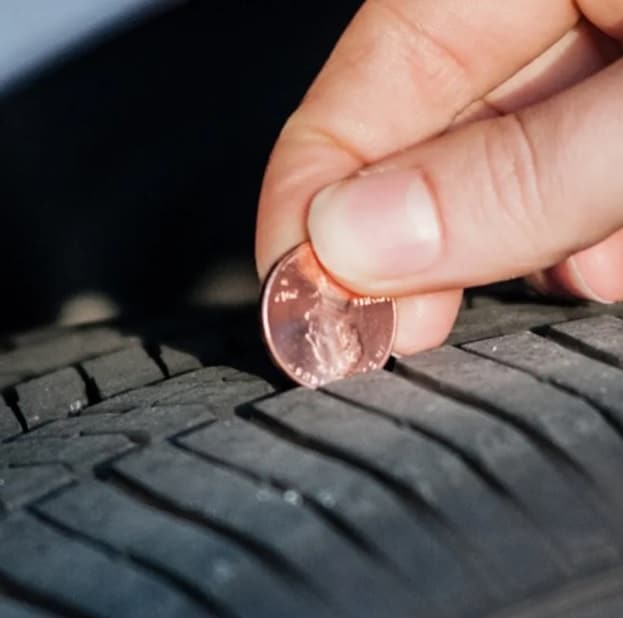
This is one of those tips that could literally save your life. Take a penny and insert it into the tread groove of your tire with Lincoln’s head facing downward.
If the tread covers the top of Lincoln’s head (you cannot see the top of his head), your tread depth is still acceptable. If you can see all of Lincoln’s head above the tread, your tires are worn past the safe minimum and need to be replaced. Do this test in several spots across the tire face, because tires can wear unevenly.
Line Your Cup Holders With Silicone Cupcake Liners
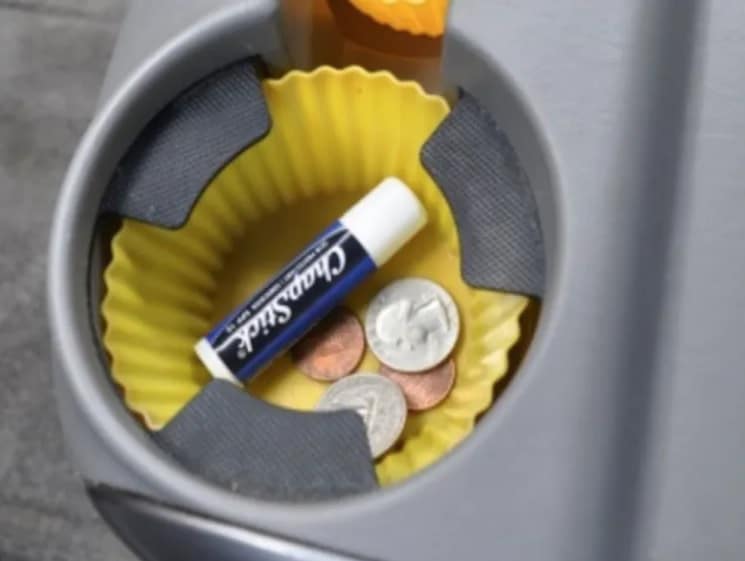
Cup holders are magnets for sticky spills, loose change, crumbs, and general grime. And they are shaped in a way that makes them incredibly annoying to clean.
Drop a silicone cupcake liner into each cup holder. They fit perfectly, they catch everything, and when they get dirty, you just pop them out, rinse them off, and put them back. Your actual cup holders stay pristine underneath. It is one of those tiny changes that makes an outsized difference in keeping the interior clean.
Hang Bags From Headrest Hooks Using Carabiner Clips
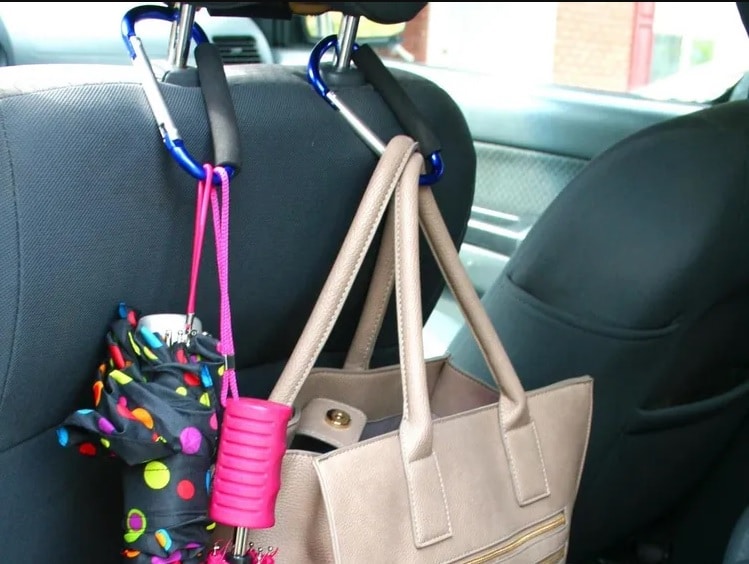
Need more room in the back seat? Clip a couple of carabiner hooks onto the headrest posts of the front seats. Now you have instant hooks for grocery bags, purses, umbrellas, backpacks, or anything else that would otherwise be sliding around on the seat or the floor.
It frees up more usable space than you would expect, and the bags hang securely instead of tipping over on every turn. A pack of carabiner clips costs a few dollars and takes two seconds to install.
A Muffin Pan Makes the Perfect Multi-Drink Carrier
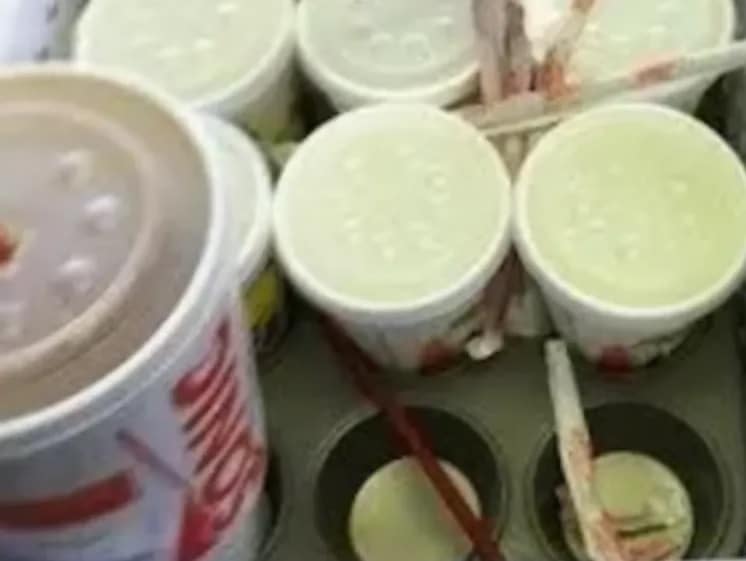
Picking up a large fast food order for the family and your car only has two cup holders? Grab a muffin pan and set it on a flat surface in the car (the floor, a seat, or a basket). Each muffin well holds a drink securely. A standard 12-cup muffin pan gives you six times the cup-holding capacity of most vehicles.
It is especially useful for road trips, tailgating, or any situation where you need to transport more drinks than your vehicle was designed to handle. Keep one in the trunk and pull it out when needed.
Keep a Laundry Basket in the Trunk for Groceries
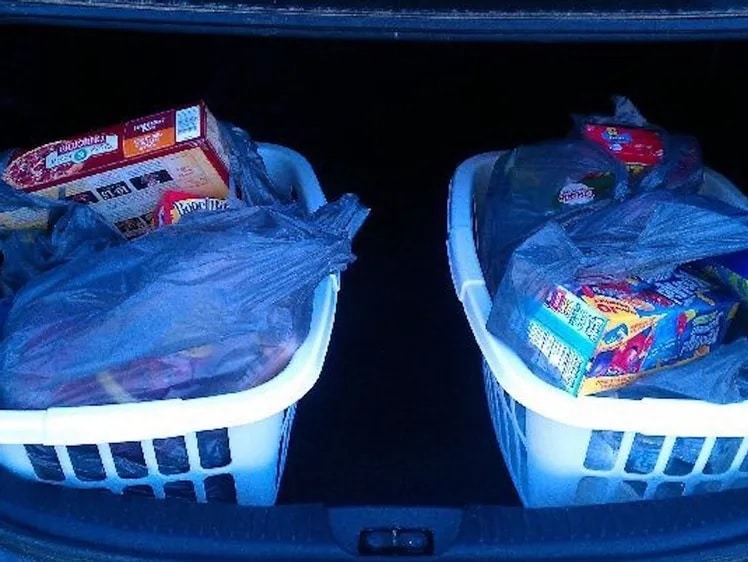
Next time you go grocery shopping, throw an empty laundry basket in the trunk before you leave. When you get home, load all the grocery bags into the basket and carry everything inside in one trip instead of five.
The basket also keeps bags from sliding around in the trunk during the drive home. No more eggs rolling under the spare tire. No more bread getting crushed by the gallon of milk. It is a simple, zero-cost upgrade to your grocery routine that you will use every single week.
Cat Litter in the Trunk is Not Just for Cat Owners
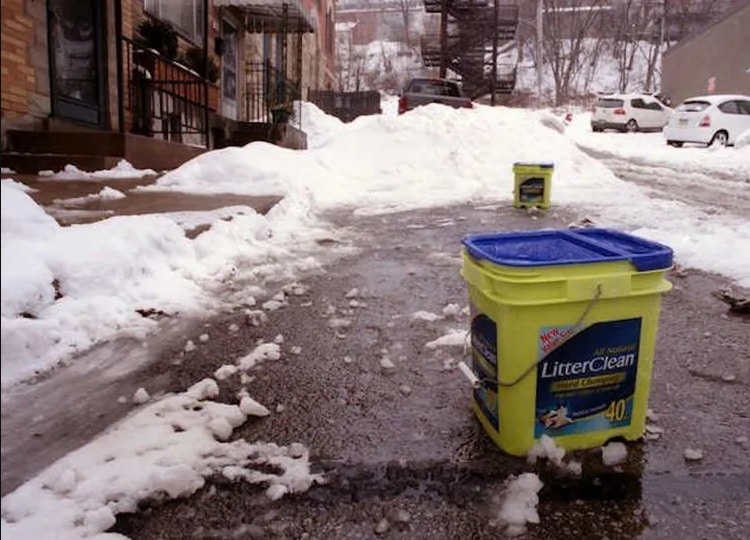
Even if you do not own a cat, keep a bag of non-clumping cat litter in your trunk during the winter months. If your car gets stuck on ice or in a snowbank, pour the litter around and under the drive wheels. The granules provide traction on slick surfaces, giving your tires something to grip.
It works similarly to sand or gravel but is lighter and easier to store. A small bag takes up minimal trunk space and can be the difference between getting yourself out of a slippery spot and waiting an hour for a tow truck.
Cat Litter in a Sock Prevents Windshield Fog
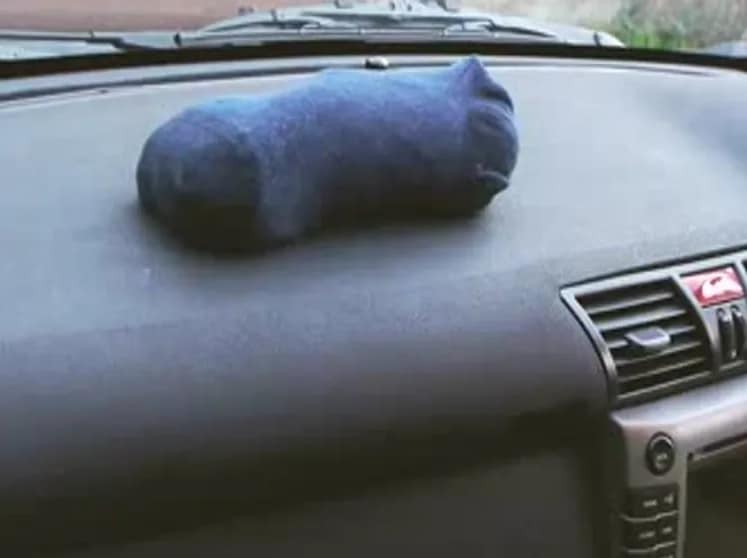
This one sounds strange, but it works. Fill a sock with cat litter, tie it off, and set it on the dashboard or near the windshield. Cat litter is designed to absorb moisture, and it does the same thing inside your car. It pulls excess humidity out of the cabin air, which significantly reduces the amount of fog that forms on the inside of your windshield during cold or humid weather.
No more waiting five minutes for the defroster to clear the glass. No more wiping the windshield with your sleeve while trying to drive. A sock full of cat litter sitting on the dash handles most of the moisture problem before it ever becomes visible fog.
Stick a Command Hook on the Dashboard to Hold Your Bag
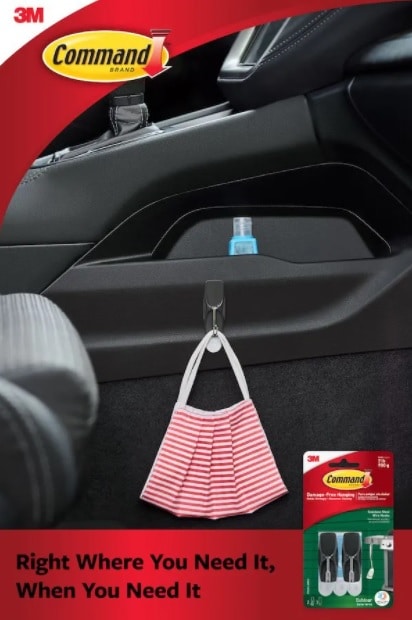
Tired of your purse, bag, or mask sliding off the seat every time you hit the brakes? Stick an adhesive command hook at floor level on the center console or near the passenger footwell. Hang the bag on it.
Everything stays put, stays accessible, and stays organized. When you do not need the hook anymore, command hooks peel off cleanly without damaging the surface. It is such a small addition, but it eliminates that daily annoyance of digging through the footwell for your bag at every stop.
Hang a Tennis Ball From the Garage Ceiling to Nail Your Parking Spot Every Time
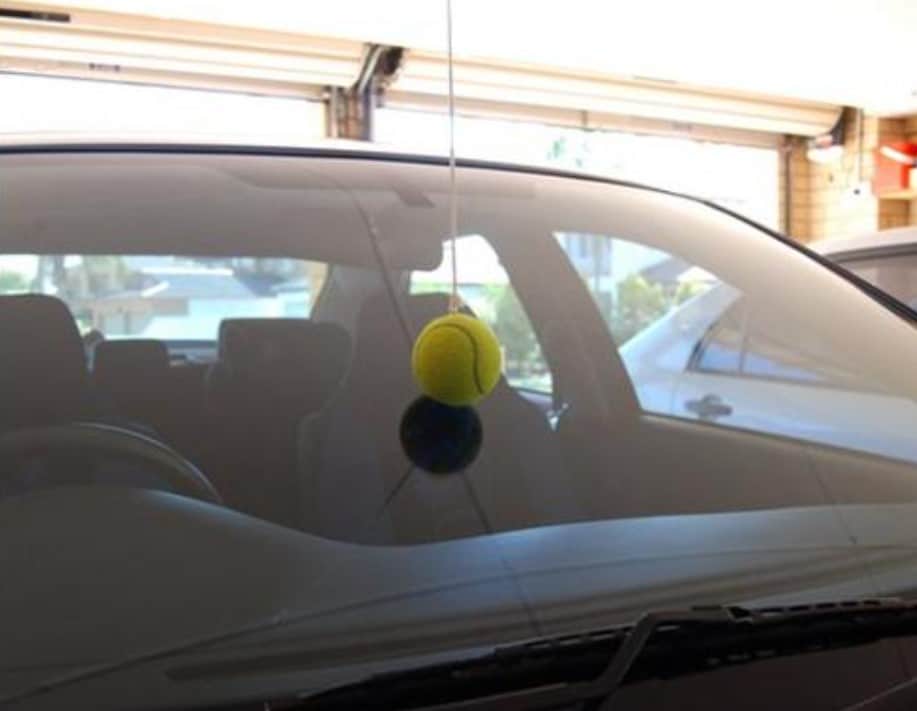
Parking in a tight garage and not sure if you have pulled far enough forward? Or too far forward? Hang a tennis ball from the ceiling on a piece of string, positioned so that it gently touches your windshield when the car is in the perfect spot.
Every time you pull in, the ball tells you exactly when to stop. No more guessing. No more getting out to check. No more bumping into the shelving unit against the back wall. It is the simplest parking guide ever invented, and it costs less than a dollar.
Use a Parking Locator App So You Never Lose Your Car Again

If you have ever wandered around a mall parking lot for 15 minutes trying to remember where you parked, there are apps for that now. Several free apps let you drop a pin on your parking location and then navigate back to it when you are done shopping.
Google Maps has this feature built in (tap the blue dot showing your location and select “Save your parking”). Apple Maps does something similar. There are also dedicated parking locator apps if you want additional features. The days of aimlessly pressing your key fob in a sea of cars are over.
Put Socks on Your Windshield Wipers Overnight to Prevent Ice Buildup
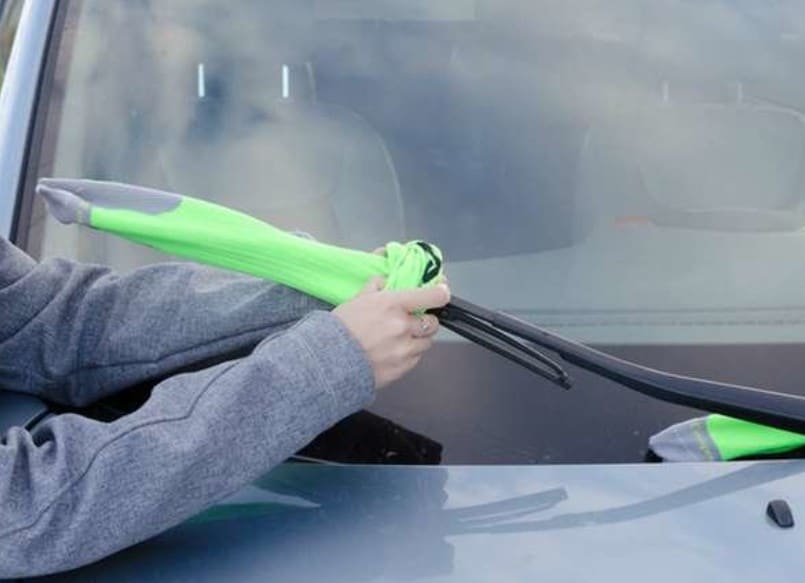
Before a cold night, slip an old sock over each windshield wiper blade. In the morning, the socks keep the rubber blades from freezing to the windshield and accumulating ice. Pull the socks off, and your wipers are clean, flexible, and ready to work immediately.
This is way easier than standing outside chipping ice off your wiper blades with your fingernails at 6:30 AM. An old pair of socks that you were going to throw away just became one of the most useful cold-weather tools in your car.
Strap a Paper Towel Roll to the Ceiling With a Bungee Cord
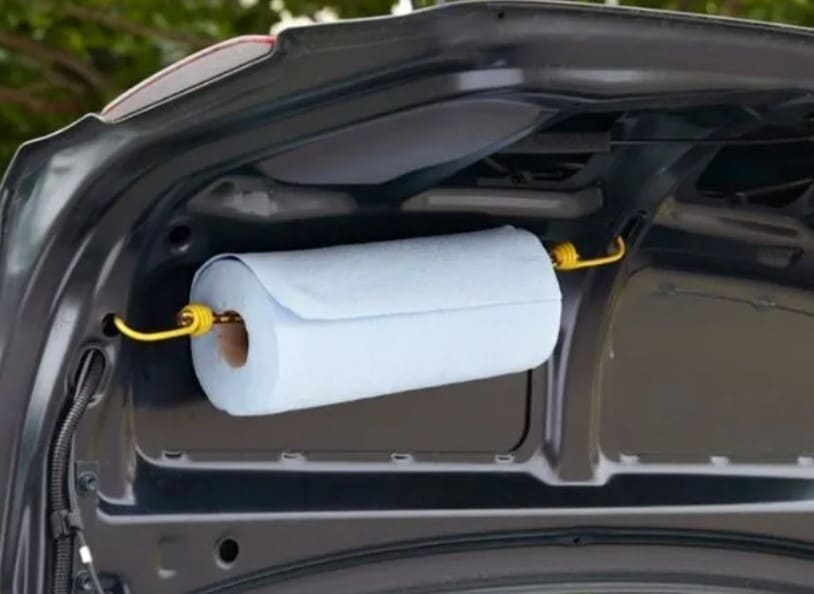
This one is particularly brilliant for families with young kids. Loop a bungee cord through the center of a paper towel roll and attach both ends to the grab handles on the ceiling of the car. The roll hangs overhead, out of the way, but within easy reach of anyone who needs a towel.
Spilled drink? Grab a towel. Runny nose? Grab a towel. Muddy hands from the playground? Grab a towel. No more rummaging through the glove box or digging between seats looking for napkins. The towels are right there, always available, taking up zero floor or seat space.
De-Frost Your Windshield Faster With a Vinegar and Water Spray
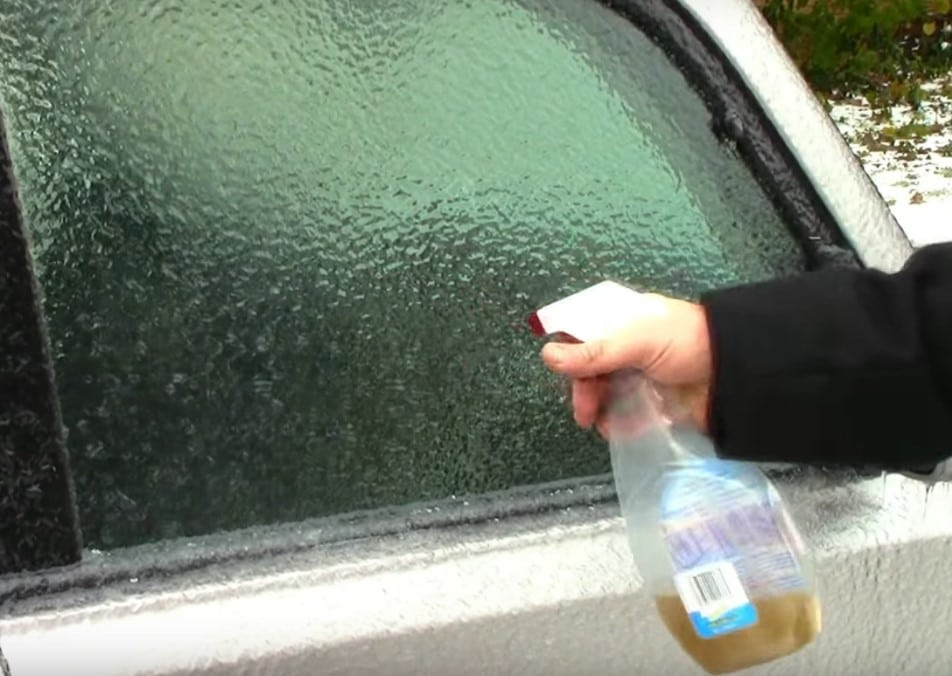
Mix three parts vinegar with one part water in a spray bottle. Spray it on your frost-covered windshield. The acetic acid in the vinegar breaks down the ice much faster than plain water, and the spray bottle lets you apply it evenly so you do not end up with random clear patches surrounded by ice.
Follow up with your ice scraper or windshield wipers, and the ice comes off in sheets instead of requiring ten minutes of stubborn scraping. Keep the spray bottle in your house (not the car, where it could freeze) and grab it on your way out the door on cold mornings.
Get More Fuel Into Your Tank by Pumping at Half Speed
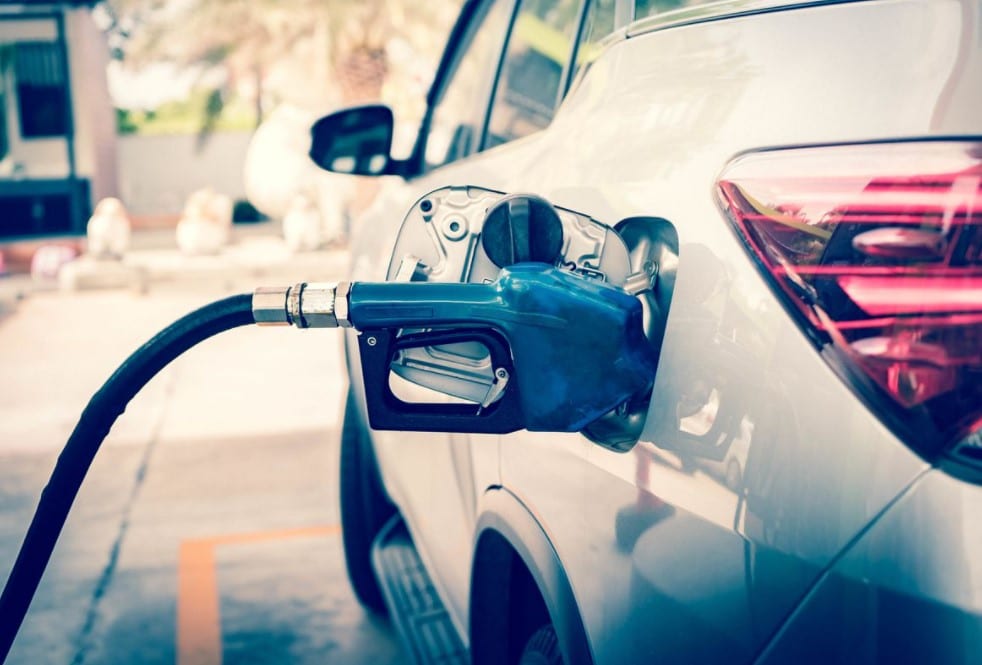
When you squeeze the gas pump handle all the way down at full speed, the fast-flowing fuel creates turbulence and foam inside your tank. This can cause the automatic shutoff to trigger prematurely, making the nozzle think the tank is full when there is actually still room.
If you squeeze the handle at about half pressure, the fuel flows in more smoothly with less foaming. You will wait a little longer, but you will fit more fuel in the tank before the nozzle clicks off. On a large tank, this can be the difference between getting that last gallon in or leaving it at the pump.
Remove Bumper Stickers Painlessly With a Hair Dryer
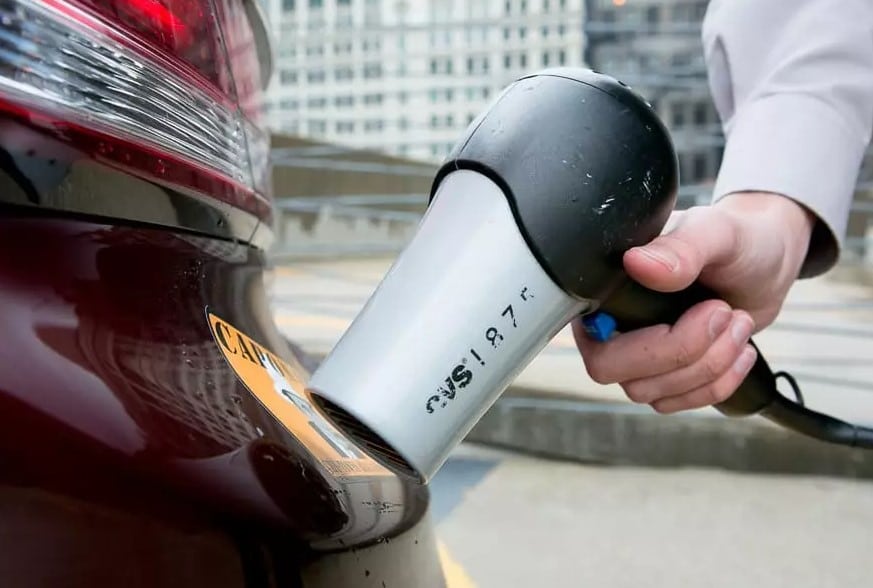
Want to get rid of an old bumper sticker without leaving behind a sticky residue or damaging the paint? Aim a hair dryer at the sticker for two to three minutes. The heat softens the adhesive, and you can peel the sticker off cleanly in one piece.
Any residual adhesive left behind can be removed with a little rubbing alcohol or Goo Gone. This works on registration stickers, parking decals, and those campaign stickers from three elections ago that you have been meaning to remove.
Clean Hard-to-Reach Crevices With Slime
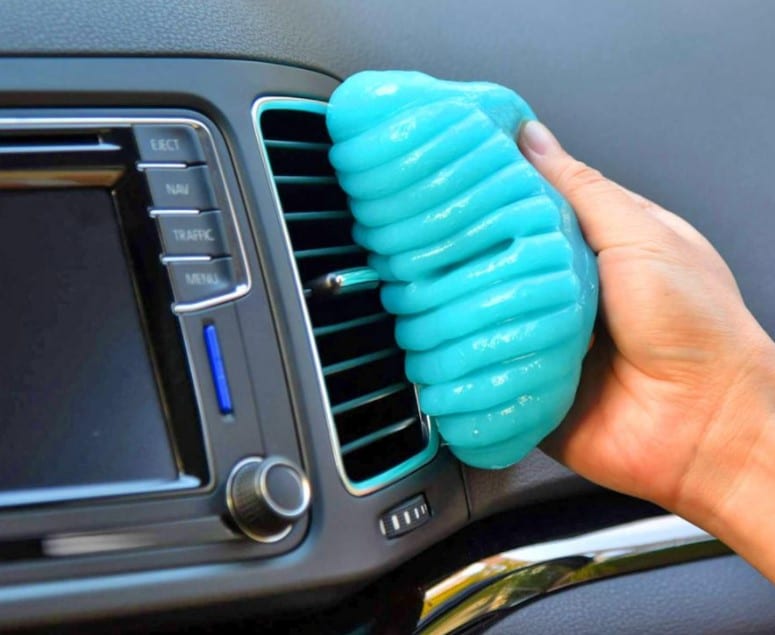
Yes, the same slime your kids play with is an unbelievably effective car interior cleaning tool. Press it into the air vents, the gaps around the gear shifter, the crevices in the steering wheel, and the seams along the dashboard. Pull it back out, and it brings all the dust, crumbs, and debris with it.
It reaches places that no vacuum attachment and no Q-tip can get to. You can buy cleaning-specific slime or use the toy version. Either way, you will be amazed (and slightly disgusted) by how much grime it pulls out of the nooks and crannies in your car.
If Your Tire Blows Out at Highway Speed, Do NOT Hit the Brakes
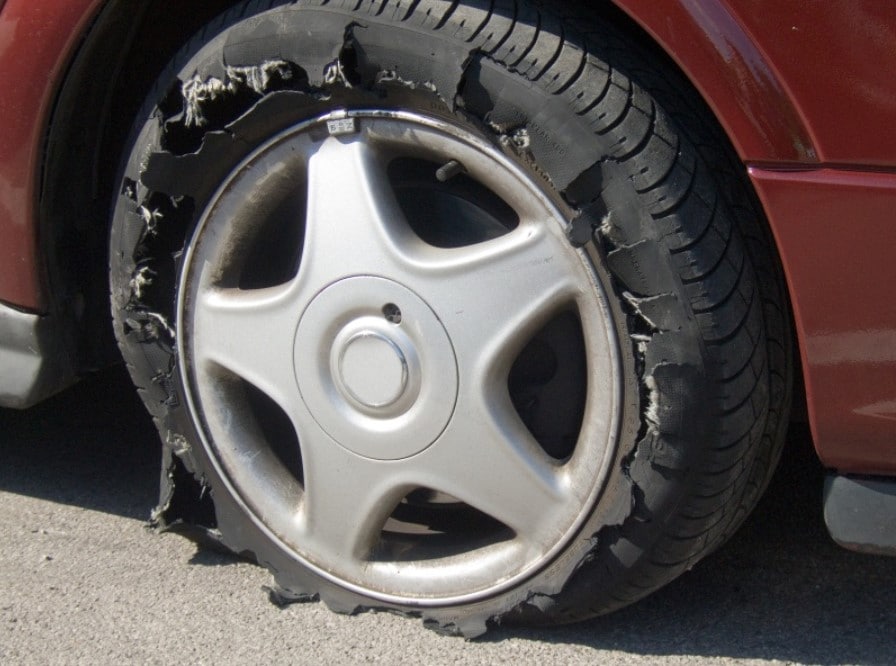
This is not a hack. This is a safety tip that could save your life. If a tire blows out while you are driving at highway speed, your instinct will be to slam on the brakes. Fight that instinct.
Braking hard during a blowout causes the vehicle to pull violently toward the side of the blown tire, which can lead to a fishtail, a spin, or a rollover. Instead, keep your foot gently on the accelerator for a couple of seconds to maintain stability, grip the steering wheel firmly with both hands to keep the vehicle going straight, and then gradually ease off the gas and let the car coast to a slower speed before gently braking and pulling over.
It feels completely wrong in the moment. Every fiber of your being wants to hit the brakes. But maintaining momentum for those first few seconds is what keeps the vehicle stable and under your control.
Do Not Overload Your Keychain (It Can Damage Your Ignition)
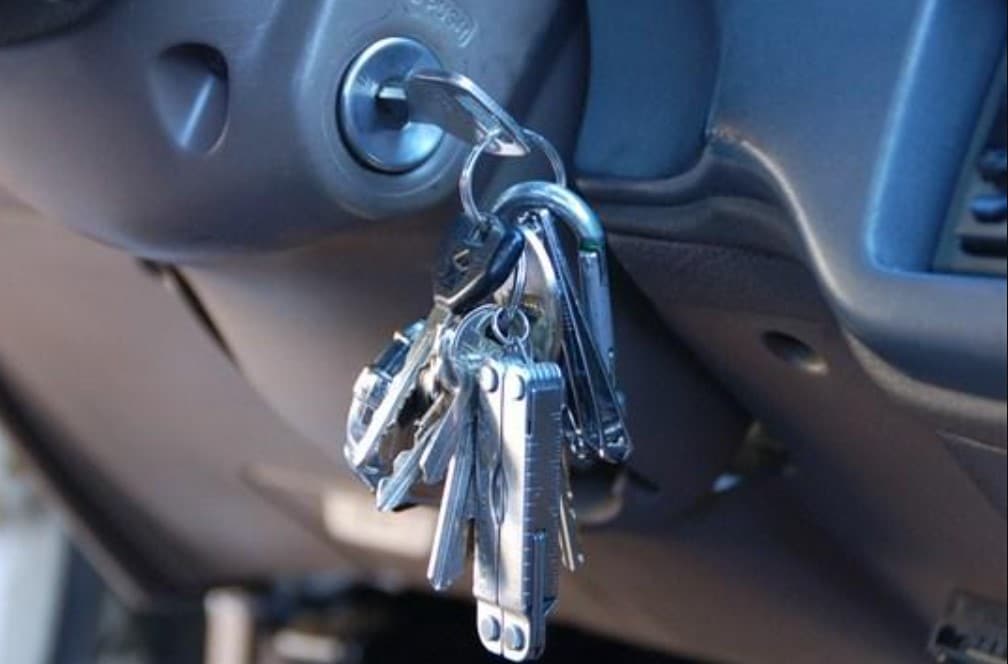
If you have a traditional keyed ignition (not push-button start), the weight of a heavy keychain hanging from the key while you drive can gradually wear out the ignition switch. The constant bouncing and pulling from a loaded keychain puts stress on the internal components of the ignition cylinder.
Mechanics recommend carrying no more than three keys or keychains on your ignition key ring. If you start to feel stiffness when turning the key, or if the key occasionally gets stuck in the ignition, the switch may already be worn. Get it checked before it fails completely, because an ignition switch replacement is not cheap.
Keep Bay Leaves in the Car to Fight Motion Sickness

Here is a natural remedy that has been used for generations. If you or your passengers get motion sick during long drives, keep some fresh bay leaves in the car. Placing a bay leaf under the tongue is said to help settle the stomach and reduce nausea.
It is entirely natural, works for both kids and adults, and costs pennies. It will not replace proper motion sickness medication for severe cases, but for mild queasiness on winding roads, it is worth trying before reaching for the Dramamine.
Take a Defensive Driving Course to Lower Your Insurance Premiums
Most people do not realize that completing a defensive driving course can qualify you for a discount on your auto insurance premiums. Many insurance companies in the United States and other countries offer discounts of 5 to 15 percent for drivers who complete an approved course.
The course makes you a safer driver (which is valuable in itself), and the insurance savings can more than cover the cost of taking the class. If you have not looked into this, call your insurance company and ask what defensive driving discounts they offer. It is one of the easiest ways to reduce a recurring monthly expense.
The Arrow on Your Fuel Gauge Tells You Which Side the Gas Cap Is On
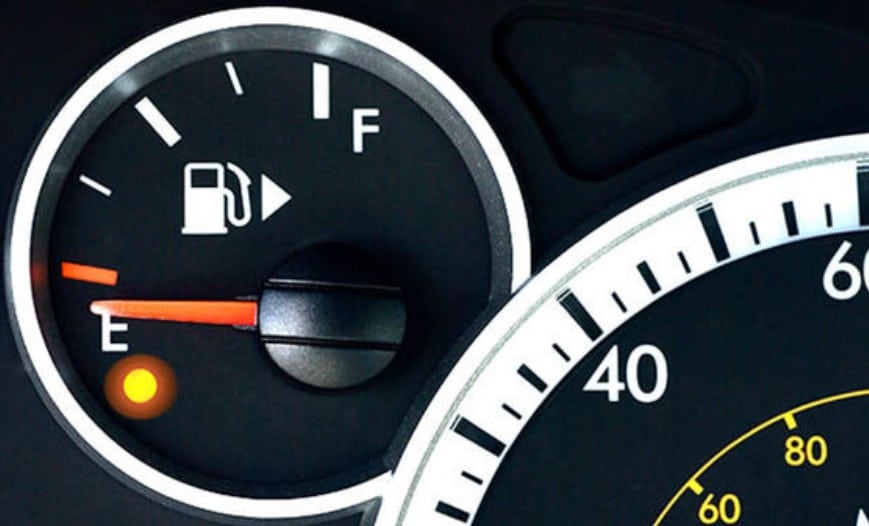
This is one of those things that has been right in front of your face for years and you never noticed. Look at the fuel gauge on your dashboard. Next to the gas pump icon, there is a small arrow. That arrow points to the side of the vehicle where the gas cap is located.
Left arrow? Gas cap is on the driver side. Right arrow? Gas cap is on the passenger side. You will never pull up to the wrong side of the pump again. This is especially useful when you are driving a rental car or a vehicle you are not familiar with.
Buy an OBD2 Scanner and Diagnose Your Own Check Engine Light
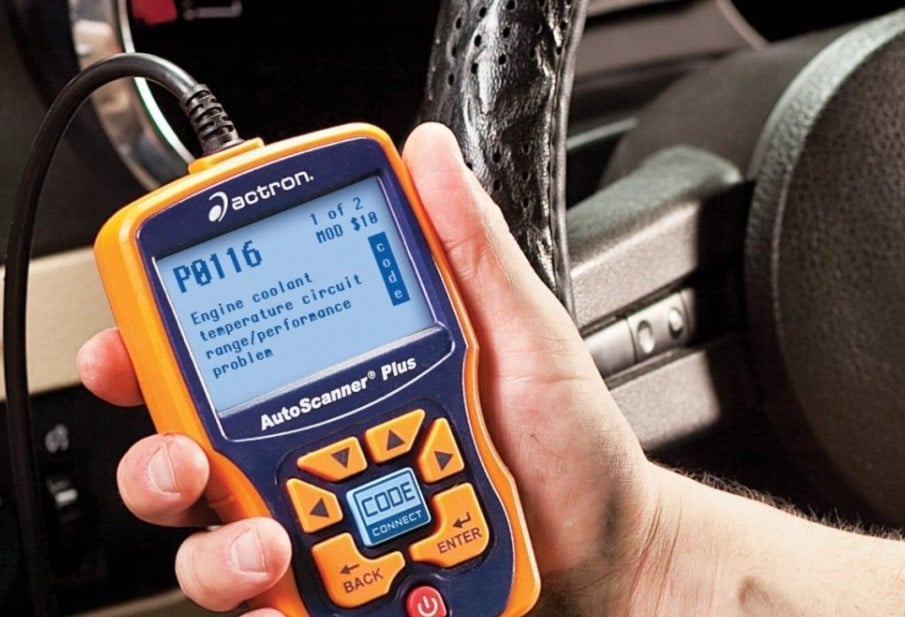
You do not need to be a mechanic to find out why your check engine light is on. A basic OBD2 code reader costs $20 to $50 and plugs directly into the diagnostic port under your dashboard (every car made since 1996 has one).
Within seconds, it tells you the fault code that triggered the light. A quick internet search of that code will tell you what system is affected, what the common causes are, and whether it is something you can fix yourself or need professional help with. At the very least, knowing the code before you walk into a repair shop gives you leverage and prevents you from being overcharged for unnecessary work.
Always Keep an Emergency Kit in Your Vehicle
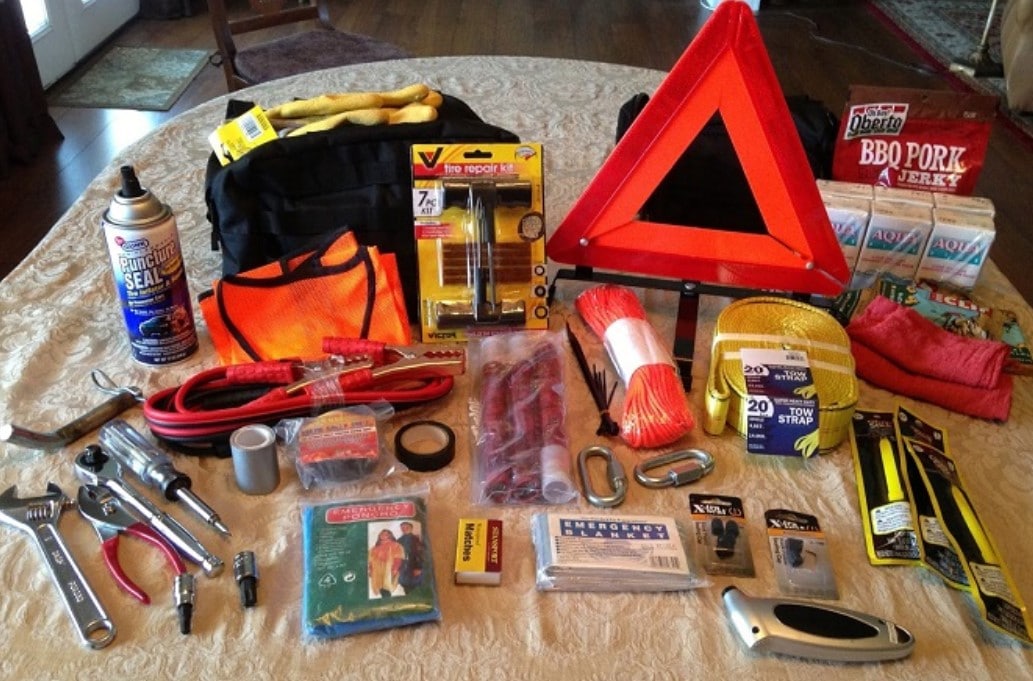
Every vehicle should have a basic emergency kit. No exceptions. You do not need to spend a fortune. A simple kit should include:
- Jumper cables
- A flashlight with extra batteries
- A basic first aid kit
- A simple tool set (screwdrivers, pliers, adjustable wrench)
- A phone charger (ideally a portable power bank)
- A warm blanket or jacket (especially in cold climates)
- A small shovel (for winter)
You never know when you might need any of these items. A dead battery, a flat tire in the dark, a minor injury, a breakdown in a cell-dead zone. Being prepared costs very little and makes a massive difference when something goes wrong.
Clean Your AC Vents With a Foam Craft Brush
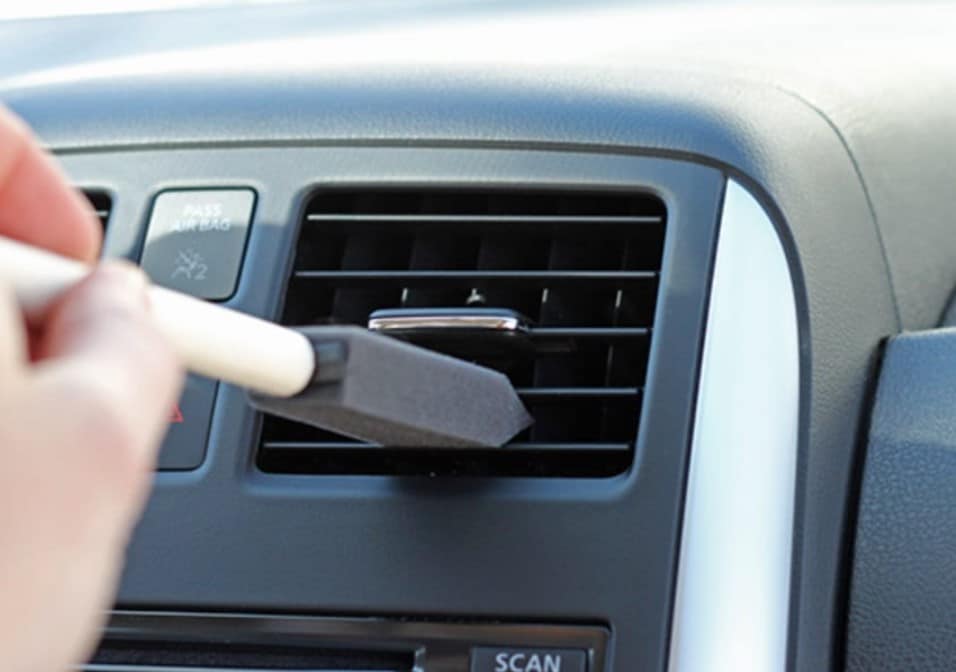
Your car’s air conditioning vents accumulate dust, pollen, and other debris over time. This stuff blows directly into your face every time you turn on the air. Not great for allergies, and not great for anyone who prefers breathing clean air.
A small foam craft brush (the kind you find in the painting section of any craft store for about a dollar) slides perfectly between the vent slats. Run it through each vent to sweep out the accumulated dust. It takes about two minutes per vent and makes a noticeable difference in air quality and vent appearance.
Use Vaseline to Protect Leather Interiors and Rubber Door Seals
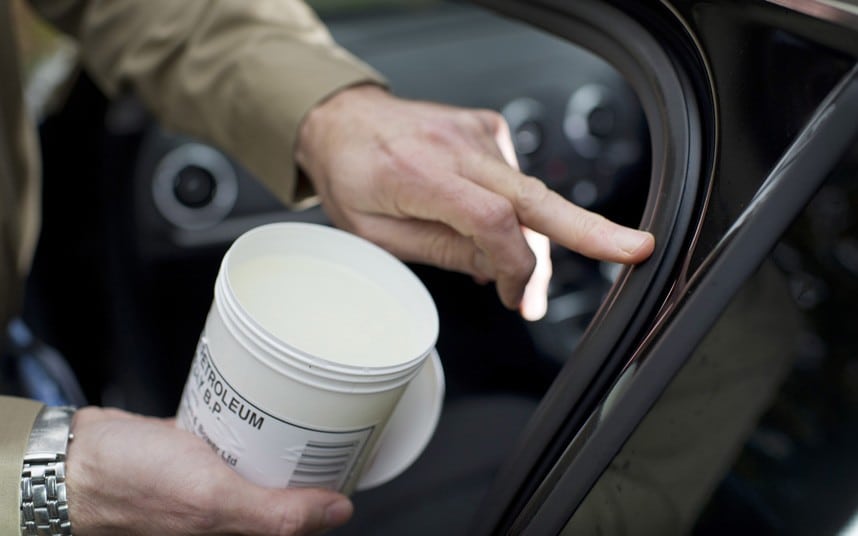
Vaseline is not just for chapped lips. Apply a thin layer to your leather or vinyl dashboard and seats using a soft cloth, and it acts as a conditioner that prevents cracking and fading. It restores a subtle shine without the greasy feel that some commercial interior products leave behind.
In the winter, rub a thin coat of Vaseline onto the rubber door seals around the door frame. This prevents the seals from freezing to the door frame overnight, which can damage the rubber or make it impossible to open the door in the morning.
Put a Sheet Under the Car Seat to Catch Kids’ Messes
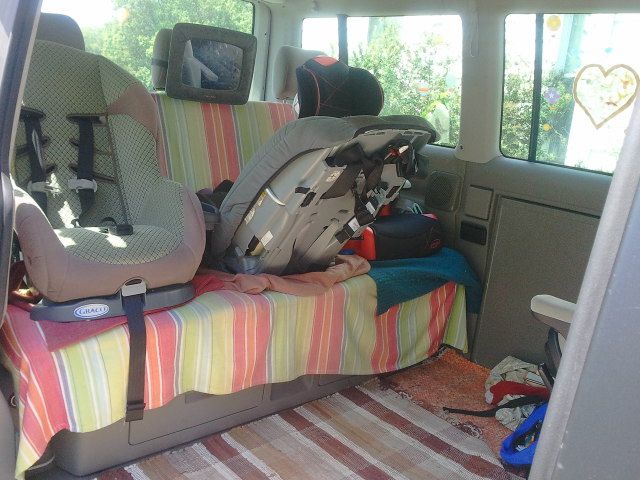
Parents know this pain. Your child drops food, spills juice, and somehow gets melted candy into places that defy the laws of physics. And most of it ends up in the crevice between the seat and the booster seat, where it is nearly impossible to clean.
Lay a flat sheet or a towel underneath the booster or car seat before you install it. Anything that falls through or around the seat lands on the sheet instead of your upholstery. When the sheet gets dirty, pull it out and wash it. Your actual seat stays clean underneath. This single tip can save the resale value of your backseat.
Clean Windows With Newspaper for a Streak-Free Finish
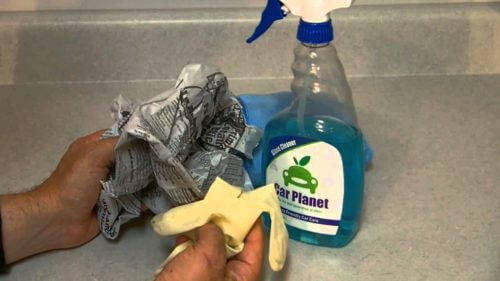
This is an old-school tip that your grandparents probably knew. Spray your window cleaner, then wipe the glass with crumpled newspaper instead of paper towels or cloth. The newspaper fibers do not leave lint behind, and the ink acts as a mild polishing agent.
The result is glass that is genuinely streak-free and sparkling clear. It works better than most microfiber cloths for glass cleaning, and it costs nothing since you are using newspaper you were going to recycle anyway. Just make sure your windows are not tinted, as the abrasion from the newspaper could potentially damage aftermarket tint film.
Make Your Wheels Shine With Dawn Dish Soap and Baking Soda
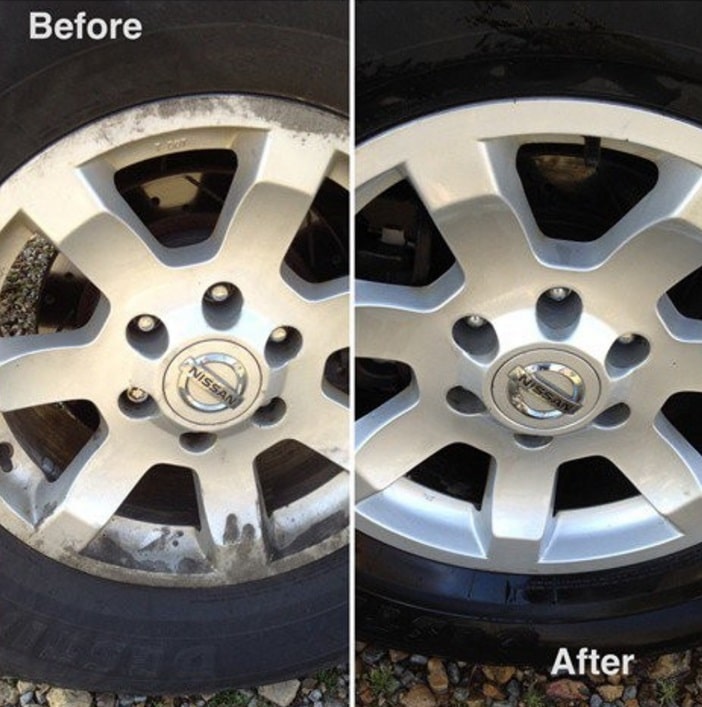
Mix Dawn dish soap with an equal amount of water in a bucket. Dip a sponge into the solution and scrub your wheels. For stubborn brake dust and grime, sprinkle baking soda on the wet sponge and scrub with the abrasive side. Rinse with water when you are done.
The combination of Dawn’s grease-cutting power and baking soda’s gentle abrasiveness produces results that rival dedicated wheel cleaners costing five times as much. Wear gloves to keep your hands clean, and enjoy wheels that look like they just came out of a professional detail shop.
Clean (or Replace) Your Cabin Air Filter for Better AC Performance
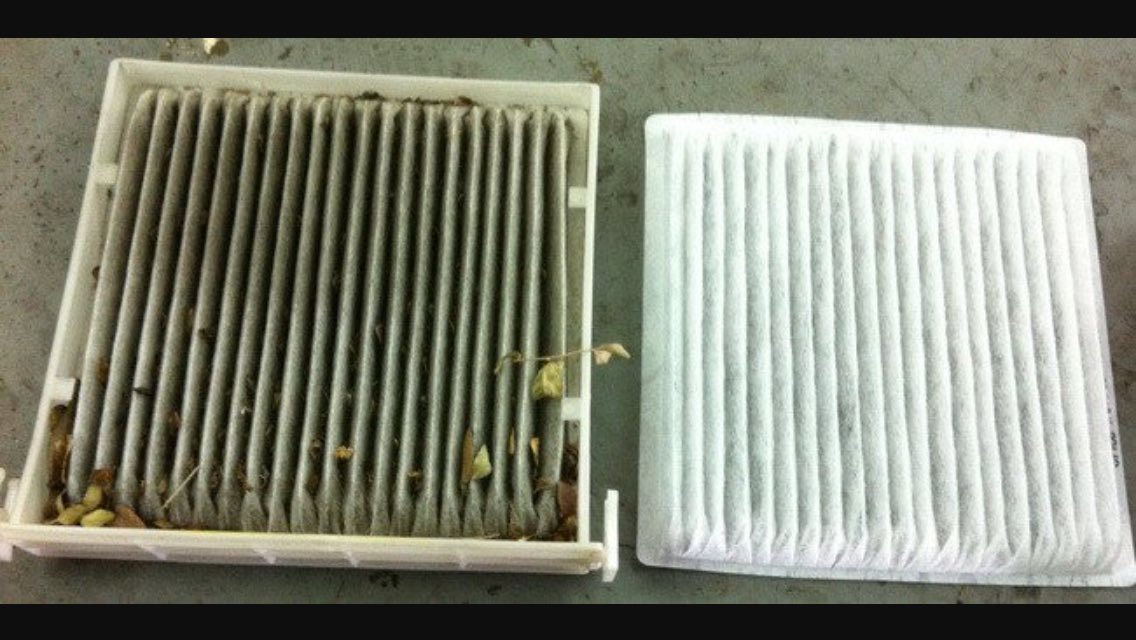
If your air conditioning does not seem as strong as it used to be, the problem might not be the AC system itself. It could be a clogged cabin air filter. This filter cleans the air that enters the cabin through the HVAC system, and over time it fills up with dust, pollen, leaves, and other debris.
On most vehicles, the cabin air filter is accessible from behind the glove box and takes about five minutes to pull out. If it is clogged, vacuum it off, spray it with a mild cleaner, let it dry completely, and reinstall it. Or just replace it with a new one for $10 to $20. You will be amazed at how much airflow improves. Your AC will feel stronger, and the air quality inside the cabin will be noticeably better.
Use Q-Tips to Clean Those Impossible Dashboard Crevices
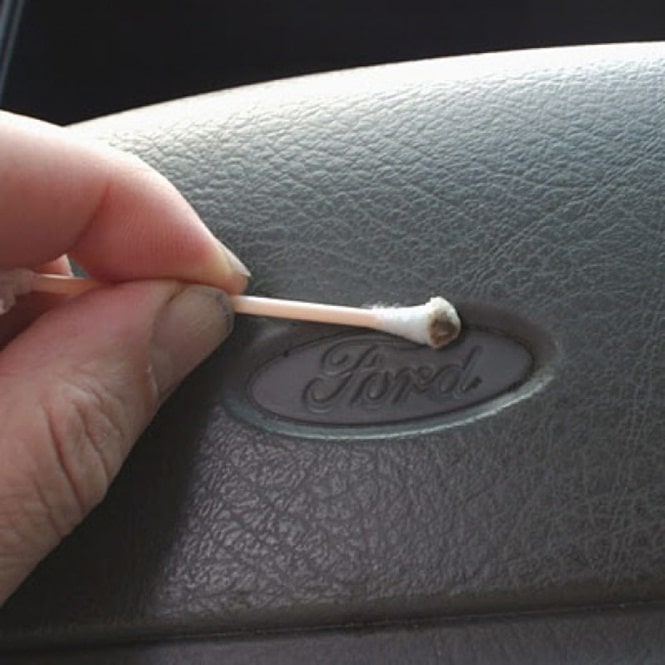
Every car dashboard has tiny crevices, seams, button edges, and control knobs that accumulate dust and grime but are impossible to reach with a regular cloth or vacuum. Q-tips are the perfect tool for these spots.
Dip a Q-tip in a little all-purpose cleaner and run it along the edges of buttons, in the grooves around the steering wheel, and in the seams of the dashboard panels. You will be slightly horrified by how much filth comes out. But you will also have a dashboard that looks cleaner than it has in years.
Remove Pet Hair From Seats With a Rubber Squeegee
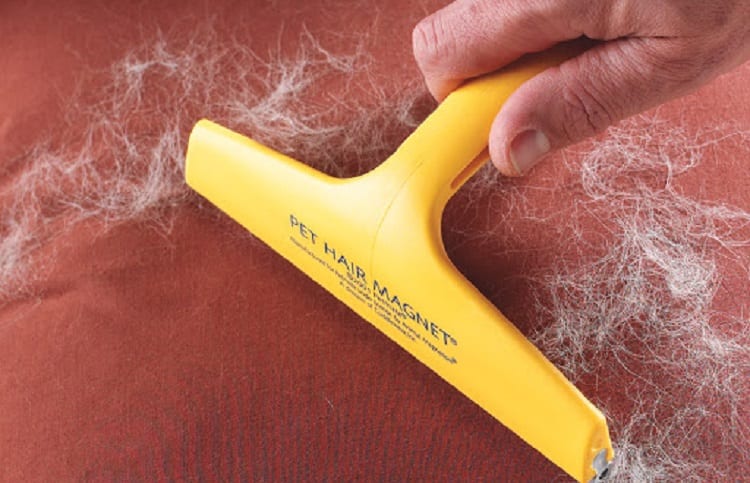
If you have a dog or cat that rides in the car, you know how deeply pet hair embeds itself into fabric seats. Vacuuming helps, but it rarely gets everything. Lint rollers work but take forever on large surfaces.
Here is what actually works: spray a light mist of water on the seat, then drag a rubber squeegee across the fabric. The rubber edge grabs the hair and rolls it into clumps that you can easily pick up. It is faster than a lint roller, more effective than a vacuum, and a squeegee costs about three dollars. Pet owners, this one is for you.
Keep Baby Wipes in the Car Even If You Do Not Have a Baby
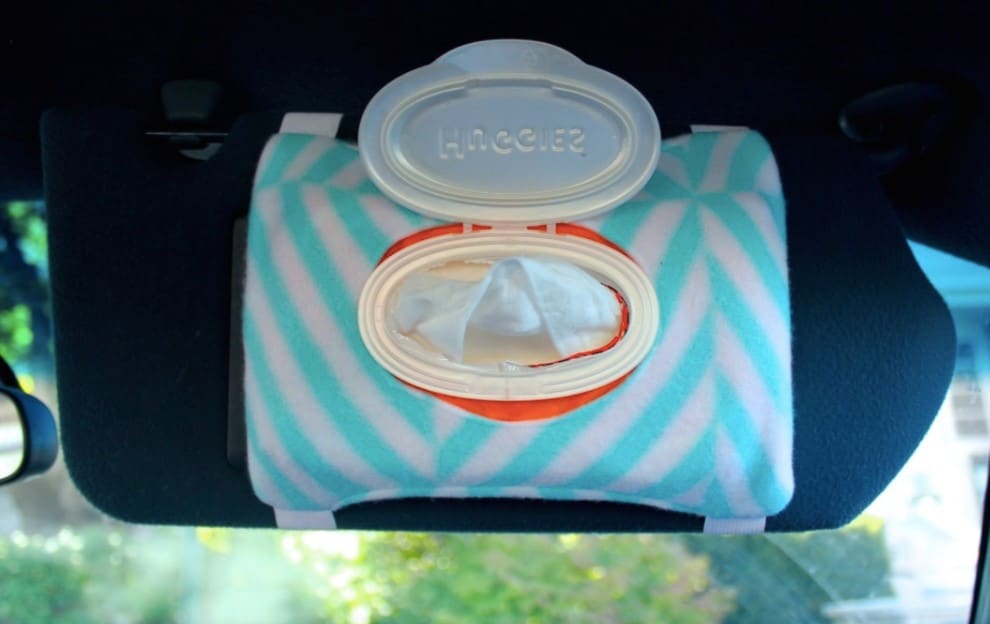
Baby wipes are one of the most universally useful things you can keep in a vehicle. Sweaty hands? Wipe. Coffee spill on the console? Wipe. Bird droppings on the paint? Wipe (gently). Sticky steering wheel? Wipe. Random smudge on the dashboard? Wipe.
They are gentle enough not to damage most surfaces, they are pre-moistened so you do not need water, and a pack lasts for months. Even if you do not have kids, keep a container of baby wipes in the car. You will reach for them more often than you think.
Magic Erasers Work Wonders on Leather and Vinyl Seats
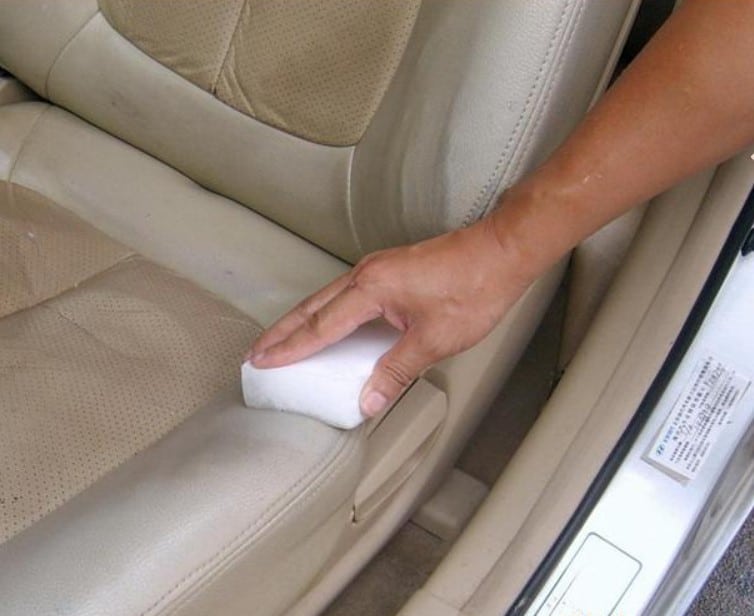
Magic Erasers (melamine foam sponges) are underrated cleaning tools, especially for car interiors. If you have stains on leather or vinyl seats that regular cleaning products cannot remove, dampen a Magic Eraser slightly and scrub the stain in circular motions.
The micro-abrasive foam lifts stains that cloths and sprays leave behind. Seats that looked permanently stained can come out looking nearly new. Use a light touch on leather (heavy scrubbing can dull the finish), and follow up with a leather conditioner afterward to restore moisture.
Store Loose Change in a Small Gum Container
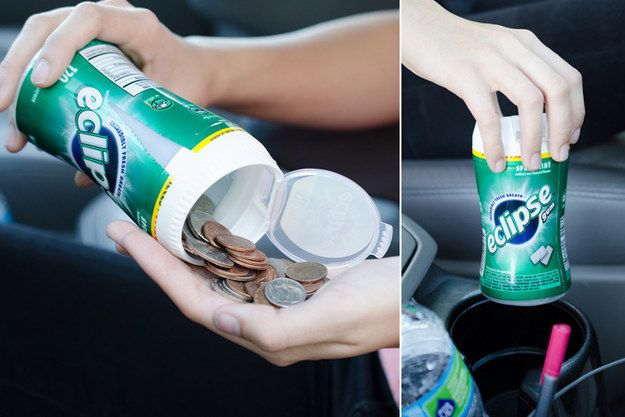
Loose coins rattling around in the cup holder, sliding under seats, and disappearing into the center console void is a universal car experience. Grab a small empty container (a gum container, a mint tin, an old pill bottle) and designate it as your coin holder.
It keeps the change contained, quiet, and accessible when you need it for parking meters or tolls. It is also a small act of recycling if you repurpose a container that would otherwise go in the trash.
Use Mayonnaise to Remove Tar and Tree Sap From Paint
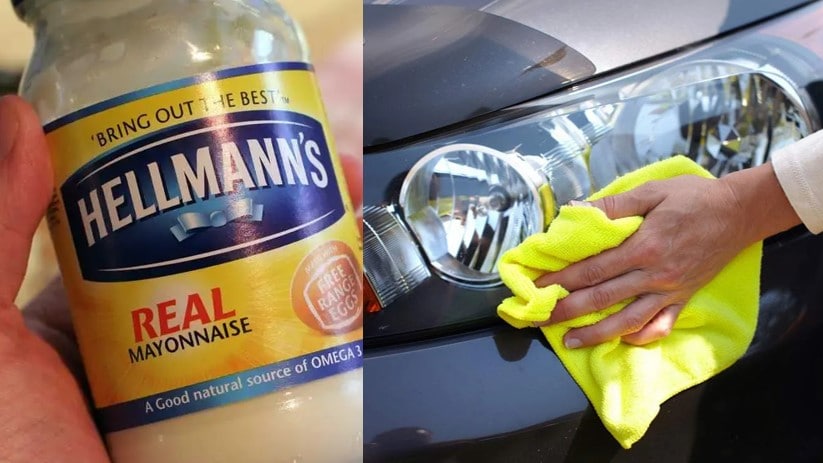
Tar spots and tree sap can be incredibly stubborn to remove from car paint. Scrubbing too hard risks scratching the clear coat. Specialty tar removers work but cost $10 to $15 a bottle.
Mayonnaise does the same job. The oils and acids in mayo break down tar and sap without damaging the wax or paint underneath. Dab some mayo onto a cloth, apply it to the affected area, and let it sit for about five minutes. Then wipe it off with a clean cloth. The tar or sap comes right off. It sounds crazy, but it works.
Clean Battery Terminal Corrosion With Coca-Cola
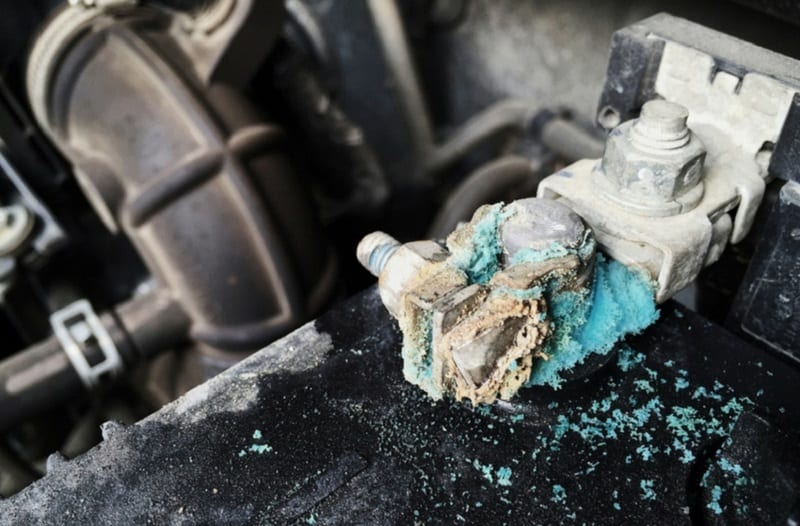
If the battery terminals in your engine bay have that white or green crusty corrosion buildup, cola can help dissolve it. Make sure the engine is off and cool. Carefully disconnect the battery terminals (negative first), then pour a small amount of cola over the corroded areas.
The mild acidity eats through the corrosion. Let it soak for a few minutes, then scrub with a wire brush and rinse with water. Dry the terminals thoroughly, reconnect them (positive first), and apply a coat of dielectric grease or petroleum jelly to prevent future buildup.
Adjust Your Mirrors to Eliminate Blind Spots
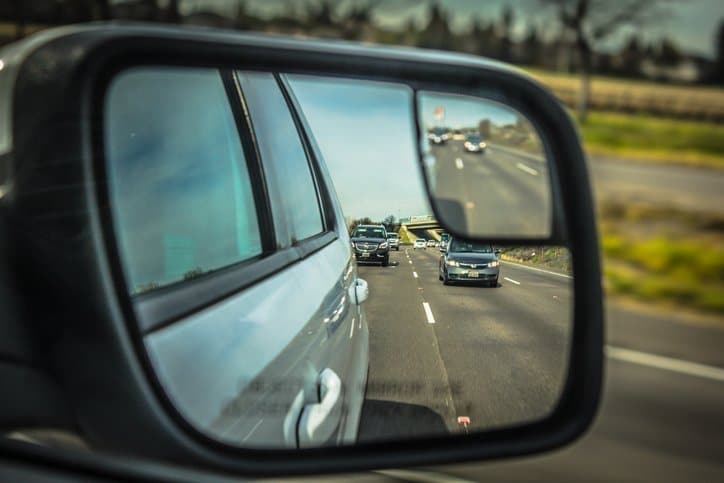
Most people aim their side mirrors so they can see the side of their own car in the mirror. This feels comfortable, but it creates large blind spots on both sides. A car in the adjacent lane can be completely invisible to you.
The fix: push your side mirrors outward until you can no longer see your own vehicle in them. This extends the field of view so that the side mirrors pick up where the rearview mirror leaves off. When a car passes you, it should transition smoothly from the rearview mirror to the side mirror to your peripheral vision, with no gap where it disappears. It takes some getting used to, but once you adjust, you will wonder how you ever drove with blind spots.
Check Your Oil Condition With a Paper Towel Test
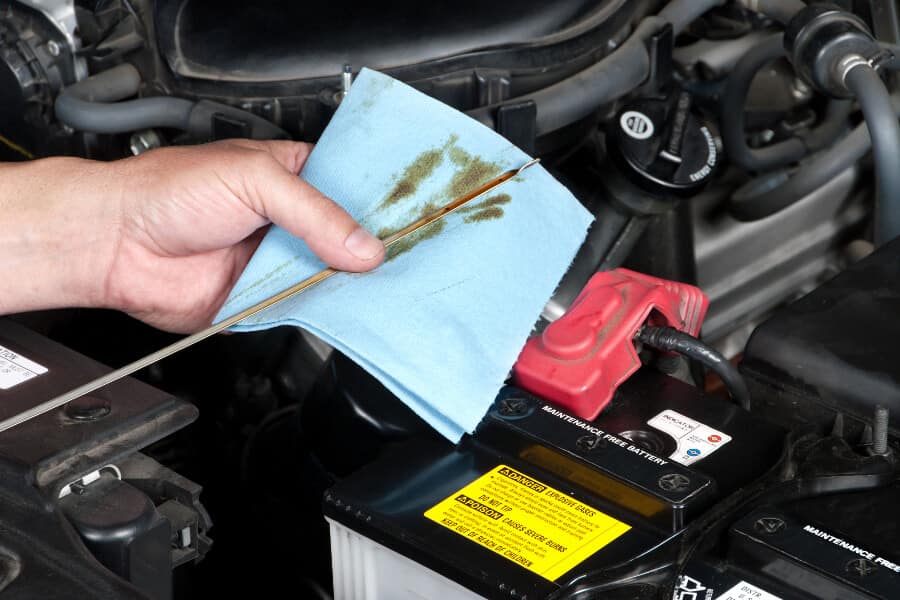
You do not need to be a mechanic to figure out whether your car’s oil needs changing. Run the engine for about five minutes to warm the oil up, then turn it off. Pull out the dipstick, wipe a drop of oil onto a clean white paper towel, and wait about two hours.
If the oil has spread evenly and the center is relatively light (amber to light brown), the oil is still in decent condition. If the center is very dark and the edges are smooth and clean by comparison, the oil is dirty and due for a change. It is a quick visual test that tells you the oil’s condition without needing any special equipment.
Hair Conditioner Gives Your Car’s Paint a Quick Shine
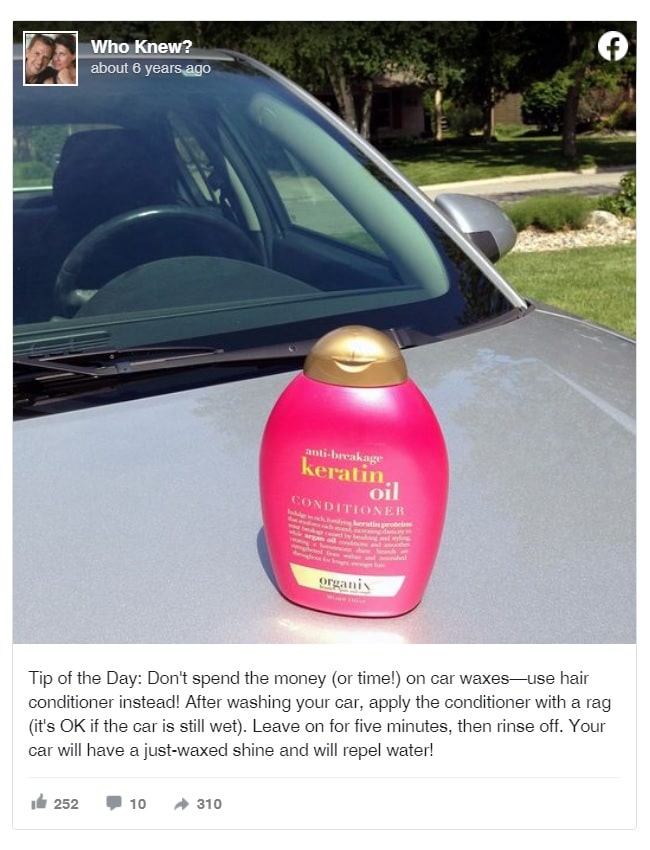
Want a quick shine on your car without buying dedicated car wax? Hair conditioner contains lanolin and silicone, which are also found in many car polishing products. Dilute some conditioner with water, apply it to the paint with a soft cloth, and buff it off.
It will not last as long as a proper wax job, but for a quick shine before a weekend outing or a car show, it does a surprisingly good job. The paint will look smoother and glossier than a plain wash alone.
Make a Backseat Garbage Can That Hangs From the Driver Headrest
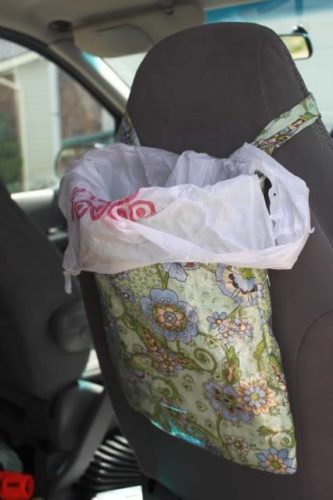
If you have backseat passengers (especially kids), a small trash bag or container hung from the back of the driver or passenger headrest gives everyone a designated place to put their garbage. It keeps wrappers, tissues, and other trash off the seats and floor.
You can buy purpose-made car trash bags that hang from the headrest, or you can DIY one with a small bag and a bungee cord. Either way, it teaches kids (and adults) to dispose of trash properly instead of stuffing it into the seat pocket or dropping it on the floor.
Shine Your Dashboard With a Tiny Amount of Olive Oil
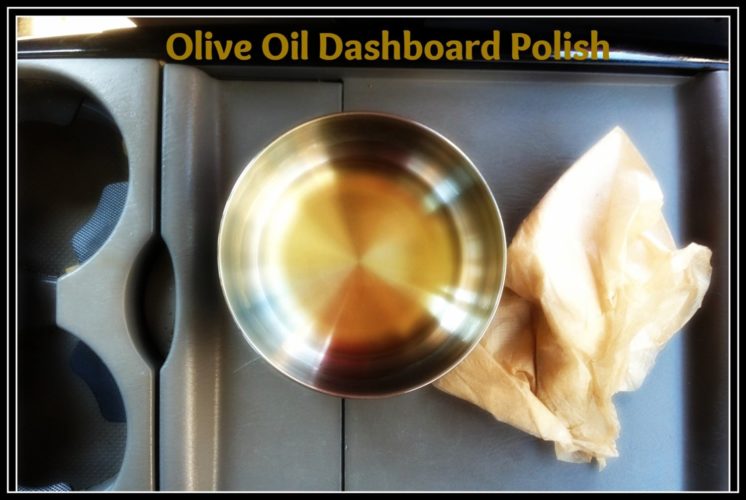
If your dashboard is looking faded, dull, or dried out, a tiny amount of olive oil on a soft cloth can restore its appearance. Wipe a thin layer across the dashboard surface using gentle circular motions. The oil conditions the vinyl or plastic, restores color depth, and adds a subtle, natural-looking shine.
The key word is tiny. You want a barely-there coating, not a puddle. Too much oil will make the surface greasy and attract dust. A little goes a very long way.
Make a DIY Windshield De-Icer With Rubbing Alcohol
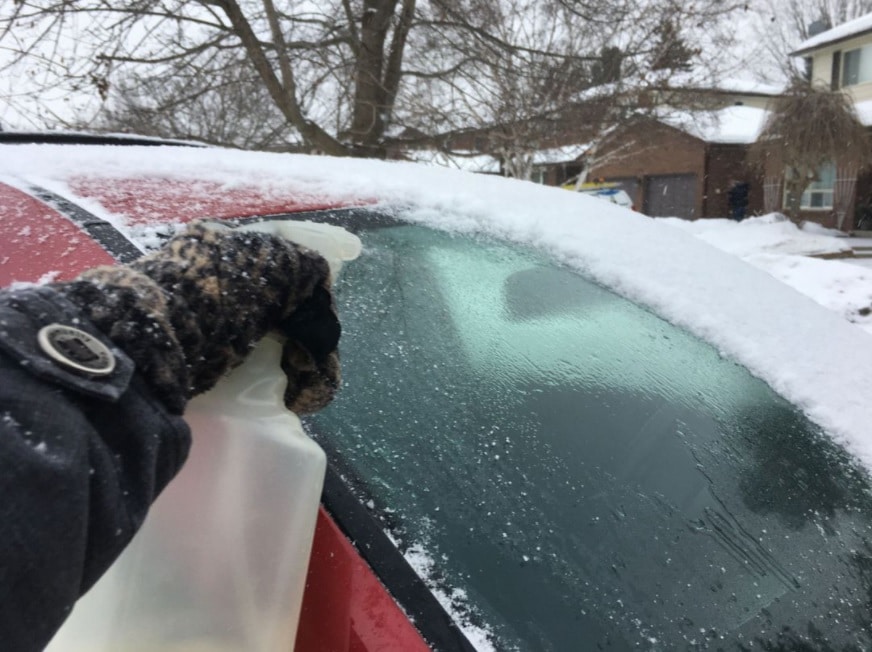
Mix two parts 70 percent isopropyl (rubbing) alcohol with one part water and add a few drops of dish detergent. Pour it into a spray bottle. Spray it on your icy windshield, and the ice loosens within seconds.
The alcohol has a much lower freezing point than water, so it melts the ice on contact. The dish soap helps the solution spread evenly across the glass. Follow up with your scraper or wipers, and the ice comes off in sheets. Keep the spray bottle inside your house during winter so it is ready to grab on your way out the door.
Every Driver Should Know About the RoadSide Hero Multi-Tool
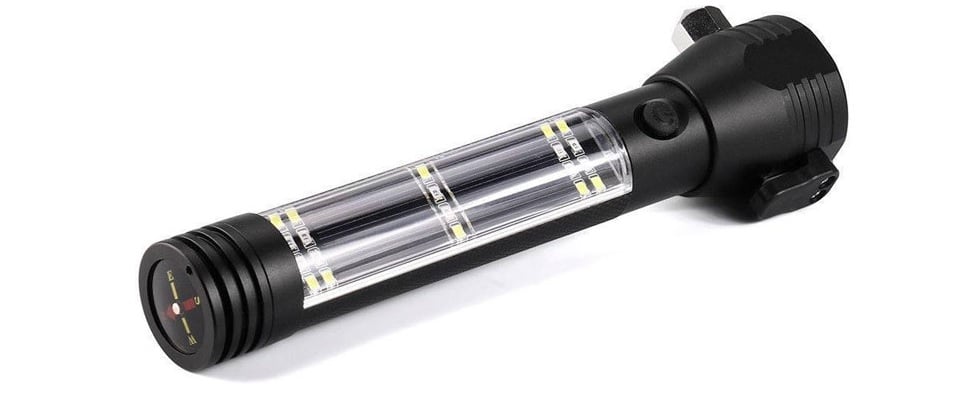
With roughly 40,000 traffic fatalities per year in the United States alone, having emergency tools in your vehicle is not paranoia. It is preparation. The RoadSide Hero is a compact multi-function device that packs nine tools into one unit: seatbelt cutter, glass breaker, hammer, flashlight, strobe/emergency light, power bank, solar panel, magnet mount, and more.
Whether or not you buy this specific product, the concept is sound. Having a seatbelt cutter and a window breaker within arm’s reach could be the difference between escaping a vehicle and being trapped in one. Keep something like this in your center console or glove box where you can reach it without thinking.
Check Your Tire Pressure Every Time You Get Gas
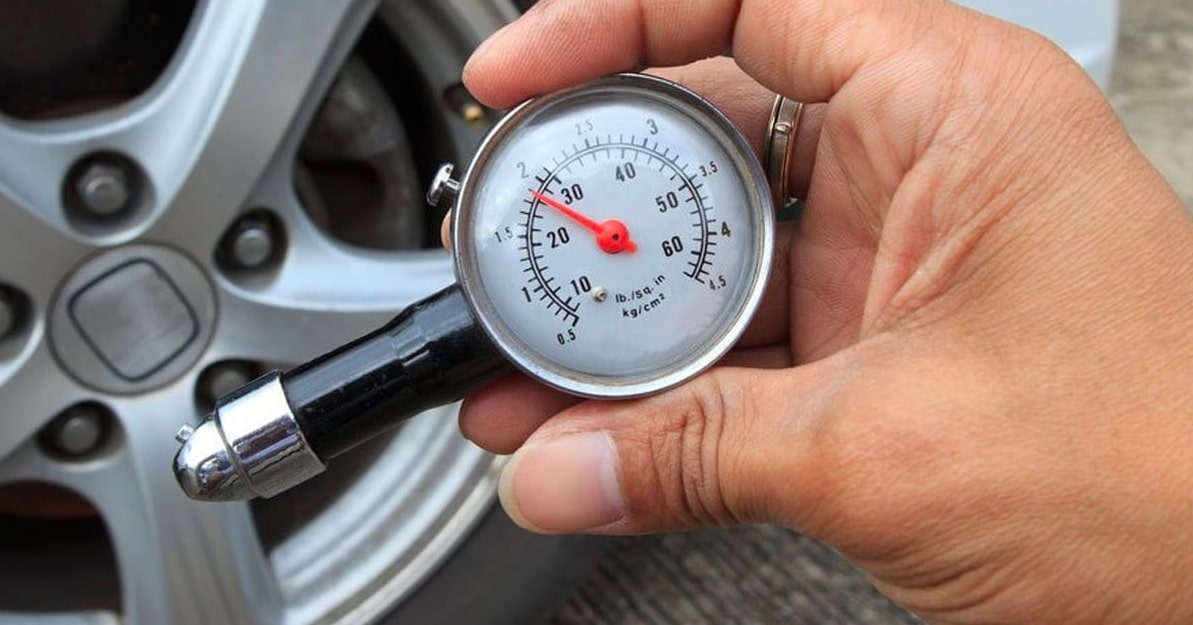
Most gas stations have an air machine with a pressure gauge built into the nozzle end. Next time you fill up, take two minutes to check the pressure in all four tires. Your owner’s manual or the placard on the driver’s door jamb tells you the correct pressure.
Properly inflated tires improve fuel economy, extend tire life, and provide better handling and braking. Under-inflated tires waste gas, wear out faster on the edges, and increase your stopping distance. It is one of the easiest and most impactful maintenance tasks you can do, and it takes almost no time.
Another Way to Clean Air Vents: The Dollar Store Foam Brush
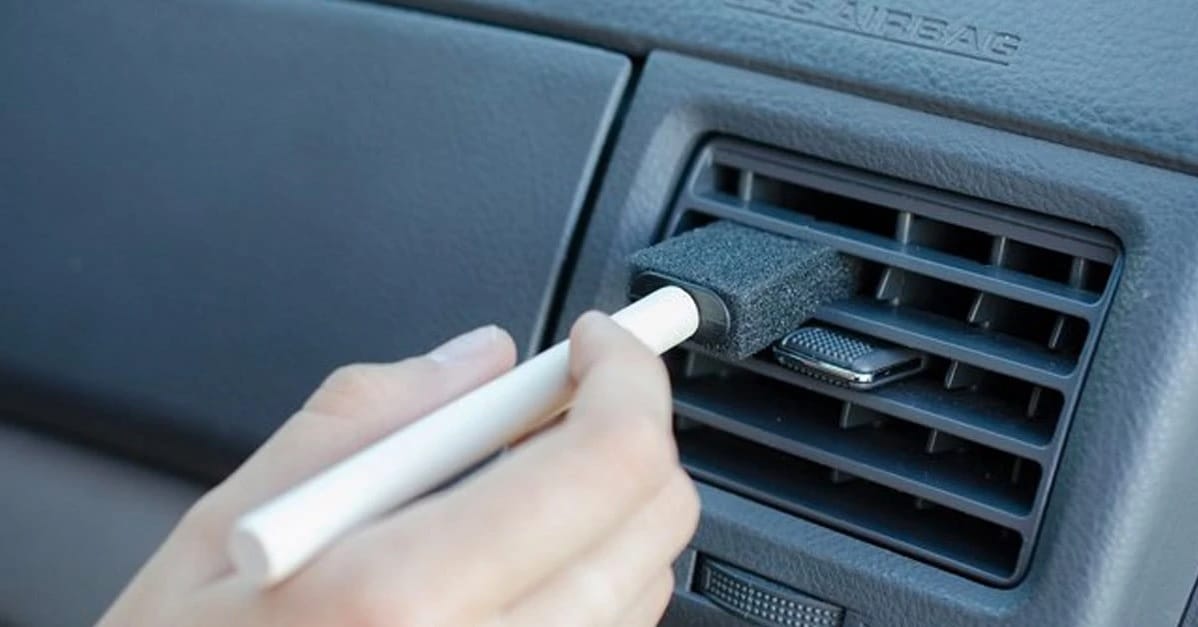
If you do not have slime or a detail brush, a foam craft brush from the dollar store works just as well for cleaning air vent slats. The foam conforms to the shape of the vent opening and sweeps dust out efficiently. At less than a dollar per brush, it is one of the cheapest detailing tools you can buy. Keep a couple in the glove box and run one through the vents whenever you notice dust building up.
Shine Leather Seats With a Small Amount of Olive Oil
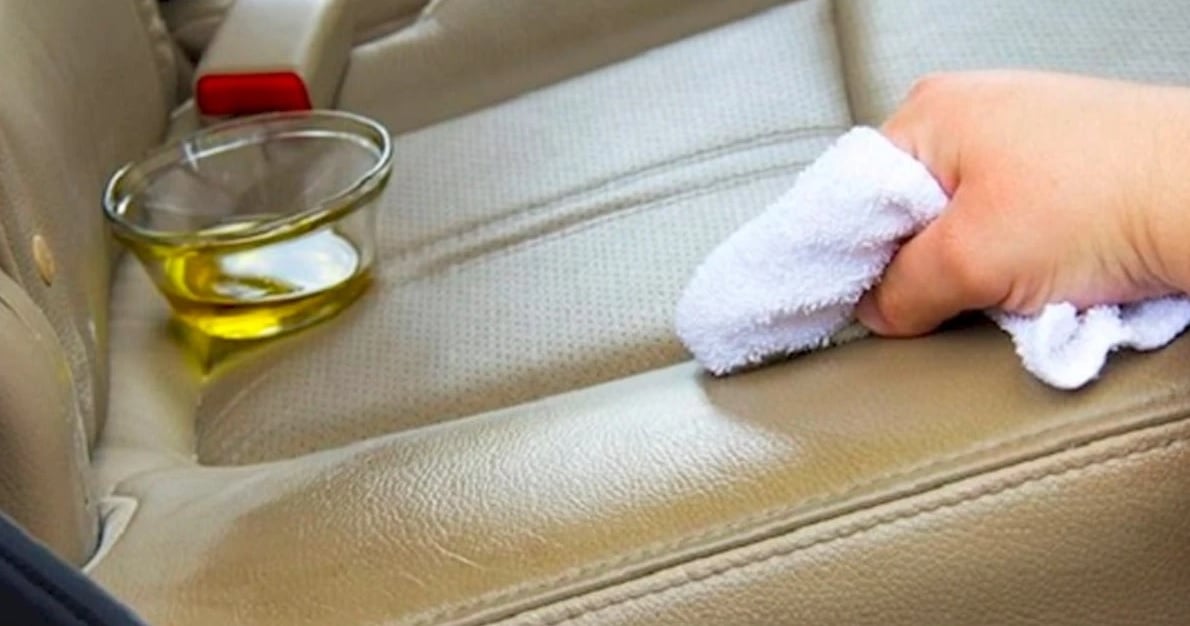
Olive oil is not just for the dashboard. It works on leather seats too. Use a microfiber cloth and apply a very small amount of olive oil in circular motions. The oil conditions the leather, restores its natural sheen, and helps prevent cracking from dryness.
Do this once every two to three months. If you do it more often, or if you use too much oil, you might get a sticky buildup. Light, infrequent applications are the key. Your leather seats will look and feel healthier than they have in years.
Melt Ice on Car Door Handles and Locks With Hand Sanitizer
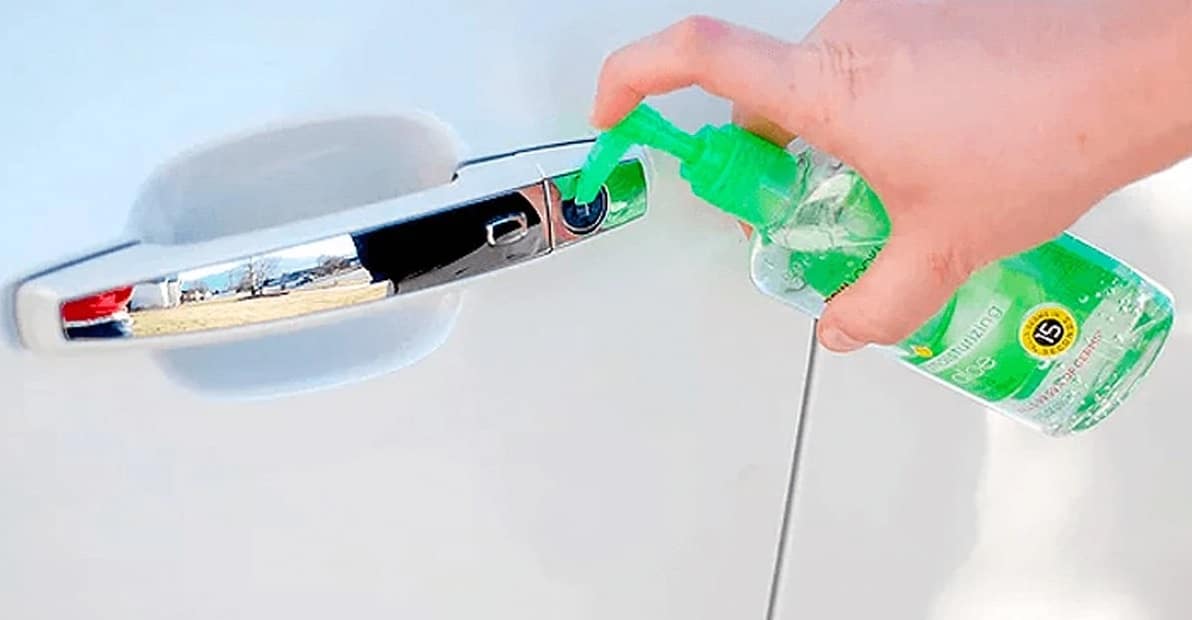
This works on door handles just as well as it works on keyholes. If your door handle or lock is frozen, squirt some hand sanitizer on it or on your key. The alcohol content melts the ice rapidly. Keep a small bottle in your coat pocket during winter, and you will never stand outside in the cold fighting with a frozen door again.
Know Where to Check All of Your Vehicle’s Fluid Levels
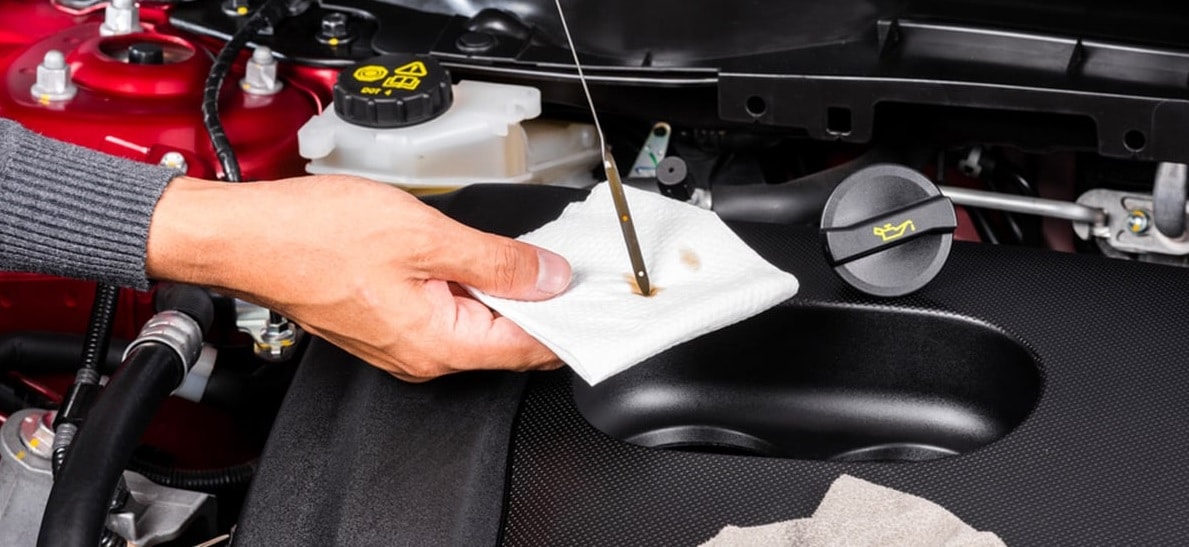
You do not need to know how to rebuild an engine. But every car owner should know how to check and top off the basic fluids: engine oil, coolant, power steering fluid, brake fluid, and windshield washer fluid. Your owner’s manual shows you where each reservoir is located under the hood and what the proper levels should be.
Keeping these fluids at the right levels is the cheapest and most effective way to prevent expensive mechanical problems. Low coolant can cause overheating. Low brake fluid can compromise stopping power. Low power steering fluid makes the steering heavy and unresponsive. A five-minute check once a month can save you thousands in repairs.
How to Escape a Sinking Car
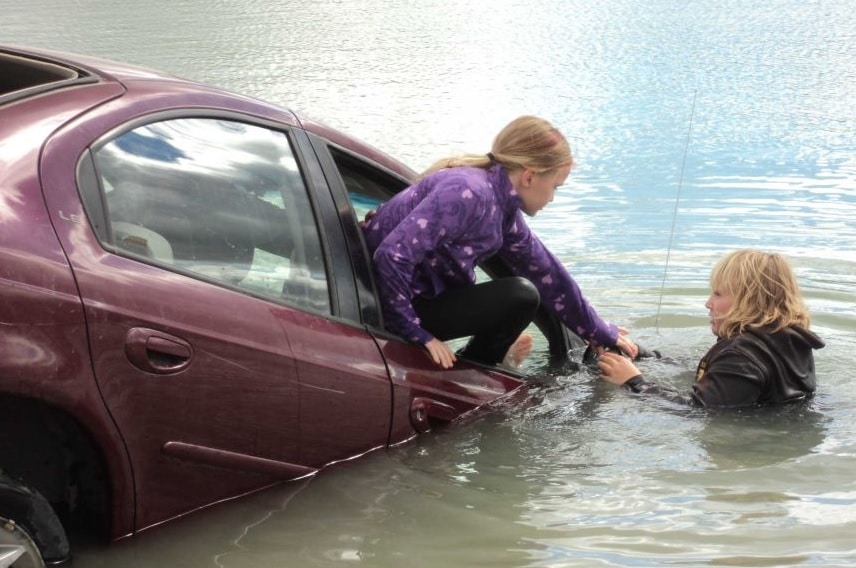
This is information you hope you never need, but if you ever do need it, nothing else matters. If your vehicle enters water and begins to sink:
- Unbuckle your seatbelt immediately. Verify that the release mechanism works before the pressure from rising water makes it harder to operate.
- Open or break the window as fast as you can. Electric windows may still work for the first 30 to 60 seconds. If they do not, use a window breaker tool (like the one on the RoadSide Hero) to shatter the side window. Do not try to open the door. The water pressure outside will make it nearly impossible to push open until the car is almost fully submerged.
- Get out through the window and swim to the surface.
The single most important takeaway: act fast. You have a very short window of time before the electronics fail and the water pressure makes escape dramatically harder. Knowing this sequence in advance, so you do not have to think about it in the moment, is the whole point.
Keep an Eye on Your Engine Temperature Gauge
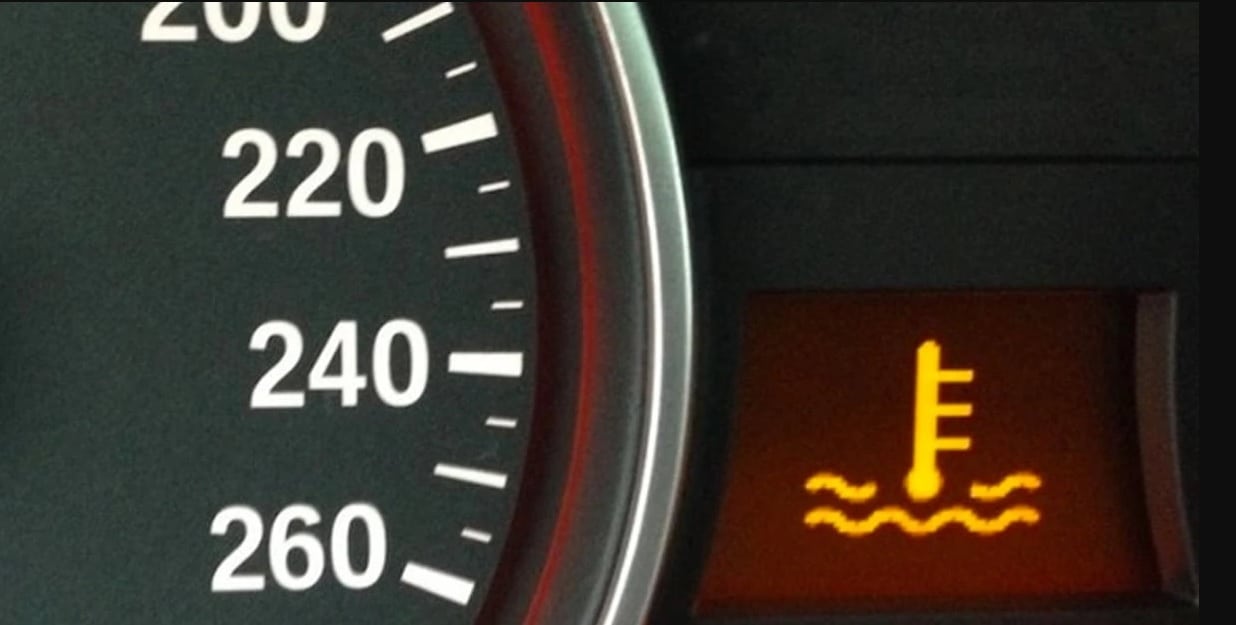
Every car owner should know where the engine temperature gauge is and what it should read during normal driving. The needle should sit near the center of the gauge. If it starts creeping toward the hot end, something is wrong with the cooling system, and you need to address it immediately.
Do not rely on the temperature warning light alone. By the time that light comes on, the engine may already be overheating badly enough to cause serious damage. The gauge gives you an early warning that the light does not. Glance at it occasionally during your drive, especially during hot weather, towing, or heavy traffic.
Start a Vehicle Maintenance Log and Actually Use It
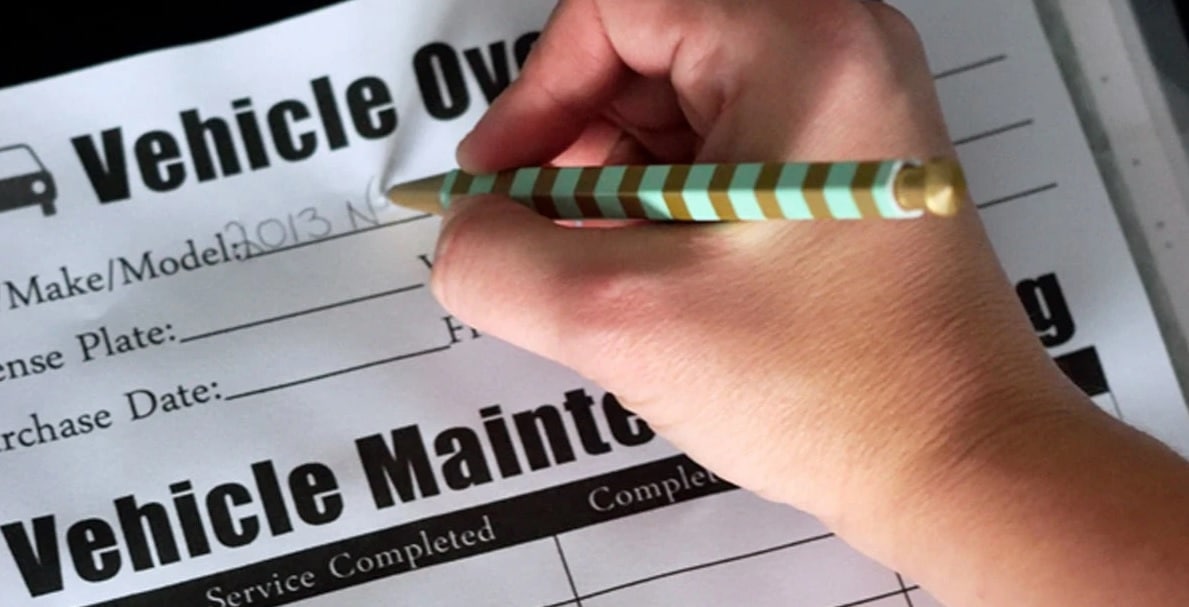
If you are not keeping a log of your vehicle’s maintenance, start one today. Write down every oil change, tire rotation, fluid top-off, brake service, and repair. Include the date, the mileage, what was done, and how much it cost.
This log tells you at a glance what is due next, what was done recently, and how the vehicle has been maintained over its life. It is also incredibly valuable when you sell the car. A buyer who sees a complete maintenance history is willing to pay more because they know the vehicle was cared for. A simple notebook in the glove box is all you need.
Refresh Wiper Blades With Rubbing Alcohol and a Microfiber Cloth
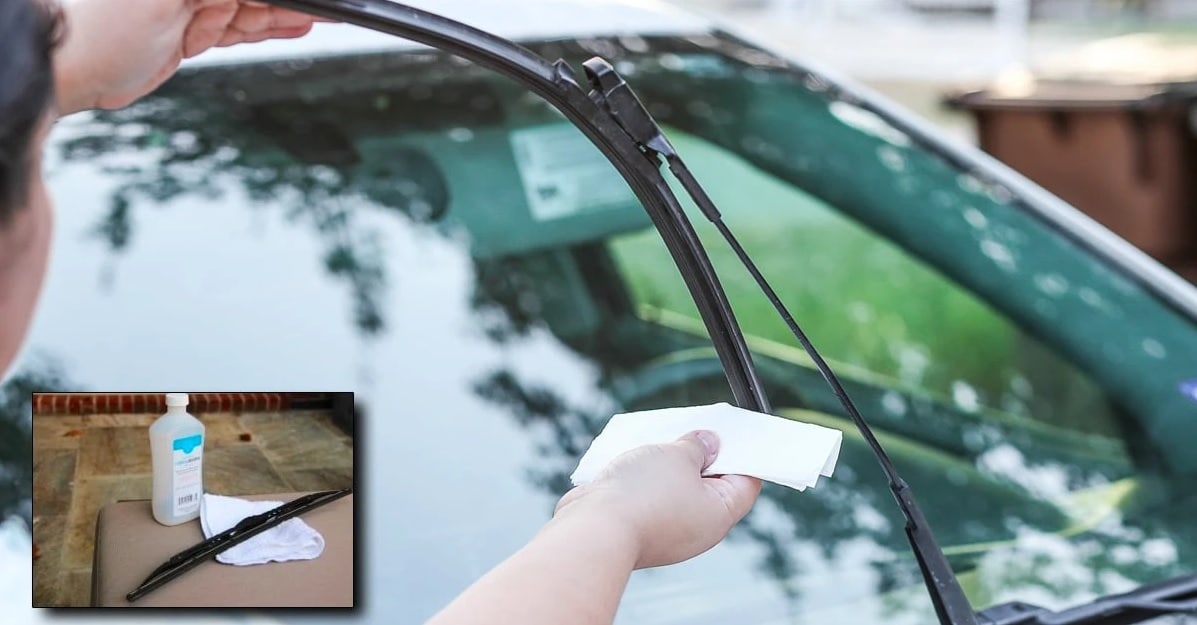
Before replacing wiper blades that are streaking, try cleaning them first. Dampen a microfiber cloth with rubbing alcohol and wipe down the rubber edge of each blade. Road film, oil, and grime build up on the rubber and cause the streaking and chattering that makes you think the blades are worn out.
A good cleaning can restore wiper performance and buy you several more months of use before replacement is actually needed. It takes two minutes and costs almost nothing. Do this every couple of months as part of your regular car maintenance routine.
Your Glove Box Should Hold More Than Just the Owner’s Manual
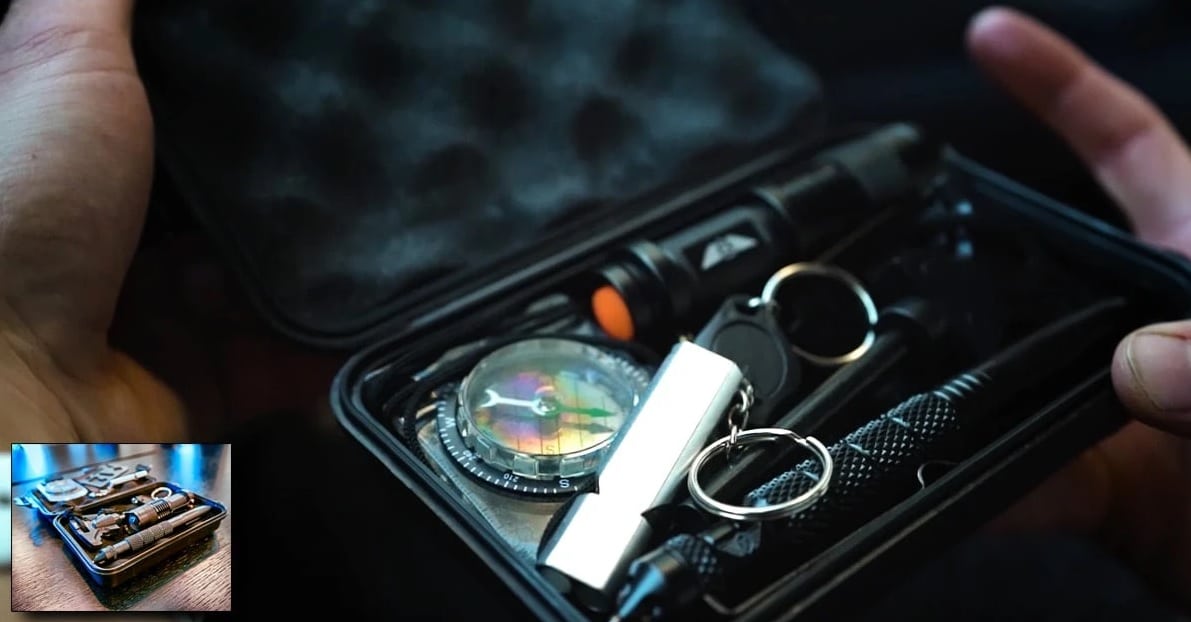
Most people stuff their owner’s manual, registration, and insurance card in the glove box and never think about it again. But the glove box is prime real estate for items you might need in a hurry.
Consider keeping a small emergency multi-tool, a compact flashlight, a window breaker, a pen, and a few band-aids in there alongside the paperwork. Everything stays within arm’s reach from the driver’s seat. The glove box is the first place you reach in an emergency. Make sure it has what you need when that moment comes.
Neutralize Bad Car Odors With Baking Soda
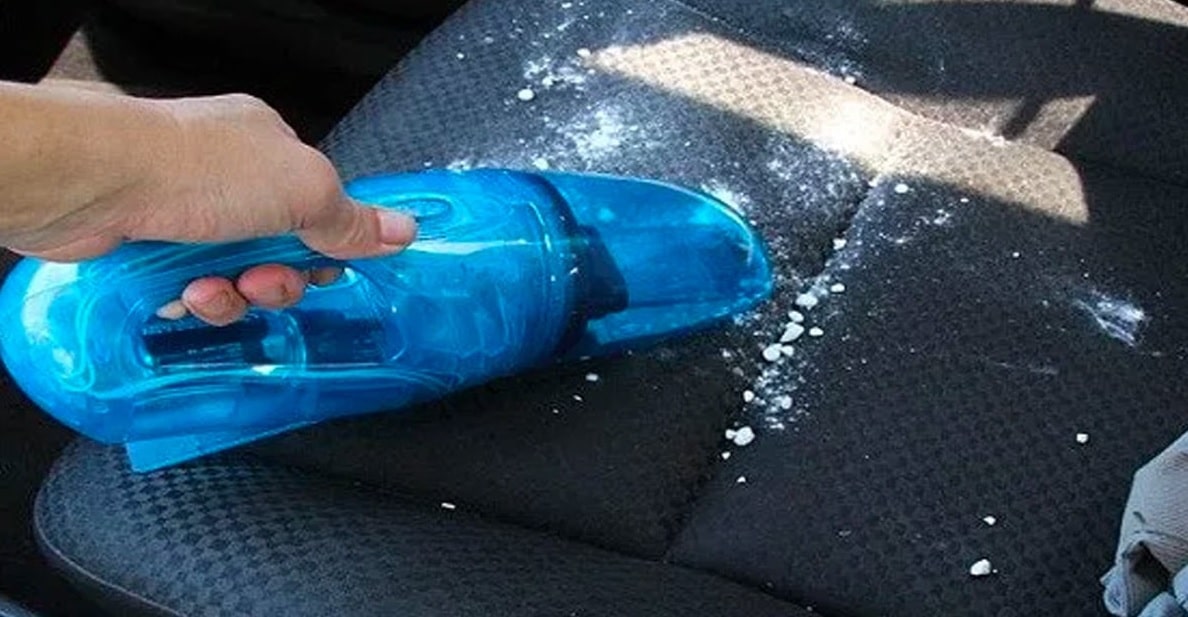
If your car smells bad and air fresheners are just masking it, baking soda is the answer. Sprinkle it on the floor mats and fabric seats, let it sit for 15 to 30 minutes, and vacuum it up. The baking soda absorbs and neutralizes the odor molecules instead of just covering them with a different scent.
You can also leave an open box of baking soda under a seat for ongoing odor control. It works the same way it works in your refrigerator. Quietly absorbing bad smells in the background without adding any fragrance of its own.
Dust Your Dashboard With Coffee Filters for a Lint-Free Finish
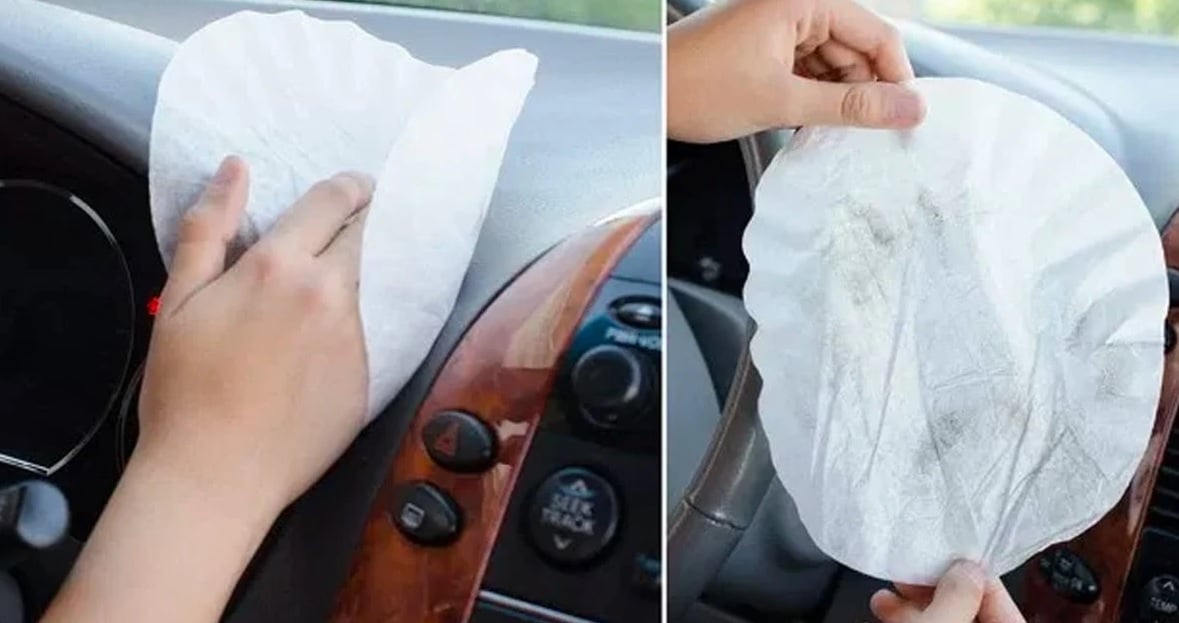
Paper towels leave lint. Cloth rags can scratch shiny surfaces. Coffee filters do neither. They are lint-free, soft, and inexpensive (you can get a large pack at the dollar store for almost nothing).
Use a coffee filter to dust the dashboard, center console, and any smooth plastic or glass surface in the cabin. They pick up dust effectively without leaving fibers behind. Keep a stack in the glove box or door pocket for quick touch-ups between full interior cleanings.
Know Where Your Air Filter Is and How to Change It
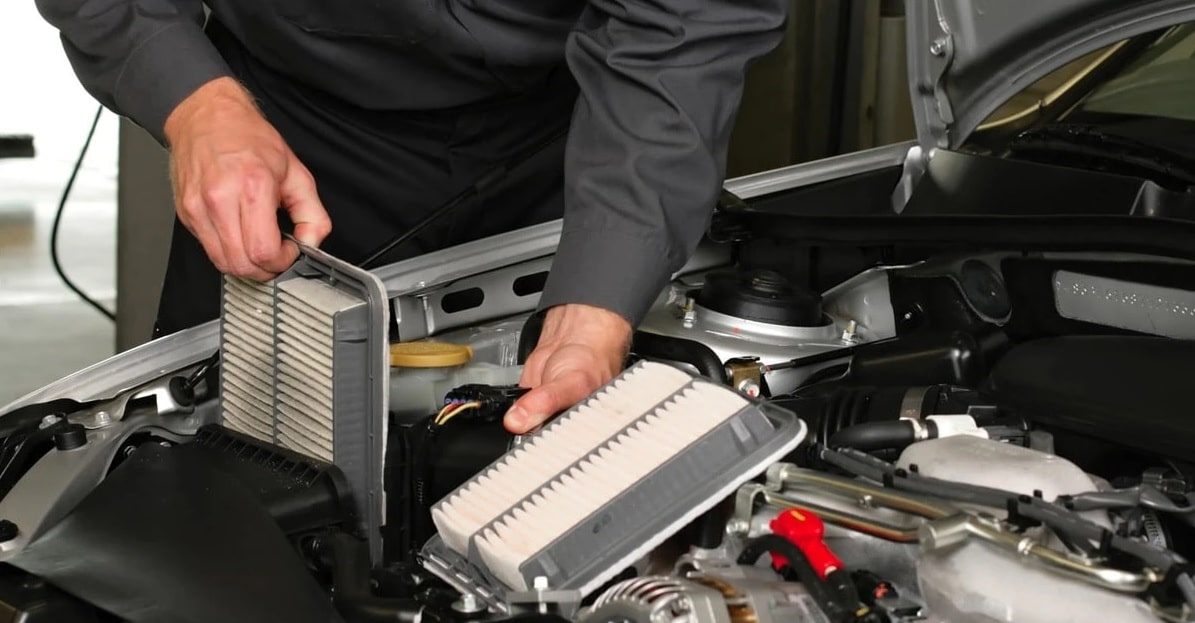
Every car owner should know where the engine air filter is located and how to check its condition. On most vehicles, it is in a black plastic box on top of or near the engine, held in place by clips or screws. Open the box, pull out the filter, and hold it up to the light.
If light passes through easily, the filter is still good. If it is packed with dirt and debris and you cannot see through it, it needs to be replaced. A clogged air filter restricts airflow to the engine, which reduces power and hurts fuel economy. A new filter costs $10 to $25 and takes five minutes to swap. It is one of the simplest and most cost-effective maintenance tasks you can do yourself.
Use Your Phone as a Heads-Up Display for Navigation
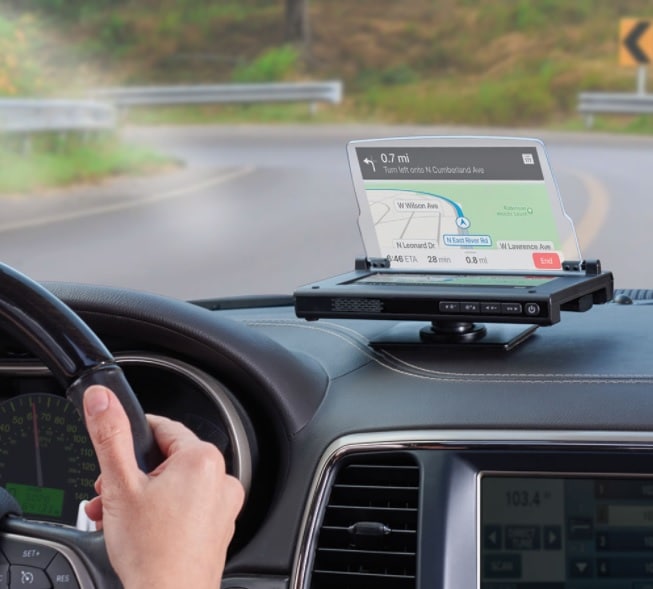
Several apps and dashboard mounts can turn your smartphone into a heads-up display (HUD) that projects navigation directions, speed, and other information at eye level. The display appears translucent, letting you see the road and the information simultaneously.
It feels futuristic, it keeps your eyes closer to the road than looking down at a phone in a cup holder, and it works with most standard navigation apps. If you rely heavily on GPS navigation, this is a worthwhile upgrade to your setup.
Keep a Mental (or Physical) List of What Lives in Your Car
After reading through all of these tips, you probably have ideas about what you want to add to your vehicle. A shower caddy for the trunk. Silicone liners for the cup holders. An emergency kit. Baby wipes. A bottle of hand sanitizer for winter. Cat litter for traction.
Write it all down. Keep a list of what you have stocked in your car and check it once a season to make sure nothing has expired, been used up, or gone missing. Being prepared is only useful if you actually have the supplies on hand when you need them.
Which of these hacks are you going to try first?