

Vehicles offer a high degree of convenience and comfort. They let us move from place to place more easily than public transport, and they make everyday errands—like grocery runs—simpler without additional delivery charges. With a car, you can travel on your schedule, carry what you need, and enjoy a level of independence that’s hard to beat. For many people, a vehicle is not just transportation; it’s time saved, opportunities expanded, and daily life made smoother.
But it’s also true that anything with perks comes with disadvantages. When you own a vehicle, you inherit a long list of responsibilities: maintenance, insurance, safe driving, and—especially in many cities—security. Car theft and vehicle break-ins are not rare, and they’re not always “random.” Many thieves operate with patterns, preferred targets, and repeatable methods. That’s why prevention works best when you think in layers: visibility control, deterrence, delay tactics, and recovery planning.
Today, car theft is our topic of discussion. Some former car thieves who have decided to turn over a new leaf have shared practical advice that aligns surprisingly well with what security professionals call situational deterrence: make your vehicle less attractive, more difficult, and riskier to target than the next one. If you’re looking for the best tips to secure your car, these suggestions are genuinely helpful. Buckle up for 40 tips and tricks to ensure you and your vehicle are as safe as possible.
Expert note before we start: No single tip is “100% theft-proof.” Your goal is not perfection; it’s risk reduction. A thief typically wants speed, low attention, and low friction. If your car looks time-consuming or unpredictable, many thieves move on. Combine several strategies from this list and you dramatically increase your odds of avoiding a break-in or theft.
How Car Thieves Think (So Your Prevention Is Practical)
Before the 40 tips, it helps to understand the two most common threat types—because your strategy changes depending on who you’re defending against:
- Opportunistic thieves: These offenders look for quick wins—visible bags, unlocked doors, open windows, easy-to-remove wheels, or an obvious phone mount that suggests electronics. Your best defense is to remove temptation and increase visibility-based risk.
- Targeted thieves: These offenders may be looking for a specific model, a specific part (wheels, catalytic converters, infotainment units), or a vehicle that can be resold or stripped quickly. Your best defense is layered security (immobilization + tracking + secure parking + professional installation).
Nearly every tip below fits into one or more of these security pillars:
- Conceal: reduce what thieves can see (tint, hide bags, remove suction mount evidence).
- Deter: signal that your car is not an easy target (stickers, wheel locks, steering locks).
- Delay: add steps/time (car covers, security screws, kill switches, tire locks).
- Detect & document: improve response and recovery (pager alerts, cameras, GPS tracking awareness).
Now, let’s get into the 40 recommendations. You don’t need all of them. But you do want a mix—ideally one “visible” deterrent, one “hidden” deterrent, and one “environment” improvement.
1. Tinting your Windows
Do you have a habit of keeping cash inside the car? If that is the case, tinting your windows becomes more than a style choice—it becomes a visibility-control strategy. Besides making your car look more sophisticated and remarkable, tint can reduce the “walk-by scan” advantage thieves rely on. Your vehicle benefits by looking fresher while protecting your items simultaneously.
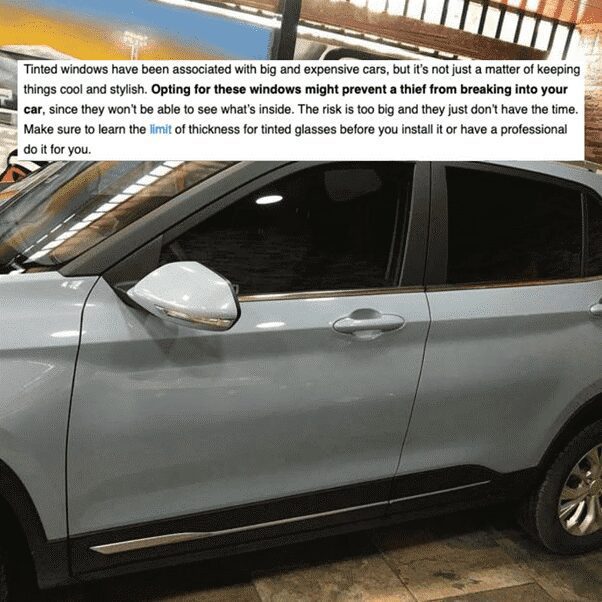
Like the “under the seat” trick, tinting raises risk for thieves because it reduces what they can confidently see at a glance. Most opportunistic thieves are not hunting for mystery; they’re hunting for certainty. If they can’t easily spot a bag, laptop, or cash, many won’t gamble on breaking in—because breaking a window is noisy, attention-grabbing, and rarely worth it if the payoff is unclear.
Also, ensure you check the legislation in your locality to know the necessary tinting level. In some locations, there are specific guidelines on tinting. Best to consider this before ending up on the wrong side of the law.
Pro tip: Tint works best when paired with “clean cabin” habits. Tint alone won’t help if valuables are still obvious in daylight—especially on the front seats. Think of tint as a visibility reducer, not a safe deposit box.
Expert add-on: If you drive a hatchback or SUV where the cargo area is visible, tint can be even more useful because it reduces visibility into that “trunk-like” space. Still, a cargo cover or blanket adds another layer and makes the tint’s job easier.
2. Cover your Car
If you live in a particularly rainy or cold region, using a car cover overnight can be surprisingly useful. It prevents snow buildup on your mirrors and windshield, helps protect your vehicle’s finish, and can keep the car looking cleaner for longer. But there’s a security angle too—one that many owners overlook.
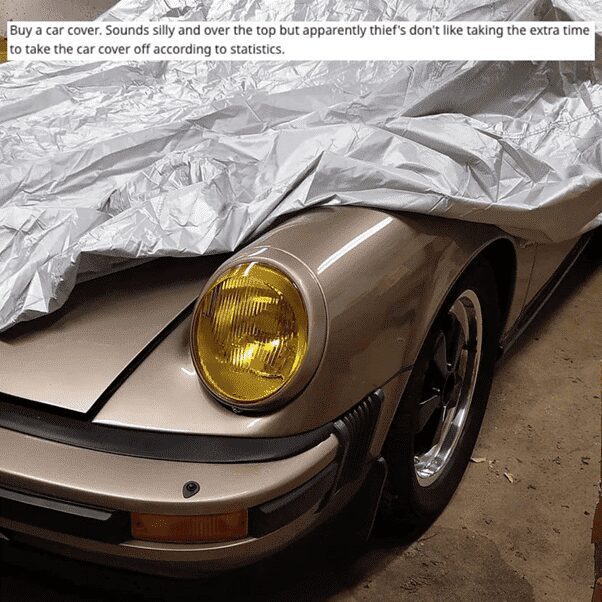
On top of weather protection, many thieves avoid covered vehicles because a cover adds friction. It takes time to remove, it increases visibility (people notice someone wrestling with a cover), and it introduces uncertainty (they can’t instantly see what kind of car or what kind of interior they’re dealing with). That extra effort often pushes thieves toward easier targets.
According to this user, car thieves tend to avoid vehicles with car covers because stealing them is more complicated since it is hard to anticipate what you might find beneath the covers. That said, it is time to wrap your vehicle up!
Expert caution: If you use a cover regularly, make sure the car is reasonably clean before covering. Dirt trapped under a cover can scratch paint over time. And in windy regions, use proper tie-downs to prevent the cover from flapping (which can also cause paint abrasion).
Expert add-on: A cover is especially effective in residential settings where neighbors notice unusual activity. In a large public parking area, the deterrence effect can still help, but the best use-case is typically overnight storage at home or in a driveway.
3. Pager to the Rescue
Most vehicles have an alarm, but alarms have a credibility problem: they can trigger from harmless bumps, loud vibrations, or accidental contact. Over time, people stop reacting. That’s exactly what thieves count on—noise without response.
Separating legitimate threats from idle ones can be tricky, and you might find yourself responding unnecessarily to harmless situations. Unfortunately, that conditioning can be dangerous when someone is actually breaking into your car.
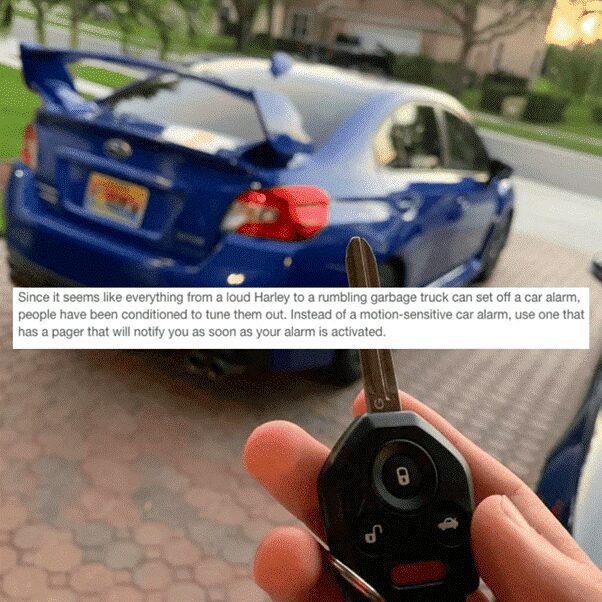
This is why the pager concept is valuable. A pager-style alarm system alerts you directly (often through a fob or phone notification), so you know when the alarm is going off and can decide whether it needs immediate attention. This upgrades alarms from “noise” to “actionable information.”
We do recommend following this advice and acquiring one with a pager. By doing so, you can identify when your alarm is going off and need to check it out.
Expert note: Don’t confront thieves alone. If your pager alerts you, prioritize safety; verify from a distance, call authorities, and avoid putting yourself at risk.
Expert add-on: If your alarm is notorious for false triggers, fix that issue. False alarms reduce the value of any alert system—pager or not—because you’ll start ignoring notifications the same way people ignore sirens.
4. Conceal Your Bags
Most people know to keep valuables in the trunk. It’s out of sight, and thieves typically choose what they can see quickly. But the trunk isn’t the only hiding place that matters—and some vehicles don’t have a truly hidden trunk at all.
Sometimes, you can’t fit everything in the trunk—or you’re driving a hatchback where the cargo area is still visible. In those moments, thieves look for the easiest visible reward: backpacks, shopping bags, purses, laptop sleeves, or gym bags.
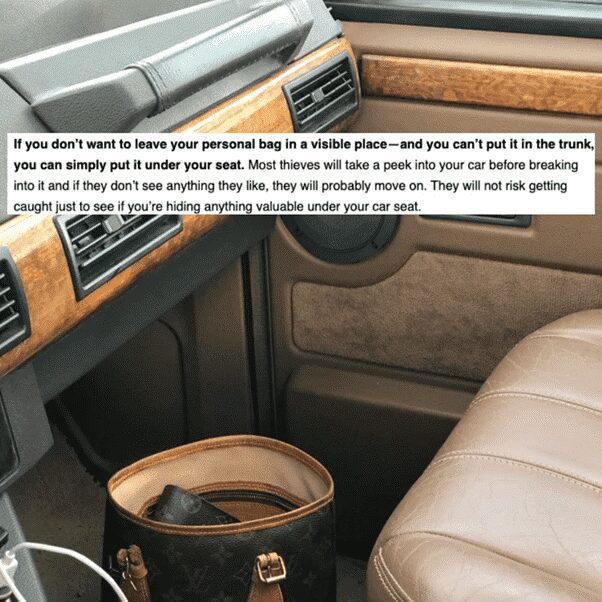
Putting items under the seat can be equally effective. Many thieves won’t risk breaking in just to “see if there might be something” hidden. Their goal is speed, not exploration.
Expert practice: Hide items before you arrive and park. If someone watches you move a bag under the seat after you park, the hiding trick becomes a “here’s where the valuables are” signal.
Expert add-on: Avoid leaving “empty” bags visible too. A thief can’t tell if a backpack is empty from the outside, and they may still break a window to find out.
5. Have your Key with You
This sounds like a cliché because it’s so obvious, yet it’s one of the most common preventable mistakes: do not leave your keys in the ignition during a quick stop. Even if you’re “just running inside for a second,” a thief needs only seconds too.
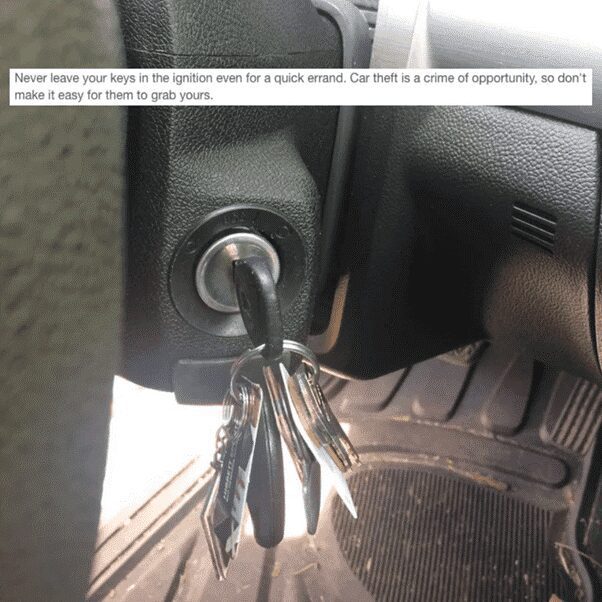
Even the shortest opportunities are sufficient for a car thief to jump in and drive off. Always remove the keys and lock the door when stepping out—even if the vehicle is still in your sight.
In this modern era, you cannot leave things to chance. Losing your vehicle is expensive, stressful, and time-consuming to recover from. A small habit—keys out, door locked—removes one of the easiest theft opportunities.
Expert add-on: If you use keyless ignition, treat the fob as the “key.” Don’t set it down in the cupholder while pumping gas or loading items. Keep it on your person, and avoid leaving it near the car while doors are open.
6. Thievery of Wheels
If you always lock your doors and never leave valuables inside, you may feel safe. Unfortunately, thieves don’t always need access to the cabin. Wheels, tires, and other exterior parts can be stolen quickly—especially if they’re desirable, easy to resell, or common on high-demand models.
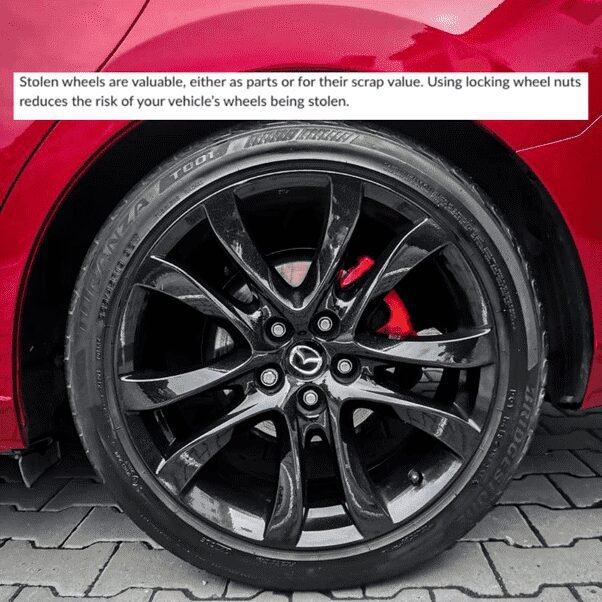
Wheel theft is profitable because wheels can be sold fast, and the victim is left stranded and forced to buy replacements immediately. Thieves may target specific models that use popular wheel sizes or aftermarket rims.
Expert prevention tip: Consider wheel locks (lug nut locks) and park in well-lit areas. If your wheels are high-value, secure parking matters more than you think. Wheel locks won’t stop a determined thief with tools, but they often add enough delay to make your car less attractive than the next one.
Expert add-on: If you have rare wheels, take photos of them and keep receipts. Documentation speeds up insurance claims and helps identification if stolen wheels are recovered.
7. Stolen System
Some car components feel too “built-in” to worry about—like the stereo system. But stereos and infotainment parts can be prime targets, especially in older vehicles with removable faceplates or easily accessible units.
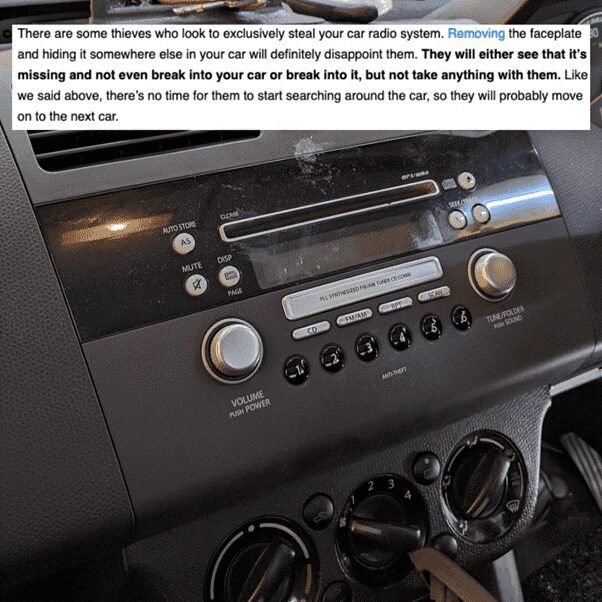
We strongly recommend covering it when possible. Stereos are enticing because they’re valuable, portable, and easy to sell. If your system has a removable faceplate, remove it and take it with you. That small act turns the stereo into a low-value target.
Expert note: The best deterrence is “nothing worth stealing.” If your cabin looks empty and uninteresting, you reduce the odds of both theft and break-ins that cause expensive window damage.
Expert add-on: If you’ve upgraded audio equipment (amps, subwoofers), remember that thieves may target the trunk too. Conceal the build and consider trunk security if your system is high-end.
8. Document Storage Dilemma
Vehicle ownership includes paperwork: insurance documents, registration, tax documentation, and personal identification. It’s easy to assume these are safe in the glove box because they “belong with the car.” But that’s risky.
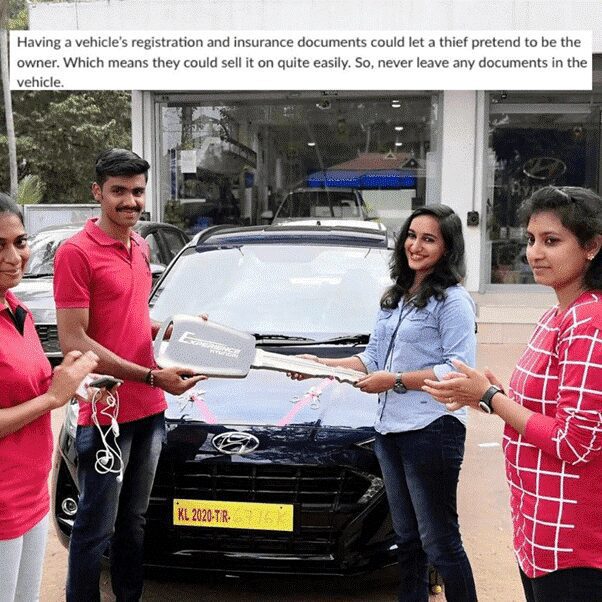
Do not leave sensitive documents inside the car. If a thief steals your vehicle—or even just breaks in—they can use those documents to impersonate ownership or commit identity-related crimes. In other words, you may lose more than the car.
To avoid such headaches, keep documents secure and carry only what you must. If local laws require you to keep certain documents in the vehicle, store them in a less obvious place and consider redacting unnecessary personal information where legally permissible.
Expert habit: Keep a digital copy of essential documents in a secure cloud storage account. That way, if the car is stolen, you still have what you need for police reports and insurance claims—without relying on what was left in the vehicle.
Expert add-on: If your address is on any visible document, it can turn a car break-in into a home-security risk. That’s one more reason to minimize what stays in the vehicle.
9. Innovative Wheel Lock
The core security principle you’ll notice throughout this list is simple: the harder you make theft, the less attractive your vehicle becomes. Steering wheel locks are a classic example of visible deterrence paired with real delay.
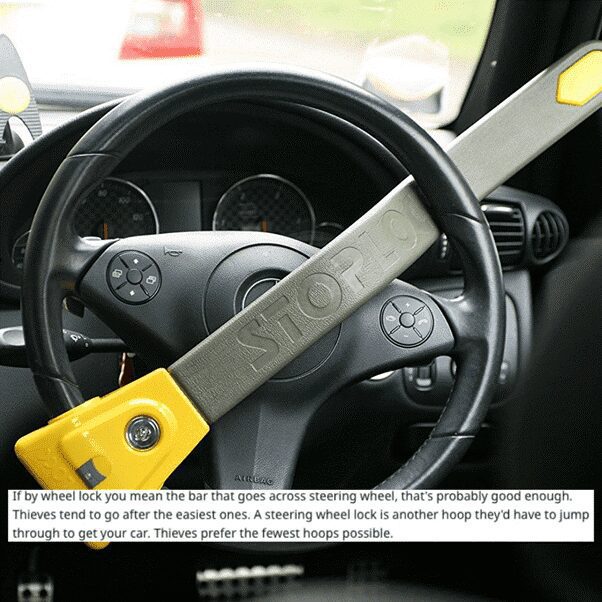
A steering wheel lock prevents easy driving, even if a thief gets inside. It adds steps, creates noise, and forces the thief to spend time and attention in a public space. That combination discourages many opportunistic theft attempts.
Expert tip: Visible deterrents work best when paired with hidden deterrents (like a kill switch or immobilizer). A thief may be willing to defeat one layer; multiple layers increase the chance they abandon the attempt.
Expert add-on: Place the lock consistently. If it looks “half-fitted,” you reduce deterrence because thieves may assume it’s easy to defeat.
10. Cash Problems
This next trick is obvious but still frequently ignored: don’t leave money openly visible in the car. Cash is an instant-reward item; if a thief sees it, they may break a window just to grab it, even if nothing else is taken.
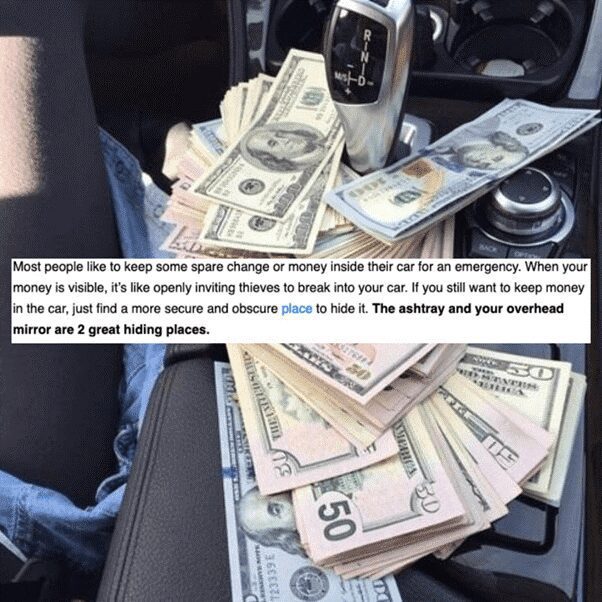
If you keep emergency cash, don’t store it in plain view. Use discreet locations like the ashtray or the center compartment. Avoid predictable “hiding spots” that everyone knows (like under the floor mat), because some thieves check those automatically.
Expert rule: The best place for emergency cash is on your person, not in your vehicle. A car is not a safe.
Expert add-on: If you must store something, store less than you think. A small emergency note is one thing; leaving large amounts of cash invites unnecessary risk.
11. Van Safety
You might assume vans are less attractive to thieves. In reality, vans can be high-value targets because they often contain tools and equipment. Thieves who target vans often do so intentionally, not opportunistically.
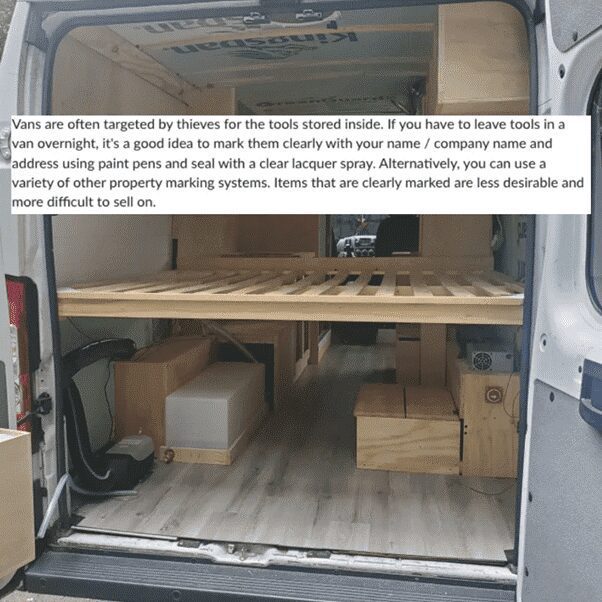
Always double-check that doors are locked. Consider internal tool storage solutions that can’t be seen from the outside. Invest in tools that are manufacturer-compatible and keep documentation (serial numbers/photos) in case you need to file a claim.
Expert add-on: If you carry expensive tools, consider a separate insurance policy or rider that covers tools in transit. Many standard auto insurance policies do not fully cover commercial tool theft.
Expert add-on: Vans benefit massively from “out of sight” discipline. If thieves can see toolboxes through windows, you’ve already lost half the battle—because you’ve confirmed value exists inside.
12. Secure Parking
No one loves paying for parking, especially when it feels like an avoidable expense. But in high-risk areas, secure parking is often cheaper than the fallout from theft or a break-in. If you truly value your vehicle, paying a little extra for a monitored or gated space can be a smart investment.
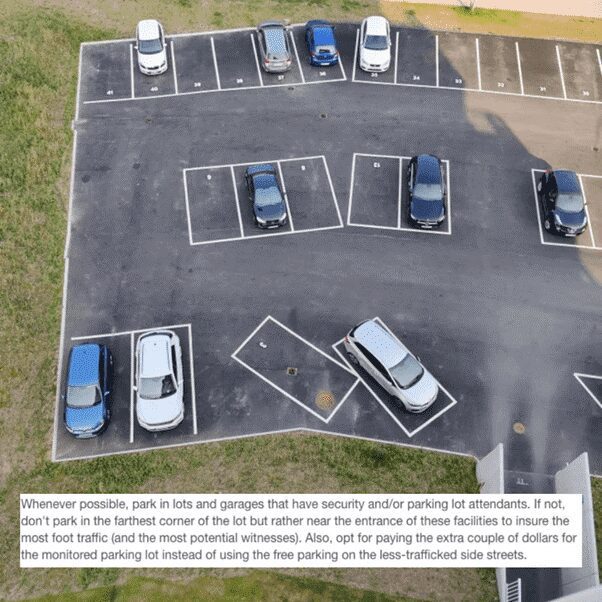
No matter how outrageous parking fees feel, they are typically less than the cost of replacing stolen parts, repairing window damage, or dealing with the emotional and logistical stress of a stolen car. Secure parking also reduces the chance of vandalism.
Expert strategy: When choosing parking, prioritize visibility and surveillance: lighting, cameras, and foot traffic. Thieves prefer privacy.
Expert add-on: If you park at home, consider physical barriers too (gates, bollards, driveway posts). A thief can bypass an alarm; it’s harder to bypass a physical obstacle quickly without drawing attention.
13. Car Trademark
Some theft prevention factors are under your control; others aren’t. One factor you can plan around is whether your vehicle model is frequently targeted. Certain models are stolen more often because of high resale demand, valuable parts, weak security designs, or theft “trends” that shift year to year.

This preference varies annually, so stay informed through credible reports and local crime statistics. If your model is commonly targeted, treat that as a signal to strengthen security using multiple layers from this list. Even if your vehicle isn’t a “top target,” don’t neglect your defenses; opportunistic theft can happen to any car.
Expert note: Sometimes thieves target parts, not the whole vehicle. If your model is known for catalytic converter theft or wheel theft, your prevention strategy should focus on those specific vulnerabilities.
Expert add-on: If your area has a known “model trend,” avoid habits that advertise the exact model and trim (stickers showing expensive modifications, visible branded accessories, etc.). The less you broadcast, the less you attract.
14. Identification Plates
After your car is stolen, it may seem like tracking it should be simple. But thieves often remove identification quickly. License plates can be removed in minutes with basic tools, making it harder to identify the vehicle and more expensive to recover.
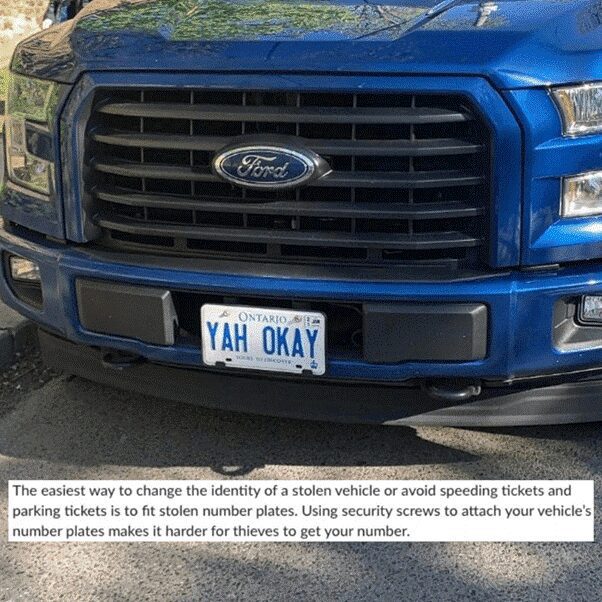
After removing plates, thieves may swap them with another set to disguise the vehicle. To reduce this risk, use security screws that are harder to remove with common tools. This doesn’t make theft impossible, but it increases time and difficulty.
Expert add-on: Keep recent photos of your vehicle from multiple angles, including distinguishing marks. This helps police and insurance, especially if plates are removed.
Expert add-on: Consider discreetly marking your plates (where legal) or using a plate holder that makes quick removal harder. Again, the goal is delay and inconvenience.
15. Electronic Cars
People often assume that newer “electronic” cars are automatically safer. But innovation cuts both ways: advanced systems can create new attack surfaces for thieves. Some thieves prefer newer cars because they’re valuable and can be exploited using modern tools and tactics.
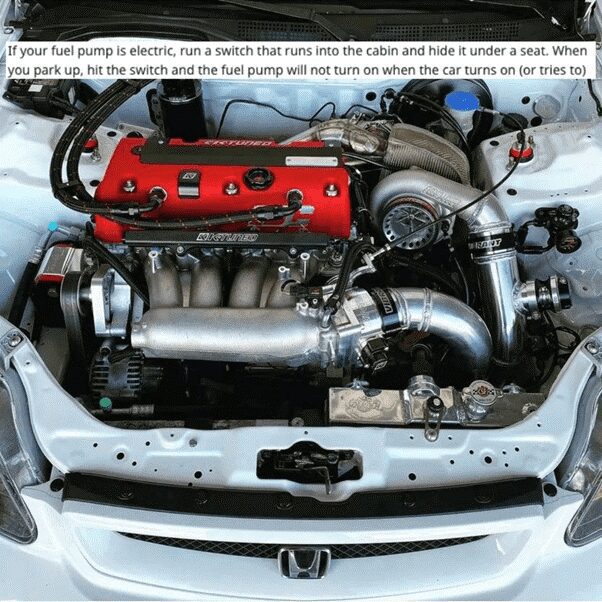
The suggestion shown here involves adding a switch that prevents the fuel pump from operating normally, which can make theft harder. The logic is: even if a thief gains access, the vehicle won’t run as expected. That said, modifications like this should be done professionally to avoid safety hazards, reliability issues, or insurance complications.
Expert caution: Do not DIY electrical modifications unless you understand vehicle wiring and safety. A poorly installed switch can create stalling risks or electrical faults. A professional installer can implement a safer immobilization strategy (including kill switches, relays, or hidden interlocks).
Expert add-on: Newer vehicles also benefit from software hygiene: keep firmware updated where applicable, and use strong account passwords for connected-car apps to reduce remote compromise risks.
16. Swap the Spot
Routine is convenient, but routine is also predictable. If you park in the same spot at the same time daily, you can become an easy target for someone watching patterns. Thieves sometimes do basic surveillance, especially for high-value cars.
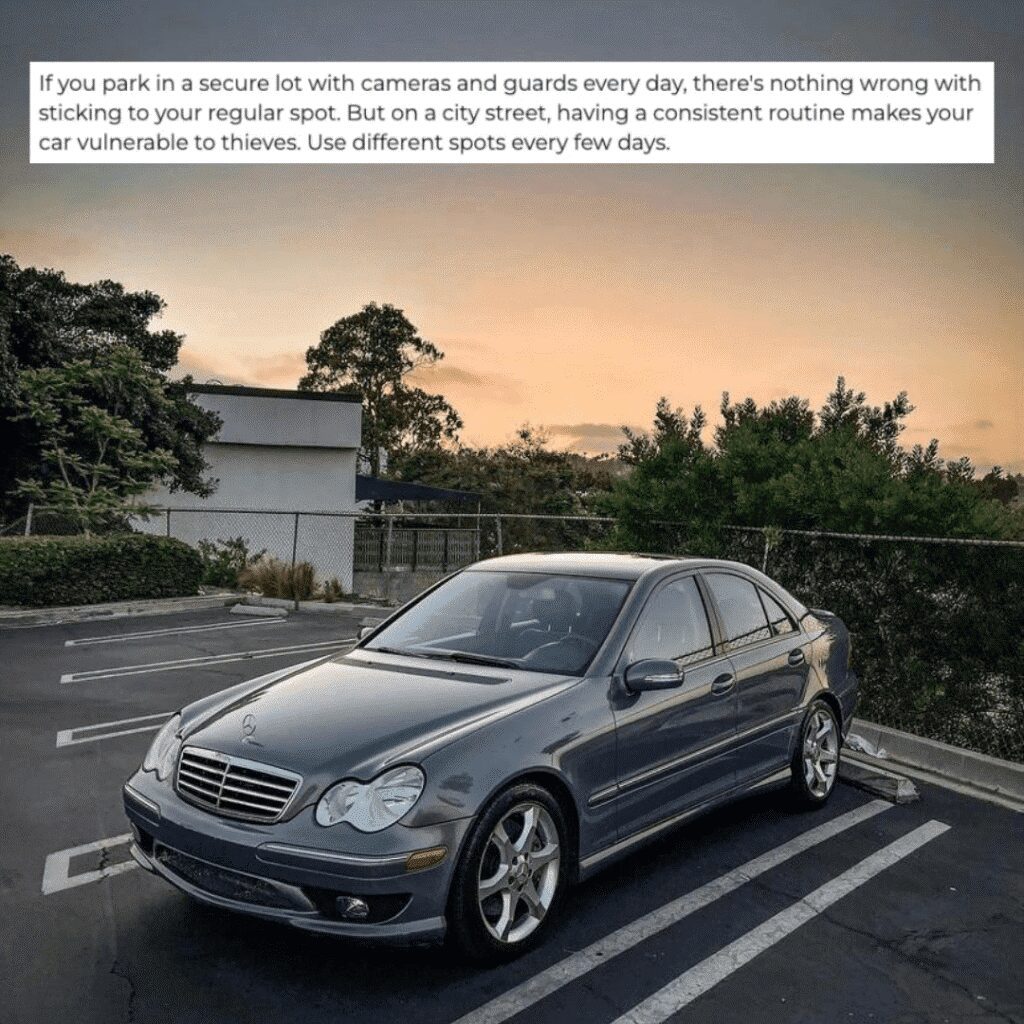
Changing your parking spot—even slightly—makes your vehicle less predictable. It disrupts timing and reduces the chance that a thief can plan a low-risk theft attempt.
Expert practice: This tip works best when combined with better parking choices (lighting, cameras) and visible deterrents (steering lock). Unpredictability + deterrence is powerful.
Expert add-on: If you must keep the same spot (apartment parking, assigned office space), compensate with stronger layers like visible locks, a kill switch, and motion lighting where possible.
17. Light Spot Parking
A relative has probably told you not to park in dark areas. That advice is solid. Thieves prefer darkness because it reduces witnesses and increases the time they can work undisturbed. Parking in well-lit areas increases visibility and raises the chance that someone will notice suspicious behavior.
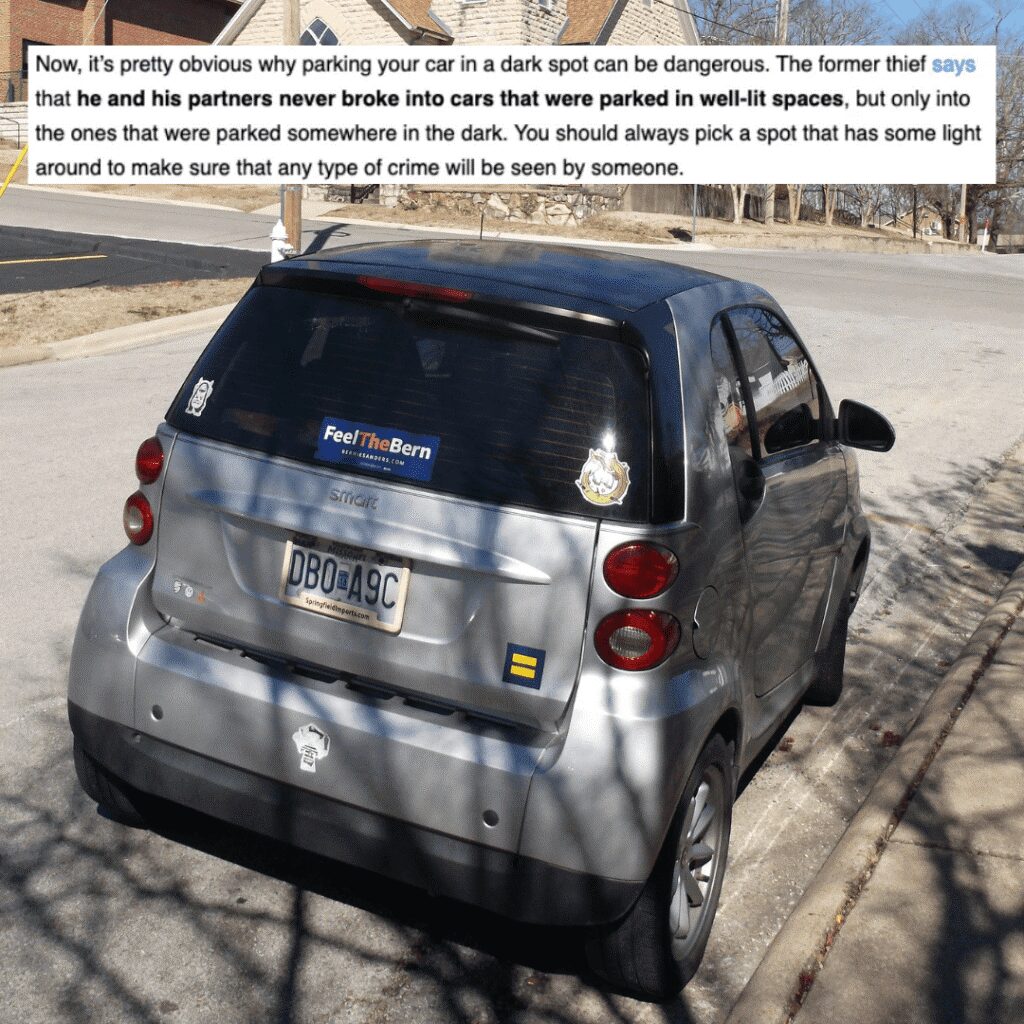
Parking in lit areas deters many thieves. Visibility increases risk, and risk is what most thieves want to avoid. “Sunshine” is a simple concept, but it’s one of the most cost-effective security choices you can make.
Expert note: Light is even more effective when paired with activity (people nearby) and surveillance (cameras). A bright but empty lot is still less ideal than a moderately lit area with frequent foot traffic.
Expert add-on: If you park at night, avoid spots hidden by pillars, bushes, or large vans. Even if lighting is good, “visual cover” can give thieves a privacy advantage.
18. Cautionary Sticker
Some theft prevention tools cost money. But deterrence can also be psychological—and inexpensive. A cautionary sticker suggesting an installed alarm system can discourage opportunistic thieves because it adds perceived risk and uncertainty.
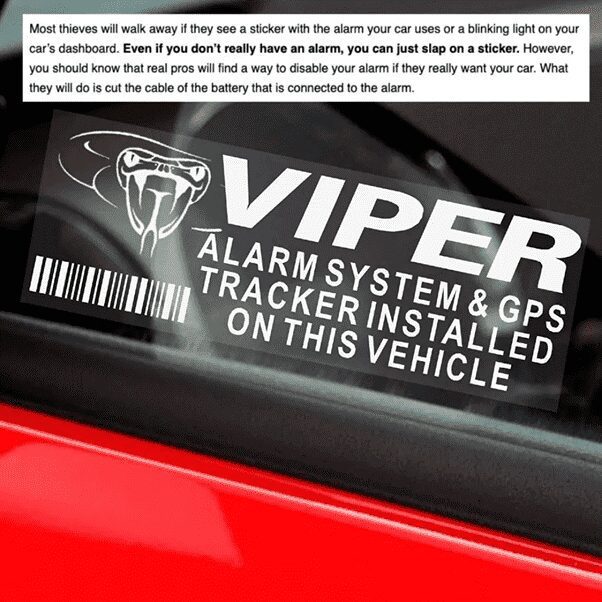
No one has time to verify whether the alarm is real during a theft attempt. That’s the point: deterrence is about shifting the thief’s risk calculation. It’s not a guarantee, but it can help.
Expert recommendation: If you use warning stickers, pair them with at least one real deterrent (wheel lock, alarm, camera, immobilizer). A sticker alone is better than nothing, but a sticker plus real security is far stronger.
Expert add-on: Place stickers where they’re visible but not ridiculous. Overstating security in a way that looks fake can reduce credibility. Subtle works better.
19. Keyhole Trick
Older vehicles with external keyholes can be more vulnerable because their locks may be simpler, worn, or easier to exploit than modern systems. This isn’t a criticism of older cars; many are excellent vehicles; but it’s a security reality. If your car is older, you may need to layer security more aggressively.
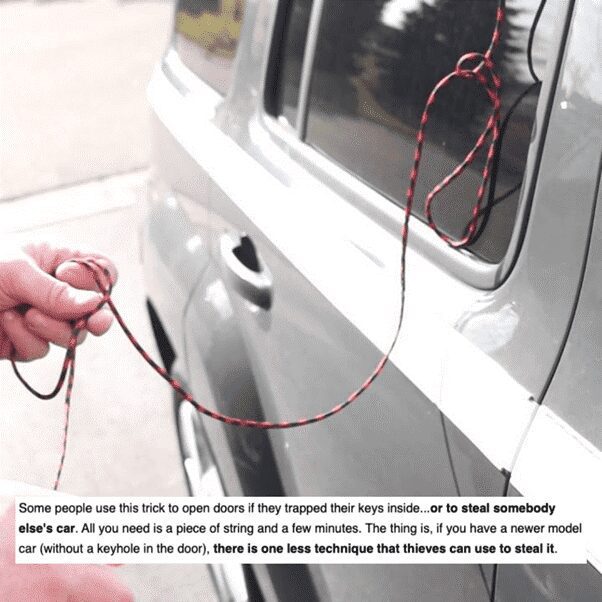
Since many new cars reduce reliance on exposed keyholes (or hide them behind covers), they can be less susceptible to certain older lock vulnerabilities. If your vehicle doesn’t have a keyhole, this specific risk may not apply; so focus on other methods on this list.
Expert approach for older cars: Consider upgrading door lock components, adding a modern alarm, installing a kill switch, and parking strategically. You don’t need to abandon an older car; you just need a stronger security strategy.
Expert add-on: If the vehicle is a classic or collector car, consider additional storage security (garage, immobilization, and physical barriers). Classics can be targeted for parts or resale overseas.
20. Motion Sensor Lighting
Motion sensor lighting is a high-value security upgrade because it protects both your vehicle and your home. Sudden lighting removes the thief’s advantage of darkness and increases the chance of being seen.
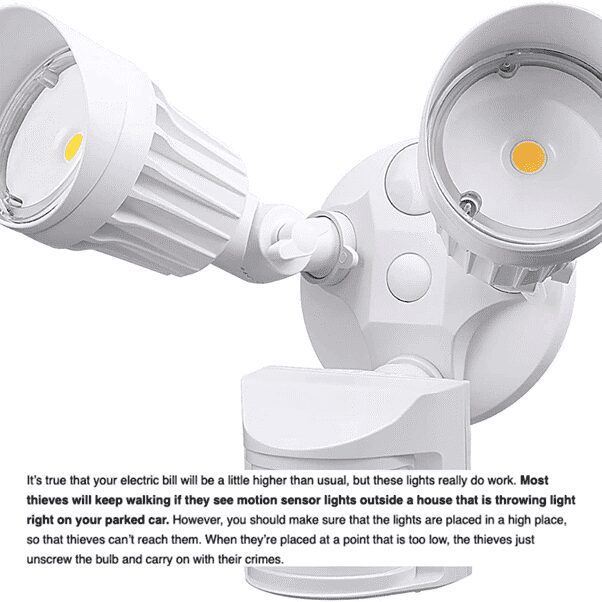
Motion sensor lights activate when movement is detected, which can scare off thieves who prefer stealth. But placement matters. As noted, if lights are installed too low, they can be stolen or disabled easily. Place them high, and position them to cover driveways and common approach paths.
Expert tip: Pair motion lighting with a camera or doorbell cam. Light alone deters; light + recording increases consequences.
Expert add-on: Adjust sensitivity and timing. Lights that trigger constantly (cats, passing cars) train you and neighbors to ignore them—similar to alarm fatigue.
21. Open Invitation for Everyone
Most thieves enter through doors, but windows and sunroofs can also be exploited—especially if left slightly open. Before you walk away from your vehicle, make it a habit to verify that all doors, windows, and sunroofs are fully closed and locked.

If you skip this step, you may return to missing items—or worse, a stolen vehicle. Thieves test doors and handles quickly; an unlocked door is an “open invitation.”
Expert habit: Use a “walk-away check” routine: lock → pull the handle once → glance at windows → leave. Routine builds consistency, and consistency prevents mistakes.
Expert add-on: If you drive with passengers often (rideshares, family, colleagues), do the check anyway. Passenger doors are frequently the ones left unlocked or not fully closed.
22. Suction Condition
Suction mounts (phone holders, dash cams, sat nav mounts) are convenient, but they leave signals. A suction mount implies electronics, and electronics imply profit. Thieves often interpret suction cups and mounts as evidence that a device may be hidden in the glove box or center console.
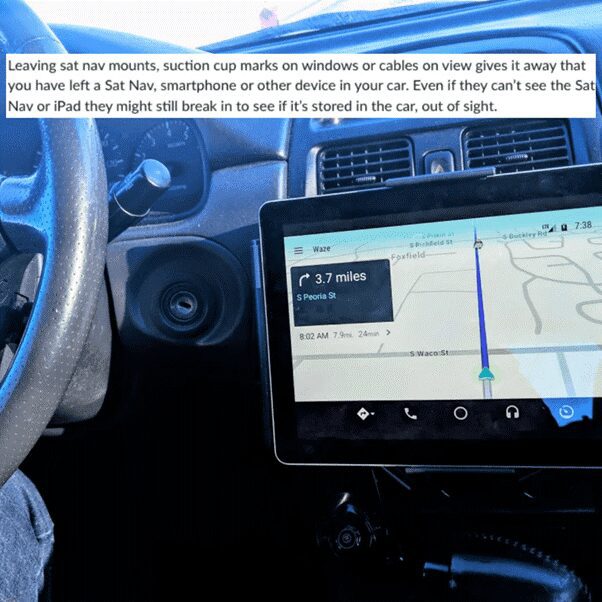
Even if you remove the device, the mount can still attract attention. The safest approach is to remove the mount as well—especially in higher-theft areas.
Expert note: This is the same logic as leaving a laptop bag visible. You’re not just protecting items; you’re managing what your car advertises to strangers.
Expert add-on: If your mount is hard to remove, consider switching to a less obvious option (vent mount) or a removable system you can quickly stow.
23. Mysterious Sound
Car thieves evolve. Sometimes the threat isn’t the break-in; it’s the distraction that gets you out of the car while it’s running. Thieves may create a situation that makes you step away briefly, then they take advantage.
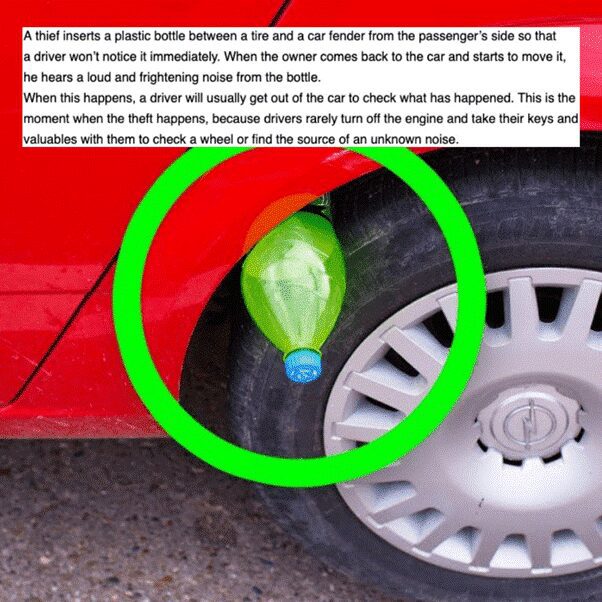
Distraction tactics can include objects placed on the road, unusual noises, or staged situations designed to pull you out. The best response is awareness: if something feels off, prioritize personal safety. Lock the car, keep keys on you, and assess from a safe position.
Expert safety note: This tip is about situational awareness, not paranoia. Trust patterns: if you’re in an unfamiliar area and something seems engineered to pull you away, act cautiously.
Expert add-on: If you must check an issue (flat tire, noise, object behind car), ensure your keys are in your pocket and doors are locked. A running, unlocked vehicle is the dream scenario for an opportunistic thief.
24. Suction Indication
Removing suction mounts is good. Removing the residue they leave behind is even better. Those circular marks are “advertising.” They tell thieves a device was recently there—and might still be in the car.
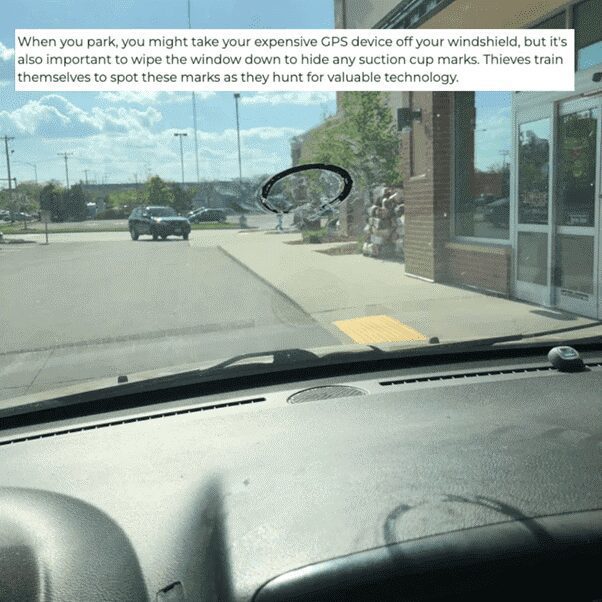
Wipe the glass where the suction cup was attached. If you’re parking in a high-risk location, take a moment to remove visible clues that invite break-ins.
Expert principle: If a thief has to guess, many won’t try. If your car shows “evidence,” they may gamble. Remove evidence.
Expert add-on: Clean the whole dashboard area too. Sticky spots, cable routing, or dash cam wiring are also clues.
25. Complex Trunk
This strategy sounds strange, but it’s grounded in reality: many thieves focus on fast-access areas. A trunk can require extra steps and time, which increases risk. That makes trunks useful for hiding valuables.

Whatever the reason thieves often skip trunks, it’s good news for you. Store valuable items in the trunk when possible—especially items like laptops, cameras, or shopping bags.
Expert caution: In hatchbacks and SUVs, “trunk” space can be visible. Use cargo covers, tint, or concealment strategies so the trunk area isn’t a display case.
Expert add-on: If you must park and then move items to the trunk, do it before arriving or in a different location. Parking and then “loading the trunk” in public can tell observers exactly where you put valuables.
26. Documentation Specifics
Expensive items aren’t the only valuables. Documents—passports, sensitive letters, IDs—can be just as damaging to lose. They signal identity and travel patterns, which can increase risk beyond the car itself.
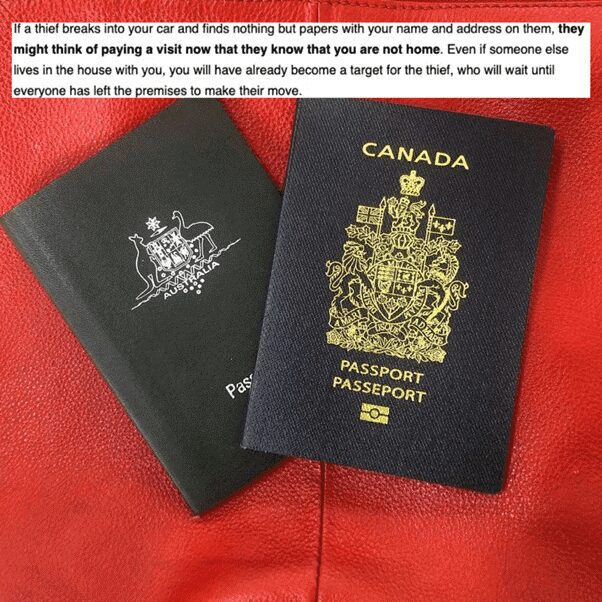
Thieves who find travel documents may assume you’ll be away and may use that information to target your home. In a nutshell: never store critical documents in your vehicle unless there is no alternative, and even then keep them concealed.
Expert habit: If you must transport documents, use a discreet bag and take it with you. A car should never be a long-term storage place for sensitive identity items.
Expert add-on: Don’t underestimate “minor” documents like utility bills, mail, or workplace IDs. These can be useful to criminals for social engineering.
27. Additional Keys
Spare keys are useful, but storing them inside the vehicle is a serious mistake. It effectively gives thieves the one thing they need to upgrade a break-in into a theft.
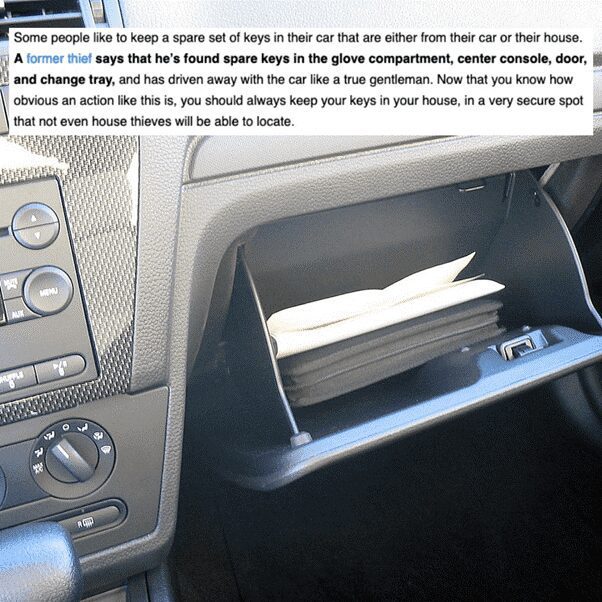
Store spare keys inside your home in a secure location. If possible, use a lockbox or safe. If you’re worried about home security too, avoid obvious key storage spots near entrances.
Expert note: If your vehicle uses keyless entry, protect spare fobs from signal theft risks too (see Tip 30).
Expert add-on: If a key or fob is lost, deactivate it (if your vehicle supports it) and update security. Old keys floating around are an invisible risk.
28. On the Uppermost
Roof racks are incredibly useful for travel, but they’re also visible, and visibility attracts attention. Thieves may target roof cargo because it’s often valuable (bikes, boards, storage boxes) and can sometimes be removed quickly with the right tools.
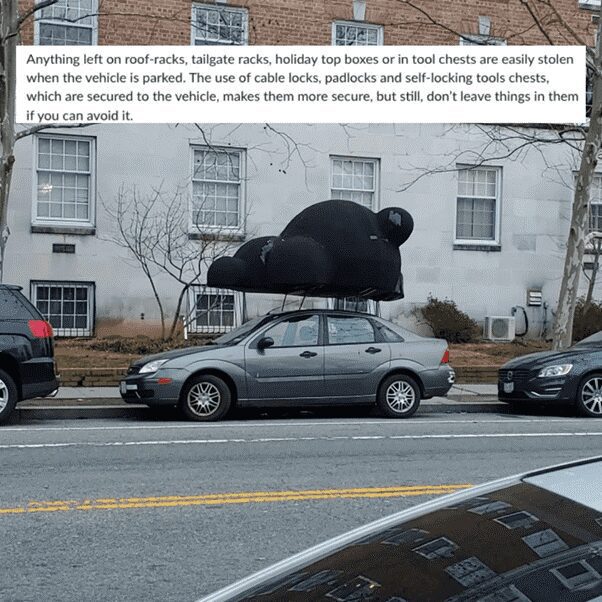
No matter how many locks you install, rooftop gear can remain vulnerable. The best approach is to remove valuable cargo and bring it indoors when possible—especially overnight or in unfamiliar areas.
Expert practice: Use quality rack locks, park in visible areas, and avoid leaving high-value items on racks for extended periods. Think of racks as “transport tools,” not storage.
Expert add-on: If you travel with rooftop cargo boxes, don’t leave them mounted permanently if you don’t need them. They can advertise that you often carry gear (and possibly expensive gear).
29. Experts Only
Installing an alarm is a solid move, but how it’s installed matters as much as the alarm itself. Obvious alarm setups can be predictable to experienced thieves. The advantage of professional installation is that installers understand common thief behaviors and can hide wiring, place sensors intelligently, and reduce obvious vulnerabilities.
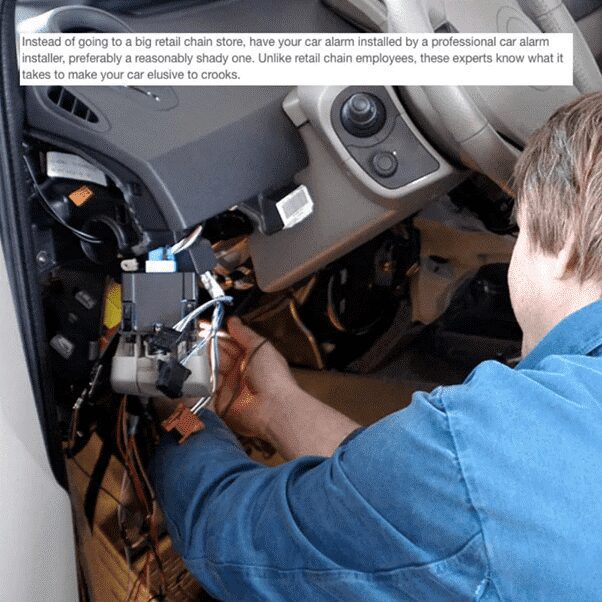
Professionals can recommend modern systems that integrate with your vehicle correctly and reduce false alarms. The best security often looks boring—because it’s hidden and functional rather than flashy.
Expert note: Choose installers who provide documentation and warranty. Bad installations can cause electrical issues and create new problems.
Expert add-on: Ask an installer about layered immobilization options (starter interrupt, fuel relay, or ECU interlock) that won’t compromise safety. Not every “kill switch” approach is equal.
30. Carless Keys Solutions
Keyless entry is convenient, but it introduces signal-related theft risks. Some criminals use devices that amplify or intercept key fob signals to trick vehicles into thinking the key is nearby. That’s why key signal protection is now a practical security step for many owners.
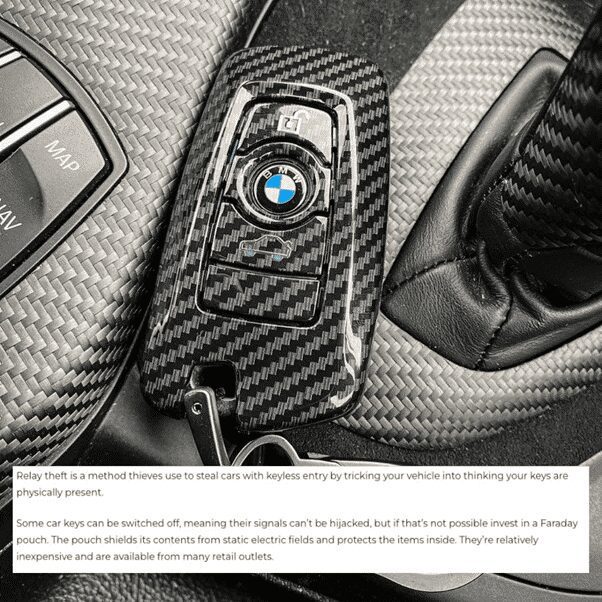
For prevention, consider buying a cheap Faraday pouch online. A Faraday pouch blocks the fob’s signal when stored inside, reducing the chance of signal hijacking. This makes it harder for thieves to exploit keyless systems.
Expert tip: Test your pouch: put the fob inside and confirm your car won’t unlock/start when you stand next to it. Not all pouches are equal.
Expert add-on: At home, keep keys away from doors and windows. Even without a pouch, distance can reduce the effectiveness of some relay-style attacks.
31. Kill Switch Option
Kill switches are one of the most effective theft deterrents because they stop the vehicle from running even if entry is gained. They create a hidden “no-start” condition unless the driver knows the switch location and procedure.
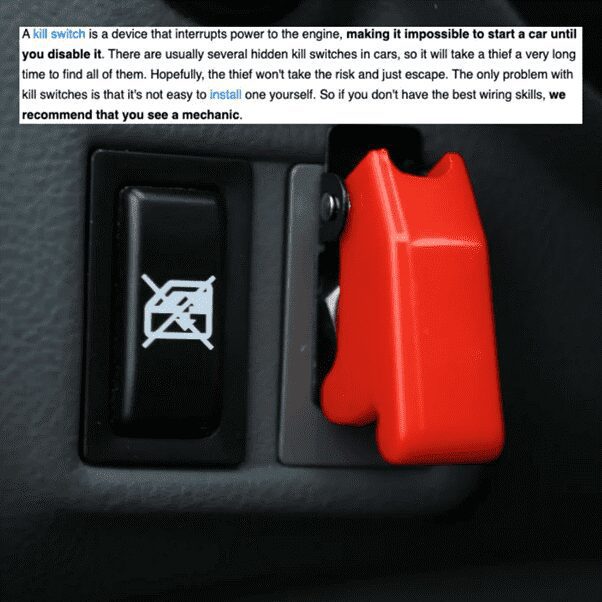
Some vehicles use multiple kill switches or layered immobilization. Because installation is technical, use a professional. Poorly installed kill switches can create safety issues or electrical faults.
Expert note: A kill switch works best when it is discreet and not obvious to anyone entering the cabin. The goal is that the thief cannot quickly diagnose why the car won’t start.
Expert add-on: Avoid “popular” kill-switch locations that thieves already know from online tutorials. Custom placement and logic increase effectiveness.
32. Reverse Parking
This tip is debated, but the logic is about escape speed. If a thief wants to steal a car, they want the easiest exit. If your car is already positioned for a quick getaway, that can reduce the time they need to maneuver.
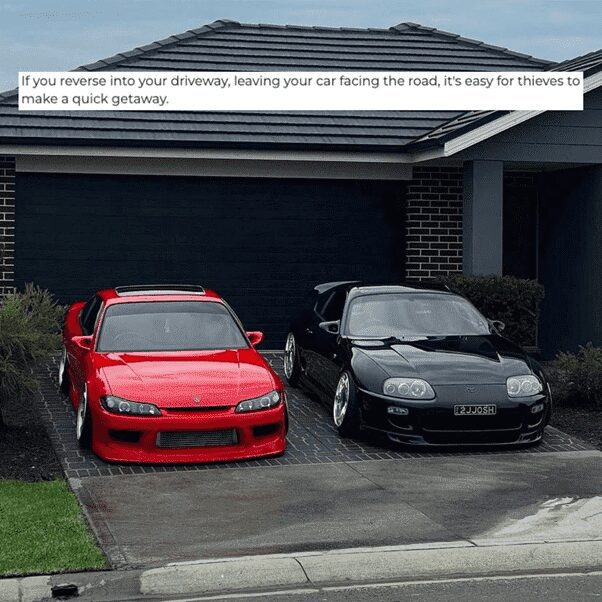
Reverse parking can make departure easier. Parking nose-in may require more maneuvering to leave quickly, which can increase the chance of being noticed. That additional time and movement can be enough to deter some thieves.
Expert nuance: Safety and practicality matter too. In some environments, reverse parking is safer for the driver. So use judgment: if you’re in a high-risk area, consider whether nose-in parking adds friction; if you’re in a safer environment, prioritize your own visibility and safety.
Expert add-on: If you park nose-in, consider turning wheels toward the curb (Tip 39) to add extra maneuvering friction.
33. Steering Wheel Insights
If you want a high-friction theft deterrent, disabling the steering wheel is a strong strategy. A car cannot be driven safely without steering control.
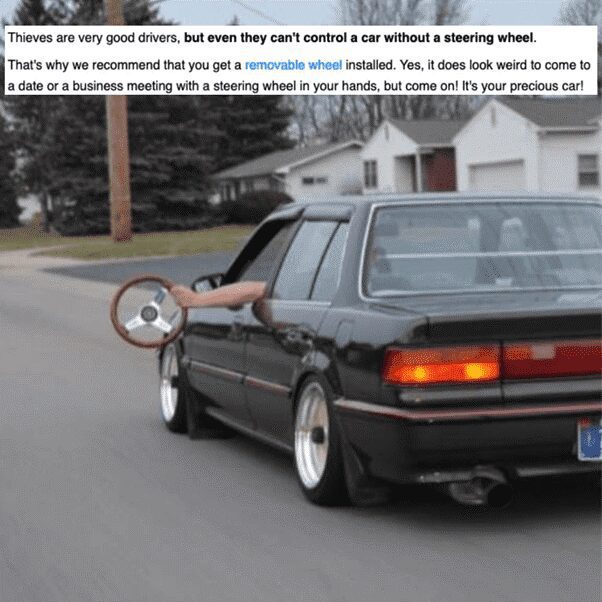
Installing a removable steering wheel can help, especially for vehicles in higher-risk locations or enthusiast builds. The downside is storage and practicality; steering wheels are bulky and not ideal to carry around daily.
Expert note: This method is more common in enthusiast and track builds than daily commuters, but it remains a legitimate high-security option for specific situations.
Expert add-on: If you use this approach, ensure your modification complies with local laws and doesn’t compromise airbag systems or safety requirements.
34. Baby Monitor to the Rescue
Not every security solution has to be expensive. A baby monitor inside the car is a creative option for monitoring activity—especially if your vehicle is parked close enough to receive signal reliably.
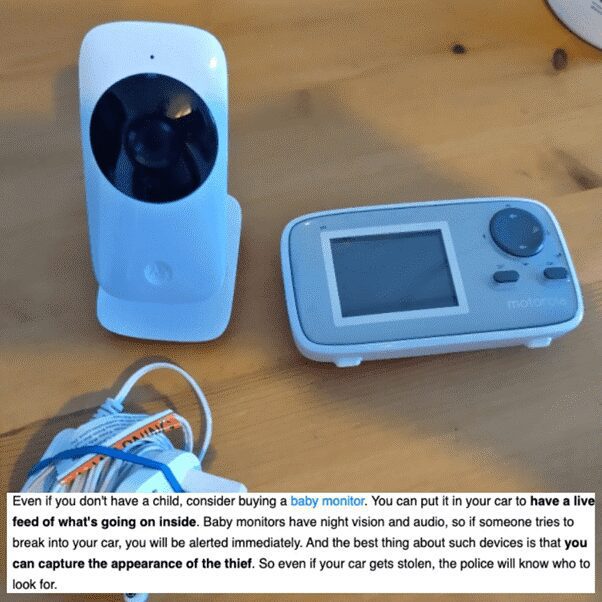
If someone attempts to break in, you may hear or see it. This can help you respond appropriately (safely) and potentially provide evidence. Place the monitor discreetly and securely so it doesn’t become a stolen item itself.
Expert caution: Consider power needs. If the device drains your battery or requires frequent charging, it may not be a practical long-term solution. Also, prioritize safety; do not confront criminals directly.
Expert add-on: If your goal is evidence, a proper dash cam system may be more durable. But the baby monitor idea shows an important security truth: creative monitoring can still deter when it increases detection risk.
35. GPS Tracker Solutions
GPS trackers help owners recover stolen vehicles, but criminals can also exploit tracking. A thief may hide a tracker under your vehicle to learn your routines, confirm where the car is parked, and identify patterns that increase opportunity.
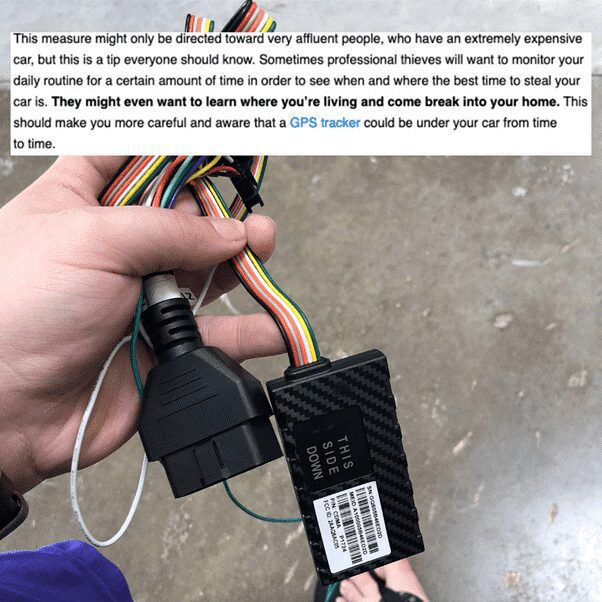
If you want to reduce this risk, periodically inspect your vehicle for unknown devices, especially after suspicious encounters or if you notice unusual behavior (being followed, repeated unknown activity around your car). Look in common hiding areas, and if you find something suspicious, contact authorities.
Expert tip: Use a legitimate tracker for your own vehicle, but also be aware that external trackers can be placed by others. Awareness is part of modern security.
Expert add-on: If you install your own tracker, place it where it isn’t easily found. A tracker that’s obvious can be removed quickly, limiting its value for recovery.
36. Coin Catcher Trick
This trick is an example of why you should verify locks instead of assuming they worked. The claim here is that placing a coin in the door handle area can interfere with certain locking mechanisms, potentially leaving a door less secure than you think.
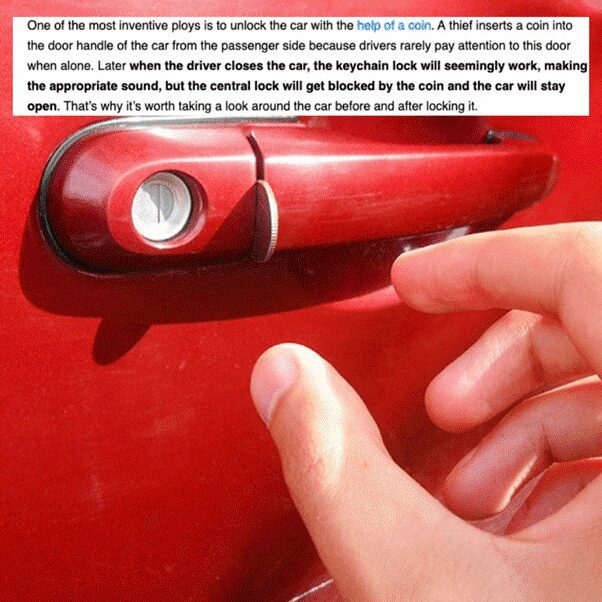
Whether or not this exact method applies to every vehicle, the security principle is valid: check all doors, especially passenger doors. Don’t assume a single beep means every door is secure; verify physically when possible.
Expert habit: After locking, pull each handle once (quickly). If any door opens, address it immediately. This turns “maybe locked” into “confirmed locked.”
Expert add-on: If your central locking is inconsistent, fix it. Security isn’t only gadgets; it’s basic functionality you can trust.
37. Tire Lock Hack
A tire lock is a strong immobilization tool. If a wheel is physically locked, the car can’t be driven away normally. This adds major friction, which is exactly what theft deterrence is about.
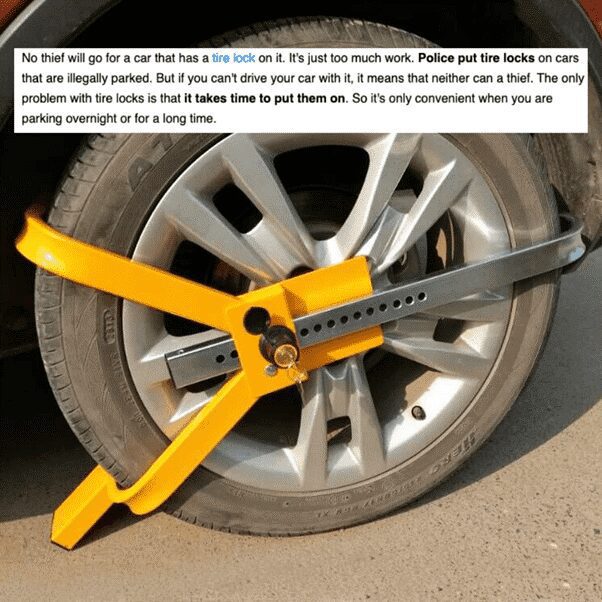
Tire locks can be especially useful for long-term parking situations—such as storing a vehicle, leaving it at an airport for an extended period, or parking in a high-risk area overnight. They are not always convenient for daily use, but they are very effective.
Expert note: If you use a tire lock, keep the key secure and build a routine so you never forget it’s installed. A forgotten lock can create an embarrassing and time-consuming morning.
Expert add-on: Tire locks are most effective when visible. Visibility changes thief behavior before they even attempt entry.
38. First Impressions Matter
Car thieves make fast decisions. If your vehicle “looks hard,” they often move on. That’s why first impressions matter: visible deterrents, good lighting, and an empty cabin create a higher-risk picture for thieves.
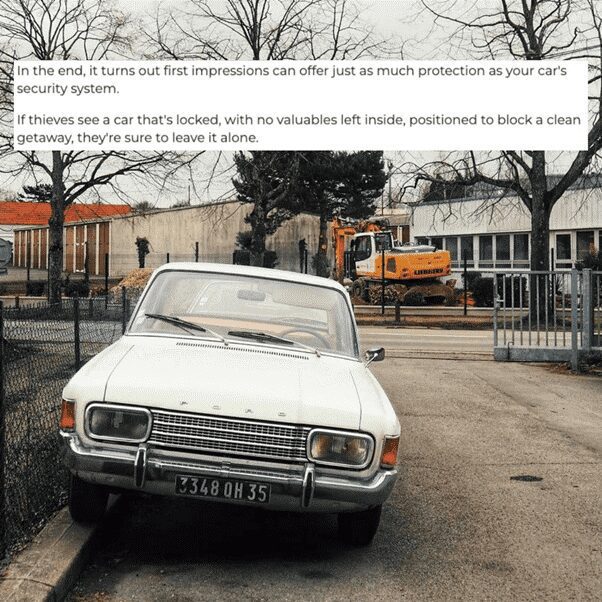
No method is perfect, but combining two or three of these tips makes your car meaningfully harder to steal. You’re not just protecting your property; you’re influencing the thief’s decision-making timeline.
Expert strategy: Use one visible deterrent (steering lock), one hidden deterrent (kill switch), and one environmental deterrent (lighting/camera/secure parking). That combination covers the most common theft scenarios.
Expert add-on: Think like a thief for 10 seconds when you park: “If I were looking for easy value, what would I see?” Then remove what you can.
39. Tires In
This is a free, simple trick: turn your wheels toward the curb (or into a position that makes moving the vehicle harder). The steering lock engages after you remove the key or shut down the car (depending on system), which can add resistance to a quick getaway.
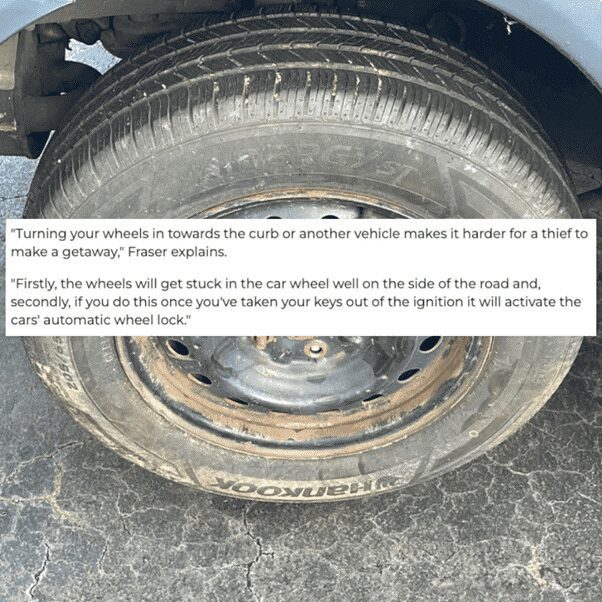
This adds small but meaningful delay. Thieves want clean, fast exits. Anything that forces extra maneuvering increases the chance of being noticed or caught.
Expert note: This is not a standalone security plan, but it’s a smart “last-step habit” to add friction at zero cost.
Expert add-on: This habit is especially useful when you park on streets rather than in lots. In tight street environments, forced steering maneuvers are more obvious and time-consuming.
40. Closed Windows Trick
This point is worth repeating because it’s easy to overlook: always ensure your windows are fully closed before leaving the vehicle. Even small gaps can be enough for a thief to exploit, especially if they can hook or pry a window and create a larger opening.
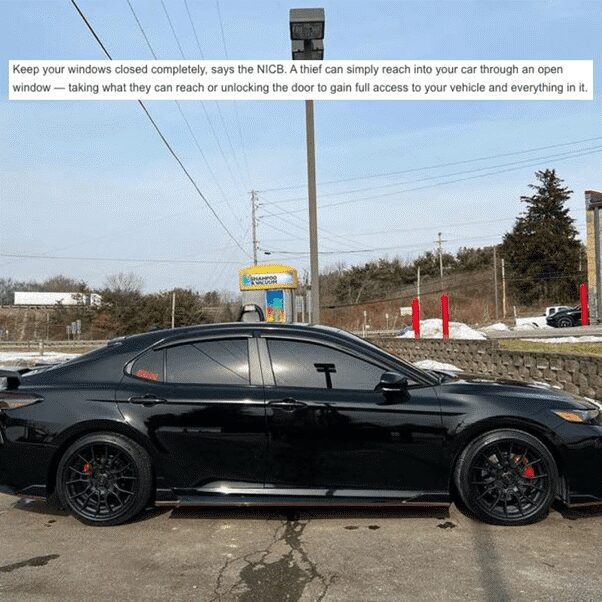
The tiniest opening can still offer access. Once inside, a thief can steal belongings—or in worst cases, attempt to take the vehicle. Always check again to ensure windows are closed. Knowing your vehicle is secure gives peace of mind.
Expert habit: If your car has an auto-close feature, don’t rely on it blindly. Verify closure visually, especially after passengers exit or after using vent mode.
Final Expert Takeaway: Layered Security Beats Any Single Trick
These 40 tips work best when you treat them as a layered system rather than a checklist you try once and forget. Thieves usually choose the easiest option available. If your car looks time-consuming, uncertain, and risky—because it’s clean inside, well-lit, secured with visible and hidden deterrents, and parked smartly—you become the car they skip.
If you want a simple “starter stack” that covers most theft scenarios without going overboard, begin with:
- Clean cabin (no visible bags/cash), plus window tint where legal
- Steering wheel lock or tire lock (visible deterrent)
- Faraday pouch if you use keyless entry
- Well-lit parking or paid secure parking in risky areas
- Professional alarm/immobilizer if your vehicle is commonly targeted
Do that consistently and you’ll be dramatically safer than the average vehicle on the road—without turning your life into a full-time security operation.