
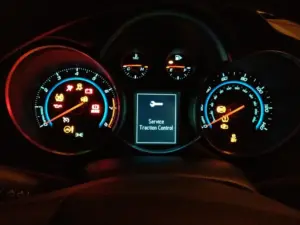

If you’re driving a Chevy Impala and the “Service Traction Control” warning appears, it’s completely normal to feel confused or even a little annoyed. The message is brief, but what it represents is important: your vehicle is flagging a problem in a system that helps keep the car stable when traction is limited. This message often points to issues with the traction control system, like a faulty wheel speed sensor, which affects vehicle stability. In other words, your Impala may no longer be able to accurately detect wheel slip, so it can’t reliably intervene when the road gets slick or when acceleration demands exceed available grip.
Here’s the expert perspective: traction control is not just a “nice to have” feature. On modern GM vehicles, traction control is intertwined with ABS and stability control logic. When the computer loses trust in a critical sensor (especially wheel speed data), it may disable or limit traction control and sometimes other driver-assist features as well. That’s why this warning deserves attention sooner rather than later, especially if you live in a region where rain, snow, ice, or gravel roads are common.
The good news is that this message is usually diagnosable with a clear process. Many causes are straightforward (a sensor, wiring, corrosion, or a wheel bearing that’s affecting sensor readings), and some fixes are simple enough to handle at home if you’re comfortable with basic inspections. In this guide, you’ll learn what the traction control system is actually doing behind the scenes, how it works with ABS and stability control, what symptoms to watch for, why the warning appears, and how to troubleshoot from the easiest checks to deeper module-level diagnostics. Stick around to learn how to address this and keep your Impala running smoothly.
Safety note before we begin: If your traction control warning appears along with ABS warnings, brake warnings, or you notice braking behavior changes, treat the situation as higher priority. Base braking generally still works, but ABS/traction/stability functions may be reduced. Drive cautiously, increase following distance, and avoid aggressive acceleration or high-speed maneuvers until the vehicle is inspected.
Understanding the Traction Control System
The traction control system in your Chevy Impala is crucial for preventing wheel spin and maintaining stability. While drivers often think of traction control as “the system that stops wheel spin,” its real job is more nuanced: it continuously compares wheel speeds, driver inputs, and vehicle behavior to determine whether the tires are gripping as expected. When slip is detected, it reduces torque and/or applies brake pressure to regain control.
This system incorporates multiple components to enhance safety, especially in slippery conditions, and works closely with ABS and StabiliTrak. That relationship matters because traction control doesn’t “live” as a separate box in isolation, in most Impalas it’s part of an integrated brake and stability control strategy managed through the ABS module (and coordinated with the powertrain control module).
Think of it like a team: traction control, ABS, and stability control share sensors and hardware, and they often share the same diagnostic pathways too. That’s why a warning in one system can trigger warnings in another. If a wheel speed sensor fails, for example, traction control loses its ability to calculate slip accurately and ABS may also lose the ability to modulate brake pressure properly during a skid or hard stop.
To make troubleshooting easier, it helps to understand how traction control is supposed to behave in normal operation. When the system is healthy, you might only notice it as a brief blink of a traction icon and a subtle reduction in engine power as the tires find grip. When something is wrong, the system may disable itself entirely and turn on warning messages so you’re not relying on a feature that isn’t functioning correctly.
Basics of Traction Control
The traction control system is designed to improve grip when you accelerate. It prevents the wheels from spinning on slippery surfaces by regulating the engine’s power output and/or applying braking force to a spinning wheel. When your wheels begin to lose traction, sensors detect the slip and send signals to the control logic that manages traction control behavior.
In practical terms, the system is asking a simple question many times per second: “Are the wheels turning at a rate that matches the vehicle’s speed and driver demand?” If one wheel suddenly spins faster than the others (common on ice or wet paint lines), the vehicle interprets that as a loss of traction and intervenes.
This module then adjusts the engine’s output or applies brakes to specific wheels, helping regain control. Torque reduction can include limiting throttle opening, reducing fuel delivery, altering ignition timing, or commanding the transmission/torque management strategy to limit output. Brake application is done through the ABS hydraulic modulator, which can apply pressure to individual wheels quickly and precisely.
In modern vehicles, traction control often works alongside the ABS (Anti-lock Braking System) and StabiliTrak systems. While ABS prevents the wheels from locking during braking, traction control ensures they don’t spin excessively during acceleration. StabiliTrak (GM’s stability control branding) adds another layer: it monitors whether the vehicle is rotating or drifting away from the driver’s intended direction and can selectively brake individual wheels to correct understeer or oversteer.
Expert insight: traction control is primarily “longitudinal” control (front to back slip during acceleration), while stability control is often “lateral/yaw” control (side to side stability during turning). They’re different problems, but they use many of the same sensors and hardware, which is why faults overlap.
It’s also important to remember what traction control cannot do: it cannot create traction that isn’t there. Tires, road surface, and speed still rule the outcome. Traction control helps you use available traction more effectively, but worn tires, incorrect tire pressure, or mismatched tire sizes can reduce system effectiveness and can even trigger faults if wheel speeds don’t match expected patterns.
Components of the Traction Control
The traction control module (often integrated with the ABS control module on the Impala) is the brain behind the system. It processes sensor signals, especially wheel speed sensor inputs, to determine if there’s slip. If a wheel spins too fast compared to the others, the module responds by adjusting engine power and/or commanding brake application to that wheel. These small, fast adjustments are what restore traction without requiring the driver to react as quickly.
Wheel speed sensors play a critical role. They’re located at each wheel and continuously monitor wheel rotation. That data is shared not only with traction control but also with ABS and stability control logic. ABS and wheel sensors also communicate with the module to provide necessary data for making real-time adjustments. If the module sees missing, erratic, or implausible wheel speed data, it may disable traction control and request service.
Other components that often influence traction and stability decisions (even when the primary fault is elsewhere) can include:
- ABS hydraulic modulator/pump (controls brake pressure modulation)
- Steering angle sensor (helps stability control interpret driver intent)
- Yaw rate / lateral acceleration sensors (helps stability control detect vehicle rotation)
- Powertrain control module (PCM) (executes torque reduction commands)
- Wiring harnesses and connectors (carry signals and power; vulnerable to corrosion and road debris)
Maintaining these components is vital for your Chevy Impala’s overall safety and performance on the road. The most common reality, however, is that wheel-speed-related faults are at the center of many “Service Traction Control” messages, because those sensors work constantly and live in harsh environments.
Another expert detail worth noting: wheel speed sensor signals are often interpreted alongside wheel bearing condition. On many designs, the sensor reads a magnetic encoder ring integrated into the bearing/hub assembly. If the bearing begins to fail or the encoder ring becomes damaged/contaminated, the sensor may report erratic wheel speed even if the sensor itself is technically “okay.” This is why diagnosing traction control issues requires looking at the full signal chain, not just the sensor body.
Common Symptoms of Service Traction Control Issues
When you’re dealing with service traction control issues in your Chevy Impala, there are a few warning signs that typically show up first. The most obvious are dashboard indicators, but there can also be changes in how the car accelerates, brakes, or handles on low-traction surfaces. Recognizing the pattern of symptoms helps you narrow the likely cause and decide how urgent the repair is.
The most common indicators include warning lights on your dashboard, such as the traction control and ABS lights. Those lights usually mean the system has detected a fault and may be partially or fully disabled. In many cases, the driver information center will also provide a text message (“Service Traction Control,” “Service Stabilitrak,” etc.), and those messages often appear together because the systems share sensor data.
Beyond the lights, you may notice one or more of the following real-world drivability symptoms:
- Traction control seems to engage when it shouldn’t (false activation)
- Traction control doesn’t engage when you expect it to (no intervention on slippery acceleration)
- ABS behavior changes or ABS does not function during hard braking
- Intermittent warnings that come and go with bumps, turns, or wet weather
Now let’s break down the two biggest warning signs you’ll see most often.
Traction Control Light on Dashboard
The Service Traction Control light is a major sign that something might be off. When this light turns on, it means the system has detected a fault condition and may not be able to manage wheel slip properly. Depending on the fault, traction control may be disabled completely or may operate in a limited mode.
Common causes include a failing traction control module (or integrated ABS module) or bad wiring, but the most frequent trigger in day to day diagnosis is a wheel speed sensor signal problem. The warning is not just telling you something needs service, it’s also warning you not to assume the vehicle will automatically correct a traction loss event the way it normally would.
In some cases, the Check Engine Light may accompany the traction control warning. When these lights appear together, it often suggests the powertrain system has joined the conversation, either because the traction system requested torque reduction and the PCM detected a related issue, or because a shared electrical/network problem is affecting multiple modules at once.
If you see both lights, wheel speed sensors become a primary suspect. These sensors can become covered in dirt or grime, damaged by road debris, or affected by bearing/encoder issues. In some cases, even a partially loose connector can create intermittent signal dropout that triggers warnings during turns or over bumps.
Expert tip: if the traction control light appears intermittently and resets after restarting, do not assume the issue is “gone.” Intermittent faults often worsen over time, and the stored history codes can still be retrieved with a capable scan tool even after the lights turn off.
Activation of the ABS Light
Another symptom to be mindful of is when the ABS light comes on. The Antilock Brake System (ABS) works closely with your traction control because traction control uses ABS hardware to apply brake pressure to individual wheels. If the ABS module detects a fault, especially a wheel speed sensor issue, it may disable ABS and traction functions simultaneously.
This usually indicates a problem in the brake control system, which could include wheel speed sensor faults, wiring issues, module issues, or sometimes low brake fluid (depending on the vehicle’s diagnostic logic). Low brake fluid is important because it can indicate leaks or pad wear. While low fluid is not the most common cause of “Service Traction Control,” it can trigger related warnings and should always be checked for safety.
Your Driver Information Center (DIC) may also display messages about these issues. It’s a convenient feature that keeps you informed about what’s happening, but it still relies on underlying diagnostic logic. Paying attention to these signals helps in identifying problems early on, which is crucial for maintaining the safety and function of your Chevy Impala.
Professional note: when ABS and traction lights appear together, it strongly suggests a shared root cause, typically a wheel speed signal problem or ABS module related fault, rather than a pure “engine” issue. This matters because it helps you avoid chasing unrelated engine components when the real fault is at the wheels.
Possible Causes of Traction Control Problems
Having trouble with traction control in your Chevy Impala can be frustrating because the message is broad. It doesn’t tell you which wheel, which sensor, or which circuit is at fault, only that the system can’t guarantee normal operation. That’s why understanding the most likely causes is helpful: it allows you to triage the problem logically and focus inspections on the highest probability failure points.
You might experience warning lights or unusual vehicle behavior. Understanding key areas like sensors, wiring, and modules can help diagnose the issue. In practice, traction control complaints most often trace back to one of four categories:
- Wheel speed sensor signal faults (sensor, encoder, connector, or wiring)
- Wiring harness damage/corrosion (especially near wheels and suspension)
- Module or power/ground issues (ABS/traction control module power supply and grounds)
- Mechanical faults influencing sensor readings (wheel bearing/encoder defects)
Let’s examine each one in detail, including what it looks like and why it triggers warnings.
Faulty Wheel Speed Sensors
One common cause of traction control problems is faulty wheel speed sensors. These sensors measure how fast each wheel is turning and send that data to the vehicle’s control module. When a sensor fails, it can send incorrect information or stop sending information entirely, causing the traction system to lose its ability to detect wheel slip accurately.
Signs of a bad wheel speed sensor include warning lights on the dash, stability issues, and sometimes false activation of traction control (where the car “thinks” a wheel is slipping even on dry pavement). On some vehicles, you may also notice the speedometer behaving strangely if the vehicle speed signal is influenced by the same sensor set (varies by configuration).
You might need to inspect each sensor to see if there is dirt, metal shavings, corrosion, or physical damage. Cleaning the sensor area can sometimes resolve signal interference (especially if debris is the only issue), but many failures require replacement. Regular checks of these sensors particularly after winter driving or suspension work can help maintain smooth vehicle operation.
Expert diagnostic tip: the fastest confirmation method is often live data. With a scan tool capable of reading ABS data, you can monitor wheel speed values in real time. A faulty sensor will often show one of these behaviors:
- drops to zero intermittently while the vehicle is moving
- spikes to an implausible high speed briefly
- reads consistently different from other wheels at the same speed (when tire sizes are correct)
This is also where tire size and tire pressure matter. If one tire has a significantly different rolling diameter, the wheel speed sensor will accurately report a different speed, and the module may interpret that as slip or a sensor fault depending on conditions.
Problems with the Wiring Harness
The wiring harness connects your wheel speed sensors to your car’s control module. If there’s a problem with wiring such as a broken wire, corrosion, moisture intrusion, pin damage at a connector, or a rubbed through section near the suspension, it can disrupt how data is transmitted. The result is often an intermittent warning that appears and disappears depending on vibration, steering angle, or road conditions.
Symptoms of wiring issues might include intermittent warning lights, traction control behavior that changes with bumps, or warnings that appear after rain or car washes (water intrusion is a common clue). Because wheel speed wiring lives close to the wheel well environment, it’s exposed to heat, salt, debris, and repeated movement making it a frequent failure point over time.
A close examination of the wiring harness may reveal frayed insulation, stretched wiring, loose clips, or green/white corrosion at connectors. Simple repairs, like re-seating a connector, repairing a damaged wire segment, or replacing an affected harness section, can restore communication between components. Paying attention to wiring condition can prevent future problems and reduce repeated warning light cycles.
Expert note: a “wheel speed sensor circuit” code doesn’t always mean the sensor itself has failed. Many times, the sensor is healthy, but the circuit is compromised by wiring resistance, corrosion, or connector issues. That’s why professionals often perform a visual inspection plus continuity/voltage drop testing before replacing parts.
Traction Control Module Issues
The traction control module (often integrated with ABS electronics) oversees stability by managing wheel slip and coordinating brake pressure and torque reduction requests. A faulty module can lead to incorrect signals being processed or sent to other systems, affecting vehicle handling and triggering persistent warning lights.
You might experience problems like the traction control warning light staying on, multiple stability related messages, or inconsistent traction intervention. In some cases, the car may feel normal until a traction event occurs, then the system fails to respond properly. In other cases, the system may disable itself immediately at startup if it fails internal self-checks.
Checking the module’s connections and ensuring it’s receiving proper power and ground can highlight issues that mimic module failure. Low voltage, poor grounds, or water intrusion at connectors can make a good module behave badly. In some cases, reprogramming or replacing the module might be needed, which typically requires professional tools. Keeping the module and its electrical foundation in good condition is key for vehicle safety.
Expert tip: if the vehicle has multiple unrelated electrical symptoms (random warning lights, intermittent resets, unusual cluster behavior), verify battery and ground integrity first. ABS/traction modules are extremely sensitive to voltage stability because they manage safety critical braking functions.
Wheel Bearing Defects
Wheel bearing defects can also cause traction control issues. Bearings allow wheels to rotate smoothly, but they also affect wheel speed sensor signal quality on many modern vehicles because the sensor reads an encoder ring often integrated into the bearing/hub assembly. If the bearing is worn, loose, or the encoder ring is damaged, the sensor can output inconsistent data that the module interprets as a wheel speed fault.
Indicators of bearing problems include unusual humming or growling noises that increase with speed, vibrations, and sometimes a sensation of looseness. A failing bearing may also create noise that changes when turning left versus right (because the load shifts). When bearings degrade far enough, they can trigger sensor plausibility problems and stability warnings.
Regular inspection can detect bearing wear early, preventing further damage. If you suspect this is the issue, seeking a mechanic’s expertise for replacement is wise. Maintaining proper wheel bearing function contributes to accurate wheel speed data, which is essential for a reliable traction control system.
Professional note: if you replace a wheel speed sensor and the code returns quickly, especially with the same wheel indicated, suspect bearing/encoder issues or wiring faults. Many “repeat sensor failures” are actually mechanical signal target problems.
Easy Fixes for Service Traction Control Issues
When dealing with service traction control issues in your Chevy Impala, there are several “first-pass” repairs and checks you can perform before diving into advanced diagnostics. Two key areas to focus on are resolving minor electrical faults and replacing the wheel speed sensor when it is confirmed defective.
From an expert standpoint, the goal with easy fixes is not to throw parts at the vehicle. The goal is to correct the most common root causes, loose connections, damaged wiring, blown fuses, sensor contamination, while confirming results with a scan tool whenever possible. Even a basic scan tool can help you avoid replacing the wrong component.
If you don’t have a scan tool, you can still do useful work: inspect connectors, clean corrosion, verify fuses, and check for obvious harness damage. But if the warning returns, code reading becomes the next smart step.
Resolving Minor Electrical Faults
Electrical issues can trigger the service traction control warning, especially because traction control depends on stable power supply, clean grounds, and reliable sensor signals. These can often be addressed by inspecting and correcting simple connections.
Start by examining your spark plugs and wiring for any loose or frayed parts. While spark plugs aren’t part of the traction system directly, engine misfires and torque irregularities can sometimes trigger stability/traction interventions or related warnings, especially if the PCM detects irregular engine output that affects drivability. A worn-out or improperly connected spark plug can contribute to broader performance issues that complicate the traction system’s behavior.
Next, inspect the ABS sensor cables. They need to be properly connected and free from damage. Wheel speed sensor wiring is often routed along suspension components and can be damaged during brake work, tire rotations, or even by road debris. If you notice wear or damage, replacing the affected wiring or repairing the connection may solve the problem.
Checking the fuses is also a smart move. Sometimes, a blown fuse can be the root cause of the issue. Inspect the fuse box and replace any damaged fuses. Make sure the correct fuse type and rating are used to ensure proper function.
Expert-level guidance to improve the odds of success:
- Inspect battery terminals for corrosion and tightness. Low voltage can trigger multiple stability related warnings.
- Check chassis grounds if you have intermittent warning lights. Poor grounds can mimic module failures.
- Look for harness rub points near the strut, control arms, and wheel wells.
If your warning is intermittent and appears after rain, prioritize connector and harness moisture intrusion checks. Dry conditions that “fix themselves” often point to water affecting connections.
Wheel Speed Sensor Replacement
A faulty wheel speed sensor can lead directly to traction control warnings because wheel speed data is the foundation for slip calculation. It’s crucial to check each sensor on your wheels. The wheel speed sensors monitor wheel rotation so the system can determine whether the wheels are moving in sync and whether one is slipping.
If a sensor is faulty, traction control can behave incorrectly or shut down. To replace a damaged sensor, remove the wheel and locate the sensor near the brake/hub area. Carefully detach the connector, remove the retaining hardware, and remove the sensor. Then install the new sensor, routing the wiring the same way as the original and ensuring it’s clipped properly so it doesn’t rub or stretch during suspension movement.
Once replaced, check if the traction control warning still appears on your dashboard. If everything is in order, the warning should be gone. Keeping your sensors in good condition will help maintain overall safety and performance.
Expert tip: after replacement, clear the ABS/traction codes and then test drive. If the warning returns immediately with the same wheel indicated, re-check the connector seating, wiring continuity, and consider wheel bearing/encoder issues as a next diagnostic step.
Advanced Troubleshooting for Persistent Traction Control Issues
If you’ve corrected the obvious issues (loose connectors, damaged wiring, fuses, and a confirmed faulty sensor) and the traction control warning still persists, you’ll need a deeper diagnostic approach. This is where scan data, code interpretation, and module level thinking become essential.
If you’re facing ongoing traction control issues with your Chevy Impala, a deeper dive into certain systems can help. Focus on resolving powertrain concerns and checking the electronic components for a smoother ride.
From a professional standpoint, persistent traction control warnings are usually caused by one of the following:
- Intermittent wheel speed data that only fails under certain conditions (turning, bumps, heat, moisture)
- Power/ground stability issues affecting the ABS/traction module
- Communication faults between modules over the vehicle network
- Module internal faults that require programming or replacement
Now let’s cover the two advanced areas mentioned in your content: powertrain/PCM concerns and BCM/ESC malfunctions.
Dealing with Powertrain and PCM Problems
Persistent traction control warnings can sometimes be linked to powertrain issues, particularly when the traction system is requesting torque reduction and the PCM is not responding as expected or when engine output is unstable (misfires, throttle control issues, fuel delivery problems). Start by examining the Powertrain Control Module (PCM). It plays a crucial role in engine management and can influence traction problems if it receives bad inputs or has internal faults.
Look for chassis and ABS codes using a scan tool capable of accessing those modules. Codes like C0035 (commonly associated with a wheel speed sensor circuit, depending on the platform and scan tool definitions) may indicate wheel speed sensor issues. The important part is not the specific code alone, it’s what the code status tells you (current vs history) and whether it repeats during a road test.
Check the Throttle Position Sensor. This sensor influences throttle behavior and torque delivery, which matters because traction control manages wheel slip by requesting torque reduction. If throttle signals are inconsistent, the traction system may not achieve the expected torque control outcome, causing warnings or performance limitations.
Consider the impact of a bad fuel pump too. While fuel pump issues aren’t a primary traction control cause, inconsistent fuel supply can create power fluctuations that feel like traction events and may lead to broader drivability concerns. When engine output becomes unpredictable, stability systems can react, and multiple warning lights can appear, especially if the PCM detects misfires or torque correlation issues.
Expert tip: if traction warnings appear with reduced engine power messages or the vehicle enters a limp strategy, treat it as a combined drivetrain and stability event. Diagnose engine performance first (misfires, throttle issues, fuel pressure) alongside wheel speed data integrity.
Also don’t ignore voltage integrity. A weak battery or charging issue can cause PCM and ABS modules to behave erratically, generating “phantom” faults. If you see multiple unrelated codes or communication faults, test battery and charging output as part of your baseline diagnosis.
Handling BCM and Electronic Stability Control Malfunctions
The Body Control Module (BCM) is integral to the vehicle’s electronic ecosystem. It controls various electronic systems, coordinates messages, and can influence how warnings are displayed. A fault here might reduce responsiveness and can contribute to issues affecting the Electronic Stability Control (ESC) strategy.
If your Impala suddenly enters limp mode or you see the Service StabiliTrak Light, pay close attention to BCM related wiring and stability control communication. Stability control relies on multiple modules sharing accurate information. If the BCM or the network communication becomes unreliable, the system may disable stability features because it cannot trust the data stream.
Inspect wiring connections around the BCM. Poor connections can cause ESC to malfunction. Regularly check and tighten these connections for smooth performance. A faulty module can throw off the balance of the Stability Control System, which is why you need to ensure the health of all electronic components.
Professional note: module level diagnostics often require a scan tool that can access multiple systems (ABS, BCM, PCM) and view network codes. If you’re at the point where codes suggest module communication faults, professional diagnosis is typically cost effective because it reduces the risk of replacing expensive modules unnecessarily.
In some cases, reprogramming (software updates) may correct known logic or communication issues, especially if technical service bulletins apply. If you’ve ruled out sensors, wiring, bearings, and power supply issues, checking for updates or module faults becomes a reasonable next step.
Finally, remember that persistent stability warnings can be aggravated by mismatched tires or uneven tread depth. Stability algorithms assume similar rolling diameter across wheels. If your tires are significantly uneven (or one wheel has a temporary spare), the system may interpret the speed differences as slip or sensor problems. Always verify tire condition as part of advanced troubleshooting.
Prevention and Best Practices (Keep the Warning From Returning)
Once you’ve corrected the immediate cause of the “Service Traction Control” warning, your next goal is preventing repeat failures. The most common repeat scenarios involve environmental wear (salt/corrosion), physical harness damage, and bearing deterioration, especially on vehicles driven in harsh climates or over rough roads.
Best practices that significantly reduce recurrence:
- Inspect wheel speed sensor wiring during tire rotations and brake service.
- Keep wheel wells reasonably clean in winter to reduce salt buildup around connectors.
- Maintain even tire sizes and tread depth across the axle (and ideally across all four tires).
- Address bearing noise early before it affects sensor signals and triggers stability faults.
- Monitor battery and charging health because low voltage events can cause safety modules to disable features.
These aren’t just “maintenance tips”—they directly protect the inputs traction control depends on. Clean electrical connections and consistent wheel speed data are the foundation of a stable system.
When to Drive vs. When to Stop (Practical Safety Guidance)
Many Impala owners ask whether they can continue driving with the traction control warning on. In many cases, yes, you can drive cautiously to a safe destination or service facility. However, the correct answer depends on what other symptoms are present.
Usually safe to drive cautiously (short term) if: the car brakes normally, steering feels normal, and only the traction/stability warning is present.
Reduce driving and prioritize service if: ABS light is on, braking feels different, warnings are combined with reduced power, or you notice wheel bearing noise/vibration.
Stop driving and seek immediate help if: you have a red brake warning, severe brake performance changes, or the vehicle behaves unpredictably.
This approach balances practicality with safety. Traction control is a safety system, so even when the car still drives, you should schedule diagnosis quickly, especially before bad weather.